How to Professionally Decline an Invitation Letter
Staring at a blank page when you need to write a professional letter can feel paralyzing—but the right sample turns that anxiety into a confident, polished draft in minutes. If you’ve ever received an invitation you need to decline politely, you know the pressure: you want to be respectful, clear, and professional without burning bridges. It doesn’t have to be hard.
Using a letter sample isn’t cheating. It’s a smart, time-saving strategy that gives you a strong structure, the right tone, and key phrases you can adapt. A good sample acts like a roadmap: you follow the basic layout, swap in your details, and add your own voice. Professional correspondence becomes less intimidating when you have a reliable starting point.
Category: Professional Etiquette
How to choose the right sample for your situation
Not all decline letters are the same. A formal business event, like a conference attendance invitation, calls for a different tone than a casual book club meeting invitation. Before you start writing, think about your relationship with the host and the formality of the original request. A good letter template will match the occasion—for example, if you’re responding to a conference attendance invitation, you’ll want a respectful, professional reply that mentions your schedule or prior commitments. For a book club meeting invitation, you can be warmer and shorten the formalities.
Also consider the format. Is the invitation digital or printed? If it’s an email, you can skip the letterhead design and go straight into the subject line and salutation. But if you’re mailing a physical response, follow standard business letter format: your contact details, date, recipient’s address, salutation, body, and closing. A customizable letter template helps you keep all these elements in order.
Adapt the sample without losing your authentic voice
Once you pick a sample, don’t just copy it word for word. Read it through and highlight the parts that reflect your own reasoning. Then rewrite those sections in your natural tone. For example, if the sample says “I regret to inform you that I am unable to attend,” you might say “Thank you so much for the invitation—I’m sorry I can’t make it.” Both are professional, but one feels more like you. The goal is to sound genuine while maintaining letter writing etiquette. Avoid stiff language that doesn’t match your personality, especially if you know the host well.
If the invitation is for a annual general meeting invite, keep it formal but not robotic. Use the sample’s structure to guide you, then inject a personal reason. “I have a prior commitment that day” works. No need to over-explain.
Tailoring the opening paragraph to grab attention (in a polite way)
The first line of your decline can set a positive tone even though you’re saying no. Start with a sincere thank you. For example: “Thank you for the kind invitation to your moving day celebration.” That immediately shows appreciation before you deliver the refusal. Then briefly state your regret and the reason (optional). Avoid long apologies or over-justifying—one clear sentence is enough. If the event is a moving day celebration invitation, your opening can be warm and friendly while still keeping the structure tight.
Common mistakes to avoid
Even with a sample, people slip up. One common error is using outdated salutations like “To whom it may concern” when you have the person’s name. Always address the letter to the actual host. Another mistake is ignoring the difference between email and printed letters. For email, keep the subject line clear (e.g., “Declining your invitation for March 12”). For a printed letter, include proper letterhead design if you have one, and always sign it by hand.
Also, watch your tone. A decline that’s too abrupt can come across as rude. But one that’s too flowery can seem insincere. Aim for a balance: courteous and direct. If you’re replying to a museum public viewing invitation letter, your tone should match the elegance of the event—polished but not stiff.
Finally, proofread your letter before sending. Spelling errors or awkward phrasing undermine your professionalism. Read it aloud or ask someone else to glance at it. A clean, error-free reply shows you value the invitation enough to respond properly.
Using a sample is a smart start, but the best letters feel both professional and personal. Practice makes the process faster. Next time you need to decline an invitation, you won’t stare at a blank page—you’ll know exactly where to begin.
Examples You Can Adapt
How to Professionally Decline an Invitation Letter
Declining a Business Conference Invitation
Subject: Regretful Decline: Annual Industry Conference
Dear [Name],
Thank you so much for the invitation to speak at the Annual Industry Conference on June 12-14. I am truly honored and appreciate your consideration.
Unfortunately, due to a prior commitment that I cannot reschedule, I must decline this opportunity. I hold your event in high regard and hope to participate in future gatherings.
To assist with your planning, here are a few details I can share:
Detail
Information
Preferred alternative
Reach out to [Colleague Name] – he/she may be available
Future interest
Yes, please keep me on the speaker list for the next event
Best contact
Email is best for future invitations
I wish you a highly successful conference with engaging sessions and meaningful connections.
Sincerely, [Your Name]
Politely Refusing a Wedding Invitation
Subject: With warmest regrets – wedding decline
Dear [Name],
It was with such joy that I received your wedding invitation. Seeing your happiness means the world to me, and I feel genuinely sorry that I will not be able to attend the celebration on [Date].
Unfortunately, I have an unavoidable work commitment that coincides with your special day. I have tried every rearrangement but cannot change it. Please know that my thoughts will be with you both.
I would love to celebrate with you in another way. Perhaps a small dinner after you return from your honeymoon? I have listed a few possible dates below:
September 8, 2025
September 15, 2025
September 22, 2025
I look forward to hearing about the wedding and seeing photos. Wishing you endless love and happiness on your new journey together.
Thank you for inviting me to deliver the keynote at the [Event Name] on [Date]. I am genuinely flattered and appreciate the trust you have placed in me.
After careful consideration, I must regretfully decline. My current workload does not allow me to prepare the quality presentation that your audience deserves, and I do not want to compromise the experience.
To help you find a suitable replacement, I have compiled a short list of colleagues who are excellent speakers:
Name
Area of Expertise
Contact
Dr. Alice Wang
Digital Transformation
alice@example.com
Mr. James Brown
Leadership & Innovation
james@example.com
Prof. Maria Lopes
Strategic Management
maria@example.com
I hope these suggestions are helpful. Thank you again for considering me, and I wish you a truly inspiring event.
Best regards, [Your Name]
Declining a Job Interview Invitation
Subject: Interview invitation decline – [Job Title] position
Dear [Hiring Manager Name],
Thank you very much for your invitation to interview for the [Job Title] position at [Company Name]. I truly appreciate the time your team took to review my application.
After thoughtful consideration, I have decided to withdraw my candidacy and decline the interview at this time. I have accepted another opportunity that aligns more closely with my current career goals.
I hold your organization in high esteem and believe it is a wonderful place to work. Please keep me in mind for future roles that may be a better fit. I would be happy to stay connected on LinkedIn.
Below is a summary for your records:
Field
Details
Position applied
[Job Title]
Original interview date
[Date]
Reason for decline
Accepted another position
Thank you again for this opportunity. I wish you the best in finding an excellent candidate.
Sincerely, [Your Name]
Regretfully Declining a Team Outing
Subject: Apologies – cannot join the team outing
Dear [Manager/Organizer],
Thank you for organizing the team outing to [Location] on [Date]. I always enjoy spending time with colleagues and appreciate the effort you put into building team spirit.
Unfortunately, I will not be able to attend. A family obligation on the same day requires my presence, and it is not something I can postpone.
I hope the day is filled with fun and bonding. Here are a few activities I would recommend based on our past experiences:
Team-building games that encourage collaboration
A group photo to remember the day
A shared meal where everyone can chat informally
I look forward to hearing all about it when you return. Please save me a spot for the next one!
Warm regards, [Your Name]
Unable to Attend a Family Reunion
Subject: With sadness – missing the family reunion
Dear [Organizer/Cousin Name],
Thank you so much for coordinating the family reunion on [Date] at [Venue]. The effort you have put into gathering everyone is truly admirable, and I wish I could be there.
Sadly, a scheduled medical procedure falls exactly on that weekend, and my doctor has advised against traveling. I am very disappointed to miss seeing everyone, especially the younger cousins I have not met in years.
To stay connected, I have prepared a digital family update that you can share during the reunion:
Family Branch
Recent Update
Uncle Bob & Aunt May
New grandchild, Lily, born June 2025
Our family (yours truly)
Moved to new city, starting garden project
Cousin Sarah
Graduated from culinary school
Please send lots of photos and videos. I will be thinking of you all and hope to make the next reunion no matter what.
Thank you for reaching out and inviting me to a meeting to discuss your new [Product/Service]. I appreciate the opportunity you have extended and the information you have shared so far.
After reviewing our current priorities, I regret to inform you that I must decline the meeting at this time. Our budget cycle has already closed for this quarter, and we are not evaluating new vendors until Q1 2026.
To keep communication open, I have noted the details for future reference:
Item
Information
Product name
[Product Name]
Proposed meeting date
[Date]
Next review window
January 2026
Preferred contact
[Your email]
I will keep your materials on file. Please feel free to reach out again closer to that time. I wish you success with your other engagements.
Best regards, [Your Name], [Your Title]
Politely Refusing a Dinner Party Invitation
Subject: Sincere regrets – dinner party decline
Dear [Host Name],
Thank you so much for inviting me to your dinner party on [Date]. The menu and themes sound absolutely delightful, and I am touched that you thought of me.
Regrettably, I will not be able to attend. I have a prior engagement that evening that I cannot cancel without causing inconvenience to others. I am genuinely sorry to miss the wonderful food and company.
To help with your planning, I want you to know I have no dietary restrictions, so please do not worry about accommodating me. I also would be happy to return the favor soon — perhaps we could plan a brunch together in the coming weeks.
I hope the party is full of laughter, great conversation, and delicious dishes. Thank you again for thinking of me.
Warmly, [Your Name]
Declining a Volunteer Event Invitation
Subject: Apologies – unable to volunteer for [Event Name]
Dear [Coordinator Name],
Thank you for inviting me to volunteer at the [Event Name] on [Date]. I admire the work your organization does for the community and was excited to contribute.
After checking my schedule, I must regretfully decline due to a conflict with a prior commitment. I tried to rearrange but was unable to free the time. I hope you find enthusiastic volunteers who can give the event the energy it deserves.
If it helps, here are a few skill areas I would have offered and suggestions for who else might step in:
Skill I planned to contribute
Alternative suggestion
Photography & social media posts
Local photography club – they often volunteer
Setting up registration tables
High school service group – contact [Name]
Leading a craft activity
Retired teacher [Name] loves crafts
I would love to support in a smaller way, perhaps by donating supplies. Let me know if that is helpful. Thank you for all you do.
Thank you for inviting me to the [Event Name] networking mixer on [Date]. I value the connections I have made through your events in the past and appreciate your thoughtfulness.
Unfortunately, I will not be able to attend this time. A family health issue requires my attention on that evening, and I must prioritize personal responsibilities. I hope you understand.
To ensure I remain engaged with your network, I would like to suggest an alternative:
Please keep me on the mailing list for future events
I would be happy to host a small virtual meetup with a few attendees after the event
Feel free to connect me with anyone who wants to reach out directly – my email is listed below
I hope the mixer fosters many valuable introductions and collaborations. Thank you again for the invitation.
With appreciation, [Your Name] [Your Email Address]
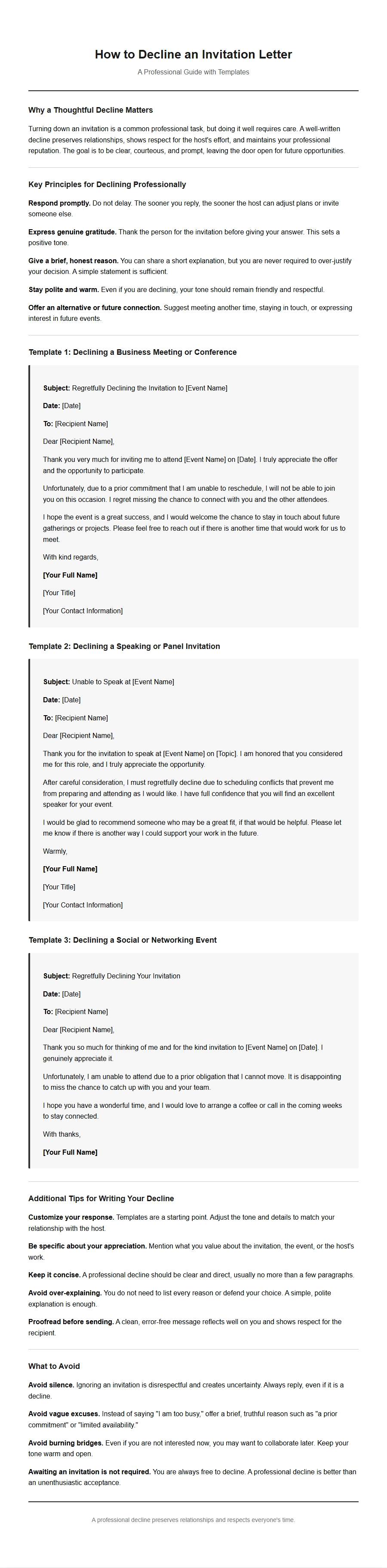
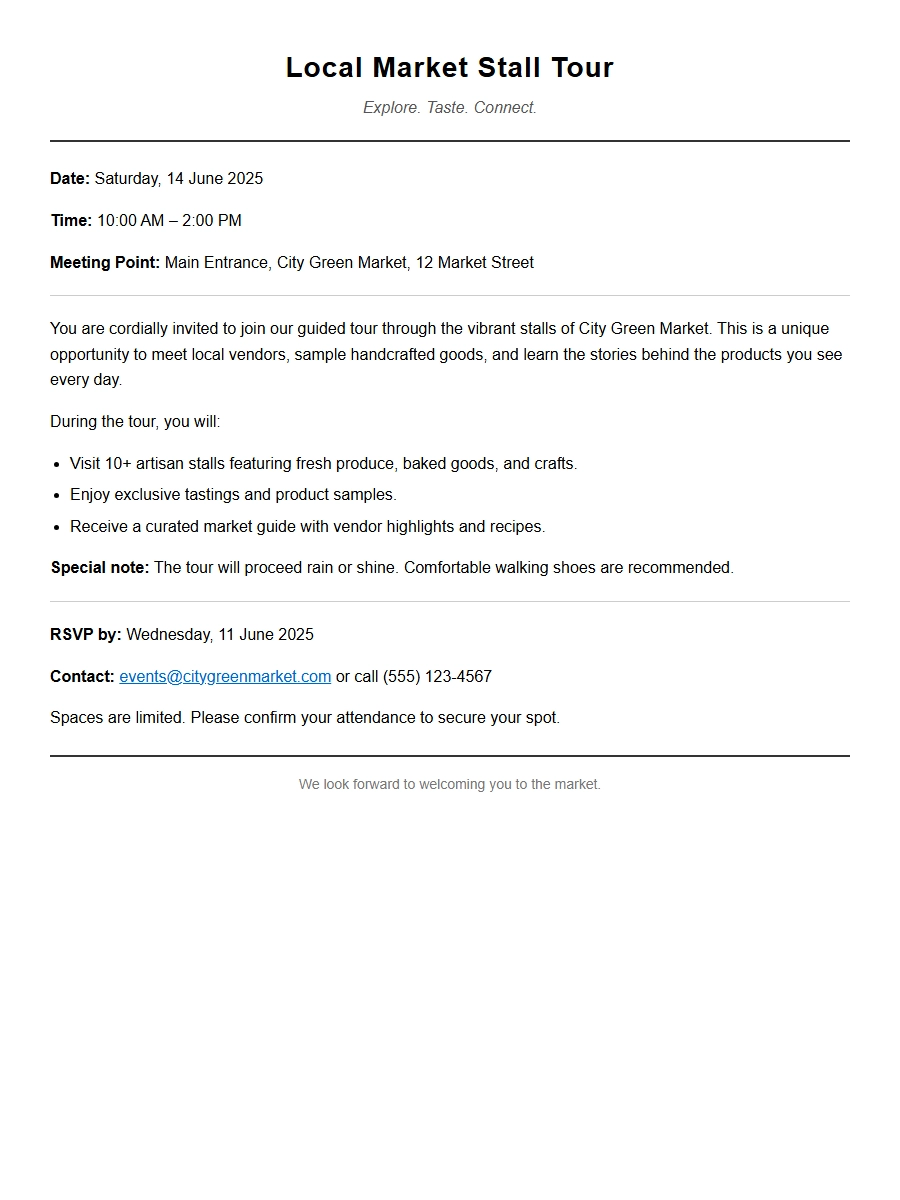 sample invitation for local market stall tour - Invitation Letters
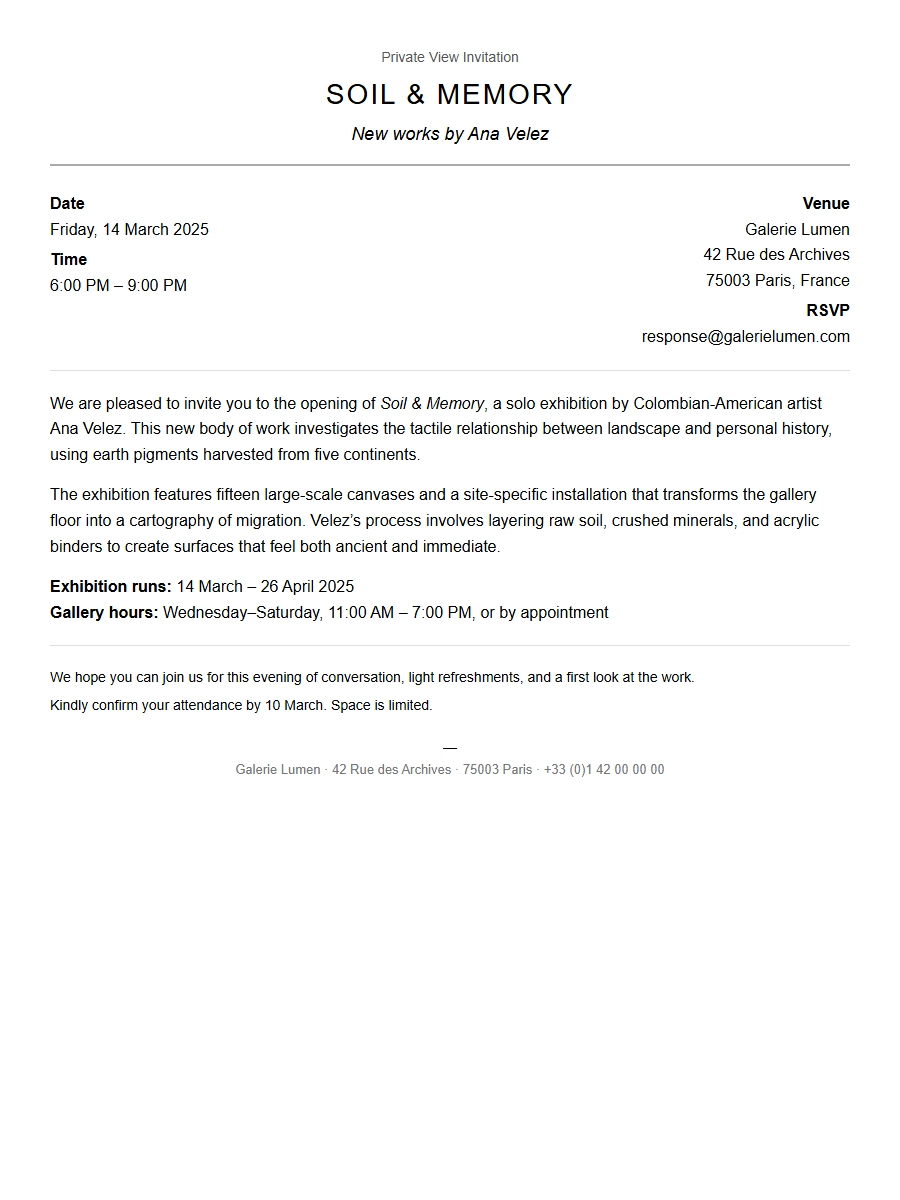 Art Exhibition Opening Invitation Wording Ideas
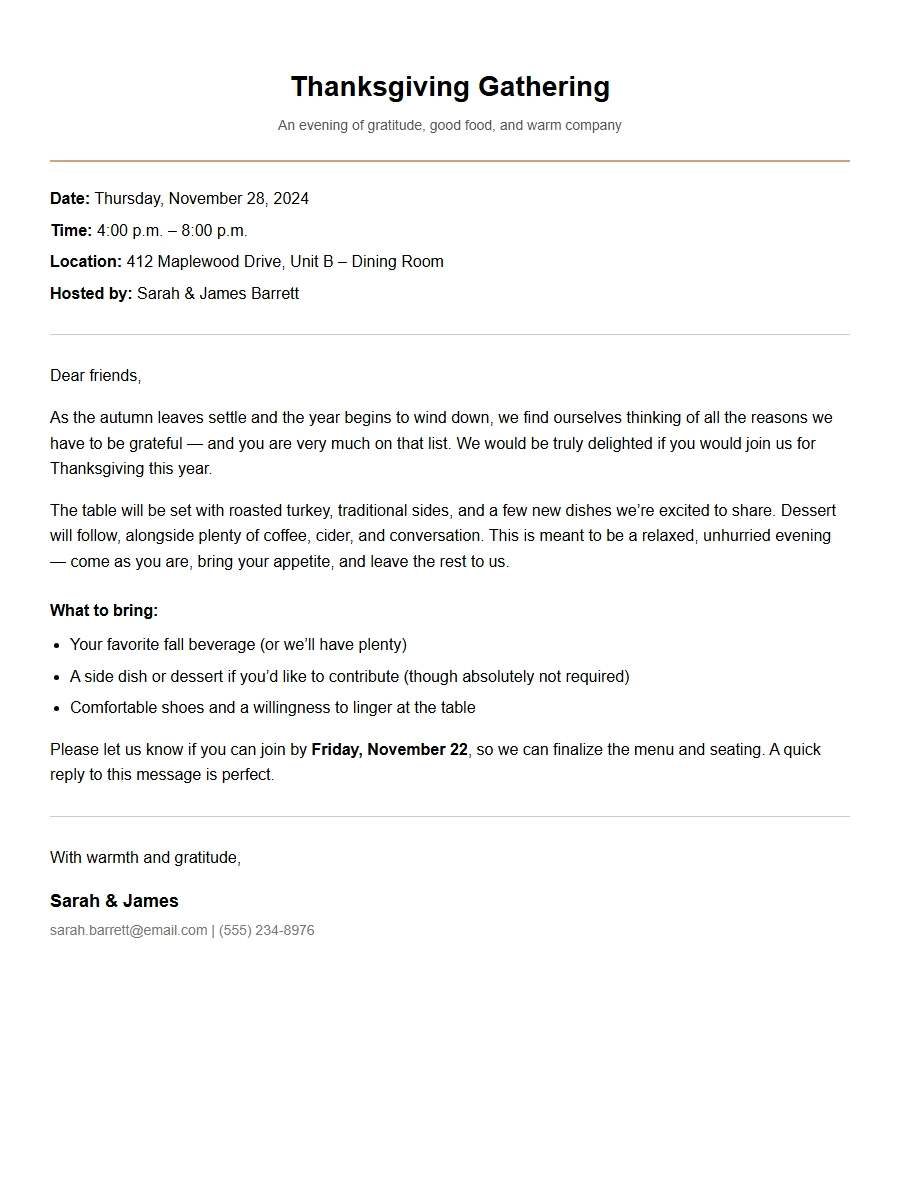 Thanksgiving Meal Gathering Invitation Text
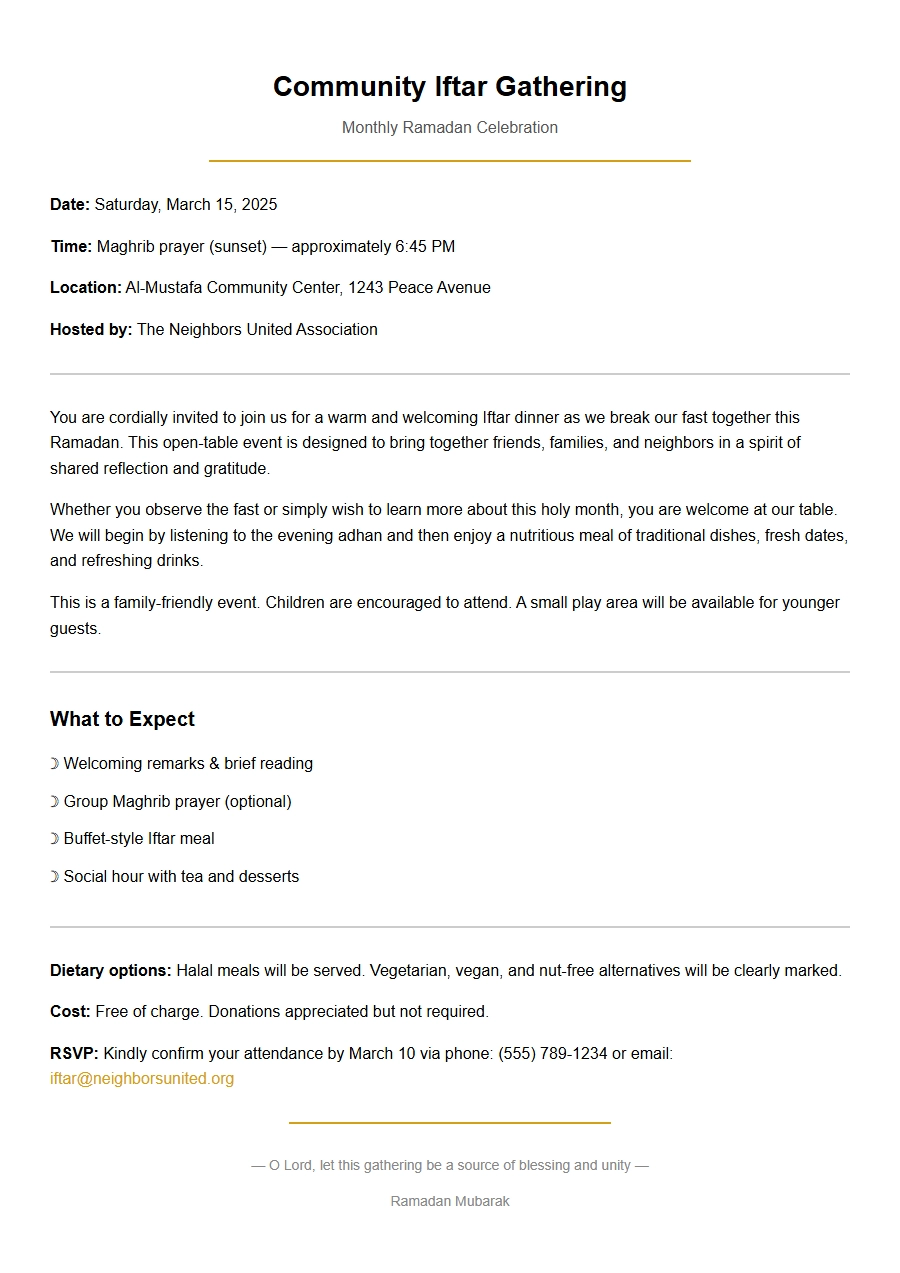 Ramadan Iftar Community Event Invitation
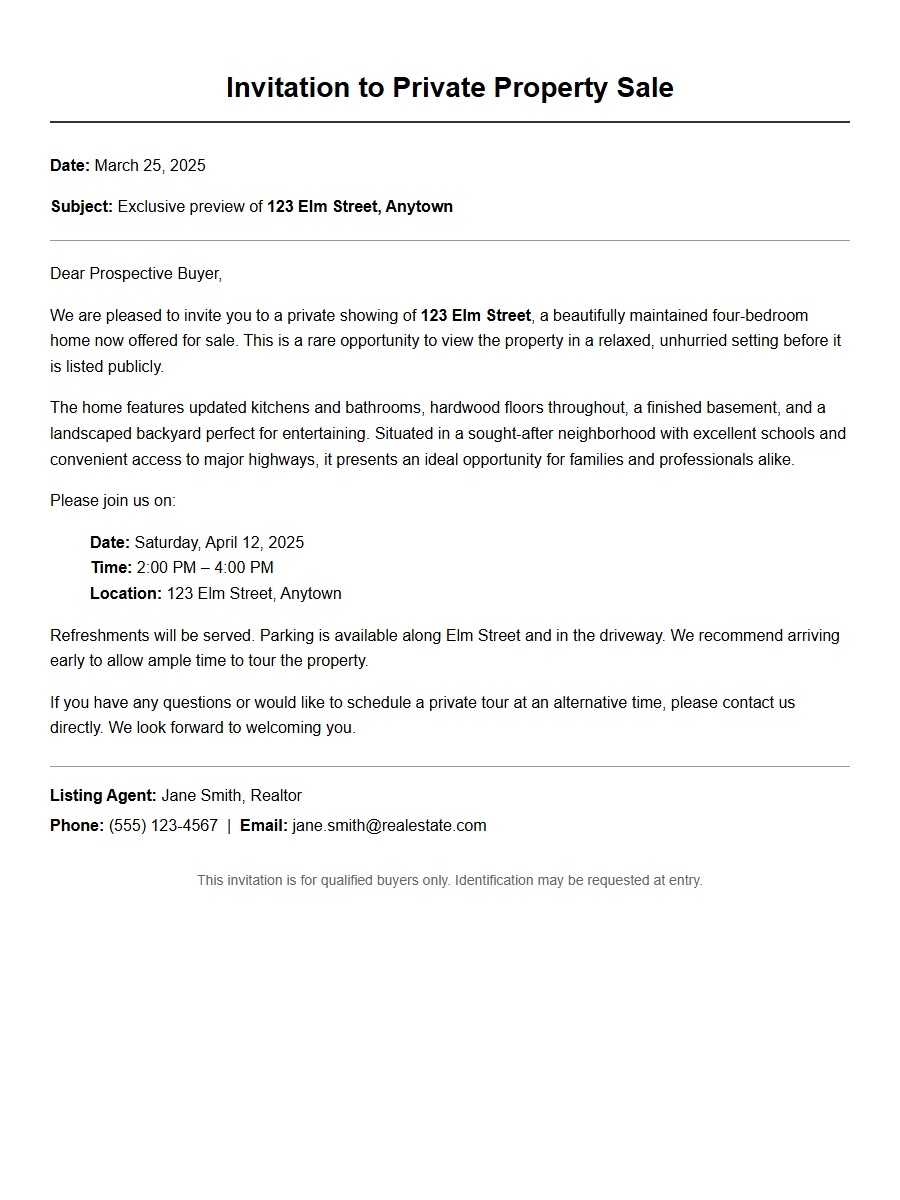 Sample Wording for Property Sale Invitations
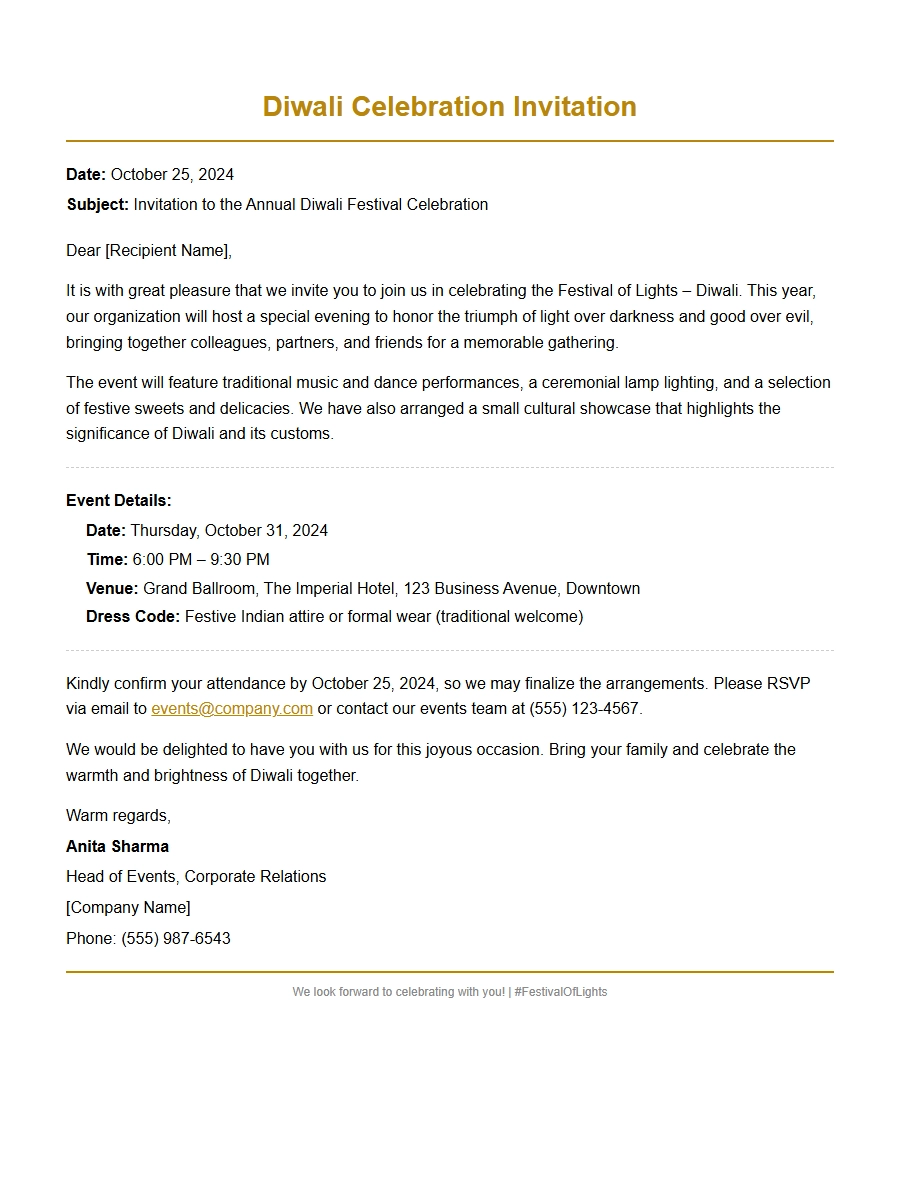 Diwali Festival Celebration Invitation Draft