You just walked out of an interview feeling good—or maybe not. Either way, you know you should send a follow-up note. But what do you actually say? And how do you ask for feedback without sounding pushy or desperate? Staring at a blinking cursor when you need to write a professional thank you note can feel paralyzing. The right sample turns that anxiety into a confident, polished draft in minutes.
Using a thank you note sample isn’t cheating. It’s a smart, time-saving strategy. A good sample gives you the structure, tone, and key phrases you need—while leaving plenty of room for your own voice. Think of it as training wheels for professional correspondence. You’ll learn the etiquette and format, then customize it until it sounds like you.
Category: Job Search Correspondence
When you ask for interview feedback, you’re doing two things: showing gratitude for the interviewer’s time and demonstrating that you value growth. The best thank you notes strike a balance between appreciation and a genuine request for insight. A letter template can help you get that balance right.
How to pick the right sample for your situation
Not all interviews are the same. A formal corporate interview calls for a different tone than a casual chat at a startup. Look for a sample that matches the industry and the relationship. If you’re in a creative field, a slightly warmer note works. For finance or law, stick with traditional business letter format. The key is to start with a structure that feels natural for the context.
Also consider the medium. If you’re sending an email, skip the letterhead design and keep your salutation simple (“Dear [Name]” instead of “To whom it may concern”). For a handwritten note, you’ll want a shorter, more personal message. Match the sample to the delivery method.
Adapt the sample without losing your authentic voice
Once you’ve chosen a sample, read it aloud. Does it sound like you? If it feels stiff, swap out formal phrases for your own words. For example, instead of “I appreciate the opportunity to interview,” you might say “Thanks again for chatting with me today.” The sample gives you the skeleton; you add the heartbeat.
One common mistake is copying the sample verbatim. Recruiters can spot a generic thank you note from a mile away. Instead, change one or two sentences to reflect something specific you discussed. Mention a project they described or a shared interest. That small personalization turns a template into genuine professional correspondence.
Tailor the opening to grab attention
The first sentence sets the tone. Don’t start with “I am writing to thank you.” That’s boring and expected. Try something like “I left our conversation feeling even more excited about the role” or “Thanks for taking the time to walk me through your team’s workflow.” It hooks the reader and shows you were engaged.
After the thank you, transition smoothly into your request for feedback. You could say: “If you have any feedback on my interview, I’d be grateful to hear it—it would help me improve either way.” That’s humble, direct, and respectful of their time.
Common mistakes to avoid
Outdated salutations like “Dear Sir” or “To Whom It May Concern” can feel cold. Use the interviewer’s name. Also avoid closing with “Sincerely” in an email unless you’re going for ultra-formal. “Best regards” or “Thanks again” work better for digital letter format.
Another pitfall: ignoring the proofreading step. One typo can undo your professionalism. Read your note once, then read it backward to catch errors. Ask a friend to glance at it if you’re unsure.
Putting it all together: a quick example
Let’s say you interviewed for a marketing role. Your thank you note might start with: “Hi Sarah, thanks again for the great conversation about content strategy. I especially loved hearing about your recent campaign for the product launch.” Then follow with: “If you have any feedback on my interview, I’d welcome it—I’m always looking to sharpen my skills.” Close with a simple “Best, [Your Name].”
You can find inspiration in related samples. For instance, if you’re writing a cold thank you after a referral, you might adapt the tone from a formal business mentorship thank you letter. Or if you’re thanking someone for a quick quote comparison, the gratitude structure in a moving company quote thank you can be reworked for interview feedback. Even a gratitude letter for a book review copy can teach you how to acknowledge someone’s effort sincerely.
The goal isn’t to find the perfect template and never change a word. The goal is to internalize the structure and tone so you can write faster each time. Practice makes the process easier. After a few interviews, you won’t even need the sample—you’ll have your own go-to format. But while you’re building that confidence, a good letter template is your best friend.
Remember: the best letters feel both professional and personal. They show you care enough to write, but also that you’re comfortable in your own skin. Start with a sample, add your voice, and hit send. You’ve got this.
Examples for Different Needs
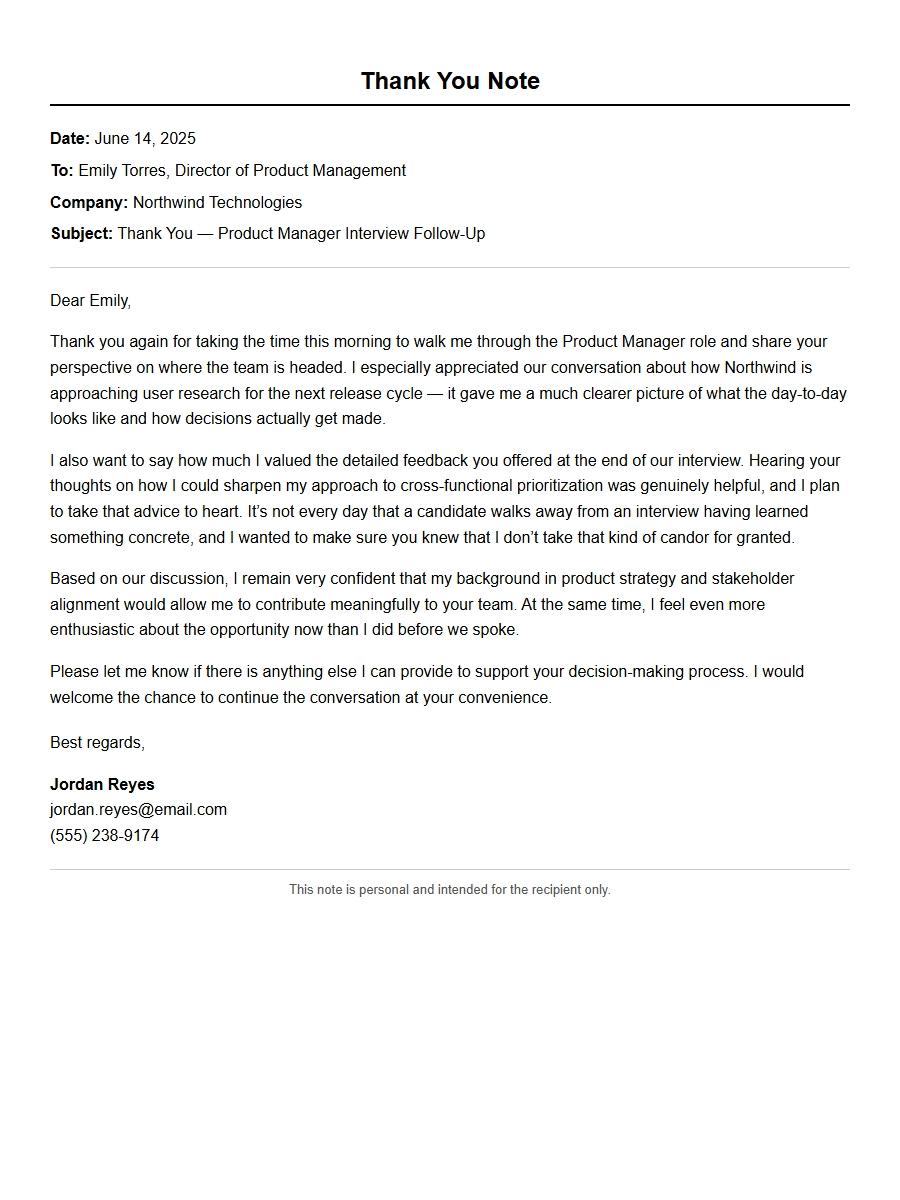
Example Thank You Note for Interview Feedback
Thank You for Rejection Feedback
Dear [Hiring Manager],
Thank you for taking the time to provide feedback on my interview. Although I am disappointed not to advance, I truly appreciate your detailed notes on areas where I can improve. Your comments about my presentation style and the need for more concrete examples in my responses are especially helpful.
I have already started working on these areas:
Practicing structured storytelling using the STAR method
Preparing more quantifiable achievements
Rehearsing concise answers to common behavioral questions
Your willingness to share constructive criticism is a reflection of your team’s professionalism. I remain very interested in [Company Name] and hope to apply again in the future when my skills better align.
Thank you again for your time and candor.
Sincerely, [Your Name]
Thank You for Constructive Feedback
Dear [Interviewer Name],
Thank you for the thoughtful feedback you shared after our meeting. I especially value your suggestions on how to strengthen my cross‑functional collaboration examples. Your point about emphasizing measurable outcomes over activities was eye‑opening.
I have already begun incorporating your advice into my preparation for future interviews. Specifically, I am:
Rewriting my project summaries to highlight impact metrics
Seeking mock interviews to refine delivery
Reviewing team dynamics to better articulate my role
Please know that your feedback has made this experience far more valuable than a simple yes/no outcome. I admire the investment your company makes in candidate development. Whether or not we work together, I have grown from this interaction.
Thank you again for your generosity.
Best regards, [Your Name]
Thank You for Second Interview Feedback
Dear [Interviewer Name],
Thank you for following up with feedback after my second interview. Hearing that my technical depth was strong but that you would like to see more strategic thinking is exactly the insight I needed. Your suggestion to link technical decisions to business outcomes is something I will definitely work on.
I appreciate that you took the time to share specific instances where I could have elaborated more—especially around the trade‑off discussion during the case study. Your feedback was clear and actionable.
To address this, I plan to:
Study how technical leaders communicate with executives
Practice framing my decisions in terms of ROI and risk
Review prior projects to identify missed strategic opportunities
Thank you again for your investment in my development. I look forward to hearing about next steps.
Warmly, [Your Name]
Thank You for Positive Feedback and Offer
Dear [Hiring Manager],
Thank you so much for the positive feedback and for extending the offer! I am thrilled to have received such constructive comments about my interview performance. Knowing that the team values my problem‑solving approach and cultural fit means a great deal to me.
Your feedback highlighted these strengths:
Area
Feedback
Technical skills
Solid foundation and quick learning
Team collaboration
Natural collaborator with good communication
Leadership potential
Showed initiative in past projects
I am excited to accept the offer and start contributing. Please let me know the next steps for onboarding. I truly appreciate the time everyone took to provide detailed feedback throughout the process. It speaks volumes about your company’s culture.
Thank you again for this opportunity.
Best regards, [Your Name]
Thank You for Technical Interview Feedback
Dear [Interviewer Name],
Thank you for the detailed feedback on my technical interview. Your comments about my algorithm efficiency and code readability were exactly what I needed to hear. I particularly appreciate the specific example of where I could have optimized the data structure choice—using a hash map instead of a list would have reduced complexity from O(n²) to O(n).
Your feedback also pointed out that I sometimes rush through problem comprehension. I have started practicing the “read‑aloud” technique to slow down and clarify requirements before coding.
Here are the key takeaways I am acting on:
Practice more advanced data structure trade‑offs
Write cleaner code with descriptive variable names
Verbally confirm problem understanding before coding
Thank you for the time and expertise you shared. This is the most useful interview feedback I have ever received.
Sincerely, [Your Name]
Thank You for Panel Interview Feedback
Dear [Hiring Team],
Thank you all for the comprehensive feedback following my panel interview. Hearing perspectives from multiple team members gave me a richer understanding of my performance. I especially value the balanced view—both my strengths in stakeholder management and the suggestion to prepare more thoroughly for cross‑functional conflict scenarios.
The panel’s input has already shaped my professional development plan:
Feedback Area
Action Plan
Conflict resolution
Take an online course on difficult conversations
Strategic vision
Read industry reports to connect daily work to big picture
Presentation clarity
Use the Pyramid Principle in slide decks
Thank you for the time each of you spent evaluating me and sharing insights. This experience has been incredibly educational, regardless of the outcome.
With appreciation, [Your Name]
Thank You for Timely Feedback
Dear [Recruiter Name],
Thank you for providing such prompt feedback after my interview. Receiving your thoughts within 24 hours showed me how much your company respects candidates’ time. Your note that I communicated clearly but could shorten answers was very helpful.
I have already adjusted my approach:
Practice delivering answers in under 90 seconds
Use a timer during mock interviews
Focus on the most relevant point first
Your quick turnaround also made the wait for the final decision much easier to manage. It is refreshing to interact with a recruiter who values transparency and efficiency. I hope to apply these lessons in future interviews, and I remain enthusiastic about joining [Company Name] if given the chance.
Thank you again for the swift and constructive feedback.
Best, [Your Name]
Thank You for Presentation Feedback
Dear [Manager Name],
Thank you for the detailed feedback on my interview presentation. Your comments about slide density and narrative flow were spot on. I realize now that I tried to cover too much content instead of diving deeper into the key insights. Your suggestion to limit slides to three main points will guide my future presentations.
You also noted that I handled Q&A well but could engage the audience more throughout. I plan to work on that by:
Asking rhetorical questions to keep listeners involved
Making eye contact and pausing for reactions
Using a conversational tone rather than reading
I appreciate your willingness to provide such specific, actionable advice. Even if this role doesn’t work out, I am walking away a better presenter.
Thank you for your time and expertise.
Sincerely, [Your Name]
Thank You for Behavioral Interview Feedback
Dear [Interviewer Name],
Thank you for the thoughtful feedback on my behavioral interview. Your observation that my answers were genuine but sometimes lacked a clear outcome was very valuable. I now understand that explaining the impact of my actions is just as important as describing the situation and task.
To improve, I am:
Rewriting my stories to always end with a measurable result
Preparing examples that showcase leadership even without a formal title
Practicing with the STAR framework until it feels natural
I especially appreciated your comment about my passion for the company mission. That connection is genuine, and I hope to bring that enthusiasm into any future roles here. Thank you for taking the time to help me grow.
Warm regards, [Your Name]
Thank You for Internship Interview Feedback
Dear [Internship Coordinator],
Thank you for the encouraging feedback after my internship interview. Hearing that my coursework and projects were impressive, but that I could strengthen my industry knowledge, was exactly the guidance I needed as a student.
Your specific suggestions included:
Following industry news publications
Attending virtual networking events
Completing a relevant certification course
I have already subscribed to three industry newsletters and registered for an upcoming webinar. Your feedback gave me a clear roadmap to become a stronger candidate, not just for this role but for my entire career.
I am grateful for the time you spent providing such constructive advice. Whether or not I am selected, I feel more prepared for the next step. Thank you for investing in my development.
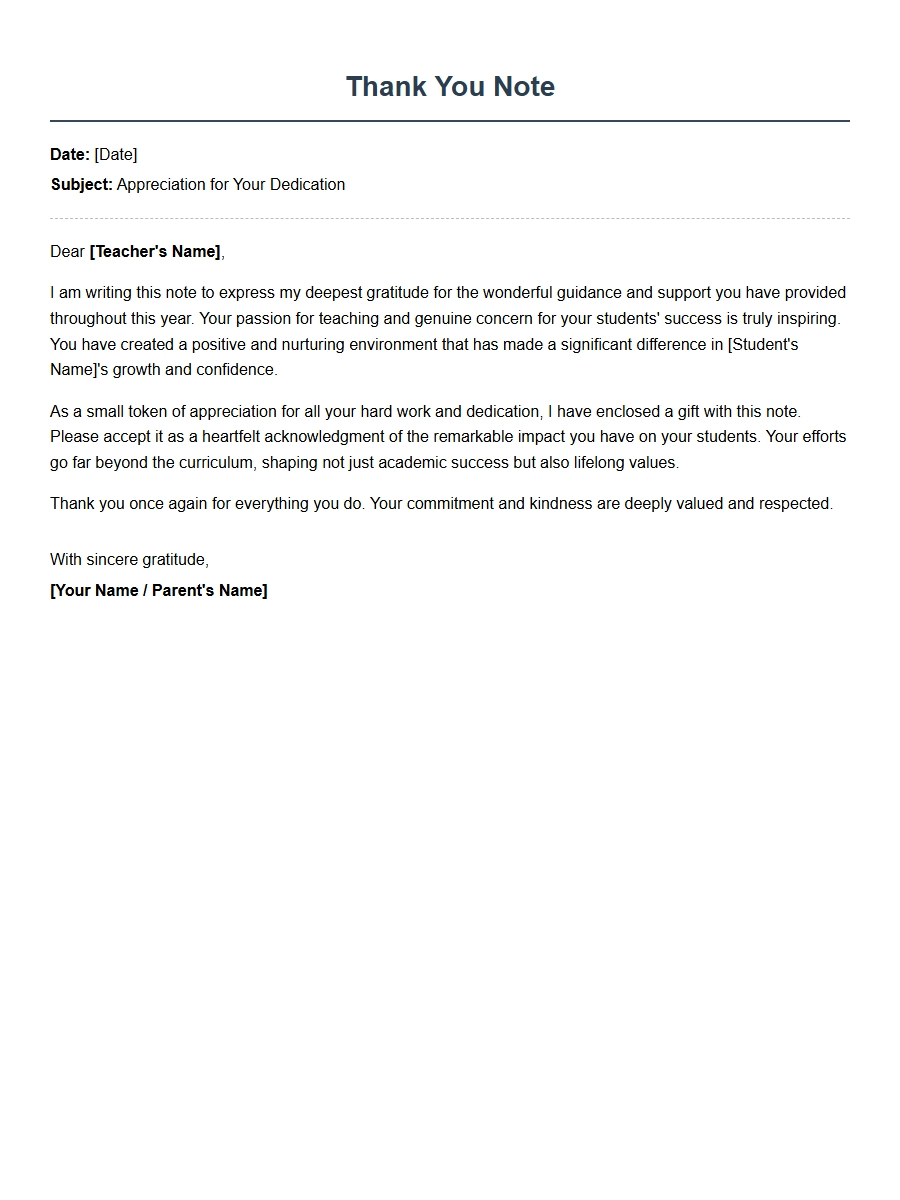 Sample Thank You Note for Teacher Gift
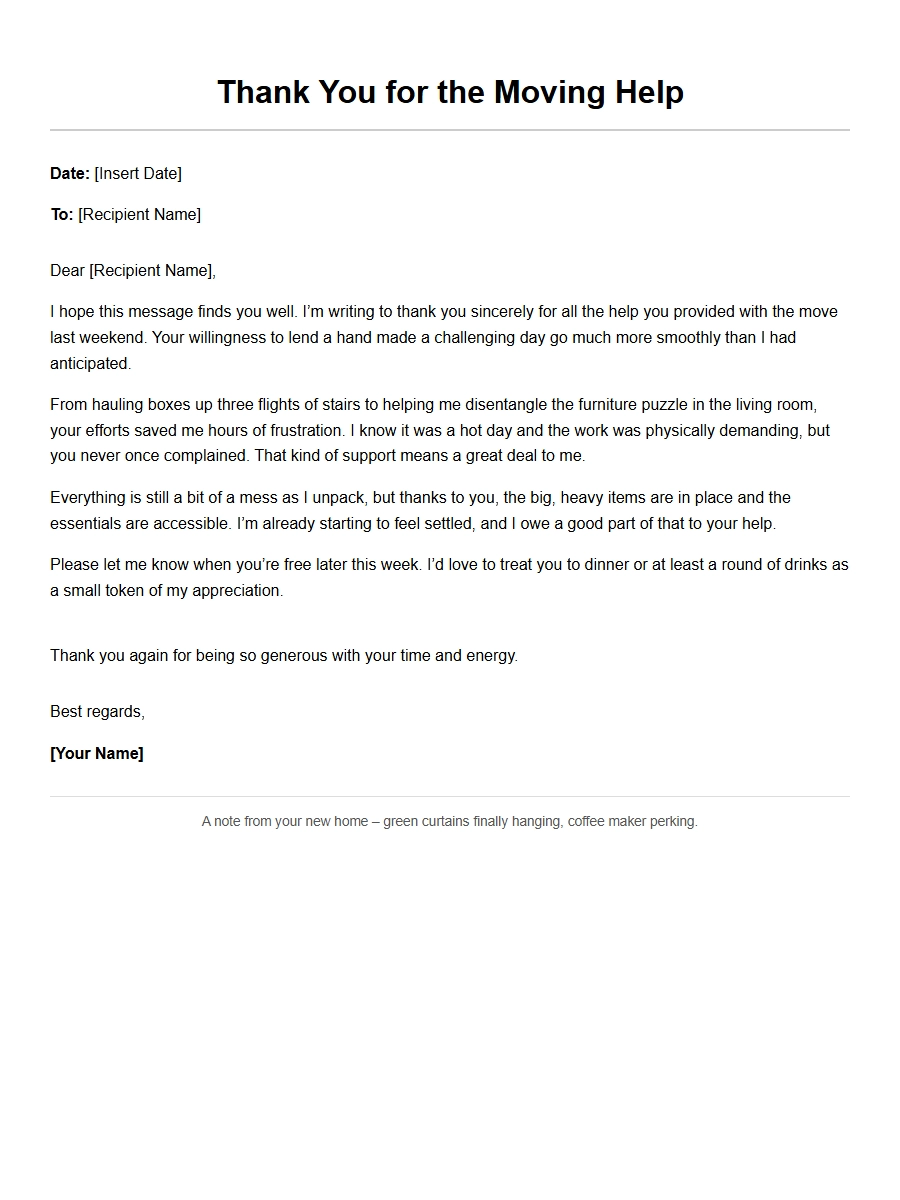 Thank-You Letter for Help with Moving
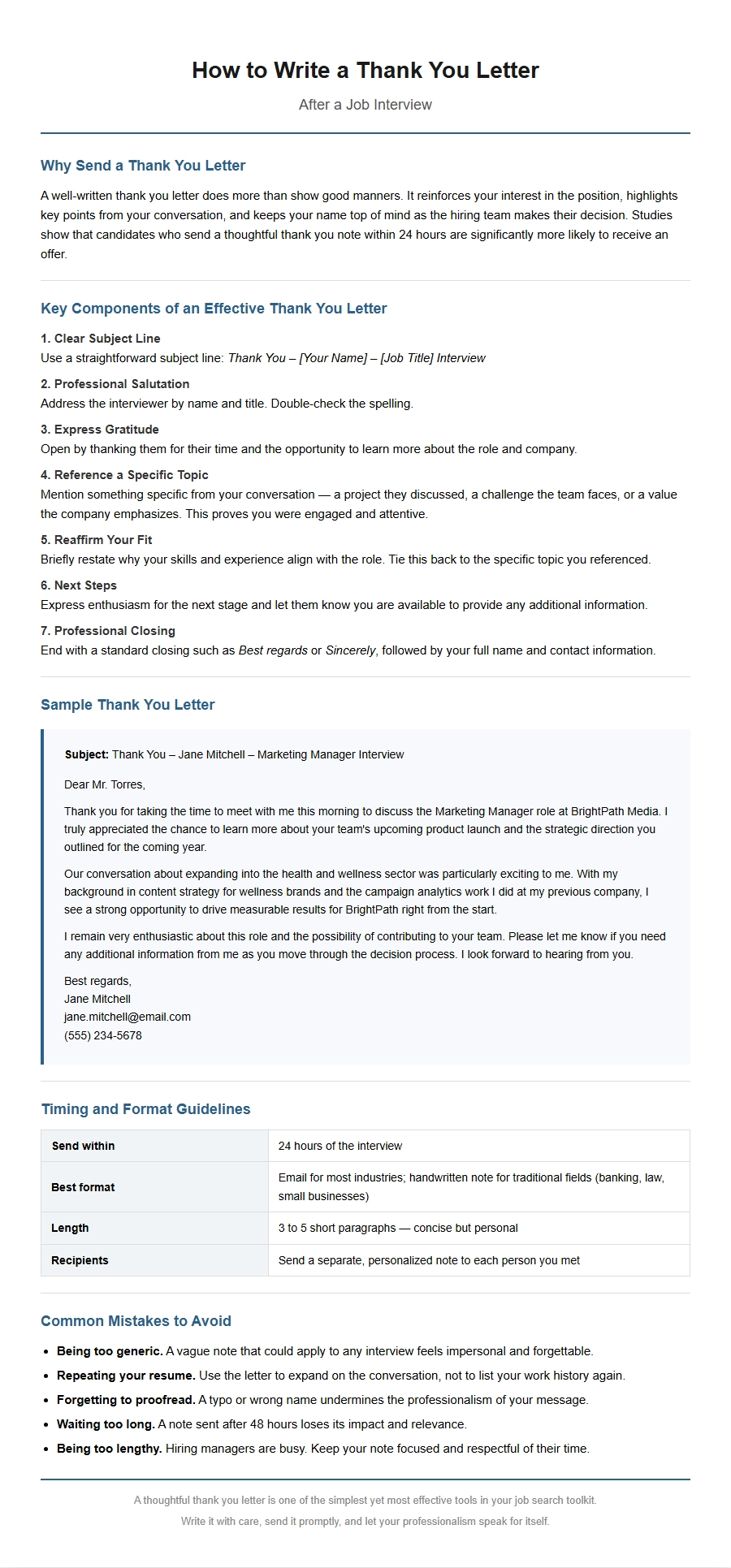 How to Write a Thank You Letter After an Interview
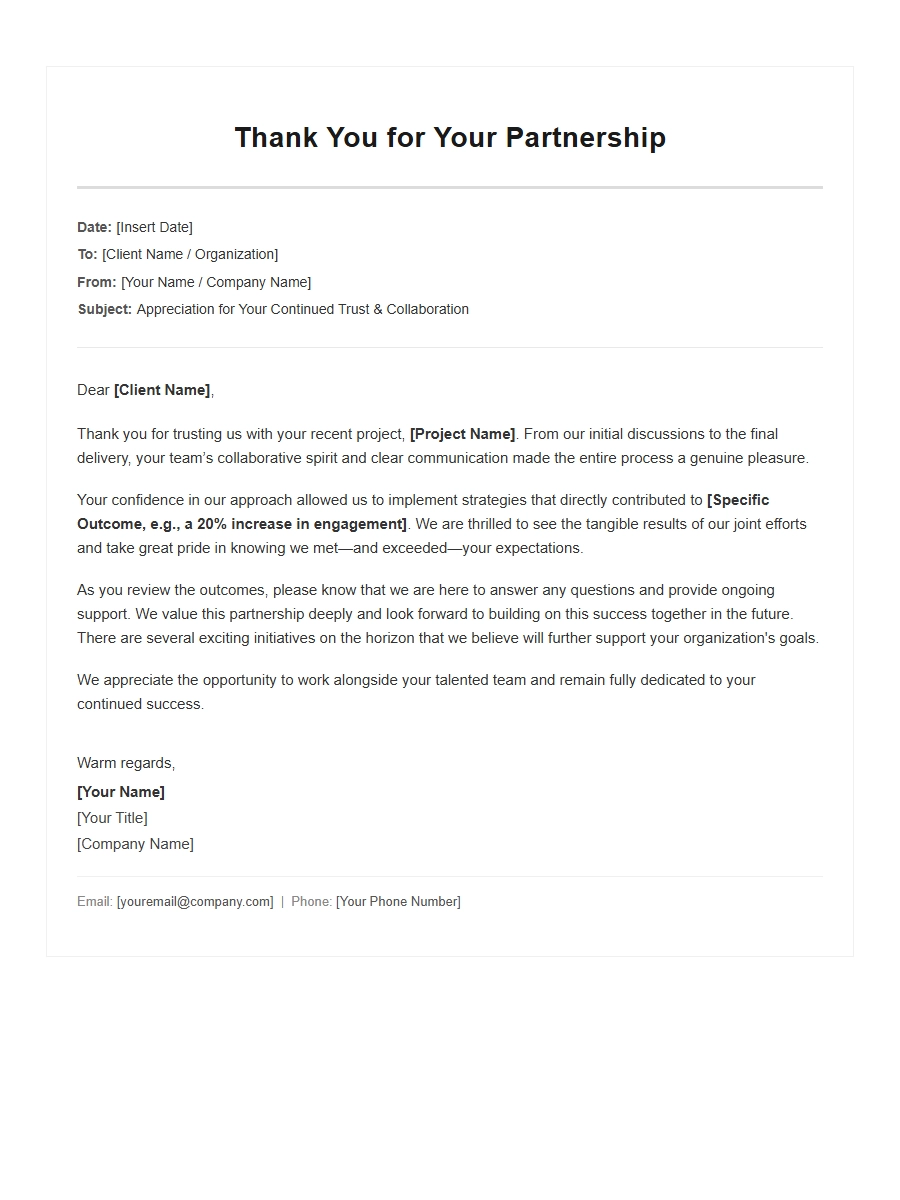 professional thank you email example for client - Thank-You Letters
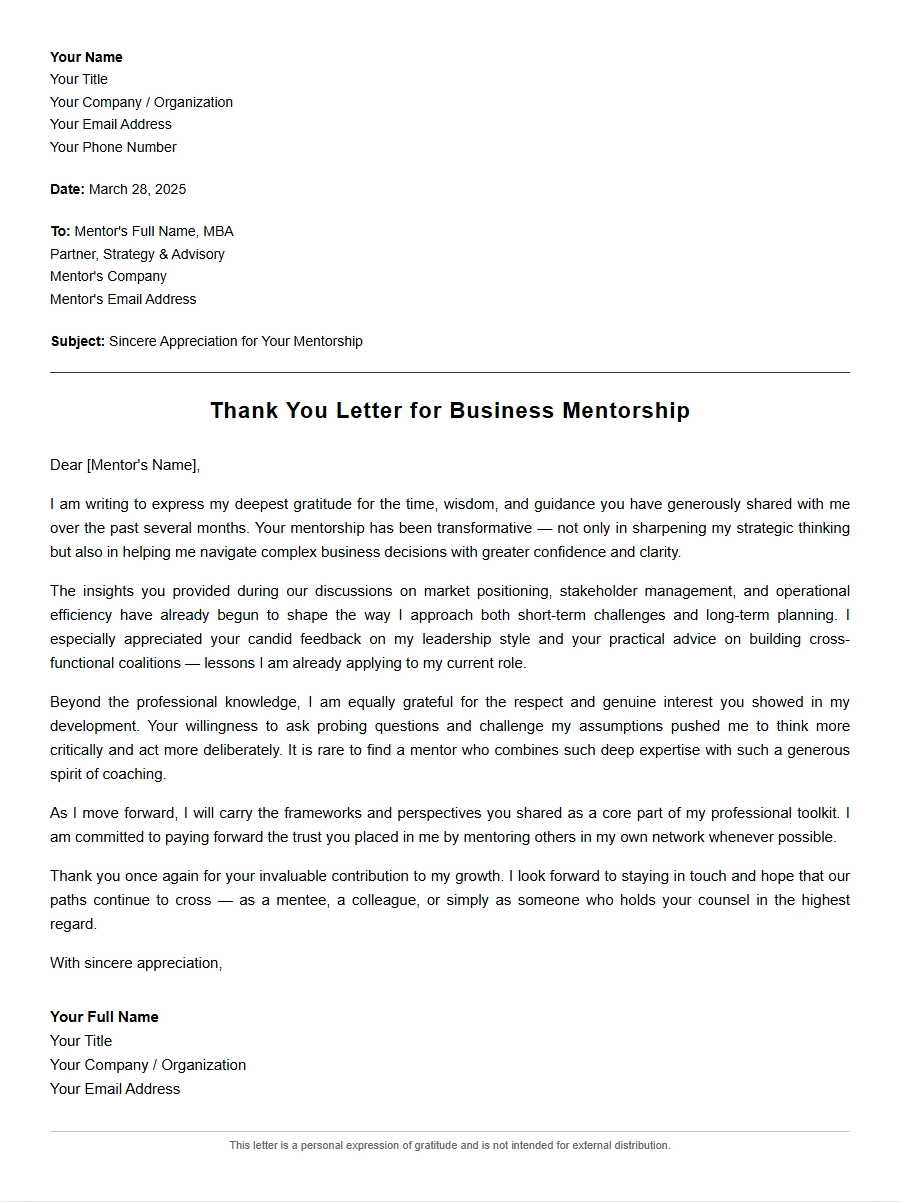 Business Mentor Thank-You Letter Guide
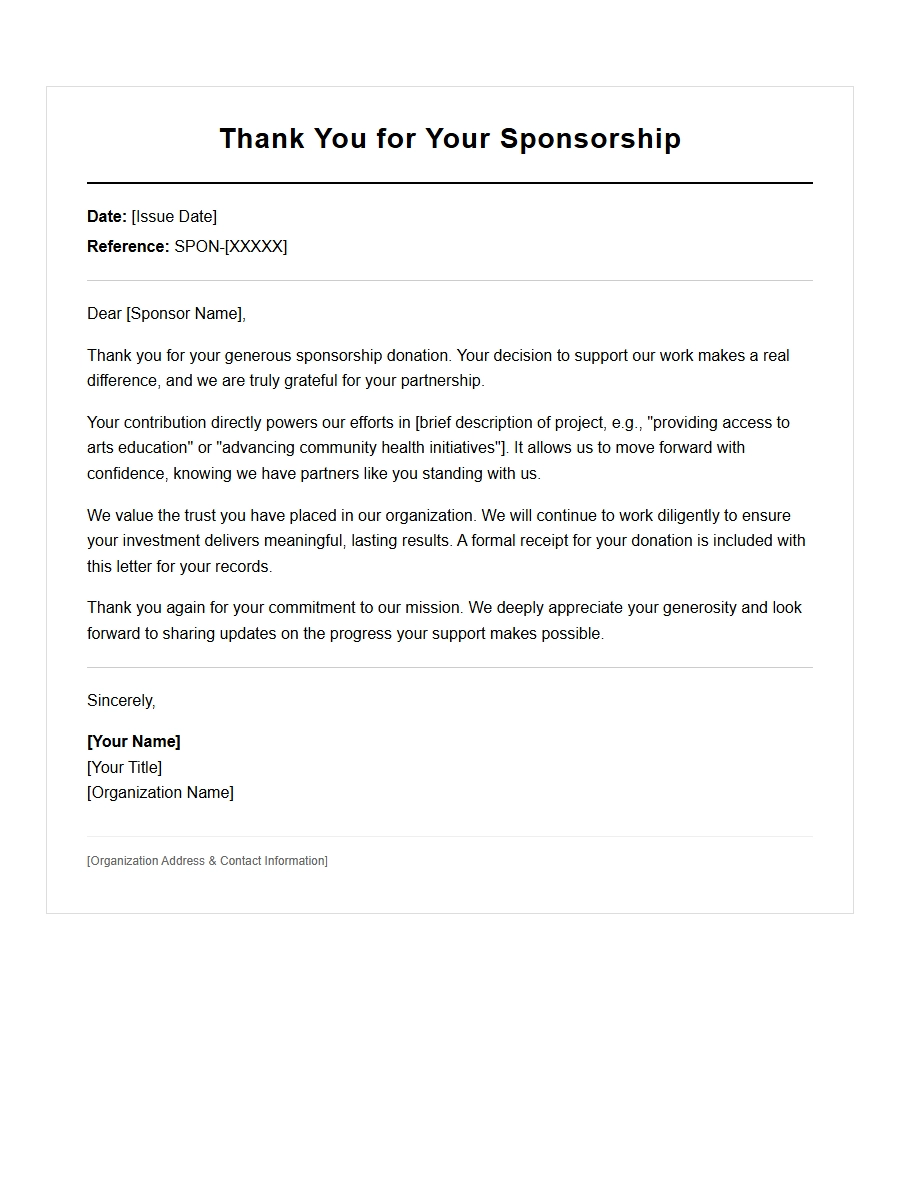 Thank You Letter for Sponsor Donation