You just finished reading a book you received as a review copy. Now you need to thank the publicist or author who sent it. It feels like a small gesture, but a poorly written note can leave a bad impression. A solid gratitude letter for a book review copy provided does more than just say "thanks." It opens a door for future opportunities and shows you're a professional.
Writing these letters doesn't have to be awkward. A simple thank you note can be short and direct. The key is making it feel personal without overthinking it.
Why a thank you letter matters here
Publicists and authors send review copies hoping for coverage. Your thank you acknowledges their trust. It also sets the stage for a good working relationship. A well-written professional correspondence shows you value their time and their book. This is basic letter writing etiquette that many people skip.
When you send a thoughtful note, you stand out. Publicists often work with dozens of bloggers and reviewers. A genuine thank you makes them more likely to send you future titles.
What to include in your letter
Start with the basics. Address the person by name. Mention the book title clearly. Publicists juggle many projects. They appreciate knowing exactly which book you mean.
Keep your tone warm but professional. You're not writing a formal business letter, but you're also not texting a friend. Aim for a tone in writing that sounds like a polite colleague. Something like: "Thank you so much for sending me a copy of [Title]. I'm looking forward to reading it."
If you've already read the book, mention a specific detail you enjoyed. This proves you actually opened the book. A personalized touch transforms a generic thank you into something memorable.
Common mistakes to avoid
Don't promise a review unless you're sure you can deliver. It's better to say you'll read it soon than to make a commitment you can't keep. Avoid overly formal language like "I hereby express my sincere gratitude." It feels stiff. Instead, use natural phrasing that reflects your voice.
Pay attention to letter structure. Even a short email needs a clear salutation and closing. Start with "Dear [Name]" and end with "Best regards" or "Warmly." This small structure makes your note feel complete.
Email vs. printed note
Most review copy thank yous happen via email. That's fine. But if the book was personally signed or came with a handwritten note from the author, consider a real letter. A handwritten thank you note carries extra weight. It shows you took a few extra minutes.
For email, keep the digital letter format simple. No fancy fonts or colors. Just clean text with maybe your blog or social media link in the signature. That's enough.
How to adapt a template without sounding fake
Using a letter template is smart. It saves time and gives you a starting point. But don't copy it word for word. Change a sentence to reflect your actual experience. If you loved the cover design, say so. If the author's previous book meant a lot to you, mention it.
Timing matters here too. Send your thank you within a week of receiving the book. A prompt reply shows you're reliable. Publicists notice this.
Final thought
Think of your gratitude letter as the start of a conversation, not a checkbox. A simple, honest note builds your reputation over time. Next time you request a review copy, the publicist will remember your professionalism. That's worth the few minutes it takes to write something genuine.
Examples for Different Needs
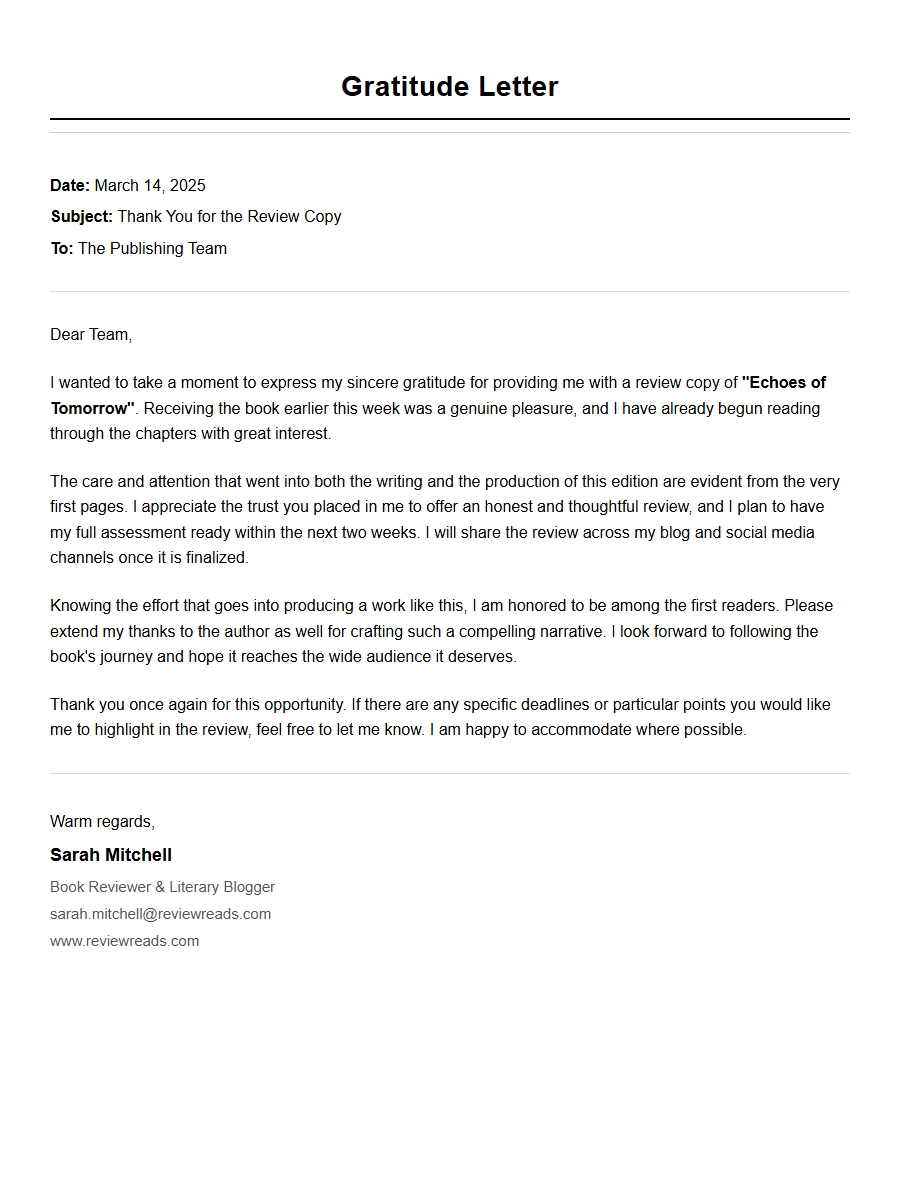
Gratitude Letter for Book Review Copy
Formal Thank You to Publisher for Review Copy
Dear Publisher Team,
Thank you for providing me with a review copy of "The Art of Resilience". I appreciate the opportunity to read and review this title before its official release. Please find below the details of the received copy for your records.
Detail
Value
Title
The Art of Resilience
Author
Sarah K. Miller
ISBN
978-1-2345-6789-0
Format
Trade Paperback
Date Received
2024-11-15
Review Deadline
2024-12-15
I will ensure my review is submitted by the agreed deadline and will post it on my blog, Goodreads, and Amazon. Thank you again for your trust and for supporting independent reviewers.
Sincerely, Jane Doe
Warm Thank You to Author for Signed Copy
Dear Alex,
I cannot thank you enough for sending me a signed review copy of "Whispers in the Wind". Holding a book you personally inscribed makes the reading experience even more special. I started it last night and am already captivated.
Here are a few things I love so far:
The vivid descriptions of the coastal town
The mysterious prologue that hooks you immediately
The authentic dialogue between the main characters
I will post my full review on my blog and social media once I finish the book — likely in two weeks. Your storytelling is truly inspiring, and I feel honored to be among the first readers.
With gratitude, Maria L.
Short Thank You to Publicist with Review Timeline
Hi Jordan,
Thanks for sending the review copy of "Data Driven" by Mark Rivers. The package arrived safely yesterday. I am excited to dive into this non-fiction title and provide an honest review.
To keep you updated, I have planned the following timeline:
Milestone
Date
Start reading
Nov 20
Finish reading
Nov 27
Draft review
Nov 29
Publish review
Dec 1
If you need any specific promotional material (quotes, interview questions, etc.), please let me know. I am happy to help amplify the book’s launch.
Best regards, Chris
Thank You for Multiple Review Copies
Dear Acme Press Team,
Thank you for generously sending three review copies of your upcoming titles. My book club members are thrilled to participate in this pre-release review program. Below are the books we received:
Title
Author
Genre
Beyond the Horizon
Elena Torres
Science Fiction
Hearth and Home
James O'Brian
Historical Fiction
The Midnight Algorithm
Priya Sharma
Thriller
Each member will read one book and write a personal review. I will compile and send you a single document with all three reviews by January 15th. Your trust in our group means a lot to us.
Thank you again for supporting reading communities.
Sincerely, Linda G., Book Club Coordinator
Thank You for E-ARC with Feedback Promise
Hello AM Book Promotions,
Many thanks for the e-ARC of "Code Red" by Dr. Laura Jensen. I have downloaded the EPUB file and it opened perfectly on my Kobo. I look forward to reading and reviewing it ahead of the January launch.
I will provide honest feedback in these formats:
Full written review on my blog (approx. 600 words)
Star rating and brief review on Goodreads
Amazon verified purchase review (if available)
Possible Instagram story snippet
You can expect the review to be live by December 10th. If you need a quote for promotional materials, I’ll be glad to provide one after reading.
Warmly, Sophia T.
Gratitude for Review Copy Received Late but Still Appreciated
Dear Ms. Chen,
Thank you for sending the review copy of "Garden Secrets". I understand there were shipping delays, and I appreciate you following up to ensure it arrived. I received it today and will prioritize reading it.
My revised review schedule is as follows:
Task
New Date
Finish reading
Dec 8
Publish review
Dec 12
Despite the late arrival, I remain enthusiastic about the book’s theme of urban gardening. I plan to incorporate photos of my own garden (if allowed) alongside my written review. Thank you for your patience and understanding.
Best wishes, Rebecca H.
Thank You for Review Copy – First Time Reviewer
Dear Zara,
Thank you so much for sending me a review copy of "The Lost Compass". This is my first time being selected for a pre-release review program, and I am absolutely thrilled. I have already started reading and am mesmerized by the world-building.
For my review, I plan to cover:
Plot and pacing
Character development
Writing style
Favorite quotes
Overall impression and rating
I will post the review on my new blog, Books & Bites, as well as on Goodreads. Thank you for trusting me with your work — I hope my review does it justice.
With excitement, Tom K.
Thank You for Review Copy – Long-Time Fan
Dear Mr. Prescott,
I was overjoyed to receive the review copy of "Shadows of Yesterday". As a longtime fan of your mystery series, I have followed every book since "The Cold Trail". Below is a list of your books I have read and my ratings:
Title
My Rating
The Cold Trail
5/5
Echoes in the Dark
4.5/5
Silent Witness
5/5
I plan to read the new book immediately and will share a thorough review on my blog and in fan forums. Your characters feel like old friends, and I can’t wait to see where you take them next.
Thank you for this privilege.
With deep appreciation, Nathan B.
Formal Acknowledgment of Receipt for Tax/Records
Dear BlueSky Publishing,
This letter acknowledges my receipt of a complimentary review copy of "Climate Action Now" by Dr. Helen Park, ISBN 978-0-9991-2345-6, received on November 12, 2024. I understand this copy is provided for review purposes and is not intended for resale.
For my records, I am noting the estimated retail value below:
Item
Value
Book (hardcover)
$29.99
Shipping
$5.00
Total
$34.99
I will complete an honest review by December 1, 2024, and provide a link to the published review. Thank you for supporting transparency in reviewer-publisher relationships.
Sincerely, Ronald M. (Book Reviewer, ID #2045)
Thank You for Review Copy – with Request for Interview
Dear Ms. Olivia Park,
Thank you for the review copy of "Designing Dreams". I am halfway through and already impressed by your insights on creative entrepreneurship. I would also like to request an interview with you for my blog series, Author Spotlight.
If you are available, I would love to ask you a few questions such as:
What inspired the core concept of Designing Dreams?
What was your biggest challenge while writing this book?
What advice would you give to aspiring designers?
What are you working on next?
An interview would complement my review beautifully and help promote the book to my audience. Please let me know if you are interested and what timeline works for you.
Thank you again for the review copy and for considering this request.
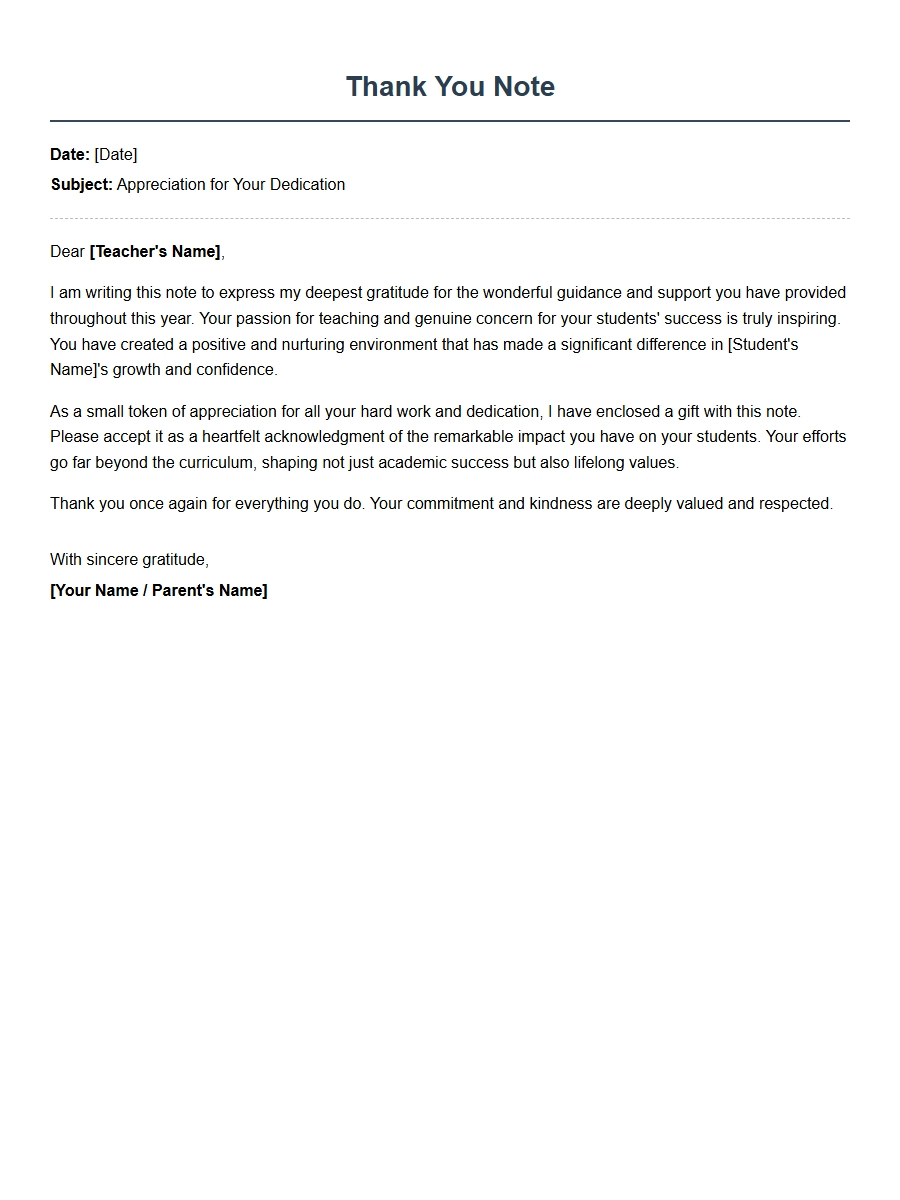 Sample Thank You Note for Teacher Gift
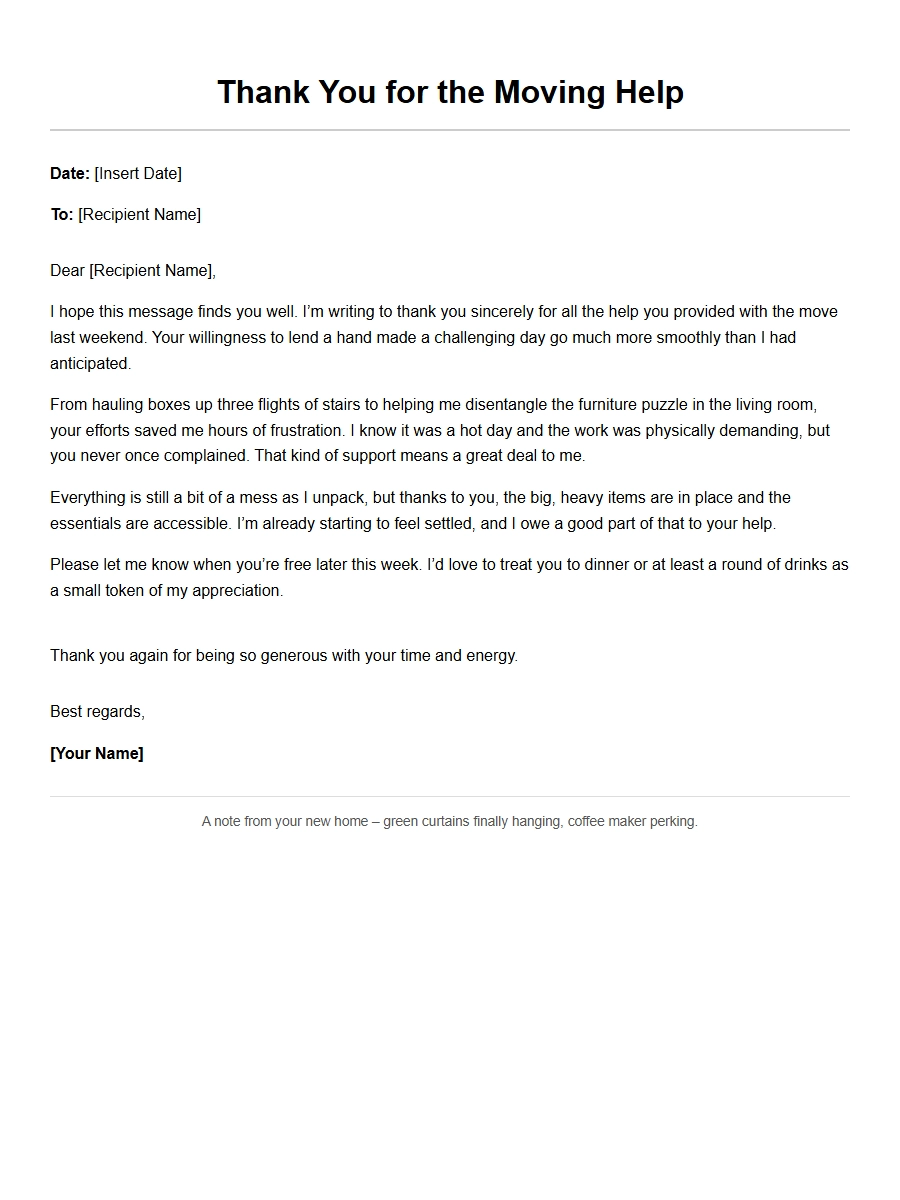 Thank-You Letter for Help with Moving
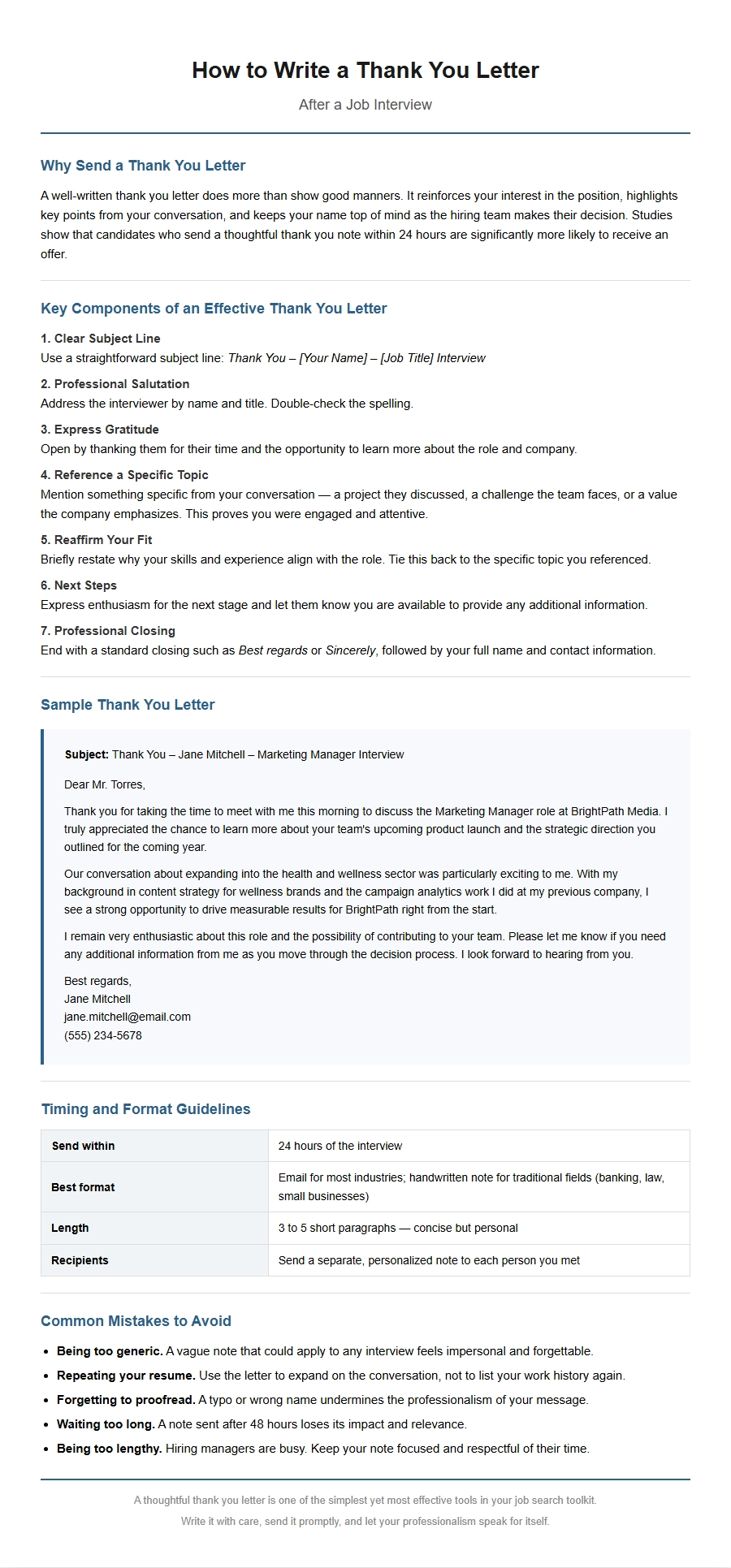 How to Write a Thank You Letter After an Interview
 professional thank you email example for client - Thank-You Letters
 Business Mentor Thank-You Letter Guide
 Thank You Letter for Sponsor Donation