You've got a customer who's been with you for years. They refer friends, they give feedback, they’re your biggest fans. You want to send a sincere thank-you for their loyalty program membership, but the words don't come easily. You’re not alone. Staring at a blank page when you need to write a professional letter can feel paralyzing—but the right sample turns that anxiety into a confident, polished draft in minutes.
Using a sample letter isn’t cheating. It’s a smart, time-saving strategy. A well-designed letter template gives you the structure, tone, and key phrases you need for professional correspondence, while leaving plenty of room for your personal touch. Think of it as a trusted starting point, not a crutch. You’ll still make it your own.
Category: Customer Loyalty Thank-You Letters
Before you dive in, ask yourself: what kind of loyalty program are you thanking them for? A VIP tier with big perks calls for a more formal writing approach and a classic business letter format. A small coffee shop’s punch card program can be warmer and shorter. Matching the sample’s tone to your brand’s voice is half the battle. Ever received a letter that felt too stiff or too casual? That’s exactly what you want to avoid.
How to adapt a sample without losing your authentic voice
Start by reading the sample you’ve chosen. Notice how it opens, how it expresses gratitude, and how it closes. Then rewrite the first paragraph to include something specific about that customer. For example: “We noticed you’ve been a Loyalty Gold member for three years now, and we love seeing you every Friday morning.” That detail makes the letter genuine, not generic.
When you adapt, keep your natural language. Don’t force corporate jargon if that’s not who you are. A simple “thank you for sticking with us” often lands better than “we appreciate your continued patronage.” The best tone in writing for loyalty letters is warm, appreciative, and specific.
Common mistakes to avoid
One of the biggest blunders is using outdated salutation and closing phrases. “To Whom It May Concern” feels impersonal, especially when you know the customer’s name. Use “Dear [First Name]” when possible. For a printed letter, pay attention to your letterhead design—make sure it’s clean and includes your logo and contact info. If you’re sending via email, skip the letterhead and use a clear subject line like “A special thank-you for being a loyal customer.”
Another mistake? Not proofreading the letter. A typo or wrong name undermines the whole effort. Read it aloud, or have a colleague glance at it. Also, check the format: is this a printed letter on paper, or a digital letter format in an email? Each has different spacing and layout norms. A printed letter needs a traditional business letter format with your address, date, and a formal closing. An email can be shorter and more direct, but still requires a proper salutation and sign-off.
Tying it to real examples you’ve already written
If you’ve ever written a thank-you note for an art commission, you know the importance of being specific about what you appreciated. The same applies here—mention the specific behaviors you’re grateful for. Maybe they referred a friend or hit a purchase milestone. That’s the kind of detail that makes a loyalty thank-you stand out.
Maybe you’ve already written a similar note for a different situation. For instance, after a networking event you liked to send a follow-up. That approach—keeping it brief, personal, and timely—works perfectly here. Or perhaps you’ve thanked someone for pet sitting while you were away; the warmth and specificity in those notes is exactly what a loyalty program thank-you needs. Even mentoring a junior staff member or sending a gratitude note for workshop attendance follows the same principles: be genuine, be specific, and be prompt.
Making it personal without overcomplicating it
Stick to one or two sentences that show you know who they are. “We see you’ve been a member since 2021 and that you love our eco-friendly line” is better than a generic “thank you for your support.” The sample gives you the skeleton; you add the muscle and heart.
End with a forward-looking thought. For example: “We’re excited to keep serving you and will have new rewards just for you soon.” That turns the thank-you into a relationship builder, not just a past acknowledgment.
Use the sample as a springboard. The more you practice, the quicker you’ll get at writing personalized thank-yous that feel both professional and genuine. The best letters strike that balance—they follow letter writing etiquette but don’t sound like a robot wrote them. You’ve got this.
Samples to Guide You
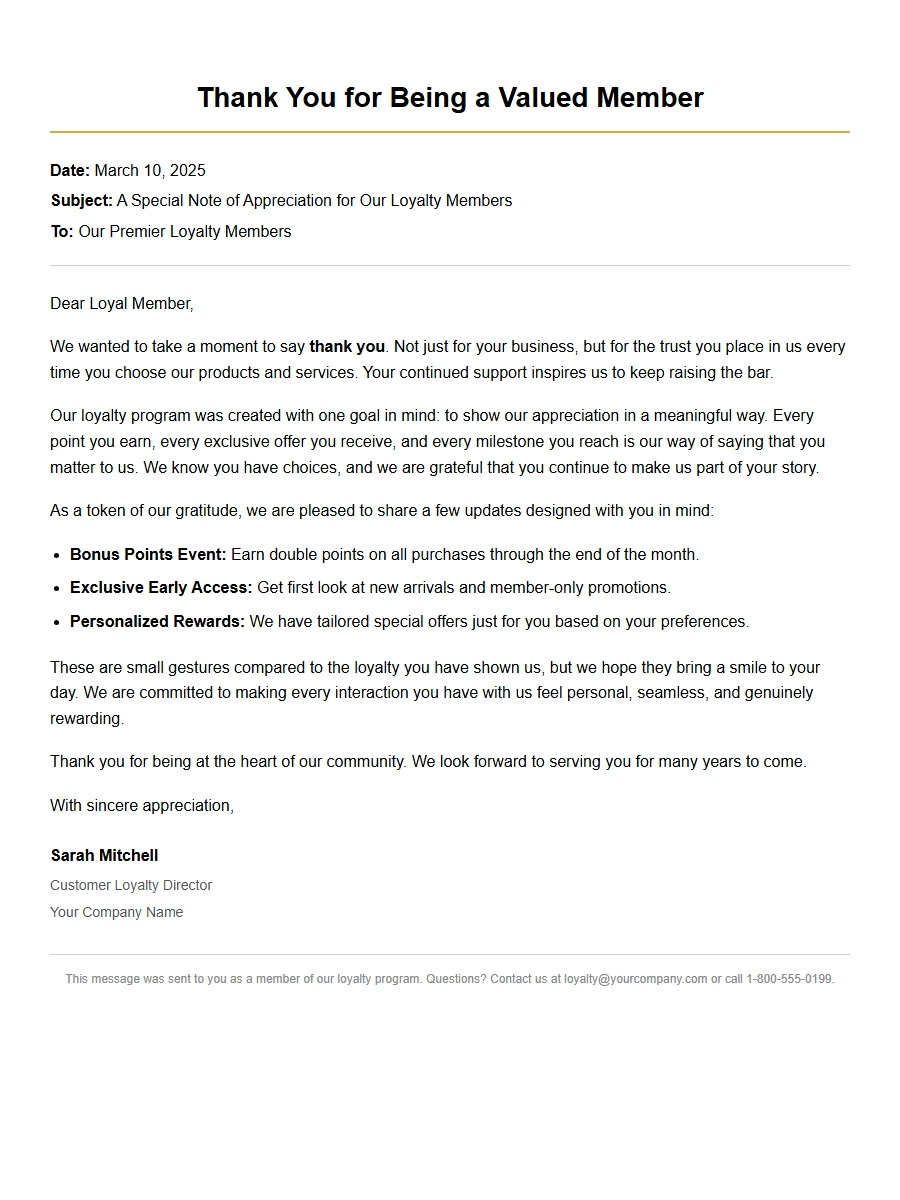
Thank You for Being a Loyalty Program Member
Welcome to Our Loyalty Family
Dear [Member Name],
Thank you for joining our Loyalty Rewards Program. We deeply appreciate your decision to be part of our community. As a token of our gratitude, we have credited 500 bonus points to your account.
Here's what you can look forward to:
Earn 1 point for every dollar spent
Exclusive members-only discounts
Birthday surprises and early sale access
Your current point balance:
Points Earned
Points Redeemed
Available Points
500
0
500
We are thrilled to have you on board and will continue to bring you special offers. If you have any questions, please contact our support team.
Warm regards, The Loyalty Team
Celebrating One Year with You
Dear [Member Name],
Congratulations on completing your first year in our Customer Loyalty Program! We are grateful for your continued trust and support. To mark this milestone, we have added a special anniversary reward to your account.
Your year in review:
Metric
Value
Total Points Earned
2,350
Rewards Redeemed
3
Anniversary Bonus
200 Points
Enjoy this bonus and continue exploring exclusive benefits tailored just for you. As a loyal member, you also get priority customer service and early access to new products.
Thank you for being an essential part of our journey. Here's to many more years together!
With appreciation, The Loyalty Team
Thank You for Using Your Rewards
Dear [Member Name],
We noticed that you recently redeemed your loyalty points for a [Product/Service Name]. Thank you for choosing to use your rewards with us! Your satisfaction is our greatest reward.
Here is a summary of your redemption:
Item
Points Used
Date
[Product Name]
1,200
[Date]
You now have [X] points remaining. Continue earning and redeeming for more exciting perks. Remember, every purchase brings you closer to your next reward.
We hope you enjoy your reward and look forward to serving you again soon. If you need any assistance, our team is always happy to help.
Warmly, Customer Loyalty Team
Thank You for Referring a Friend
Dear [Member Name],
Thank you for referring [Friend's Name] to our Loyalty Program! Your recommendation means a lot to us. As a token of our gratitude, we have added 250 bonus points to your account.
Referral details:
Friend referred: [Friend's Name]
Bonus points earned: 250
New total points: [X]
Our community grows stronger because of members like you. Keep sharing the love — for each friend who joins and makes a purchase, you earn additional rewards!
Your continued support inspires us every day. Thank you for being an amazing ambassador of our brand.
Gratefully, The Loyalty Team
We Value Your Feedback on Our Loyalty Program
Dear [Member Name],
Thank you for taking the time to complete our Loyalty Program Satisfaction Survey. Your insights are invaluable in helping us improve and tailor benefits to better serve you.
As a thank-you for your feedback, we have credited 100 bonus points to your account.
Survey response summary:
Question
Your Rating (1-5)
Ease of earning points
[Rating]
Reward variety
[Rating]
Overall satisfaction
[Rating]
We are already working on updates based on your suggestions. Stay tuned for enhanced features later this year.
Thank you for being a valued member of our community.
With gratitude, Customer Insights Team
VIP Status Acknowledgment
Dear [Member Name],
We are delighted to recognize you as a VIP Member of our Loyalty Program. Your continued loyalty and spending have earned you this exclusive status, and we want to say a heartfelt thank you.
Your VIP benefits include:
Double points on all purchases
Free shipping on every order
Personal shopping assistance
Invitations to private events
Recent activity highlights:
Date
Transaction
Points Earned
[Date]
$[Amount]
[Points]
[Date]
$[Amount]
[Points]
We appreciate your trust and look forward to providing you with exceptional experiences. Welcome to the VIP circle!
Yours sincerely, VIP Relations Team
Thank You for Completing Our Loyalty Survey
Dear [Member Name],
Thank you for participating in our Loyalty Program Feedback Survey. Your opinion matters greatly to us, and we truly value the time you invested to share your thoughts.
As a token of appreciation, we have added 75 bonus points to your account — redeemable on your next purchase.
We have summarized key action points from your feedback:
More reward categories — coming next quarter
Faster point crediting — now live
Better mobile app experience — in development
Your current point balance: [X] points.
We look forward to serving you even better. Thank you for being a loyal member!
Warmly, Customer Experience Team
Appreciation for Your Continued Patronage
Dear [Member Name],
We are writing to express our sincere thanks for your unwavering support and loyalty over the past months. Your repeated patronage through our Loyalty Program means the world to us.
Your loyalty statistics:
Quarter
Transactions
Points Earned
Q1
8
1,200
Q2
12
1,850
Q3 (so far)
5
750
Because of your continued trust, we are offering you an exclusive 20% off coupon on your next order. Use code LOYAL20 at checkout.
We are committed to rewarding you every step of the way. Thank you for choosing us — you are the reason we do what we do.
With deep gratitude, The Loyalty Team
Special Thank-You for Redeeming a Limited Offer
Dear [Member Name],
Thank you for redeeming our Limited-Edition Loyalty Reward! We are thrilled that you took advantage of this special offer designed exclusively for members like you.
Here are the details of your redemption:
Offer
Points Used
Value
[Offer Name]
500
$[Value]
Your remaining point balance: [X] points.
We hope this reward brings you joy. Your ongoing enthusiasm for our program inspires us to create even more exciting perks. Keep an eye on your inbox for future limited-time offers!
Thank you for being a cherished member of our community.
Sincerely, Loyalty Rewards Team
Welcome to Premium Tier
Dear [Member Name],
Congratulations on upgrading to our Premium Loyalty Tier! We are incredibly grateful for your dedication and spending, which has brought you to this elite level.
Your new premium benefits are:
5x points on every purchase
Dedicated customer service hotline
Annual free gift worth up to $50
Exclusive access to new products
Points summary since program start:
Total Earned
Total Redeemed
Current Balance
8,500
3,200
5,300
We are honored to have you as a premium member. Thank you for your trust and loyalty — we promise to keep exceeding your expectations.
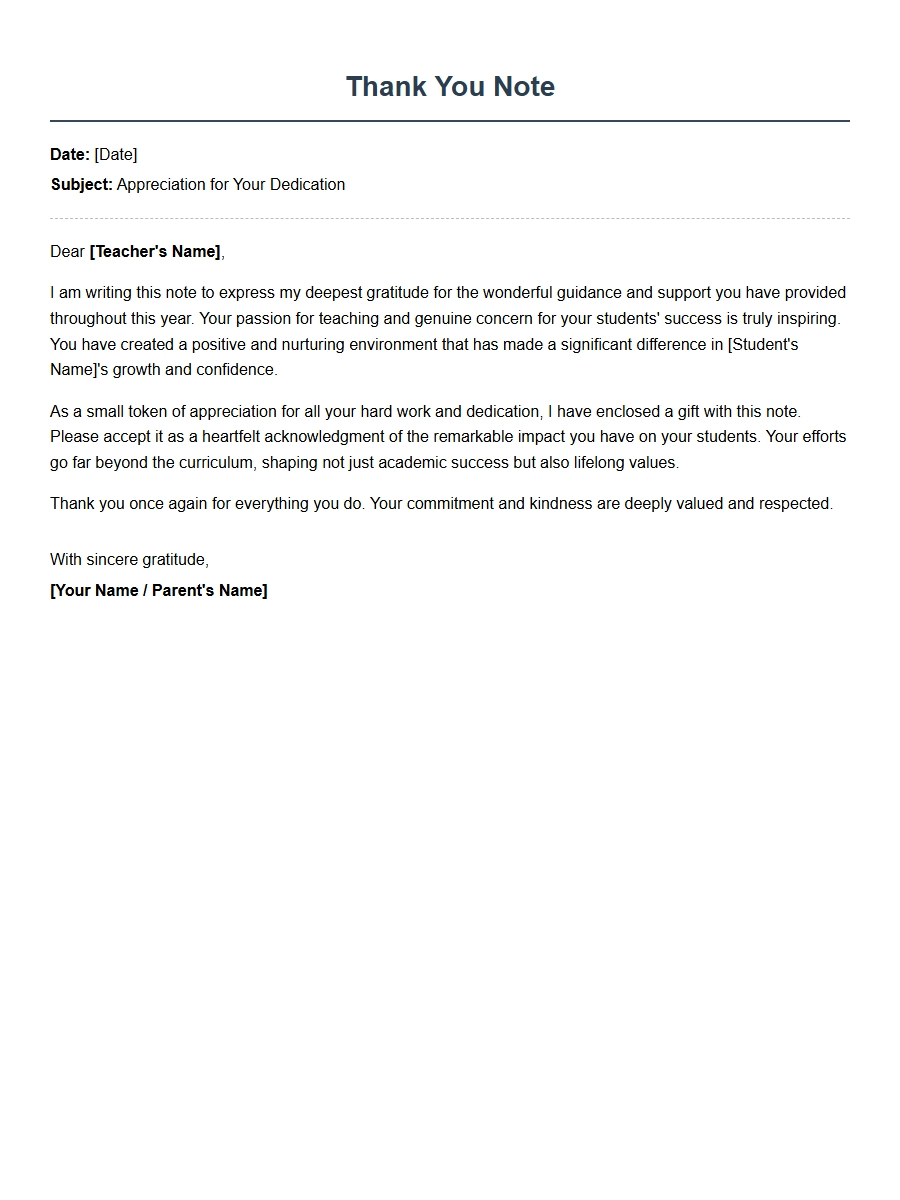 Sample Thank You Note for Teacher Gift
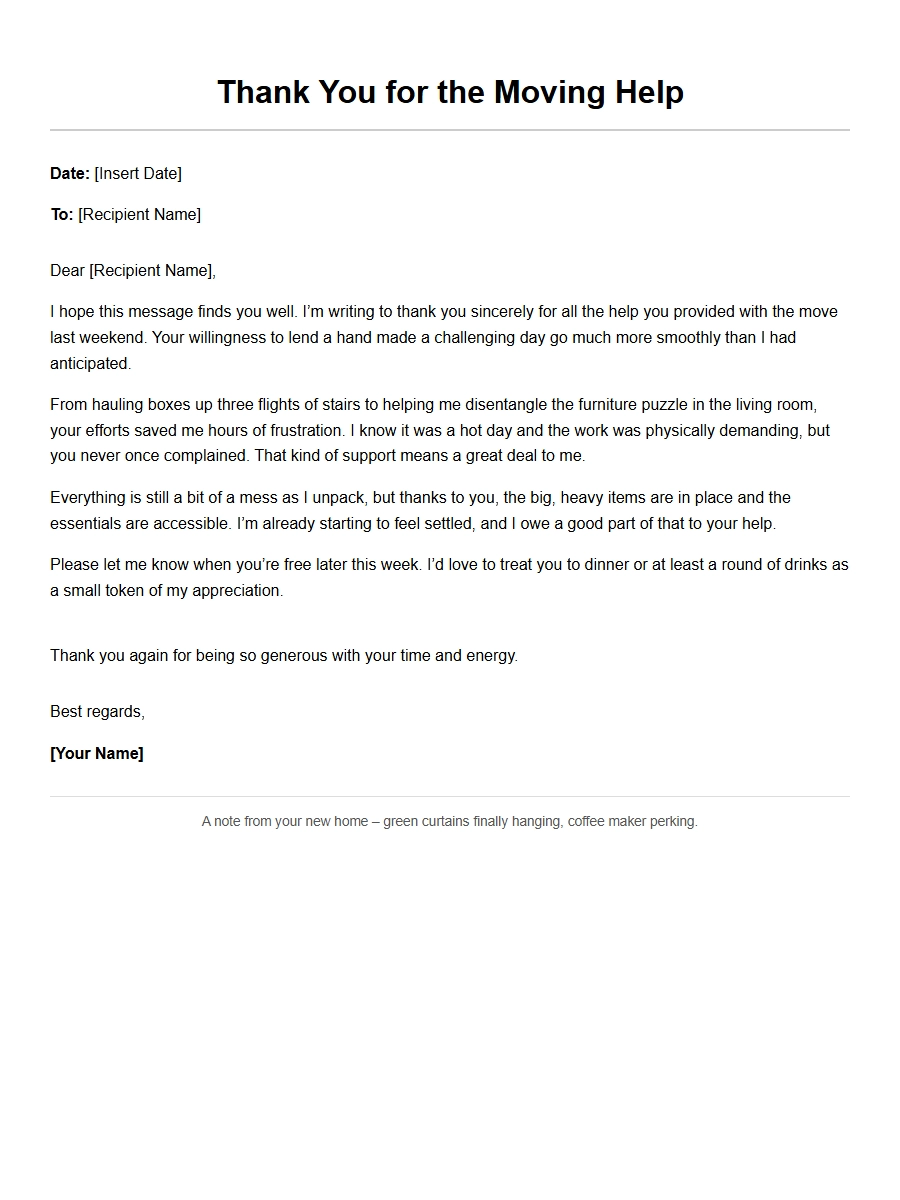 Thank-You Letter for Help with Moving
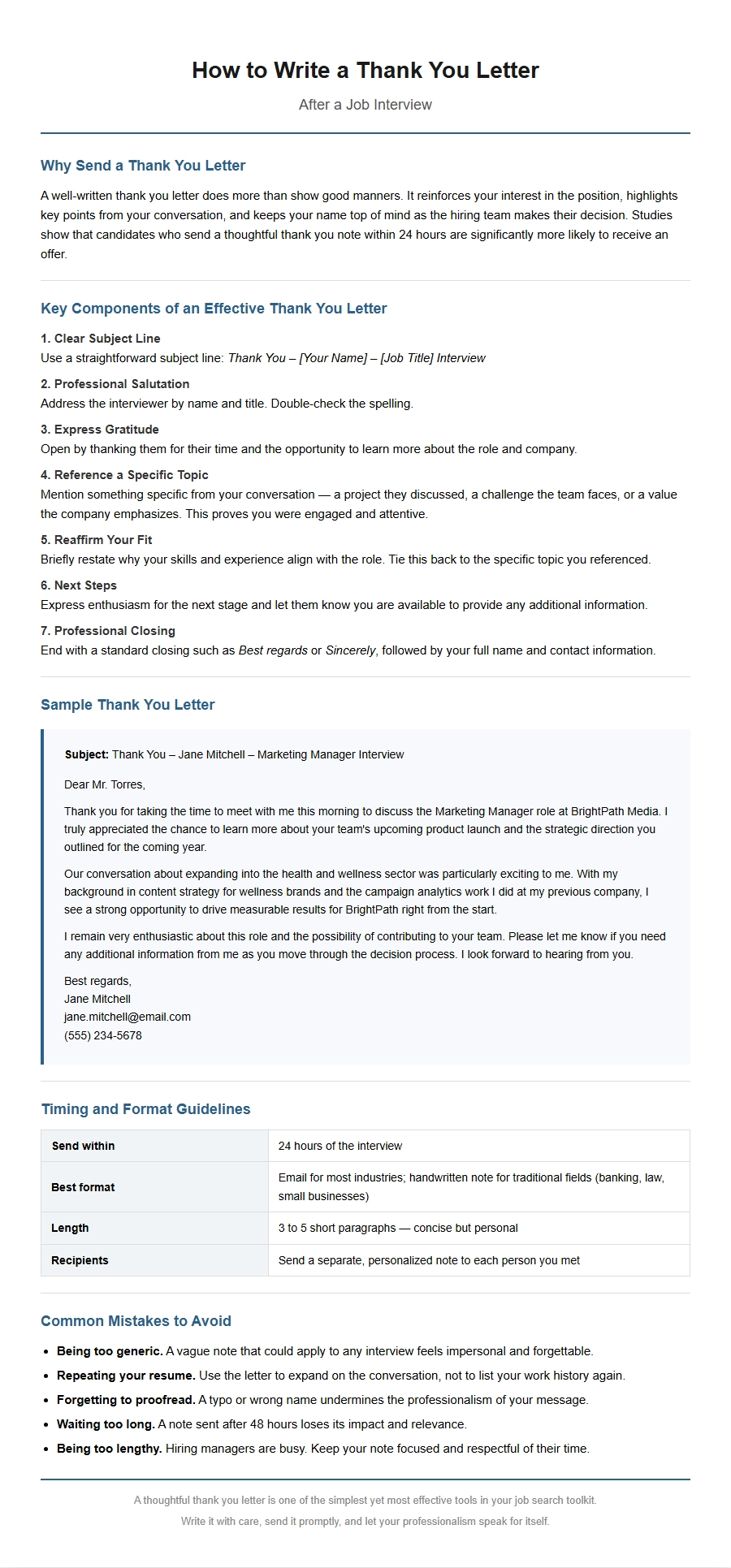 How to Write a Thank You Letter After an Interview
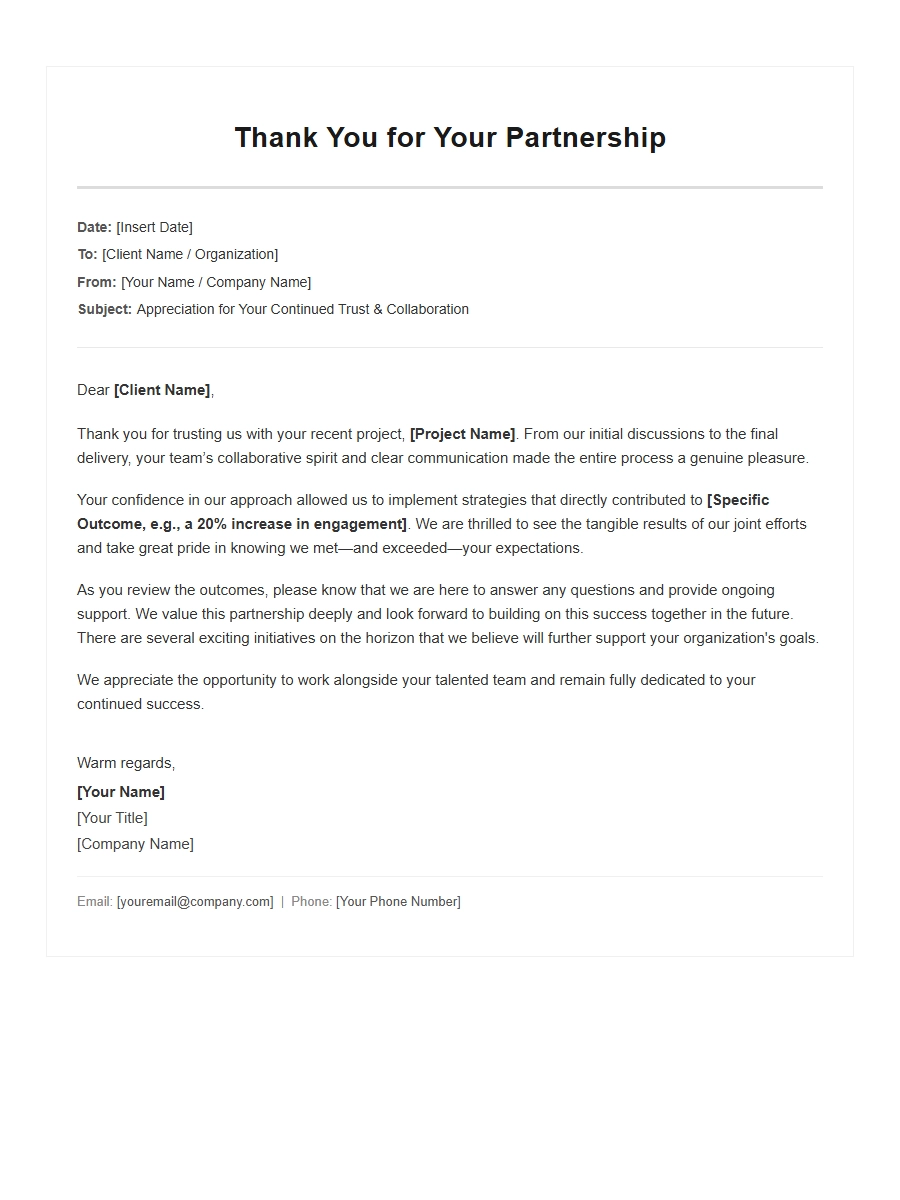 professional thank you email example for client - Thank-You Letters
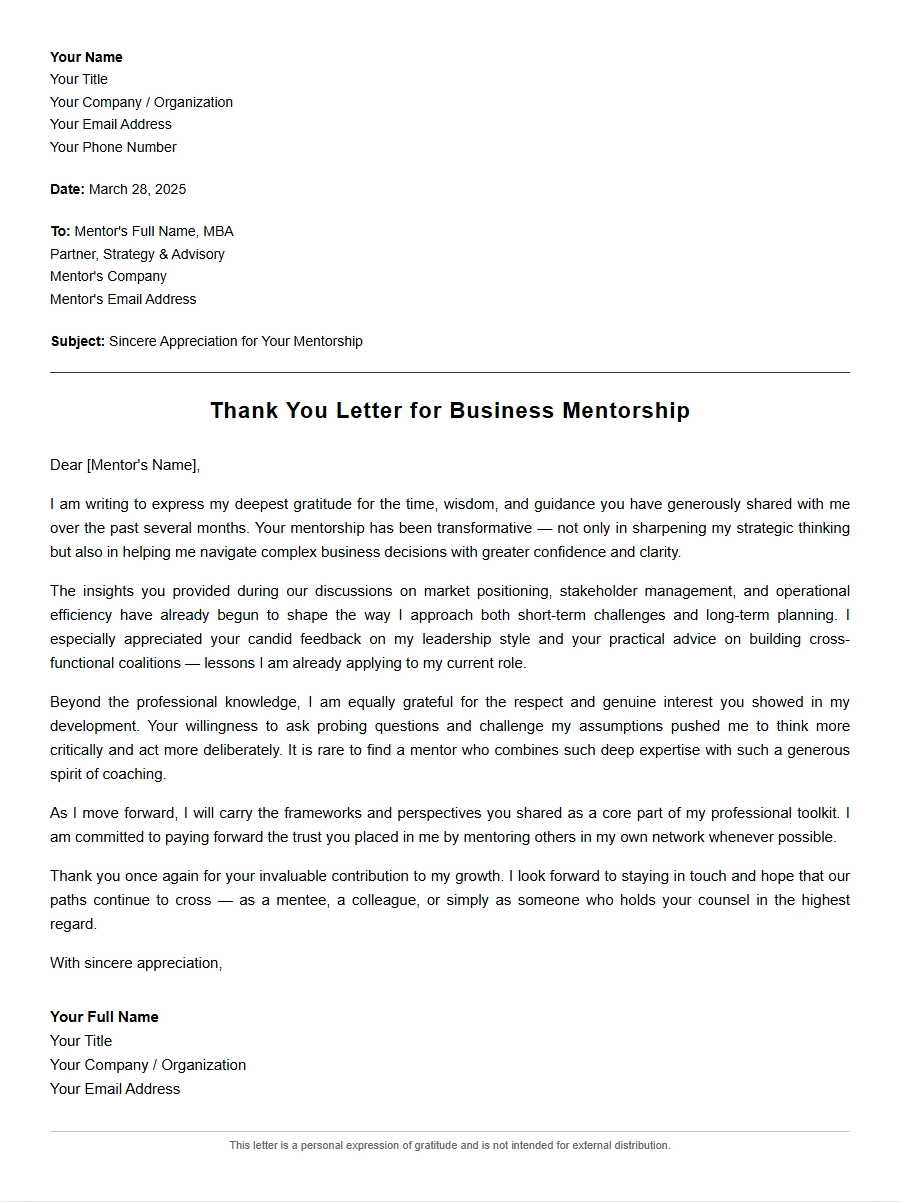 Business Mentor Thank-You Letter Guide
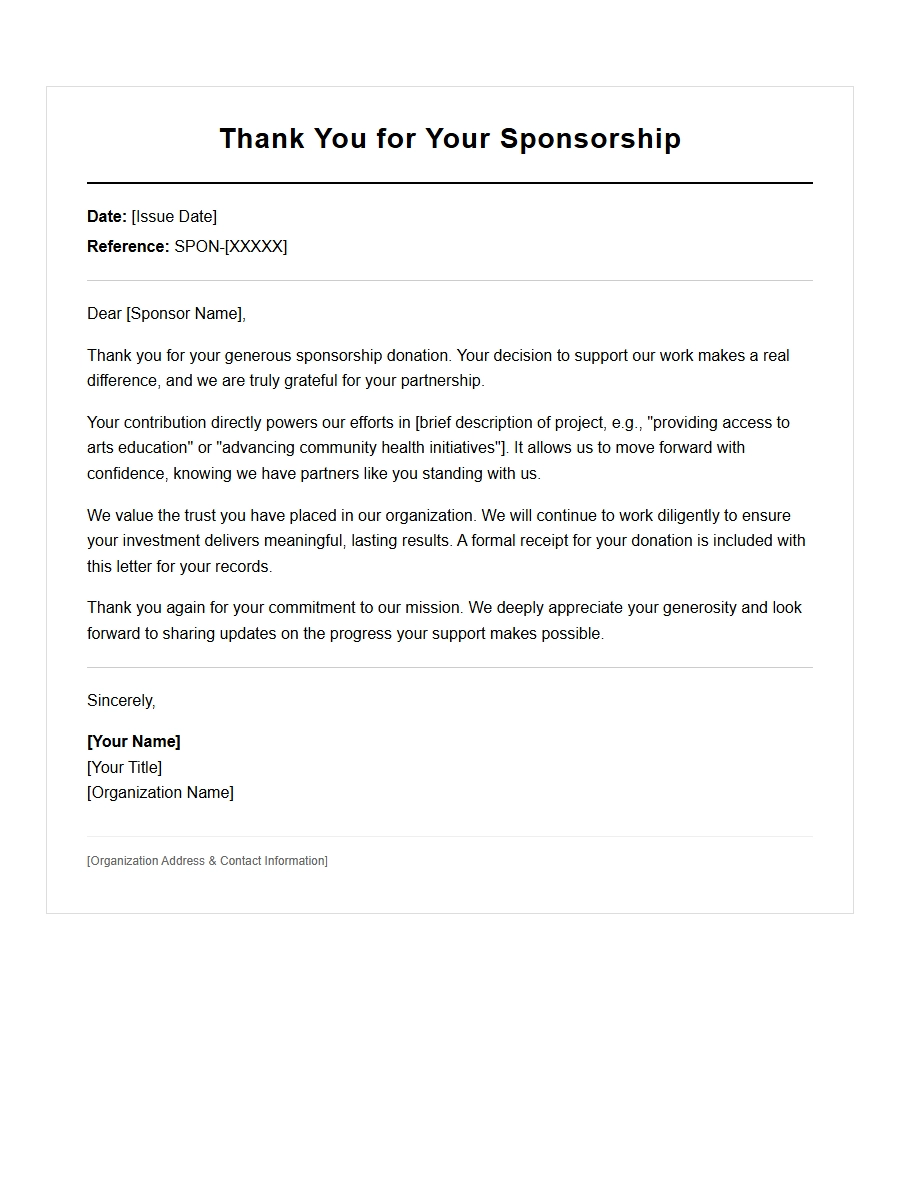 Thank You Letter for Sponsor Donation