You just wrapped up a major project with your team, and you know a thank you letter is in order. But staring at a blank page, you're not sure how formal to be or what to say beyond "thanks." It's a familiar moment—one that can stall momentum. The good news? A well-chosen sample can cut the anxiety and give you a polished draft in minutes.
Using a letter template isn’t cheating—it’s a smart strategy. A good sample provides the skeleton: the right salutation and closing, the logical flow of a professional correspondence, and the tone that matches your situation. You don’t have to reinvent the wheel. You just need to swap generic phrases with specific moments that made your team collaboration success real.
Category: Professional Correspondence
How to pick the right sample for your team thank you
Not all thank you letters look the same. For a cross-departmental win, you might lean toward a slightly more formal business letter format. For a close-knit internal team, a warmer, semi-formal tone works better. Look for a sample that matches the relationship you have with the recipients. If you’re unsure, err on the side of professional—you can always soften the language.
When you browse cover letter examples or resignation letter sample sites, you’ll notice they all share a common structure. The same structure applies here: an opening that states your purpose, a body that names specific contributions, and a closing that looks ahead. The key is choosing a sample that mirrors the level of detail you need.
Adapting the sample without losing your voice
Start with the skeleton. Replace the placeholder names with real ones. Then, edit the body to highlight concrete actions—mention that late night someone pulled to fix a bug, or the creative solution a teammate suggested. This is where customizable letter templates shine: they give you room to be genuine.
One quick tip: tailor the opening paragraph to grab attention right away. Instead of "I am writing to thank you," try "I’ve been thinking about how smoothly the [project name] launch went, and it’s because of your effort." That small shift makes the tone in your writing feel more personal and less robotic.
Common mistakes to skip
The biggest misstep is using outdated salutations. "To Whom It May Concern" never belonged in a team thank you. Address people by name if you can. Another mistake is ignoring the format. If you’re sending via email, skip the letterhead design and keep the subject line clear—something like "Thank you for [project name] success." For a printed letter, a simple letterhead or company header is enough.
Don’t forget to proofread. A typo in a gratitude note can feel careless. Read it out loud once to catch awkward phrasing. And if you’re copying a sample, double-check that you didn’t leave placeholder text like "[specific contribution]."
Where to find inspiration for specific scenarios
If your team collaboration success involved external partners or a charitable effort, you might adapt a structure similar to a formal gratitude letter for charity support. For a situation where you’re thanking someone who helped you individually, like editing your resume for a team application, consider the approach used in a thank you letter for resume editing assistance—it’s personal but still professional.
Even a simple thank you to a teacher who helped your child’s team grow can borrow from a sample thank you note for a teacher gift—just swap the gift references with team achievements.
Make the sample a springboard, not a crutch
The best thank you letters feel both professional and personal. Treat the sample as your starting point. Fill in the details that only you know. With practice, you’ll write these letters quickly—and they’ll actually sound like you. Next time a project wraps, you’ll have a go-to structure ready. That’s the real payoff.
Samples You Can Use
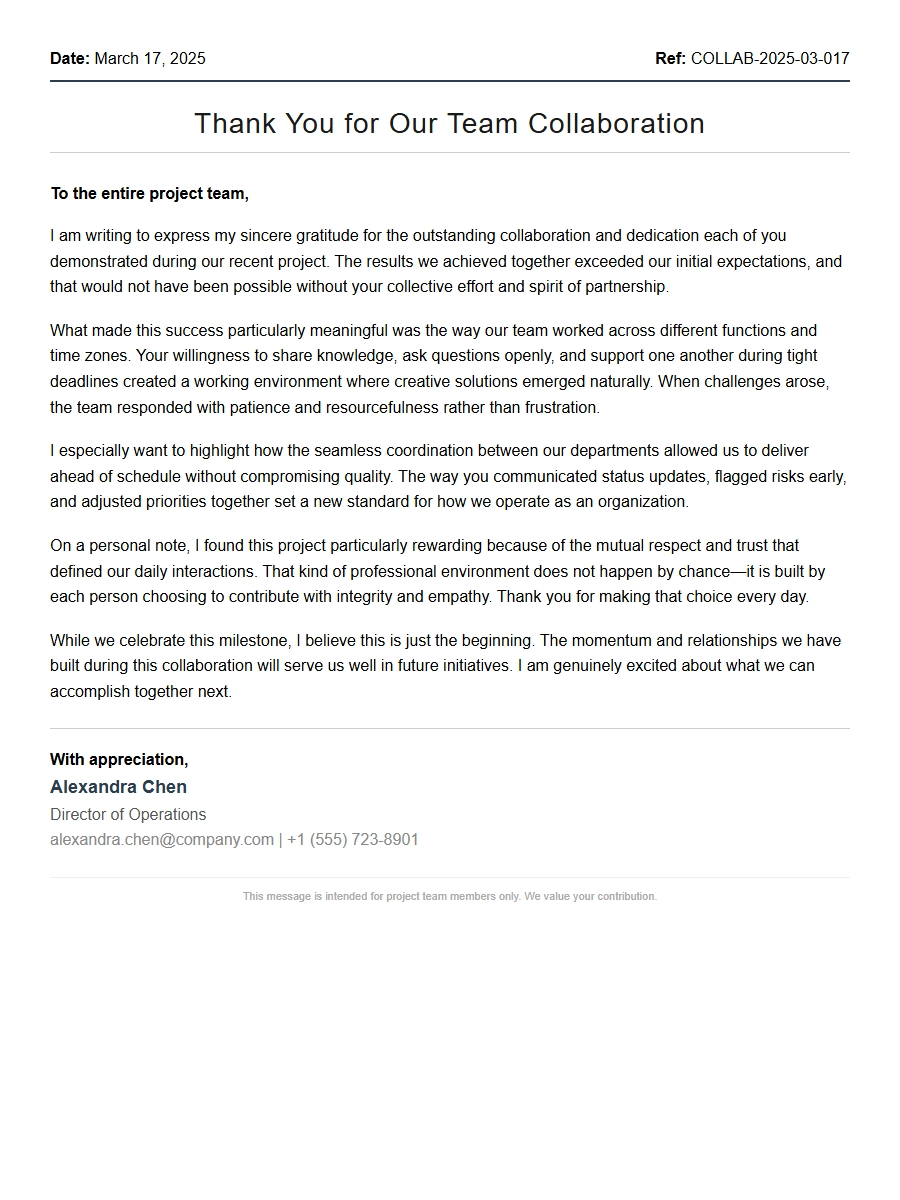
Thank You Letter for Team Collaboration Success
Completion of Major Software Release
Dear Team,
Thank you for your exceptional effort and collaboration in delivering the Q3 software release ahead of schedule. Each of you brought unique strengths to the table — from DevOps ensuring seamless deployment to QA catching critical edge cases. I appreciate how the front-end and back-end teams synchronized sprint goals despite tight dependencies.
Key contributions that made this possible:
Sprint planning that accurately estimated story points
Daily stand-ups where blockers were resolved within hours
Two peer code review sessions that improved code quality by 15%
Our post-release metrics show zero critical bugs and a 20% improvement in page load time. The client has already sent positive feedback. Let’s carry this collaborative spirit into our next milestone.
With gratitude, Alex Rivera Engineering Manager
Cross-Functional Product Launch
Hello Product Launch Squad,
Thank you for making the launch of our new mobile app a resounding success. The way marketing, design, engineering, and customer support aligned around a single goal was inspiring. I’m especially grateful for how the team adapted when the beta test revealed a critical UX flaw — you pivoted overnight and saved two weeks of rework.
Your collaboration is reflected in these results:
Metric
Target
Actual
App store rating
4.0
4.6
First-day downloads
10,000
14,200
Support tickets day 1
<50
32
This wouldn’t have happened without the trust and open communication you showed. I’m proud to work with each of you.
Best, Priya Mehta Product Director
Team Overcoming a Critical Production Incident
Dear Incident Response Team,
When the payment gateway went down at 3 AM last Saturday, your coordinated response was nothing short of heroic. I want to thank everyone who dropped what they were doing to join the war room. The way you divided tasks — infrastructure diagnosing the load balancer, backend patching the timeout logic, and frontend displaying a graceful fallback — restored service in 47 minutes instead of the estimated 2 hours.
Your post-incident review also identified two systemic issues we’ve already fixed. Because of your calm collaboration under pressure, we not only recovered quickly but also made the system more resilient.
Particular appreciation to:
James for coordinating communication with stakeholders
Lina for writing the rollback script in 10 minutes
Carlos for staying on the call until 6 AM documenting the timeline
You are the reason this company can sleep at night. Thank you.
Yours, Emily Tran SRE Lead
Department-Wide Collaboration on Q4 Strategy
Dear Strategy Contributors,
Thank you for the incredible teamwork that shaped our Q4 roadmap. Each department — sales, product, finance, and operations — brought data and insights that turned a rough draft into a cohesive plan. I was especially impressed by the cross-departmental breakouts you initiated without being asked.
Highlights from our collaborative sessions:
Sales shared customer pain points that reprioritized three features
Finance provided a cost-benefit model that made our budget 12% more efficient
Operations suggested a phased rollout that reduced risk
Because you listened to each other and built on ideas, we now have a strategy that every team owns. The board approved it unanimously. Let’s keep this partnership alive throughout execution.
Warmly, David Kim VP of Strategy
Thank You for Team Mentorship and Knowledge Sharing
Dear Knowledge Champions,
I want to thank each of you who made our internal skill-sharing initiative such a success. Over the past quarter, you organized 12 lunch-and-learn sessions, created reusable code libraries, and paired with junior members on real tickets. Your willingness to share what you know built a culture where asking for help is celebrated.
Measurable outcomes of your collaboration:
Metric
Before
After
Average onboarding time
6 weeks
3.5 weeks
Cross-team pull requests
8%
37%
Team satisfaction score
3.2/5
4.6/5
This is the kind of collaboration that builds long‑term success. Thank you for making everyone around you better.
With appreciation, Sarah Okafor Engineering Director
Our first company-wide hackathon was a blast, and it wouldn’t have happened without your teamwork. From the logistics squad that booked spaces and arranged catering to the tech leads who debugged participants’ environments on the fly — every piece fit together.
Teams formed across departments, and I saw engineers, marketers, and finance analysts coding side by side. The final demos included a chatbot for HR, an expense tracker, and a carbon calculator — three tools we now plan to productize.
Collaboration statistics:
42 participants from 7 departments
12 cross‑functional teams
9 working prototypes in 48 hours
Your energy and openness to work with strangers built bonds that will improve our everyday workflows. Thank you for making this a tradition worth repeating.
Cheers, Maya Chen Culture Lead
Thank You for Collaborative Client Rescue
Dear Client Success Task Force,
I want to express my profound gratitude for how you rallied to save the Acme Corp account. When the client threatened to leave due to missed deliverables, you formed a strike team without waiting for a formal assignment. Account management renegotiated timelines, engineering built a dedicated integration in three days, and QA turned around regression testing in record time.
Your collaboration produced a 180‑degree turnaround:
Client satisfaction score rose from 2.1 to 4.8 in two weeks
They signed a renewal contract with 15% higher value
They even agreed to be a reference for prospective clients
The key was that you communicated constantly, escalated early, and supported each other’s work. This is what “one team” looks like. Thank you for saving the day.
Sincerely, Tomás Garcia Head of Customer Success
Multi‑Team Effort on Compliance Project
Dear Compliance Project Team,
Thank you for the seamless collaboration that allowed us to pass the ISO 27001 audit with zero nonconformities. Legal, IT, and operations formed a joint working group that met daily for six weeks. The willingness of developers to rewrite authentication modules and of ops to document every server configuration — all while maintaining regular project work — was extraordinary.
Key collaborative achievements:
Area
Owned by
Status
Access control policies
Legal + IT
Implemented and tested
Data encryption at rest
Engineering
Deployed to all services
Employee training
HR + Ops
100% completion
Your collective discipline and open communication turned a stressful audit into a celebration. I’m deeply grateful.
Best regards, Nadine Holt Chief Compliance Officer
Thank You for Collaborative Problem‑Solving in Remote Team
Dear Remote Team,
Working across four time zones isn’t easy, but you turned it into a superpower this quarter. I want to thank you for the asynchronous collaboration that made our distributed model work so effectively. You used shared documents instead of endless meetings, recorded decisions with clear owners, and always left helpful comments on code reviews.
Examples that stood out:
The async design sprint where you produced six mockups in 48 hours using Figma + Loom
The war room channel that resolved a scheduler bug with engineers from India, UK, and US replying within minutes of each other
The documentation cleanup initiative that cut new‑hire ramp‑up by a week
Your thoughtful communication and mutual respect are the foundation of our success. Thank you for making remote feel close.
Grateful, Luka Petrov Remote Team Lead
Final Thank You for Year‑Long Cross‑Team Collaboration
Dear All Teams,
As we close the fiscal year, I want to thank every person who contributed to the success of our cross‑team initiatives. From the joint product‑engineering‑data work that improved conversion by 8% to the marketing‑sales alignment that drove pipeline growth — collaboration was the common ingredient.
Let me highlight a few numbers that tell the story:
Initiative
Teams Involved
Impact
Unified customer view
Sales, Support, Data
+22% upsell rate
Automated reporting
Finance, Eng, Ops
40 hours saved weekly
Internal knowledge base
All departments
39% fewer repetitive questions
You broke silos, shared credit, and helped each other without being asked. That’s a culture I’m proud of. Let’s carry this spirit into the new year.
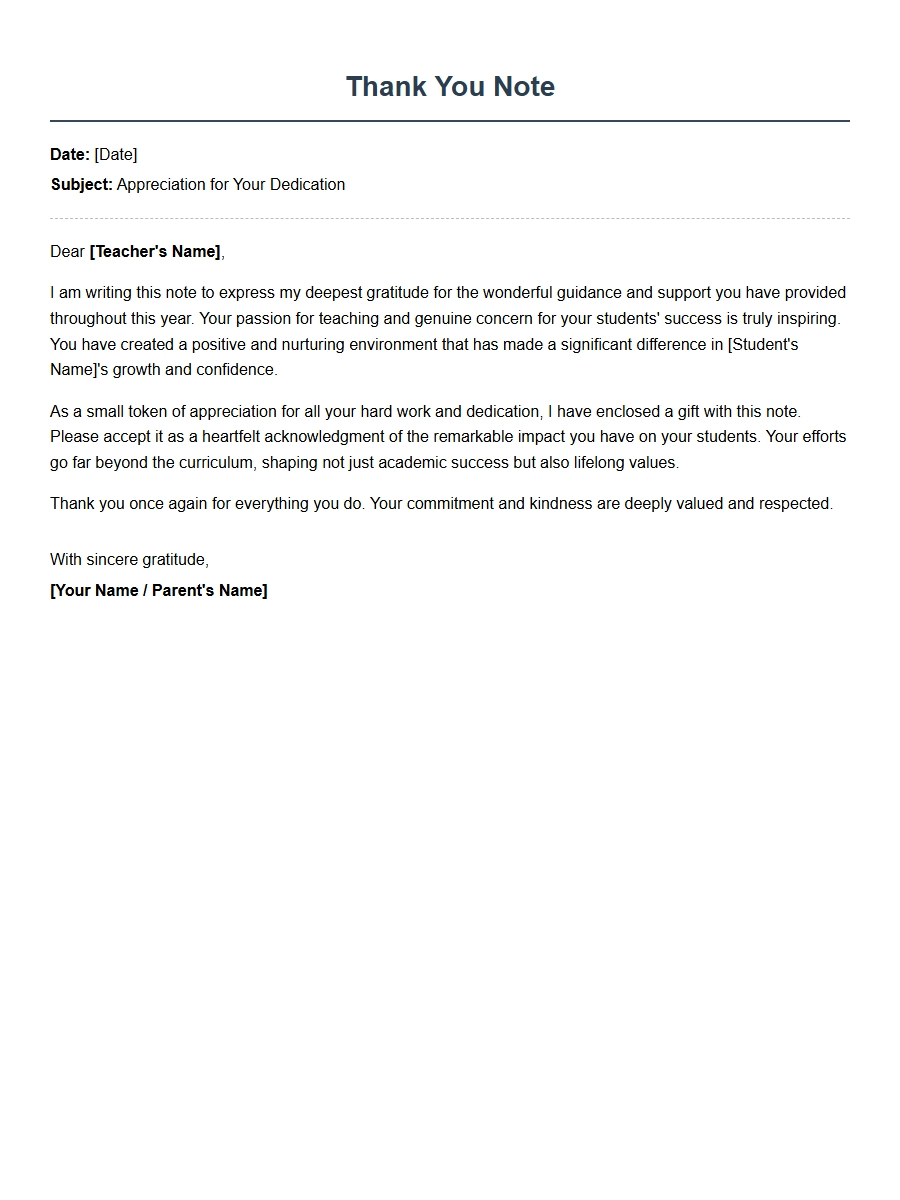 Sample Thank You Note for Teacher Gift
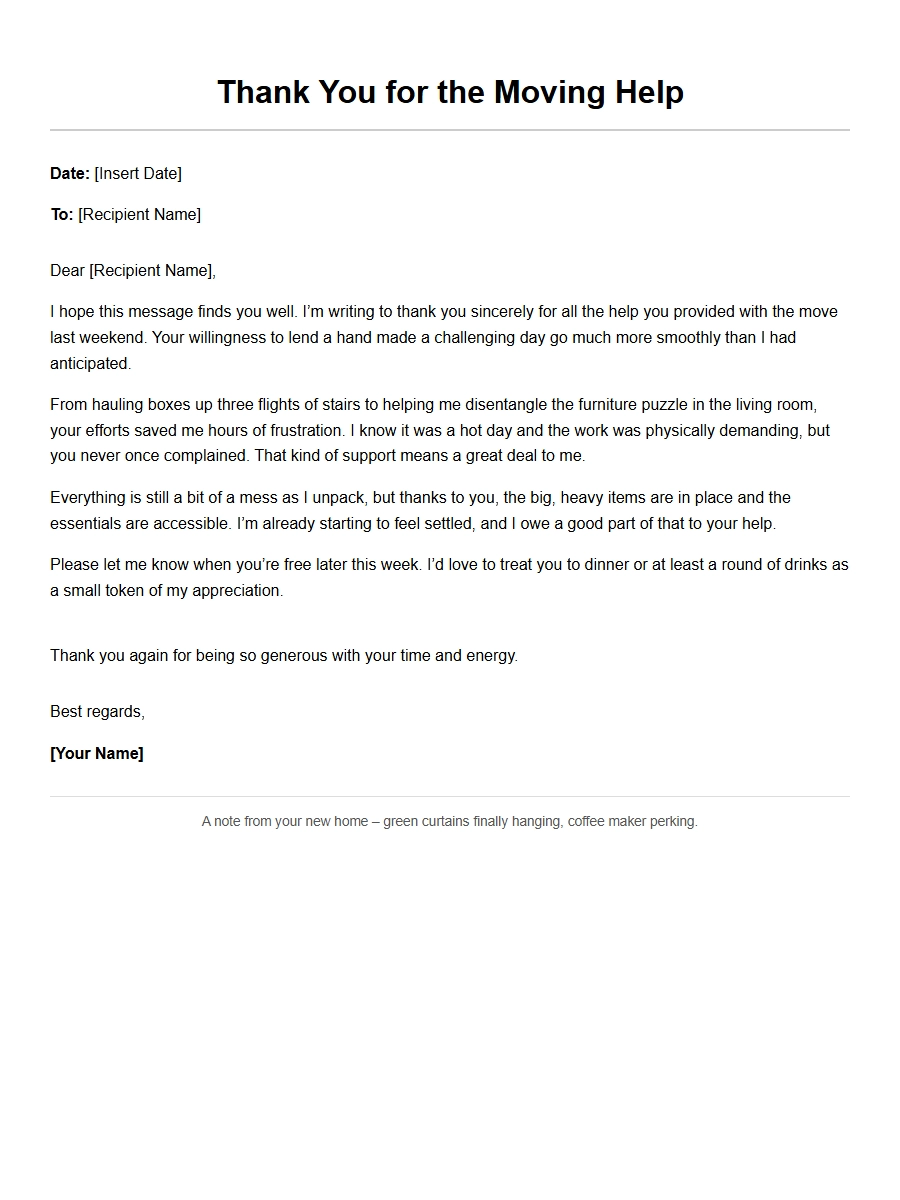 Thank-You Letter for Help with Moving
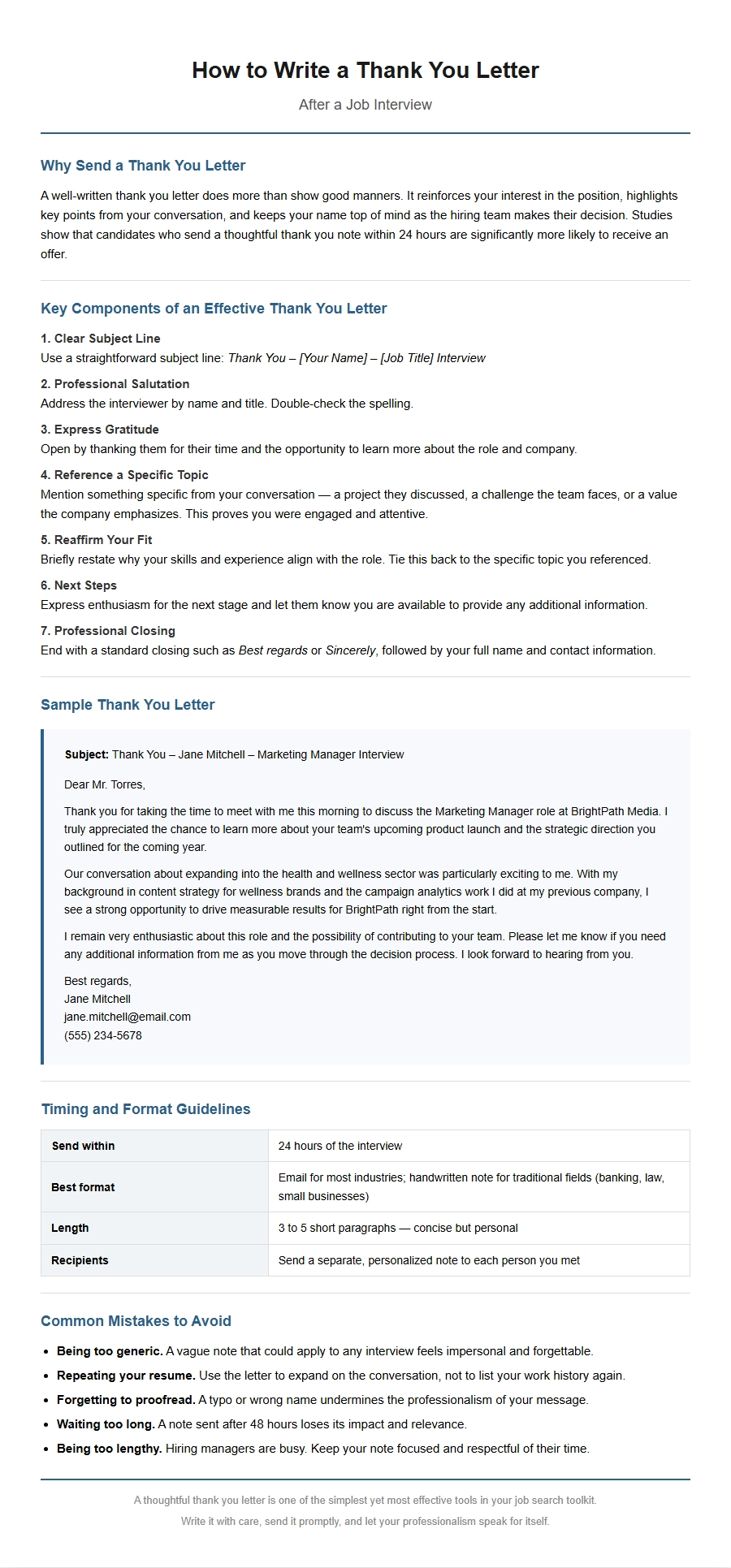 How to Write a Thank You Letter After an Interview
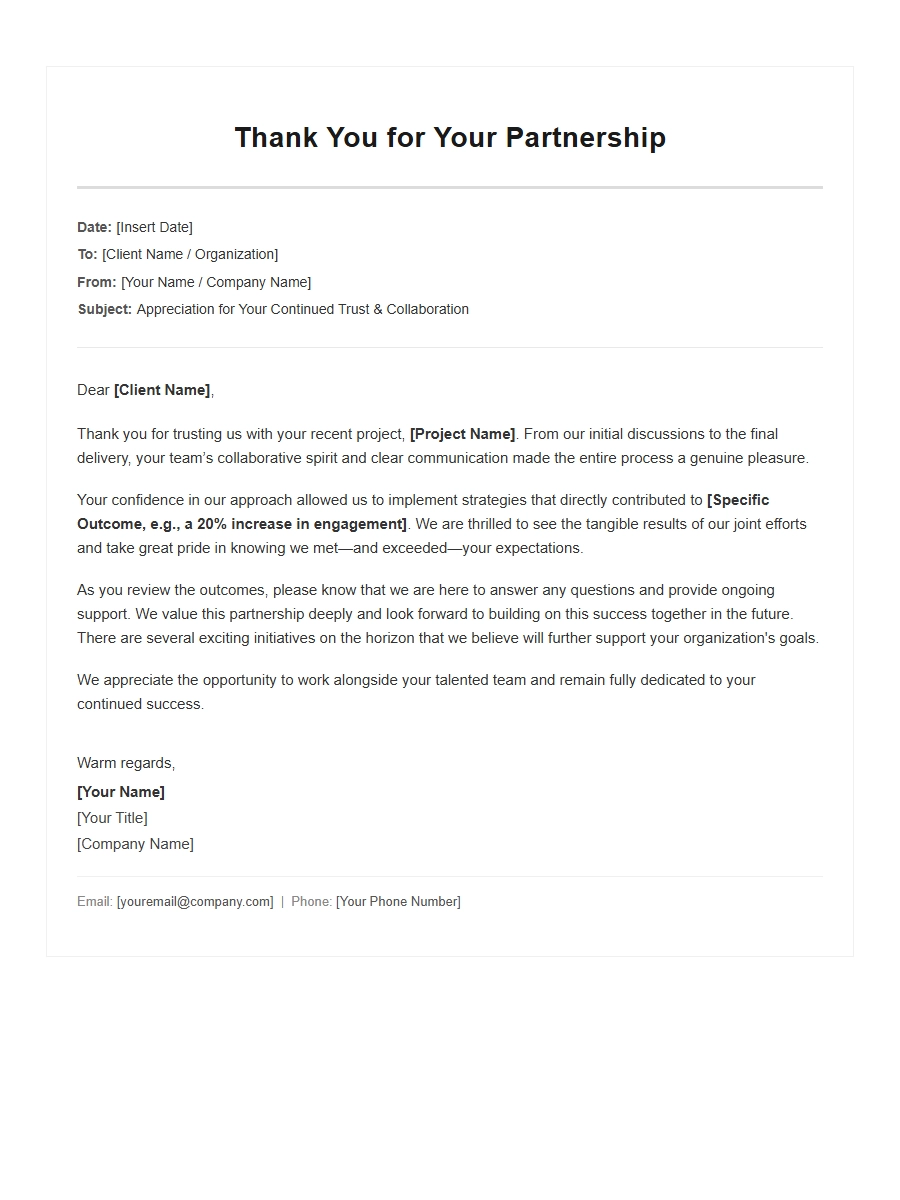 professional thank you email example for client - Thank-You Letters
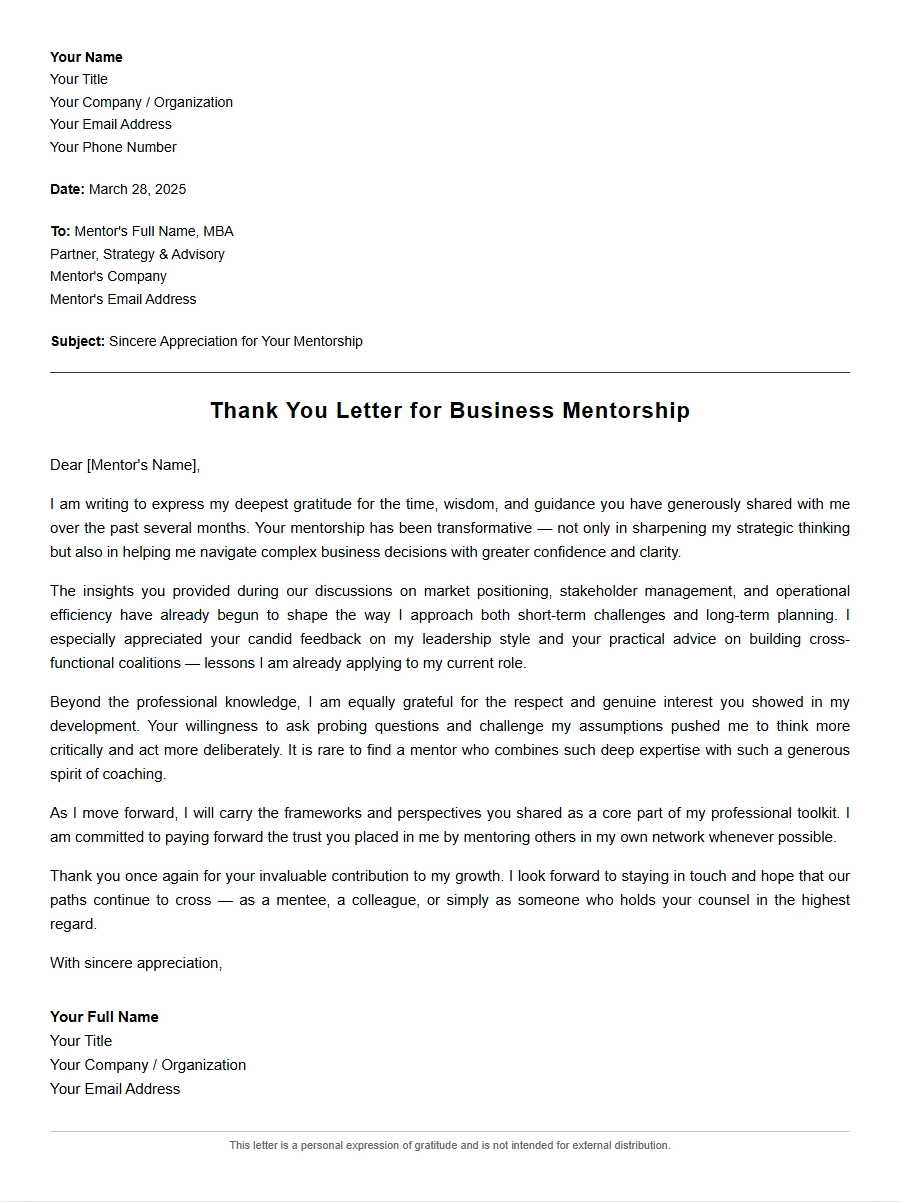 Business Mentor Thank-You Letter Guide
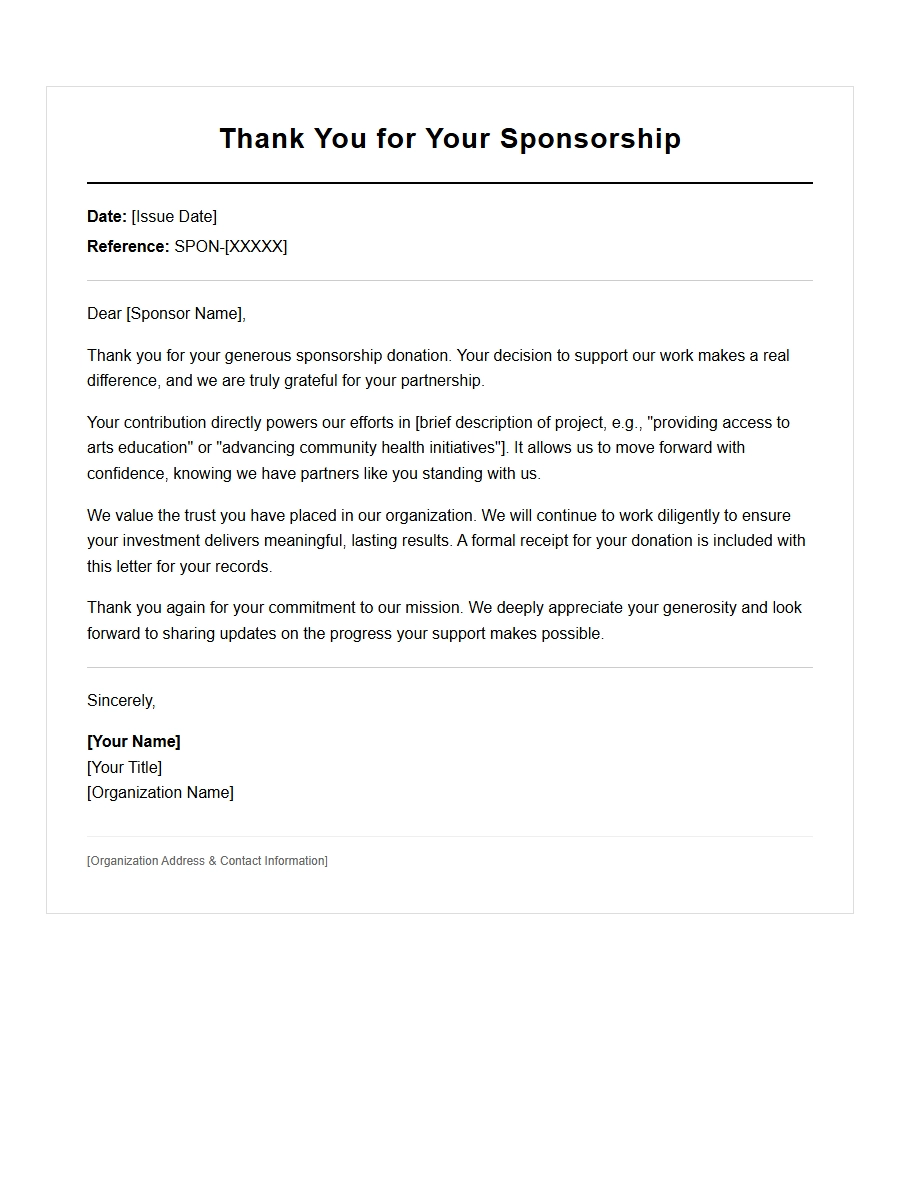 Thank You Letter for Sponsor Donation