You’re in your first few months at a new job, and it’s just not working out. Maybe the role wasn’t what you expected, or the culture clashes with your style. Now you need to resign during probation, and you have no idea what to say without burning a bridge. The blank page stares back at you. That anxiety is normal, but a solid resignation letter sample turns that panic into a draft you can send in minutes.
Why a Sample Isn't Cheating (It's Smart)
Using a letter template isn't admitting you can't write. It's using a proven structure so you can focus on tone and personal details. A good sample gives you the business letter format, the right salutation and closing, and the professional phrasing you need. You don't have to reinvent professional correspondence every time you leave a job.
The trick is to treat the sample as a starting point. You'll replace the generic phrases with your own specific reasons and circumstances. That's how you keep your authentic voice intact while still sounding polished.
Category: Career Transition
How to Choose the Right Sample for a Probation Resignation
Not all resignation letter samples fit a probation period. You're not giving two weeks' notice in the traditional sense. Your employment agreement likely states a shorter notice period, sometimes just a few days or a week. Look for a sample that acknowledges a shorter timeline and focuses on gratitude rather than frustration. You want a tone that says "this isn't the right fit" without sounding like you're complaining.
If you're in a high-stress environment, a sample resignation letter for high-stress environment can help you frame your exit without blaming anyone. It keeps things professional and forward-looking.
Adapting the Sample Without Sounding Robotic
Once you have a basic template, rewrite the opening paragraph to match your situation. For example, instead of "Please accept this letter as formal notification," try "I'm writing to let you know that I've decided to move on from my position." That's more direct and human.
Tailor the middle section to explain your reason briefly. You don't need a long story. A simple line like "After careful consideration, I've realized this role isn't aligned with my long-term goals" is enough. Then, thank them for the opportunity and offer to help with the transition. This demonstrates letter writing etiquette and keeps the door open for future references.
Common Mistakes That Undermine Your Message
One big mistake is using a formal salutation like "To Whom It May Concern" when you've been working directly with a manager. Use their name. Another is ignoring the format. If you're sending an email, you don't need a full letterhead design with your address at the top. A clean subject line and a polite opening work better.
Also, don't skip proofreading. A typo in a resignation letter can make you look careless, even if your reasons for leaving are valid. Read it aloud or run it through a simple grammar checker. Tone in writing matters here. Keep it neutral and respectful, not bitter or overly apologetic.
If you're unsure about the letter structure, stick to a short opening, a clear statement of resignation, a brief reason, a thank you, and a closing. That's it. You don't need paragraphs of explanation.
Making It Feel Personal but Professional
The best letters feel like they were written by a real person. Use contractions like "I'm" or "it's" to keep the tone natural. Avoid stiff phrases like "I hereby tender my resignation." That sounds like a legal document. Instead, say "I'm resigning from my role as [title], effective [date]."
If you want to add a personal touch, mention something specific you appreciated. "I really valued the mentorship from the team during my onboarding" goes a long way. That kind of detail makes your letter feel genuine and less like a fill-in-the-blank exercise.
Final Thought: Use the Sample as a Springboard
A sample gets you started, but your own words make the letter memorable. Treat it like a framework, not a script. The more you practice writing these notes, the faster and easier it becomes. You'll learn to balance professionalism with authenticity. And next time you need to write a professional note regarding upcoming departure, you'll have a clearer idea of what works.
Formal Resignation Letter with Notice Period Table
Dear [Manager's Name],
Please accept this letter as formal notification that I am resigning from my position as [Job Title] during my probation period. As per my employment contract, the probationary notice period is one week. My final day of employment will be [Last Working Day].
Below is a summary of my notice period details:
Detail
Information
Resignation Date
[Today's Date]
Notice Period
7 days (probation clause)
Last Working Day
[Last Working Day]
Outstanding Leave
[X] days (to be encashed/settled)
I will ensure a smooth handover of my responsibilities before my departure. Thank you for the opportunity to work with the team. I wish the company success in the future.
Sincerely, [Your Name]
Email Resignation During Probation for Better Opportunity
Subject: Resignation - [Your Name]
Dear [Manager's Name],
I am writing to formally resign from my position as [Job Title], effective [date - usually 1 week from today] as per my probation notice period. I have accepted a new opportunity that aligns more closely with my long-term career goals.
I appreciate the training and mentorship I have received during my short time here. I will do my best to complete any outstanding tasks and assist with the transition. Please let me know if there are any specific handover documents you require.
My last working day will be [Last Working Day]. I would like to request that any final pay be processed according to company policy.
Thank you for your understanding. Best regards, [Your Name]
Resignation Due to Role Mismatch
Dear [Manager's Name],
After careful consideration, I have decided to resign from my position as [Job Title] effective [Last Working Day]. During my probation period, I have realized that the role does not fully match my skills and career aspirations. I believe it is in both our interests to part ways amicably at this early stage.
I am grateful for the opportunity to have worked with the team and for the insights I gained. I will complete my notice period until [date] and ensure all assigned tasks are wrapped up.
I have listed below the key deliverables I was working on:
Project A - status report submitted
Client B correspondence - filed and handed over
Training materials - compiled for next batch
I wish the company continued success.
Yours sincerely, [Your Name]
Immediate Resignation During Probation
Dear [Manager's Name],
I am writing to resign from my position as [Job Title] with immediate effect. As per the probation clause in my contract, I understand that I may leave without serving the standard notice period. My last day of employment is today, [Date].
I apologize for the short notice, but personal circumstances require my immediate departure. I will ensure that I return all company property, including my laptop and access card, by the end of the day.
Items to be returned:
Laptop and charger
ID badge
Office keys
Any confidential documents in my possession
Please advise on the final settlement process. I appreciate the opportunity to have been part of the team, even briefly.
Regards, [Your Name]
Resignation with Handover Checklist
Dear [Manager's Name],
I am writing to inform you of my resignation from the position of [Job Title] during my probation period. My notice period is one week, so my final day will be [Last Working Day].
To facilitate a smooth transition, I have prepared a handover checklist:
Task/Asset
Status
Comments
Project X documentation
Completed
Saved in shared drive
Client Y contact list
Handed over to [Colleague]
Email sent
Company laptop
To be returned on last day
IT notified
Training materials
Updated and archived
Available for team
I am happy to assist in briefing my replacement during the remainder of my notice period. Thank you for the learning experience.
Best regards, [Your Name]
Resignation After Accepting Permanent Role Elsewhere
Dear [Manager's Name],
Please accept this letter as my formal resignation from the position of [Job Title]. I have been offered a permanent role at another company, and after careful thought, I have decided to accept it. My last day will be [Last Working Day], in accordance with the probation notice period of one week.
I greatly appreciate the opportunity to work at [Company Name] during my probation. The experience has been valuable, and I am grateful for your guidance.
To ensure continuity, I will:
Complete my current tasks by [date]
Update all work logs and documentation
Introduce the handover contact to key stakeholders
I wish the team all the best.
Sincerely, [Your Name]
Personal Reasons Resignation During Probation
Dear [Manager's Name],
It is with regret that I submit my resignation as [Job Title], effective [Last Working Day], due to personal reasons that require my full attention at this time. My probation period allows for a shorter notice, which I am serving as per my contract.
I have enjoyed my brief time at [Company Name] and appreciate the support I have received. I will ensure all my responsibilities are handed over before I leave.
Tasks for handover:
Weekly reports – final version sent
Database updates – completed until [date]
Meeting schedules – forwarded to the team
Please let me know if any additional information is needed. Thank you for understanding.
Kind regards, [Your Name]
Resignation Citing Company Culture Fit
Dear [Manager's Name],
I am writing to resign from my position as [Job Title] effective [Last Working Day]. After spending time with the team during my probation, I have concluded that my working style and values are not fully aligned with the company culture. I believe it is best for both parties if I step away now.
I remain grateful for the opportunity and for the insights I have gained. I will work diligently during my notice period to wrap up my assignments.
Current projects status:
Marketing campaign – draft ready, pending review
Data analysis report – completed and shared
Client onboarding – transitioned to [Colleague Name]
I wish the company continued growth and success.
Yours truly, [Your Name]
Resignation with Request for Reference
Dear [Manager's Name],
Please accept this letter as my formal resignation from the role of [Job Title] during my probation period. My final day of work will be [Last Working Day], serving the required one-week notice.
As I move on to new opportunities, I would be grateful if you could provide a brief reference based on my performance during this probationary period. I have attached a reference request form for your convenience.
During my time here, I contributed to:
Area
Accomplishment
Process improvement
Reduced report generation time by 20%
Team collaboration
Assisted in onboarding new hires
Client feedback
Received positive comments on responsiveness
Thank you for your support and guidance. I hope to stay in touch.
Sincerely, [Your Name]
Resignation Letter with Effective Date and Property Return
Dear [Manager's Name],
I am writing to confirm my resignation from the position of [Job Title] during my probation period. As per the probation terms, my notice period is one week, and my last day will be [Last Working Day].
I will ensure that all company property is returned on or before my last day. Below is the list of items I will return:
Laptop (model: [specs])
Mobile phone (IMEI: [number])
Access card (ID #[number])
Stationery and manuals
Please arrange for an exit interview if required. I would also appreciate confirmation of my final pay and any accrued leave settlement.
Thank you for the opportunity to work here. I wish the organization the best.
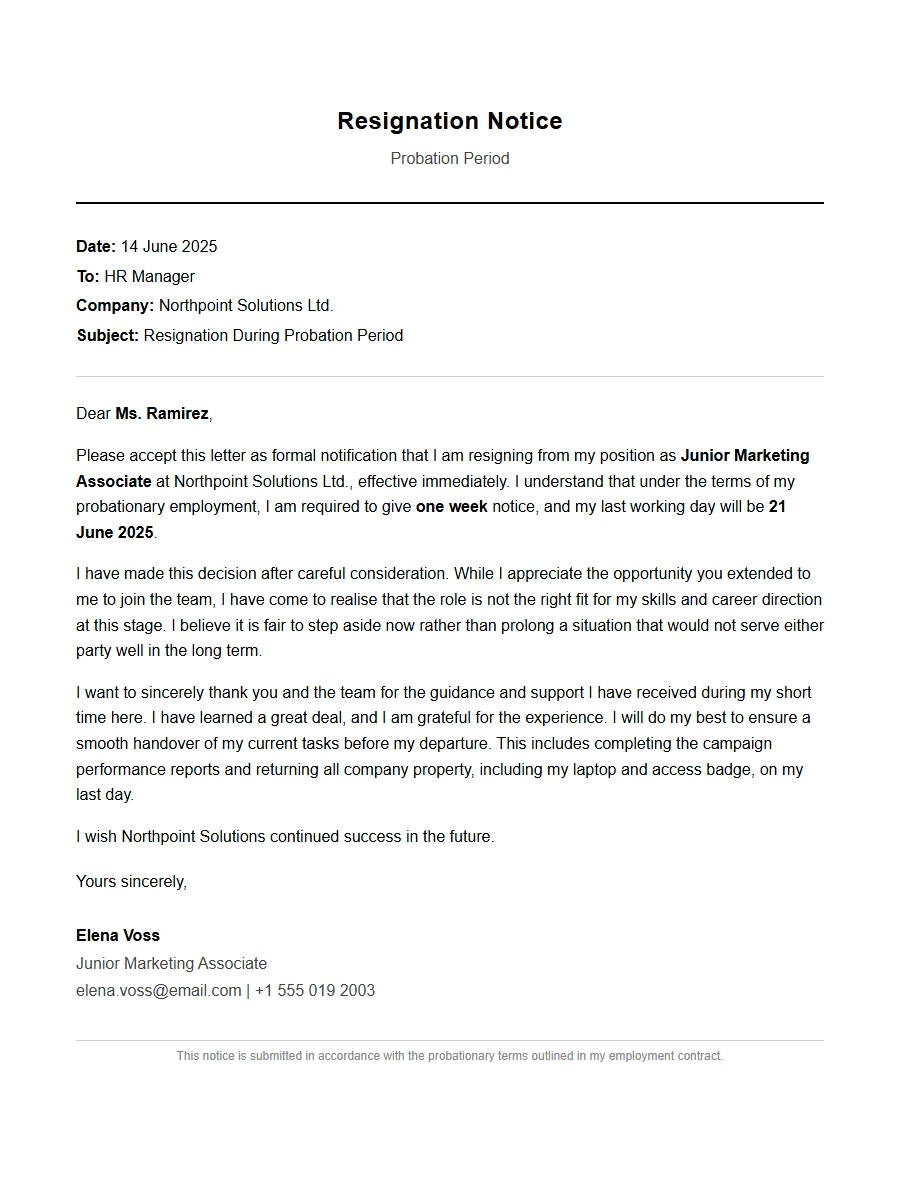
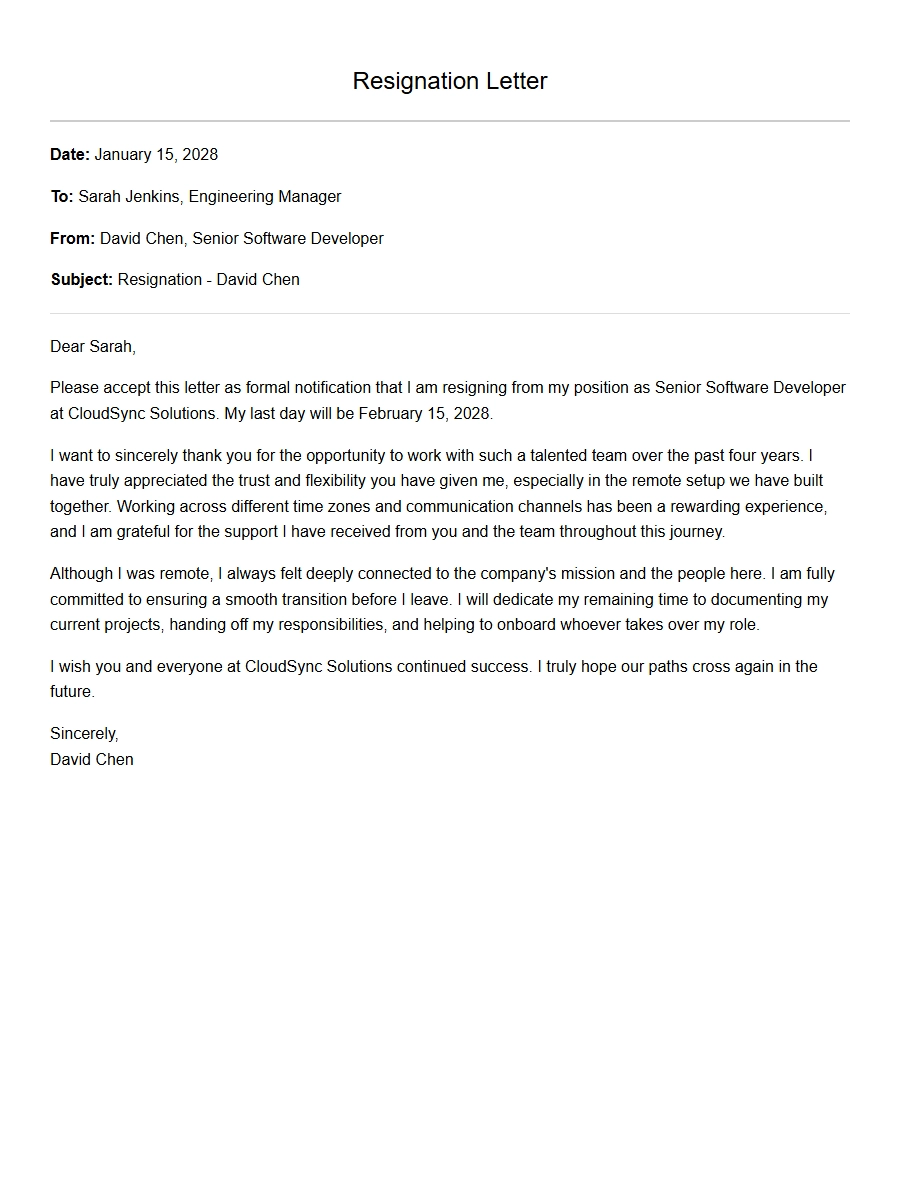 Polite Resignation Email for Remote Employees
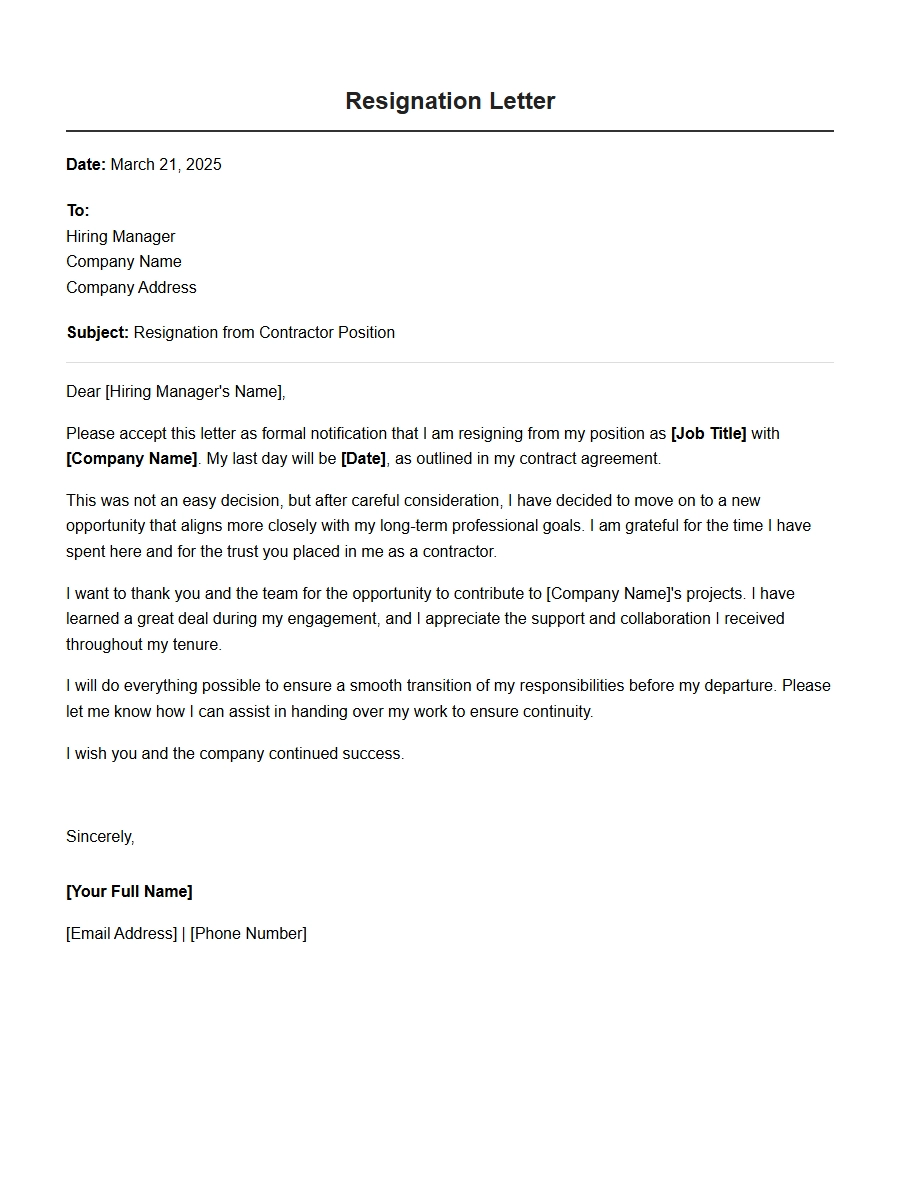 Short Resignation Letter for Contractor Position
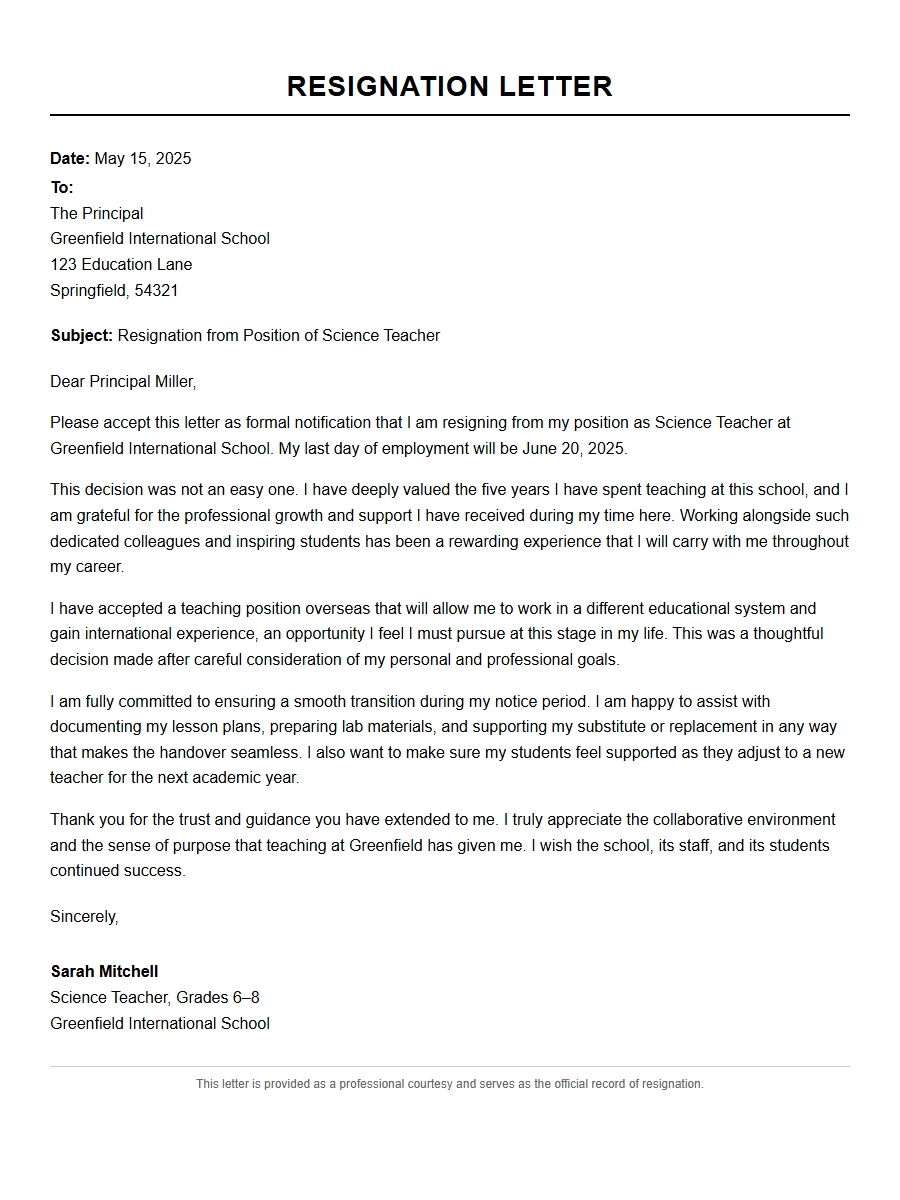 Teacher Resignation Letter Example
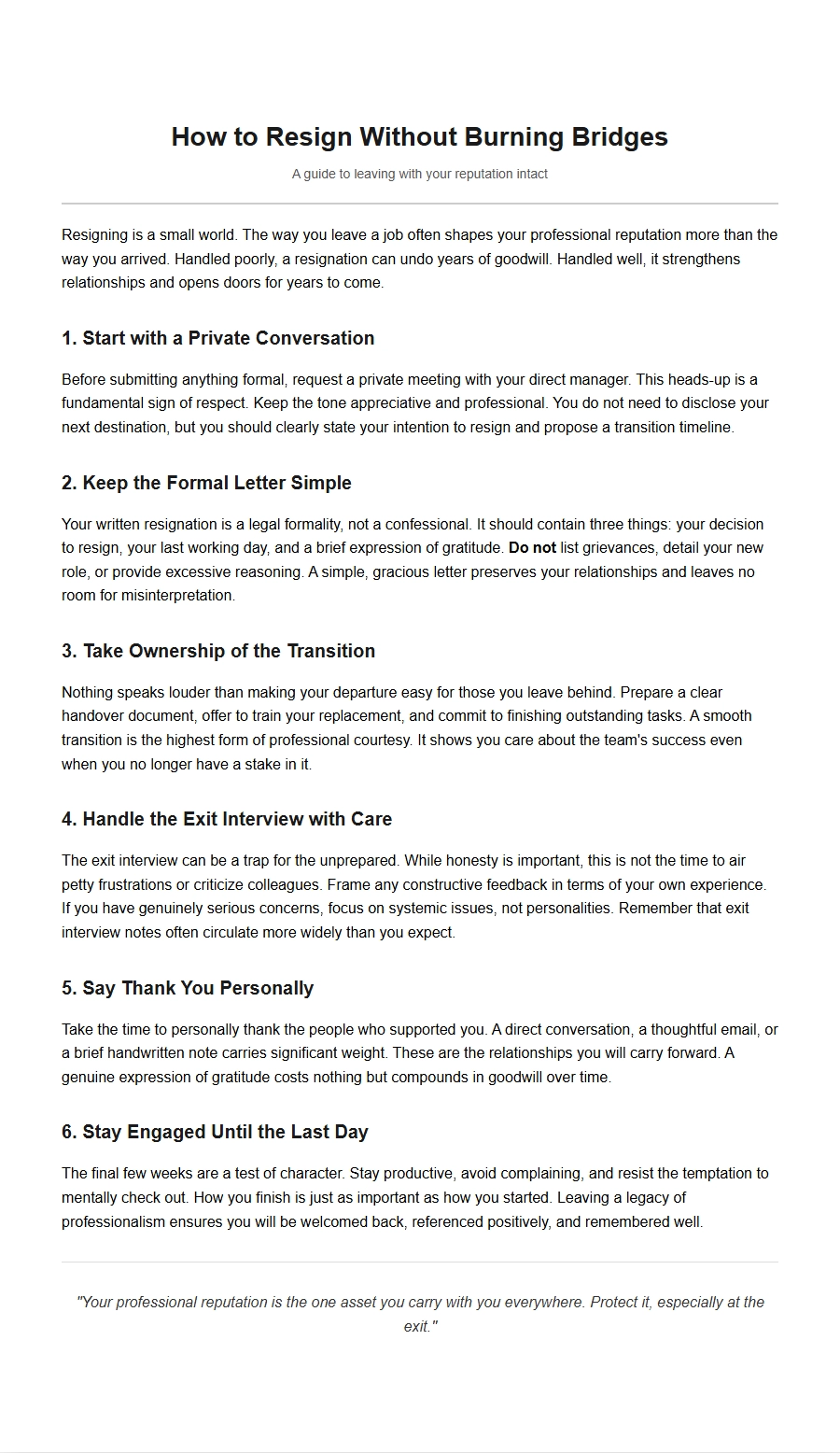 How to Resign Without Burning Bridges
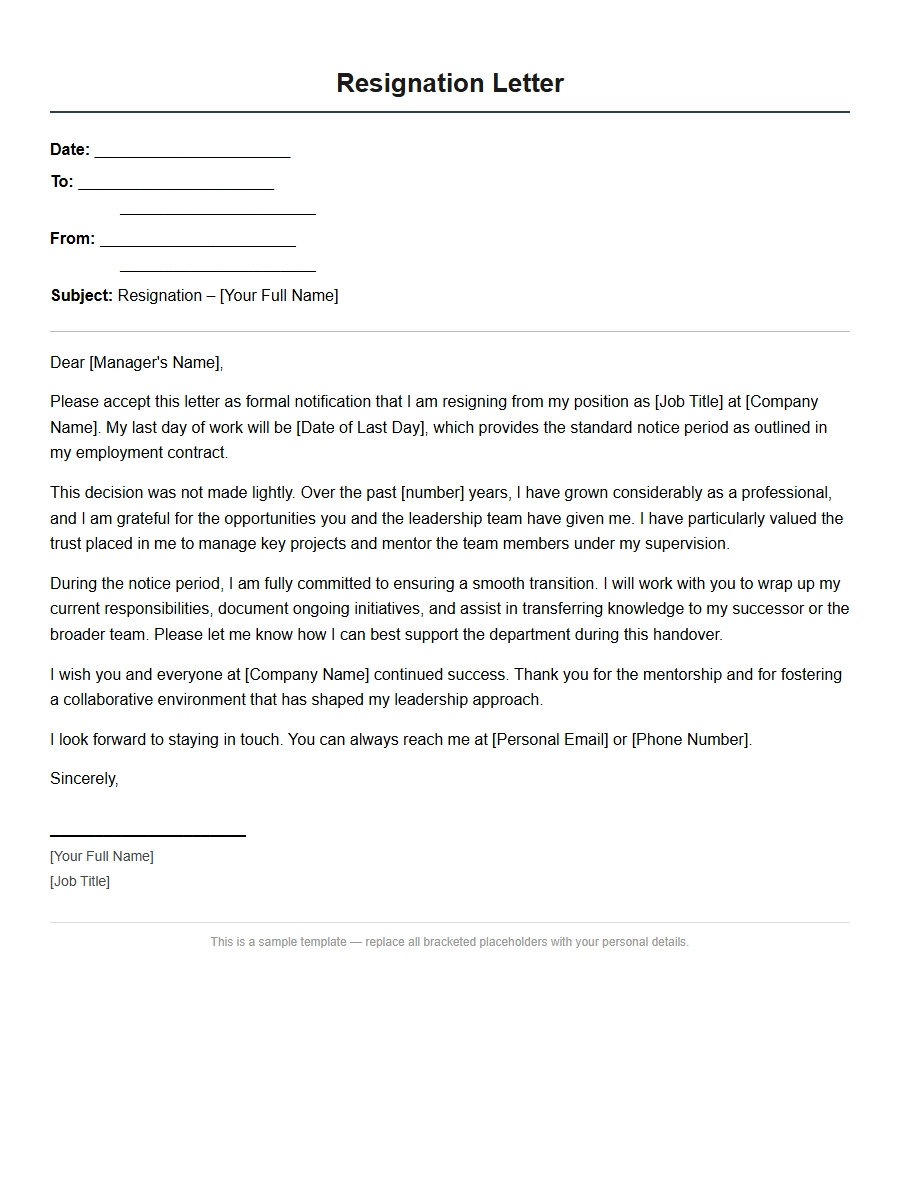 Formal Resignation Letter Sample for Manager
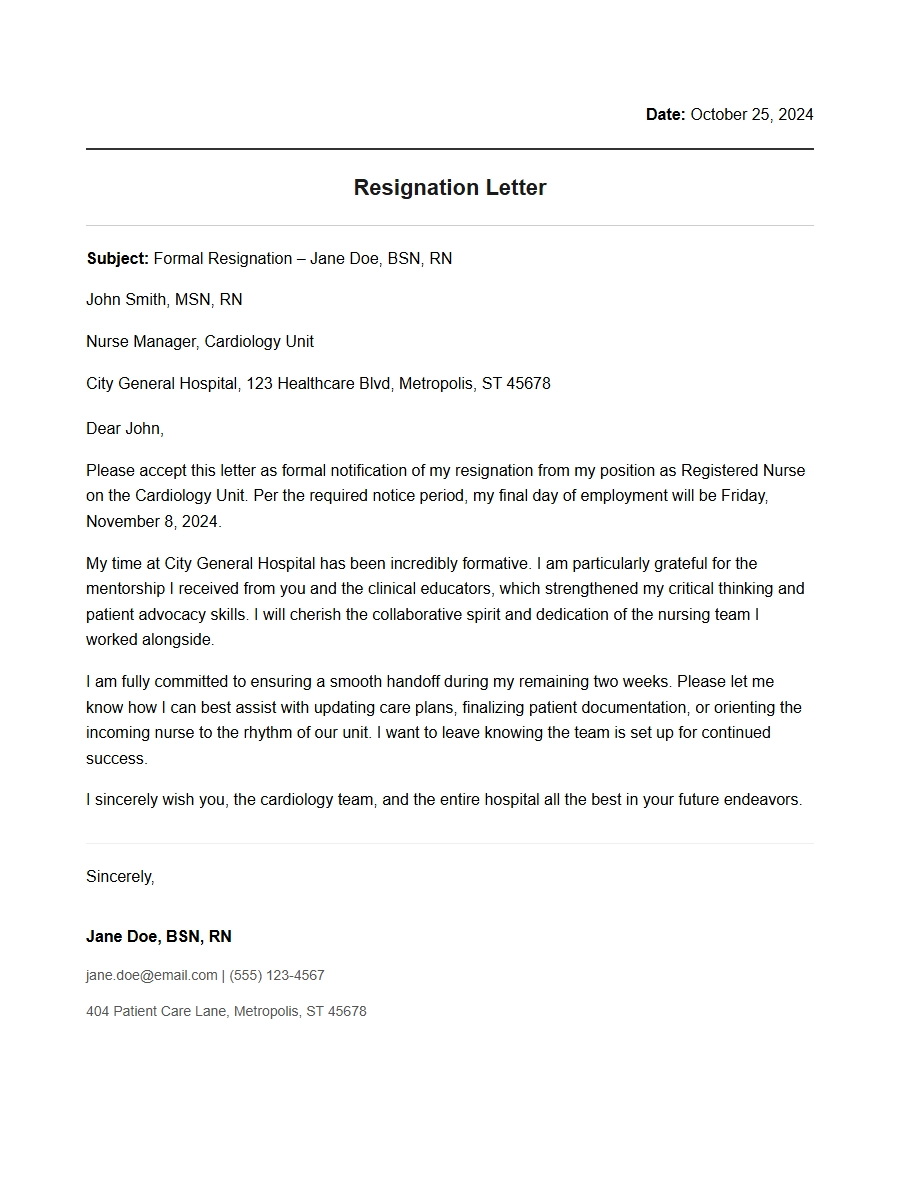 Nurse Resignation Letter with 2 Weeks Notice