You just left the doctor’s office with more questions than answers—or maybe you need to send a quick thank-you note for the care you received. Writing that follow-up correspondence can feel awkward. Where do you start? What tone is appropriate? Should it be formal or casual? That blank page stare is real, especially when you’re already busy recovering or managing a health concern.
Using a sample isn’t cheating. It’s a smart shortcut. A solid letter template gives you structure, the right tone, and key phrases—while still leaving room for your own details. Think of it as a framework you customize, not a script you copy. That saves time and reduces stress, so you can focus on what matters: clear communication with your healthcare provider.
Category: Personal Letters
How to choose the right sample
Not all follow-up notes are the same. A request for medical records needs a different level of formality than a thank-you note for a great appointment. Start by identifying your purpose. Are you asking for test results? Clarifying a treatment plan? Expressing gratitude? Each situation calls for a slightly different structure and tone.
For most doctor visit follow ups, a standard business letter format works well. That means your address at the top, the date, the doctor’s name and practice address, a clear subject line (like “Follow-up on Appointment: [Date]”), and a polite salutation like “Dear Dr. [Last Name].” Keep the closing professional: “Sincerely” or “Best regards.” Even if you’re sending an email, sticking to this format shows respect and ensures your message is taken seriously.
If you’re writing a more personal note—say, to thank a specialist who went out of their way—you can loosen up a bit. Use a conversational tone while still being polite. The key is matching the sample to your relationship with the doctor and the context of your correspondence.
Adapting the sample without losing your voice
Once you find a good customizable letter, the real work is making it sound like you. Start by swapping out placeholder details—your name, date, specific requests. Then read it aloud. Does it feel stiff? Change a few words to something you’d actually say. For example, if the sample says “I am writing to inquire about,” you might prefer “I’m checking on.” That’s fine, as long as the core message stays clear and respectful.
Pay extra attention to the opening paragraph. That’s where you grab the reader’s attention and state your purpose. Instead of “I hope this letter finds you well,” try something more direct: “I was in your office on March 15th and wanted to follow up on the blood work we discussed.” It’s specific, polite, and saves the doctor time.
Tone in writing matters a lot for medical follow ups. You want to sound appreciative but not overly familiar, and firm but not demanding. A good sample will model that balance—you just need to adjust the language to your natural style.
Common mistakes to avoid
One big error is using an outdated salutation. “To Whom It May Concern” looks lazy when you have the doctor’s name. Always address the letter to the actual provider. Another mistake is ignoring the format. If you’re emailing, don’t attach a PDF unless requested. Write the letter in the email body, using the same professional structure but without letterhead design. For printed letters, a simple letterhead with your name and contact info is fine—no need for fancy graphics.
Proofreading your letter before sending is essential. A typo in a medical request could cause confusion. Read it once for spelling, once for clarity, and once for tone. If you’re unsure, ask a friend to glance at it.
Finally, don’t forget basic letter writing etiquette: use a clear subject line, keep paragraphs short, and always include your contact information. These small details make your correspondence look thoughtful and competent.
Use the sample as a springboard, not a crutch. The first time you adapt one, it might take a while. The second time, it’ll be faster. By the third or fourth follow-up letter, you’ll know the format by heart and only need to change a few lines. That’s the goal: not to memorize templates, but to internalize the rhythm of professional correspondence so it feels natural.
Practice makes the process quicker, and your doctor will appreciate a clear, courteous message. So next time you need to write a quick note after a visit, grab a sample, tweak it, and send it. You’ll feel more confident, and your healthcare relationship will be stronger for it.
Common Sample Formats
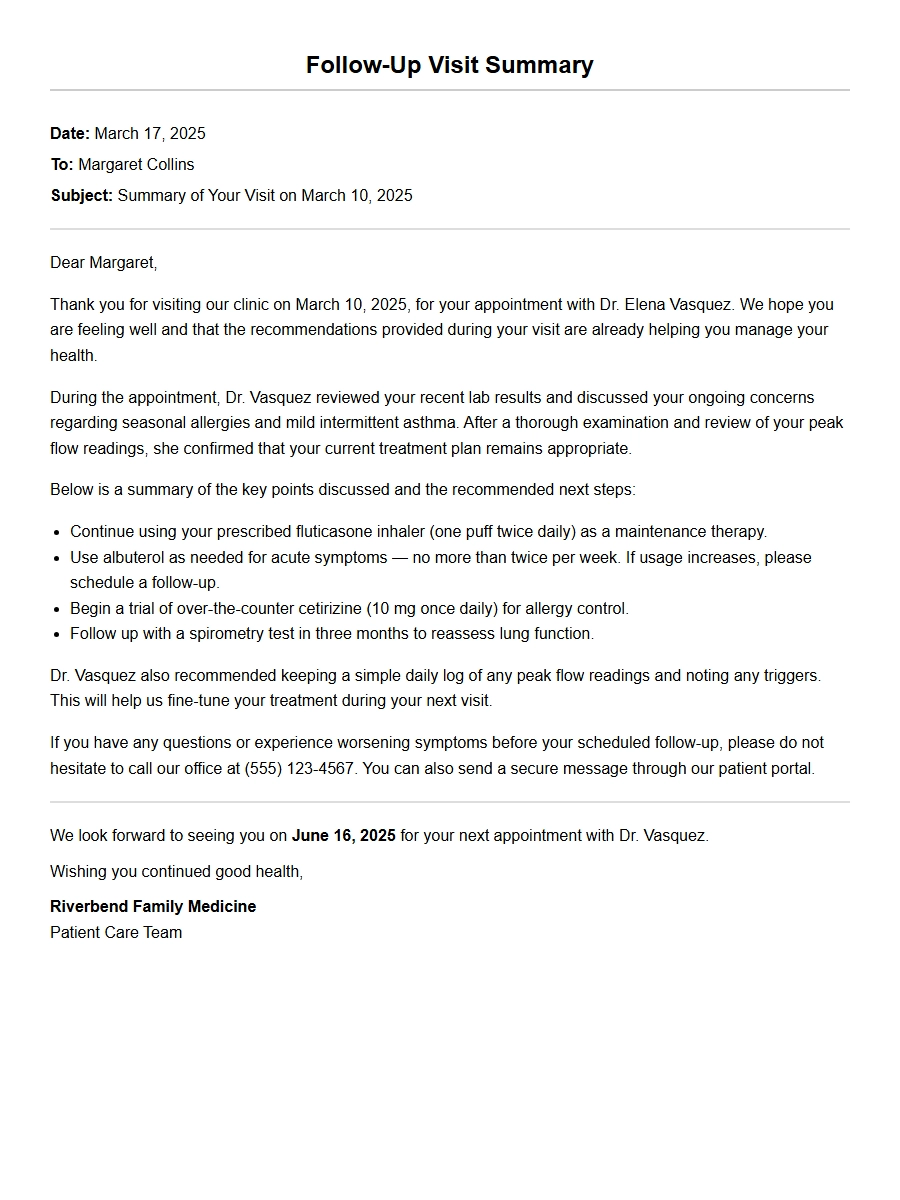
Doctor Visit Follow-Up Letter Example
Follow-Up After Annual Physical
Dear Dr. Smith,
I want to thank you for the thorough annual physical examination I had on March 10, 2025. I appreciated your clear explanation of my blood work results and the time you took to answer all my questions.
As you suggested, I have scheduled a mammogram for next week and will begin the Mediterranean diet plan you recommended. I also started taking the vitamin D supplement—2000 IU daily as prescribed.
Regarding the mild elevation in my blood pressure, I have been monitoring it at home. Readings have consistently been between 128/82 and 135/88. I will continue to track them and will report back if they exceed 140/90.
Could you please send me a copy of my lab results and the referral to the cardiologist we discussed? Thank you again for your excellent care.
Sincerely, Jane Doe
Request for Prescription Refill Follow-Up
Dear Dr. Patel,
I am writing to follow up on my appointment on February 20, 2025, regarding my hypertension medication. You prescribed lisinopril 10 mg once daily, and I have been taking it consistently.
My current supply will run out in about two weeks. Could you please authorize a refill for an additional 90 days? I have attached my recent home blood pressure log for your review.
Date
Morning Reading
Evening Reading
02/25
132/85
128/80
02/28
130/82
126/78
03/02
128/80
124/76
If you need me to come in for a blood pressure check or lab work before authorizing the refill, please let me know. Thank you for your ongoing care.
Best regards, John Brown
Post-Surgery Recovery Update
Dear Dr. Lee,
I am writing to provide an update on my recovery following the laparoscopic cholecystectomy you performed on February 15, 2025.
Overall, I am healing well. The incisions are clean and dry, and I have been walking short distances daily as instructed. My pain level is manageable with over-the-counter ibuprofen—usually a 2-3 out of 10.
However, I have noticed some mild bloating after meals, especially with fatty foods. The nausea has resolved. I am sticking to the low-fat diet you recommended.
My follow-up appointment is scheduled for March 22, 2025 at 10:30 AM. Please let me know if I need to bring any specific records or if I should fast before the visit. Thank you for your excellent surgical care.
Warmly, Susan Green
Follow-Up After Specialist Referral
Dear Dr. Rivera,
Thank you for referring me to Dr. Kim at the Rheumatology Clinic. I saw him on March 5, 2025, and wanted to share his findings with you.
Dr. Kim confirmed the diagnosis of osteoarthritis in both knees, as you suspected. He recommended the following treatment plan:
He also ordered new X-rays, which showed mild joint space narrowing but no significant deterioration. I will continue with your prescribed medication regimen. Please let me know if you need any additional information or if you would like to coordinate my care further.
Best regards, Tom Wilson
Test Results Follow-Up Inquiry
Dear Dr. Garcia,
I am writing to follow up on the blood tests and thyroid ultrasound I had on March 8, 2025. During my visit, you mentioned that the results would be available within 5-7 business days. As of today, it has been 10 days, and I have not received any updates.
Could you please check on the status of my results and share them with me? My patient ID is 784-32-990. If any results require immediate attention, I would appreciate a call rather than a portal message.
For your reference, here are the tests ordered:
Test
Date Ordered
Lab
TSH, Free T4
03/08/25
Quest Diagnostics
Complete Blood Count
03/08/25
Quest Diagnostics
Thyroid Ultrasound
03/08/25
City Imaging Center
Thank you for your prompt attention. I look forward to hearing from you.
Sincerely, Linda Chen
Second Opinion Follow-Up
Dear Dr. Adams,
Thank you for seeing me for a second opinion on my chronic lower back pain on February 28, 2025. I appreciated your thorough review of my MRI and previous treatments.
After considering your recommendation to try epidural steroid injections and physical therapy, I have decided to proceed with that approach. However, I would like to discuss a few points before scheduling the injection:
What are the potential risks specific to my case?
How many injections would you typically recommend?
Will I need to stop any of my current medications beforehand?
I have attached my latest MRI report (dated 02/10/25) for your records. Please let me know if you prefer a phone call or a brief appointment to answer these questions. Thank you again for your valuable insight.
Best regards, Michael Torres
Chronic Condition Management Follow-Up
Dear Dr. Nguyen,
I am writing to follow up on our visit on March 1, 2025, regarding my type 2 diabetes management. Since adjusting my insulin regimen as you advised, my blood sugar levels have improved significantly.
Here is my weekly average glucose log:
Time of Day
Average Reading (mg/dL)
Range
Fasting
118
98–132
After Breakfast
145
120–168
After Lunch
138
110–155
After Dinner
152
130–175
I have been following the carbohydrate-counting plan, and my weight is stable at 172 lbs. However, I occasionally experience mild hypoglycemia (low 60s) in the late afternoon. Should I adjust my lunchtime insulin dose, or would you recommend a different snack schedule? I have an appointment scheduled for April 5, but I wanted to check in earlier. Thank you for your guidance.
Warmly, David Park
Follow-Up After Urgent Care Visit
Dear Dr. Williams,
I visited your urgent care clinic on March 12, 2025, for a severe sore throat and fever. You diagnosed me with strep throat and prescribed a 10-day course of amoxicillin.
I am writing to report that after 4 days of antibiotics, my fever has resolved and the throat pain has improved by about 70%. However, I still have some difficulty swallowing and a mild cough. I am concerned this might be developing into something else.
Should I continue the antibiotics and wait it out, or would you recommend a follow-up swab or other tests? I have no known allergies to medications. I also noticed a small rash on my chest yesterday—could this be a reaction to the amoxicillin?
Please advise. I can come back to the clinic if needed. Thank you for your prompt care.
Best regards, Emily Johnson
Treatment Plan Confirmation and Follow-Up
Dear Dr. Martinez,
Thank you for the detailed discussion during my visit on March 3, 2025, about the treatment plan for my newly diagnosed hypothyroidism. I appreciate you explaining the options and listening to my preferences.
As we agreed, I will start levothyroxine 50 mcg daily, take it on an empty stomach in the morning, and avoid calcium or iron supplements for at least 4 hours. I will have follow-up labs in 6 weeks to check TSH and free T4 levels.
I also understand the importance of consistent dosing and monitoring for symptoms like fatigue, weight changes, or heart palpitations. Could you please provide me with a written copy of the treatment plan, including the target TSH range? I would like to share it with my pharmacist.
My next appointment is scheduled for April 21, 2025 at 2:15 PM. If any lab results are ready sooner, please notify me through the patient portal. Thank you for your care.
Sincerely, Rachel Kim
Billing and Insurance Follow-Up After Visit
Dear Dr. Thompson’s Office,
I am writing to follow up on my visit on February 25, 2025, for a routine dermatological checkup. I received a bill for $185 after insurance, but I believe there may be a discrepancy.
According to my insurance explanation of benefits (EOB), the allowed amount for the visit was $150, and my copay of $30 should have been collected at the time of service. However, I was not asked for a copay during check-in, and the bill now shows a balance of $185.
Here are the details of the visit:
Service
Charge
Insurance Paid
Patient Responsibility
Office Visit (CPT 99213)
$250.00
$120.00
$30.00 (copay)
Skin biopsy (CPT 11100)
$300.00
$180.00
$70.00 (after deductible)
Could you please review my account and adjust the balance accordingly? If you need a copy of my EOB, I can provide it. Thank you for your help resolving this matter.
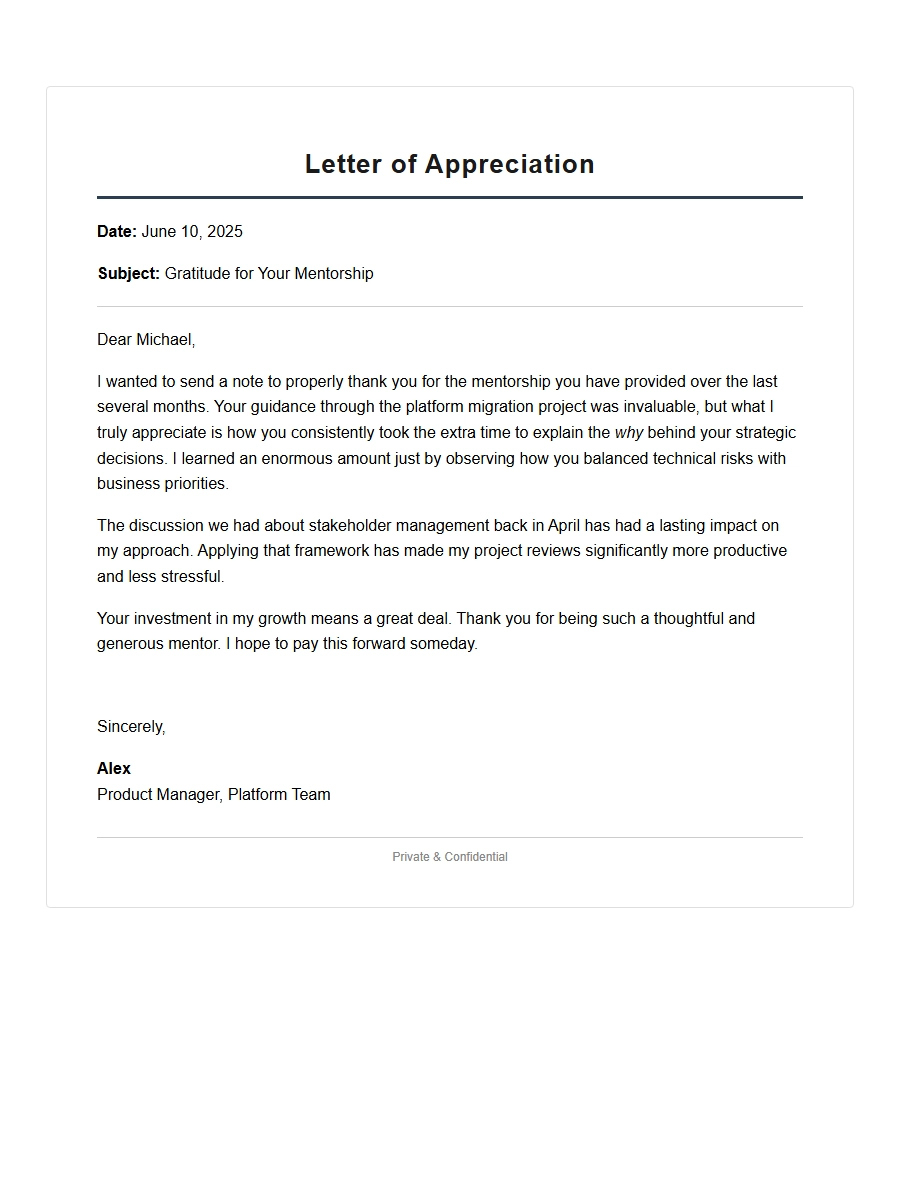 Thanking a Mentor for Guidance: Sample Messages
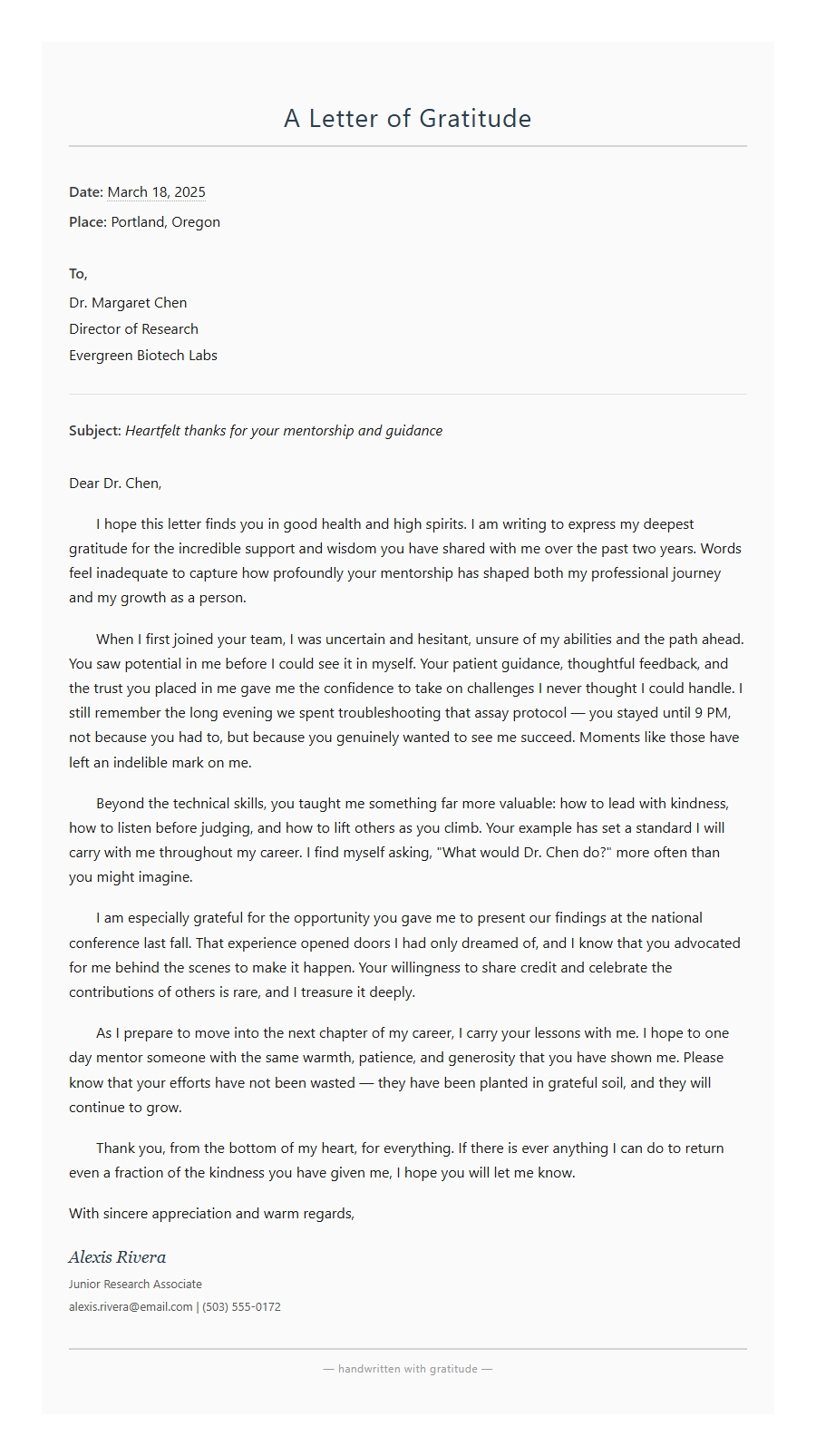 Expressing Gratitude: Handwritten Letter Example
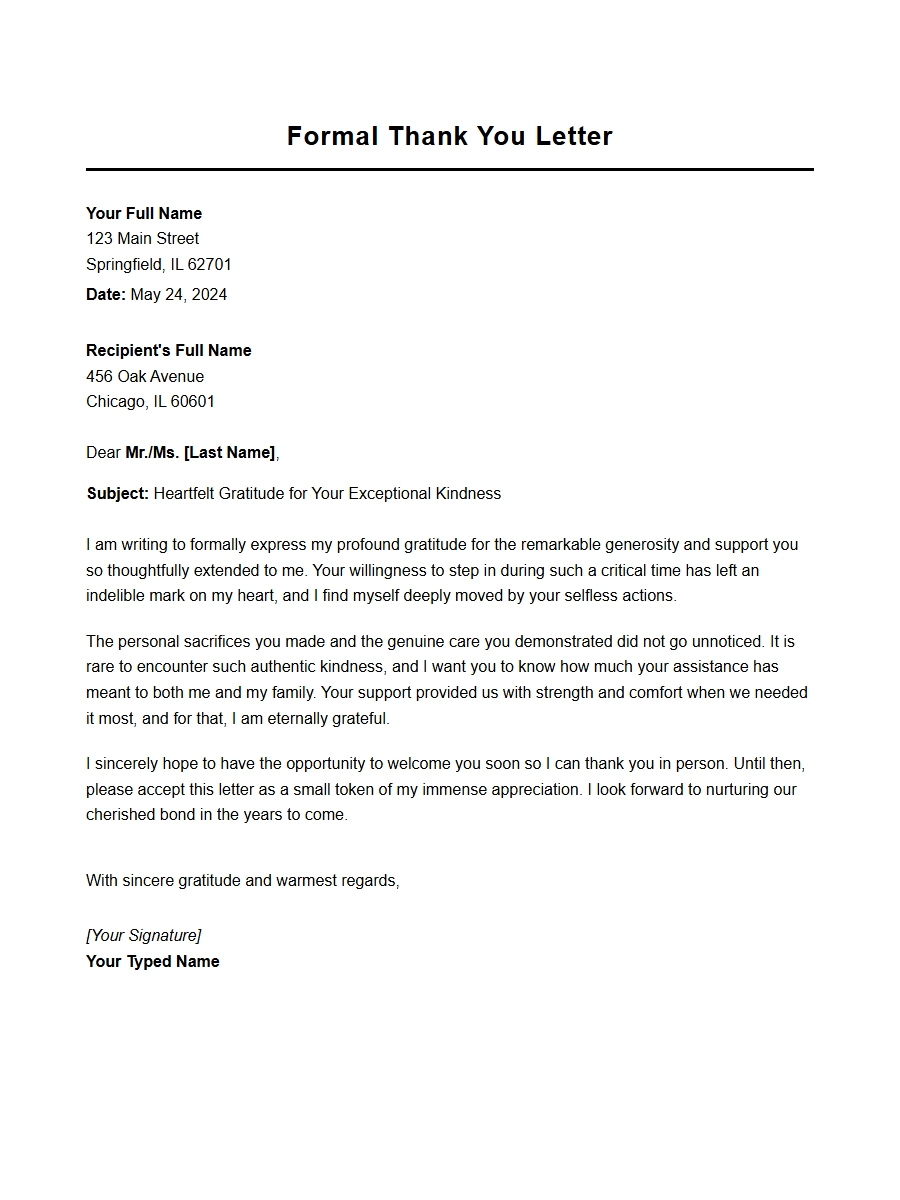 Expressing Thanks in a Formal Personal Letter
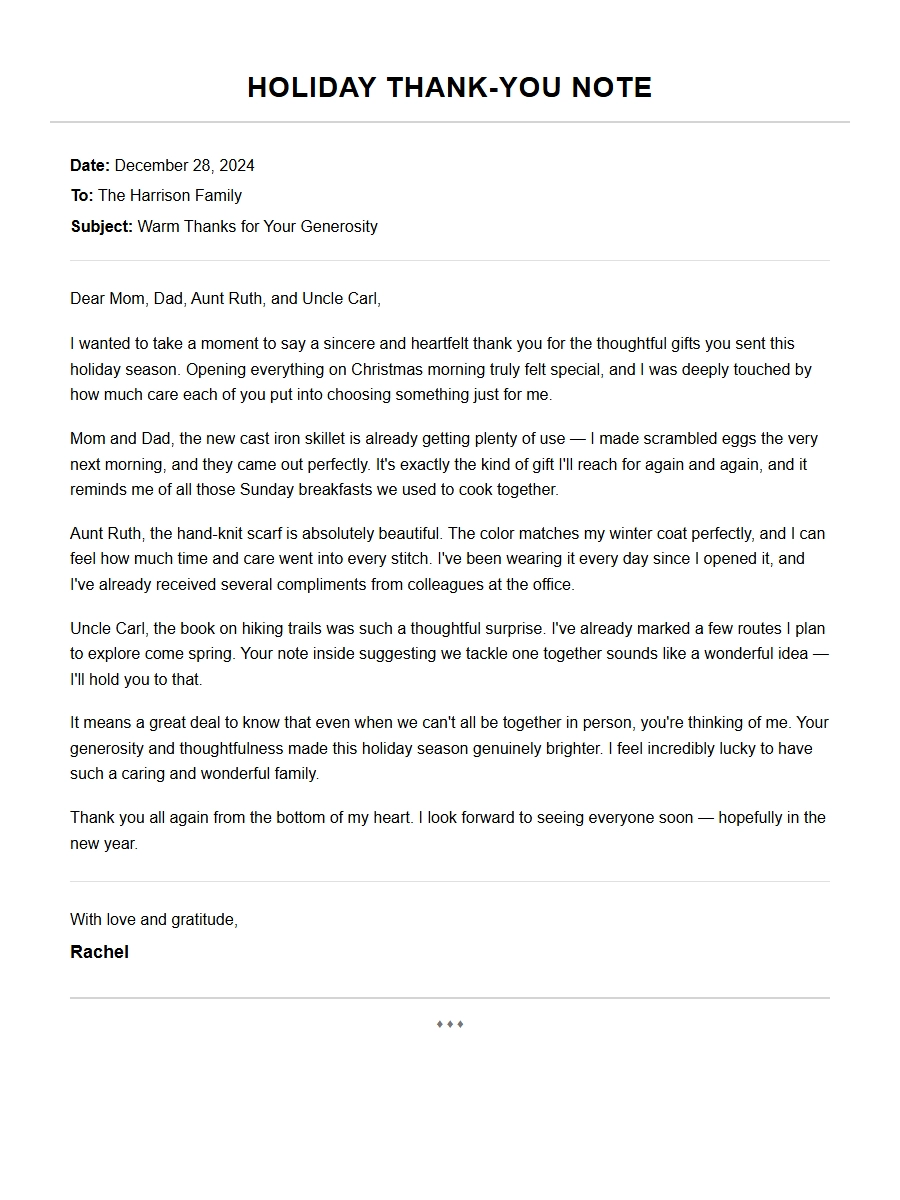 Thank You Letter Examples for Family Holiday Gifts
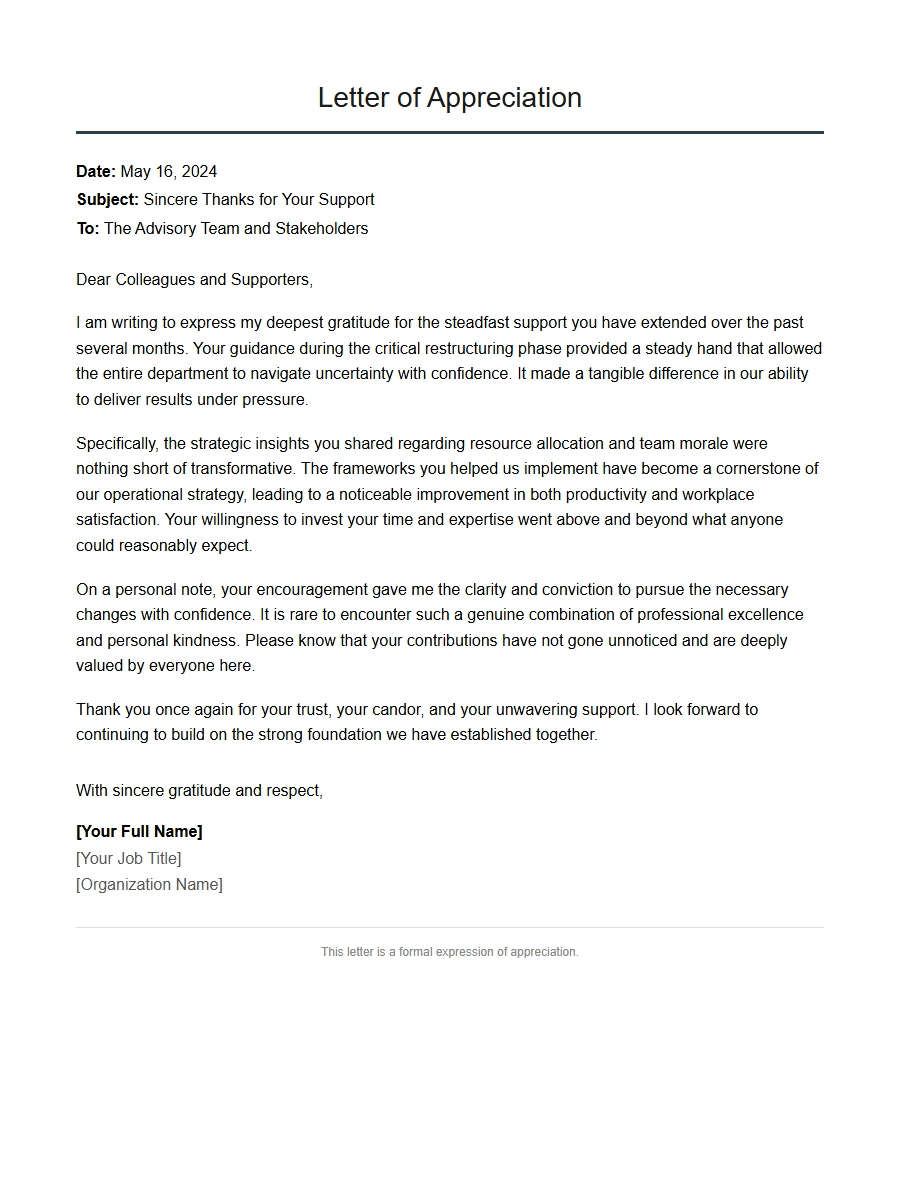 Sample Thank You Letter for Support
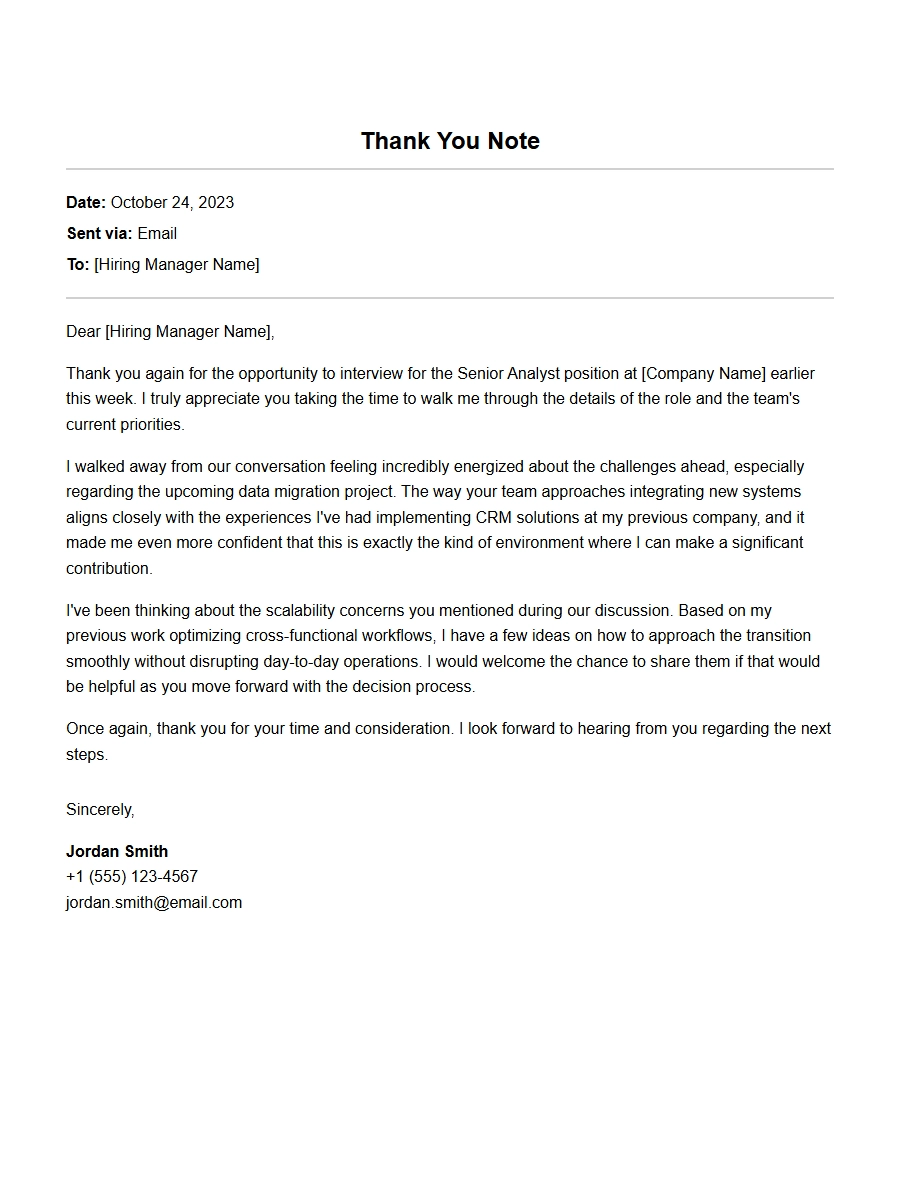 How to Write a Personal Thank-You Note After an Interview