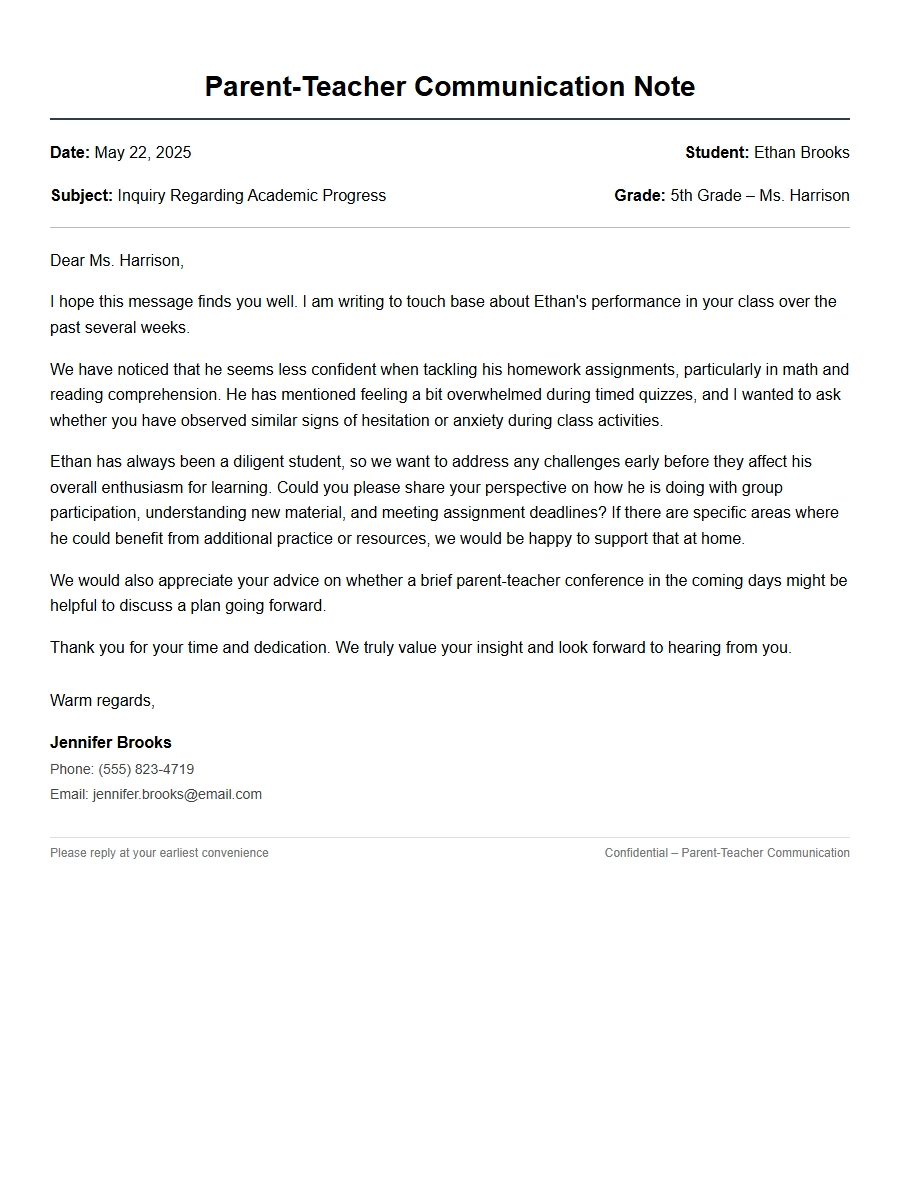
Sample Note to Discuss Your Child’s Progress with a Teacher
You’ve just seen your child’s report card and feel a knot in your stomach. Maybe grades dropped, or a teacher mentioned behavior issues. Now you need to write a professional note—but blank page anxiety hits. That’s normal. The good news is you don’t have to start from scratch.
Why Using a Sample Isn’t Cheating
Think of a letter template as training wheels, not cheating. It gives you the structure, tone, and key phrases professionals use. You’ll still personalize every word. That saves time and reduces stress. A solid sample also teaches professional correspondence etiquette—how formal or casual to be, how to address the teacher, and how to close without sounding stiff.
Category: Parent-Teacher Communication
Choosing the Right Sample for Your Situation
Not all parent-teacher notes are the same. If you’re simply asking about progress, a short digital letter format works. If you need to discuss a sensitive issue like learning difficulties or repeated absences, a more formal business letter format might be better. Look for samples that match the tone of your existing relationship with the teacher. If you already chat informally after school, a semi-formal note is fine. If you’ve never met, stick with polite formality.
For example, if your child’s performance is suffering because of medical issues, you might adapt a medical leave absence letter. In that case, explaining medical leave absence to school can give you the right language for explaining the situation without oversharing.
How to Adapt a Sample Without Losing Your Voice
First, fill in the blanks: your child’s name, the teacher’s name, specific concerns. Then rewrite the opening paragraph to sound like you. Avoid copying phrases like “I am writing to inform you” if that’s not how you talk. Instead, try “I wanted to touch base about Liam’s math grade—I noticed it dropped, and I’m hoping we can figure out what’s going on.”
Keep the letter structure from the sample, but adjust the salutation and closing to match your comfort level. “Dear Mrs. Chen” is always safe. “Best regards” or “Thanks again” work for closing. If you’re sending via email, skip the physical letterhead design and just put your name at the end.
One quick tip: grab attention in your opening line. Don’t bury the purpose. Teachers read dozens of notes a day. Say upfront whether you’re asking for a meeting, sharing updates, or requesting a specific change. That shows respect for their time.
Common Mistakes to Avoid
Using outdated salutations like “To Whom It Concern” when you know the teacher’s name. It feels impersonal. Also, don’t ignore formatting for email versus printed letter. Emails don’t need a full address block, but they do need a clear subject line. If you print, use standard margins and simple font.
Another mistake is being too negative or defensive. Even if you’re frustrated, start with appreciation (“Thanks for all you do”). Then state your concern factually. If you’re also handling other correspondence—like a refund request letter due to dissatisfaction—you can apply the same tone: clear, polite, and solution-focused.
If your child’s performance is tied to mental health struggles, you may need to share that delicately. A sample for sharing mental health struggles in a safe space can help you frame it as a partnership request, not a complaint.
Tone and Formality: Getting It Right
Your tone in writing should match the situation. For a routine check-in, a conversational tone works. For a serious concern, be more formal but still warm. Ask yourself: Would I say this aloud to the teacher? If it sounds too stiff or too casual, adjust.
Formal writing tips apply here: avoid slang, keep sentences clear, and use proper grammar. But don’t overthink it. A few contractions (“I’m,” “you’ll”) make the note feel human. Ever received a letter that felt too stiff or too casual? That’s what you’re trying to avoid.
If you need to authorize someone else (like a grandparent or tutor) to discuss your child’s progress, include that permission clearly. A sample for authorizing third party to access account info can be tweaked for school contexts—just replace “account info” with “academic records.”
Proofreading and Final Touches
Before sending, proofread your letter. Read it aloud. Check for typos and missing details. Make sure the teacher’s name is spelled correctly. Small errors can distract from your message. If you’re emailing, double-check the subject line (e.g., “Question about Emma’s reading progress”).
If your note is part of a larger conversation—say, you’re proposing a partnership with the school to help your child—you could adapt a partnership proposal to small local business format, focusing on mutual goals and clear next steps.
Use the Sample as a Springboard, Not a Crutch
The best parent-teacher notes feel both professional and personal. They show you care and you’re willing to collaborate. A sample gives you a starting point, but your real voice makes it effective. You’ll get faster with practice. The next time you need to write a note, you’ll know exactly how to start—and you’ll only need the sample as a quick reference, not a lifeline.
Samples to Guide You
Sample Note to Discuss Your Child’s Progress with a Teacher
Request for Parent-Teacher Meeting
Dear Mrs. Thompson,
I am writing regarding the performance note you sent home with my son, Liam, about his recent math assessments. I appreciated your detailed observations and would like to discuss his progress further.
Would you be available for a brief meeting next week? I am free on Tuesday or Thursday after 3:30 PM. Please let me know what time works best for you.
Student: Liam Carter
Teacher: Mrs. Thompson
Subject: Mathematics
Preferred days: Tuesday or Thursday
Thank you for your continued support. I look forward to hearing from you.
Best regards, Jane Carter
Thank-You Note for Teacher's Feedback
Dear Mr. Rodriguez,
Thank you so much for the thoughtful performance note you sent home about my daughter, Emma. It was encouraging to read your positive comments about her reading comprehension, and I appreciate the specific suggestions for improvement.
We have already started implementing your recommendations:
Reading for 20 minutes each evening
Discussing story elements together
Using flashcards for vocabulary
Please continue to keep us updated on her progress. Your dedication means a great deal to our family.
Sincerely, Michael Chen
Clarification on Performance Note Criteria
Dear Ms. Patel,
I received the performance note regarding my child, Aiden, and I wanted to ask for clarification on a couple of points. The note mentioned his "participation in group projects" as needing improvement, but I am unsure what specific behaviors are being evaluated.
Could you please elaborate on the grading criteria? I have summarized my questions below:
Area
Question
Group Participation
Is it based on speaking up, or on collaboration skills?
Homework Completion
Is late submission penalized for group assignments?
Behavior
Are there specific incidents I should be aware of?
Thank you for your time. I look forward to your response so we can support Aiden better.
Warmly, Olivia Brown
Progress Update After Teacher's Note
Dear Ms. Garcia,
Following up on the performance note you sent home about my son, Ethan, I wanted to share some positive developments. We have been working on his organization skills, as you advised, and I have noticed improvements.
Here is a summary of what we have done:
Created a daily homework checklist
Set up a designated study space
Reviewed his planner each evening
Ethan was also very motivated by your note. He has been more proactive about asking for help in class. Could you let me know if you have observed any change in his participation?
Thank you again for your support.
Best, Robert King
Parental Concern About Child's Performance
Dear Mr. Johnson,
I am writing with some concern after receiving your performance note about my daughter, Sophia. The note indicated she is struggling with science concepts and not completing lab reports on time. I would like to understand more about the root cause.
Could you please provide details on the following:
Whether this is a recent trend or an ongoing issue
If there are specific topics she is finding difficult
Any recommendations for extra resources or tutoring
I want to ensure Sophia gets the help she needs before the semester ends. Please let me know a convenient time to discuss this further.
Sincerely, Linda Martinez
Note About Child's Improved Behavior
Dear Mrs. Lee,
I wanted to follow up on the performance note you sent regarding my son, Noah. The note highlighted some behavioral concerns during recess. I am happy to report that we have addressed these at home, and Noah has been showing much better self-control.
To track his progress, we created a simple chart:
Week
Incidents Reported
Positive Notes
Week 1
3
0
Week 2
1
2
Week 3
0
1
He is also trying to use his words instead of pushing. Please let me know if you see any further improvement.
Thank you for your patience.
Best regards, Karen Scott
Request for Additional Support Resources
Dear Mr. Adams,
I am writing in response to the performance note you sent about my child, Mia, which mentioned she is falling behind in reading fluency. I want to work together with you to help her catch up.
Could you please suggest specific resources or interventions? I have listed what we currently have at home:
Leveled reading books (Level G–H)
Flashcards for sight words
Access to online reading apps
Additionally, are there any school-based tutoring programs or reading groups available? I am happy to volunteer in the classroom if that would help.
Thank you for your guidance.
Sincerely, Sarah White
Follow-Up on Teacher's Suggested Strategies
Dear Ms. Taylor,
Thank you for the performance note regarding my son, Jacob. After receiving your suggestions to improve his focus, we started implementing the following strategies:
A consistent bedtime routine to ensure adequate sleep
Breaking homework into 15-minute intervals
Using a fidget tool during class (with your permission)
I have noticed he is more attentive during our home practice sessions. Could you let me know if you have seen any improvement in his classroom behavior?
Also, is it okay for him to keep the fidget tool in his desk? Thank you for your guidance.
Best wishes, Amanda Walker
Informing Teacher of Upcoming Events Affecting Performance
Dear Mr. Clark,
I received your performance note about my daughter, Ava, and I appreciate the heads-up about her declining grades in spelling. I suspect this may be related to recent events at home.
We have been dealing with a family emergency over the past two weeks, which has affected Ava's study routine. I wanted to bring this to your attention so you are aware of the circumstances. We expect things to settle by next week.
Here is a timeline of the situation:
Date
Event
Nov 1–7
Grandmother hospitalized
Nov 8–14
Frequent hospital visits
Nov 15 onward
Recovery phase, routine resuming
I would appreciate any flexibility with upcoming assignments, and I am happy to discuss a plan to help Ava catch up.
Thank you for your understanding.
Warmly, Patricia Hall
Positive Response to Performance Note
Dear Mrs. Evans,
I received the performance note you sent home about my son, Benjamin, and I wanted to thank you for the thorough assessment. I was pleased to see that his math skills are improving, and I appreciate your suggestions for extending his learning.
We have started using some of the advanced worksheets you recommended. Benjamin has been especially interested in the word problems. Here is what we have been working on:
Multiplication and division facts
Solving multi-step word problems
Using online math games for practice
Please feel free to send home any additional enrichment materials. I am also available to discuss his progress at your convenience.
 Thanking a Mentor for Guidance: Sample Messages
 Expressing Gratitude: Handwritten Letter Example
 Expressing Thanks in a Formal Personal Letter
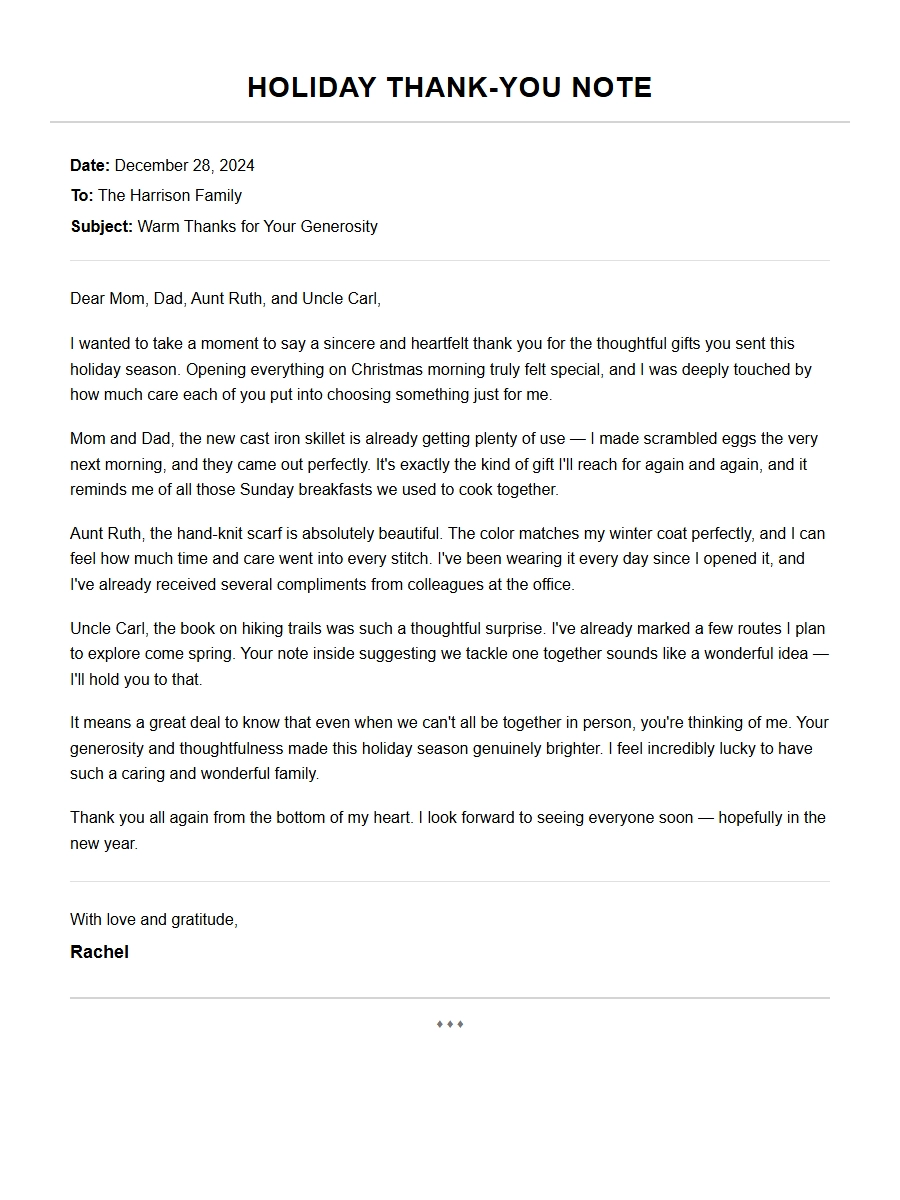 Thank You Letter Examples for Family Holiday Gifts
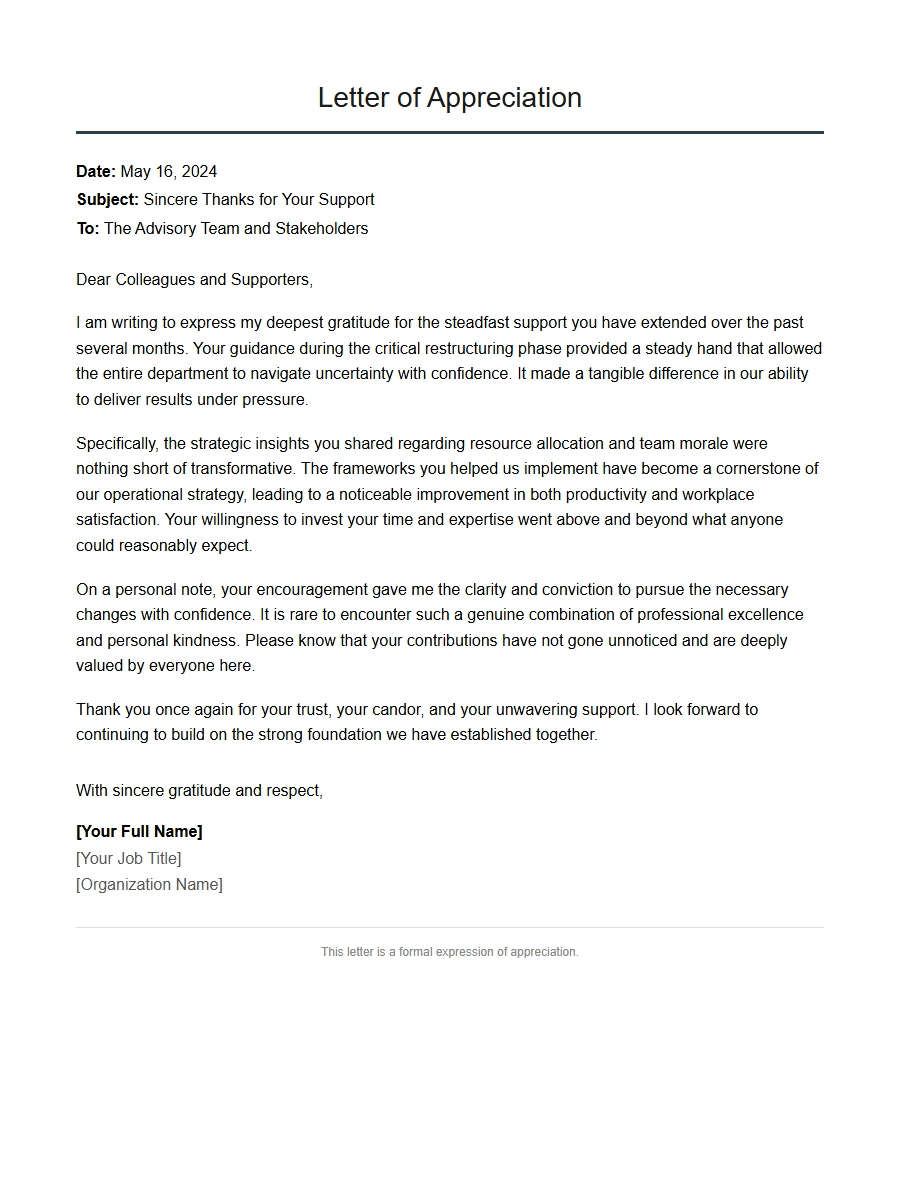 Sample Thank You Letter for Support
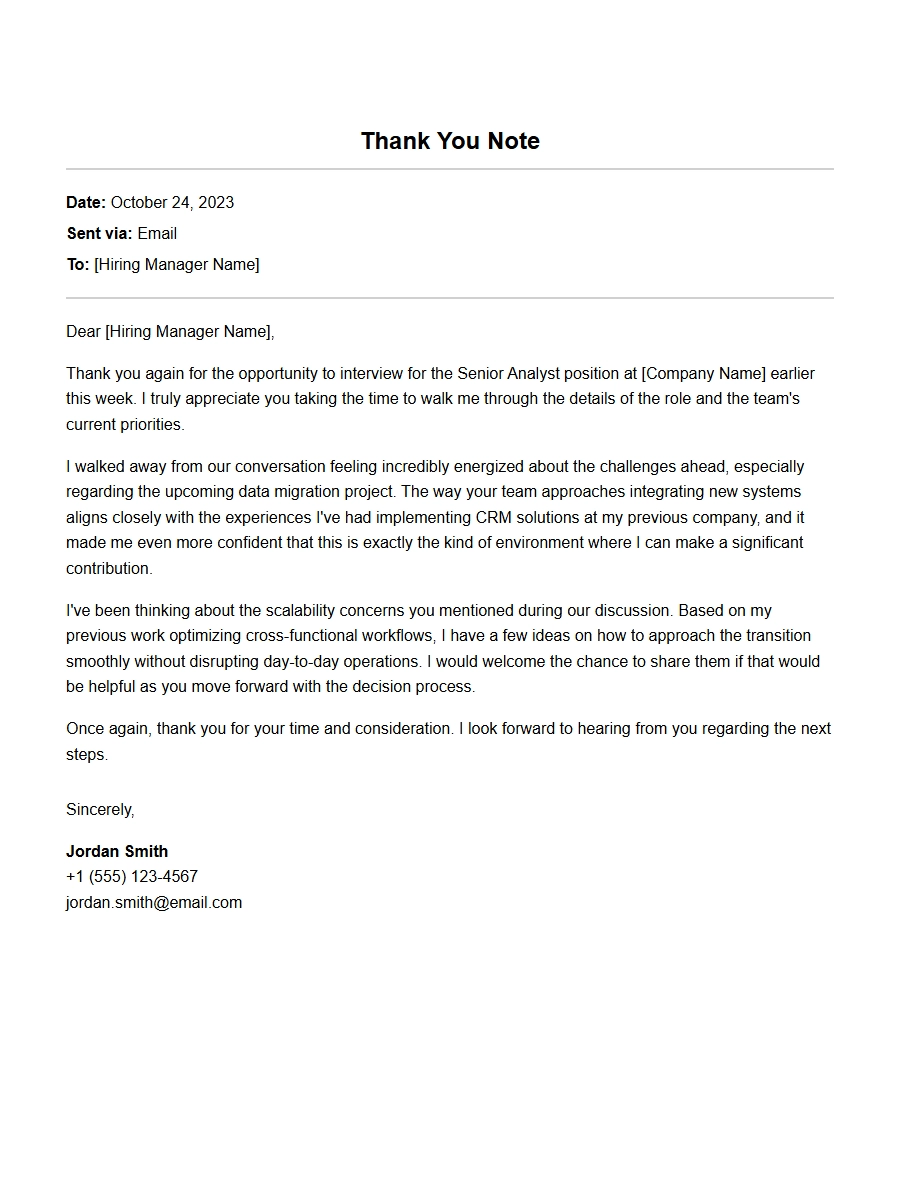 How to Write a Personal Thank-You Note After an Interview