distributor agreement proposal letter - Business Proposal Letters
You need to send a distributor agreement proposal but the cursor just blinks at you. That blank page feels like a wall. It’s not that you don’t know your offer—it’s that translating it into a formal proposal feels awkward and risky. One wrong phrase and you could sound too pushy, too vague, or just plain unprofessional. I’ve been there, and the best shortcut I’ve found is a solid sample.
Using a distributor agreement proposal letter sample isn’t cheating. It’s smart. A good sample gives you the structure, the professional tone, and the key phrases that work. You don’t start from scratch—you start from a proven foundation. Then you tweak it with your specific details, your actual terms, and your genuine voice. That’s how you save time and still sound like you.
Category: Business Proposal Letters
What exactly is a distributor agreement proposal letter?
It’s a professional correspondence you send to a potential distributor. Its job is to outline the business relationship you’re proposing: product details, territory, pricing, expectations, and terms. It’s not a signed contract—it’s the pitch that leads to a contract. The letter shows you’re serious, organised, and ready to work together. It’s a formal writing task, but it doesn’t have to be stiff.
When do you need one?
You need it when you’re approaching a new distributor for the first time, or when you’re formalising a verbal handshake into a written proposal. Maybe you’ve had a few calls and the distributor wants to see everything in black and white. Or you’re cold outreach and need a document that commands attention. In either case, a well-written distributor proposal letter sets the tone for the entire negotiation. It’s the bridge between “let’s talk” and “let’s sign.”
How to structure your distributor proposal letter
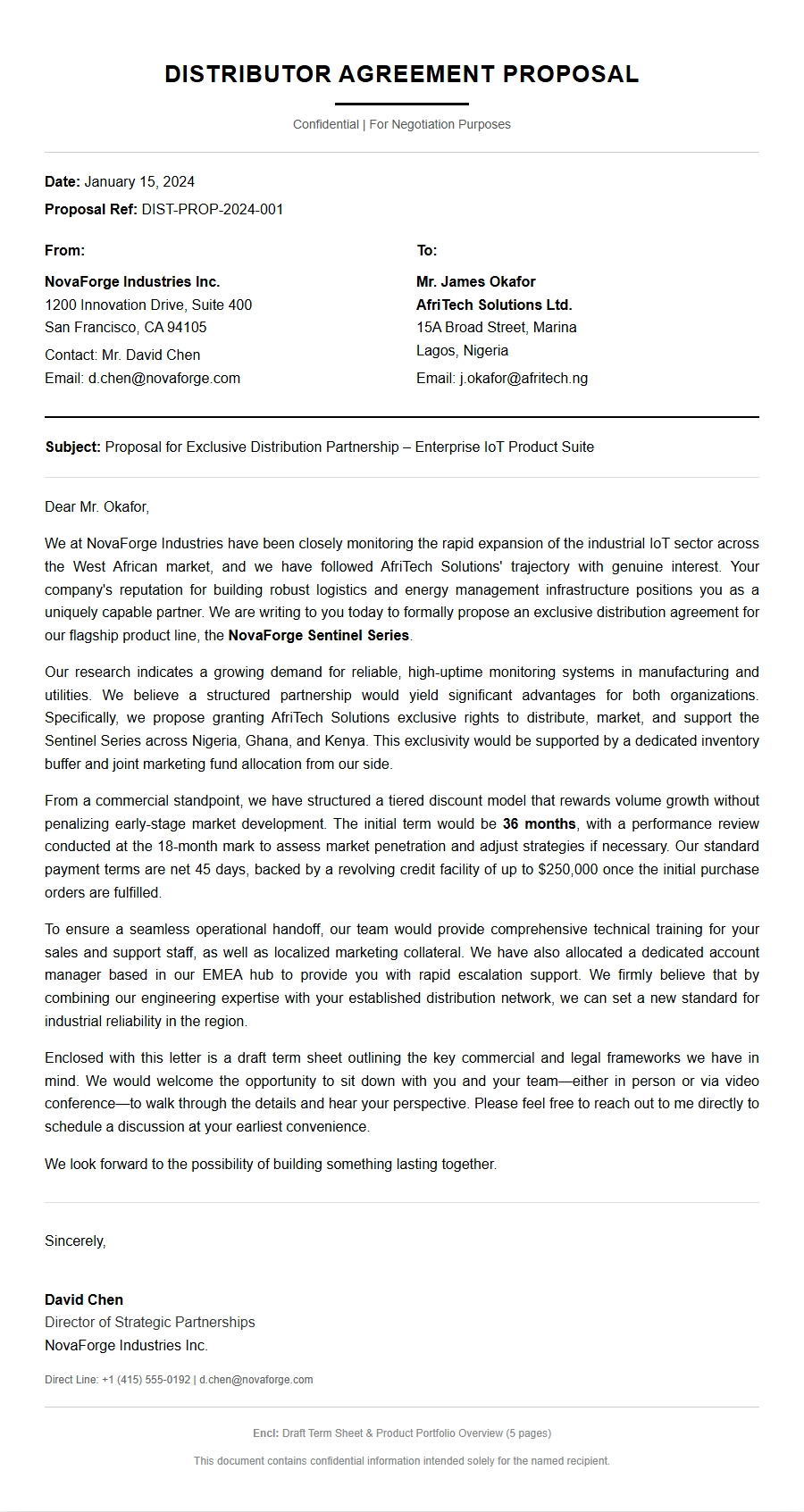
Start with a clean business letter format. Use your letterhead design if you have one—your company logo and contact details at the top. Then the date, the distributor’s name and address, and a proper salutation (avoid “To Whom It May Concern” if possible; use the actual person’s name). The opening paragraph should grab attention: briefly explain why you’re reaching out and why this partnership makes sense. For example, “We’ve been impressed by your network in the Midwest and believe our product line is a natural fit for your customers.”
The body of the letter should cover the key terms. This is where you adapt the sample. Talk about the product or service, the proposed territory, distribution rights, pricing structure, payment terms, and any performance expectations. Be specific but not overly legal—this is a proposal, not a contract. Use clear language. If you’re offering exclusive rights, say so. If you have minimum order requirements, state them. This section is your chance to show you’ve thought through the logistics.
Then include a call to action: ask for a meeting or a follow-up call. Close with a standard salutation like “Sincerely” or “Best regards,” and leave room for your signature. For email versions, a digital letter format works fine—just keep the same structure and use your email signature.
How to customize a sample without losing your voice
The trap is copying a sample word-for-word. That makes your letter sound robotic. Instead, read the sample first to understand the flow. Then rewrite each section in your own words. Keep the skeleton—the sections and key phrases—but replace generic claims with real details. Got a product that saves retailers 20% on shipping? Mention that. Have a distributor who already showed interest? Reference that conversation. Authenticity comes from specifics, not from perfect grammar.
Also, adjust the tone. If your brand is casual and innovative, your proposal can be slightly less formal. If you’re in a conservative industry like medical devices, keep it polished. The sample should guide your tone in writing, not dictate it.
Common mistakes to avoid
One big one: using outdated salutations like “Dear Sir” or “Gentlemen.” It’s 2025. Use the person’s name or a neutral “Dear Team [Company Name].” Another mistake is ignoring formatting for email vs printed letter. If you’re sending by email, keep paragraphs short, avoid attachments that need printing, and include a clear subject line. Don’t bury your main point—distributors get dozens of emails a day. Also, skip the legalese. Your proposal letter is a persuasion tool, not a legal brief. Save the fine print for the actual distributor agreement.
Proofreading letter matters. A typo in a dollar amount or a territory name erodes trust. Read it aloud, or ask a colleague to glance at it. Even a small error can make you look careless. And don’t forget to include your contact information—nothing kills momentum like a proposal with no phone number.
A distributor agreement proposal letter sample is a tool, not a crutch. The more you write these proposals, the faster you’ll get. You’ll develop your own mental template, and eventually you won’t need to look at a sample at all. But until then, grab a good one, make it yours, and send it with confidence. The best proposals feel both professional and personal—and that combination starts with your willingness to adapt, not just copy. Good luck.
Simple Examples
distributor agreement proposal letter - Business Proposal Letters
Standard Distributor Agreement Proposal
Date: March 15, 2025
To: ABC Distribution Inc. From: XYZ Manufacturing Co.
We are pleased to propose a standard distributor agreement for our range of industrial lubricants. Your established network in the Midwest region makes you an ideal partner for serving automotive and machinery sectors.
Commission Rate: 15% on all sales within territory
Key Conditions:
Condition
Detail
Exclusivity
None; non-exclusive arrangement
Minimum Annual Purchase
$150,000
Sales Reporting
Quarterly, due within 15 days after quarter end
Marketing Support
Co-op funds up to 3% of net purchases
We look forward to a mutually beneficial relationship. Your acceptance by March 31 would allow us to begin shipments by April 15.
Proposal valid until April 14, 2025.
Exclusive Distributor Agreement Proposal
Date: March 18, 2025
To: GlobalTech Solutions From: EcoPower Batteries
We invite GlobalTech to become our exclusive distributor for lithium-ion battery systems in the Benelux region. Your expertise in renewable energy storage aligns perfectly with our product innovation.
Exclusive Terms:
Territory: Belgium, Netherlands, Luxembourg
Product Range: Residential (5–20kWh) and commercial (50–500kWh) battery systems
Minimum Commitment: €500,000 in first 12 months
Discount Structure: Tiered – 20% for orders below €100k, 25% for €100k–€300k, 30% above €300k
Payment Terms: 30% deposit with order, balance on delivery
Exclusivity Conditions:
Condition
Requirement
Annual Sales Target
€750,000 by year 2
Exclusive Right
No other distributor appointed in territory
Performance Review
Semi-annual; exclusivity contingent on target attainment
Brand Representation
Must maintain showroom with our full line
If you are interested, kindly sign the attached letter of intent by April 1. We can then negotiate a detailed agreement.
This proposal is confidential and non-binding until countersigned.
Renewal Proposal for Distributor Agreement
Date: March 20, 2025
To: Pacific Supplies Ltd. From: GreenChem Agro
As our current distributor agreement expires on June 30, 2025, we propose renewal with enhanced terms reflecting our successful three-year partnership. Your sales grew 22% last year, demonstrating strong market penetration.
Proposed Renewal Terms:
Current Term (2022–25)
Proposed Term (2025–28)
Non-exclusive
Exclusive for Western Canada
Commission: 12%
Commission: 14%
Minimum annual purchase: $2M
Minimum annual purchase: $2.5M
Net 45 payment
Net 30 payment (2% discount for early settlement)
Additional Benefits:
Co-op marketing budget increased to 5% of net sales
Dedicated account manager
First access to new biopesticide line launching 2026
We welcome a meeting to finalize. Please respond by April 15 so we can prepare the contract.
This renewal proposal is valid until May 1, 2025.
International Distributor Agreement Proposal
Date: March 22, 2025
To: EuroMed Trading GmbH From: Texan Oilfield Equipment Inc.
We propose an international distributor agreement for our drilling equipment and safety tools across the EU market. Your logistics network and regulatory knowledge make you an ideal entry partner.
Key International Terms:
Territory: European Union (except UK, Switzerland)
Pricing: FOB Houston; freight costs borne by distributor
Currency: All transactions in EUR
Minimum Initial Order: €200,000
Regulatory Responsibilities:
Party
Responsibility
Texan Oilfield
Provide CE/ATEX certifications, product documentation
EuroMed Trading
Obtain local import permits, handle customs clearance
Payment & Shipment: Letter of credit confirmed by a top EU bank. Lead time 90 days after L/C confirmation. Minimum 3-year commitment with annual review.
We would like to schedule a video conference to discuss incoterms and warranty details. Please let us know your availability next week.
Proposal open until April 15, 2025.
Small Business Distributor Proposal
Date: March 10, 2025
To: LocalMart Retail Group From: Artisan Soaps Co.
Thank you for your interest in distributing our handmade soaps and skincare products. We are confident a partnership will delight your customers and grow both our brands.
Simple Terms for Small-Scale Distribution:
Products: 10 SKUs (bar soaps, lotions, lip balms)
Territory: Your 3 retail locations in Portland metro
Wholesale Price: 40% below MSRP
Minimum Order: $500 per order
Payment Terms: 50% upfront, 50% upon delivery
What We Provide:
Support Item
Details
Display Rack
Free countertop display with first order
Samples
20 sample sets per quarter
Marketing Materials
Shelf talkers, tear pads, social media graphics
We suggest a 3-month trial period. If sales exceed $2,000 per month, we can negotiate exclusivity. Please sign the attached simple agreement form and we will process your first order within 5 business days.
Proposal ends March 31, 2025.
Performance-Based Incentive Distributor Proposal
Date: March 12, 2025
To: NextGen Distributors From: SolarTech Inc.
We are excited to propose a distributor agreement with aggressive performance incentives for our solar panel and inverter line. Your track record suggests you can exceed our targets.
Base Terms:
Territory: California, Arizona, Nevada
Products: Monocrystalline panels (400–500W) and hybrid inverters
Base Commission: 12% on all sales
Minimum Monthly Order: $50,000
Incentive Table:
Quarterly Sales Target
Bonus Commission
$200,000 – $299,999
+2% (14% total)
$300,000 – $499,999
+4% (16% total)
$500,000+
+6% (18% total) + $10,000 cash bonus
Additional Performance Rewards:
Top distributor of the year receives an all-expenses-paid trip to our German headquarters.
Quarterly training webinars on new product features.
We require quarterly sales reports verified by independent audit. Let us set up a call to go over the incentive plan in detail.
Offer valid until April 1, 2025.
New Product Line Distribution Proposal
Date: March 8, 2025
To: FreshChoice Distributors From: NutriVeg Foods
We are launching a premium line of plant-based protein snacks in Q3 2025 and propose that FreshChoice be our exclusive foodservice distributor for the Southeast region.
New Product Details:
Product Names: CrispChick’n Bites, Blazing Beefless Strips, Cheezy Kale Puffs
Formats: Bulk (5 lb bags for restaurants) and retail (6 oz pouches)
Special Launch Incentive: 5% extra discount on initial orders placed by May 1, 2025. We also provide free POS materials and shelf talkers.
If accepted, we will share full product specs, allergen info, and a sample kit. Please confirm interest by April 1.
This proposal is confidential.
Termination and Renegotiation Proposal
Date: March 28, 2025
To: Allied Distribution Group From: PrimeMed Devices
Following our recent discussions regarding the underperformance of the current distributor agreement, we propose terminating the existing contract effective May 1, 2025, and entering into a new, restructured agreement.
Current Issues:
Sales in 2024 were $1.2M against a minimum of $2M
Slow adoption of new product line (Surgical Probes)
Three payment defaults in the last 12 months
Proposed New Agreement:
Element
Current
Proposed
Territory
Northeast US
Reduced to NY, NJ, CT
Minimum Annual
$2M
$800,000 (first year)
Commission
15%
12% (with 3% performance bonus)
Payment Terms
Net 30
Net 15, with 5% late fee
Conditions to Continue: Clear all outstanding invoices ($47,000) before April 15; provide a bank guarantee for $100,000; accept monthly performance reviews. We believe these changes rebuild trust and profitability for both parties.
Please sign the attached mutual termination release and new letter of intent by April 10.
This proposal supersedes any previous communications.
Multi-Tier Distributor Proposal
Date: March 30, 2025
To: Wholesale Direct Corp. From: AquaPure Water Systems
We propose a multi-tier distributor arrangement: Wholesale Direct as master distributor for the South Central US, with authority to appoint sub-distributors. This structure can accelerate coverage of residential water filtration systems.
Minimum Inventory: $100,000 worth of stock (purchased within 60 days)
Sub-Distributor Structure:
Level
Discount
Requirements
Master Distributor
35%
Manage sub-distributor network, stock inventory
Sub-Distributor
25%
Minimum order $10,000, approved by master
Dealer/Retailer
15%
End customer facing, selected by sub-distributor
Support for Master: Co-op advertising (4% of net purchases), training for sub-distributors, and a dedicated regional manager. We expect you to appoint at least five sub-distributors within six months.
This model has worked well in other regions. Let us schedule a workshop to train your team on onboarding sub-distributors.
Proposal valid for 30 days from March 30, 2025.
Trial Distributor Agreement Proposal
Date: March 25, 2025
To: QuickMart Convenience Stores From: Buzz Energy Drinks
We propose a 6-month trial distributor agreement for our new line of organic energy drinks. Your 50-store chain in the Southwest offers an ideal test market before broader rollout.
Evaluation Criteria: At the end of the trial, if average monthly sales per store exceed 200 units, we will discuss a long-term exclusive agreement. There is no obligation to continue, and unsold inventory may be returned with 30 days notice.
We can deliver initial stock within 10 days of signed agreement. Let’s meet to finalize details.
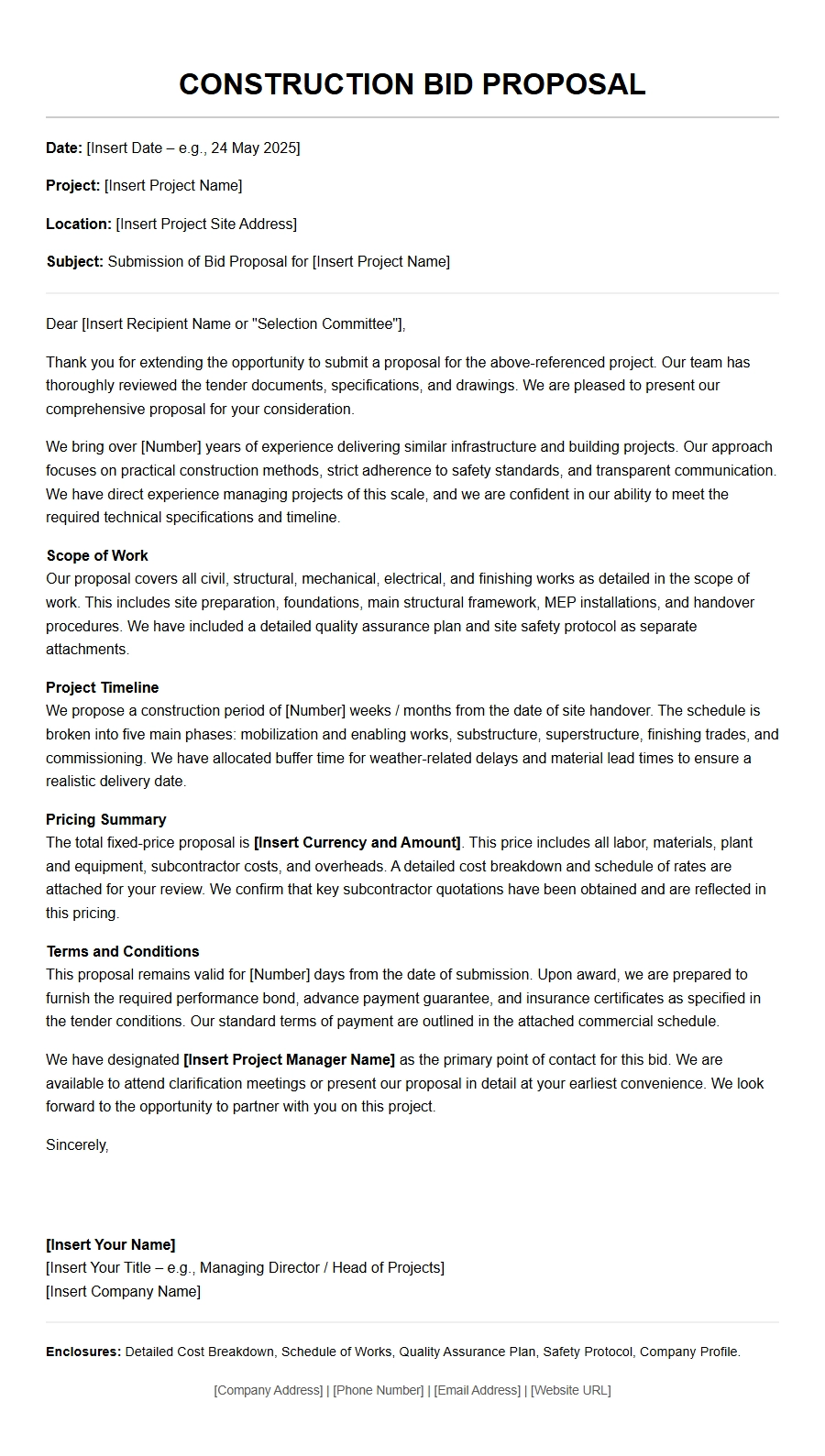 Sample Construction Bid Proposal Letter
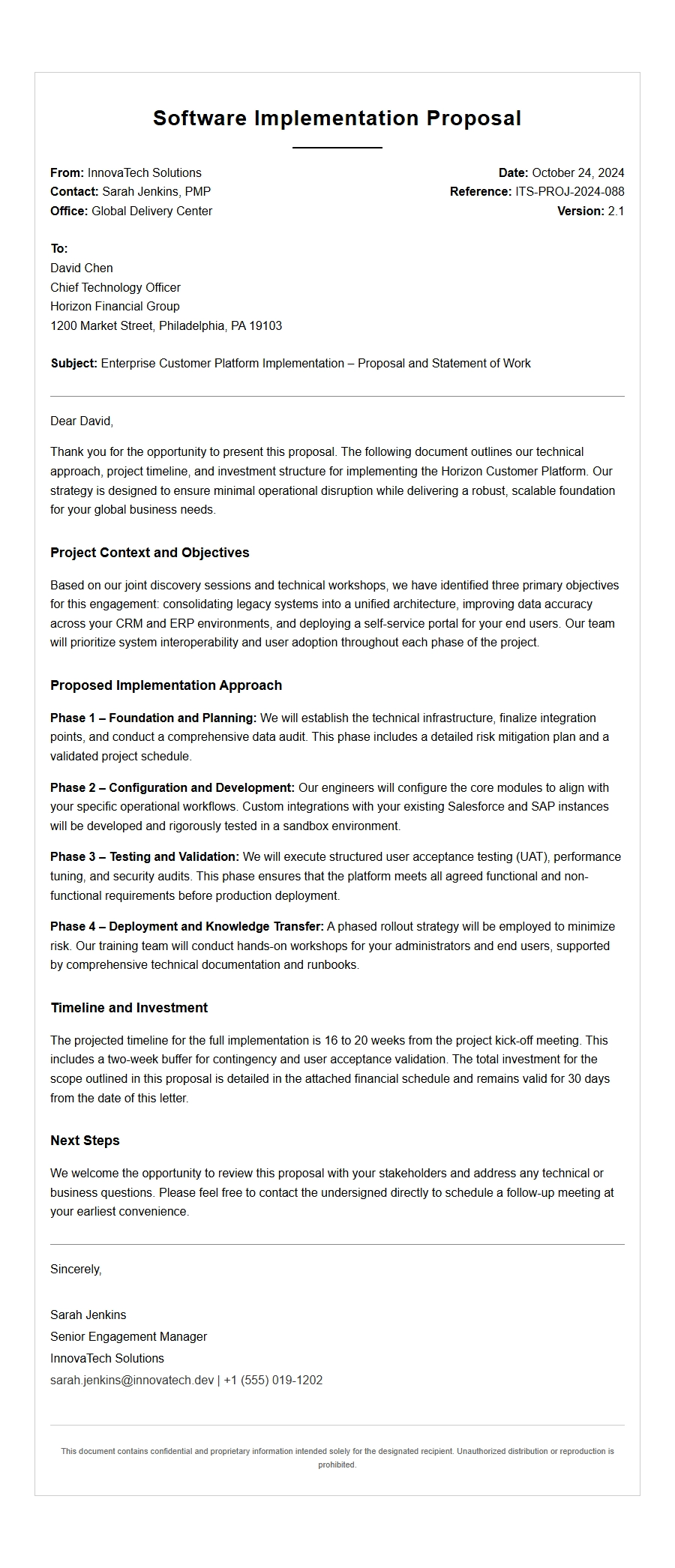 Enterprise Software Implementation Proposal Letter Example
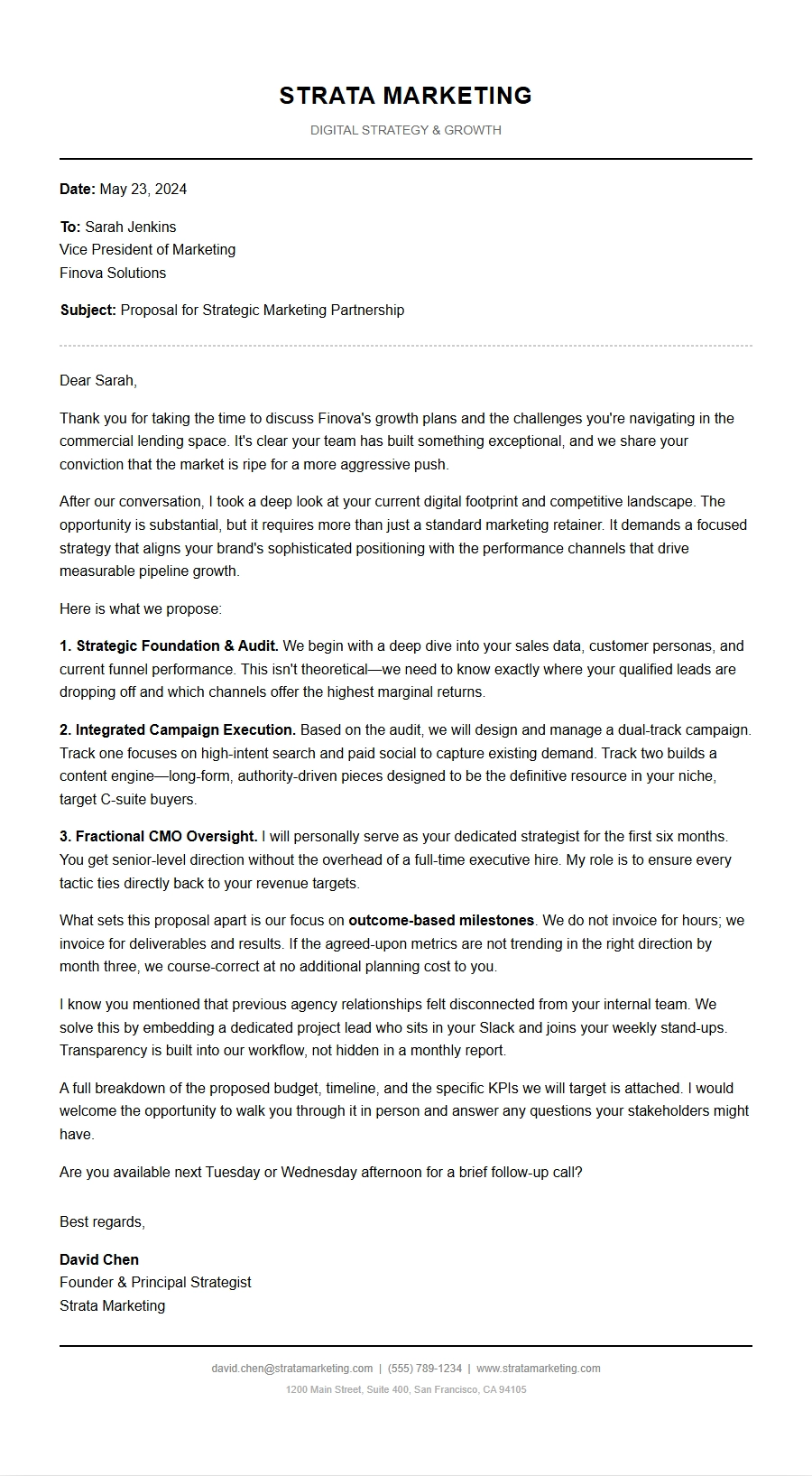 Marketing Agency Service Proposal Letter Template
 Creative Studio Project Proposal Letter
 Small Business Partnership Proposal Letter Template
 Startup Investment Proposal Letter Template