You just got a proposal that looks perfect—now you need to send a formal acceptance letter. The terms are clear, the project feels right, but putting it into a professional letter can feel awkward. You don’t want to sound too stiff or too casual. A good sample cuts through that hesitation. It gives you a structure you can trust, so you can focus on making the letter feel like you.
Category: Business Proposal Letters
What Is an Acceptance of Terms Proposal Letter?
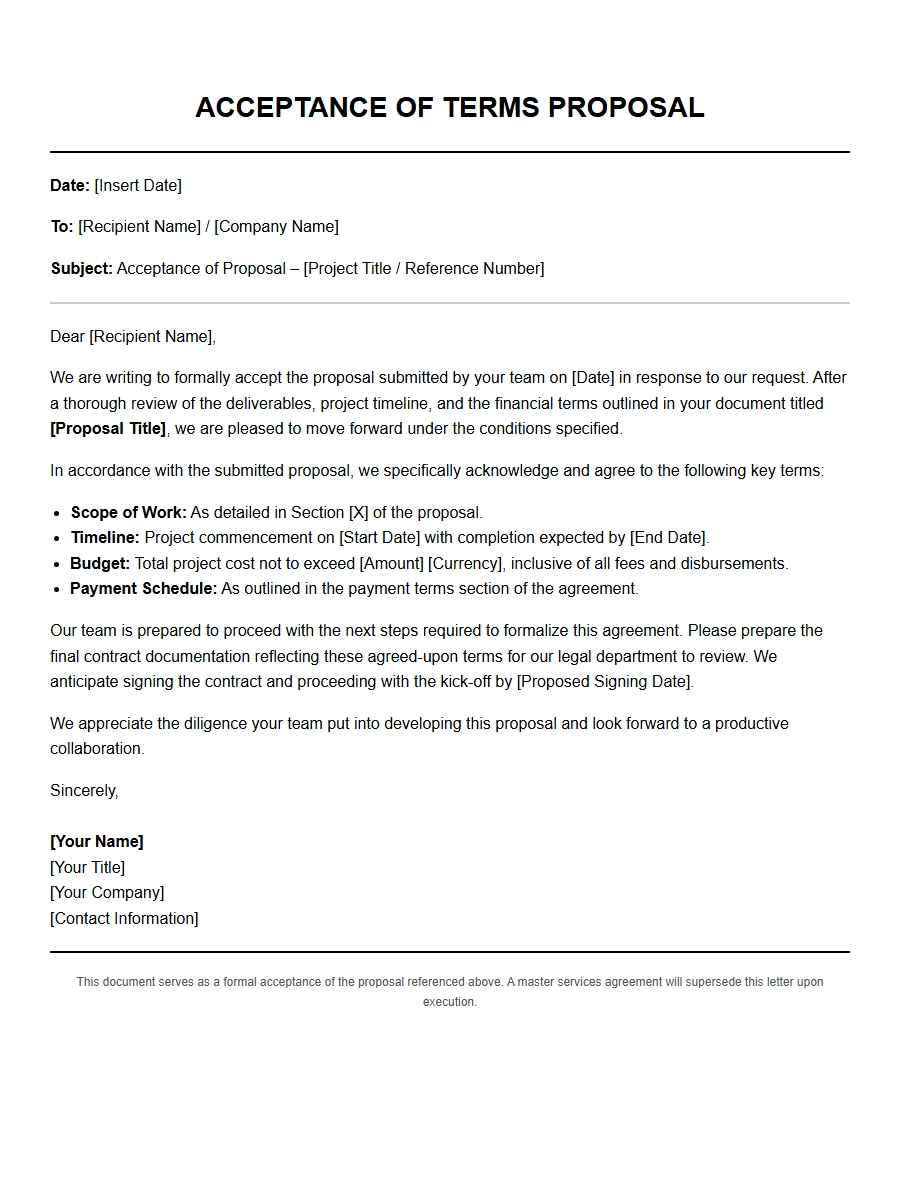
This letter confirms that you agree to the specific conditions laid out in a proposal. It could be for a service contract, a partnership agreement, or a project bid. The letter says “yes, I accept these terms” in a clear, written format. It protects both sides by putting the agreement in writing. You’ll often send it after reviewing a proposal but before any work starts.
Using a letter template here isn’t lazy—it’s smart. Templates give you the right letter structure and common phrases so you don’t forget important details like dates, obligations, or signatures. And because you customize it, it still sounds like you.
When You Really Need This Letter
Maybe you’re a freelancer accepting a client’s proposal for a design project. Or you’re a small business owner saying yes to a vendor’s pricing and delivery terms. Even in formal situations like accepting a job offer that came as a proposal, this letter works. In each case, the format stays similar—polite, precise, and professional.
A common mistake is treating it like a simple “okay.” But the acceptance of terms letter should reference the original proposal by date or title, confirm each key term, and state the next step. That’s where professional correspondence matters. A sample reminds you to do that without guessing.
How to Pick the Right Sample
Not every sample fits every situation. If you’re accepting terms for a premium service proposal, you’ll want a more formal tone than for a quick freelance gig. Think about your audience. A corporate partner expects traditional business letter format with a proper salutation and closing. A local charity you’re donating to might appreciate something warmer. For fundraising scenarios, check a charity fundraising letter sample for tone ideas.
Also consider the medium. Are you printing it on letterhead or sending an email? For email, skip the full address block and keep the digital letter format short. A good sample shows both options. Don’t use outdated salutations like “To Whom It May Concern” if you know the person’s name. That’s basic letter writing etiquette.
Making the Sample Your Own
Start with the sample’s structure, then adjust the voice. If the sample says “We hereby accept the terms,” and you talk more casually, change it to “I’m happy to accept the terms.” Keep the key phrases that make it official: “per the proposal dated [date],” “agree to the following conditions,” “counterpart signature clauses.” Those are standard for formal writing tips.
Your opening paragraph should grab attention. Mention the proposal by name and show enthusiasm. For example: “Thanks for sending over the marketing plan proposal. I’ve reviewed the terms and am ready to move forward.” That’s direct, friendly, and professional. Avoid “I am writing to inform you” unless you need a very formal tone.
Common mistakes? Forgetting to specify what you’re accepting. If the proposal has multiple options, state which one you agree to. Also, don’t ignore formatting. A letterhead design that matches your brand adds trust. If you’re emailing, keep the subject line clear: “Acceptance of Proposal – [Project Name].”
Tailoring for Different Situations
The same basic template works whether you’re accepting terms for a moving company relocation service or a consulting engagement. But adjust the level of detail. For a relocation service, you might need to confirm dates, payment schedule, and liability. For a consulting proposal, you might mention deliverables and timeline.
If you’re following up after a pending decision, use a pending decision follow-up letter to check in before sending the acceptance. And if the proposal requires negotiation, see a revision negotiation proposal letter first. Those are separate documents, but they feed into the final acceptance.
Proofread and Keep It Personal
Before sending, proofreading the letter is essential. A typo in the acceptance of terms could cause confusion. Read it aloud to catch awkward phrasing. Check that you’ve replaced all placeholder text. And ask yourself: Does this sound like me? The best letters balance professionalism with personality. You want the recipient to feel confident that you understand the terms and are committed.
After a few times, writing this letter becomes faster. The sample is a springboard, not a crutch. Practice helps you learn what to keep and what to change. Over time, you’ll write it from memory, just checking a template for tiny details.
So next time you need to say “I accept,” don’t stare at a blank screen. Grab a sample, adapt it, and send a letter that feels both competent and human. That’s the kind of tone in writing that builds trust.
Simple Examples
Acceptance of Terms in Business Proposal Letter
[
{
“title”
“General Business Proposal Terms Acceptance”,
“body”
“
Date: 2024-11-21 Proposal Ref: BP-2024-089 To: Acme Corp., Attention: Ms. Jane Doe
We, at Smith & Associates, hereby formally accept the terms outlined in your business proposal dated 2024-11-01. Below is a summary of the agreed key terms:
Term
Description
Value
Service Scope
Strategic consulting for Q1 2025
12 weeks
Fee
Fixed price, payable in two installments
$45,000
Payment Schedule
50% upon signing, 50% upon delivery
Net-30 terms
Confidentiality
Per attached NDA, valid 3 years
—
We confirm our acceptance of these conditions and look forward to commencing work on December 1, 2024. Please find the signed counterpart enclosed.
Accepted by: John Smith, CEO, Smith & Associates Date: 2024-11-21
This letter serves as my acceptance of the terms set forth in your web development proposal dated 2024-11-10. I agree to deliver the following as per scope:
Responsive e‑commerce site (5 pages)
Payment gateway integration (Stripe)
SEO optimization and analytics setup
Two rounds of revisions
Project Timeline: 8 weeks from start date. Total Fee: $8,500 (50% upfront, 25% at milestone, 25% on completion).
Milestone
Delivery Date
Amount
Wireframes & design approval
Week 2
$2,125
Development complete (beta)
Week 6
$2,125
Final launch
Week 8
$4,250
I have reviewed and accept the standard terms regarding intellectual property, confidentiality, and cancellation policy. Please sign below to confirm.
Freelancer: Alex Rivera Client Representative: ________________________
”
},
{
“title”
“Software Development Proposal Terms Acceptance”,
“body”
“
Date: 2024-11-23 Ref: SWDEV-987 To: TechForge Inc., 123 Innovation Drive
We are pleased to accept the terms presented in your software development proposal for the “Project Orion” CRM module. The key terms we agree upon are as follows:
Development of a custom CRM module with 10 user stories as defined.
Testing and QA phase of 2 weeks post-development.
Deployment on AWS with 99.9% uptime SLA.
Total budget: $120,000, payable in three equal milestones.
Milestone
Deliverable
Due Date
1
Functional design document & prototype
2025‑01‑15
2
Core module completion & unit tests
2025‑03‑01
3
Final deployment & handover
2025‑04‑15
Additional terms regarding change requests and warranty are as per section 8 of the original proposal. This letter, along with the signed agreement, constitutes a binding contract.
Acceptance by Client: Sarah Chen, VP Operations, TechForge Inc.
”
},
{
“title”
“Partnership Proposal Acceptance”,
“body”
“
Date: 2024-11-24 Proposal Ref: PART-2024-055 From: BrightPath Education To: Global Learning Systems
We formally accept the terms of the strategic partnership proposal submitted on 2024-10-30. The partnership will focus on co‑developing online certification courses. Below are the accepted terms:
Area
Term
Revenue Share
60% (BrightPath) / 40% (Global Learning)
Course Catalog
Minimum 5 courses per year
IP Rights
Joint ownership, licensing per agreement
Term
3 years, renewable by mutual consent
We understand that the first joint course will launch in Q2 2025. All marketing and branding will follow the co‑branding guidelines attached to the proposal. Please proceed with drafting the final partnership agreement.
Accepted by: Dr. Maria Lopez, Director of Partnerships, BrightPath Education
This letter confirms our acceptance of the terms and conditions outlined in your vendor proposal for sustainable packaging materials. We agree to the following pricing and delivery schedule:
Item
Quantity (units)
Unit Price
Total
Bio‑degradable boxes (small)
500
$1.50
$750
Compostable mailers
1,000
$0.80
$800
Kraft tissue paper
200 rolls
$2.50
$500
Order Total: $2,050 Payment Terms: Net‑30 from invoice date. Delivery: Within 14 business days after order confirmation.
Please issue a formal purchase order number and confirm the acceptance. We look forward to a long‑term partnership.
Accepted by: David Kim, Procurement Manager, GreenLeaf Organics
”
},
{
“title”
“Real Estate Proposal Acceptance”,
“body”
“
Date: 2024-11-26 Proposal Ref: RE-COMM-1126 Property: 456 Oak Avenue, Suite 200, Metropolis
As the representative of Metropolis Commercial Leasing, I hereby accept the terms presented in your lease proposal for the above property. The agreed terms are as follows:
Lease term: 5 years, commencing January 1, 2025
Base rent: $4,500 per month (first year, 3% annual escalation)
Security deposit: $9,000 (two months’ rent)
Tenant improvements allowance: $25,000
Both parties acknowledge the conditions regarding maintenance responsibilities, insurance requirements, and use restrictions as detailed in sections 5‑8 of the proposal. A formal lease agreement will be prepared based on these terms.
Acceptance by Tenant: Thomas Grey, CFO, Grey Consulting Group Acceptance by Landlord: Rachel Adams, Leasing Director, Metropolis Commercial Leasing
We are delighted to accept the terms of your digital marketing campaign proposal. The campaign will run for 3 months starting January 2025. Below is a recap of the acceptance:
Component
Deliverable
Budget Allocated
Social media ads
4 platforms, 20 creatives
$15,000
Influencer partnerships
5 macro‑influencers, 2 posts each
$12,000
Email drip campaign
6‑email sequence + analytics
$3,000
Reporting & optimization
Bi‑weekly reports, weekly calls
Included
Total Campaign Fee: $30,000 Payment: 40% upfront, 30% at mid‑point, 30% upon completion.
We confirm the terms regarding content ownership (transferable to client after campaign) and the non‑disclosure clause. Please send the final contract for signatures.
Accepted by: Laura Miles, Marketing Director, FreshBite Fast Casual
”
},
{
“title”
“Consulting Services Proposal Acceptance”,
“body”
"
Date: 2024-11-28 Proposal Ref: CS-2024-278 Consultant: Strategic Minds Inc. Client: National Hospital Network
This letter confirms our acceptance of the terms in your consulting proposal for operational efficiency. The engagement details are as follows:
Scope: Process audit, staff training, and workflow redesign for 3 departments
Duration: 6 months, starting December 2, 2024
Fee structure: Monthly retainer of $18,000 plus $200 per hour for additional sessions
We also agree to the expense reimbursement policy (travel, lodging at standard rates) and the confidentiality agreement. Milestones and payment schedule:
Month
Deliverable
Invoice Amount
1
Initial audit report
$18,000
2
Training plan & pilot
$18,000
3
Implementation phase 1
$18,000
4–6
Continuous support & final report
$54,000 (combined)
Total estimated fee: $108,000 (plus expenses). We look forward to your invoice and the start of this engagement.
Accepted by: Dr. Patricia Owens, CEO, National Hospital Network
We are pleased to accept the sponsorship terms proposed for the TechFuture Summit. The package we have chosen is the “Platinum” level. Details of our acceptance:
Benefit
Value
Booth size
10’ x 10’ premium location
Speaking slot
20 minutes on Day 1
Logo placement
Main stage backdrop, website, all promotional materials
Sponsorship Fee: $25,000 Payment Terms: 50% upon acceptance, 50% by March 1, 2025. Event Date: April 15–16, 2025, at Metro Convention Center.
We understand that the contract includes a non‑exclusivity clause within the tech hardware category. An official sponsorship agreement will be sent to us within 7 business days. We look forward to a successful partnership.
Accepted by: Chris Evans, VP Brand Partnerships, TechGadget Inc.
"
},
{
“title”
“Supply Chain Agreement Acceptance”,
“body”
"
Date: 2024-11-30 Proposal Ref: SCM-2024-099 From: RapidLogistics Co. To: MegaMart Retail Inc.
This letter confirms MegaMart’s acceptance of the terms in your supply chain management proposal. The key agreed terms are summarized below:
Service: Warehousing, inventory management, and last‑mile delivery
Coverage: 3 regional hubs (East, Central, West)
Contract duration: 2 years, with annual performance review
Pricing: Flat monthly fee of $65,000 plus variable cost per shipment (see table)
Shipment Volume (per month)
Cost per unit
0–5,000
$1.80
5,001–15,000
$1.50
15,001+
$1.20
Both parties accept the service level agreement (98% on‑time delivery, 99.5% inventory accuracy) and the 60‑day notice for termination. Please proceed with the final contract.
Accepted by: Linda Park, SVP Operations, MegaMart Retail Inc. Date: 2024-11-30
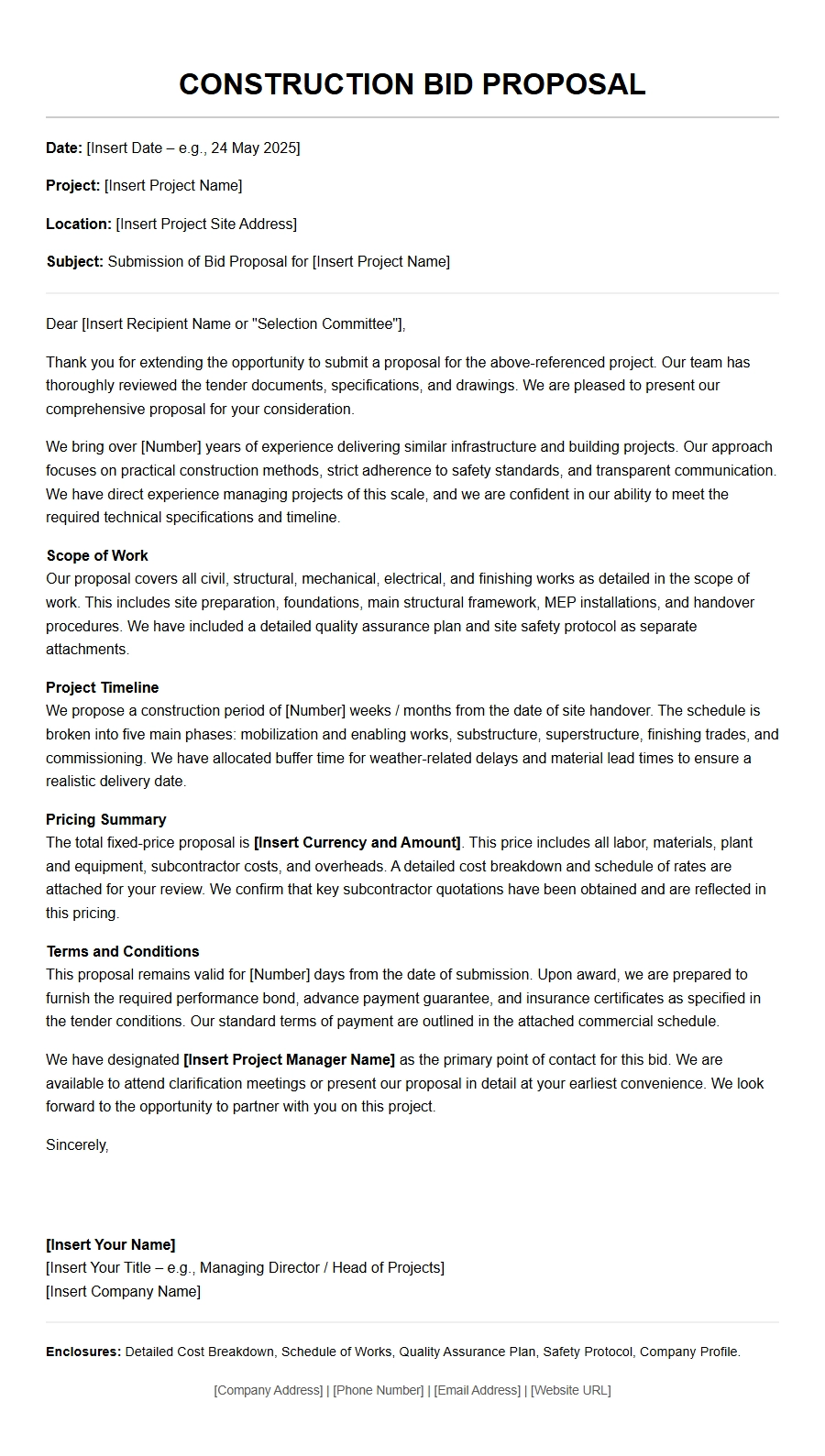 Sample Construction Bid Proposal Letter
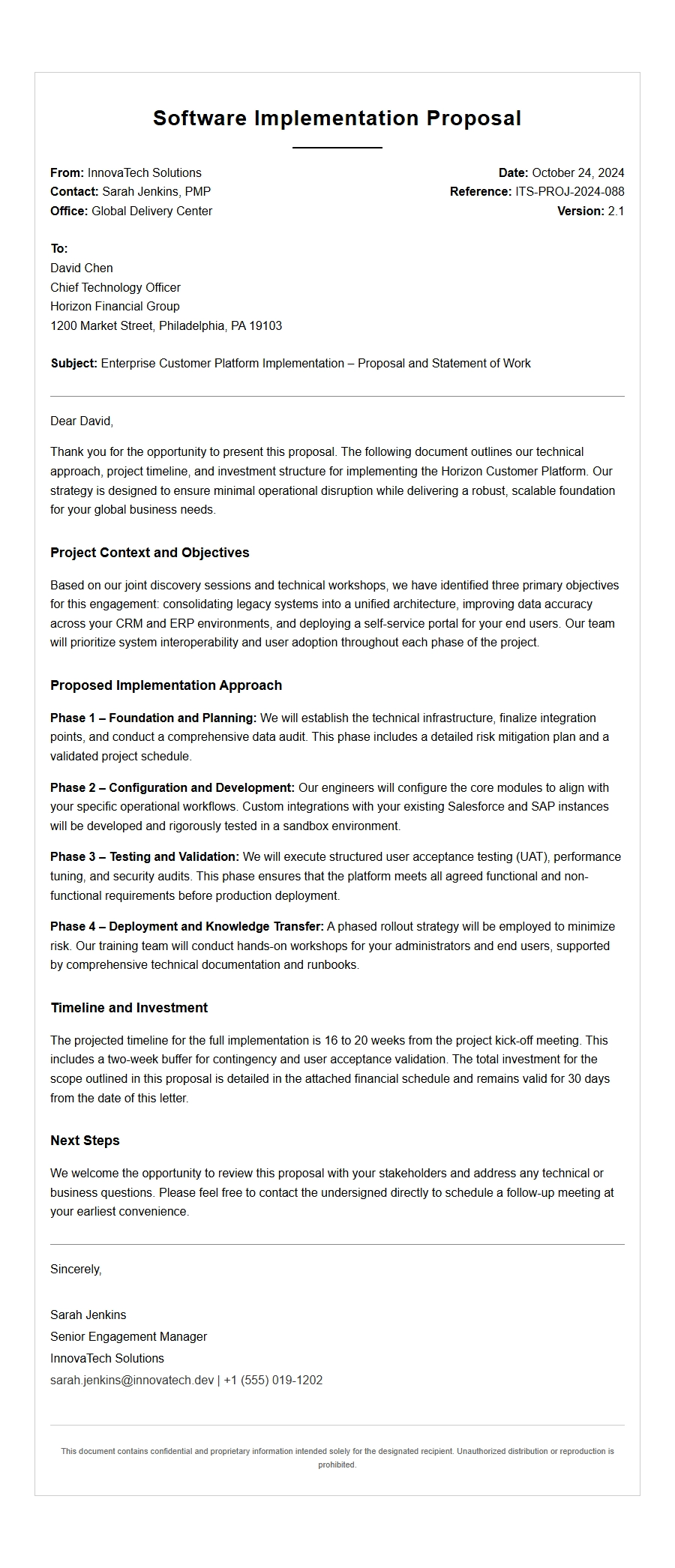 Enterprise Software Implementation Proposal Letter Example
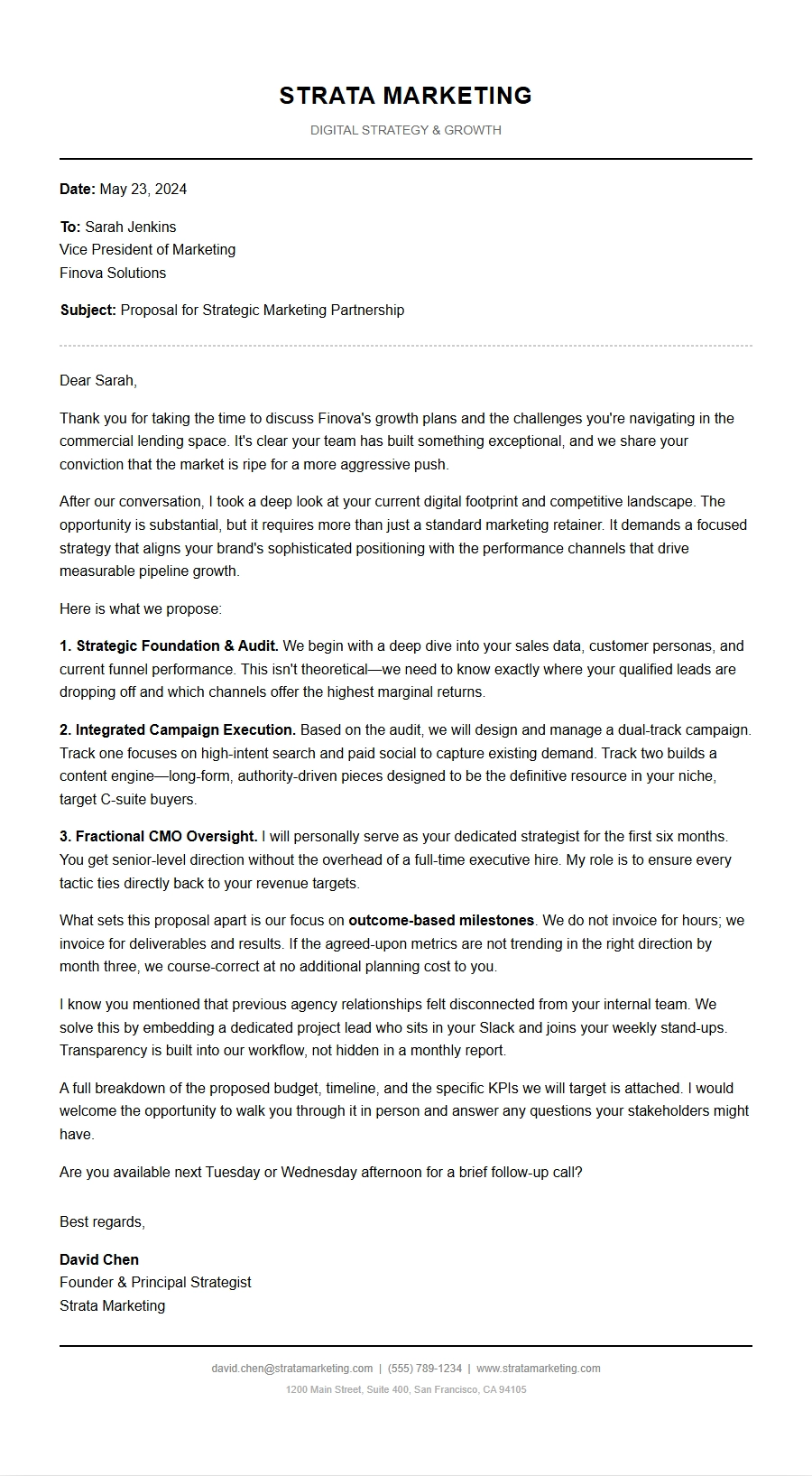 Marketing Agency Service Proposal Letter Template
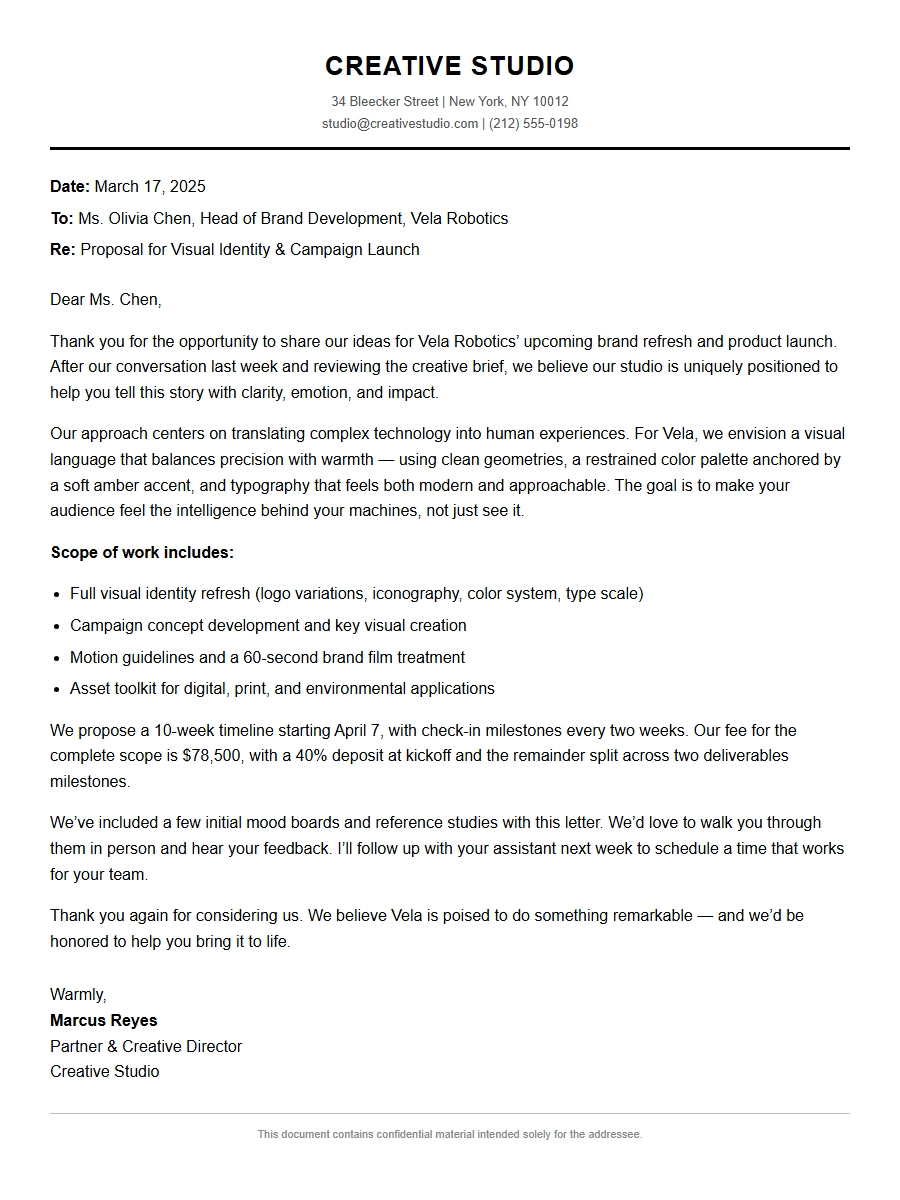 Creative Studio Project Proposal Letter
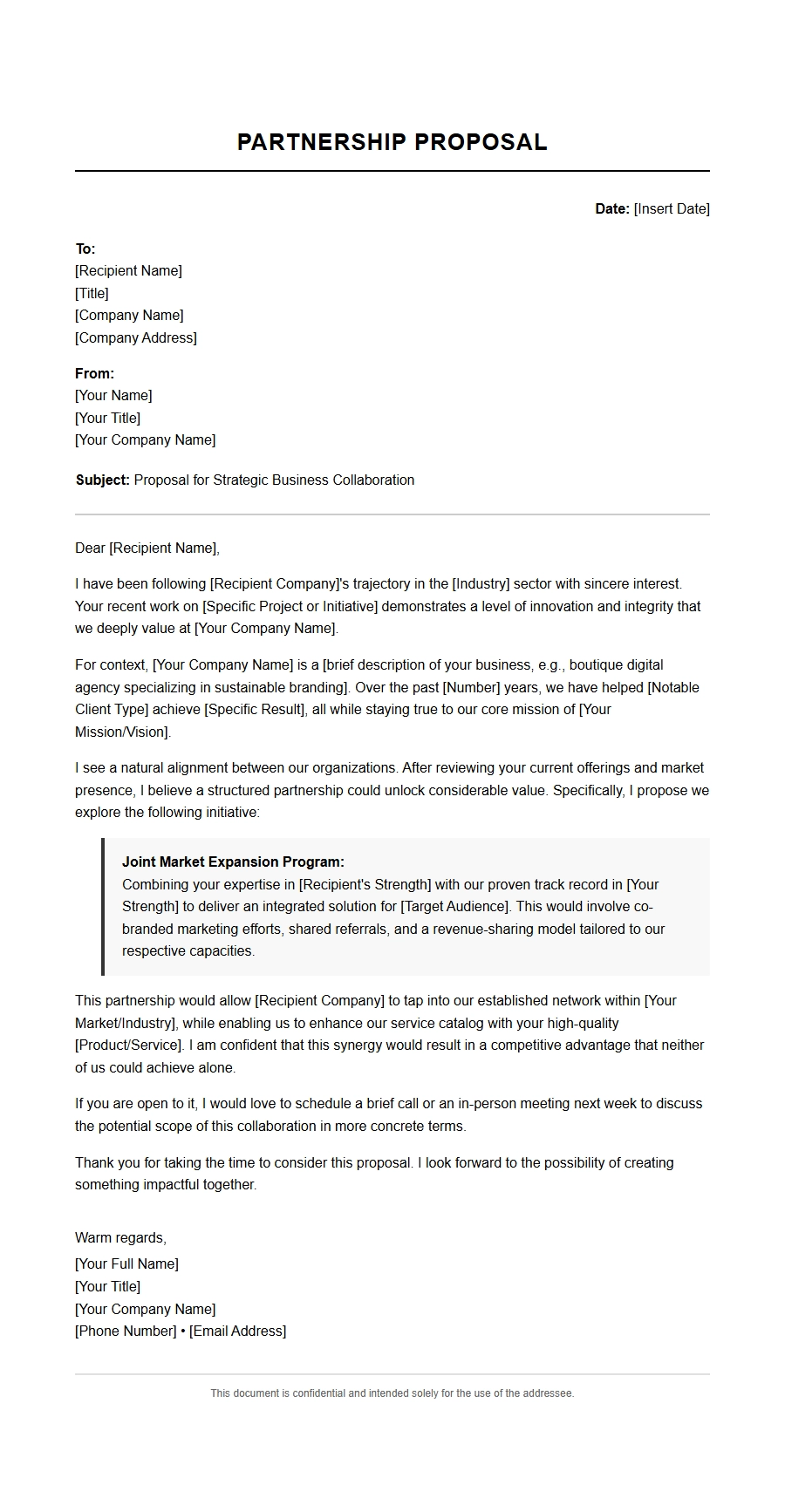 Small Business Partnership Proposal Letter Template
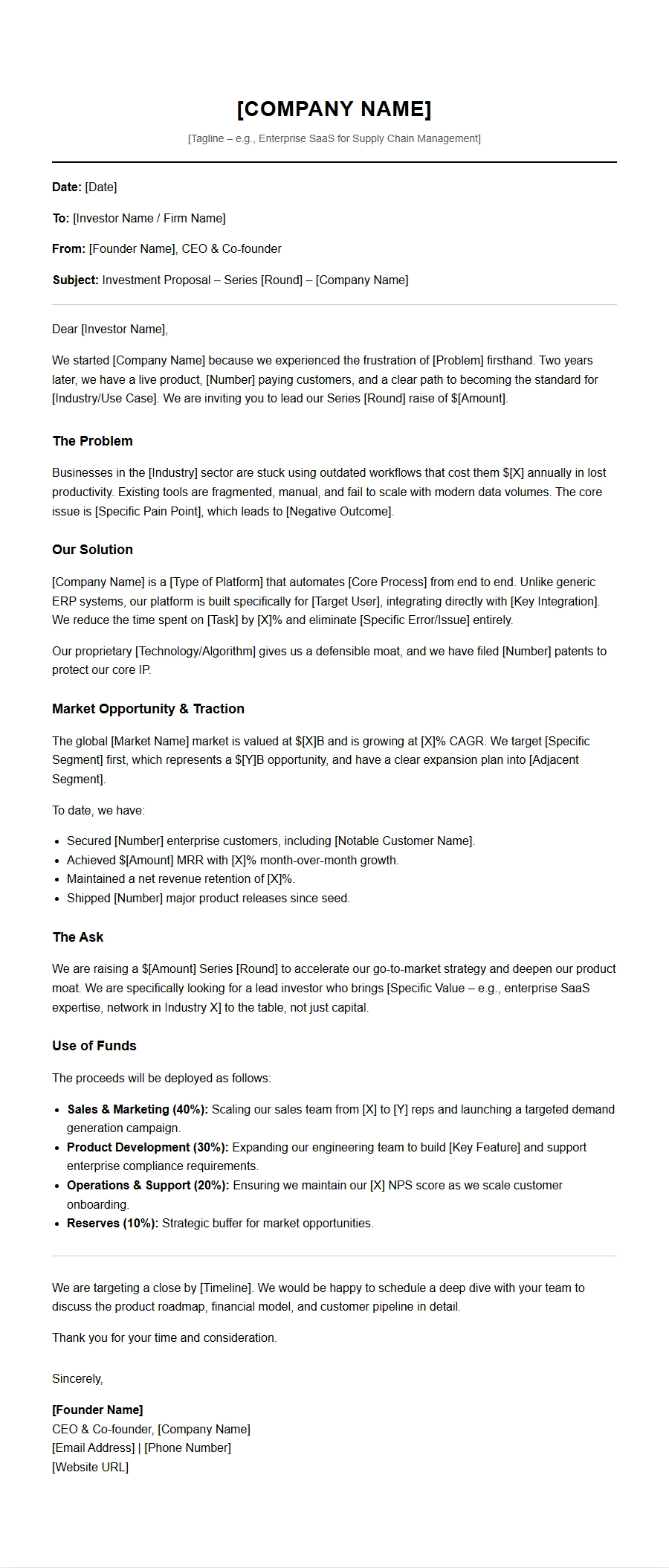 Startup Investment Proposal Letter Template