Staring at a blank page when you need to write a pricing structure proposal letter can feel paralyzing. It’s not just about explaining what you do. You have to justify what you charge. That pressure makes even experienced freelancers and business owners freeze up.
The right sample turns that anxiety into a confident draft in minutes. A good letter template gives you a framework. It shows you where to put the numbers, how to frame the value, and how to close without feeling pushy. Using a sample isn’t cheating—it’s working smart. It frees up your mental energy to focus on the details that matter to your specific client.
Category: Business Proposal Letters
Why a Pricing Letter Feels Different (and Harder)
Most professional correspondence follows a familiar business letter format. But a pricing letter has a unique job. It needs to be transparent enough to build trust, confident enough to justify the investment, and flexible enough to feel personal. Unlike cover letter examples for jobs, where you’re asking for a chance to interview, a pricing letter assumes the conversation has already happened. Now you’re defining the terms of a partnership. That shift in purpose is why finding the right structure matters so much.
How to Customize a Sample Without Losing Your Voice
When you find a sample you like, don’t just swap in names and hit send. Read it out loud. Does it sound like you? If the sample uses formal language like “we hereby propose,” but you usually speak plainly, rewrite that part. Your tone in writing should match your real voice. Clients can smell sincerity. A customizable letter is only useful if you’re willing to adapt it.
Pay attention to the salutation and closing. “Dear [Name]” and “Best regards” are safe and modern. Avoid dated phrases like “To Whom It May Concern.” You want the reader to feel like this letter was written specifically for them. For complex projects, you might need to start with a broader overview before diving into pricing. You can see how that structure works in an executive overview proposal letter.
The Building Blocks of a Good Pricing Proposal
A strong letter structure guides the reader naturally. Start with a quick reminder of the problem you’re solving. Then present the scope of work, followed by the pricing breakdown. This is where you get specific. Don’t just say “Project cost: $5,000.” Show the math. List the deliverables, timelines, and payment terms. This transparency removes doubt.
Think of your proposal as a letter of recommendation for your own services. You are recommending that the client invest in your expertise. Frame your pricing as an investment, not an expense. If you know the client is on a tight budget, you can borrow language from a cost-effective service proposal letter to show how your solution delivers real value without sacrificing quality.
For early-stage companies, your approach might shift. Startups care about growth and long-term ROI. Adapting your pricing letter from a startup investment proposal letter can help you focus on outcomes rather than just the monthly cost.
Quick Mistakes to Watch For
One common mistake is treating a printed letter the same as a digital letter format. If you’re sending a PDF, make sure your letterhead design is clean and the fonts are readable on screen. If you’re pasting it into an email body, keep the formatting simple to avoid alignment issues.
Another slip is skipping the proofreading letter step. A typo in a pricing letter raises quiet questions about your attention to detail. Read it twice. Send it to a friend. A clean document shows respect for your work and for the reader.
This isn’t a resignation letter sample where you’re ending a relationship. You’re starting one. The tone should be forward-looking and collaborative. If your proposal involves international work, currency and logistics add complexity. A cross-border business expansion proposal letter can show you how to handle those variables cleanly.
Pricing proposals aren’t just for external clients either. You might need to pitch a budget internally. An employee benefits package proposal letter uses a similar mix of justification and clear breakdown.
Make the Sample Work for You
A sample is a springboard, not a crutch. The more you write these letters, the faster the process gets. Your goal is a document that feels both professional and human. You want the client to read it and think, “This person understands my problem, and their solution is worth the investment.” That clarity comes with practice. So start with a good sample, make it your own, and send it with confidence.
Examples for Different Needs
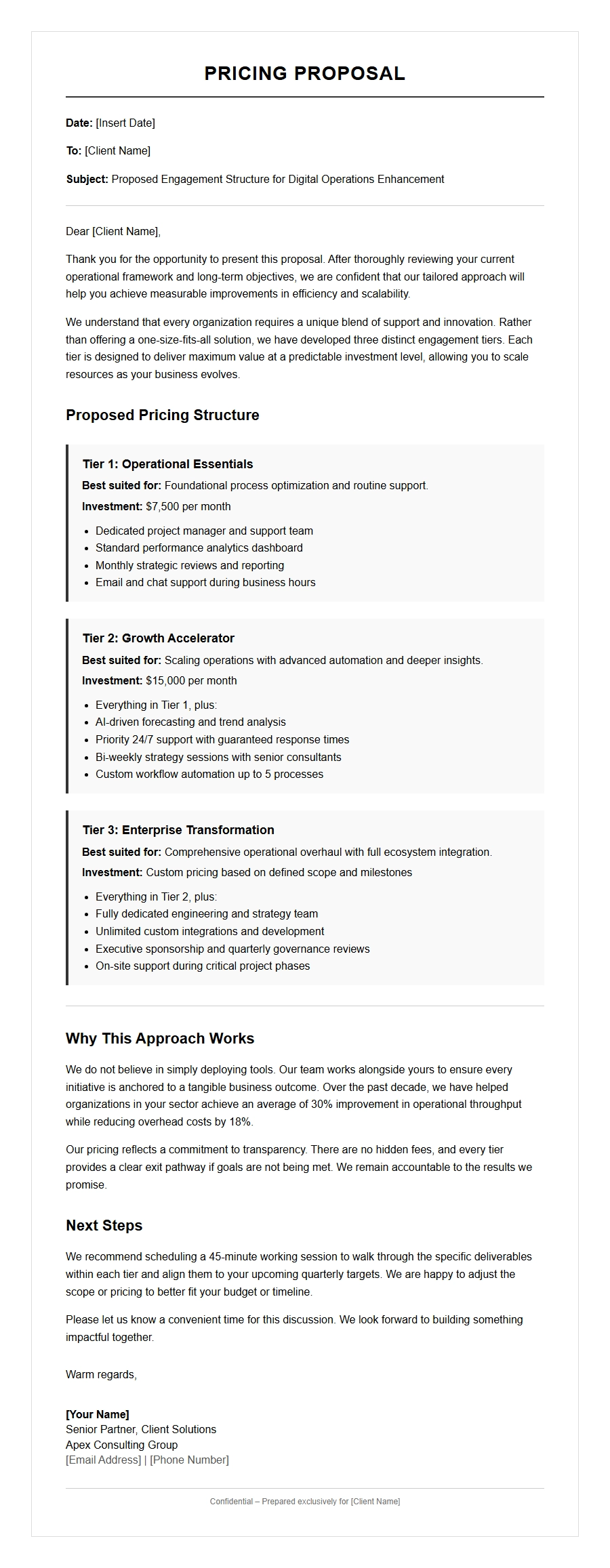
Pricing Structure Proposal Letter Example
Software Subscription Tiered Pricing
Dear Client,
Thank you for considering our software solutions. We propose the following tiered pricing structure for your needs.
Tier
Monthly Price
Users
Storage
Starter
$99
Up to 5
10 GB
Professional
$249
Up to 20
50 GB
Enterprise
$499
Unlimited
200 GB
All tiers include 24/7 support and regular updates. For annual billing, we offer a 15% discount on the total. Please let us know if you have questions about customization or volume licensing.
Consulting Retainer vs Hourly Pricing
Dear Prospect,
We have prepared two pricing structures for our consulting services. Below is a comparison to help you decide.
Hourly Rate: $150 per hour, billed monthly with a minimum of 20 hours per month. Ideal for short-term or variable projects.
Monthly Retainer: $2,500 per month for up to 20 hours of dedicated support. Additional hours at $120 each. This option includes priority response and a dedicated account manager.
For retainer clients, we also provide a monthly strategy report. We recommend the retainer if you anticipate ongoing needs. Please advise which structure suits your budget and timeline.
Product Bundle Pricing Proposal
Dear Buyer,
We are excited to offer a bundled pricing proposal for our three flagship products. Purchasing the bundle saves you 20% compared to buying separately.
Item
Standalone Price
Bundle Price
Product A
$500
$1,200
Product B
$400
Product C
$600
The bundle includes full implementation support and a one-year warranty. We can also customize the bundle by swapping products if needed. This offer is valid for orders placed by the end of next month.
Volume Discount Pricing for Wholesale
Dear Wholesale Partner,
Based on your projected order volume, we propose the following tiered discount structure for our product line.
Order Quantity 100-499 units: 10% off list price
Order Quantity 500-999 units: 15% off list price
Order Quantity 1,000+ units: 20% off list price, plus free shipping
All prices are per unit and exclude applicable taxes. Minimum initial order is 100 units. We can also negotiate custom packaging for large orders. Please confirm your expected volume to lock in the best rate.
Usage-Based Dynamic Pricing Model
Dear Customer,
We propose a flexible usage-based pricing structure that aligns costs with your actual consumption. This model is ideal for businesses with fluctuating demand.
Usage Tier
Price per Unit
Example Monthly Cost
0-1,000 units
$0.50
$500 max
1,001-5,000 units
$0.40
$2,400 max
5,001+ units
$0.30
Custom quote
Billing is monthly based on the previous month's usage. There are no long-term commitments. We provide a dashboard to track usage in real time. This structure offers you scalability and cost efficiency.
Fixed-Price Project with Milestone Payments
Dear Project Sponsor,
We propose a fixed-price contract of $25,000 for the website redesign project, with the following milestone payment schedule.
25% upon signing ($6,250)
30% upon design approval ($7,500)
30% upon development completion ($7,500)
15% upon final delivery ($3,750)
All milestones include specific deliverables as outlined in the scope of work. Payment is due within 15 days of each milestone invoice. This structure ensures transparency and phased investment.
Membership Subscription Pricing
Dear Prospective Member,
Our membership program offers two subscription options to suit your budget. Benefits include exclusive content, networking events, and tools.
Plan
Billing Cycle
Price
Savings vs Monthly
Monthly
Every month
$29
None
Annual
Once per year
$299
Save $49
Both plans include a 30-day money-back guarantee. Annual members also receive a free welcome kit. Please select your preferred plan and we will activate your membership immediately.
Competitive Pricing Adjustment Proposal
Dear Valued Partner,
We are proposing a revised pricing structure to remain competitive and support our long-term relationship. Our new prices are effective from next quarter.
Current Price: $120 per unit
Proposed Price: $108 per unit (10% reduction)
New Volume Discount: 5% additional off for orders above 500 units
This adjustment is based on our improved operational efficiencies and lower raw material costs. We are confident this will help you maintain margins while we continue to deliver quality. Please provide your feedback by the end of the month.
Tiered Service Levels Proposal
Dear Client,
We have designed three service levels to match your support needs. Each level includes core features with increasing response times and dedicated resources.
Level
Monthly Fee
Response Time
Dedicated Manager
Basic
$1,000
24 hours
No
Premium
$2,500
4 hours
Yes
Enterprise
$5,000
1 hour
Yes+
All levels include phone and email support. Upgrade anytime with prorated billing. We recommend Premium if your operations depend on quick issue resolution.
Cost-Plus Pricing for Manufacturing
Dear Manufacturer,
We propose a cost-plus pricing structure for the production of your custom components. This ensures transparency and fair margins.
Direct Material Cost: $15.00 per unit (subject to market fluctuation)
Direct Labor Cost: $8.00 per unit
Overhead: $4.00 per unit
Profit Margin: 12% of total cost
Based on current estimates, the price per unit would be approximately $30.24. We will provide a detailed breakdown with each invoice. The margin is fixed, but we will renegotiate if material costs change significantly. This model is ideal for long-term partnerships.
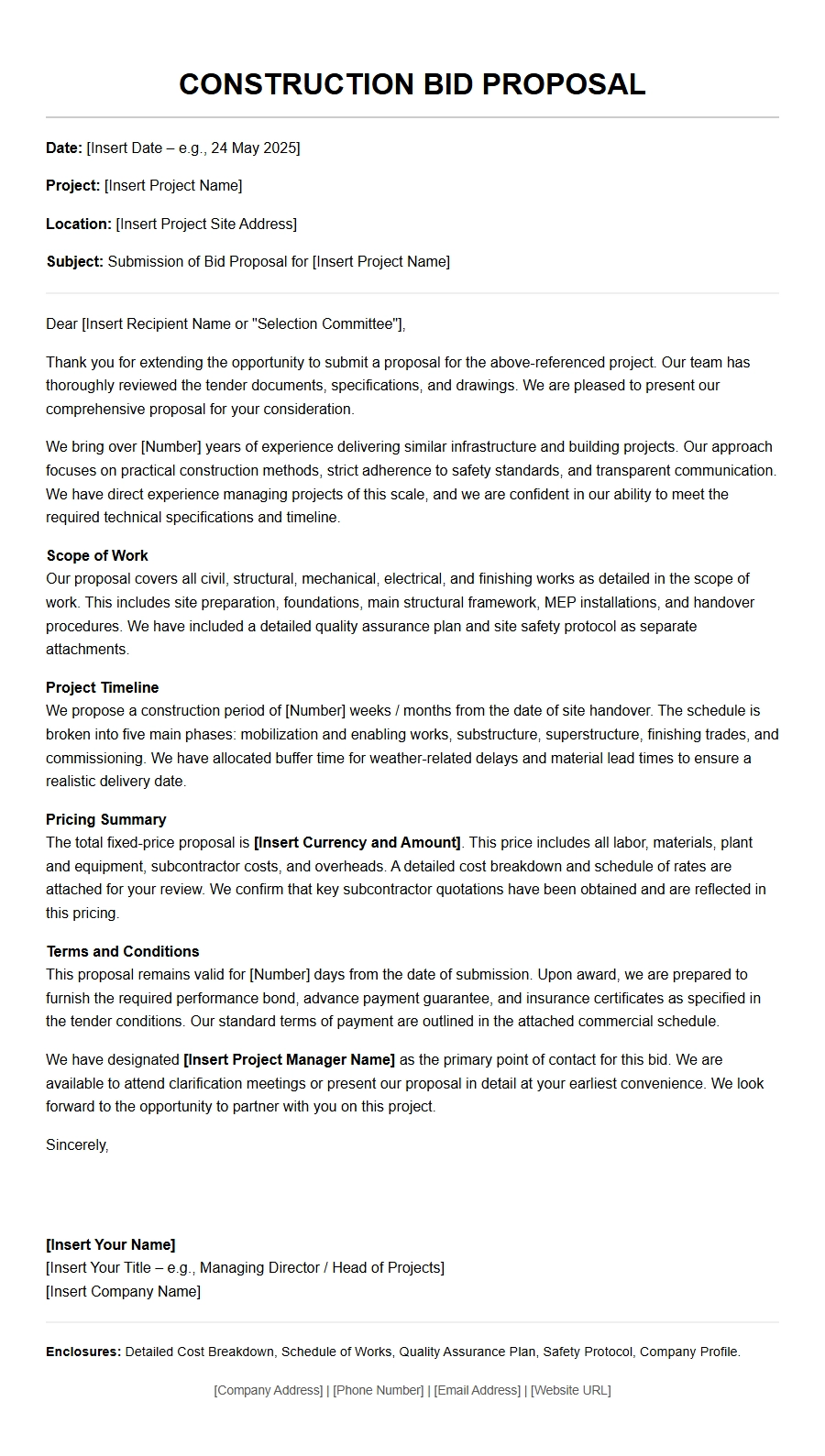 Sample Construction Bid Proposal Letter
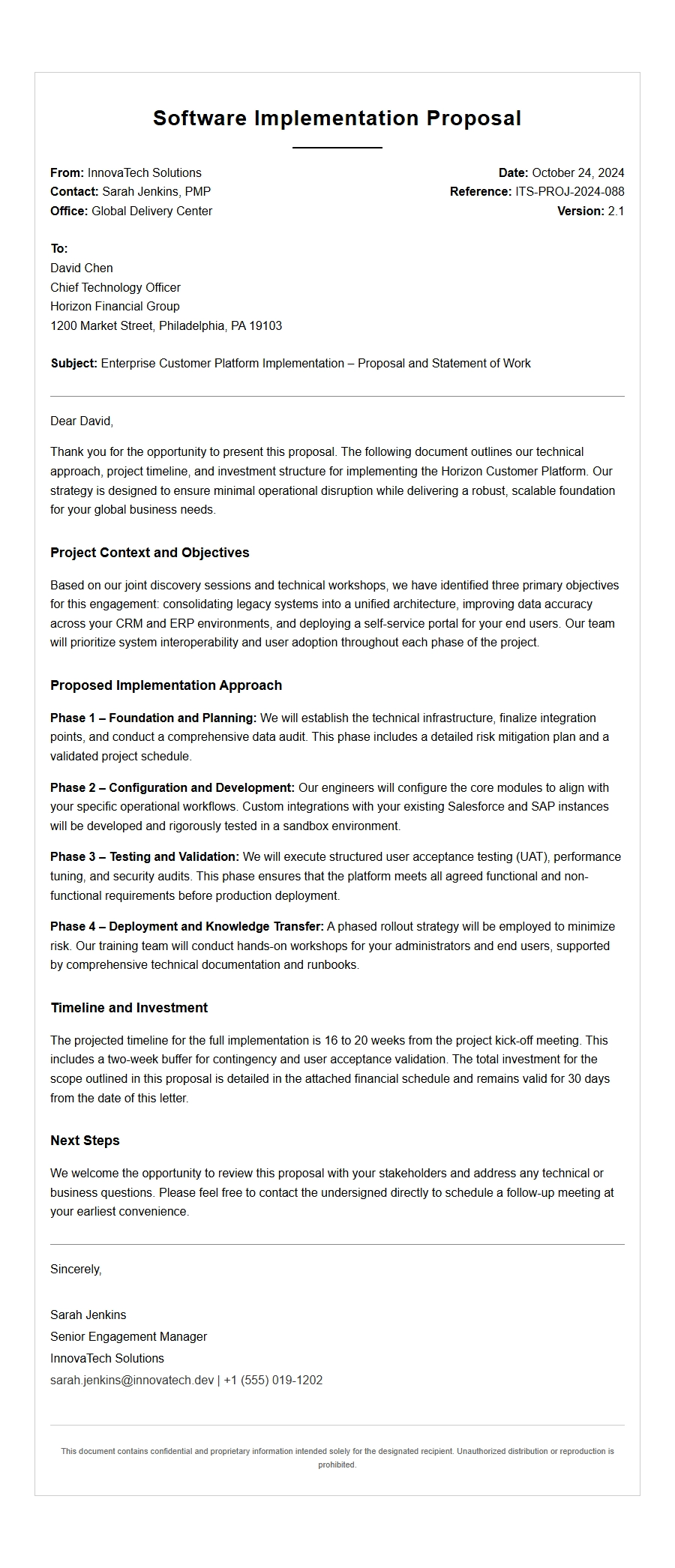 Enterprise Software Implementation Proposal Letter Example
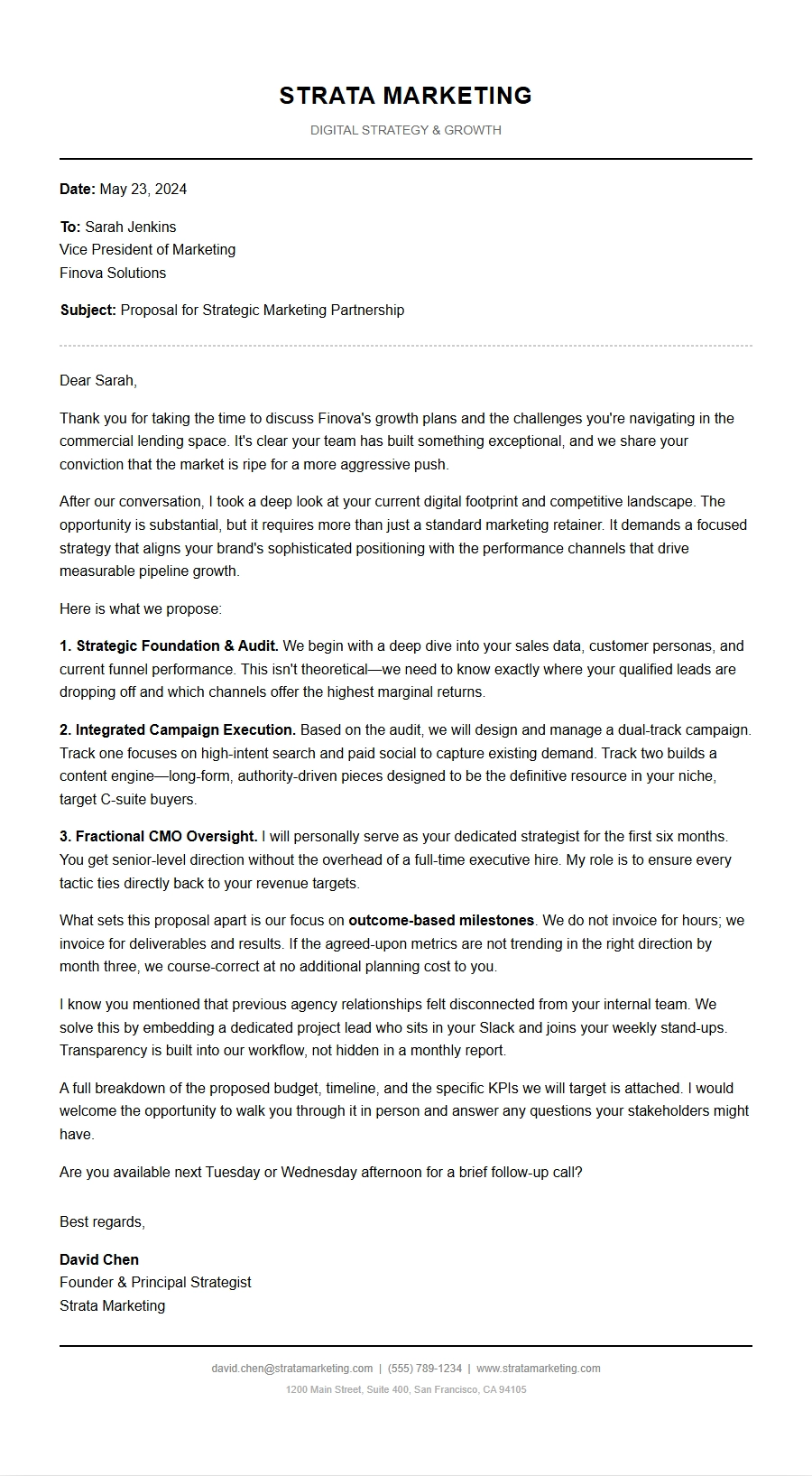 Marketing Agency Service Proposal Letter Template
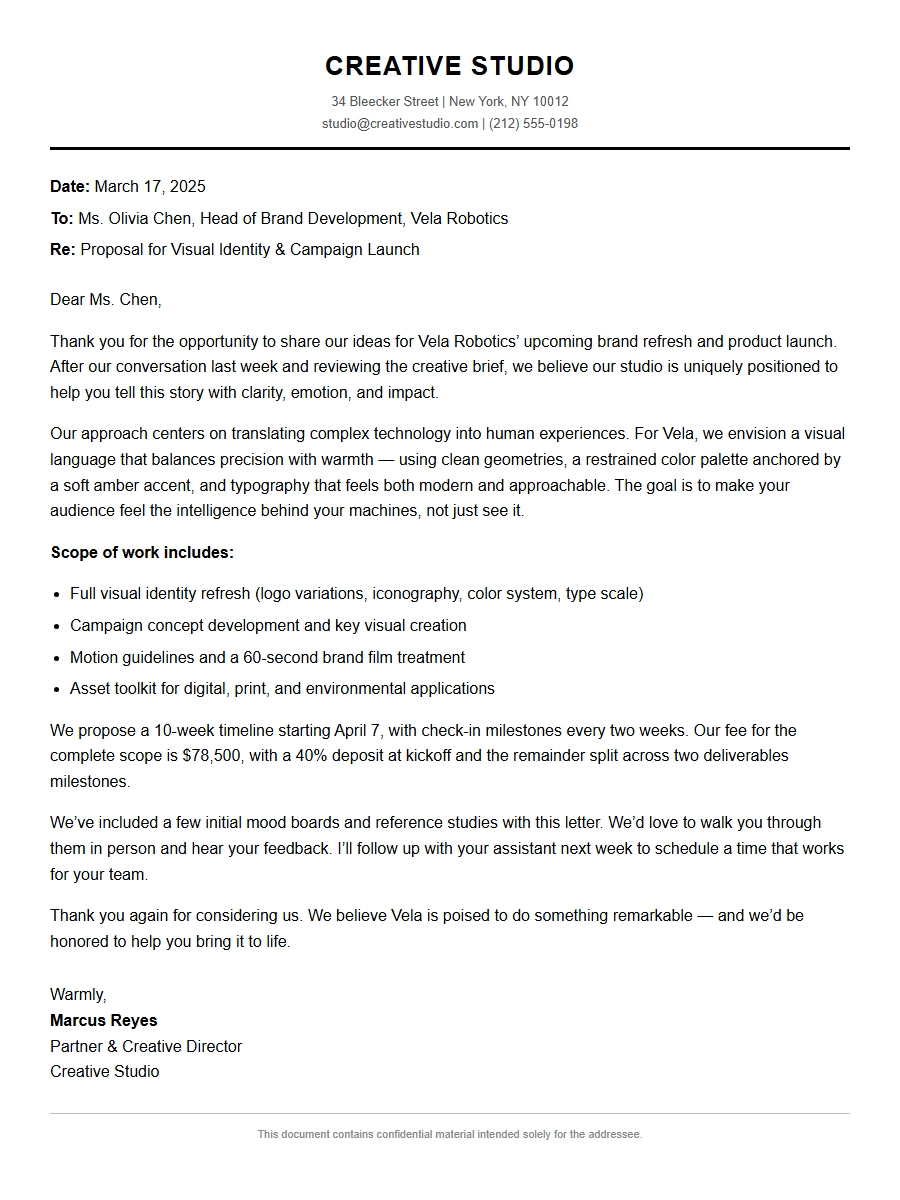 Creative Studio Project Proposal Letter
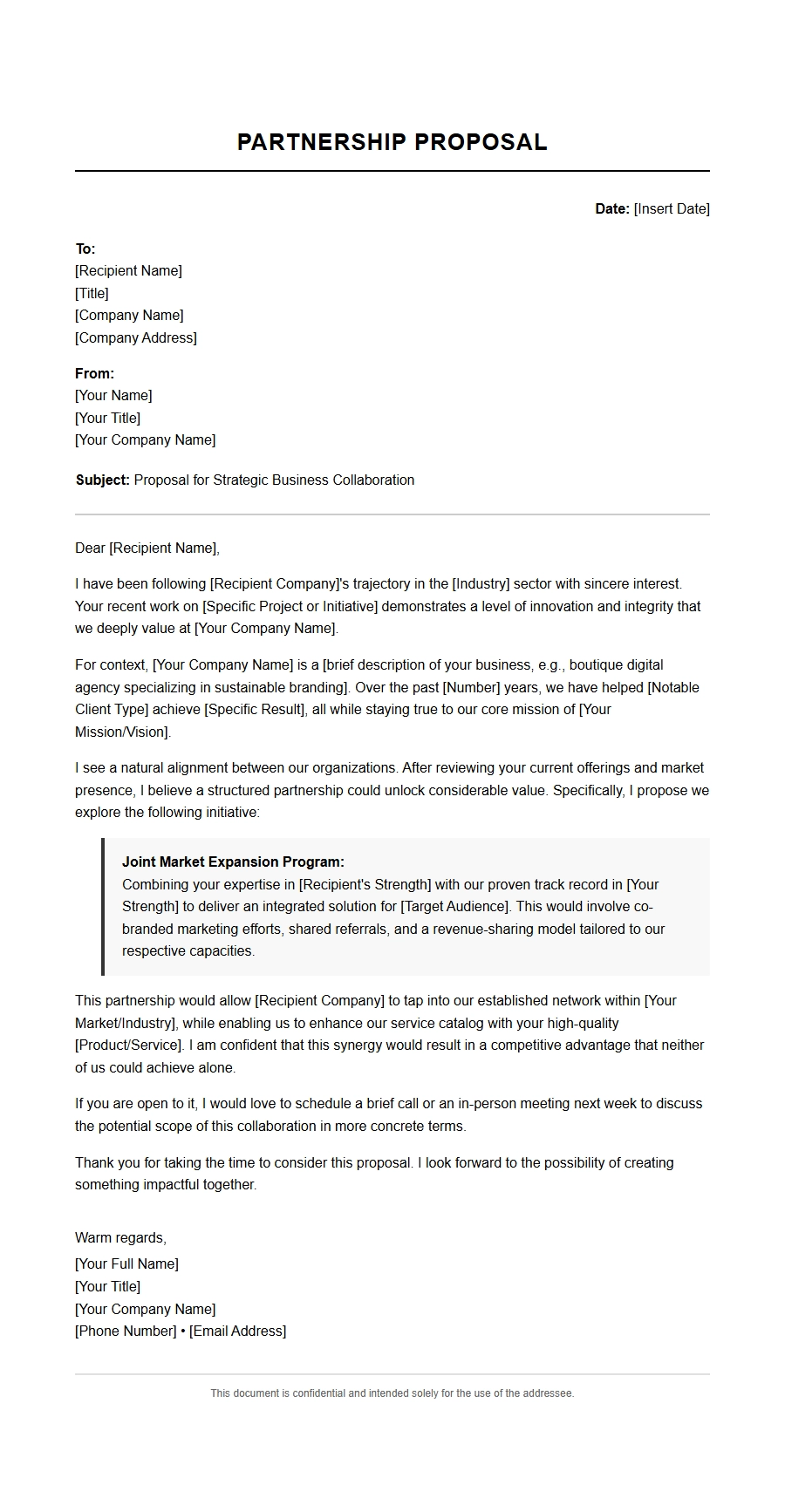 Small Business Partnership Proposal Letter Template
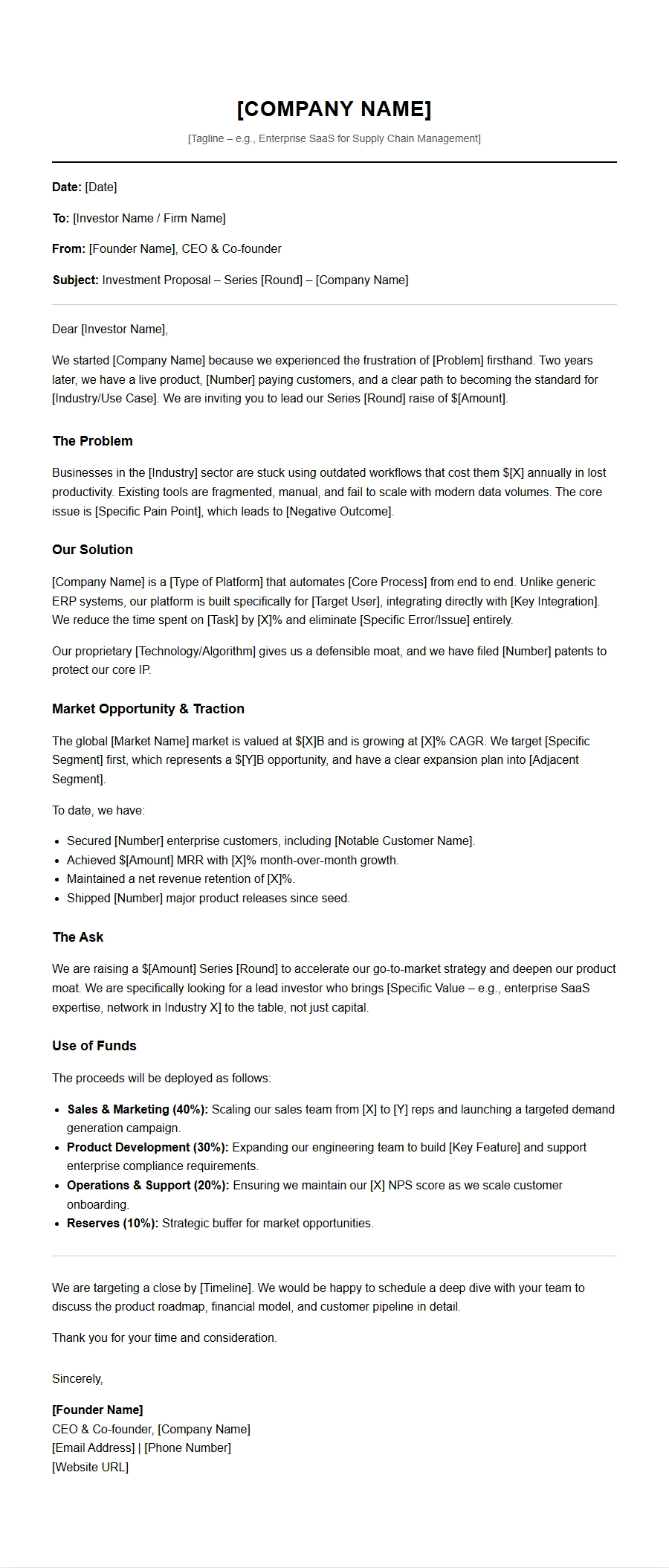 Startup Investment Proposal Letter Template