Staring at a blank page when you need to write a waste management service contract proposal letter can feel surprisingly hard. You know your services inside out, but translating that into a formal pitch that wins a contract feels like a different skill entirely. A good sample letter cuts through that anxiety. It gives you a structure so you can focus on what makes your offer unique.
Why using a proposal template is a smart move
Using a letter template isn't cheating. It's a practical way to make sure your professional correspondence hits the right notes. A well-designed sample covers the standard parts of a proposal — the opening, the scope of work, the pricing, and the legal bits. You don't have to invent the wheel. You just need to personalize the details. This approach saves time and helps you avoid common mistakes that can make your company look careless.
What to look for in a waste management proposal sample
Not all samples are useful. You need one that matches your situation. A proposal for a small commercial office is very different from one for a large construction site or a hospital. Look for a sample that includes space for specifics, like pickup frequency, types of waste handled (recyclables, hazardous materials, general refuse), and clear pricing terms. The best samples show you how to present your services as a solution to a specific problem, not just a list of things you do.
Tailoring the letter to your potential client
When you adapt a sample, your first goal is to sound like yourself. Nobody wants to read a robot letter. Start by changing the tone in the opening paragraph to match the relationship you have with the prospect. If you've worked with them before, mention that. If you're cold-pitching, be direct about why you're reaching out. One quick tip: address their specific pain point in the first two sentences. If you know a local business struggles with compliance for grease trap disposal or hazardous waste, say so. It shows you've done your homework.
Common mistakes to avoid
Even a good sample can lead you astray if you're not careful. Here are a few things to watch for:
Using outdated salutations: "To Whom It May Concern" feels impersonal. Use a real name or a specific title like "Operations Manager."
Ignoring the format: A digital letter sent via email should have a clear subject line and shorter paragraphs. A printed proposal can follow a stricter business letter format and include a letterhead design that reinforces your brand.
Forgetting to proofread: A typo in a pricing section or a wrong date can cost you the contract. Always do a final proofreading letter check before you hit send or print.
How to structure your proposal for clarity
A clear letter structure helps the reader follow your thinking. Start with a strong salutation and closing. Then, explain the problem you solve. Next, list your specific services. Finally, present your pricing and terms. This flow makes it feel like a natural conversation. If you include a reference to a past success, link to a relevant case study reference that shows you can deliver what you promise. This builds trust without you having to brag too much.
Adapting your tone for different clients
The tone in writing matters a lot in a proposal. A small family restaurant might appreciate a friendly, straightforward pitch. A large corporation or a government agency may expect a more formal approach. Read the room. If you're unsure, a neutral, respectful tone is usually the safest choice. You can always adjust the language in your customizable letter to fit the relationship as it develops over time.
When to include supporting documents
A proposal letter is often just the cover for a bigger package. If you are offering a complex service, like handling medical waste or industrial recycling, you may need to attach a separate document that lists compliance details. You might also need to include a compliance audit support form or a proposal for enterprise software implementation if you are offering a technology solution alongside your pickup services. Keep the letter itself focused on the main value proposition.
Making your pricing clear and fair
People are often uncomfortable talking about money. Your proposal should make it easy. Use simple language to explain how you charge (per pickup, per month, per ton). If you offer discounts for longer contracts, mention them upfront. This transparency builds trust. If your proposal requires approval from multiple departments, you might also look at a format used for an HR recruitment and staffing proposal to see how they handle multi-stakeholder approval steps.
Keeping it concise
Nobody wants to read a ten-page letter. Respect their time. A concise executive summary style works best. Get to the point, explain what you offer, and tell them how to say yes. If you are verbose, you risk losing their attention. Every paragraph should serve a purpose. If it doesn't help sell your service or build trust, cut it.
Using a sample is like having a map. It shows you the route, but you still have to drive the car. Take the structure, add your own voice, and make sure every detail fits the client's specific needs. The best waste management service contract proposal letters feel both professional and personal. They make the reader feel understood. With practice, this process gets faster. You'll spend less time worrying about format and more time winning new business.
Simple Examples
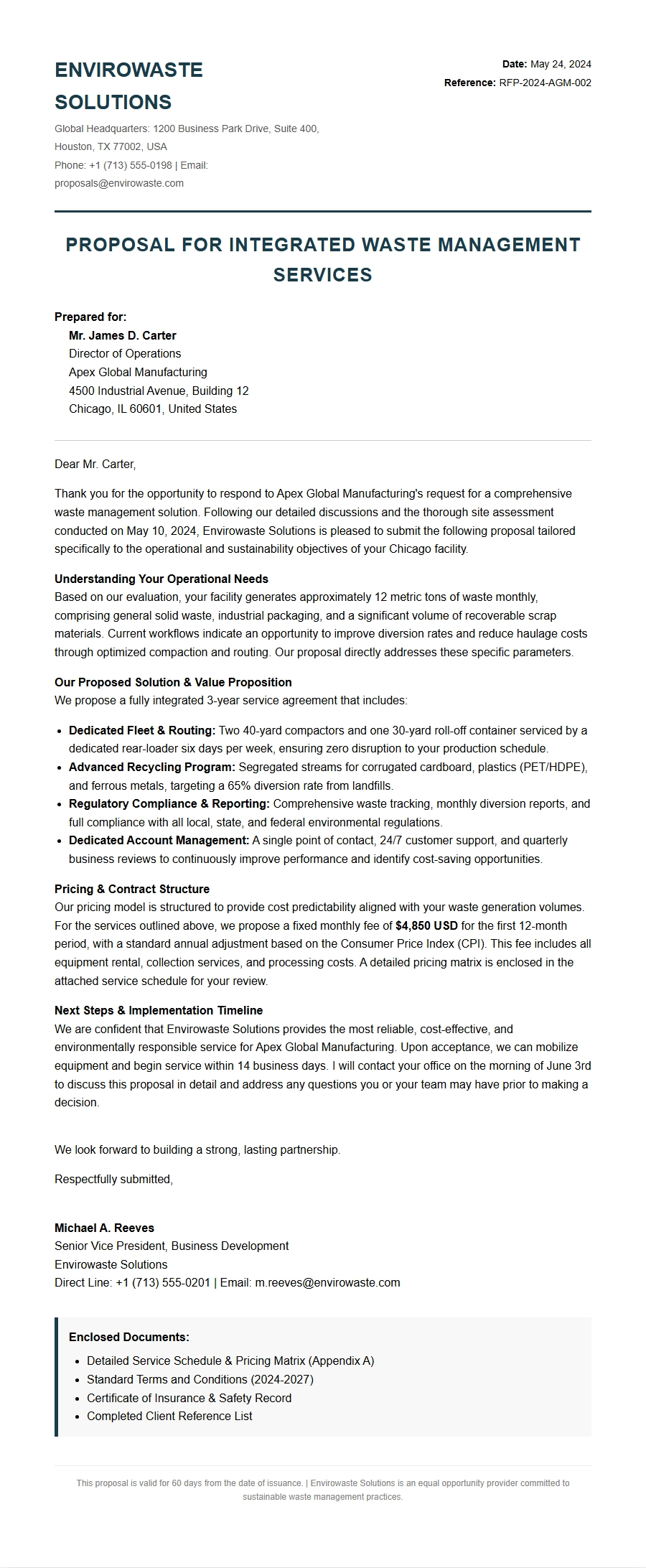
Professional Waste Management Service Proposal
Commercial Waste Collection Proposal
To: GreenLeaf Office Park Management From: EcoCycle Waste Services Date: May 15, 2025 Re: Commercial Waste Collection Contract Proposal
We are pleased to submit this proposal for regular waste collection services at GreenLeaf Office Park. Our plan includes twice-weekly pickup of mixed recyclables and general waste, using 2-cubic-yard dumpsters at each of the four buildings.
Service
Frequency
Monthly Fee
General waste collection (2-yard bin)
2x per week
$180
Single-stream recycling (2-yard bin)
1x per week
$95
Total
$275
The proposed term is 12 months, with automatic renewal. We provide all bins and guarantee same-day replacement if damaged. Please contact us to finalize the agreement.
We propose a comprehensive recycling program tailored to your 20-story office building. Our service includes:
Weekly collection of paper, cardboard, plastics #1–7, metals, and glass.
Provision of color-coded desk-side bins and central station containers.
Quarterly waste audits and reporting on diversion rates.
Employee education sessions (2 per year).
Pricing is based on total waste volume. After an initial free audit, we estimate a monthly fee of $1,200 for a building of your size. This includes all container rentals and transportation. We also offer a 5% discount for a 3-year commitment.
We look forward to helping Downtown Tower achieve its sustainability goals.
Hazardous Waste Disposal Contract Proposal
To: Apex Manufacturing, Inc. From: SafeWaste Environmental Services Date: June 1, 2025
Thank you for inviting us to bid on your hazardous waste management contract. Our proposal covers all Class I – IV hazardous wastes generated at your facility, including solvent still bottoms, spent acids, and contaminated rags.
Waste Type
EPA Code
Pickup Frequency
Annual Cost
Ignitable liquids
D001
Monthly
$4,500
Corrosive acids
D002
Bi-monthly
$3,200
Non-halogenated solvents
F003
Quarterly
$2,800
We provide all approved containers, labels, manifests, and transportation to our permitted treatment facility. Our team ensures full compliance with RCRA and DOT regulations. Contract term: 2 years with price guarantee.
Residential Curbside Pickup Expansion Proposal
To: Oakwood Homeowners Association Board From: CityClean Waste Management Date: April 10, 2025
We propose expanding our residential curbside service to the new Fox Run subdivision (120 homes). Service includes weekly pickup of garbage, recycling, and yard waste using 96-gallon carts.
Garbage: every Monday
Recycling (single-stream): every other Tuesday
Yard waste: every Wednesday (April–November)
Monthly cost per household: $38.50 (billed to HOA). This rate includes cart delivery, replacement, and all disposal fees. No contract term beyond the first year is required.
We also offer a bulk waste collection twice a year at no extra charge. Please let us know if you would like a service walk-through.
Zero Waste Initiative Partnership Proposal
To: Mayor's Office, City of Springfield From: GreenFuture Recycling Cooperative Date: March 22, 2025
We propose a public-private partnership to help Springfield achieve its Zero Waste 2040 goal. Our three-year proposal includes:
City-wide single-stream recycling collection for all residential households (15,000 homes).
Construction and operation of a material recovery facility (MRF) with 90% diversion capability.
Community education programs and quarterly progress reporting.
Pricing structure:
Year
Annual Fee (City Contribution)
Revenue Share from Recyclables
1
$750,000
50%
2
$700,000
55%
3
$650,000
60%
This proposal reduces landfill use, creates green jobs, and positions Springfield as a sustainability leader.
Industrial Waste Management and Compliance Proposal
To: Delta Petrochemical Plant From: EnviroGuard Industrial Services Date: February 14, 2025
In response to your RFP, we present a comprehensive waste management plan for your facility. Services include:
On-site waste characterization and segregation guidance.
Regular removal of non-hazardous industrial waste, sludges, and spent catalysts.
Full regulatory compliance support (RCRA, EPA, state permits).
Emergency response for spills or container leaks (24/7).
We propose a fixed monthly fee of $12,500 plus variable disposal costs based on weight. Estimated annual total: $165,000. This includes all transportation, disposal at permitted facilities, and annual compliance reports.
Contract length: 3 years. We are licensed in 5 states and have served similar petrochemical operations since 1998.
Medical Waste Disposal Service Proposal
To: St. Mary's Hospital Administration From: BioMed Waste Services Date: July 8, 2025
We are pleased to offer a customized medical waste disposal program for your 300-bed hospital. Our service covers all regulated medical waste (sharps, pathological, infectious, and pharmaceutical waste).
Waste Category
Container Type
Pickup Frequency
Cost per Pickup
Sharps (red)
5-gallon pail
Weekly
$15
Infectious waste (red bags)
28-gallon cart
Bi-weekly
$28
Pharmaceutical waste (blue bins)
2-gallon box
Monthly
$35
We provide all containers, labels, and chain-of-custody documentation. Our staff are OSHA-trained and HIPAA-compliant. Estimated monthly total: $980. Contract term: 1 year with renewal option.
Construction Debris Removal Proposal
To: BuildRight General Contractors From: DumpMax Roll-Off Services Date: March 5, 2025
This proposal covers debris removal for the new Riverfront Condominium project (Phase I). We will provide and service roll-off dumpsters on site for the duration of construction (estimated 8 months).
Included:
Delivery, pickup, and replacement of boxes as needed.
Mixed construction debris (wood, drywall, metal, concrete, plastics).
Two 30-yard roll-off containers placed at the loading dock.
Weekly pickups, with additional on-call service available.
Pricing per month: $2,400 (flat rate including all disposal fees). No hidden fees. We also offer a 10% discount if you sign a contract for the entire Phase I duration.
We have served over 50 contractors in the region. References available upon request.
Organic Waste Composting Service Proposal
To: FreshBites Restaurant Group (12 locations) From: EarthCycle Composting Solutions Date: August 1, 2025
We propose a comprehensive organic waste composting program for your restaurant chain. Our service collects pre-consumer kitchen scraps, post-consumer food waste, and compostable packaging.
Service details:
Weekly pickup of 64-gallon wheeled carts (2 per location).
All carts are lined with compostable bags.
We process waste at our aerated static pile facility.
Monthly reports on pounds diverted and CO2 saved.
Number of Locations
Monthly Fee per Location
Total Monthly
12
$215
$2,580
This fee includes educational materials for staff. We also provide finished compost for your landscaping needs (1 cubic yard per quarter).
Waste-to-Energy Conversion Proposal
To: GreenTech Industrial Park Board From: PowerCycle Energy Corp. Date: September 12, 2025
We propose installing a waste-to-energy (WTE) conversion system at your industrial park to process 50 tons of non-recyclable waste daily. The system uses gasification technology to produce syngas, which powers a 2 MW turbine.
Benefits and costs:
Item
Description
Estimated Amount
Capital investment (shared)
Gasifier + turbine + infrastructure
$4.2M
Annual O&M cost
Labor, parts, ash disposal
$340,000
Annual electricity savings
Offsetting grid purchases
$510,000
Net annual benefit
Savings minus O&M
$170,000
We also offer a 20-year purchase power agreement (PPA) with predictable rates. This proposal reduces landfill dependency and provides clean, baseload energy for the park.
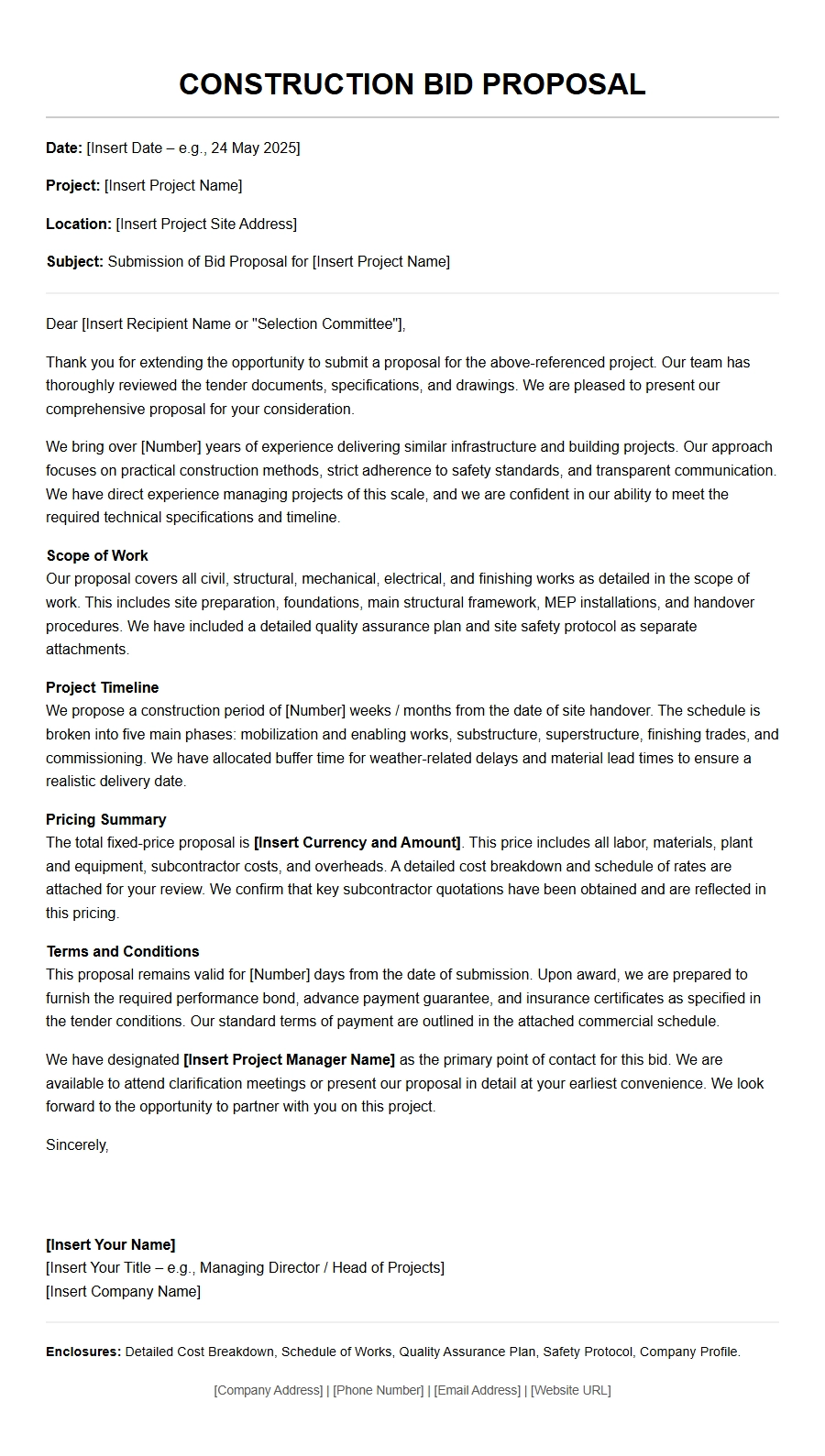 Sample Construction Bid Proposal Letter
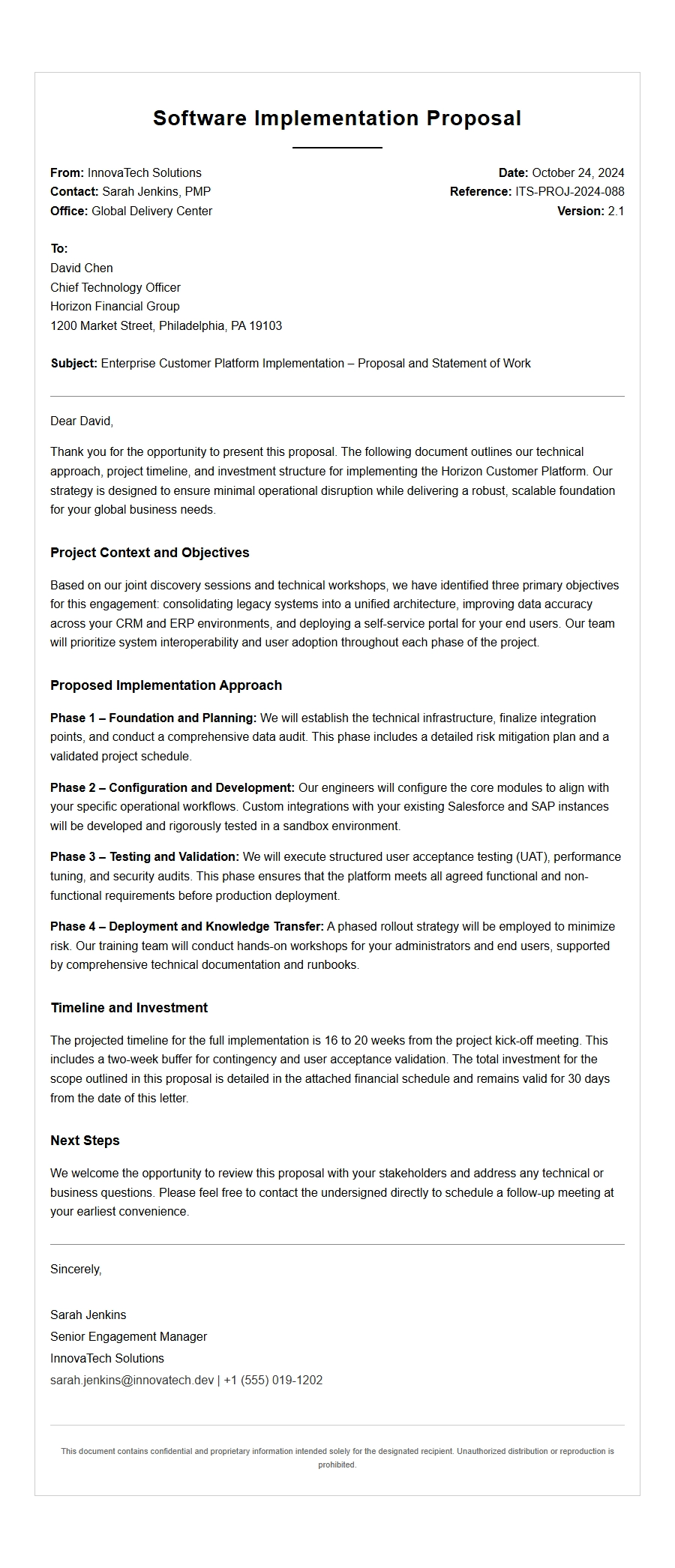 Enterprise Software Implementation Proposal Letter Example
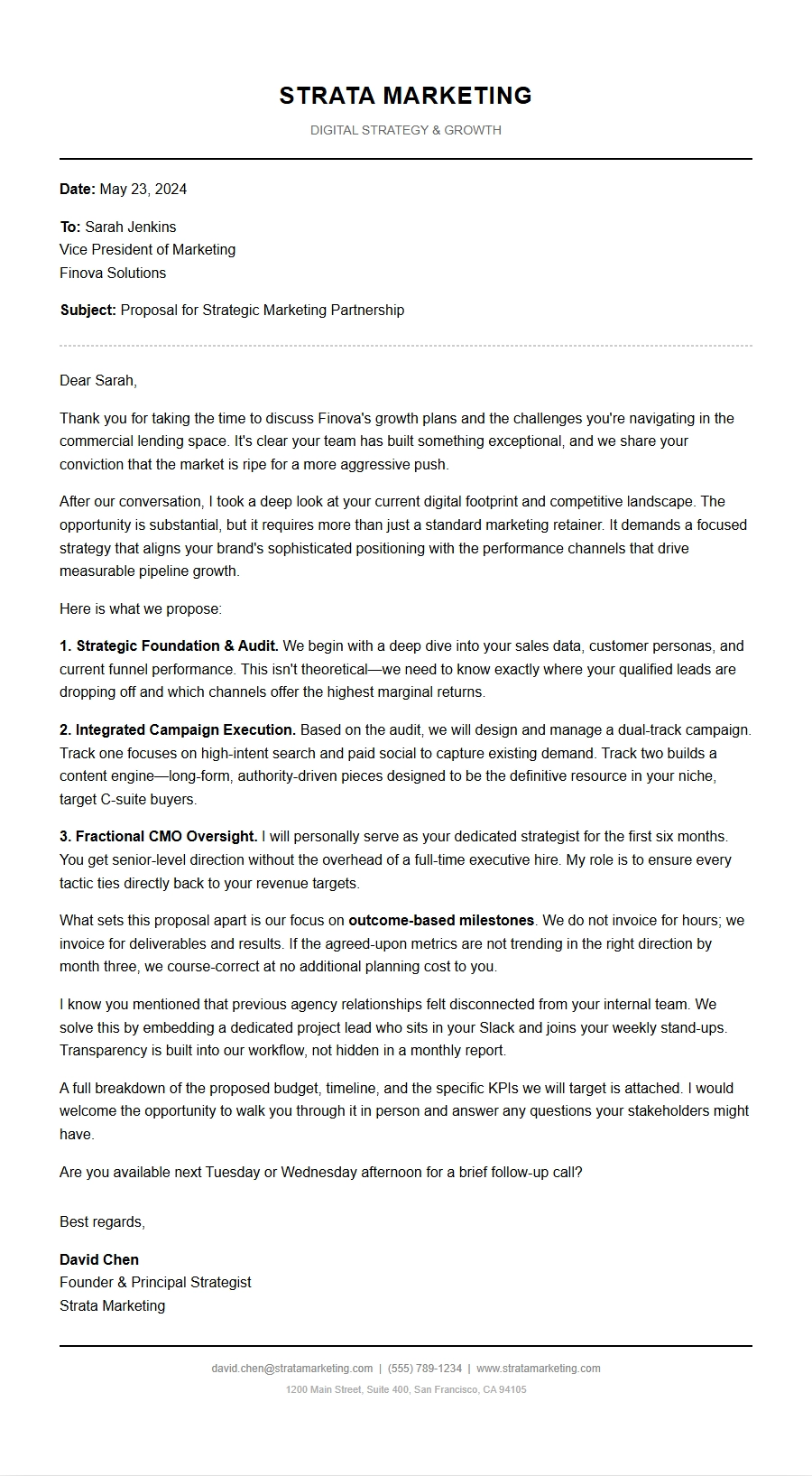 Marketing Agency Service Proposal Letter Template
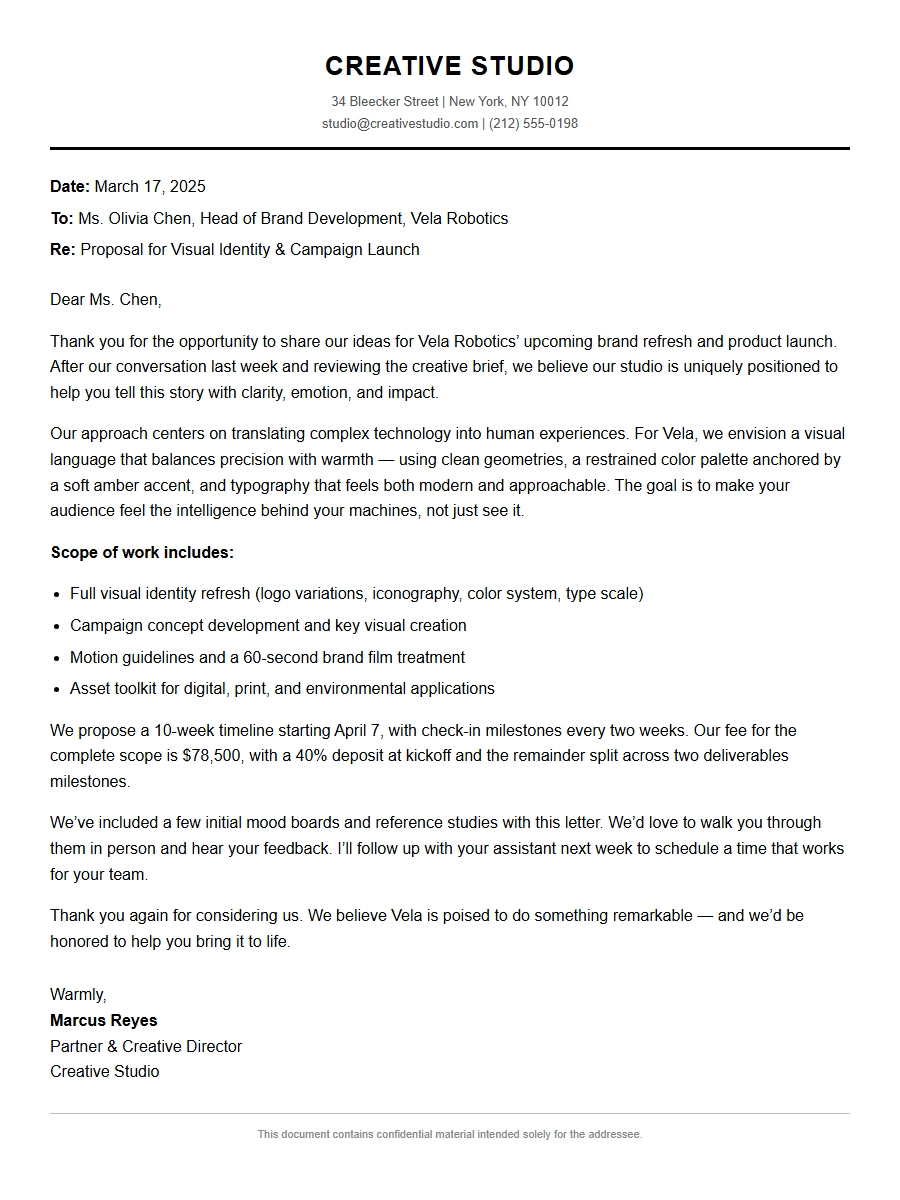 Creative Studio Project Proposal Letter
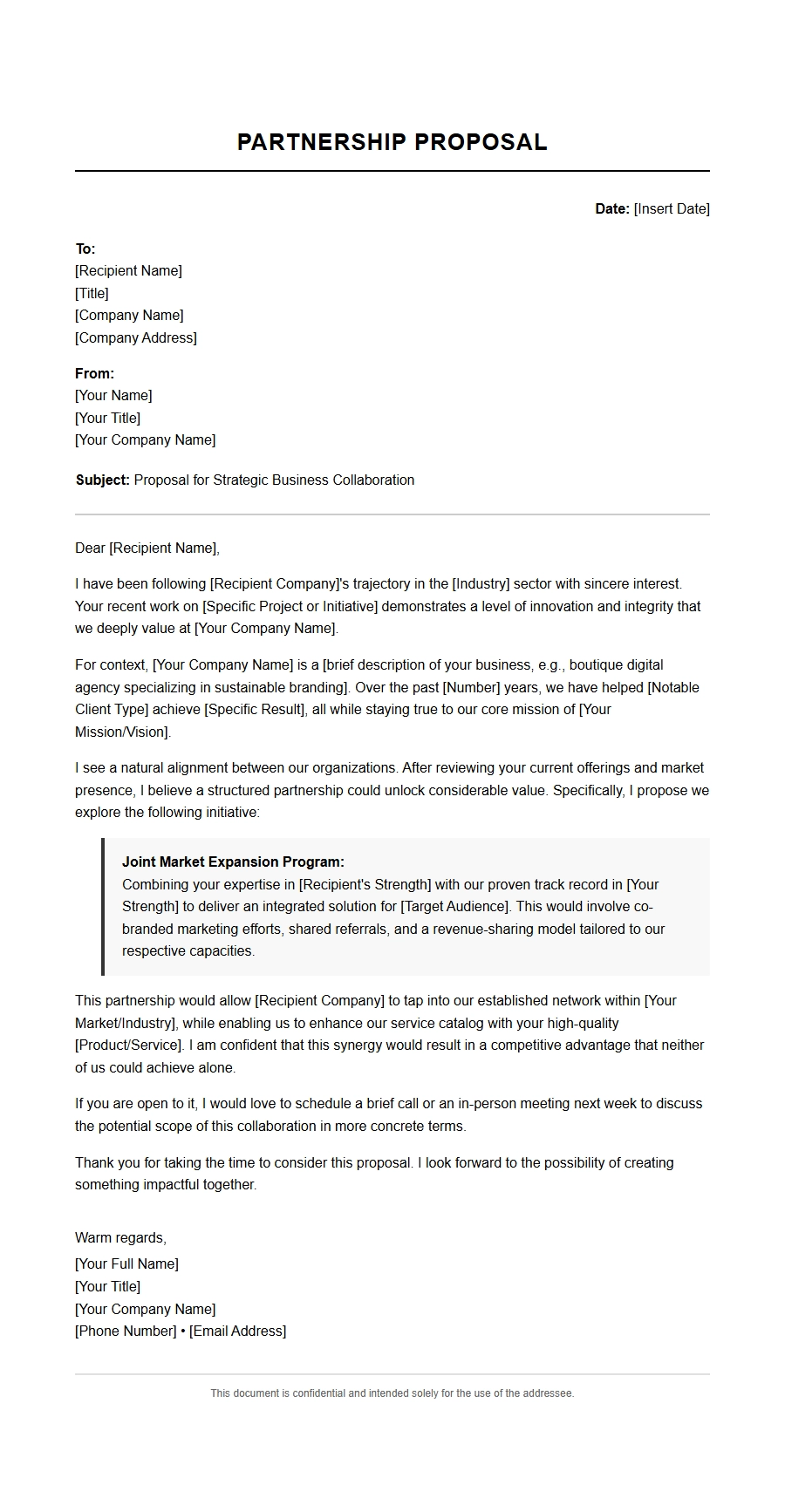 Small Business Partnership Proposal Letter Template
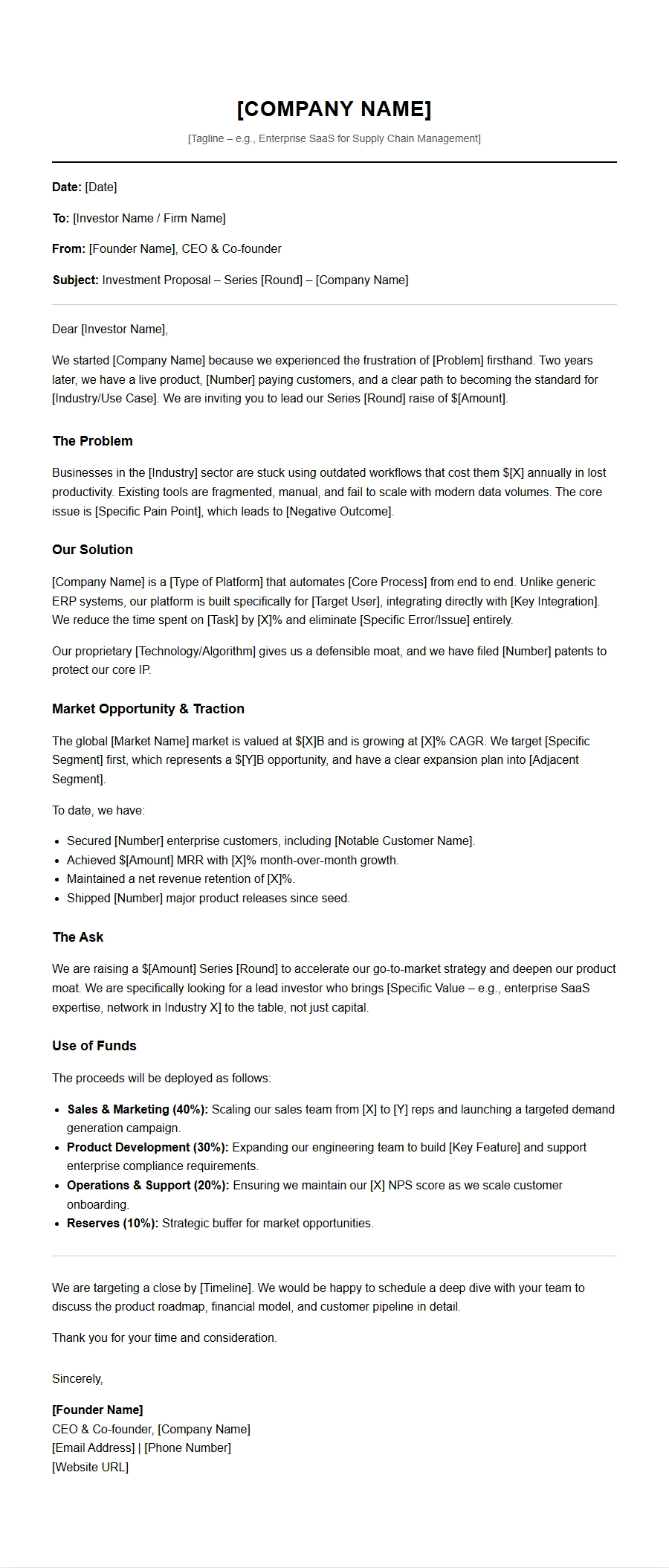 Startup Investment Proposal Letter Template