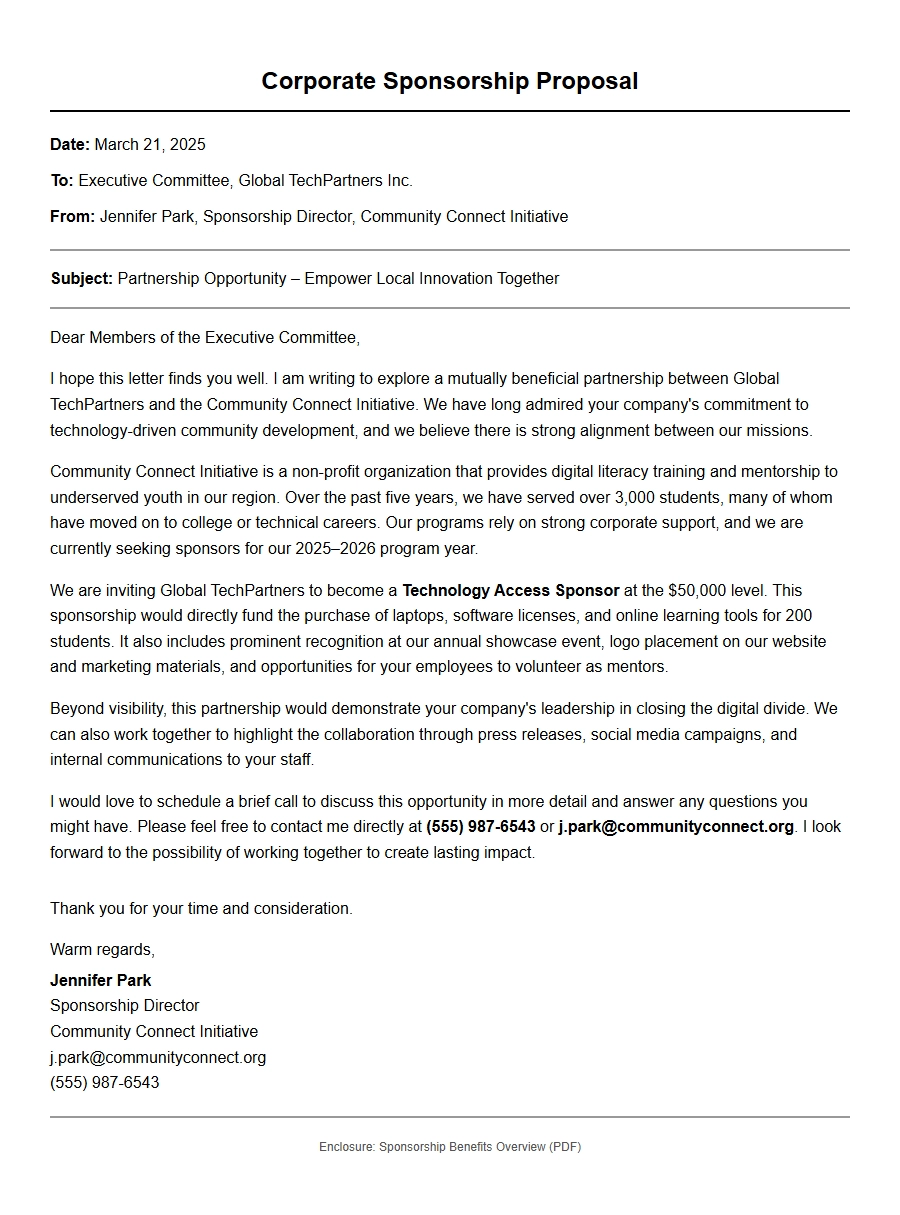
You’ve identified a potential sponsor. You know exactly why your nonprofit or event deserves their support. But then you sit down to write the proposal letter—and the cursor just blinks at you. It’s not writer’s block. It’s the fear of getting the tone wrong, missing a key detail, or sounding like every other generic request. That’s where a solid corporate sponsorship proposal letter sample can save you hours of frustration.
Using a letter template isn’t cheating—it’s working smarter. A good sample gives you a clear business letter format, proven phrases for salutation and closing, and a structure that respects the reader’s time. What it doesn’t do is write your story for you. You still bring the specifics, the passion, and the reason why this partnership matters. Think of it as a scaffold: sturdy enough to hold your message, flexible enough to let your voice show.
You’ll find this falls under the broader category of business proposal letters, where you often need to balance formal writing tips with genuine enthusiasm. The same principles apply whether you’re asking for funding, negotiating terms, or following up on a conversation. Let’s walk through how to make a sample work for you.
Choosing the right sponsorship proposal sample
Not all professional correspondence looks the same. A sponsorship letter to a local coffee shop will sound different than one aimed at a national corporation. When you search for a corporate sponsorship proposal letter sample, look for one that matches the relationship you already have. If you’ve met the decision-maker before, a semi-formal tone works. If this is a cold outreach, stick to a more standard business letter format.
Pay attention to the letter structure. The best samples open with a hook—something that shows you understand the sponsor’s goals. Then they state the ask clearly, explain the mutual benefit, and end with a specific next step. Avoid templates that stuff in too many details upfront. You want a customizable letter, not a rigid script.
Translating a template into your own voice
Once you pick a sample, resist the urge to just swap names and dates. Read it through. Notice where it uses formal language versus conversational phrases. Then adapt it to match your tone in writing. If you’re naturally direct, don’t force flowery sentences. If you’re warm and storyteller-ish, don’t shrink into stiff corporate speak.
A quick tip: rewrite the opening paragraph completely. That’s where you grab attention. Instead of “We are pleased to request your sponsorship,” try something like “Your company’s commitment to youth sports made me think of our upcoming tournament.” That small shift makes the letter feel personal and relevant.
Common mistakes that sink sponsorship letters
Even with a strong sample, a few missteps can hurt your chances. One is using an outdated salutation—drop “To Whom It May Concern” unless you have zero name. Another is ignoring the format: if you’re sending an email, skip the letterhead design and use a clear subject line. For printed letters, do include your logo and contact info at the top. And always proofread your letter before sending. A typo in the company’s name suggests carelessness, not partnership.
Also, don’t forget that a sponsorship proposal often includes a deliverables list—what the sponsor gets in return. That can be a separate document or a section within the letter. If you need help outlining that, check out this deliverables list sample for ideas on presenting benefits clearly.
When the sample doesn’t quite fit
Sometimes you’ll need a variation. For instance, you might be writing a counter-offer business letter after the sponsor suggests different terms. Or you could be pitching a specific initiative, like an environmental sustainability proposal. Don’t force a generic template into those situations. Instead, look for samples that match the scenario, like an counter-offer business letter or an environmental sustainability initiative proposal. The structure shifts, but the core rules of professional correspondence stay the same.
Using the letter as a springboard
A good corporate sponsorship proposal letter sample gets your draft started. It handles the format, the salutation and closing, and the logical flow. What it can’t do is capture your organization’s unique value or the connection you’ve already built with the sponsor. That’s your job—and it gets easier every time you write one. Practice turns a template into second nature. Soon you’ll be able to write a polished proposal in half the time, with plenty of room to sound like yourself.
Ready-to-Use Examples
Corporate Sponsorship Proposal Letter Guide
Gold Level Sponsorship for Annual Tech Conference
We invite your company to become a Gold Level sponsor for the upcoming Annual Tech Conference, scheduled for June 15-17, 2025. This premier event attracts over 2,000 technology professionals, developers, and C-level executives. As a Gold sponsor, you will receive prominent brand visibility and direct access to decision-makers.
Sponsorship Benefits Include:
Keynote speaking slot (30 minutes)
Exhibition booth (10x10 ft) in prime location
Logo on all conference materials, website, and app
Dedicated email blast to 10,000 opt-in subscribers
4 VIP passes to the networking dinner
Investment: $25,000. A detailed breakdown is provided below.
Item
Value
Keynote session
$10,000
Exhibition booth
$5,000
Digital advertising package
$7,000
Miscellaneous
$3,000
Total
$25,000
We are confident this partnership will generate valuable leads and brand affinity. Please reply by March 1 to secure your spot.
Community Sports Team Sponsorship Proposal
The Eastside Eagles Youth Soccer Club seeks your support for the upcoming season. Our program serves 120 children aged 8-14 from underserved neighborhoods. With your sponsorship, we can cover uniforms, field rentals, and tournament fees.
Sponsorship Levels:
Gold: $5,000 – Name on jerseys, banner at all games, social media shoutouts (10 posts)
Silver: $2,500 – Name on banners, logo on team website
Bronze: $1,000 – Logo on thank-you poster and one social media mention
Your company will be recognized at our season kick-off event, reaching 300+ families. We also offer the option to host a clinic with your brand involved.
Timeline: Season runs March–November. Sponsorship deadline is February 10.
Attached is a one-page summary of our impact. We would love to discuss how we can tailor benefits to your CSR goals.
Local Arts Festival Corporate Partnership
The Riverfront Arts Festival returns August 4-6, 2025, drawing an estimated 50,000 visitors. We propose a corporate partnership to enhance the experience and elevate your brand in the community.
Three sponsorship packages are available:
Presenting Sponsor ($50,000): Name in the festival title (“[Your Brand] Riverfront Arts Festival”), stage naming rights, prime vendor booth, 50 VIP tickets, and full media coverage.
Community Partner ($25,000): Logo on all marketing (posters, digital ads, program), two booths, 25 VIP tickets.
Supporter ($10,000): Logo on festival program and website, one booth, 10 VIP tickets.
Additional Benefits: All sponsors receive mention in press releases and social media posts (3 per package tier). We also offer the opportunity to distribute promotional materials at the event.
Feel free to contact us for a custom package that aligns with your marketing objectives.
Education Program Sponsorship for STEM Workshops
Our nonprofit, STEM Connect, delivers hands-on workshops to 5,000 students annually across 20 low-income schools. We seek corporate sponsorship to expand to 10 additional schools in 2025.
Sponsorship Opportunities:
Level
Investment
Benefits
Innovator
$20,000
Name on workshop kits, logo on mobile lab, 4 volunteer spots for employees
Builder
$10,000
Logo on all printed materials, social media recognition (6 posts), 2 volunteer spots
Supporter
$5,000
Logo on thank-you banner, one volunteer opportunity
Your support will directly fund curriculum development, equipment, and instructor stipends. We will provide a detailed impact report at year-end.
Join us in inspiring the next generation of innovators. We would be delighted to schedule a meeting to customize a partnership.
Health & Wellness Charity Run Sponsorship
The Heartbeat 5K Run/Walk is an annual event that raises funds for cardiac research. Over 3,000 participants are expected on May 12, 2025. We offer sponsorship tiers to maximize your brand exposure among health-conscious consumers.
Sponsorship Tiers:
Platinum ($30,000): Title sponsor (e.g., “[Your Brand] Heartbeat 5K”), finish line banner, exclusive booth at the start/finish area, company logo on race bibs, and a team of 20 complimentary registrations.
Gold ($15,000): Logo on event T‑shirts, water station sponsorship, 10 free registrations.
Silver ($7,500): Logo on event website and program, 5 free registrations.
Recognition: All sponsors are acknowledged during the award ceremony and in post-event press release.
Your partnership will help fund life-saving research. We look forward to discussing a custom activation plan.
Music Concert Series Platinum Sponsorship
The Summer Sounds Concert Series presents 8 shows across June and July 2025, attracting up to 10,000 attendees per show. We are offering an exclusive Platinum Sponsorship package for one brand in the entertainment sector.
Platinum Benefits Include:
Title naming rights: “Summer Sounds Featuring [Your Brand]”
VIP hospitality tent for 50 guests at each show
Backstage meet‑and‑greet opportunities with headliners
Logo on all digital and print promotions (posters, flyers, social media)
Two 30‑second commercials aired between sets
Exclusive on‑site product sampling rights
Investment: $120,000. This is a unique opportunity to align your brand with top musical talent and engaged audiences.
We are also open to co‑branded merchandise and social media takeovers. Let us schedule a call to explore synergies.
Environmental Nonprofit Annual Gala Sponsorship
Green Earth Alliance invites corporate partners to sponsor our 10th Annual Gala on October 18, 2025. This black‑tie event brings together 400 influential environmentalists, policymakers, and philanthropists.
Sponsorship Packages:
Level
Amount
Highlights
Environmental Champion
$50,000
Keynote introduction, full‑page ad in program, table of 10, logo on all materials
Conservation Partner
$25,000
Half‑page program ad, 5 seats, logo on event signage
Friend of the Earth
$10,000
Quarter‑page program ad, 2 seats, name in event program
Funds raised support our tree‑planting initiatives and advocacy work. Sponsors will be featured in our annual report mailed to 20,000 supporters.
We can also arrange a private reception for your executives with our board. Please contact us for a detailed proposal.
Small Business Sponsorship for Local Food Festival
The Downtown Bites Food Festival showcases 50 local food vendors on September 20-21, 2025. We seek local business sponsors to enhance the festival experience and boost community ties.
Sponsorship Options:
Title Sponsor ($10,000): Festival named after your business (e.g., “[Your Business] Downtown Bites”), prime vendor booth, logo on all festival banners and social media.
Main Stage Sponsor ($5,000): Signage on main stage, mention from stage hourly, booth space.
Beverage Sponsor ($2,500): Exclusive right to sell your beverages, logo on cups.
Audience: Average 15,000 attendees over two days, primarily families and young professionals with a median household income of $75,000.
We also offer co‑branded social media contests. This is an affordable way to gain visibility and goodwill.
Please let us know if you would like a custom package matching your budget.
University Research Grant Corporate Sponsorship
The Center for Sustainable Engineering at State University proposes a corporate sponsorship to fund a three‑year research project on renewable energy storage. This partnership will position your company as a leader in sustainable innovation.
Sponsorship Levels:
Tier
Annual Contribution
Benefits
Founding Partner
$100,000
Naming rights on research lab, seat on advisory board, early access to patents, quarterly reports
Principal Sponsor
$50,000
Co‑author acknowledgment on publications, monthly progress briefs, student intern preference
Supporting Sponsor
$25,000
Semiannual research summaries, invitation to annual symposium, logo on center website
Your sponsorship is tax‑deductible and helps train graduate students. We can tailor the research to align with your business interests.
We look forward to discussing how this partnership can drive mutual value.
Podcast Season Sponsorship Proposal
TechTalks Weekly is a top‑rated podcast with 50,000 downloads per episode and a dedicated audience of technology decision‑makers. We are offering season‑long sponsorship opportunities for our upcoming 13‑episode season.
Sponsorship Packages:
Season Presenter ($15,000): 60‑second pre‑roll ad in every episode, host‑read endorsement, logo on podcast cover art, and inclusion in show notes.
Episode Sponsor ($1,200 per episode): 30‑second mid‑roll ad, mention in social media post.
We also offer a bundled package of 6 episodes for $6,000. Ads are professionally recorded and integrated.
Bonus: All season sponsors receive a list of anonymized listener demographics and a shout‑out on our community Discord server (2,000 members).
Let us know your preferred ad length and any talking points you wish to highlight.
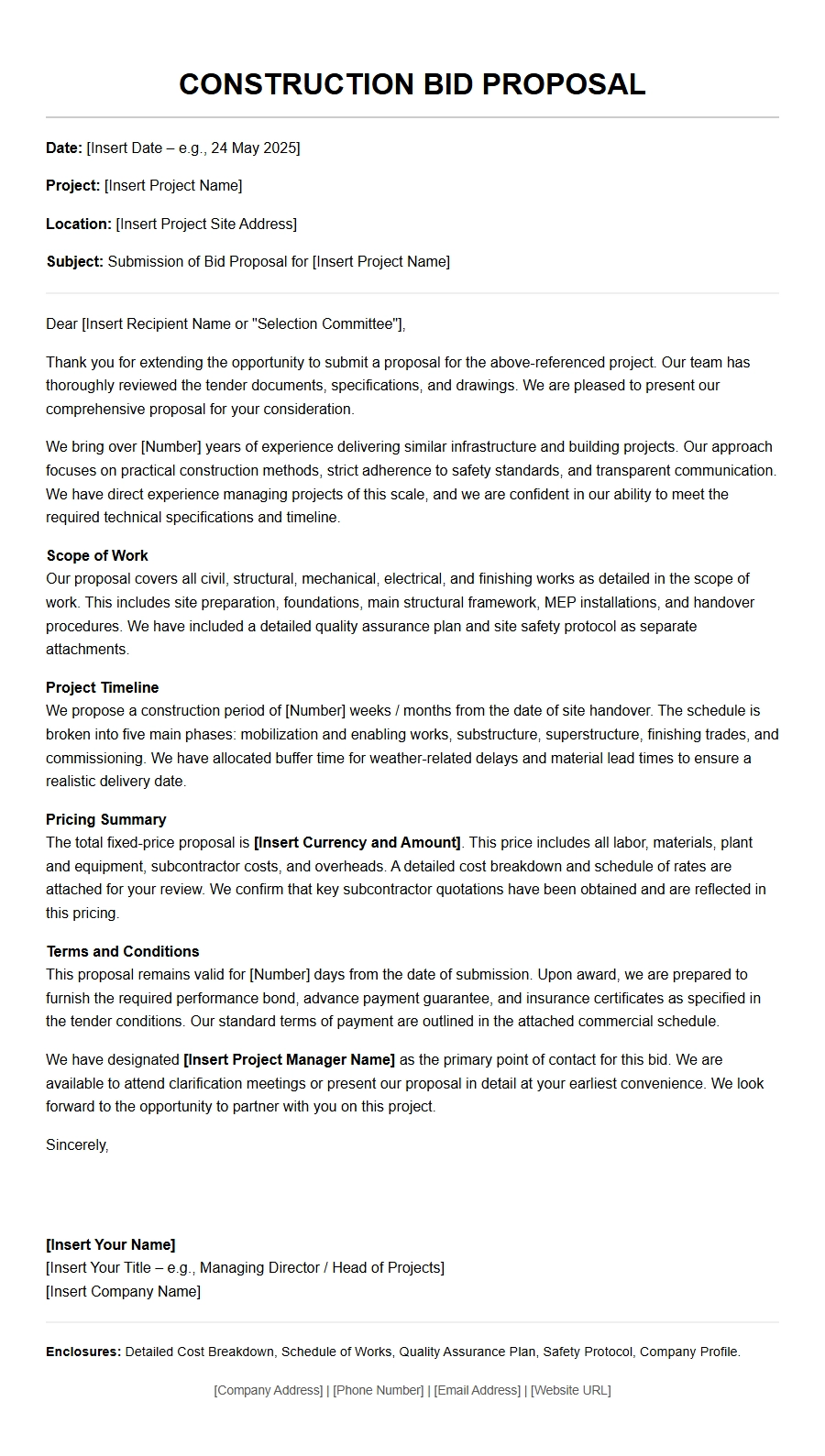 Sample Construction Bid Proposal Letter
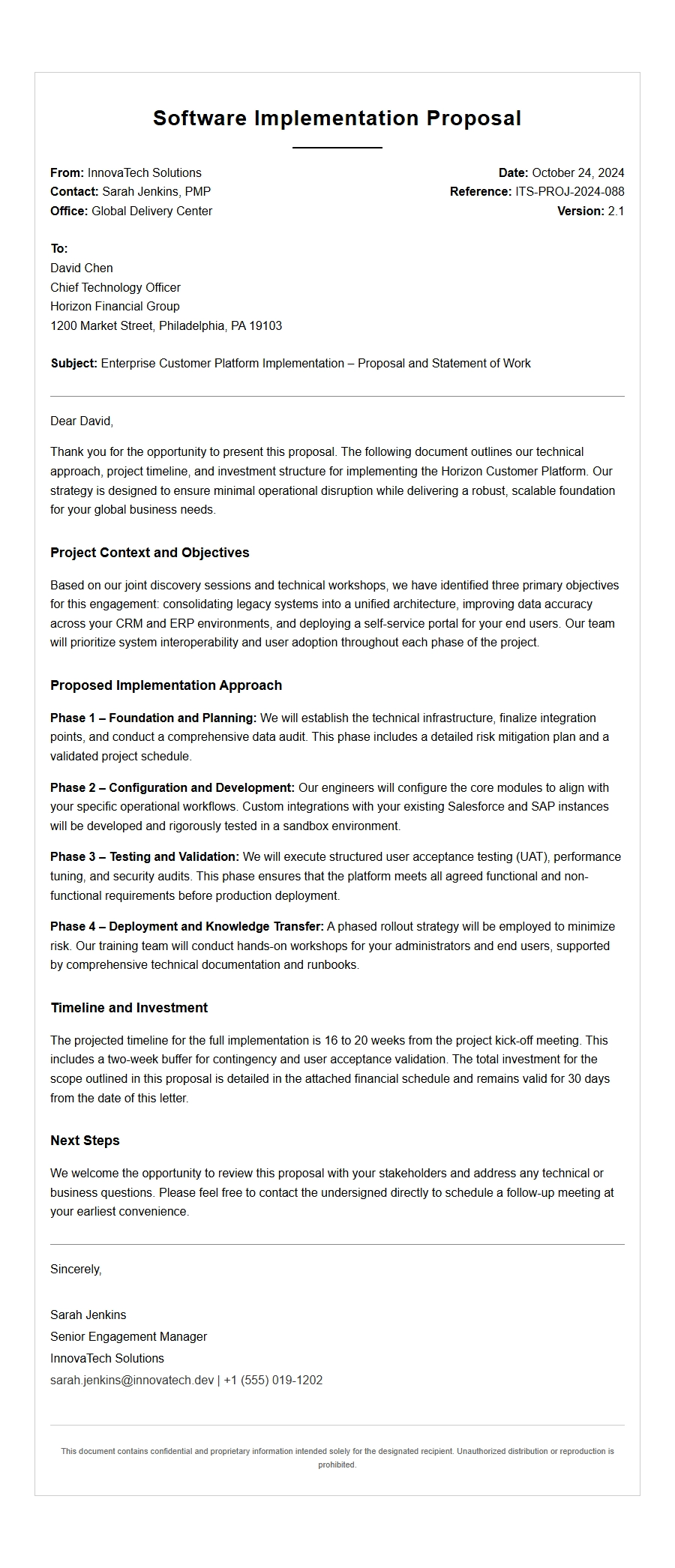 Enterprise Software Implementation Proposal Letter Example
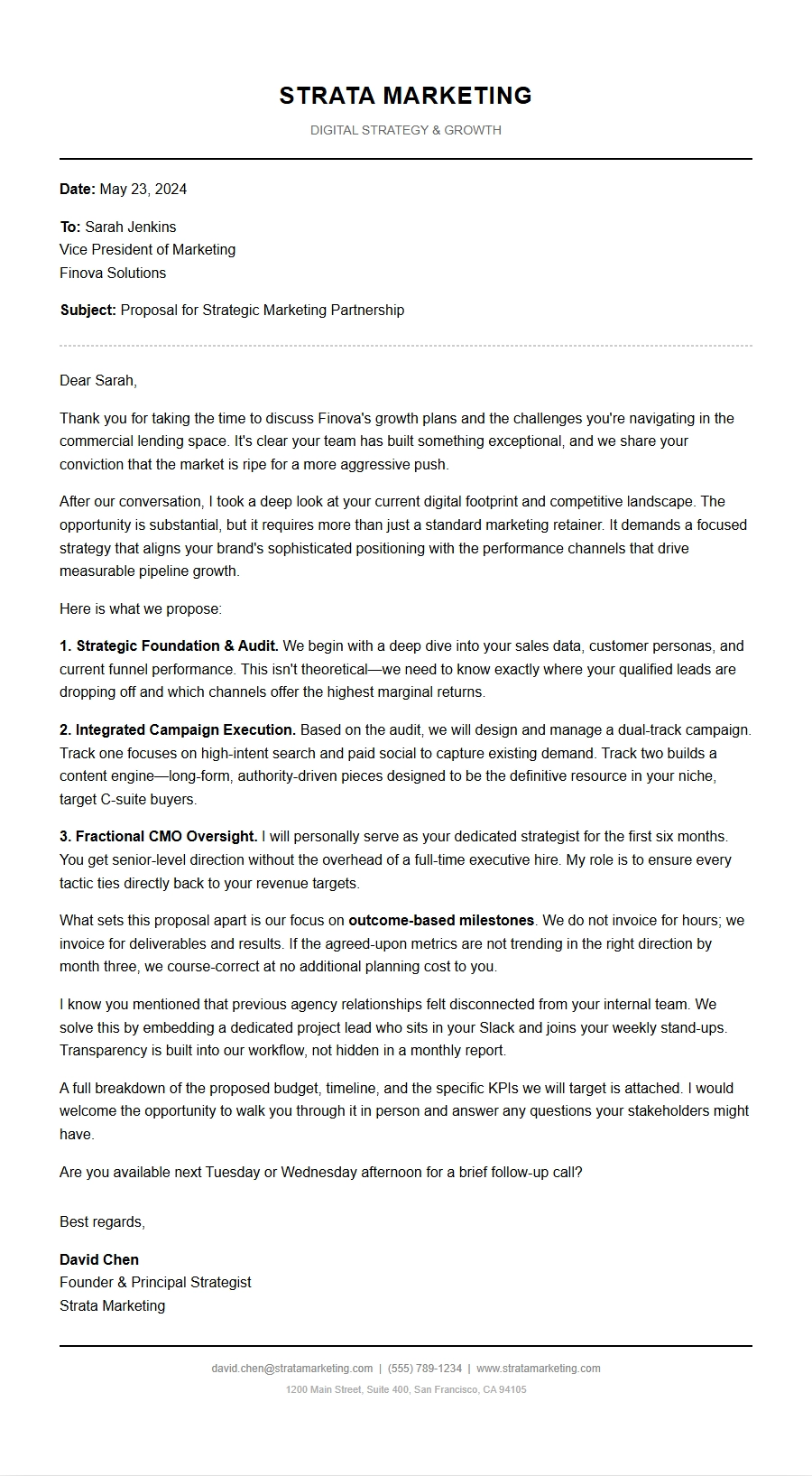 Marketing Agency Service Proposal Letter Template
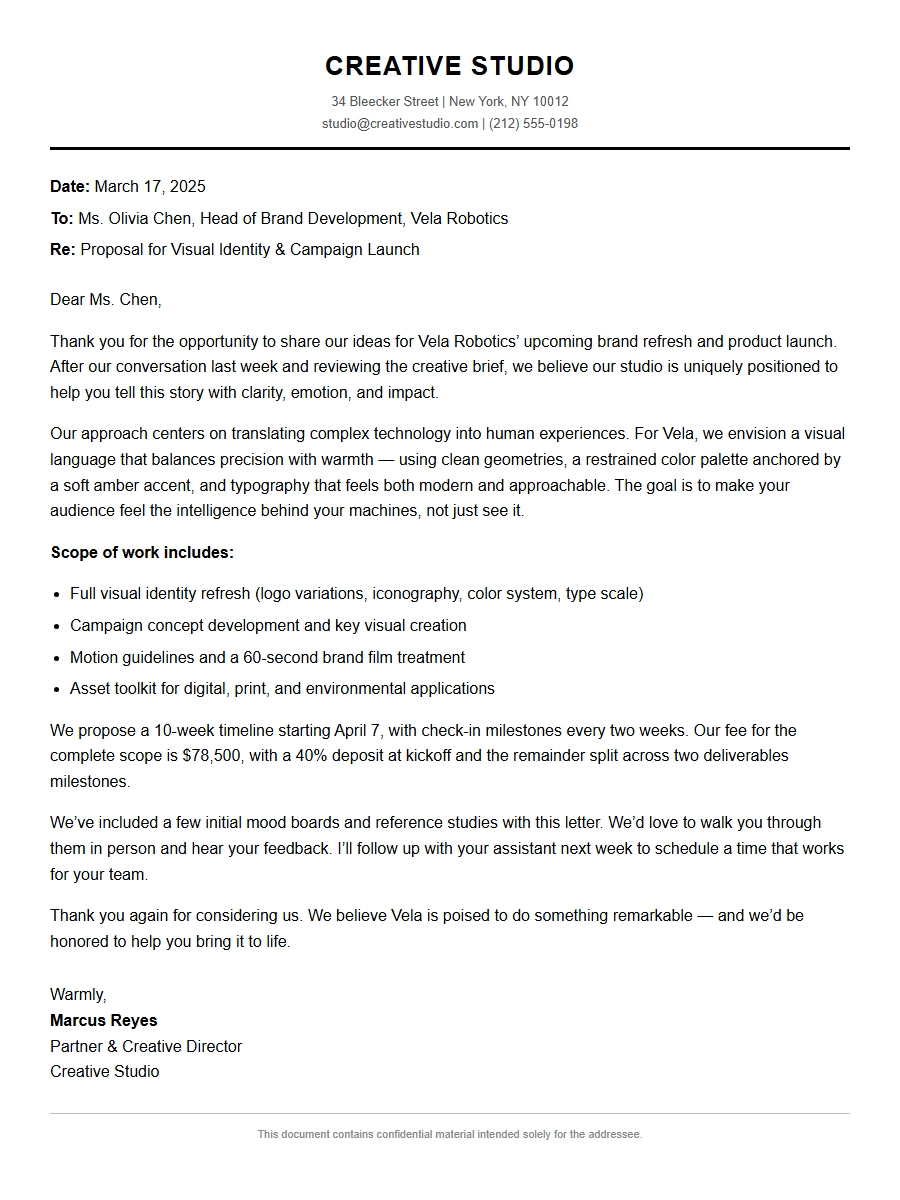 Creative Studio Project Proposal Letter
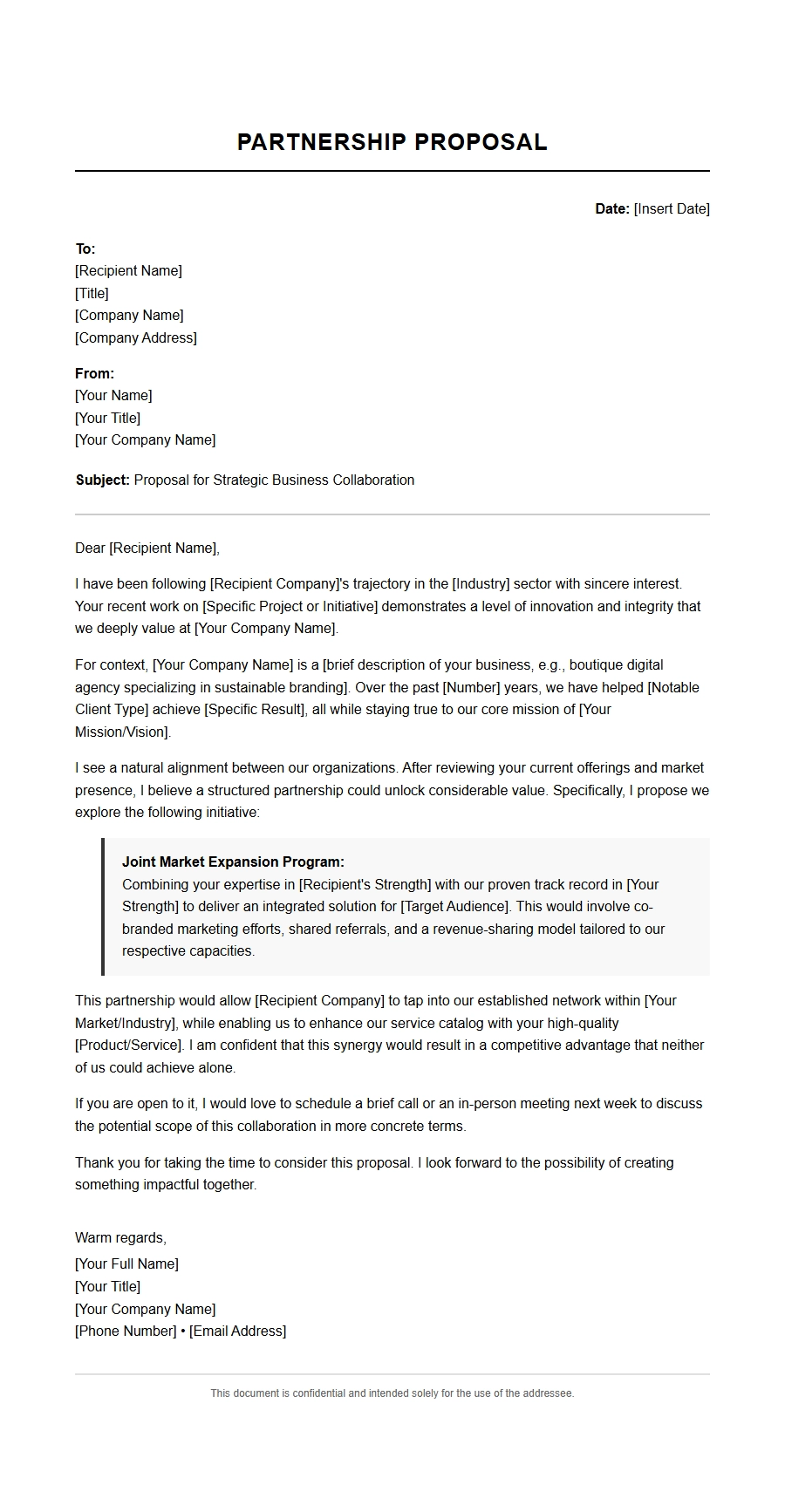 Small Business Partnership Proposal Letter Template
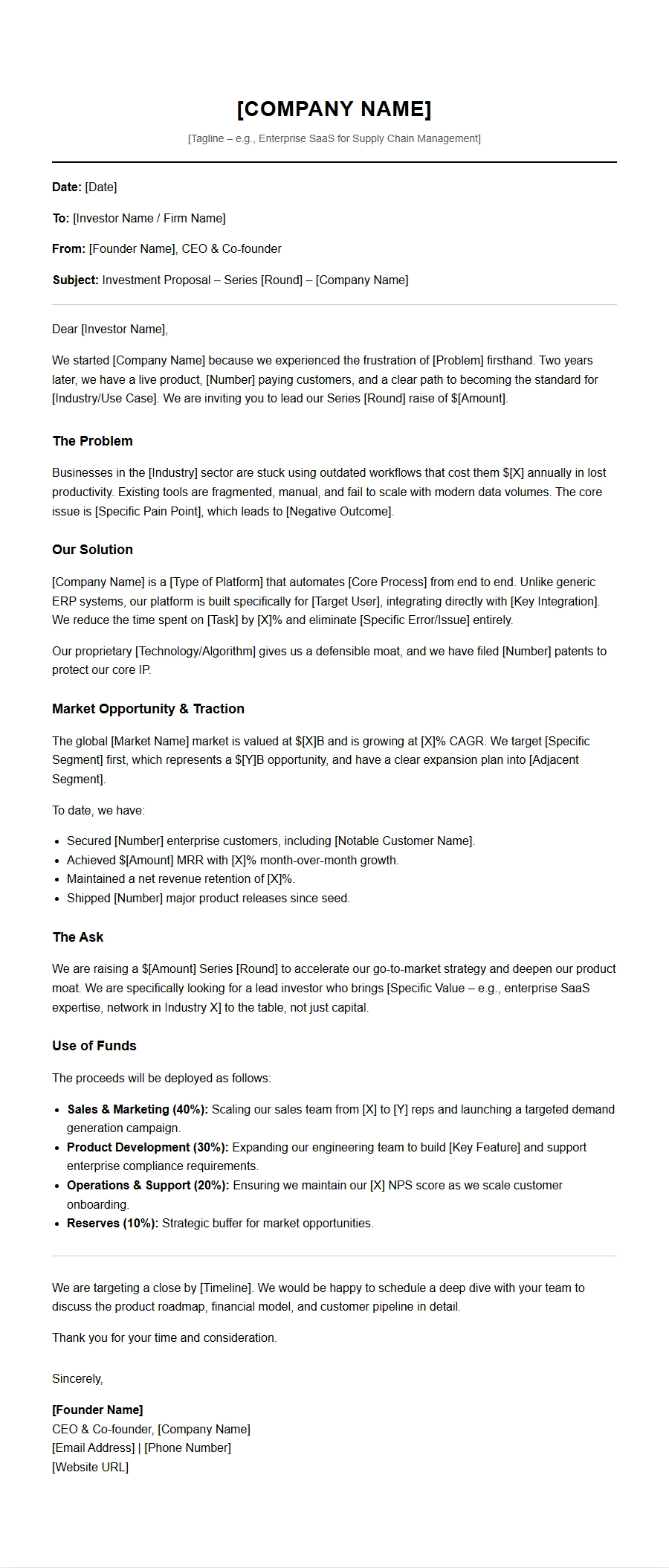 Startup Investment Proposal Letter Template