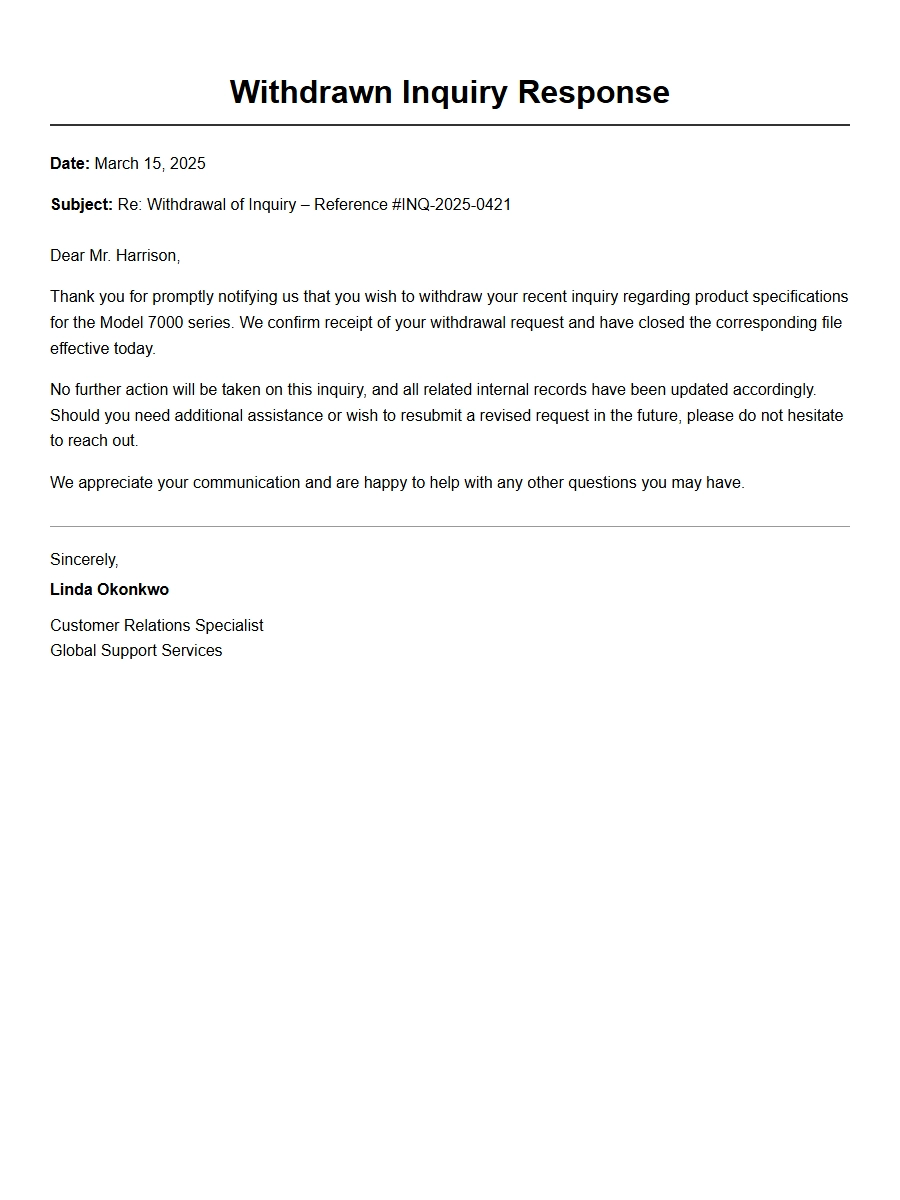
You’ve prepared a thoughtful response to someone’s inquiry—maybe about a job opening, a product quote, or a business partnership. Then the other party writes back to say they’re no longer interested. Now you’re stuck: do you still send a reply? What do you say without sounding pushy or wasting their time? Writing a withdrawn inquiry response letter can feel awkward, but a clear, professional sample turns that uncertainty into a simple task you can finish in minutes.
What is a withdrawn inquiry response letter?
It’s a short, courteous note you send when someone who previously asked you for information, a proposal, or a service has decided to cancel or withdraw their request. For example, a candidate who applied for a role might email to say they’ve accepted another offer. Or a client who requested a construction bid might decide to go with someone else. You’re acknowledging the withdrawal, thanking them for their interest, and leaving the door open for future contact.
Category: Business Letter Templates
Why a sample helps (and doesn’t make you lazy)
Using a letter template isn’t cheating. It gives you a structure, a professional tone, and key phrases that handle the delicate situation gracefully. You still customize the details—the recipient’s name, the specific inquiry, and your genuine closing. The sample saves you from staring at a blinking cursor or accidentally using a tone that’s too stiff or too casual. It’s like having a trusted colleague whisper, “Here’s how to say this without sounding cold.”
When you need this type of professional correspondence
A job applicant withdraws after you requested references
A vendor pulls out of a proposal request
A customer cancels a custom order after you started work
A partner declines a partnership inquiry you were evaluating
In each case, your goal is to remain professional, show appreciation, and preserve the relationship for future opportunities. The withdrawn inquiry response letter does exactly that.
How to adapt a sample without losing your authentic voice
Start by choosing a sample that matches the formality of your situation. For a job applicant withdrawal, a semi-formal tone works. For a vendor or business proposal, stick to standard business letter format with a proper salutation and closing. Read the sample aloud. Does it sound like you? If not, swap a couple of phrases for words you’d actually use.
Example adaptation: The sample says “We regret to inform you that we have received your withdrawal.” You might prefer “Thank you for letting us know you’ve decided to step back.” Keep the core structure—acknowledgment, appreciation, goodwill—but use your natural vocabulary.
Mistakes to avoid
Using outdated salutations like “Dear Sir or Madam” when the recipient’s name is available
Ignoring the format – an email response should have a clear subject line, while a printed letter needs consistent letterhead design
Apologizing too much – a quick “sorry” is fine, but don’t make the withdrawal seem like your fault
Not proofreading – a simple typo undercuts your professionalism. Take thirty seconds to proofread the letter before sending
Tailoring the opening paragraph to grab attention
Even in a short withdrawal response, the first sentence sets the tone. Use the recipient’s name and reference the original inquiry. For example: “Dear Ms. Torres, thank you for notifying us that you are withdrawing your inquiry about the office renovation quote.” That’s clear, direct, and respectful. Avoid generic openers like “I hope this message finds you well” when you’re already responding to a specific situation.
One quick tip on tone
If the withdrawal is amicable (e.g., they chose another option), keep your tone warm and open. If it’s a cancellation that inconveniences you (e.g., they pulled out after you spent hours on a proposal), still stay polite but slightly more formal. The goal is to leave a good impression even if the business didn’t work out.
Final thought: use the sample as a springboard, not a crutch
A withdrawn inquiry response letter doesn’t need to be perfect. It just needs to be clear, polite, and respectful. Over time, you’ll learn the key phrases by heart and the format becomes second nature. Start with a sample, tweak it to sound like you, and send it with confidence. The more you practice, the faster the process becomes—and the less awkward these moments feel.
Examples You Can Adapt
Responding to a Withdrawn Business Inquiry
Acknowledgment of Withdrawn Product Inquiry
Dear Ms. Rivera,
We acknowledge receipt of your request to withdraw your recent product inquiry regarding Model X-2000 (Inquiry #INQ-2024-0451). As instructed, we have closed the associated file and no further action will be taken.
For your reference, the original inquiry details were:
Field
Value
Inquiry ID
INQ-2024-0451
Product
X-2000 Portable Generator
Date Submitted
2024-08-12
Withdrawal Date
2024-08-19
We respect your decision. Should your needs change in the future, please do not hesitate to reach out. Our team remains ready to assist with any new inquiries or questions.
Best regards, John Carter Customer Relations
Response to Withdrawn Partnership Proposal Inquiry
Dear Mr. Tanaka,
Thank you for informing us of your decision to withdraw the inquiry regarding a potential partnership proposal (Ref: PP-2024-089). We understand that circumstances evolve, and we fully respect your choice.
We appreciated the opportunity to learn about your organization and to discuss possible synergies. While this particular path is not moving forward, we remain interested in exploring collaboration at a later time.
Proposal Reference: PP-2024-089
Submitted: 2024-07-22
Withdrawn: 2024-08-18
Please keep our information on file. If you ever wish to revisit discussions, we would be glad to schedule a new exploratory meeting. We wish you continued success.
Sincerely, Maria Santos Business Development Lead
Confirmation of Inquiry Cancellation for Custom Quote
Dear Alex Chen,
This letter confirms the cancellation of your custom quote inquiry (Ref: CQ-5678) for the Industrial Coating Service, as requested on August 20, 2024. We have closed the request in our system.
Here is a summary of the cancelled inquiry:
Item
Details
Quote ID
CQ-5678
Service
High‑Temperature Epoxy Application
Estimated Volume
500 sq. ft.
Cancellation Date
2024-08-20
No charges have been incurred. Should you require a new quote in the future, please submit a fresh inquiry through our website or contact our sales team directly.
Thank you for considering our services.
Yours faithfully, Priya Kapoor Quotations Manager
Reply to Withdrawn Service Inquiry
Dear James O’Brien,
We have received your withdrawal notice for the service inquiry regarding Managed IT Support (Inquiry #SRV-2024-011). We confirm that we have halted all preparations and closed the case.
We understand that priorities may shift. Please know that our service proposal remains available for your review if your situation changes. Below are the original details we had on file:
Inquiry Number: SRV-2024-011
Service Package: Premium 24/7 Support
Requested Start: September 2024
Status: Withdrawn by client
If you have any questions or need assistance with another IT service, feel free to contact us. We value your interest and hope to work with you in the future.
Best regards, Lisa Thompson Client Services
Handling of Withdrawn Bulk Order Inquiry
Dear Mr. Davis,
We acknowledge your request to withdraw the bulk order inquiry for Office Furniture Bundle B-300 (Inquiry #BLK-9842). As requested, we have cancelled the price quotation that was prepared.
Please note that the quoted pricing (valid until August 31, 2024) is no longer active. If you reconsider, a new inquiry will be needed to receive updated terms.
Detail
Original Information
Order Quantity
200 units
Quoted Price per Unit
$175.00
Payment Terms
Net 30
Withdrawal Date
2024-08-21
We hope this decision serves your business needs. Should you decide to proceed later, our team is ready to provide a new quote based on current market rates.
Sincerely, Amanda Lee Wholesale Sales
Response to Withdrawn RFP Inquiry
Dear Procurement Team, City of Oakridge,
This letter serves as formal acknowledgment of the withdrawal of your RFP inquiry (#RFP-2024-103) for the Municipal Water Treatment Upgrade. We have removed your organization from the active bidding list.
We respect your decision to cancel the solicitation. As a standard procedure, we will archive all submitted documentation. No further action is expected from either party.
RFP Reference: RFP-2024-103
Project Scope: Filtration System Replacement
Submission Deadline (original): 2024-09-15
Withdrawal Received: 2024-08-22
If a future RFP is issued, we would be happy to participate. We appreciate the time your team invested in the preliminary discussions.
Best regards, Robert Kim Government Contracts Manager
Reaction to Inquiry Withdrawal Due to Budget Change
Dear Sarah Johnson,
Thank you for informing us that your inquiry for the Enterprise Software Suite (Ref: SW-7881) has been withdrawn due to internal budget realignment. We completely understand that financial priorities can shift.
We have closed your inquiry without any fees. Should your budget situation improve, we can reactivate the conversation or create a scaled‑down proposal that may be more feasible.
Original Proposal Elements
Status
Full Suite License (50 users)
Withdrawn
Implementation & Training
Withdrawn
Annual Maintenance
Withdrawn
We offer flexible payment plans and modular packages. If you would like to explore a smaller initial deployment, please let us know. We are here to help.
Warm regards, David Ortiz Account Executive
Follow-Up on Withdrawn Inquiry for Subscription
Dear Emma Turner,
We have processed the withdrawal of your inquiry for the Premium Cloud Storage Subscription (Inquiry #SUB-342). As per your instructions, no subscription has been activated, and no charges have been applied.
For your records, here is a summary:
Plan: Premium 2 TB
Billing Cycle: Monthly
Inquiry Date: 2024-08-10
Withdrawal Date: 2024-08-20
Outstanding Balance: $0.00
Your account on our portal remains active with basic access. If you decide to subscribe later, you can start a new inquiry at any time. We hope you will consider us when your needs align.
Thank you for your interest.
Sincerely, Jordan Park Subscription Services
Reply to Withdrawn Inquiry from Potential Distributor
Dear Mr. Patel,
We acknowledge receipt of your withdrawal notice regarding the distributor inquiry (Ref: DIST-2024-056) for our line of organic skincare products. We respect your decision and have closed the application process.
We appreciate the time you spent evaluating our brand and territory requirements. While this opportunity is not proceeding now, we would be open to revisiting it should your business strategy change.
Inquiry Detail
Value
Territory Requested
Southwest Region
Product Line
Complete Organic Range
Minimum Order Commitment
500 units/month
Status
Withdrawn by applicant
We wish you continued growth and success. Should you ever want to restart the conversation, our partnership team is ready.
Warm regards, Nina Schwarz Partner Relations
Formal Closure of Withdrawn Inquiry – No Hard Feelings
Dear Tom Harrison,
This letter confirms the closure of your inquiry (#GEN-2024-211) regarding a custom event planning proposal. We have received your withdrawal request and have archived all related correspondence.
We respect that circumstances change and hold no assumptions about your reasons. We remain thankful for the initial interest and for the pleasant interaction with your team.
Inquiry: Corporate Gala Event – Full Planning
Initial Contact: 2024-08-03
Withdrawal: 2024-08-19
If you ever need event services again, we would be delighted to work with you. There are no hard feelings, and our door remains open.
With appreciation, Chloe Martin Event Proposals Coordinator
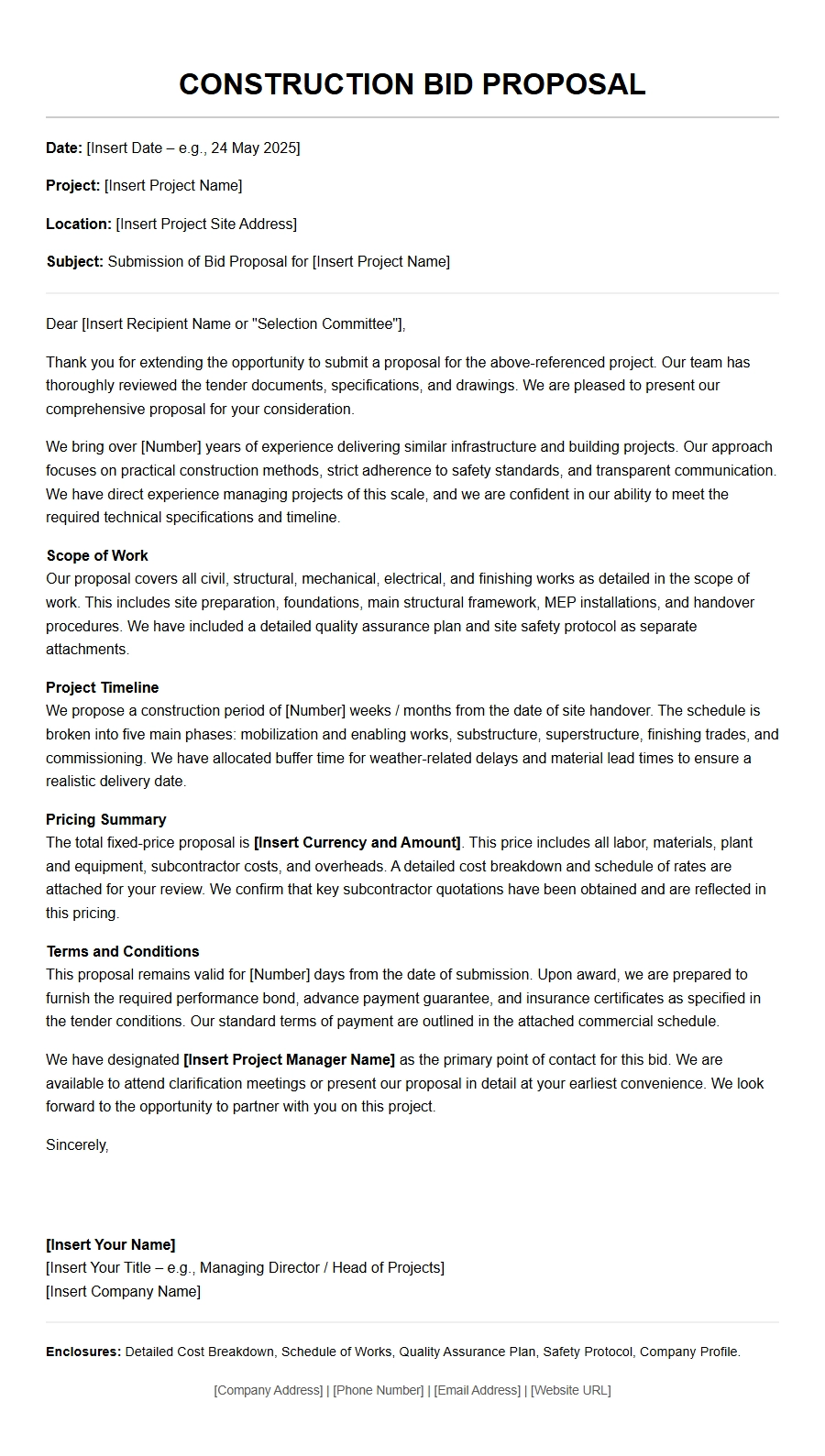 Sample Construction Bid Proposal Letter
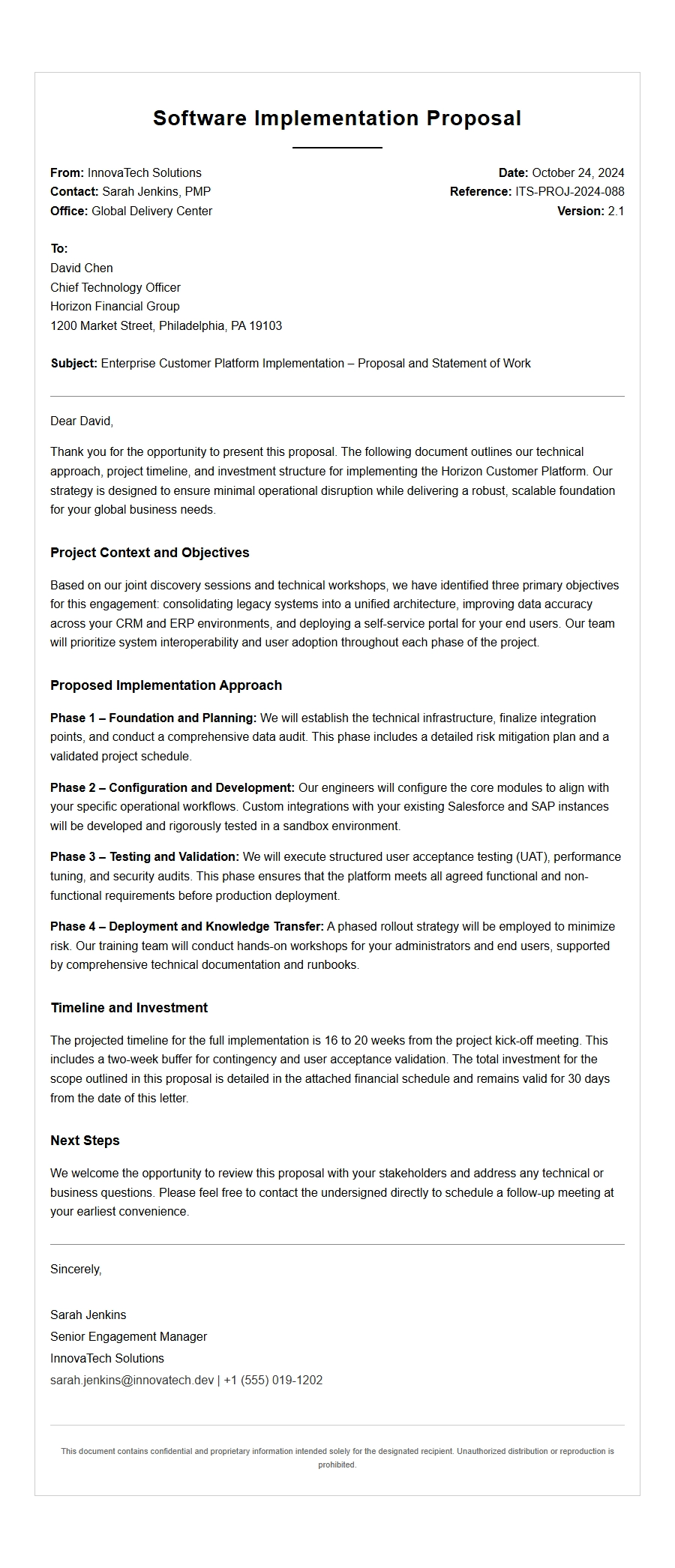 Enterprise Software Implementation Proposal Letter Example
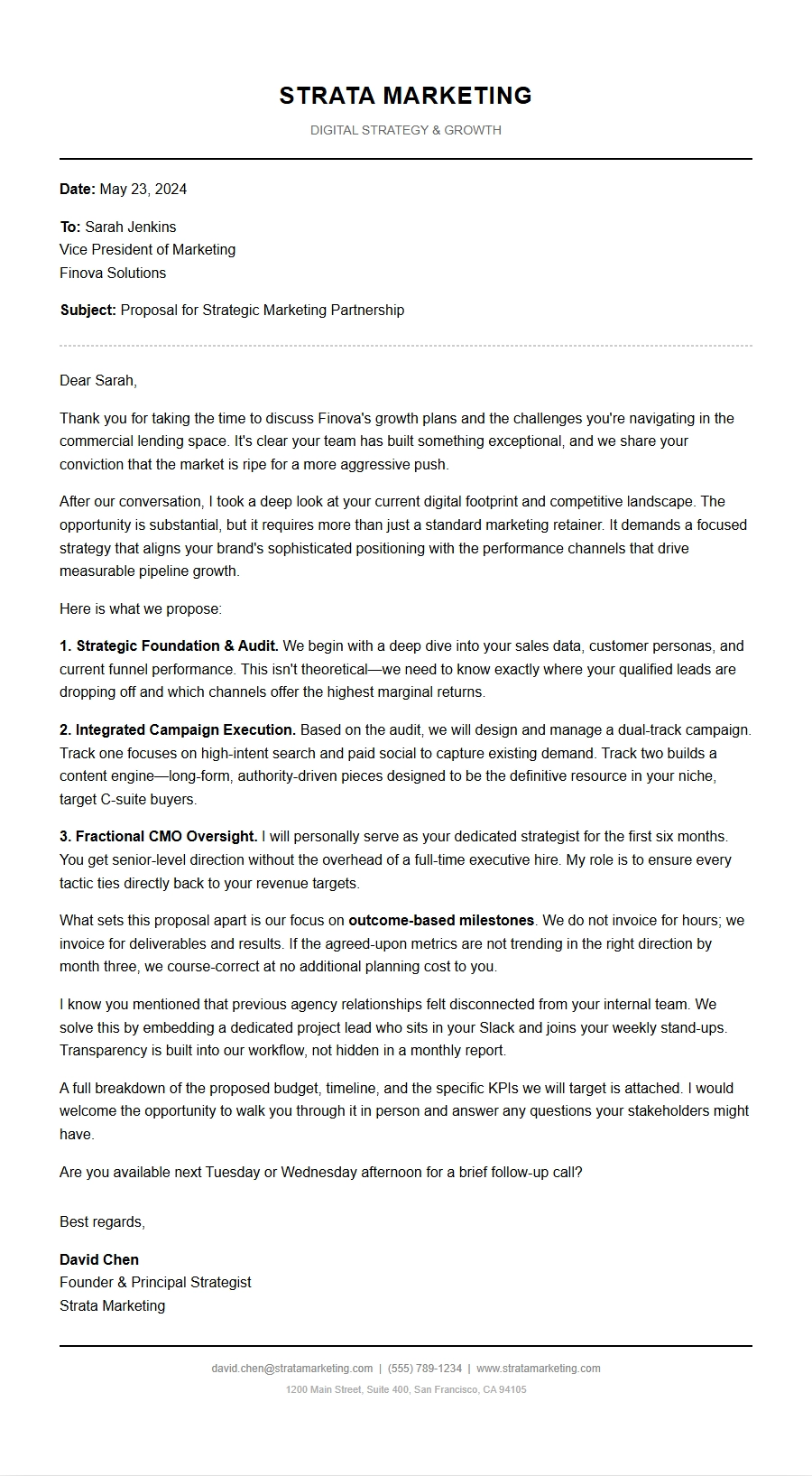 Marketing Agency Service Proposal Letter Template
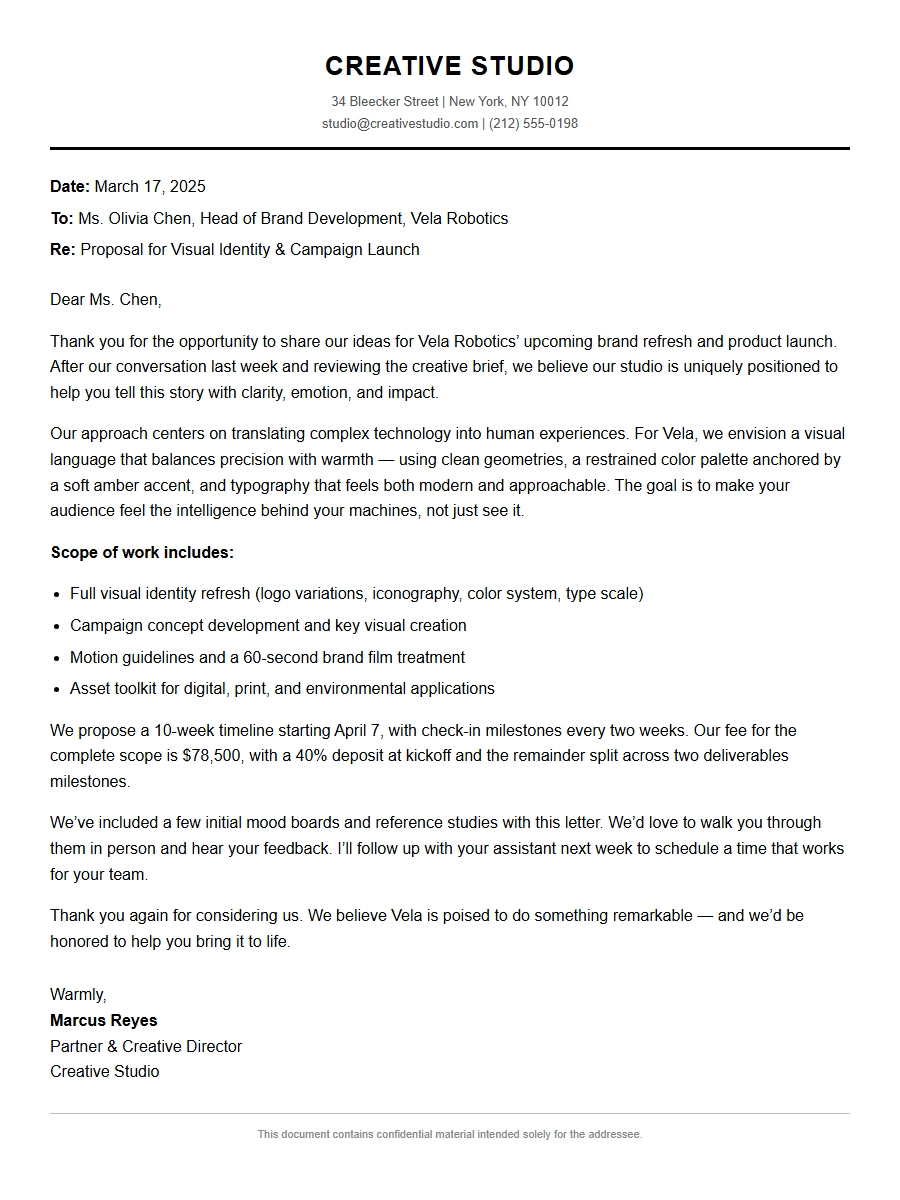 Creative Studio Project Proposal Letter
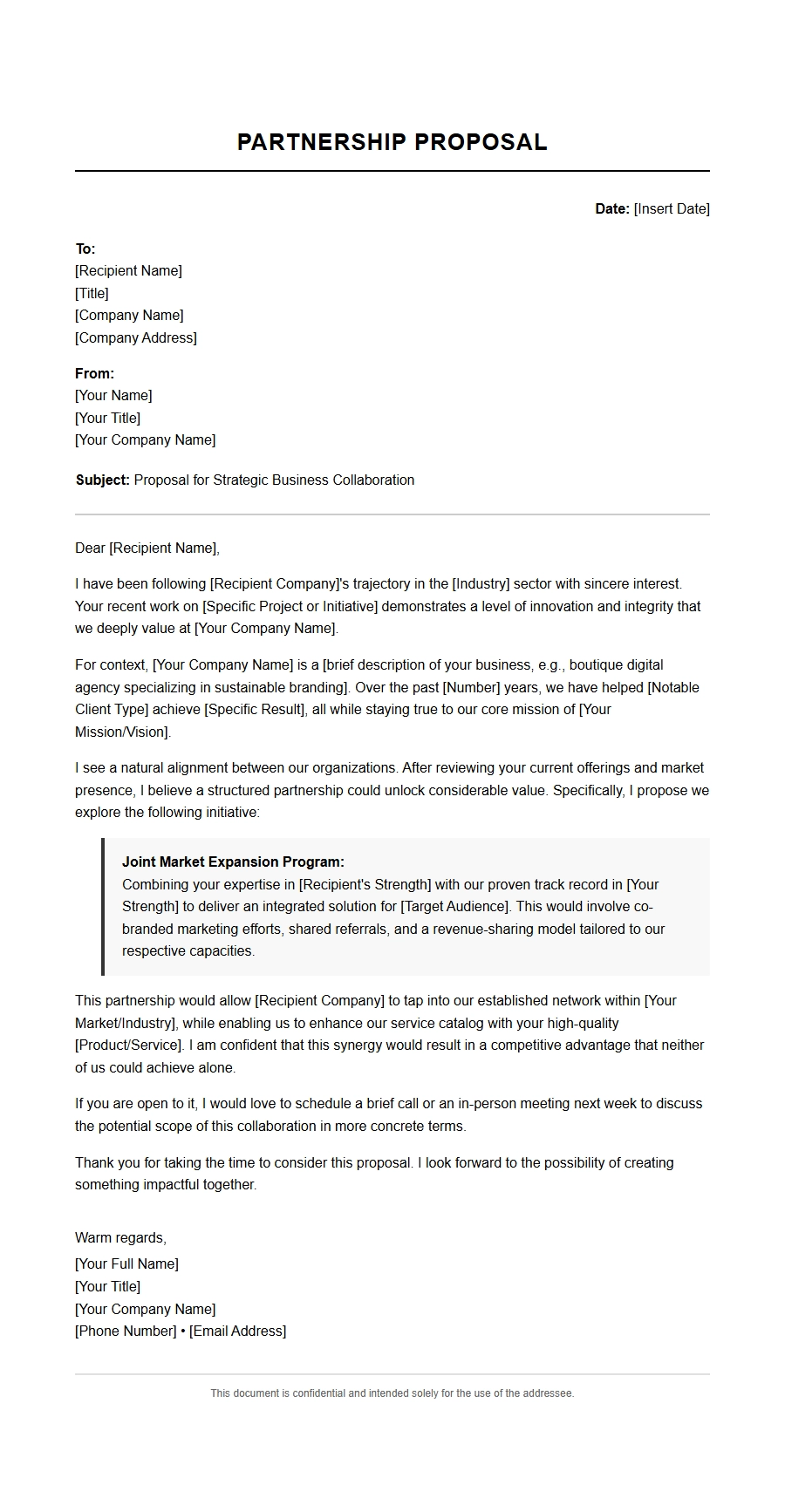 Small Business Partnership Proposal Letter Template
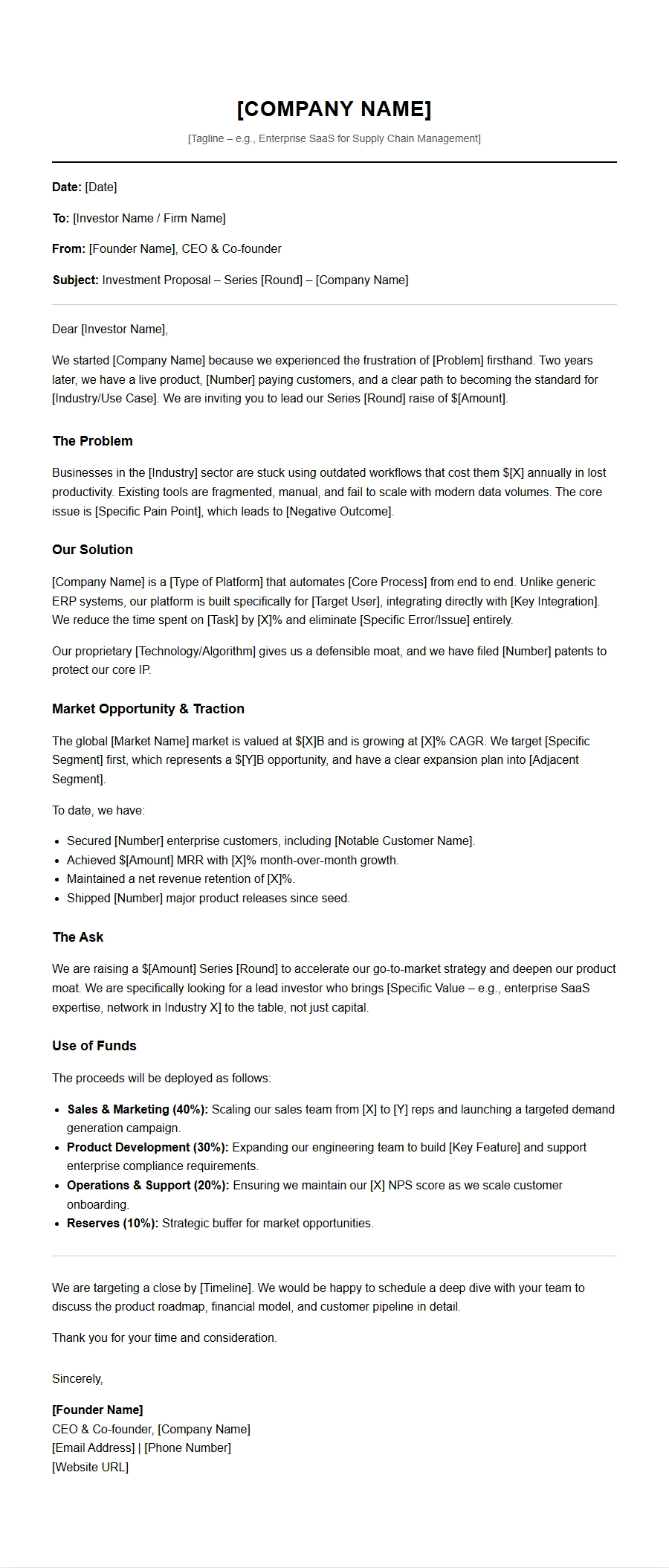 Startup Investment Proposal Letter Template