You're sitting in a consultation room, or maybe at your kitchen table, with a knot in your stomach. You've realised that the treatment plan you agreed to isn't right for you anymore. Perhaps the side effects are too harsh, or you've had a change in your health goals, or you simply feel that your voice isn't being heard. Now you need to put this decision in writing. A withdrawing patient consent treatment letter can feel like a weighty document. It's formal, it's legal, and you want to make sure your wishes are absolutely clear. The good news is that getting this right is less about complicated legal jargon and more about clear, direct communication.
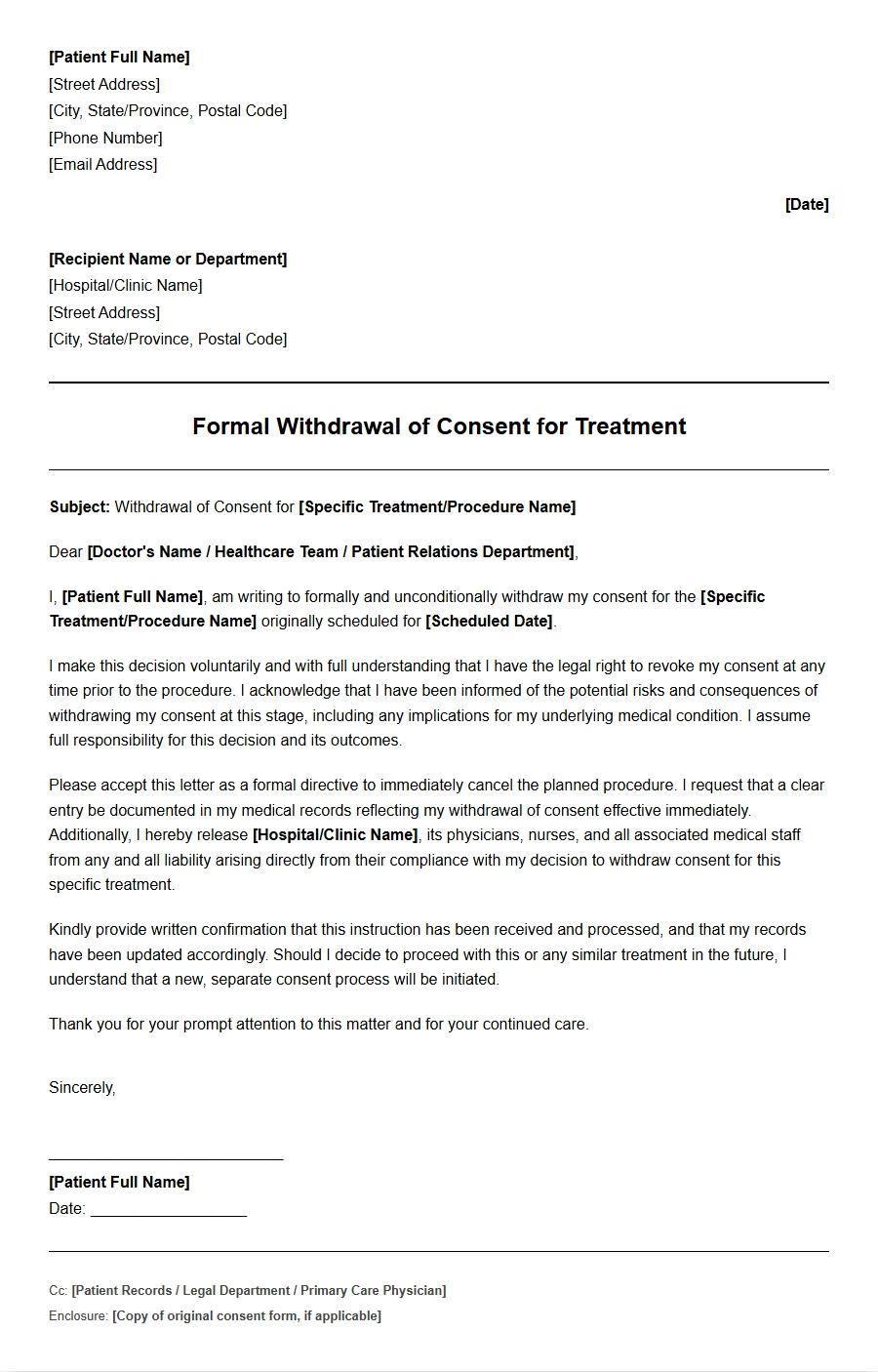
Using a sample for this kind of letter isn't taking a shortcut. It's being smart. A solid letter template gives you the structure you need—the correct way to identify yourself as a patient, the date, and the specific treatment you're withdrawing consent for. It provides the key phrases for professional correspondence that signal to the healthcare provider that this is a serious, considered decision. But remember, a sample is a starting point. Your specific situation and reason for stopping treatment are what make the letter yours.
Why a Standard Business Letter Format Works Best Here
This isn't an email to a friend. You're dealing with a medical record, so formal writing tips apply here. Think of this as a business letter format addressed to your doctor or the hospital's patient services department. A clean letterhead design isn't necessary for you, but you should include your full name, address, date of birth, and patient ID number at the top. Then, add the doctor's name and the hospital's address. This makes sure the letter gets filed correctly in your medical records.
Your salutation and closing should be respectful. "Dear Dr. [Last Name]" is standard. Avoid overly familiar greetings. For the closing, "Sincerely" or "Respectfully yours" works well. Then, sign your name above your printed name. This is letter writing etiquette at its most essential—it shows you're taking the matter seriously.
What to Actually Write in the Body of the Letter
This is where clarity is king. Start with your reason for writing. Be specific. Don't say "I want to stop my treatment." Say exactly which treatment you are referring to. For example: "I am writing to formally withdraw my consent for the chemotherapy regimen of [Drug Name] that was started on [Date]." This leaves no room for confusion.
Next, state that you understand the risks. You don't need to list them, but a simple sentence shows you've thought this through. "I understand that by withdrawing my consent, I am choosing to cease this specific treatment, and I do so of my own free will." This demonstrates to the medical team that you are making an informed decision.
Finally, you can briefly state your general reason if you feel comfortable. "This decision is based on my current quality of life and personal health goals." You don't owe a full explanation, but a short, polite reason can help maintain a good relationship with your care team. This is the heart of tone in writing for medical correspondence: firm, clear, but not confrontational.
Common Mistakes to Avoid When Drafting This Letter
One major mistake is being too vague. "I don't want the medicine anymore" is too loose for a legal document. Another misstep is forgetting to mention future care. Do you still want palliative care? Do you want to see the doctor for other issues? You need to state that. For example: "Please note that I am not withdrawing from your care entirely; I wish to continue my appointments for pain management."
Another frequent error is the wrong format. If you're sending this via a patient portal, a shorter digital letter format is fine. But if you're mailing it, print it on clean paper, sign it by hand, and keep a copy for yourself. Also, proofreading letter is not optional. A typo in a date or drug name can cause serious administrative delays. Read it out loud to yourself. It helps catch awkward phrasing.
Adapting the Sample to Sound Like You
Let's say you're sending this because the side effects are too much. A sample might have a generic sentence like "I am experiencing adverse effects." You can change that to "The fatigue and nausea have made it impossible for me to care for my family, and I cannot continue." That's a customizable letter in action. You kept the structure but added your authentic voice.
Speaking of authentic communication, many of the same principles apply when you are requesting pet permission from a property manager. You need to be clear about what you want, polite in your request, and specific about the details. It's the same idea of using a formal structure for a personal need.
Sometimes, you might need to adapt your tone to a very different setting, like advocating for a loved one in a hospital setting. In those situations, you're not withdrawing consent, but you are asserting a patient's wishes. The same skills of clarity and respectful firmness apply.
When You Need a Gentle Approach
There are times when a letter isn't about conflict, but about ensuring everyone is on the same page. If you are asking a favor from a close friend, you use a very different tone. But the core rule is the same: be clear about what you need. For a consent withdrawal letter, that clarity protects your health and your legal rights.
Writing a difficult letter can strain relationships. If you feel that your decision may upset your doctor, it can help to remember the principles of repairing a relationship through a written apology. You are not apologizing for your choice, but you can acknowledge their effort. A simple "I appreciate the care you have given me" goes a long way.
And if your decision involves a conflict, like a disagreement over a property line, you can see how similar skills are used in discussing fence boundary issues amicably. The goal is to state your position firmly while leaving the door open for continued respect. That's the balance you need here.
Your Next Step
Don't let the formality of this letter scare you. You're not writing a legal brief. You are simply documenting your right to choose what happens to your own body. Use a sample to get the skeleton right, then fill it with your specific details and your honest reasons. The best letters feel both professional and personal. They sound like a real person who has thought carefully and is making a clear statement. Write a first draft today, even if it's rough. Then step away, come back, and proofread it. You'll be surprised how quickly you can turn a blank page into a powerful document that represents your voice and your rights.
Writing Examples
Withdrawing Consent for Treatment Letter
Withdrawal of Consent for Scheduled Surgery
Date: May 10, 2026
To: Dr. Rebecca Lang, General Surgery Department, City Medical Center
Re: Withdrawal of Consent for Laparoscopic Cholecystectomy scheduled on May 15, 2026
Dear Dr. Lang,
I am writing to formally withdraw my consent for the laparoscopic cholecystectomy procedure that I previously agreed to undergo on May 15. After careful consideration and a second opinion from another specialist, I have decided that non-surgical management of my gallstones is a more appropriate course of action at this time.
I understand that by withdrawing consent I am assuming full responsibility for any consequences that may arise from not proceeding with the surgery. Please confirm in writing that you have received this notice and that the scheduled procedure has been cancelled.
Thank you for your understanding.
Sincerely, Jane Doe Patient ID: 456789 Phone: (555) 123-4567
Parent Withdrawing Consent for Child's Chemotherapy
Date: June 2, 2026
To: Dr. Michael Torres, Pediatric Oncology, St. Jude Children’s Hospital
Re: Withdrawal of Consent for Chemotherapy Treatment for my child, Olivia Chen (DOB: 03/14/2018)
Dear Dr. Torres,
As Olivia’s mother and legal guardian, I am writing to withdraw my consent for the chemotherapy regimen that was scheduled to begin on June 5. After extensive discussions with our family, Olivia’s other physicians, and reviewing complementary treatment options, I believe that an integrative approach focused on palliative care and quality of life is more suitable for her current condition.
I understand that stopping chemotherapy may have significant risks, including disease progression. I have discussed these risks with the care team and assume full responsibility for this decision. I request that all previously authorized treatments be cancelled and that Olivia's chart be updated accordingly.
Please send me a confirmation letter and any forms that require my signature regarding this withdrawal.
Thank you for respecting our decision.
Yours truly, Mei Chen Parent/Guardian Phone: (555) 987-6543
Patient Withdrawing Consent for Experimental Drug Trial
Date: July 18, 2026
To: Dr. Priya Sharma, Principal Investigator, NovoMed Clinical Research
Re: Withdrawal of Consent – Study ID: NM-2025-03 (Investigational Drug for Rheumatoid Arthritis)
Dear Dr. Sharma,
I am writing to formally withdraw my consent to participate in the clinical trial for the investigational drug NM-2025-03. I enrolled in this study three months ago, but after experiencing unmanageable side effects (severe nausea and dizziness), I have decided to discontinue my participation effective immediately.
Please remove me from all study-related procedures and discontinue the administration of the investigational product. I understand that my withdrawal will not affect my standard medical care, and I have already scheduled an appointment with my rheumatologist to discuss alternative treatments.
I request that you send me a confirmation of this withdrawal and any documentation regarding the discontinuation of the trial drug.
Sincerely, Robert Anderson Participant ID: 1029
Withdrawal of Consent for Electroconvulsive Therapy (ECT)
Date: August 12, 2026
To: Dr. Emily Foster, Psychiatrist, Serenity Behavioral Health Center
Re: Withdrawal of Consent for Electroconvulsive Therapy (ECT) – Patient: Laura Bennett
Dear Dr. Foster,
I am writing to withdraw my consent for the ongoing ECT treatments that I initially agreed to. After the first three sessions, I have experienced significant memory loss and confusion that I find unacceptable. I have decided to explore other modalities, such as transcranial magnetic stimulation and cognitive behavioral therapy, as recommended by my therapist.
Please cancel all future ECT appointments and update my treatment plan accordingly. I understand that I may experience a recurrence of depressive symptoms, and I will work with my outpatient team to manage my condition.
Kindly acknowledge receipt of this notice in writing and provide instructions on any necessary follow-up.
Thank you for your understanding.
Best regards, Laura Bennett MRN: 882-19-4467
Guardian Withdrawing Consent for Inpatient Psychiatric Treatment
Date: September 5, 2026
To: Dr. John Carter, Attending Psychiatrist, Hope Valley Psychiatric Hospital
Re: Withdrawal of Consent for Involuntary Inpatient Treatment – Patient: Thomas Knight (DOB: 01/22/1985)
Dear Dr. Carter,
I am writing in my capacity as the legal guardian appointed by the court for Thomas Knight. I am hereby withdrawing my consent for his continued inpatient psychiatric treatment at your facility. After consulting with an independent psychiatrist who evaluated Thomas, I believe a less restrictive community-based treatment program is now appropriate.
I understand that this decision may pose risks to Thomas's stability, and I have made arrangements for outpatient follow-up at a local mental health clinic starting next week. I request that you prepare a discharge summary and coordinate the transfer of his care.
Please confirm receipt of this withdrawal and let me know the steps to finalize discharge.
Sincerely, Margaret Knight Legal Guardian Phone: (555) 234-5678
Patient Withdrawing Consent for Pain Management Procedure
Date: October 20, 2026
To: Dr. Samuel Lee, Pain Management Specialist, Midwest Spine Institute
Re: Withdrawal of Consent for Epidural Steroid Injection scheduled for October 25
Dear Dr. Lee,
I am writing to cancel and withdraw my consent for the epidural steroid injection that was planned for my lower back pain. After learning more about the potential risks and after my pain improved significantly with physical therapy, I have decided not to proceed with any interventional procedure at this time.
Please remove the procedure from my schedule and notify the billing department accordingly. I understand that a cancellation fee may apply per your office policy, and I accept that.
I appreciate your thorough explanation of the options, but I will continue with conservative management for now.
Best regards, Susan Choi DOB: 12/02/1982 Insurance ID: BCBS-7789-02
Withdrawal of Consent for Blood Transfusion (Religious Reasons)
Date: November 1, 2026
To: Dr. Alan Grant, Hematologist, Mercy General Hospital
Re: Withdrawal of Prior Consent for Blood Transfusion – Patient: Elijah Brooks (MRN: 551-23-9087)
Dear Dr. Grant,
Upon deeper reflection and consultation with my religious advisor, I am writing to withdraw my earlier consent for blood transfusions as part of my treatment for severe anemia. My faith as a Jehovah’s Witness prohibits the acceptance of whole blood, and I now wish to have my medical directive updated to reflect this.
I understand the medical risks, including the possibility of increased morbidity or mortality, and I assume full responsibility. I am open to alternative treatments such as erythropoietin, iron infusions, and volume expanders, if available. Please discuss these options with me.
I request that you place a clear notice in my electronic health record and provide me with a written acknowledgment of this revocation of consent.
Sincerely, Elijah Brooks
Patient Withdrawing Consent for Physical Therapy After Injury
Date: December 15, 2026
To: Ms. Karen O’Neil, Physical Therapist, RehabRight Clinic
Re: Withdrawal of Consent for Continued Physical Therapy – Patient: Mark Davies
Dear Ms. O’Neil,
This letter serves as formal notice that I am withdrawing my consent for further physical therapy sessions for my left knee rehabilitation. I believe I have achieved sufficient functional improvement and can manage the remaining exercises independently with a home program.
Please discontinue all scheduled appointments effective immediately. I also request a copy of my home exercise plan and a summary of my progress notes for my primary care physician.
I appreciate your guidance over the past six weeks. If I experience any setbacks, I will contact the clinic to reassess.
Thank you.
Best regards, Mark Davies Patient ID: 3344
Withdrawal of Consent for Dental Implant Surgery
Date: January 8, 2027
To: Dr. Lisa Nguyen, DDS, SmileCare Dental Group
Re: Withdrawal of Consent for Single Tooth Implant Placement (Tooth #30) – Patient: Thomas Harper
Dear Dr. Nguyen,
I am writing to withdraw my consent for the dental implant surgery that was scheduled for January 15. After receiving a second opinion from an oral surgeon, I have decided that a fixed bridge is a more appropriate and less invasive solution for my missing tooth, given my bone density concerns.
Please cancel the implant procedure and any associated preparatory work. I acknowledge that my deposit might be forfeited as per your cancellation policy; please confirm the amount.
Thank you for your time and explanations. I may still return for other dental services in the future.
Sincerely, Thomas Harper Phone: (555) 345-6789
Patient Withdrawing Consent for Alternative Herbal Therapy
Date: February 20, 2027
To: Dr. Anita Patel, Naturopathic Physician, WholeHealth Clinic
Re: Withdrawal of Consent for Intravenous Mistletoe Therapy – Patient: Carol Jennings
Dear Dr. Patel,
I am writing to withdraw my consent for the intravenous mistletoe therapy we discussed for my advanced breast cancer. After careful review of the latest clinical evidence and discussion with my oncologist, I have decided that this complementary treatment may interfere with my conventional chemotherapy and does not have sufficient proven benefit to justify the risk.
Please remove the therapy from my treatment plan and cancel any scheduled appointments for IV infusions. I still value your support in other areas such as nutrition and stress reduction, and I would like to continue those aspects of our care.
I request written confirmation of this withdrawal.
 Thanking a Mentor for Guidance: Sample Messages
 Expressing Gratitude: Handwritten Letter Example
 Expressing Thanks in a Formal Personal Letter
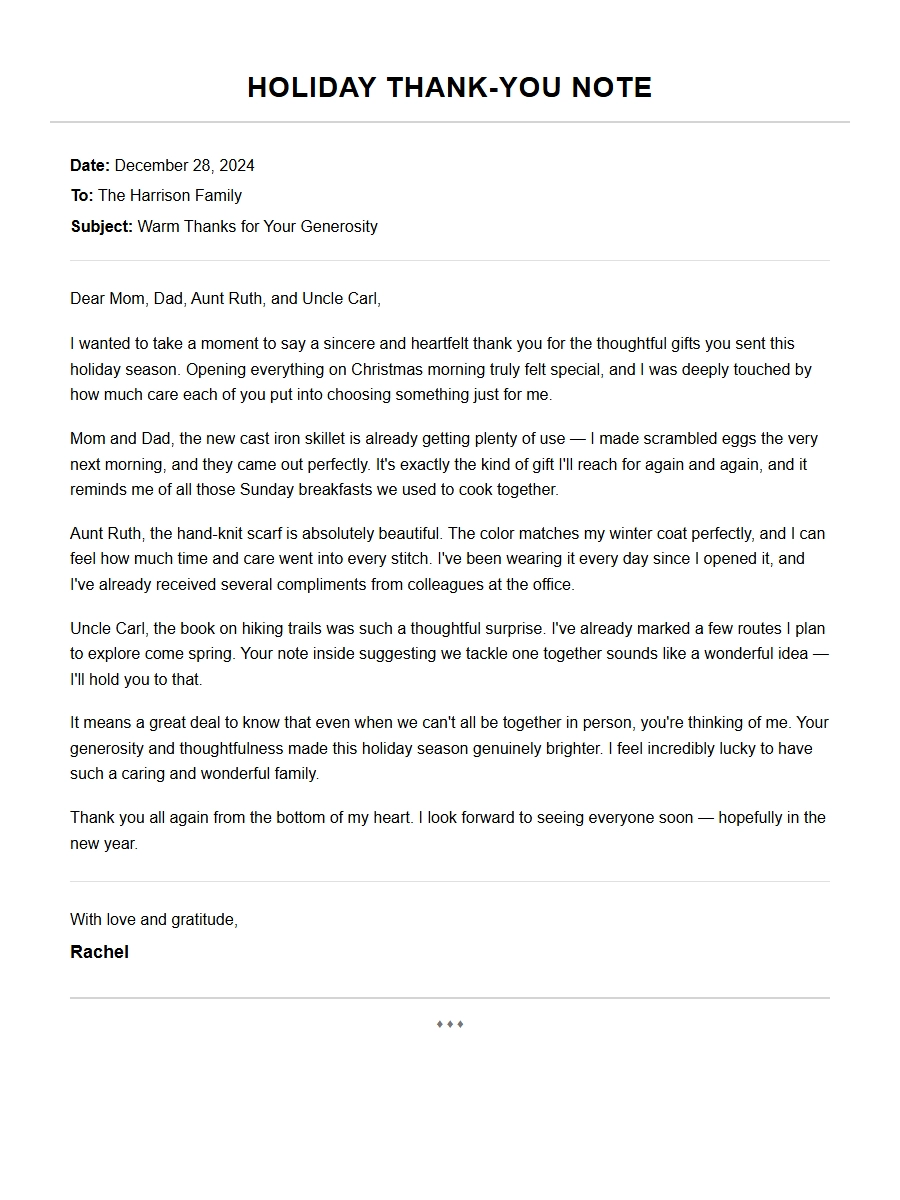 Thank You Letter Examples for Family Holiday Gifts
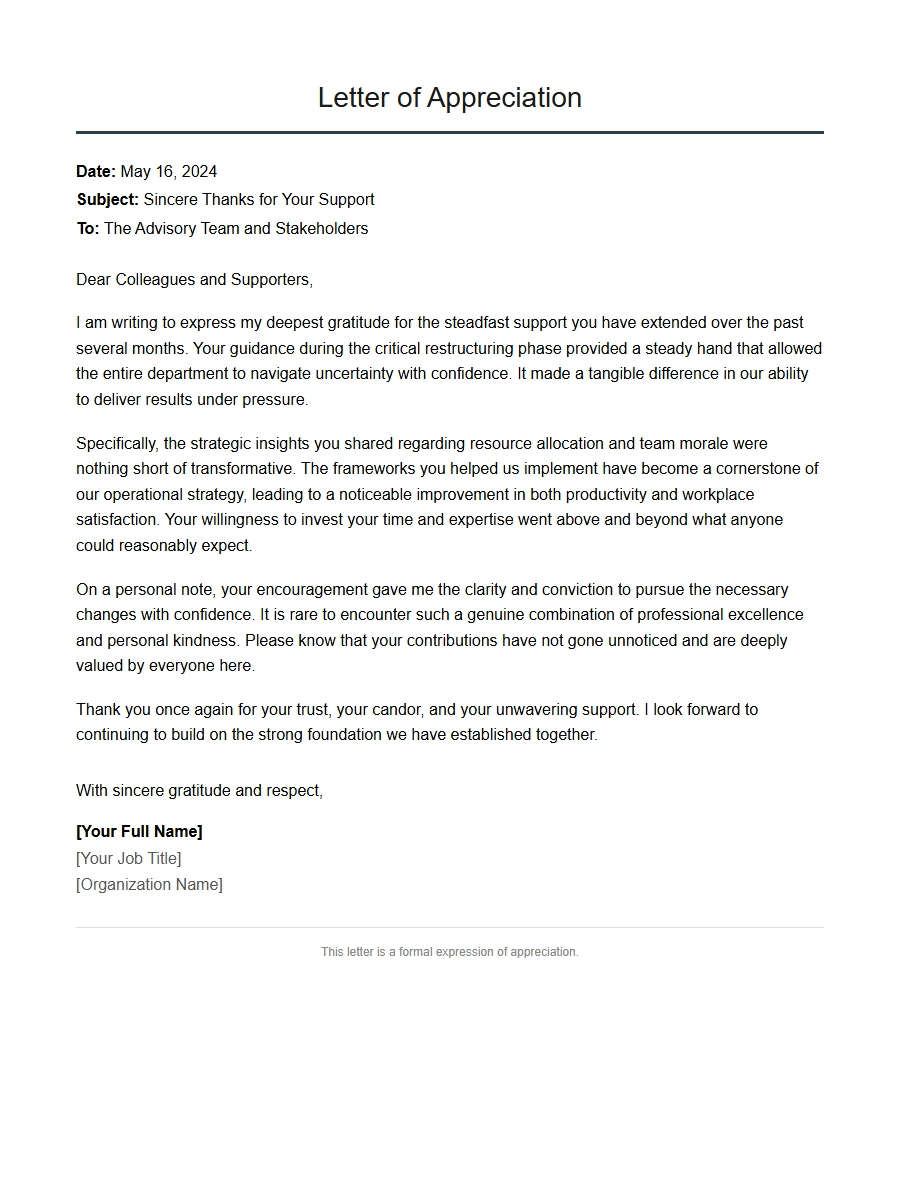 Sample Thank You Letter for Support
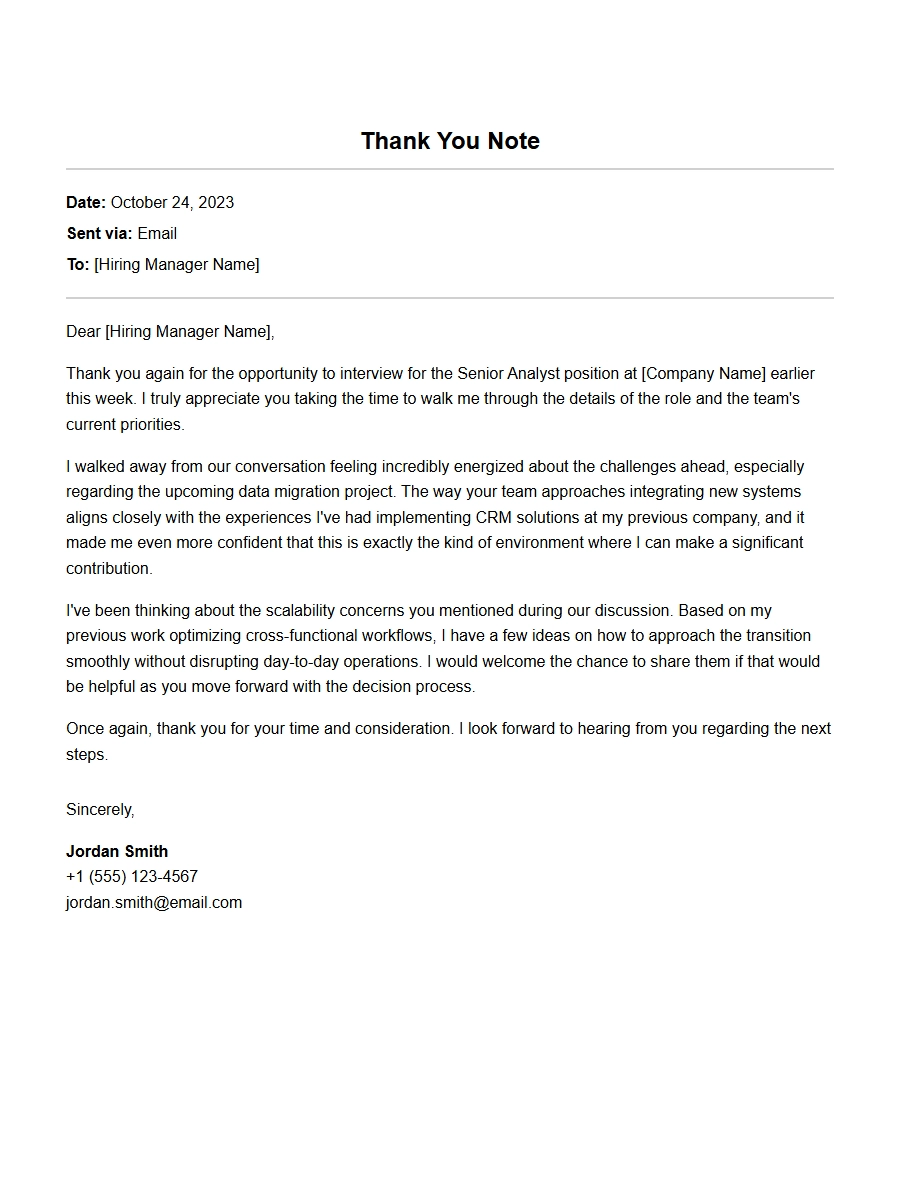 How to Write a Personal Thank-You Note After an Interview