A Personal Letter to Advocate for Your Loved One in Hospital
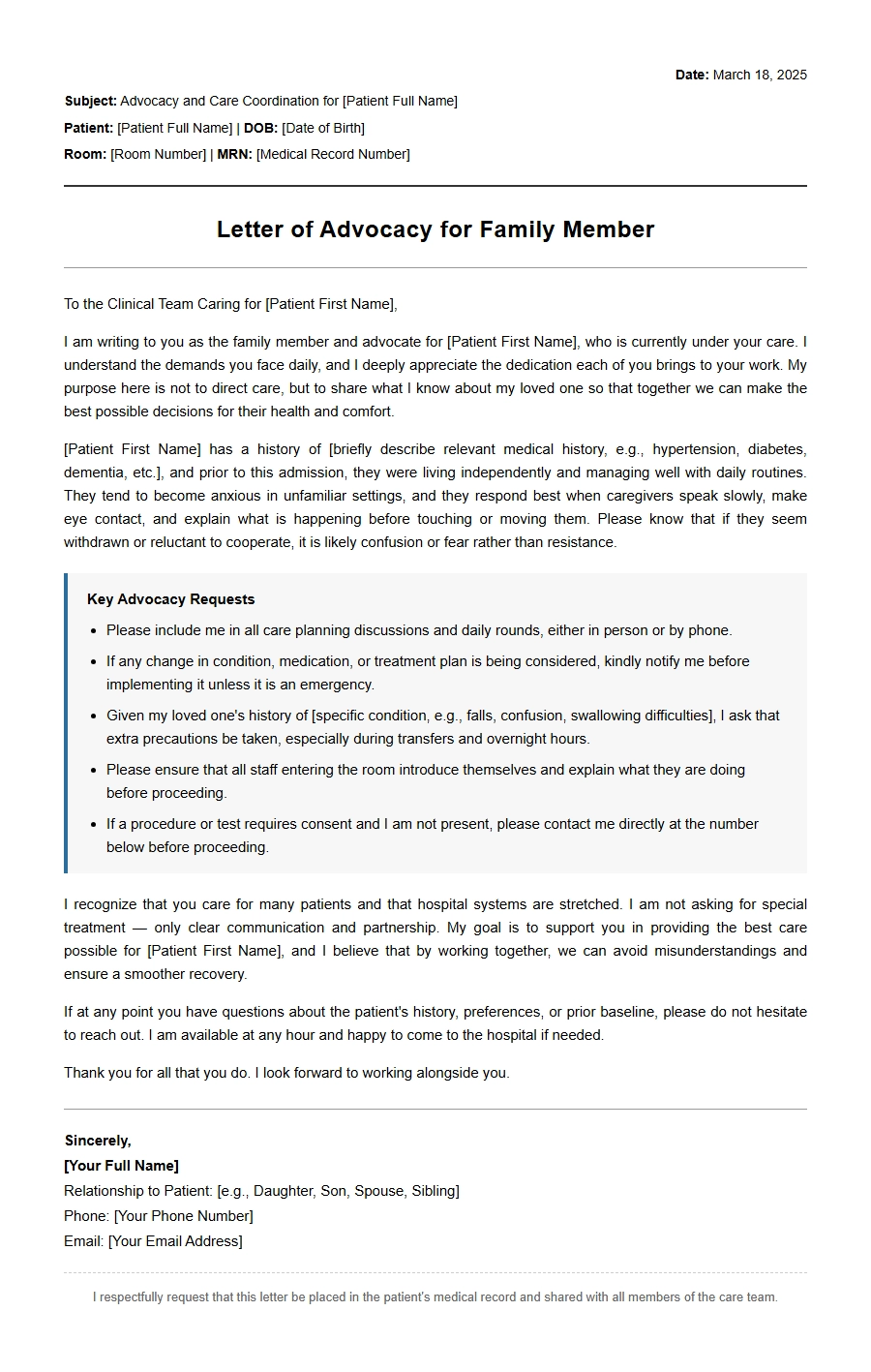
You're sitting in a plastic chair by the hospital bed, watching the nurse check a monitor, and you know something isn't quite right. Maybe the care plan feels off, or a crucial piece of information about your loved one's history didn't make it into the chart. You need to speak up, but the clinical setting is intimidating. Writing a formal letter can cut through that noise. It forces everyone to pay attention.
Using a sample letter to advocate for your family member isn't cheating. It's a smart, time-saving strategy. The good news is that a letter template gives you the structure and key phrases you need—the serious salutation, the request for a meeting, the citation of a specific concern. What it doesn't do is write your story. That part stays yours. A customizable letter format lets you drop in the details that only you know: the specific symptom you noticed at 2 AM, the medication your mom reacted to last year, the quiet plea for a second opinion.
Think of professional correspondence here as a tool, not a chore. The tone in writing for a hospital advocate letter is different from what you'd use in a cover letter. It needs to be firm and clear, but collaborative. You're not accusing anyone; you're informing the team. A good sample will teach you the proper letter structure—how to state the patient's name and room number immediately, explain your relationship to them, and then describe the issue factually. Avoid vague complaints. Say, "I noticed that his breathing rate increased after the 8 PM medication round," instead of, "He seems worse at night."
The right salutation and closing matter more than you think. "Dear Dr. Evans" is appropriate if you know the doctor's name. "Dear Care Team" works if you're addressing a broader group. Avoid "To Whom It May Concern"—it feels cold in a setting that already feels sterile. When you close, use "Sincerely" or "Respectfully," and include your phone number and email. The goal is to open a dialogue, not to close a case.
One common mistake is ignoring the digital letter format. If you're sending this via a patient portal or email, the rules shift. Don't attach a PDF with a fancy letterhead design unless you know they open attachments. Instead, paste your letter directly into the message body. Keep the subject line clear, like "Request for care plan review: Room 214, Margaret Chen." Also, check if the hospital has a patient advocate or social worker. Sometimes your letter should go to them first, not the attending physician. Knowing who to address is half the battle. If you're adapting a sample, take five minutes to look up the correct department head on the hospital's website. It's a small act of letter writing etiquette that signals you've done your homework.
Let's talk about the opening paragraph. This is where your authentic voice lives. Don't copy the sample's generic "I am writing to express concern." Try something more direct: "I am Margaret Chen's son, and I am writing to formally request a change to her pain management plan." That's a formal writing tip that works every time: state the request immediately. You can offer context in the next paragraph. If you're unsure how to phrase a sensitive observation, use "I have observed" or "The patient has mentioned." It keeps the focus on facts.
After you draft the letter, read it out loud. Does it sound like you, or like a robot? If it sounds stiff, loosen it. You can be professional without being wooden. For example, "I appreciate the team's hard work, but I have a concern about the discharge timeline" is firm and polite. Proofreading your letter is non-negotiable here. A typo in a doctor's name or a medication dosage undermines your credibility. Read it twice, once for spelling and once for tone. Have a friend scan it too. Fresh eyes catch the things you skim over because you're tired and stressed.
There are times when you might need a letter of recommendation for a patient transfer to a rehab facility, or a resignation letter sample if you need to leave your own job to become a full-time caregiver. The same principles apply: be specific, be respectful, and state your reasons clearly. For the hospital advocate letter, the stakes feel higher, but the mechanics are the same.
Letter Samples & Templates
Consider this sample a starting point. You can find a basic structure in a thank you note to a nurse, or adapt the clarity from a formal application letter. Even the polite request format from a business introduction letter can help you frame your opening. The key is to borrow the structure, not the sentiment.
When you personalize the letter, use the actual names of the doctors, nurses, and your loved one. Mention specific dates and times. One strong letter can get a meeting that a dozen phone calls couldn't. I've seen it happen. A mother wrote a short, clear letter about her son's conflicting medication instructions, and the hospital created a new checklist for the night shift. That's the power of putting it in writing.
Use the sample as a springboard. The best letters feel both professional and deeply personal. They remind the care team that behind the chart and the diagnosis is a person who loves someone. Practice makes the process faster, and the next time you need to write one, it won't feel like starting from zero. You'll just pull up the template, change the name, and get to work.
Browse Sample Ideas
A Personal Letter to Advocate for Your Loved One in Hospital
Request for a Family Meeting to Discuss Care Plan
Dear Dr. Patel,
As the primary advocate for my 78-year-old mother, Margaret, who is currently admitted in your ward for pneumonia, I am writing to formally request a family meeting with you and the care team. Over the past three days, my mother has shown minimal improvement despite the antibiotics, and the nurses have shared conflicting information about her long-term prognosis.
I believe a coordinated discussion would help clarify:
Current treatment goals and expected milestones
Potential side effects of the steroids she is receiving
Plan for rehabilitation after discharge
Please let me know your availability this week. I am free any afternoon after 2 PM. My phone number is (555) 123-4567.
Thank you for your dedication to my mother’s recovery.
Respectfully, Sarah Jenkins
Concern About Medication Side Effects
Dear Nurse Manager Simmons,
I am writing on behalf of my husband, Robert, a patient in Room 312. Since starting the new blood pressure medication (Lisinopril 20 mg) two days ago, he has developed severe dizziness, confusion, and occasional falls. The on-call doctor yesterday dismissed it as “normal adjustment,” but I am deeply worried about his safety.
I request an urgent review of this medication. For reference, here are the drugs currently prescribed:
Medication
Dose
Start Date
Observed Side Effects
Lisinopril
20 mg daily
Oct 12
Dizziness, confusion
Metformin
500 mg twice daily
Ongoing
None
Atorvastatin
10 mg daily
Ongoing
None
Please consider either a dosage reduction or alternative therapy. We are happy to discuss this in person.
Thank you for your attention.
Sincerely, Linda Carter
Advocating for Pain Management Adequacy
Dear Palliative Care Team,
I am the sister of James, a 52-year-old patient in Room 204 with advanced pancreatic cancer. James is nonverbal due to his condition, but I observe clear signs of distress: grimacing, guarding his abdomen, and agitation during bed baths. His current pain regimen – acetaminophen 650 mg every 6 hours – does not seem sufficient.
I respectfully request a comprehensive pain assessment using a behavioral tool (e.g., PAINAD) and consideration of stronger analgesics. My brother has a history of opioid tolerance from prior surgeries, so standard doses may be ineffective.
Below are my observations over the past 24 hours:
Episodes of crying out approximately every 2 hours
Pulse rate elevated (95–105 bpm) during repositioning
Facial tension persists even at rest
I understand the concerns about respiratory depression, but I believe untreated pain is causing more harm. I am available to meet anytime to discuss a better plan.
Gratefully, Maria Torres
Request for Language Interpreter Services
Dear Patient Advocate,
My father, Mr. Sung Kim, is a Korean-speaking patient in Room 410, admitted for stroke evaluation. Although I am present during the day, I cannot be here every hour. The nursing staff has tried using a translation app, but important medical instructions are often misunderstood.
I request that the hospital provide a professional Korean interpreter for all key discussions, including discharge planning. Federal law under Title VI of the Civil Rights Act requires meaningful access to language services, and I trust your facility complies.
I have noted the following specific gaps:
Medication instructions – my father took his pills incorrectly yesterday
Dietary restrictions – he ordered solid food despite being on a soft diet
Consent for MRI – he signed the form without understanding the risks
Please contact me at (555) 987-6543 to arrange an interpreter. Thank you for your prompt action.
Sincerely, Jennifer Kim
Discharge Planning Concerns for Home Safety
Dear Social Worker Ms. Garcia,
I am writing regarding my husband, Thomas, who is scheduled for discharge tomorrow following his hip replacement surgery. I am very concerned about the current plan. The hospital seems to rely on me as the primary caregiver, but I work full-time and cannot provide the level of assistance he needs.
Specifically, Thomas is still non-weight-bearing and requires help with toileting, bathing, and meals. Our home has narrow doorways and stairs to the bathroom. I request the following before discharge:
A home safety evaluation by an occupational therapist
Arrangements for home health aide visits twice daily for at least two weeks
Installation of a temporary toilet riser and grab bars
I believe delaying discharge by one to two days will prevent a readmission. I have attached a list of our home’s physical barriers. Please review and call me at (555) 321-0987 to update the plan.
Thank you for your understanding.
Respectfully, Margaret Wilson
Respecting Advance Directives During Surgery
Dear Dr. Nguyen,
I am the legal healthcare proxy for my mother, Mrs. Dorothy Adams, who will undergo emergency surgery tomorrow for a bowel obstruction. I want to ensure that her advance directives are rigorously followed. Specifically, her living will clearly states: “No cardiopulmonary resuscitation (CPR) if cardiac arrest occurs during or after surgery.”
I worry that the surgical team might default to full resuscitation due to protocol. I have discussed this with the anesthesiologist, but I need written confirmation in her chart. Please address the following points:
Clarify how DNR orders apply in the operating room (typically suspension during anesthesia, but immediate reinstatement post-op)
Document her wish for comfort measures only if the situation becomes irreversible
Identify who will communicate with me during the procedure
I appreciate your willingness to honor her choices. Please acknowledge receipt of this letter.
Sincerely, Robert Adams (Proxy)
Appeal for Second Opinion on Diagnosis
Dear Hospital Administration,
My son, Ethan, age 9, has been in the pediatric ICU for five days with a diagnosis of “atypical Kawasaki disease.” However, his symptoms – high fever, rash, and abdominal pain – also suggest possible MIS-C or even sepsis. The current team insists on the Kawasaki diagnosis despite negative echocardiogram results.
I am requesting a second opinion from a pediatric rheumatologist or infectious disease specialist at your institution. I am aware that insurance may cover such consultation. I have compiled Ethan’s lab trends for reference:
Date
CRP (mg/L)
ESR (mm/hr)
WBC (x10^9/L)
Oct 11
45
78
14.2
Oct 13
32
62
11.5
Please assign an independent specialist to review his case. As a parent, I need to be confident in the diagnosis before consenting to IVIG treatment. I am available to discuss this anytime.
Thank you for your support.
Respectfully, Laura Chen
Concern About Patient’s Mental Health in ICU
Dear Dr. Okafor,
I am writing about my wife, Patricia, who has been in the ICU for 10 days following a sepsis episode. While her physical condition is stabilizing, her mental state has deteriorated markedly. She suffers from extreme anxiety, hallucinations (seeing strange animals at night), and refuses to cooperate with nursing care.
I believe this is more than “ICU delirium” – she has a history of mild depression, and the sleep deprivation is worsening her confusion. I request an urgent psychiatric consultation and consideration of low-dose antipsychotics or melatonin for sleep.
Specifically, I have observed:
She screams when lights are dimmed for sleep
She pulls at her IV lines, requiring soft restraints
She has not slept more than 2 hours consecutively in 72 hours
Please also allow me to stay overnight to provide familiar presence. I am willing to follow all ICU protocols. Thank you for addressing her whole-person care.
Gratefully, Michael Grant
Gratitude and Request for Consistency in Nursing Staff
Dear Unit Manager,
First, I want to express our family’s sincere gratitude for the excellent care provided to my father, Leo, in Room 218. The nurses have been compassionate, especially Jessica and Mark. However, we have noticed that almost every shift a new nurse is assigned, which causes my father confusion and anxiety as he has dementia.
I kindly request that, if possible, the same set of nurses be assigned to him consistently, at least during the day shift. Familiar faces help him remain calm and cooperative. I understand staffing constraints, but continuity would greatly reduce his agitation.
For reference, here are the nurses who have formed rapport with him:
Jessica R. (day shift, Monday–Wednesday)
Mark T. (night shift, Thursday–Saturday)
If any of these nurses are available, we would be very grateful. Thank you for considering this small but meaningful change.
With appreciation, Emma White (daughter)
Request to Allow Visitation for Emotional Support
Dear Head Nurse,
My brother, Alex, age 23, was admitted to the psychiatric unit three days ago after a severe depressive episode. The current visitation policy restricts family to 30 minutes per day, and only in a common room. I understand safety concerns, but Alex is extremely isolated and has told me on the phone that he feels abandoned.
I am requesting a one-time exception: allow me to visit him this Saturday for one hour in his private room, to read to him and provide calm companionship. I am fully vaccinated and will wear an N95 mask. His attending psychiatrist, Dr. Rose, supports this request and believes it may reduce his risk of self-harm.
I have prepared a structured plan:
Time
Activity
Staff Supervision
2:00–2:10 PM
Brief check-in with nurse
Present
2:10–2:50 PM
Quiet reading together in room
Visual check every 10 min
2:50–3:00 PM
Vital signs check, debrief
Present
Please approve this compassionate visit. My phone is (555) 444-3322. Thank you for your understanding.
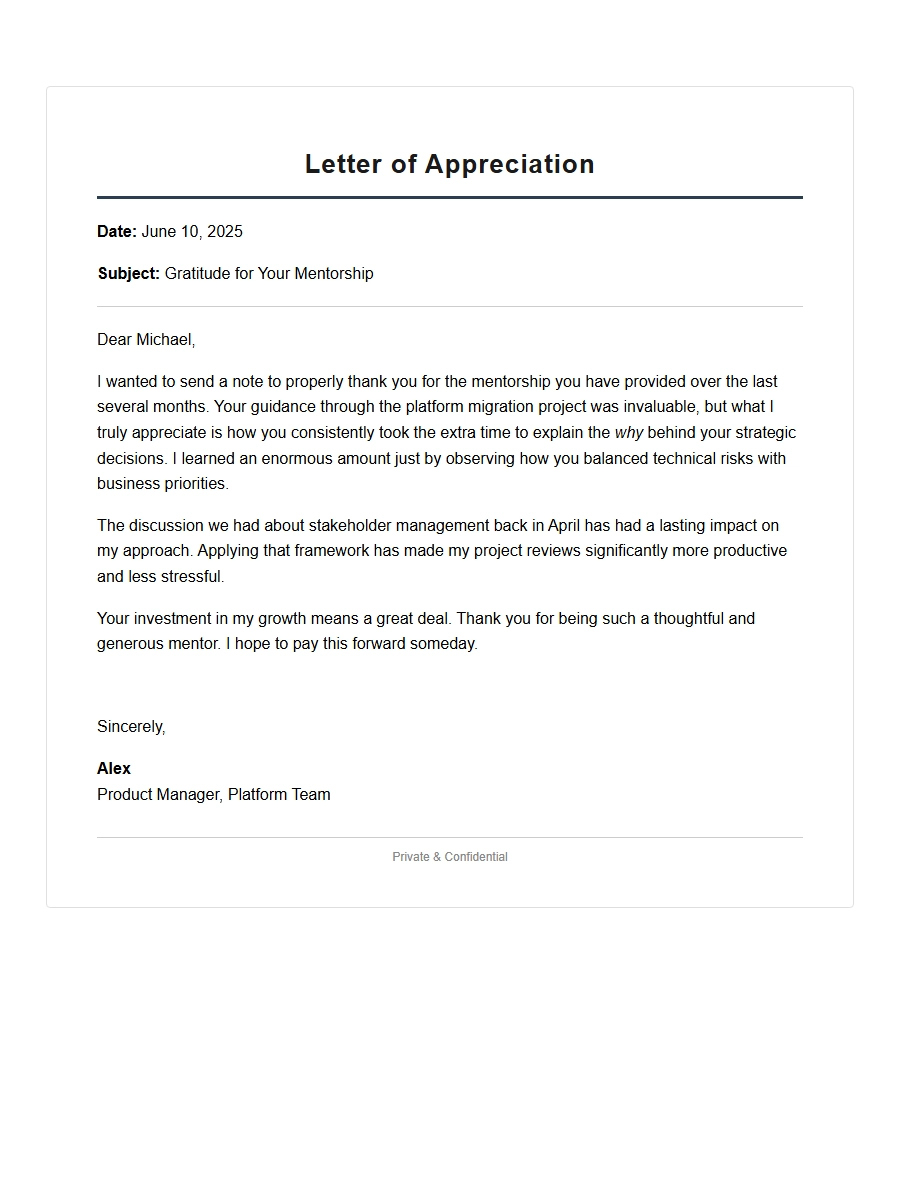 Thanking a Mentor for Guidance: Sample Messages
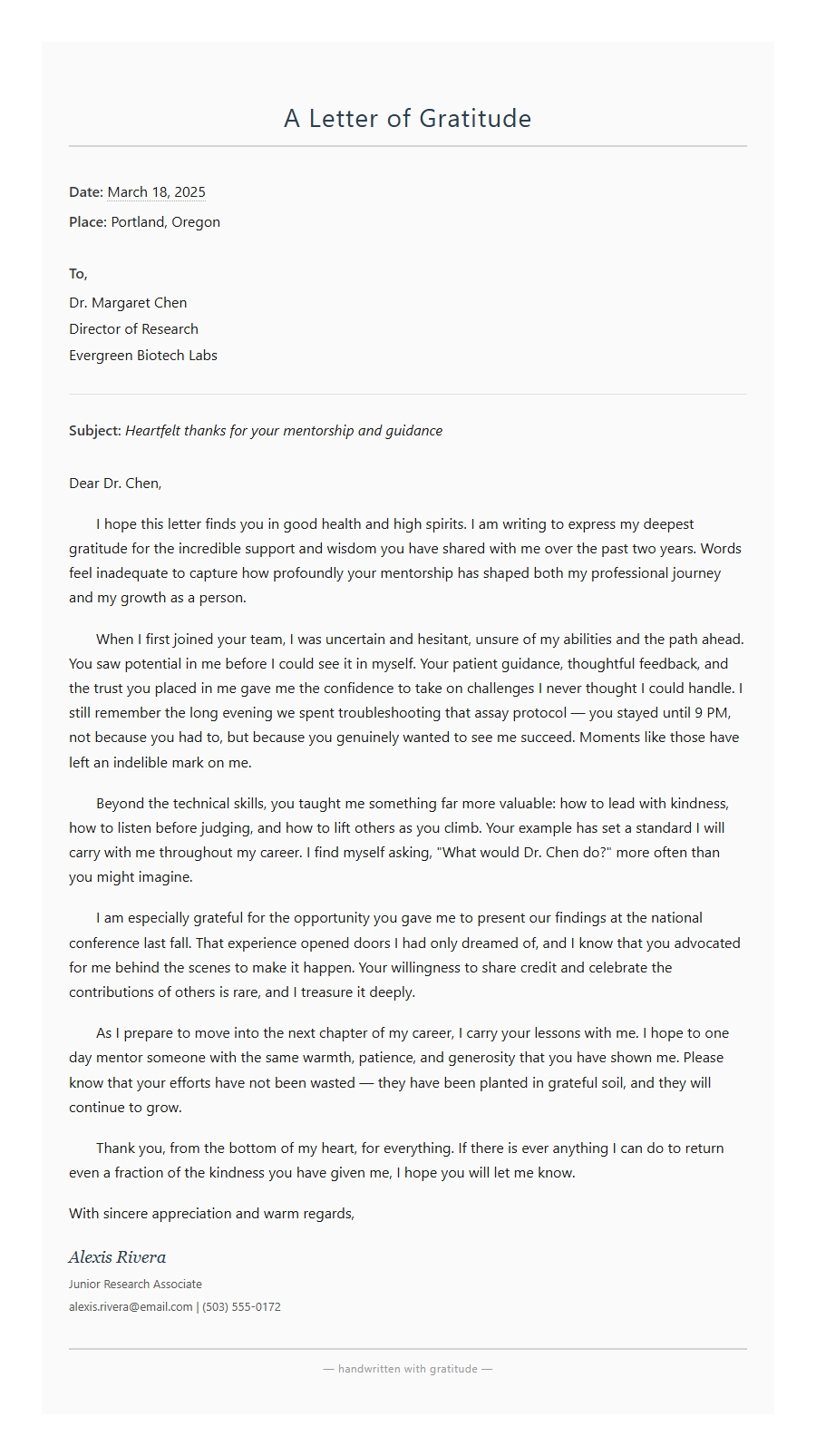 Expressing Gratitude: Handwritten Letter Example
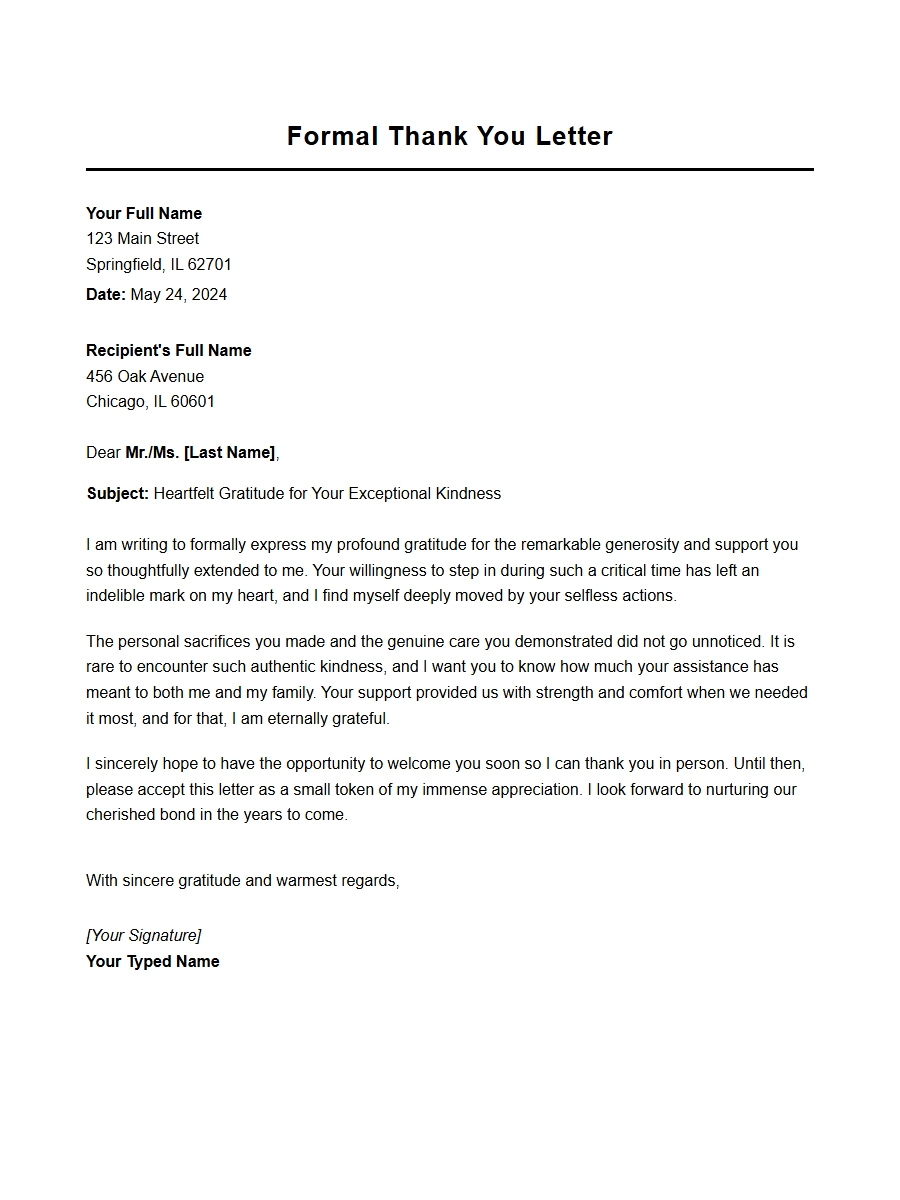 Expressing Thanks in a Formal Personal Letter
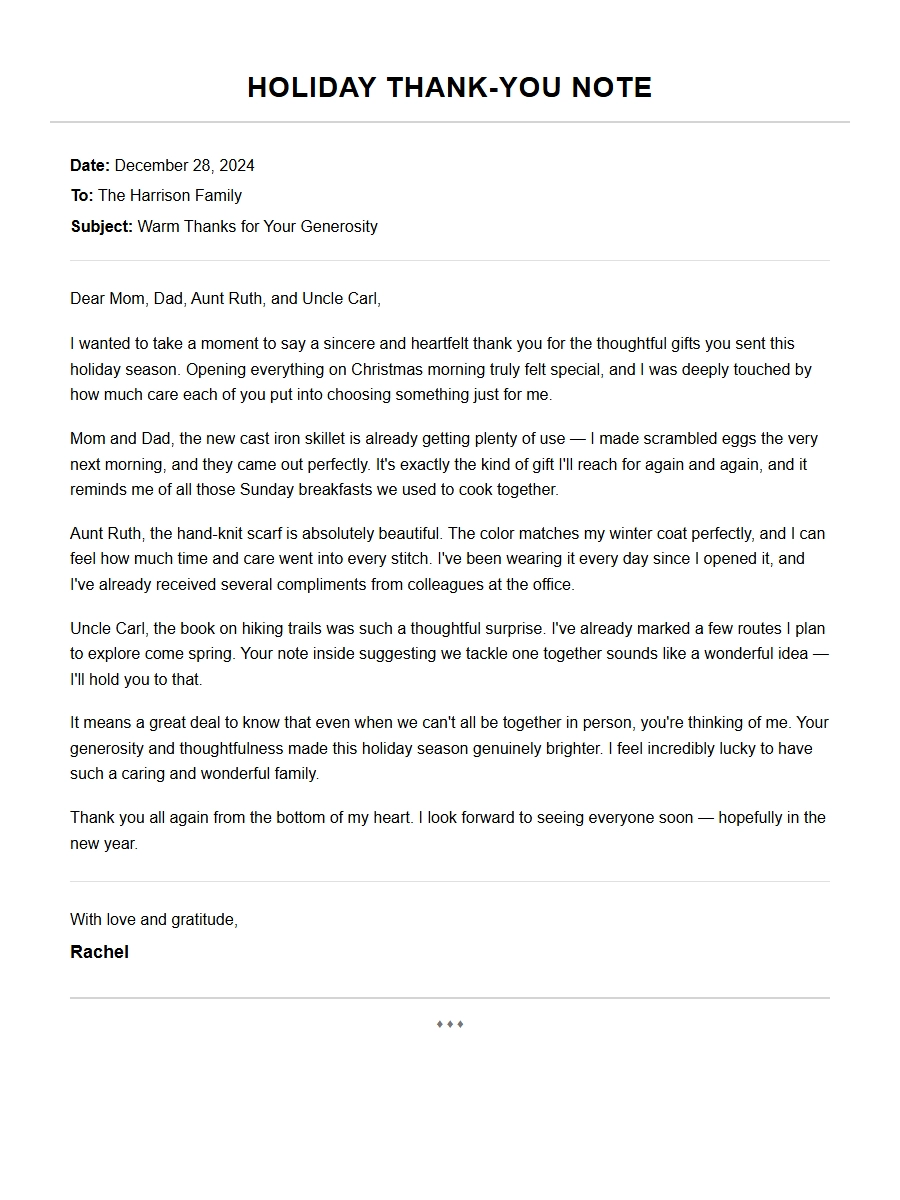 Thank You Letter Examples for Family Holiday Gifts
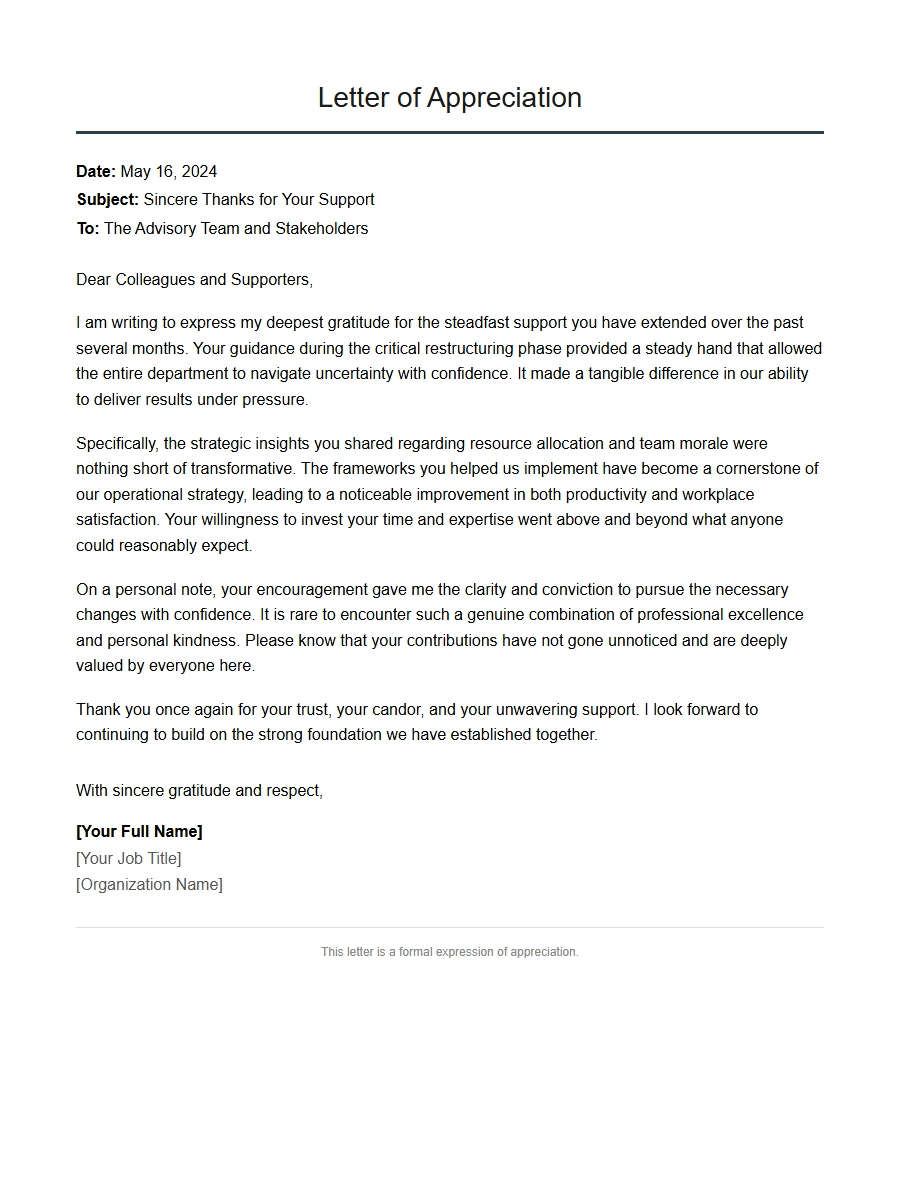 Sample Thank You Letter for Support
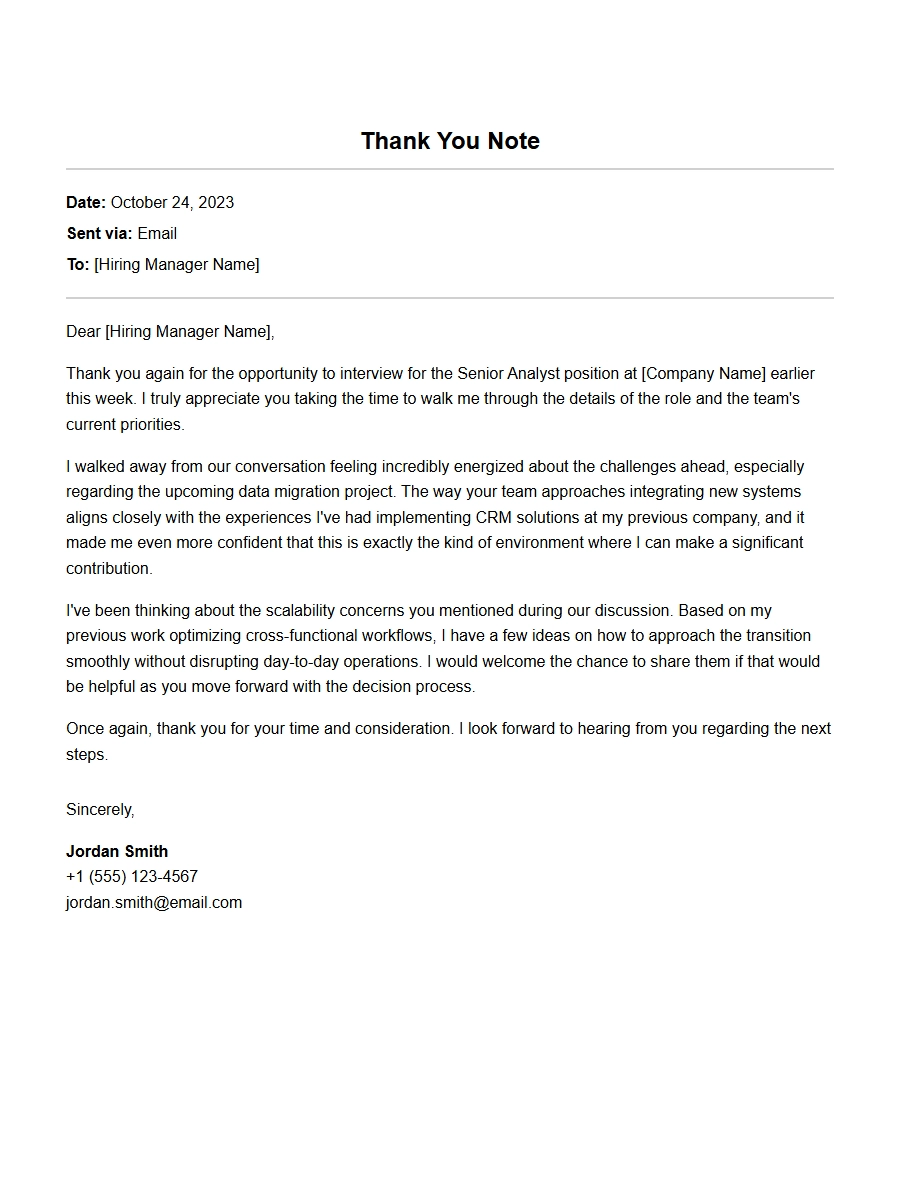 How to Write a Personal Thank-You Note After an Interview