thanking neighbor for mail collection while traveling - Thank-You Letters
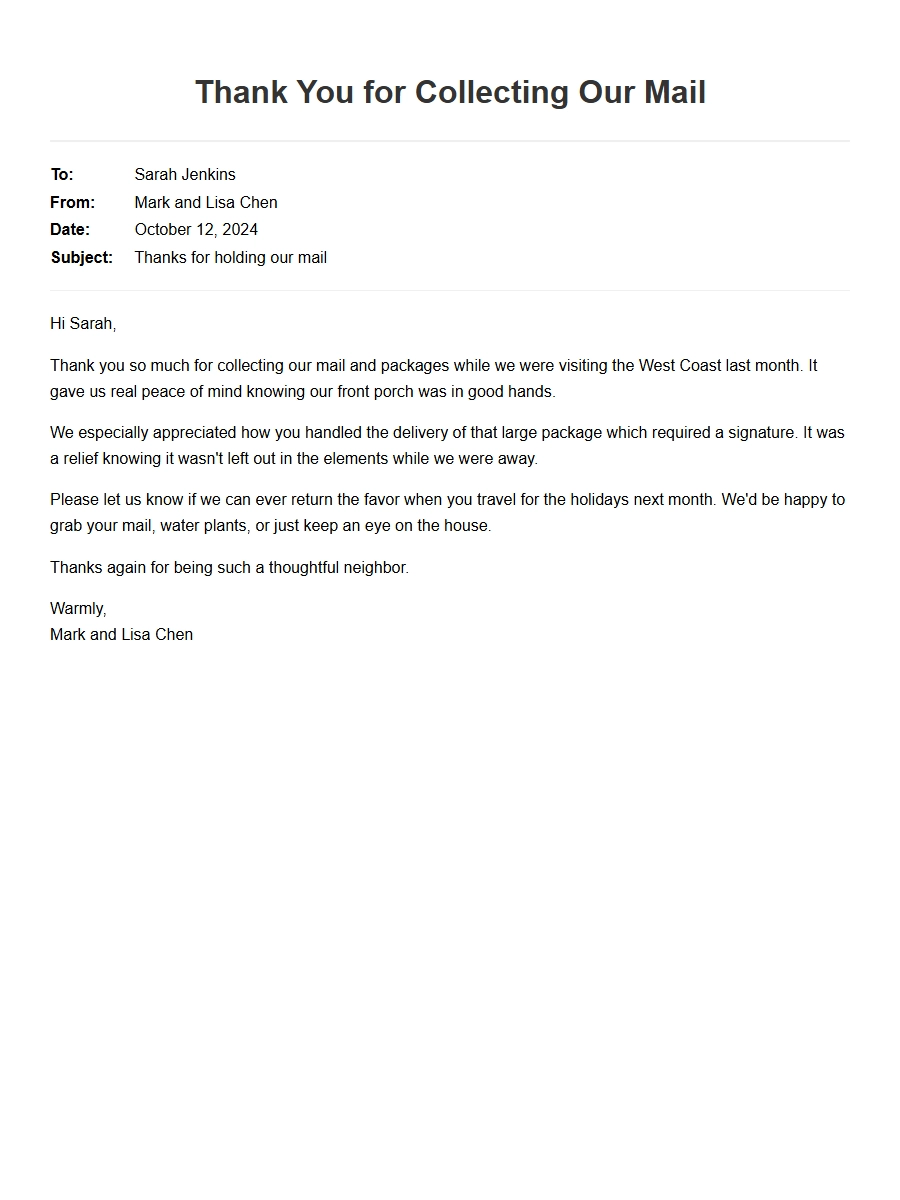
You just got back from vacation, and the neighbor who collected your mail deserves a proper thank-you. But now you're staring at a blank screen or a card, wondering what to say. It's a small gesture, but the note feels important. You want it to sound genuine, not stiff or rushed.
That's where a good sample comes in. Using a thank-you letter template isn't cheating—it's a smart shortcut. A sample gives you the right structure, a warm but not overly formal tone, and a handful of reliable phrases you can adjust. You save time and still end up with something that feels personal.
Category: Thank You Letters
When you look for a letter template, think about the relationship you have with your neighbor. Is this a close friend who lives next door, or a more formal acquaintance? For a close neighbor, a handwritten card with a casual opening works best. For a more formal relationship—say, a neighbor you only see at HOA meetings—you might want a semi-formal note on nice paper or in an email. The right sample matches the tone you actually need.
Once you have a sample in hand, adapt it to your voice. Change the opening line to mention something specific: "Thank you so much for grabbing my mail while I was hiking in the Rockies." Specificity makes the note feel real. Replace generic phrases like "your help was invaluable" with something you'd actually say, like "it was such a relief to know the mailbox wasn't overflowing."
Pay attention to salutation and closing. For a neighbor, "Dear Sarah and Tom" is fine. "To Whom It May Concern" is not. End with "Warmly" or "With thanks," not "Sincerely" unless you're writing a formal business letter. Balancing tone in writing is key: friendly but respectful. If you're sending the note as an email, keep the subject line simple—"Thank you for collecting the mail" works. And remember, a digital letter format means no letterhead design, but you can still sign off with your name.
Common mistakes? Using outdated salutations like "Dear Sir or Madam" is a quick way to sound impersonal. Another is forgetting to proofread your letter. A typo in a thank-you note can feel careless, especially when someone did you a favor. Read it out loud before you send. Also, don't overthink the length. Two or three short paragraphs are fine. You don't need to list every piece of mail they retrieved.
If you're also writing a thank-you note for a different kindness—say, thanking someone who visited a sick family member—the same rules apply: be specific, keep it warm, and don't overexplain. Or if you're thanking a professional contact, like a financial advisor for a consultation, you'd shift to a slightly more formal tone. The structure of a customizable letter lets you slide between casual and professional without starting from scratch.
What about other neighborly favors? If your neighbor also helped you with a return or exchange while you were away, a note like an example note for a return policy exchange can guide you. And if they handled a refund on your behalf, you might look at an example note for a successfully processed refund. Each situation has its own nuance, but the core of good letter writing etiquette stays the same: acknowledge the favor, express genuine appreciation, and keep it brief.
Even when you're thanking someone in a more formal setting, like thanking a receptionist for scheduling an executive meeting, the best letters combine professional courtesy with a touch of warmth. That's the balance you want with your neighbor: polite but not corporate, grateful but not gushy.
Think of the sample as a springboard, not a crutch. Use it to get the skeleton right, then fill in the details that only you know. The best letters feel both professional and personal. And the more you write them, the faster it gets. Next time you come home from a trip, you'll know exactly what to say.
Useful Formats
thanking neighbor for mail collection while traveling - Thank-You Letters
Warm Note with Gift Card
Dear Pat,
Thank you so much for collecting our mail while we were on vacation last week. It gave us great peace of mind knowing our letters and packages were safe. I’ve left a $20 coffee shop gift card in your mailbox as a small token of appreciation.
Here’s a quick rundown of what you collected:
Daily letters – 7 pieces (no urgent items)
Package from Amazon – delivered Tuesday
Utility bill – left on front step
We really appreciate your reliability. Please let us know when you travel next – we’d be happy to return the favor.
Best, Anna and Tom
Brief and Casual Thank You
Hey Mark,
Thanks a million for grabbing our mail while we were away. It was such a relief to come home to a neat pile instead of an overflowing box. You saved us from potential identity theft ads and that final notice from the HOA!
I owe you a beer (or two) next time we catch up. Seriously, you’re a lifesaver.
Cheers, Jen
Formal Letter with Return Favor Offer
Dear Mrs. Henderson,
Please accept our sincere thanks for collecting our mail during our trip from June 10 to June 17. Your kindness ensured that important documents were not left unattended.
As a courtesy, we would like to offer the same service whenever you travel. Please let us know your upcoming dates and we will gladly take care of your mail.
Date
Item
Action taken
June 12
Envelope from IRS
Placed inside front door
June 15
Package (FedEx)
Signed and stored in garage
We are truly grateful for your help.
Warmly, Robert and Lisa
Thank You with Houseplant Gift
Hi Sam,
We are back from our road trip and wanted to say a huge thank you for picking up our mail. You made it so easy for us to relax knowing the pile wasn’t growing into a mountain. I noticed you had a little succulent on your porch – I’ve left a new one in a cute pot next to your door.
Here’s what happened while we were gone:
Postcards from Aunt Sue – saved for us to read
Junk mail – recycled
A flyer about neighborhood watch – on our counter
You’re the best neighbor we could ask for!
Thanks again, Claire and Dave
Email-Style Thank You with Date Table
Dear Mr. Nguyen,
Thank you for managing our mail collection from July 1 to July 8. Your careful handling prevented any missed deliveries or security risks. Below is a brief log of items you retrieved:
Day
Type
Notes
Mon, Jul 1
Letter
Bank statement
Wed, Jul 3
Package
Left in the bin as instructed
Fri, Jul 5
Flyer
Recycled
We really appreciate your dependability. If you ever need someone to watch your place, please don’t hesitate to ask.
With gratitude, Sarah and Mark
Short and Sweet Thank You with Dessert Offer
Hi Linda,
Just a quick note to say thanks for grabbing our mail while we were away. You saved us from an embarrassing pile of catalogs. I baked a batch of chocolate chip cookies – they’re on your doorstep in a tin.
We’re back now, so no more duty until the next trip.
You’re the sweetest neighbor!
Love, Megan
Detailed Thank You with Service Log
Dear Tom,
Thank you for your excellent mail collection service while we traveled September 5–12. Your attention to detail was outstanding. I’ve compiled a record of deliveries you handled:
September 6: Envelope from doctor’s office (opened by mistake, but resealed – no harm)
September 8: Small box from Amazon (placed inside storm door)
September 10: Birthday card with check – kept safely
Everything was exactly where you said it would be. We’re very grateful for your trustworthiness. Please let us know if we can ever do the same for you.
Sincerely, Alice and Ben
Thank You with Returned Favor Promise
Hi Chris,
Big thanks for collecting our mail last week. You even sorted out the pizza coupons – you know us too well! We’ve returned the favor by grabbing your newspapers while you’re at work yesterday. Let us know if you want us to continue.
Here’s a list of important items you held for us:
Two utility bills (paid online now)
A certified letter from the post office (we picked it up today)
Three magazines
You’re a fantastic neighbor. Dinner at our place soon?
Cheers, Natalie
Humorous Thank You with Mail Inventory
Dear Joe,
You, sir, are a mail-collecting ninja. While we were sipping piña coladas, you were bravely defending our front step from junk mail and the occasional threatening envelope. We salute you!
Your haul included:
17 flyers (potential fire starter)
1 wedding invitation (we RSVP’d – thanks for flagging it)
2 mysterious packages marked “FRAGILE” (they were fine)
I owe you a steak dinner. Text me when you’re free.
Your grateful neighbor, Mike
Professional Thank You with Task List
Dear Ms. Park,
Thank you for your meticulous handling of our mail collection during our business trip from August 20 to August 27. Your professionalism ensured that no time-sensitive items were missed. Here is a summary of the tasks completed:
Task
Status
Collected mail daily
Completed
Separated personal from business
Completed
Secured packages into garage
Completed
We have left a thank-you envelope in your mailbox. Please feel free to call on us for similar assistance in the future.
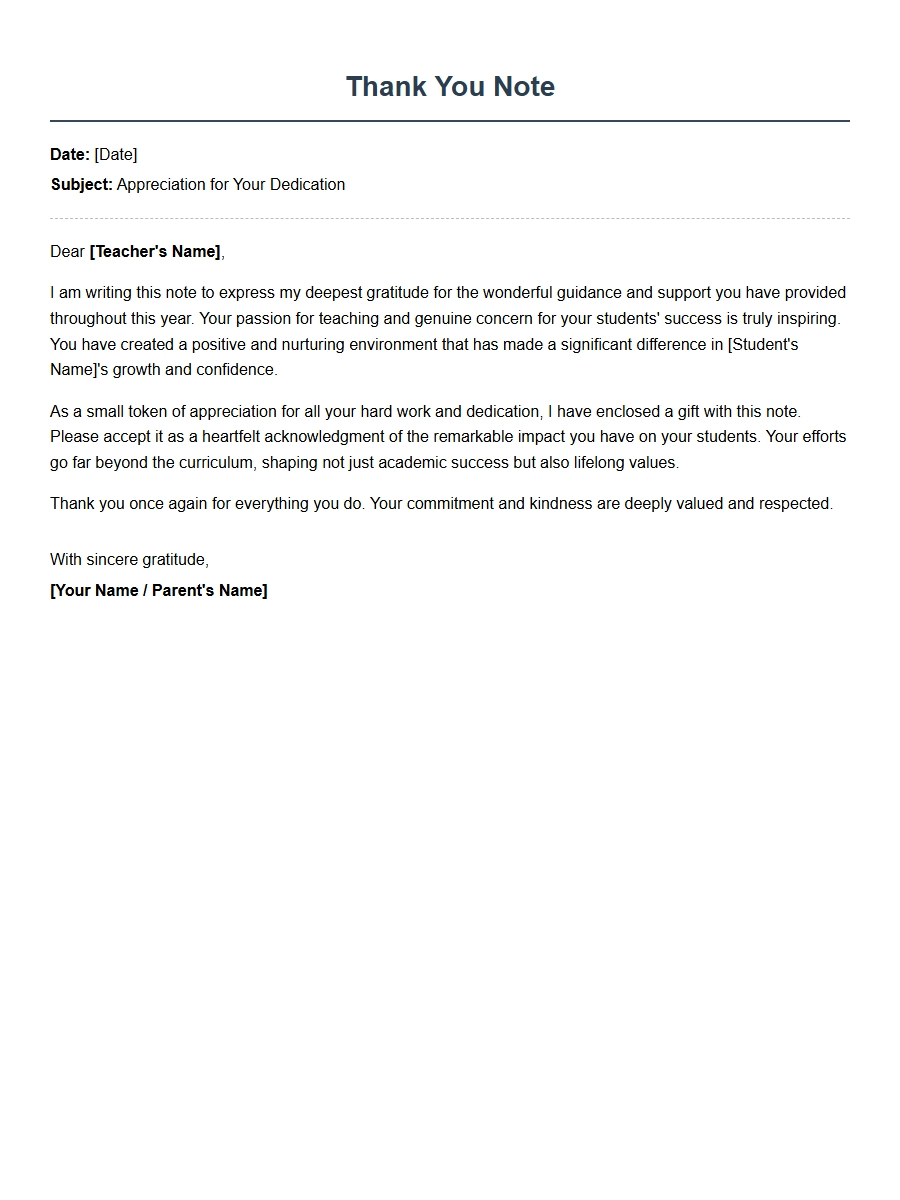 Sample Thank You Note for Teacher Gift
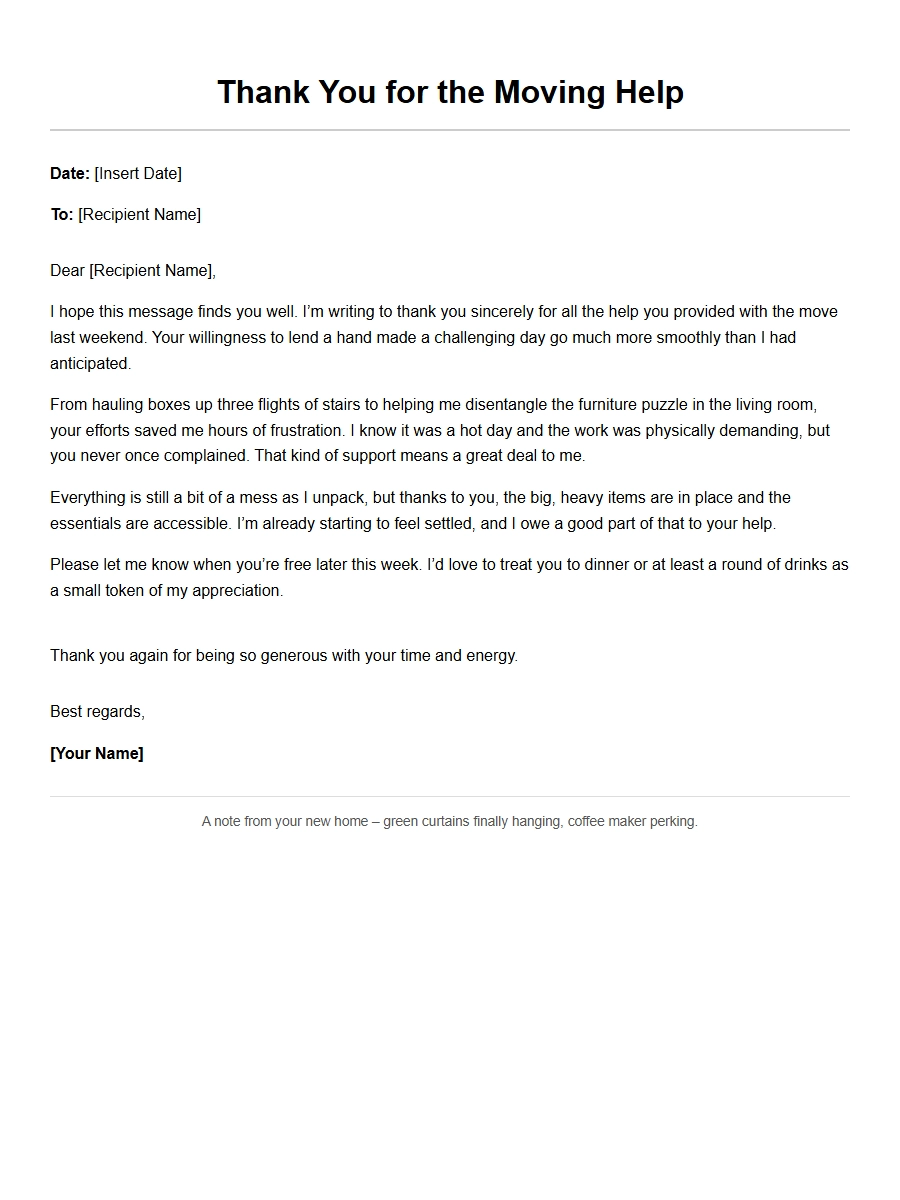 Thank-You Letter for Help with Moving
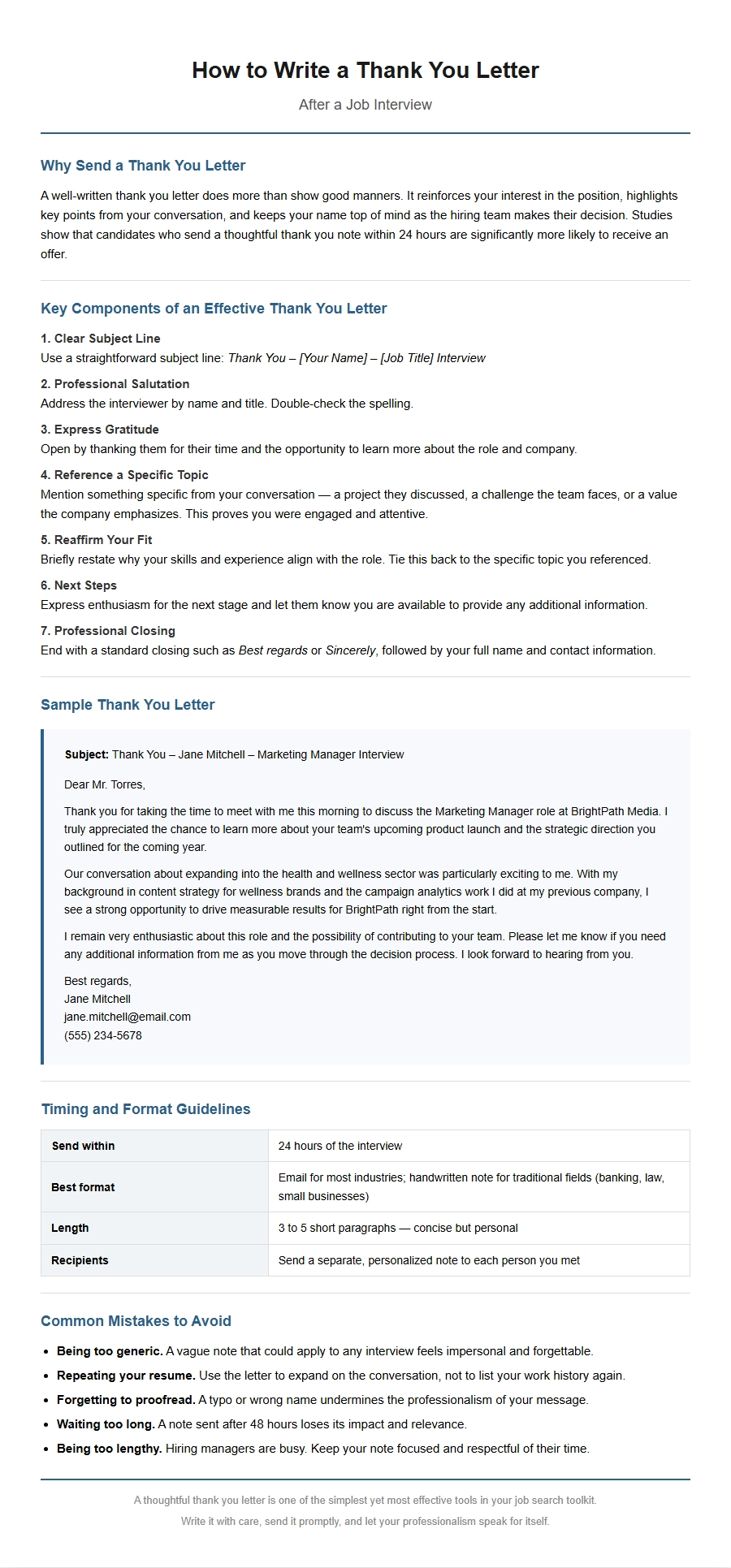 How to Write a Thank You Letter After an Interview
 professional thank you email example for client - Thank-You Letters
 Business Mentor Thank-You Letter Guide
 Thank You Letter for Sponsor Donation