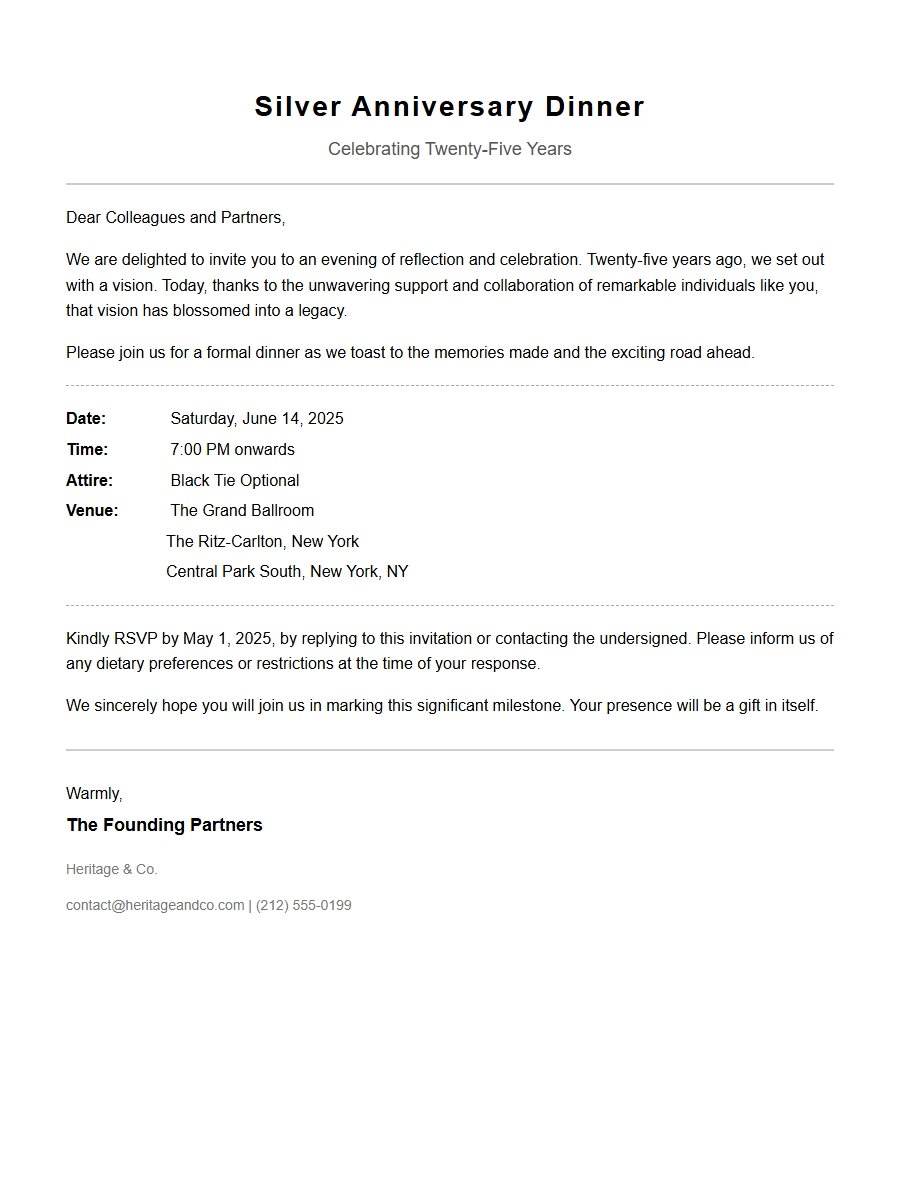
You want to invite friends and family to a silver anniversary dinner, but the blank page stares back at you. Should the wording be formal? Playful? Religious? You know the couple's story, but turning that into crisp invitation language feels harder than it should. A good sample wording for a silver anniversary dinner can cut that anxiety in half. It gives you a structure to build on—not a script to copy blindly.
Using a sample isn't cheating. It's a smart shortcut. Templates offer professional correspondence basics: a proper salutation, a warm opening, the event details, and a gracious closing. You keep the skeleton, swap in your own names and venue, and adjust the tone to match the couple's personality. The result looks polished without sounding robotic.
This type of invitation falls into the category of milestone celebration wording. Unlike a generic party invite, a 25th anniversary dinner usually calls for a balance of elegance and personal history. The sample you choose should reflect that.
Start with the occasion and the host
Every silver anniversary invitation needs to answer "What's the event?" and "Who is throwing it?" The simplest opening: "The children of John and Mary invite you to celebrate their parents' 25th wedding anniversary." If the couple is hosting themselves, change it to "We invite you to join us as we renew our vows and share dinner." Don't overthink the first sentence. Use a standard business letter format if you're mailing a formal card, or a more casual structure for email.
One common mistake is burying the date and time. State them early, then repeat them near the end. For example: "Please join us for dinner on Saturday, October 14, 2025, at 6:30 PM." Keep the location clear—include the restaurant name, address, and a note about parking or dress code if needed.
Pick a tone that fits the couple
A couple who loves humor might appreciate: "After 25 years of putting up with each other, we're throwing a party." A more traditional pair will prefer: "With gratitude for 25 years of love and commitment, we invite you to dinner." The tone in writing sets the mood before anyone arrives. If you're unsure, go slightly more formal. You can always loosen it up in a second draft.
That's where customizable letter samples shine. You take the polite structure—"We cordially invite you to a dinner honoring…"—and swap "cordially" for "happily" or "warmly." Change "honoring" to "celebrating." Little shifts make the invitation feel like the couple, not a stock phrase.
Include the small details that matter
Beyond names and dates, think about RSVP instructions, meal choices, and directions. Many people forget to mention "no gifts, please" if that's the plan, or they leave out a contact number. A good letter template will have placeholders for these extras. Fill them in before you send.
Also consider the digital letter format vs. printed card. For email, keep the subject line clear: "Silver anniversary dinner for Tom & Lisa – October 14." In the body, use shorter paragraphs and a bolded RSVP link. For a printed card, you have more room for decorative language, but don't let the design overpower readability.
Adapt without losing authenticity
You might find a sample that starts "A love that has stood the test of time." If that doesn't sound like the couple, rewrite it. "Twenty-five years of adventures, arguments, and laughter" is more personal. The best formal writing tips remind you to read the finished letter out loud. If it sounds like someone else wrote it, change the phrasing until it feels natural.
Ever received an invitation that felt too stiff? That happens when you copy a sample word for word. Instead, treat the sample as a roadmap. Take the salutation and closing ("Dear friends," and "With love and gratitude,") and build your own body paragraphs around a shared memory or inside joke. That's what makes a letter feel genuine.
Proofread and format carefully
Nothing undermines a beautiful invitation like a typo in the date or a missing vowel in the couple's last name. Proofreading letter content twice—once on screen, once on paper—catches most errors. Also check the letterhead design. If you're using a pre-printed card, make sure your text aligns with the design borders. For a digital invitation, preview it on mobile to avoid line breaks that look messy.
The most effective invitations feel both professional and personal. They follow letter writing etiquette without sacrificing the couple's voice. Next time you need to write an invitation, remember: you are not starting from scratch. You are adapting a proven pattern to tell a unique story. With a little practice, the whole process will take fifteen minutes instead of an hour. So pick a sample that feels close, then tweak it until it sounds like you. The dinner will be better for it.
Please indicate your preferred seating when RSVPing to Alex (555-789-0123) by March 15th.
No gifts – just come hungry and happy.
Couple's Personal Note
Dear friends and family,
Twenty-five years ago, we promised to love, honor, and cherish each other. Today, that promise feels even more precious.
You have been part of our journey – your love, support, and laughter have shaped our marriage. Now we want to celebrate with you at our Silver Anniversary Dinner.
Peter and Nancy Kim invite you to dinner
Saturday, December 13th at 6:30 PM The Garden House, 345 Rose Lane, Green Hills
Cocktails and conversation at 6:30
Dinner at 7:30
Dancing under the stars (weather permitting)
Please RSVP by November 30th to Nancy: 555-890-1234 or nancy.kim@loveletter.com
In lieu of gifts, we ask that you write a note of advice for the next 25 years – that will be our treasure.
With gratitude, Peter & Nancy
Open House Style Dinner
We’re opening our home to celebrate 25 years of marriage – stop by anytime between 4:00 PM and 9:00 PM.
Greg and Sharon Ellis invite you to an open-house dinner for their Silver Anniversary.
Saturday, May 10th 456 Cedar Street, Westbrook Dinner served continuously from 5:00 PM to 8:00 PM
No formal seating – just good food, good friends, and a lot of memories. We’ll have a memory table where you can leave a note or photo.
Appetizers and drinks upon arrival
Main course buffet: roast beef, pasta, salads
Silver-themed dessert bar
Coffee and tea available all evening
Please let us know if you plan to come (for headcount) by May 1st. Call or text Greg at 555-901-2345 or Sharon at 555-012-3456.
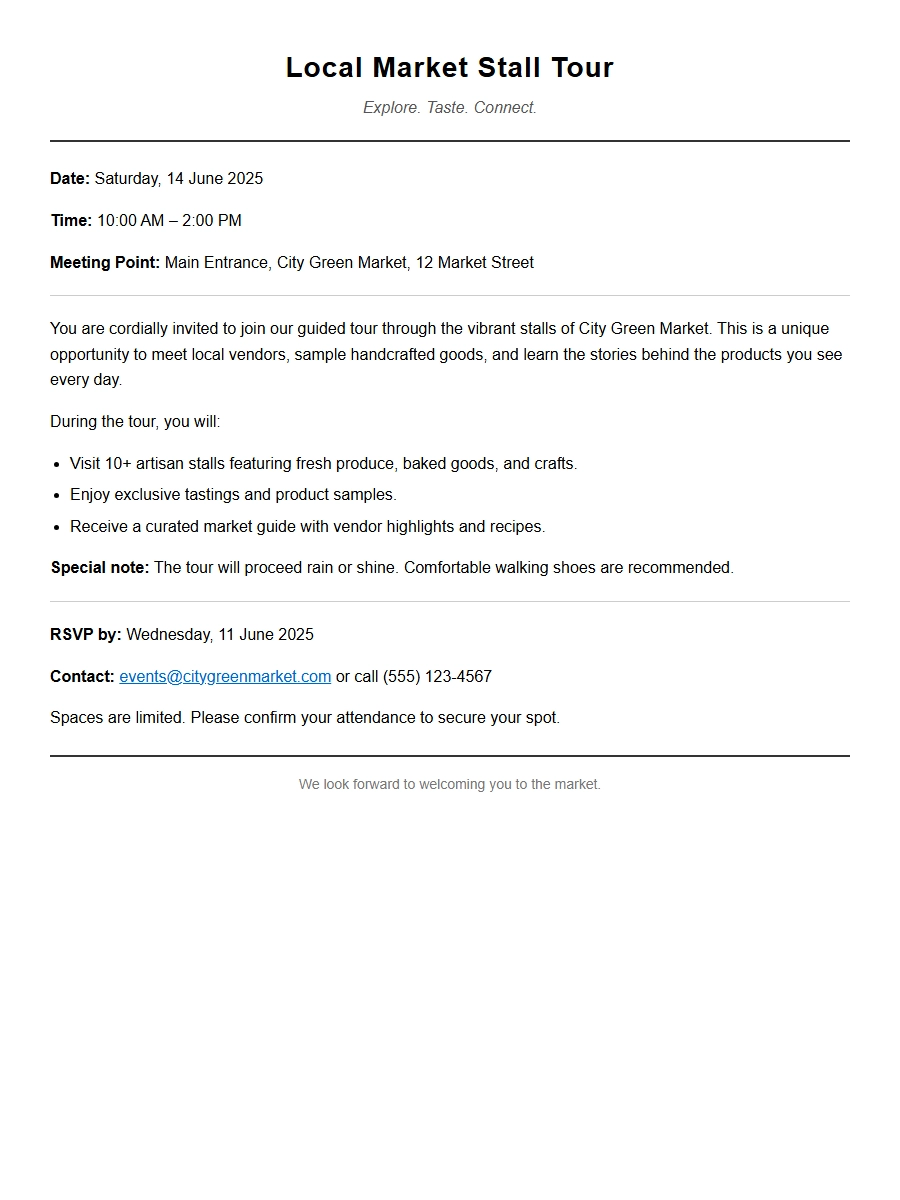 sample invitation for local market stall tour - Invitation Letters
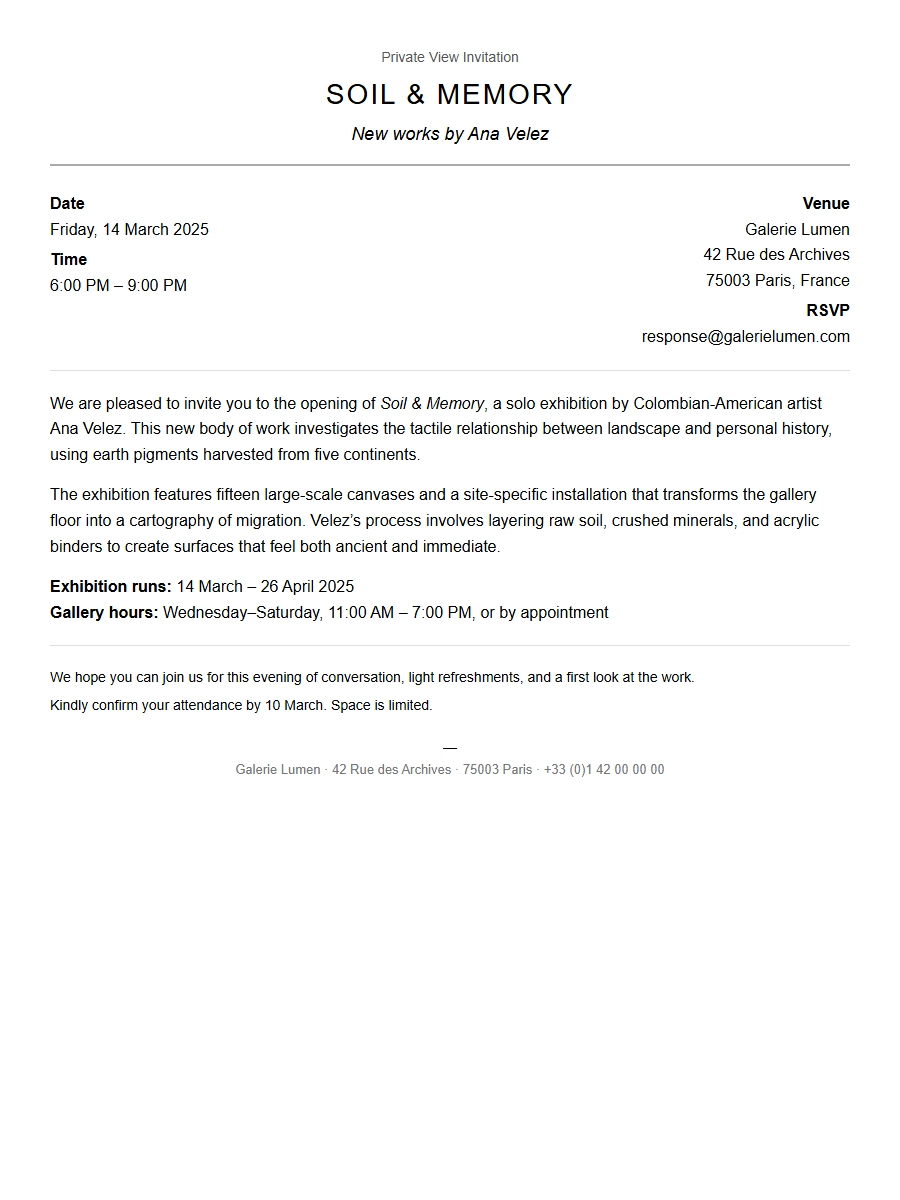 Art Exhibition Opening Invitation Wording Ideas
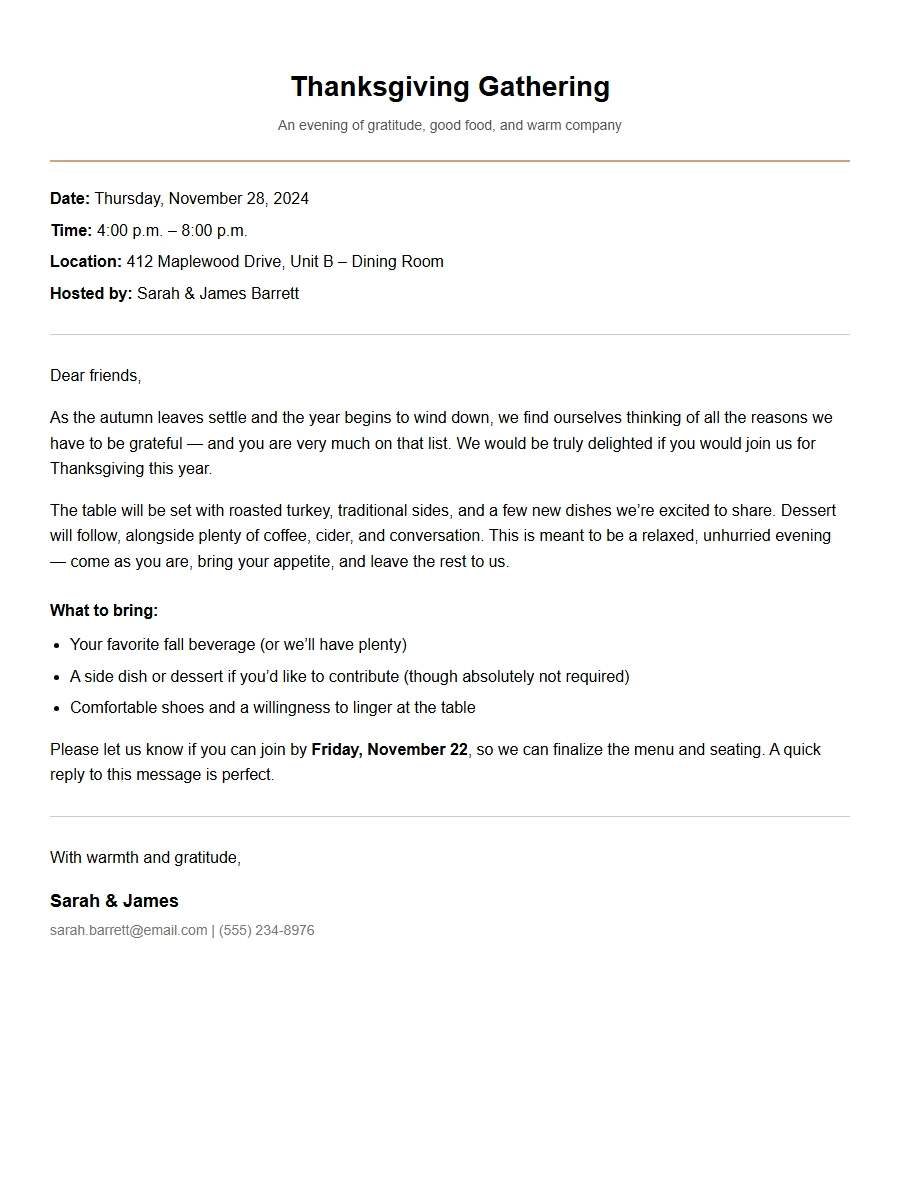 Thanksgiving Meal Gathering Invitation Text
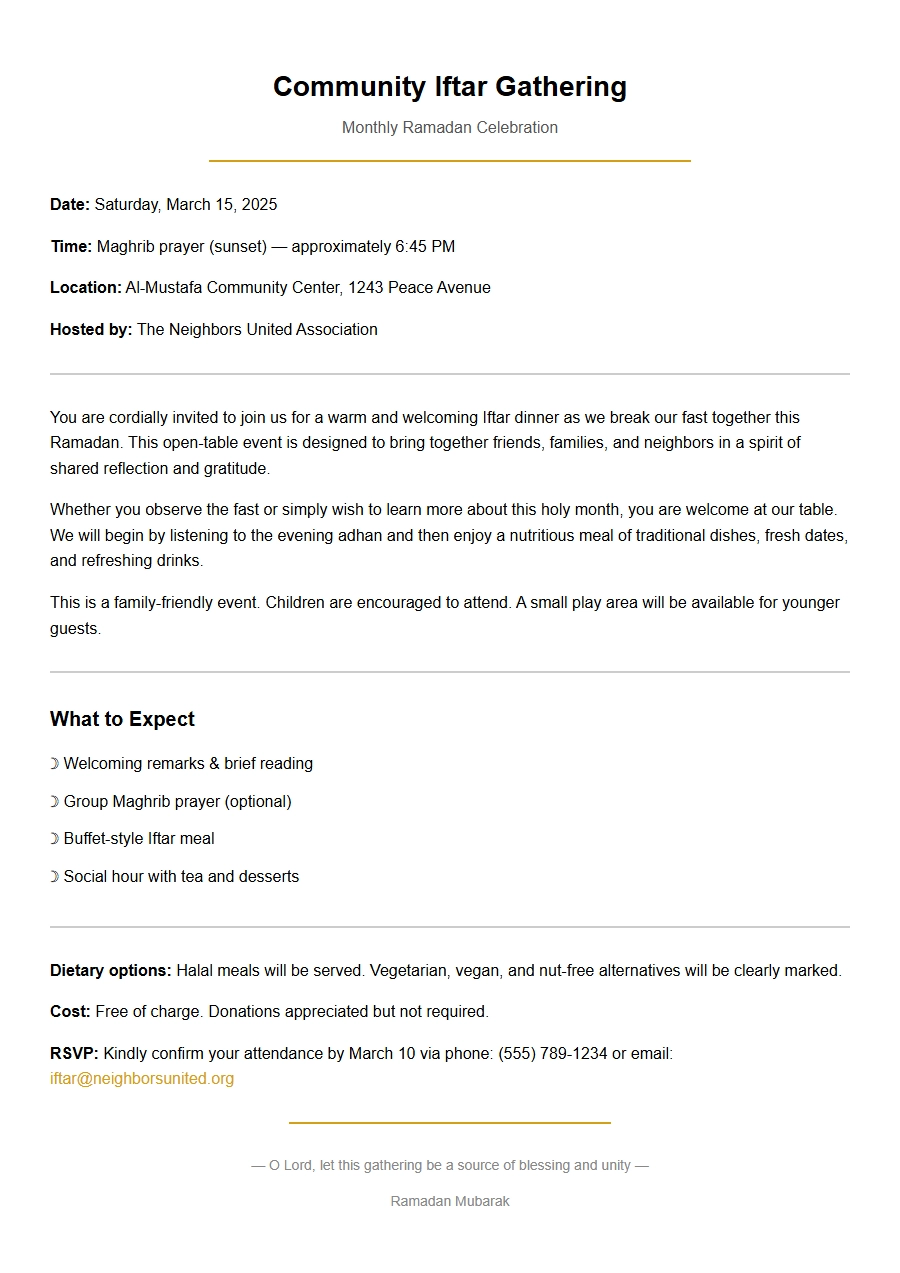 Ramadan Iftar Community Event Invitation
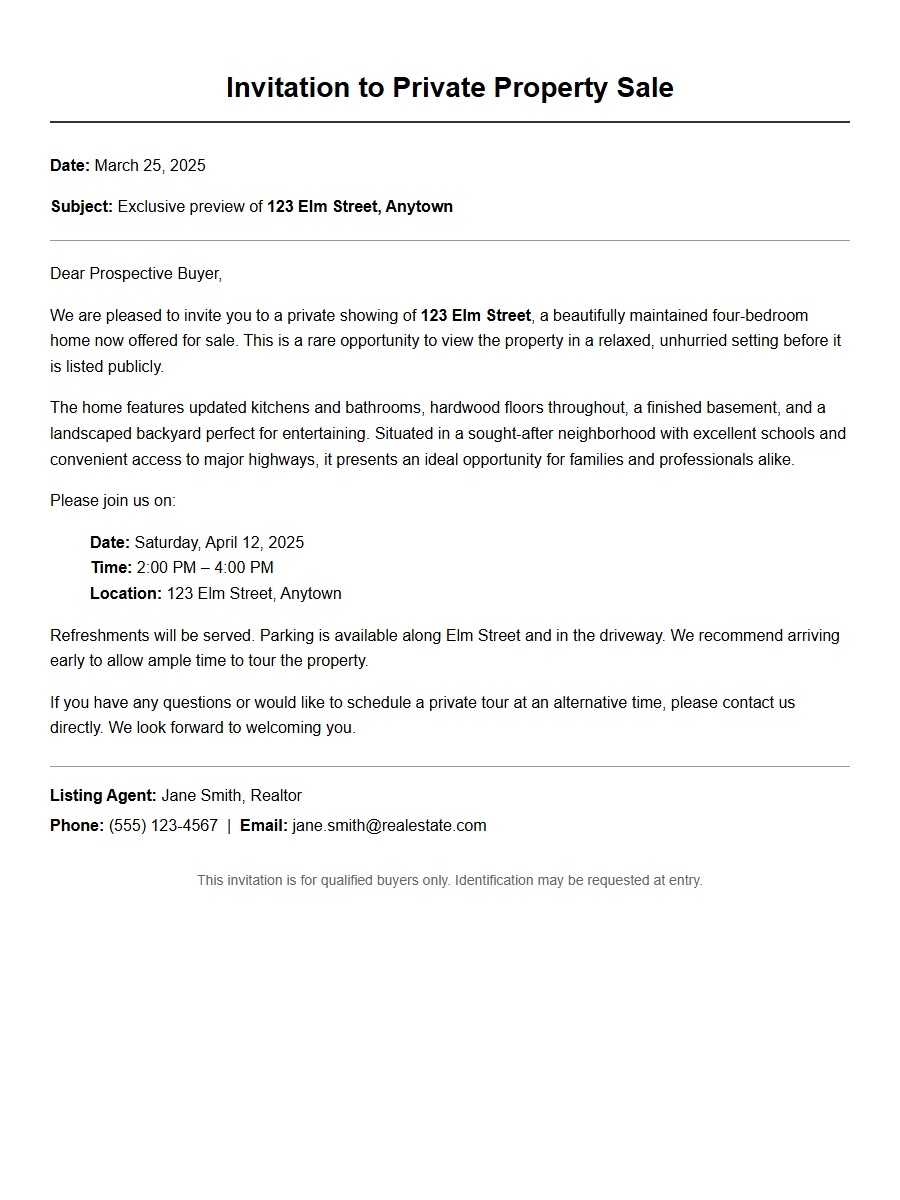 Sample Wording for Property Sale Invitations
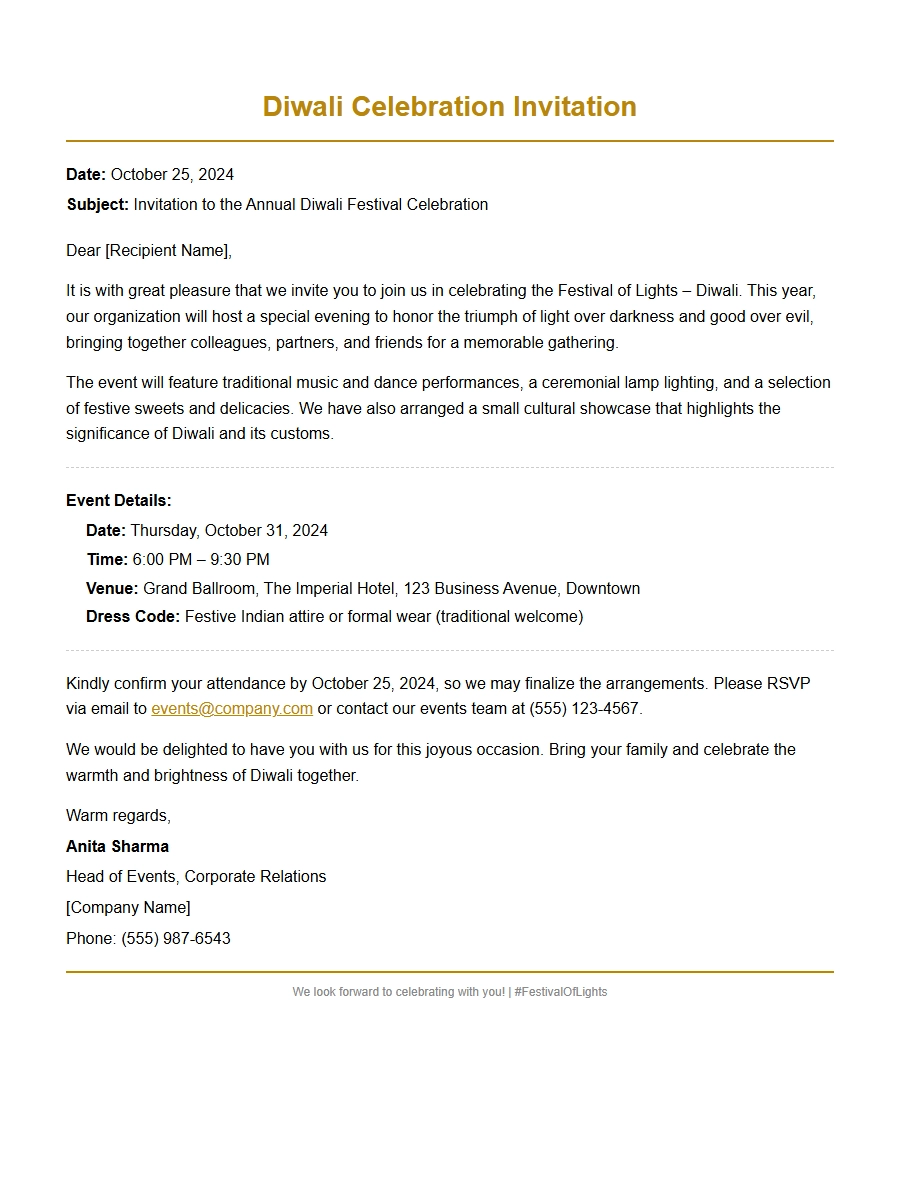 Diwali Festival Celebration Invitation Draft