You want your baby's first birthday party to feel special, but staring at a blank invitation can stop you cold. You're not alone—most parents freeze up trying to find the right words for a milestone that feels both huge and simple at the same time.
Using a sample for your first birthday party wording isn't cheating. It's smart. A good sample gives you the structure, the warm tone, and the polite phrasing you need, then leaves room for your own details and personality. Think of it as a starting point, not a script you have to follow exactly.
What makes first birthday wording different from other invitations?
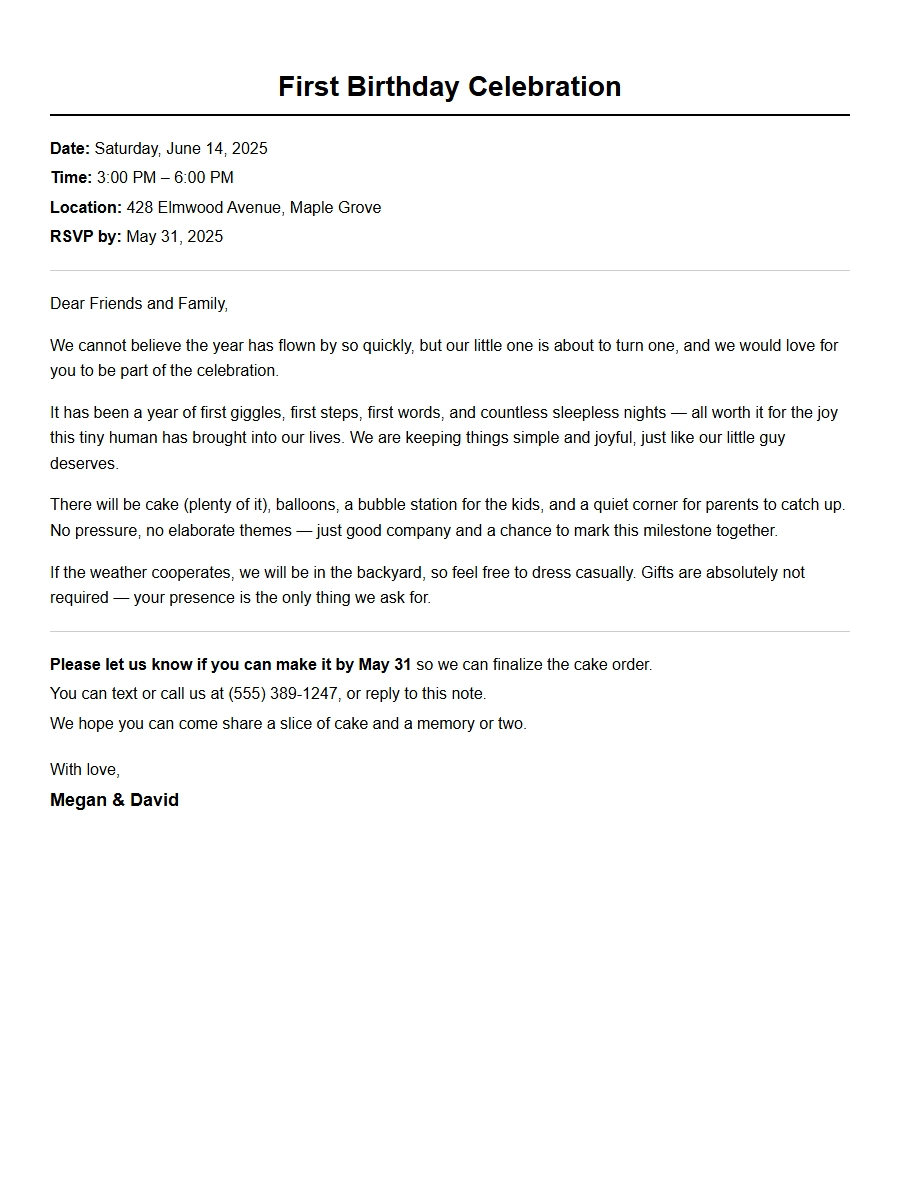
A first birthday invitation sits somewhere between a casual playdate and a formal event. You want it to feel celebratory, not stuffy, but you still need the basics: who, what, when, where, and how to RSVP. The best samples strike that balance—friendly without being sloppy, warm without being overly sentimental.
Most parents overthink the tone. Should it be from the baby's perspective ("Aiden is turning one!") or from yours ("We invite you to celebrate Aiden's first year")? Both work, but the first person voice tends to feel more playful and natural for a first birthday. The second feels a bit more polished and works better if you're inviting extended family or coworkers.
How to pick the right sample for your party
Start by thinking about your guest list. If it's mostly close family and a few friends, a casual invitation letter tone works well. If you're inviting neighbors, your child's daycare friends, or professional contacts, lean toward something a little more structured—something closer to a formal invitation wording style, but relaxed enough to feel personal.
Look for a sample that matches your party's vibe. A backyard barbecue calls for different wording than a rented hall. A small gathering needs fewer formalities. A bigger party might need clearer details about parking, timing, or food. The right sample will already include those elements, so you can just swap in your specifics.
Common mistakes to avoid
The biggest mistake is copying a sample word-for-word without checking the details. It sounds obvious, but people accidentally leave in placeholder text or forget to update the date. Read every line out loud before you send anything.
Another mistake is making the invitation too wordy. First birthday parties are casual events. Your guests need the basics, not a paragraph about how the baby has grown. Keep it short. A good rule: if you can't fit everything on one screen or one card, cut something.
Also, don't forget the RSVP method. Whether you want texts, emails, or a film screening audience invite-style response card, make it obvious. People won't guess. They need a clear instruction.
Adapting a sample without losing your voice
Start with a sample that feels 80 percent right. Then change the parts that feel off. Maybe the sample uses "little one" but you prefer your child's name. Maybe it says "join us" but you want "come celebrate with us." Small swaps like these keep the structure solid while making the invitation sound like you.
Pay attention to the opening line. That's where you grab attention. A good sample will start with something like "Our little star is turning one!" or "Can you believe it's been a year?" Choose the one that matches your personality. If you're not a sentimental person, pick something more straightforward. The best sample text for poetry reading invite might be too flowery for a casual party, so trust your gut.
Formatting matters more than you think
Printed invitations and digital invites have different needs. For printed cards, include a clear sample wording for property sale invitation-style header with the event name and date at the top. For digital invitations, keep the subject line short and put the most important info (date, time, location) in the first few lines so people see it without scrolling.
Email invitations need a proper salutation and closing. "Dear" still works fine, but so does "Hi everyone." The closing can be as simple as "Hope you can make it!" followed by your names. You don't need a formal signature block for a first birthday party.
One quick tip for the opening paragraph
Lead with the milestone. "Our baby is turning one!" tells people immediately what the event is. Then follow with the party details. That structure keeps the invitation clear and scannable. If someone only reads the first two lines, they still know what's happening.
Proofread before you hit send
Read your invitation out loud. Does it sound natural? Does the date make sense? Is the address correct? A typo in the date or time can ruin the whole event. Ask a friend to look it over if you're unsure. Fresh eyes catch things you miss.
Also check the tone. If you're inviting a mix of ages and backgrounds, avoid inside jokes or overly cutesy phrasing. You want everyone to feel welcome, not confused. A simple "Come celebrate with us" is always safer than a clever line that might fall flat.
The best first birthday invitations feel both professional and personal. They give guests all the information they need while making them feel genuinely invited. Use a sample as your springboard, but let your own voice come through. That balance takes practice, but you'll get faster every time you do it.
Next time you need to send an invitation, you won't stare at a blank page. You'll grab a sample, tweak it, and send something that feels like you. That's the whole point.
Examples You Can Adapt
First Birthday Invitation Wording Samples
Casual and Sweet Celebration
You are warmly invited to celebrate our little one's very first trip around the sun! Join us for a relaxed afternoon of cake, bubbles, and giggles.
Details:
Who: Olivia Rose
When: Saturday, June 15, 2024 at 2:00 PM
Where: Our backyard, 123 Maple Lane, Springfield
No gifts please – your presence is the best present. Just bring your appetite and a camera! We can't wait to share this sweet milestone with you.
Kindly RSVP by June 1 to mom@example.com or text (555) 123-4567.
Formal First Birthday Evening
The honor of your presence is requested at a dinner celebration honoring the first birthday of Master Henry James Thompson.
Event Schedule:
Time
Activity
5:30 PM
Cocktails & hors d'oeuvres
6:30 PM
Dinner service
7:30 PM
Toasts & cake cutting
Venue: The Grand Ballroom, 2000 Elegance Drive, Suite 100, Metropolis
Attire: Semi-formal. Please confirm your attendance by May 20 by replying to this email or calling (555) 987-6543.
Rhyming Invitation for a One-Year-Old
Our little star is turning one – the party has just begun! Please join us for fun and cheer to celebrate this special year.
When: Sunday, July 7, 2024, 11:00 AM till 2:00 PM Where: Sunshine Park Pavilion, 456 Oak Avenue Hosted by: The Johnson Family (Liam, age 1, and his parents)
We’ll have games, a bubble machine, and cake for all. If you’d like to bring a gift, your presence is enough – but a children’s book for Liam’s library would be treasured!
RSVP by June 25 to party@johnsons.com. We hope you can make it!
Gender-Neutral & Inclusive Party
Everyone is invited to celebrate a very important milestone: our child’s first birthday! We welcome you exactly as you are.
About the guest of honor: Jamie is one year old and loves blocks, music, and peek-a-boo.
Party information:
Date: August 10, 2024
Time: 10:00 AM – 1:00 PM
Location: Raindrop Play Center, 789 Harmony Lane
Activities will include sensory play, a small bounce house for toddlers, and a birthday cupcake for everyone. This is a family-friendly, all-gender celebration. No gifts necessary – if you insist, consider a donation to Little Hearts Foundation.
Please RSVP by July 30 so we can prepare enough treats. Contact info@example.org with any questions.
Milestone Party with Memory Sharing
Join us as we celebrate the first year of our sweet Sophia Grace. It’s been a journey of love, first steps, and endless wonder – and we want you to be part of this memory.
Event: First Birthday Brunch When: Saturday, September 21, 2024, 10:30 AM Where: Garden Terrace Cafe, 321 Blossom Street
We kindly ask each guest to bring a written message or a photo memory to add to Sophia’s time capsule. This will be opened on her 18th birthday!
A light brunch and birthday cake will be served. RSVP by September 7 to sophia.memories@gmail.com.
Theme Party: Once Upon a Time (Storybook)
Once upon a time, a little prince named Ethan turned one. You are cordially invited to his storybook themed birthday party!
Details:
Date: October 12, 2024
Time: 3:00 PM – 5:00 PM
Location: The Enchanted Library, 555 Pages Drive
Dress as your favorite storybook character (optional). We’ll have storytelling, a craft table, and a magical cake. Parents are welcome to stay and enjoy.
Gift request: Instead of traditional presents, please bring a gently loved children’s book to donate to a local school. Let’s share the love of reading!
RSVP by September 28 to ethanbookparty@fairytale.com or call (555) 234-5678.
Short Notice – Last Minute Invite
We decided at the last minute to throw a tiny gathering for our little Ava’s first birthday – and we’d love for you to come!
Details if you’re free:
Item
Info
Date
This Saturday, November 9
Time
2:00 PM – 4:00 PM
Place
Our home, 987 Cozy Court
We’ll have pizza, juice, and a small cake. No need to bring anything – just yourself and a smile. Please text us as soon as possible if you can make it (or even just for an hour).
RSVP by replying to this message to confirm.
Invitation with Activity List and Menu
Come celebrate Mason’s first birthday with a morning of fun and food!
Activities:
Splash pad time (bring a swim diaper and towel)
Baby-friendly obstacle course
Photo booth with props
Cake smashing for the birthday boy!
Menu:
Mini sandwiches and fruit skewers
Cheese puffs and veggie sticks
Cupcakes and a smash cake
Juice, coffee, and water
When: Saturday, December 14, 2024, 10:00 AM – 12:30 PM Where: The Backyard Fun Center, 111 Play Street
Please let us know by December 1 if you can come, so we can finalize numbers. Reply to masonparty@example.com.
Invitation Including Registry Information
We are thrilled to invite you to Lily’s first birthday party! Your love and support mean the world to our growing family.
Party Details:
Date: January 18, 2025 Time: 1:00 PM – 3:00 PM Location: The New Beginnings Community Center, 222 Hope Street
Gifts: Please don’t feel obligated, but if you wish to contribute, we have a small registry at BabyList.com/LilyFirst. Items include diapers, wipes, and a few books. Your presence alone is enough!
Also: We will have a card box for any written wishes for Lily to read when she’s older.
RSVP by January 5 to lilysmom@example.com.
Playful & Rhyming Sequel to First Year
Our little bug has turned one – the year of messy fun is done! Join us for a playful fete as we celebrate until it’s late.
What to expect:
Musical instruments for tiny hands
A bubble station and a tunnel
Balloon animals (we’ll try!)
Cost-friendly finger foods and a “number 1” cake
Venue: Kiddo Kingdom Indoor Play, 44 Fun Lane Date: Sunday, February 23, 2025, from 3:00 PM to 5:30 PM
This is an informal gathering – no need to dress up. Just bring your energy! If you can, please let us know by February 10. Text (555) 333-4444 or email party@kidparty.com.
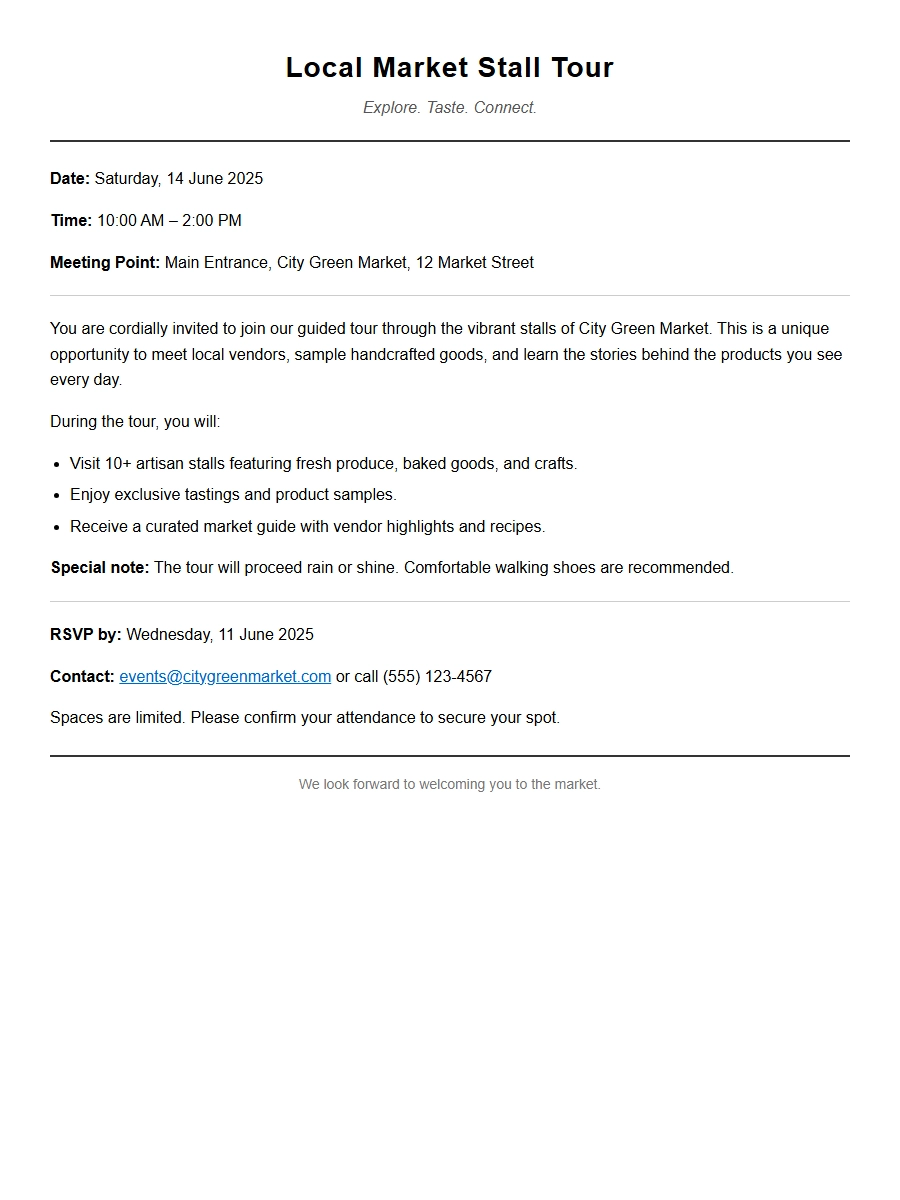 sample invitation for local market stall tour - Invitation Letters
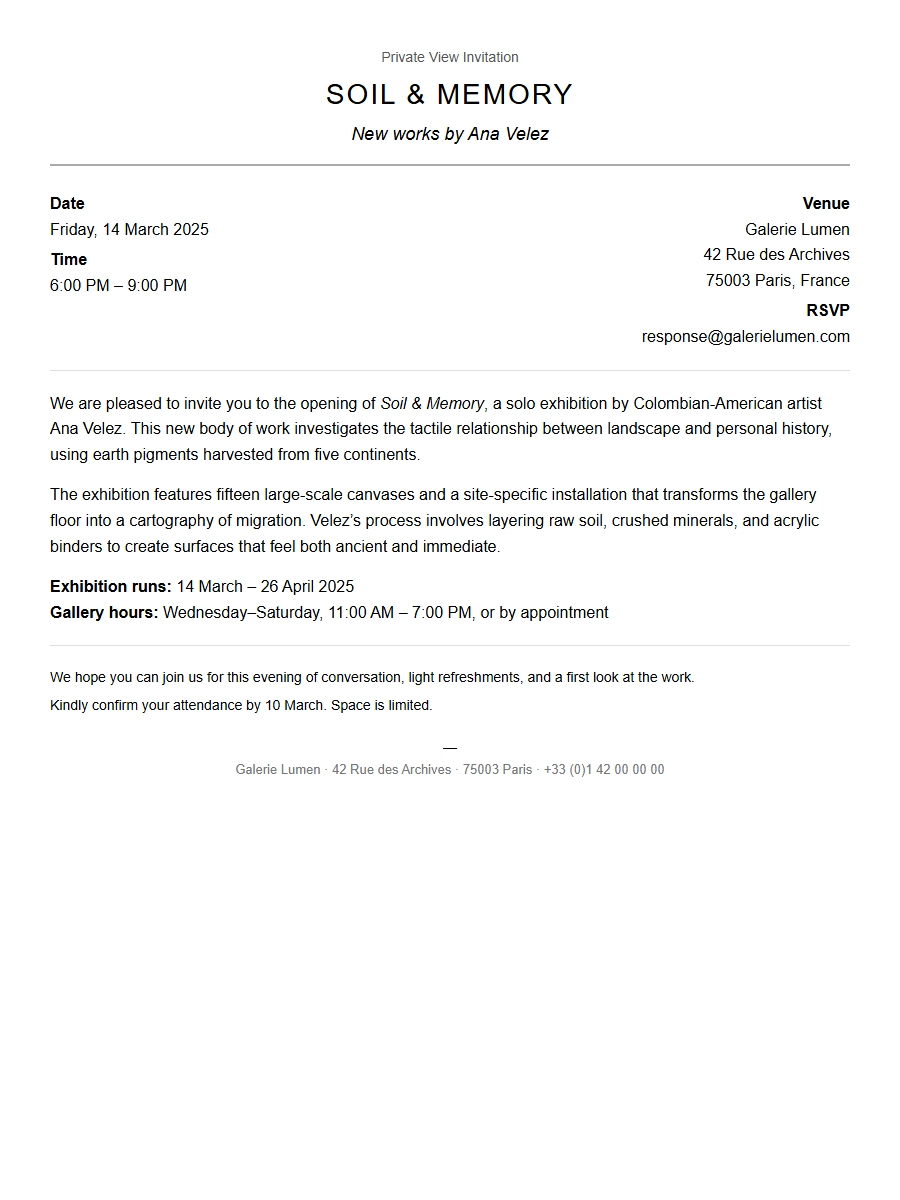 Art Exhibition Opening Invitation Wording Ideas
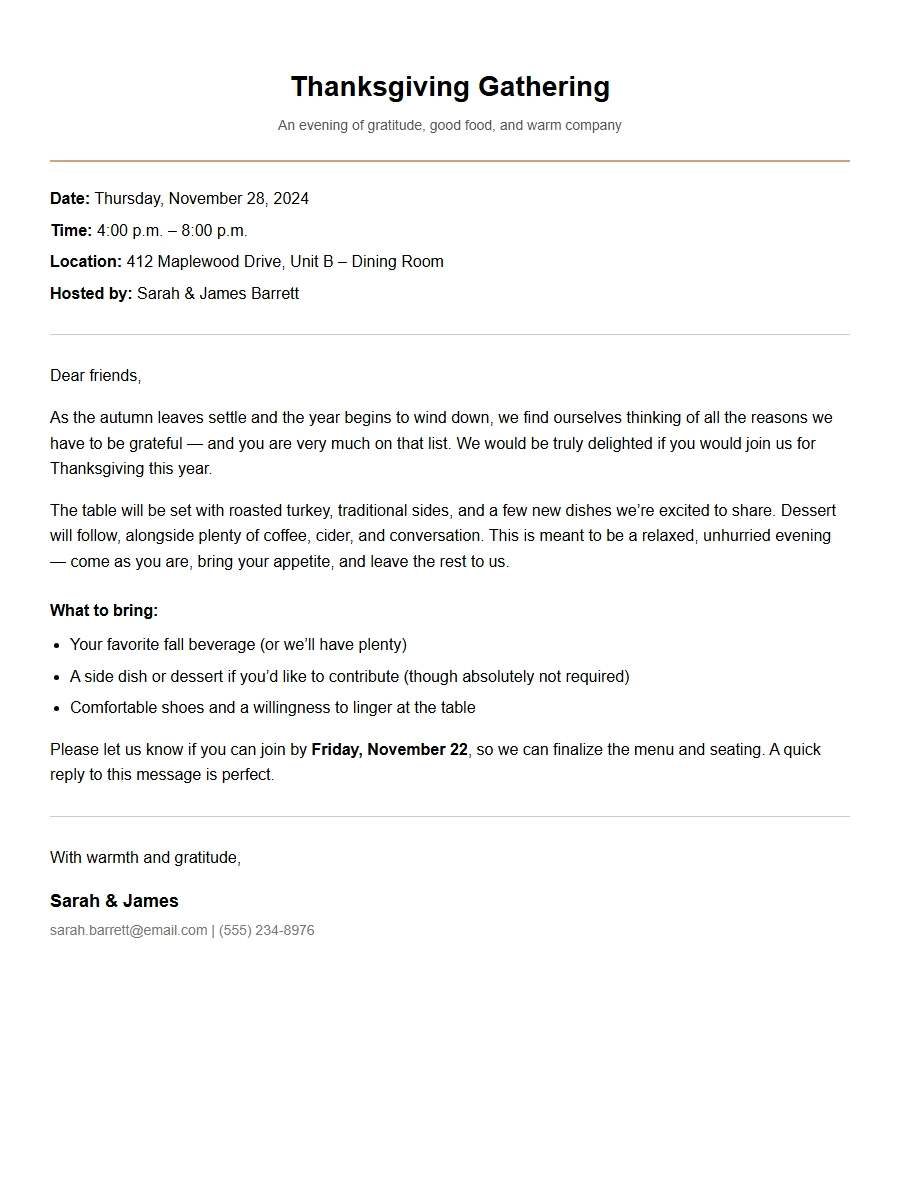 Thanksgiving Meal Gathering Invitation Text
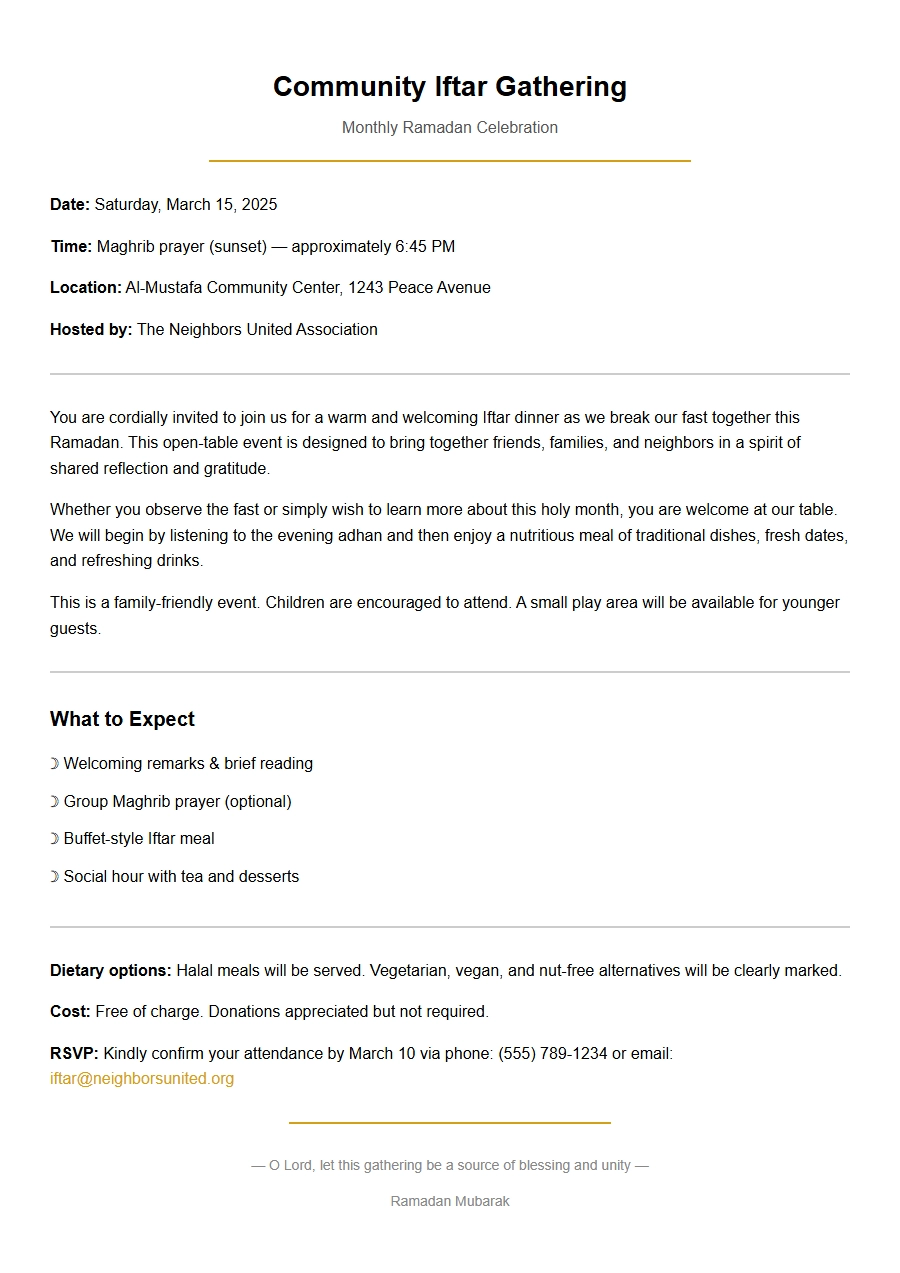 Ramadan Iftar Community Event Invitation
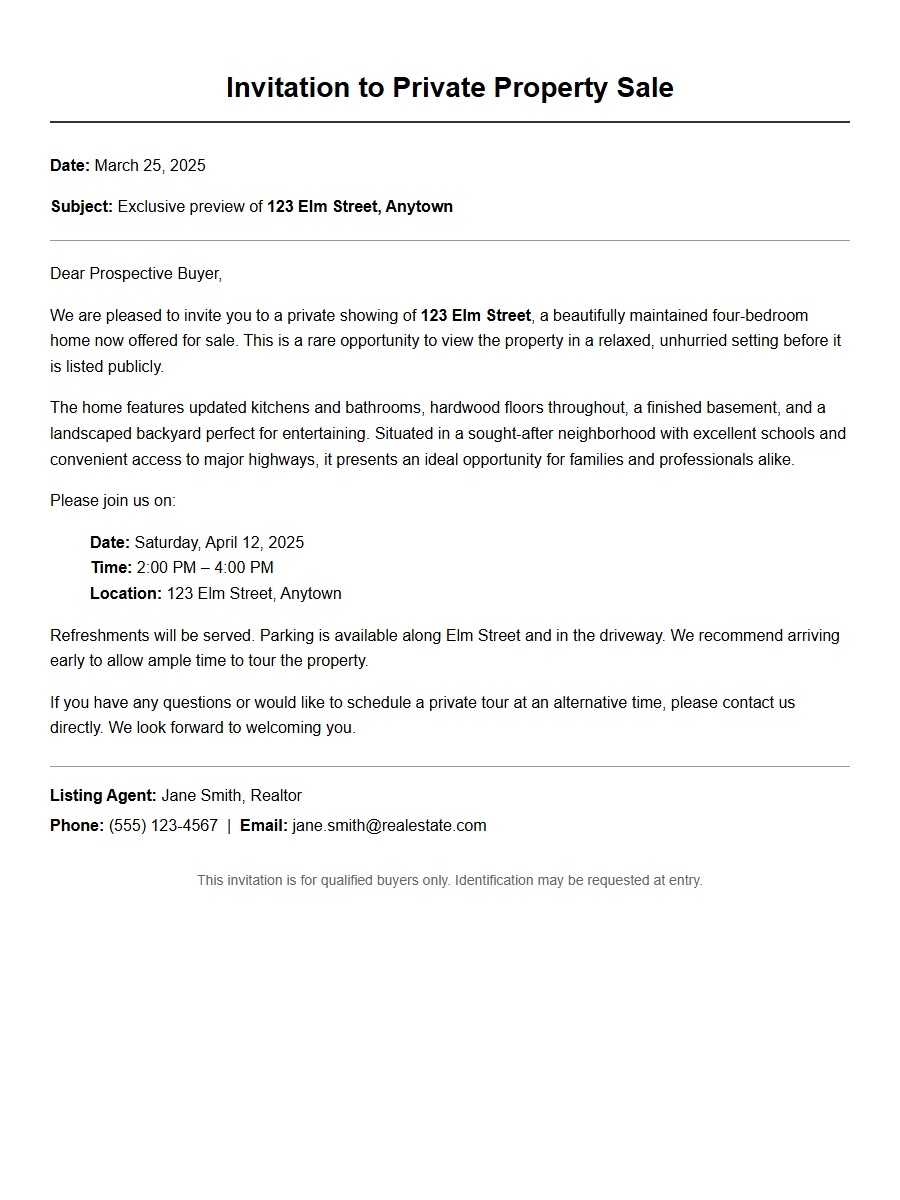 Sample Wording for Property Sale Invitations
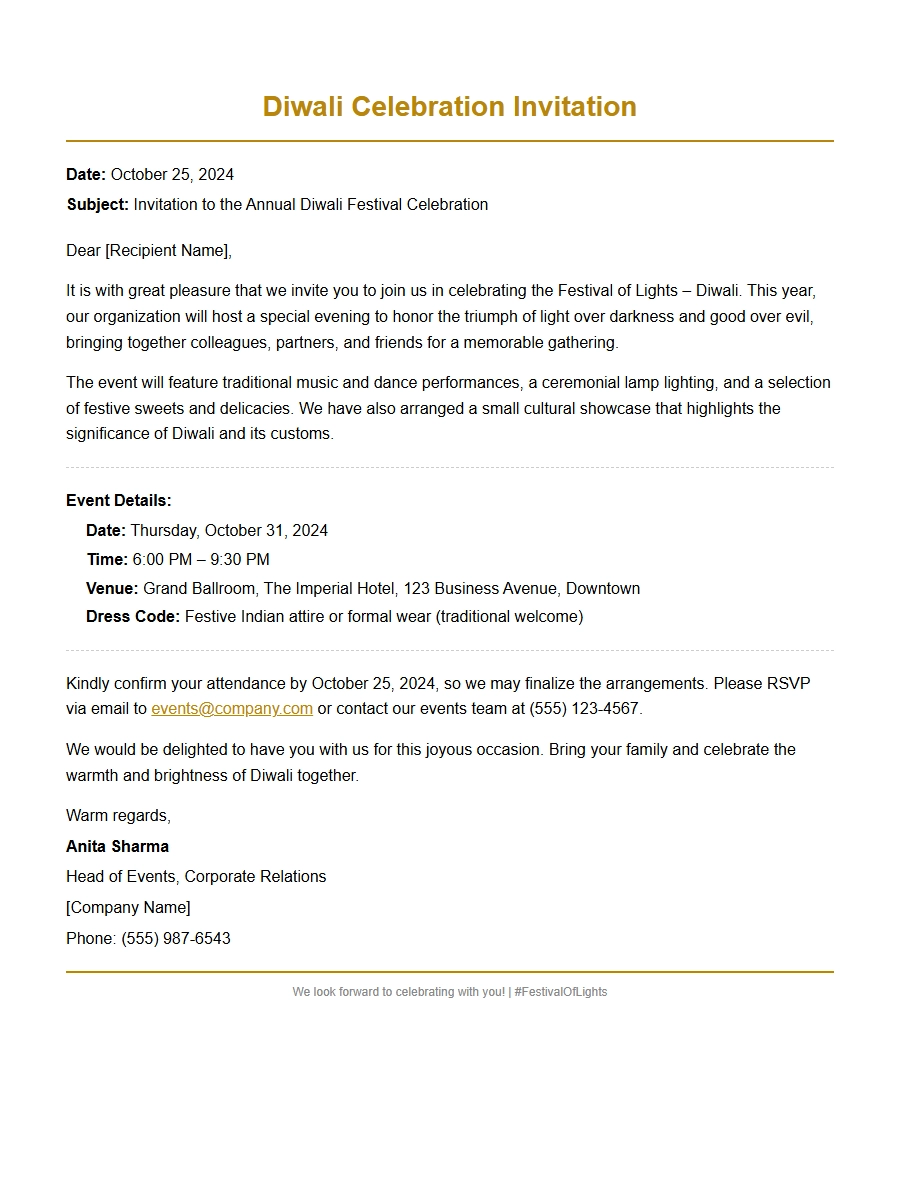 Diwali Festival Celebration Invitation Draft