You're preparing to sell a property and need to invite potential buyers, agents, or even neighbors to a private viewing or open house. The words you choose matter more than you think. A weak invitation gets ignored. A confusing one wastes everyone's time. But a clear, warm, professional invitation builds trust and fills the room with serious prospects.
What makes a property sale invitation work?
A good invitation does three things. It tells people exactly what's happening, why they should care, and what to do next. Whether you're a homeowner selling on your own or a real estate agent managing multiple listings, the structure stays the same. You don't need flowery language or corporate buzzwords. You need clarity, warmth, and a logical flow.
The best invitations feel personal without being intrusive. They use professional correspondence standards but drop the stiffness. Think of it as a letter template you customize for each recipient, not a mass email you blast and forget.
How to adapt a sample without sounding robotic
Most people make one big mistake: they copy a sample word for word and change only the address. The result reads like a form letter. Nobody responds to form letters. Instead, start with a solid letter structure and then tweak three things.
First, adjust the salutation and closing. "Dear Neighbor" works for a general open house invite. "Dear Mr. Chen" works for a personal invitation to a serious buyer. Second, add one specific detail about the property that fits the recipient. If they have kids, mention the backyard. If they commute, mention the train station. Third, match the tone in writing to the relationship. A letter to a referral client can be warmer than one to a stranger from a mailing list.
Ever received a letter that felt too stiff or too casual? The balance comes from reading your draft out loud. If it sounds like how you'd explain the listing to a friend over coffee, you're on the right track.
Sample wording for property sale invitation that actually gets responses
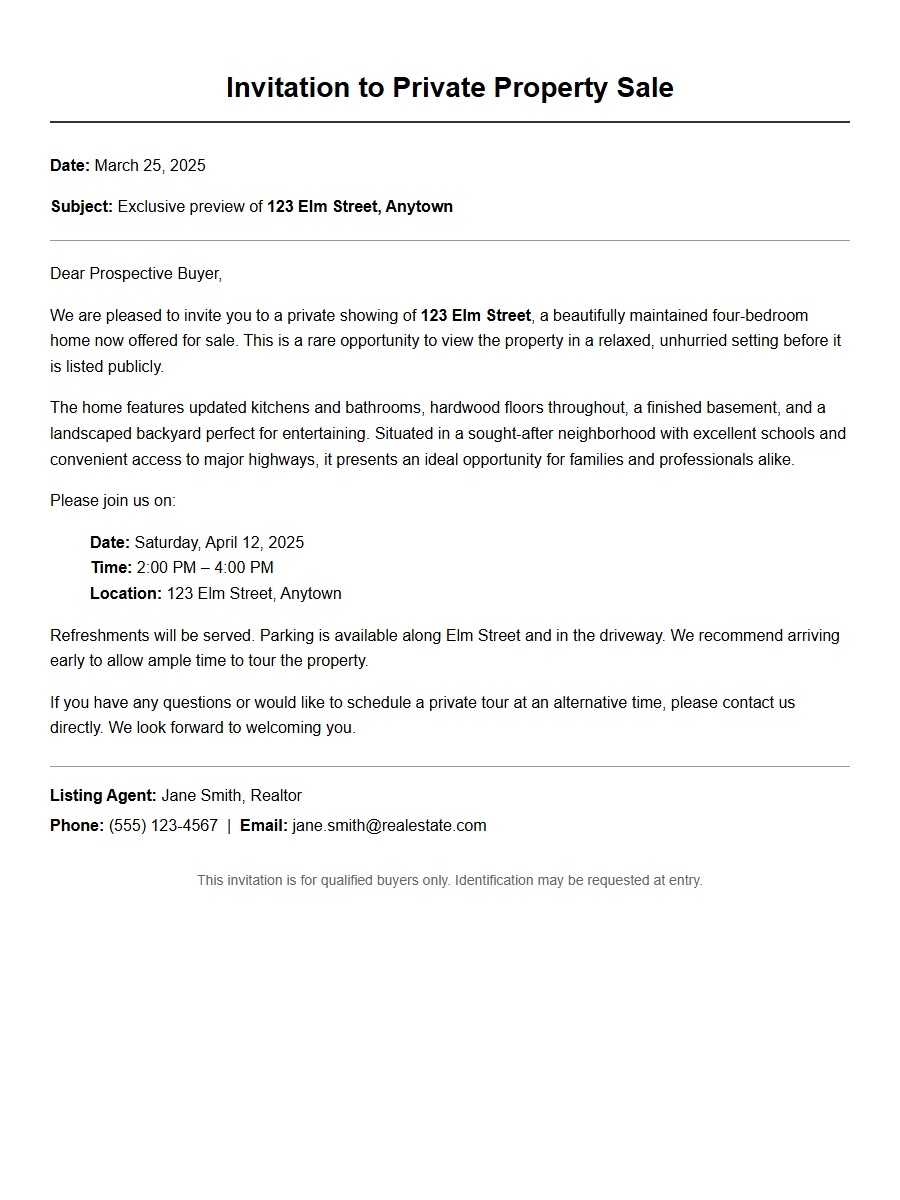
Here's a structure that works for most situations. You can adapt it for email, a printed letterhead design, or a digital letter format.
Subject line or heading: Keep it short. "You're invited: 123 Oak Street Open House" or "Private viewing invitation for 456 Maple Avenue."
Opening: State the purpose immediately. "I'm writing to invite you to a private showing of 123 Oak Street. This property just hit the market, and I believe it fits exactly what you're looking for."
Middle: Give the key details. Date, time, location. Then add one or two compelling features. Don't list every feature. Pick the ones that matter to that person. "The kitchen was fully renovated last year, and the master suite includes a walk-in closet you mentioned wanting."
Call to action: Tell them exactly what to do. "Please RSVP by Friday so I can arrange private appointment times. Reply to this email or call me directly."
Closing: Warm but professional. "Looking forward to showing you this home. Best regards, [Your name]"
For inspiration on different invitation styles, you might find these helpful: sample text for poetry reading invite invitation letters shows how to create event-focused invites, while formal wedding reception invitation wording examples can teach you how to strike the right formal tone for high-end property events.
Common mistakes that kill your response rate
Using outdated salutations. "To whom it may concern" tells the reader this is a mass mailing. Use their name or a simple "Hello" instead.
Ignoring the format. An email invitation needs a clear subject line and short paragraphs. A printed letter needs proper spacing and a readable font. A business letter format with your contact details at the top builds credibility. Mixing up these formats makes you look careless.
Forgetting to proofread. One typo in the date or address erodes trust. Proofreading letter content twice before sending is basic letter writing etiquette. Read it once for spelling, once for tone.
Burying the call to action. Don't make people hunt for what to do next. Put the RSVP instruction in its own sentence, ideally near the end but clearly visible.
When formal vs. informal works best
A letter of recommendation from a past client can be included with an invitation to add social proof. But don't overdo it. For an exclusive luxury property, a more formal approach with formal writing tips like proper salutations and a polished closing works well. For a neighborhood open house, a friendly email with a casual tone gets better results.
If you're inviting people to a market stall tour or local event alongside a property viewing, check out sample invitation for local market stall tour invitation letters for ideas on blending event and property invitations naturally.
Making your invitation feel personal at scale
You can't handwrite every letter. But you can use mail merge or a customizable letter system that inserts the recipient's name, neighborhood, and one personal detail. That small effort doubles your response rate. People notice when you took the time to remember their preferences.
For less formal gatherings like a sports-themed open house, sample wording for football game tailgate invitation letters offers ideas for energetic, casual language that still drives action.
The fastest way to get good at writing invitations
Write one. Send it. See what happens. Then adjust. The first draft won't be perfect, and that's fine. Every invitation you send teaches you what works for your audience. Some people respond to urgency. Others respond to exclusivity. A few just need clear directions and a parking tip.
If you ever need to turn down an invitation yourself, how to decline an invitation letter professionally shows you the polite way to say no without burning bridges.
Use the sample as a starting point, not the final word. The best invitation is the one that sounds like you, speaks to the reader, and makes the next step obvious. That's not cheating. That's smart writing.
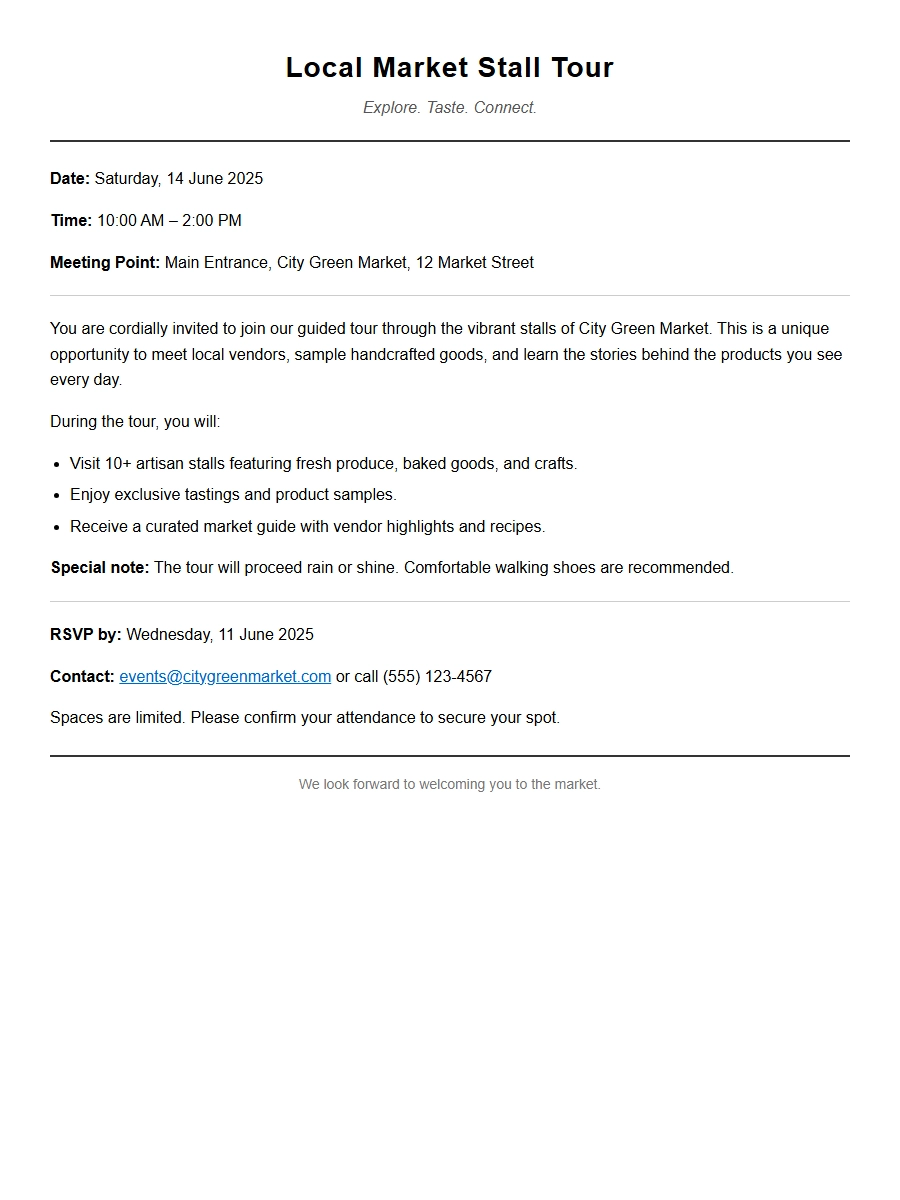 sample invitation for local market stall tour - Invitation Letters
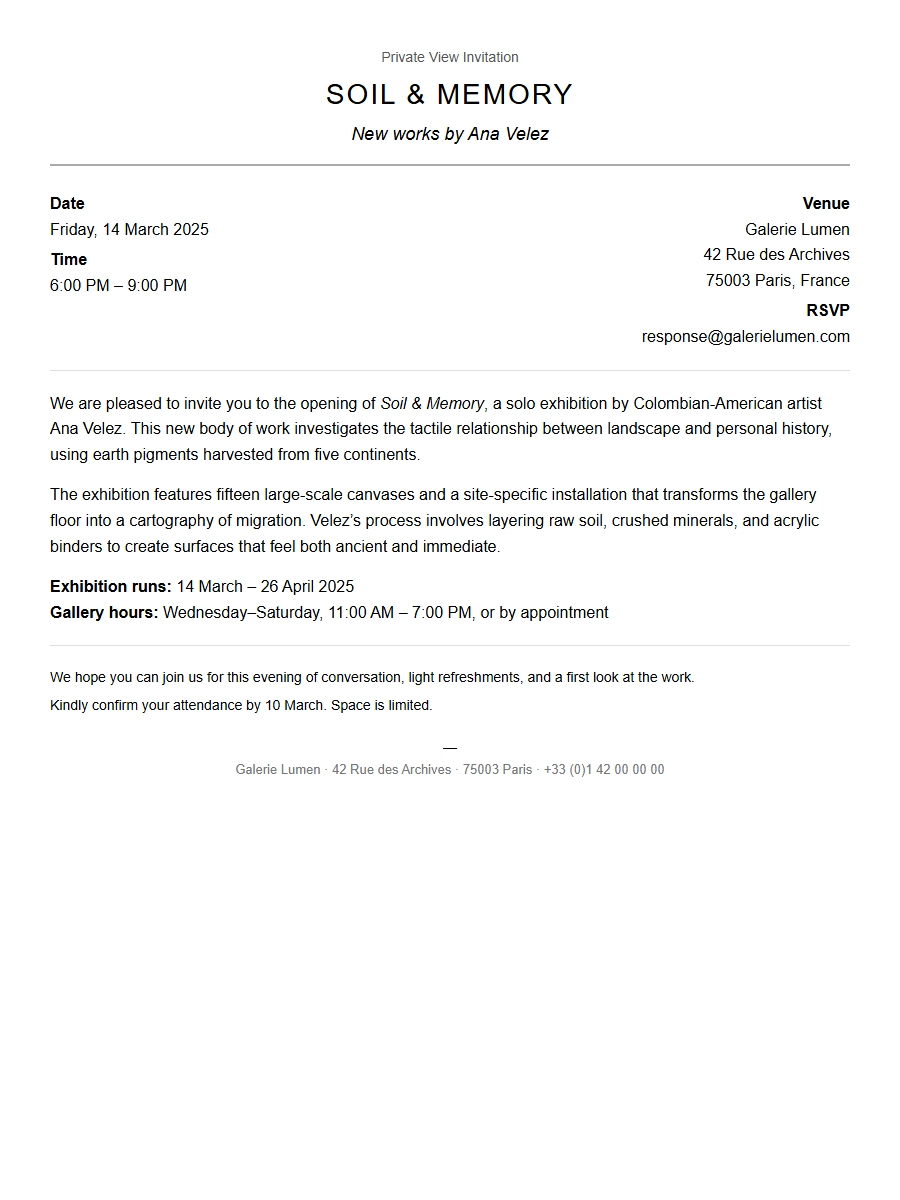 Art Exhibition Opening Invitation Wording Ideas
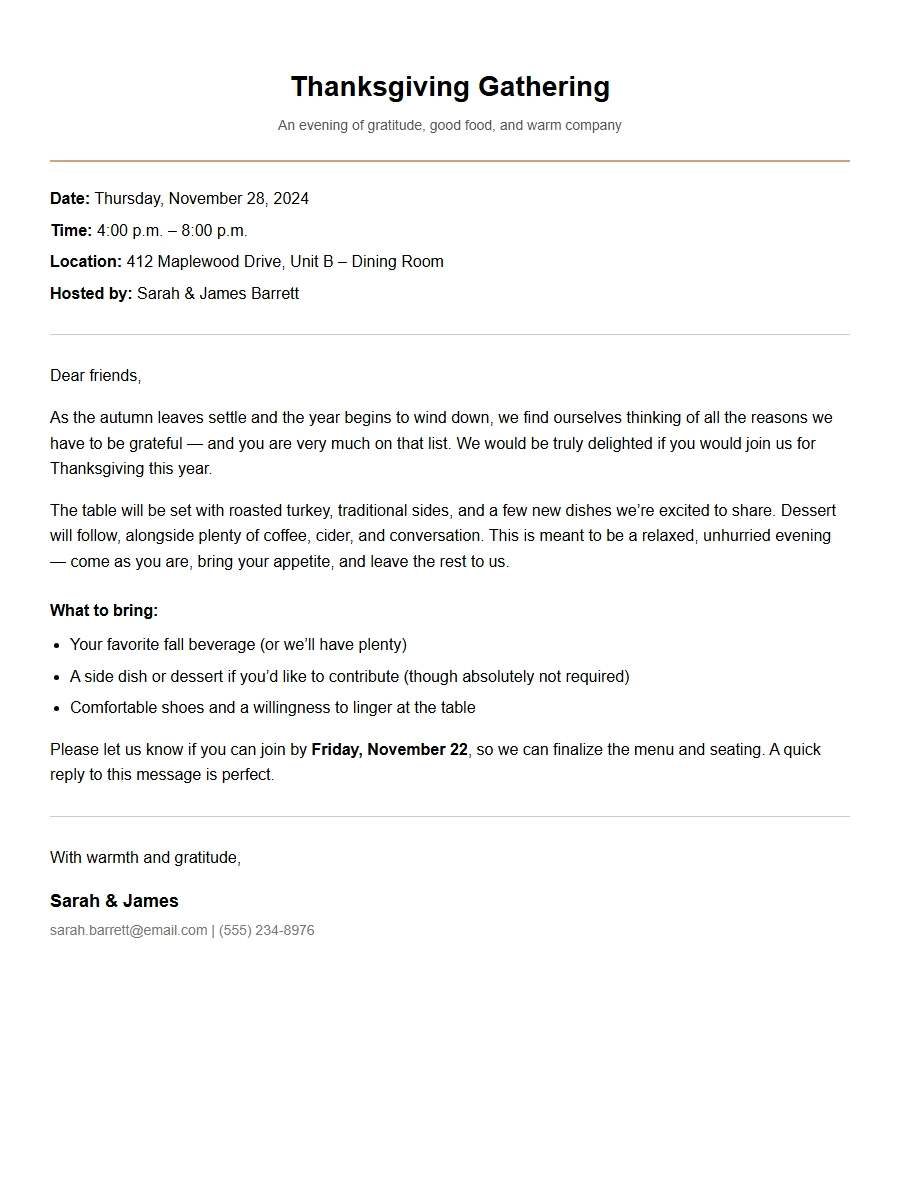 Thanksgiving Meal Gathering Invitation Text
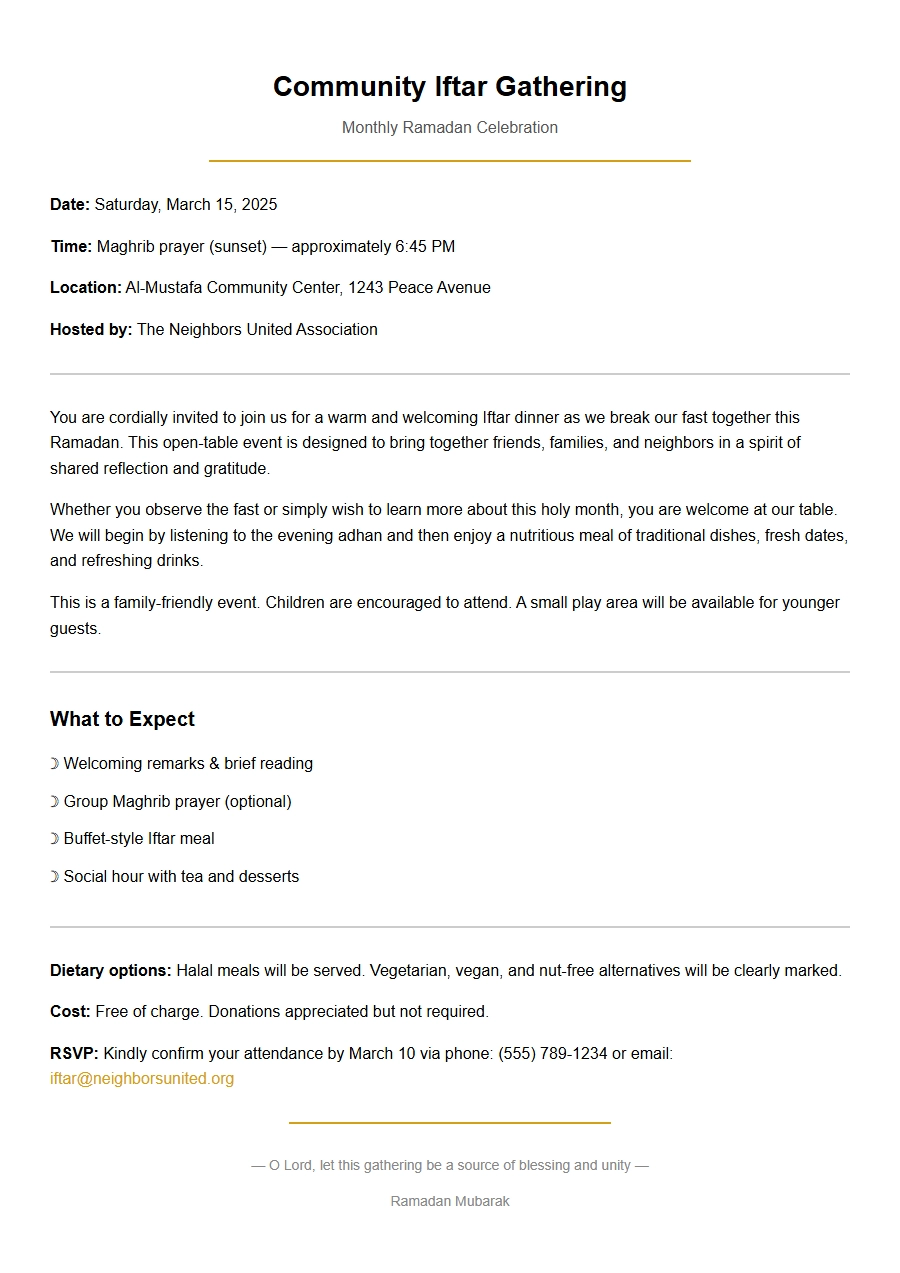 Ramadan Iftar Community Event Invitation
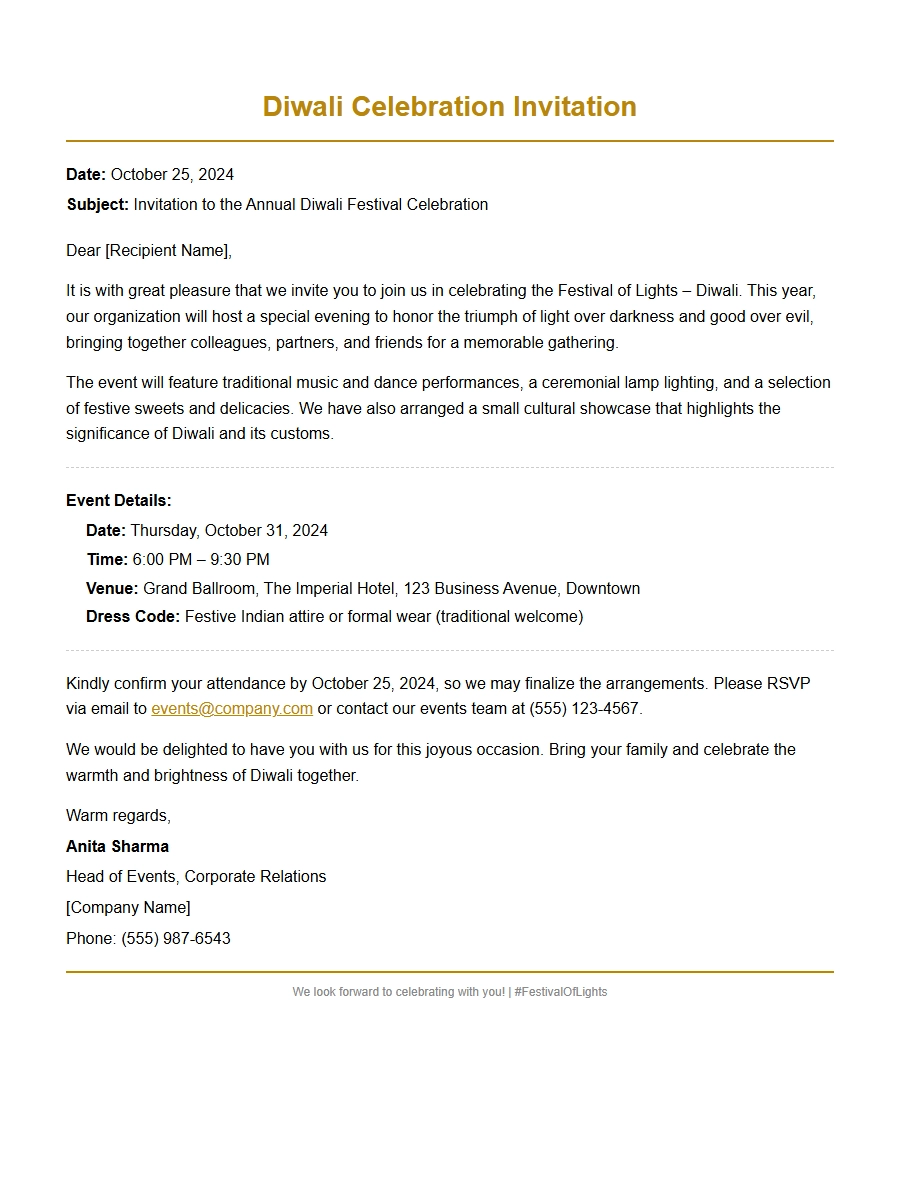 Diwali Festival Celebration Invitation Draft
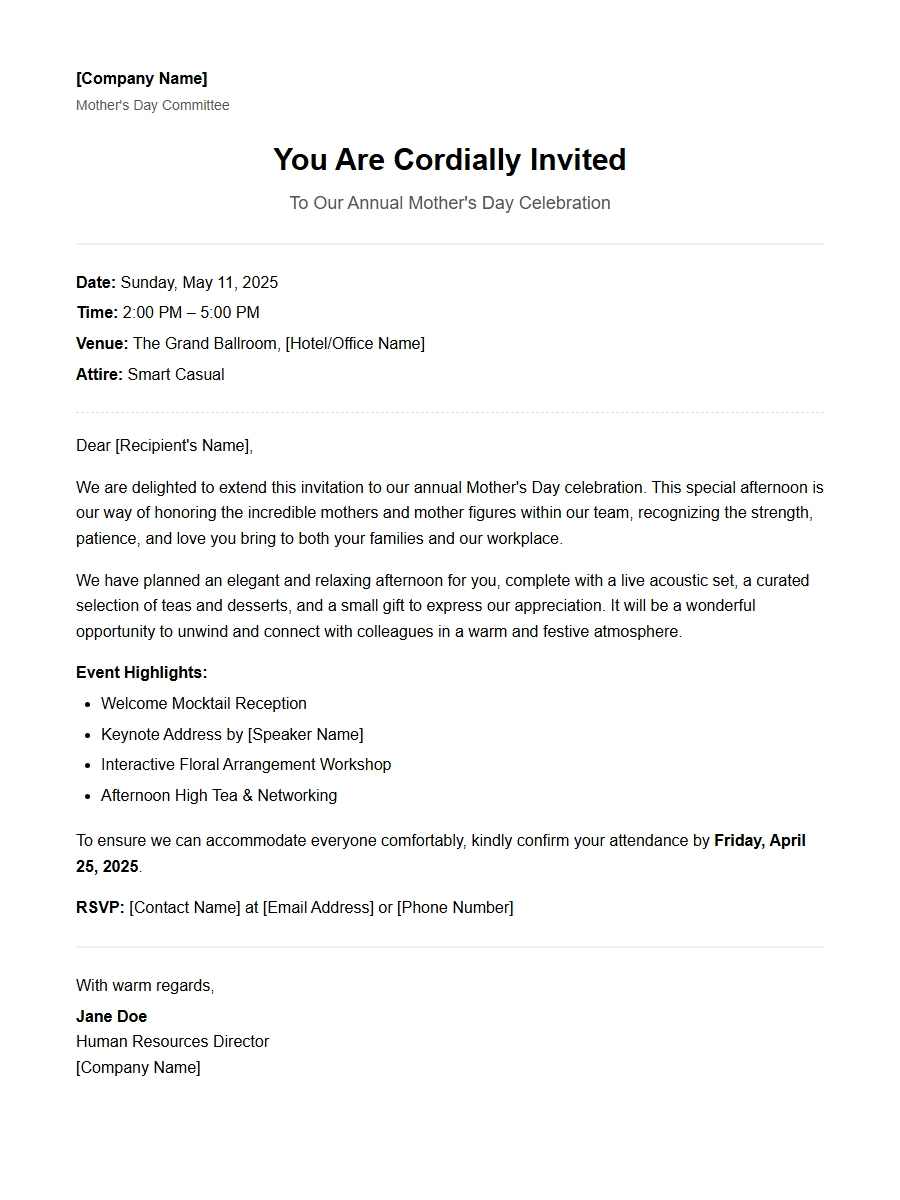 Mother's Day Celebration Invitation Draft