You’re staring at a blank email, cursor blinking, trying to invite people to a networking mixer. The clock is ticking, and you need something professional but not stiff. It’s a common moment of panic.
That’s where a good sample email invitation for networking mixer comes in. Using a sample isn’t cheating; it’s a smart shortcut. It gives you a structure, a professional tone, and the key phrases you need. You just fill in your specific details. It saves time and reduces the chance of forgetting something important, like the date or location.
Think of a letter template as a starting point. Your job is to make it sound like you, not like a robot. The best professional correspondence feels personal, even when it follows a standard format.
How do you pick the right sample for your mixer?
First, figure out the vibe of your event. Is it a formal affair for industry leaders, or a casual after-work gathering for local entrepreneurs? The tone of your email should match the event.
For a formal mixer, your business letter format needs a proper salutation and closing. Think “Dear Ms. Chen” and “Sincerely.” For a casual event, “Hi everyone” and “Best” works just fine. Look for a sample that fits the energy you want to project.
Also, consider your audience. A sample aimed at young professionals in tech will read differently than one for seasoned attorneys. Find a sample that reflects your industry’s usual tone in writing.
What should you change and what should you keep?
Do not just copy-paste and change the name. That’s how you get awkward results. Here’s a simple process:
Keep the structure. The best samples have a clear flow: a friendly greeting, the purpose of the event, key details (date, time, location), a reason to attend, and a call to action.
Change the opening line. This is where you grab attention. Instead of “We are pleased to invite you,” try “I’m excited to gather a few local founders for drinks next Thursday.” It’s more direct.
Add your authentic voice. If you’re funny, add a light joke. If you’re serious, use precise language. The sample’s letter structure is your skeleton, but your voice is the flesh.
Update the closing. A generic “Hope to see you there” is fine, but “I’d love to hear your take on the new industry trends over a beer” is better. It hints at the conversation you want to have.
Common mistakes that make your email fall flat
Ever received a letter that felt too stiff or too casual? It’s uncomfortable. Avoid these traps:
Using outdated salutations. “To whom it may concern” is cold and impersonal. Use a real name or a group greeting.
Ignoring the format for email vs. printed letter. For email, keep it shorter. Skip the letterhead design unless you have a clean digital signature. For a digital letter format, use a clear subject line like “Networking Mixer: Drinks & Connections on Oct 12.”
Forgetting to proofread. A typo in a date or address kills credibility. Do a quick proofreading letter check before hitting send.
Making it all about you. People attend mixers for themselves, not for you. Focus on what they will gain: new contacts, interesting conversations, or a fun evening.
If you found this sample email invitation for networking mixer approach useful, you might also want to explore other common invitation scenarios. The same principles apply when you need a sample text for retirement party invites invitation letters—keep it warm and specific. Or, for a more focused group, an invitation letter for book club meeting invitation letters needs a different tone but the same clarity. For a casual night out, check out an invitation text for concert evening ticket invitation letters for ideas on generating excitement.
How to tailor the first paragraph for impact
The first paragraph is your hook. Start with a specific benefit or a shared connection. Avoid vague statements.
Bad opening: “We are hosting a networking event for professionals.”
Good opening: “Hi Jordan, I’m putting together a small group of designers and developers who are tired of boring networking events. We’re meeting at The Taproom next Tuesday for real conversations.”
Notice the difference? The second one feels like a person wrote it, not a committee. It promises a specific experience, not a generic obligation.
Remember letter writing etiquette applies here: be respectful of their time, be clear about the value, and make it easy to RSVP.
Making your sample feel like a real person wrote it
Even a customizable letter needs to feel human. After you fill in the blanks, read it out loud. Does it sound like something you would say on the phone? If not, rephrase it.
For example, change “We cordially request the pleasure of your company” to “I’d love for you to join us.” It’s shorter, friendlier, and still professional.
If you’re writing a cover letter examples style for a professional event, you can still keep it warm. Think of it like a letter of recommendation for the event itself—you are recommending people spend their valuable time with you. Make it worth their while.
Use the sample as a springboard, not a crutch. The best professional writing tips always come back to this: know your format, know your audience, then write like a human. The more you practice adapting samples, the faster the process becomes. You’ll eventually glance at a resignation letter sample and see immediately what to keep and what to throw away.
Start with a good sample, add your voice, and proofread once. You’ll hit send with confidence, not hesitation.
Samples to Guide You
Sample Email Invitation for Networking Mixer
General Professional Networking Mixer
You're Invited! Join us for an evening of meaningful connections at our Professional Networking Mixer on Friday, June 23, 2026, from 6:00 PM to 8:30 PM at The Rooftop Lounge, 123 Business Ave.
This open-format event is designed for professionals across all industries. Bring your business cards and an open mind. Light appetizers and a cash bar will be available.
Why attend?
Expand your professional network
Meet potential collaborators and mentors
Enjoy a relaxed, upscale atmosphere
RSVP required by June 20. Click the link below to register. Space is limited to 100 guests.
Monthly Tech Industry Mixer
TechConnect Monthly Mixer — You are cordially invited to our June edition, hosted at InnovateHub (456 Code Lane). Tuesday, June 27, 2026, 5:30 PM – 8:00 PM.
This month’s theme: AI & Automation. Share ideas, demo projects, and network with fellow developers, product managers, and CTOs from leading startups and enterprises.
Time
Activity
5:30 – 6:00
Check-in & Icebreaker
6:00 – 7:00
Open Networking
7:00 – 8:00
Lightning Demos (3 slots available)
RSVP: Please register by June 25. First 50 guests receive a complimentary drink token.
Young Professionals Networking Event
Calling all Young Professionals! Kick off your summer with an evening of connections at YPN Summer Mixer. Date: Saturday, July 8, 2026, 7:00 PM – 10:00 PM. Location: Skyline Social, 789 Downtown Blvd.
This event is designed for professionals aged 21–35 who are eager to trade insights, discover career opportunities, and build friendships.
What’s included:
Welcome drink on arrival
Networking games with prizes
Curated matchmaking (based on industry interests)
Space is limited to 60 attendees. RSVP early at the link below. Dress code: smart casual.
Alumni Networking Mixer Invitation
Alumni, Reconnect! The University Alumni Association invites you to our Annual Alumni Networking Mixer on Thursday, September 14, 2026, from 6:30 PM to 9:00 PM at The Grand Ballroom, 100 University Circle.
Reunite with former classmates and meet fellow graduates from diverse fields. This year we celebrate 25 years of alumni excellence.
Feature
Details
Cocktail Hour
6:30 – 7:30
Speed Networking
7:30 – 8:15
Open Mix & Mingle
8:15 – 9:00
Heavy hors d'oeuvres and two drink tickets per attendee. RSVP by September 10 via the link below. We look forward to seeing you there!
Holiday Networking Mixer
Happy Holidays! You and a guest are invited to the Christmas Networking Mixer hosted by the City Business Council. When: Wednesday, December 13, 2026, 6:00 PM – 9:00 PM. Where: Winter Garden Pavilion, 456 Frost Street.
Celebrate the season while expanding your network. Enjoy festive decorations, live acoustic music, and a selection of seasonal treats.
Gift exchange: Optional—bring a wrapped gift ($15 limit) if you'd like to participate.
Charity drive: Please bring a non-perishable food item for the local food bank.
RSVP required by December 10. Attire: holiday chic. We can't wait to toast with you!
Women in Business Networking Mixer
Women in Business – Empower Mixer. You are personally invited to an exclusive evening with like-minded professionals on Tuesday, August 8, 2026, 6:00 PM – 8:30 PM at The Glass House, 900 Sheroes Way.
This event aims to foster mentorship, collaboration, and empowerment among women leaders, entrepreneurs, and rising stars.
Light refreshments provided. RSVP by August 5. All who identify as women are welcome. Bring your ambition and a friend!
Startup Founders Networking Mixer
Founders' Circle Invitation — You are invited to the Startup Networking Mixer on Thursday, July 20, 2026, 7:00 PM – 10:00 PM at Launchpad Co-working, 34 Innovation Drive.
Connect with fellow founders, angel investors, and early-stage VCs in a casual, high-energy setting. Share your pitch, get feedback, and discover potential co-founders.
Ticket Type
Price
General (founder/investor)
Free
Spectator / non-founder
$20
Drinks and finger food included. RSVP mandatory by July 18. Limited to 80 people. Pitch your idea during the open mic segment (sign up at check-in).
Virtual Networking Mixer Invitation
Join Us from Anywhere! Our Virtual Networking Mixer is back on Friday, July 28, 2026, from 4:00 PM to 5:30 PM ET via Zoom.
Connect with professionals across the globe without leaving your desk. Each participant will be placed in small breakout rooms for focused conversations.
How it works: After a brief welcome, you'll join a 20-min room, then rotate to meet new people.
Bring: A recent project or challenge to discuss.
Tech: Camera and microphone required. Link will be sent after registration.
RSVP by July 27. This is a free event but limited to 40 participants. We'll share a networking bingo card to make it fun!
Networking Mixer with Guest Speaker
Mixer + Keynote! You are invited to Networking Night: Insights from Industry Leaders on Wednesday, October 11, 2026, 5:30 PM – 8:30 PM at The Forum Theater, 200 Main Street.
Hear from our featured speaker Dr. Amara Chen, CEO of NexGen Innovations, on “The Art of Strategic Networking.” Then enjoy an extended period of mingling.
Agenda
Time
Doors Open & Networking
5:30 – 6:15
Keynote Address
6:15 – 7:00
Q&A + Open Mixer
7:00 – 8:30
Complimentary wine and cheese provided. RSVP by October 8. Tickets are $10 for members, $15 for non-members. Space is limited—reserve now.
Chamber of Commerce Business Networking Mixer
You’re Invited to the Chamber Mixer! The Metro Chamber of Commerce invites you to its Quarterly Business Networking Mixer on Thursday, August 24, 2026, 5:30 PM – 8:00 PM at the Metro Convention Center Hall B.
Connect with local business owners, government officials, and community leaders. This is the perfect opportunity to build partnerships and promote your business.
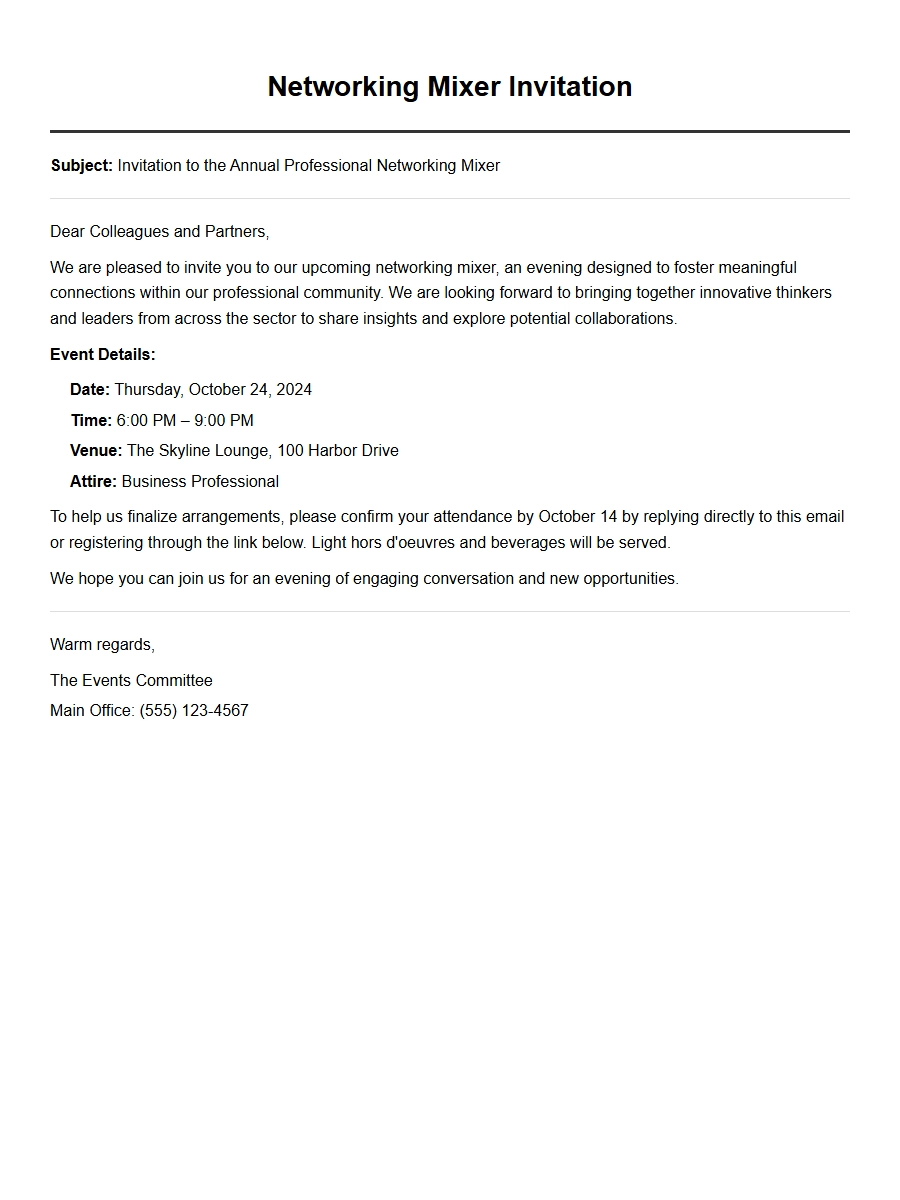
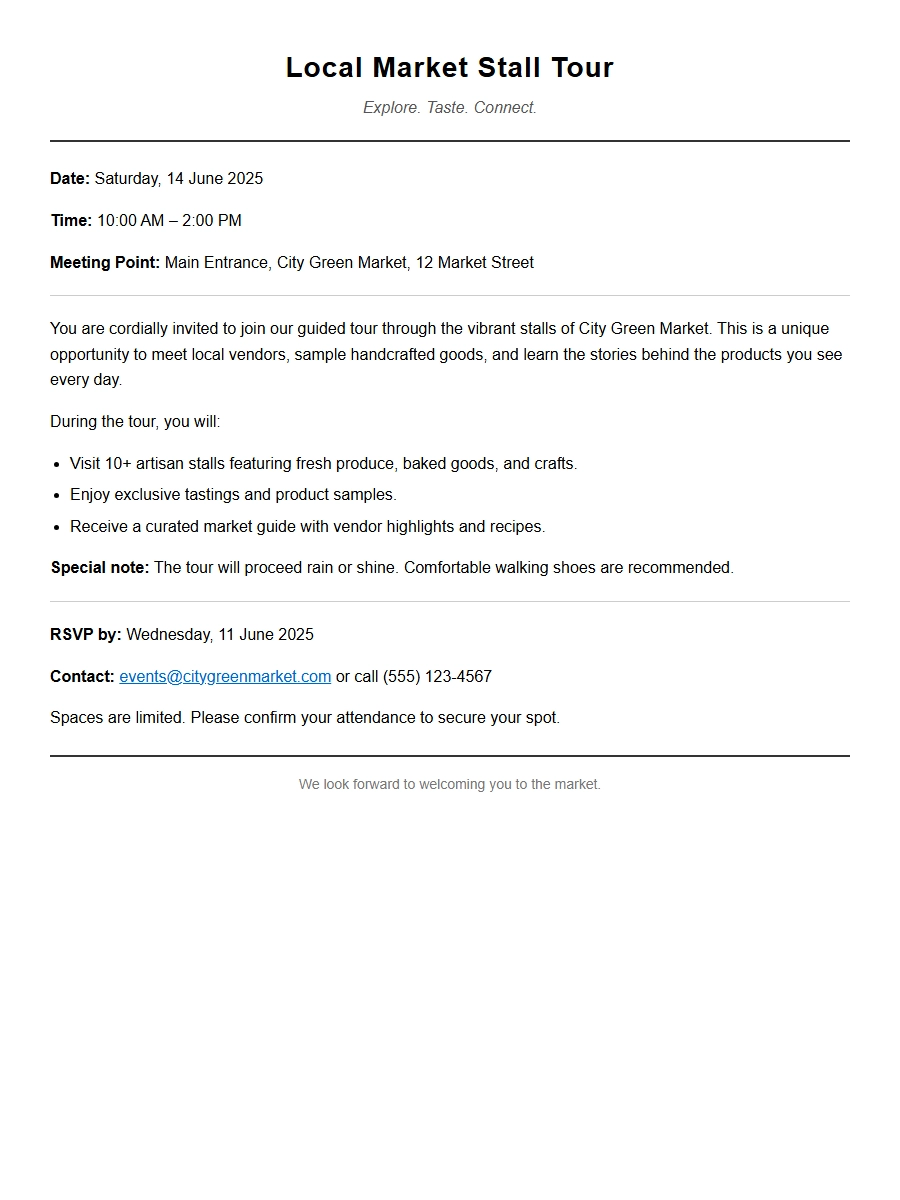 sample invitation for local market stall tour - Invitation Letters
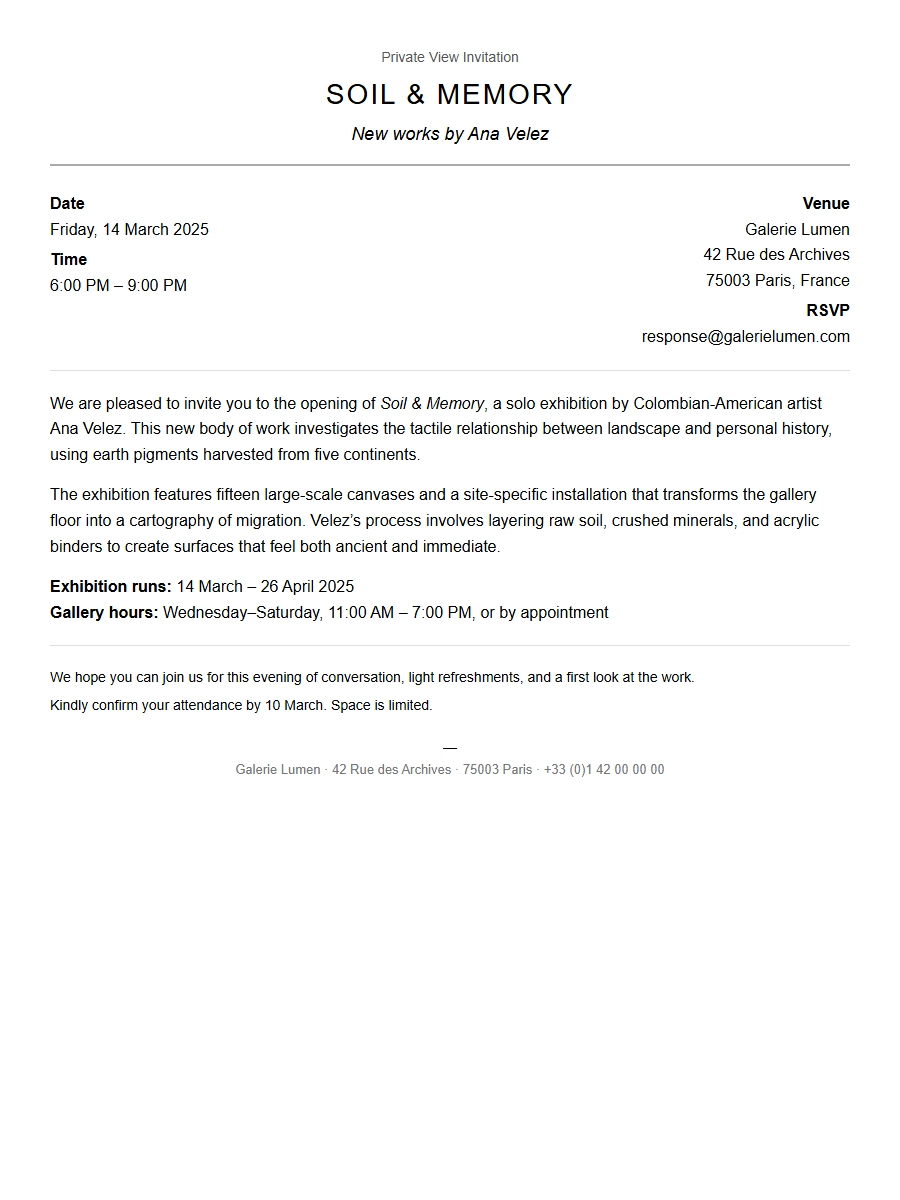 Art Exhibition Opening Invitation Wording Ideas
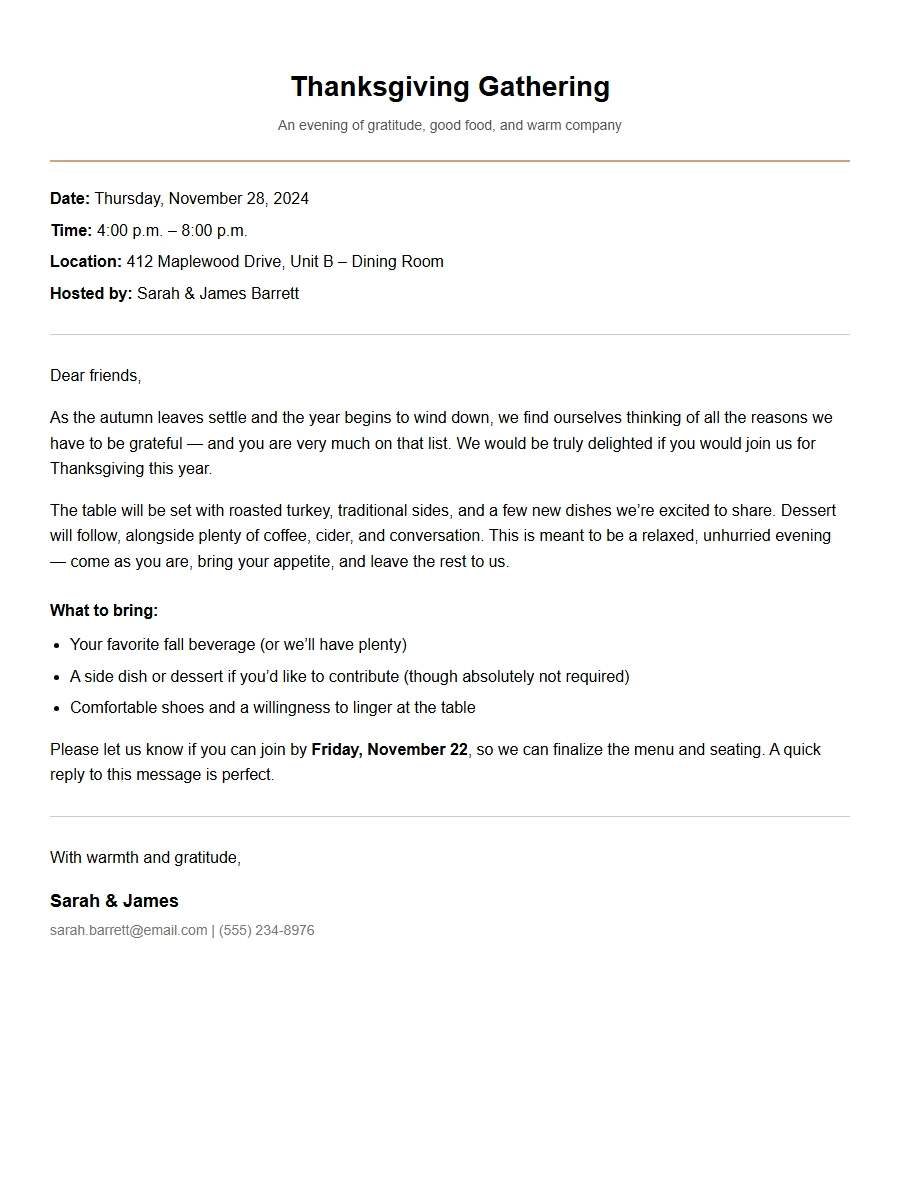 Thanksgiving Meal Gathering Invitation Text
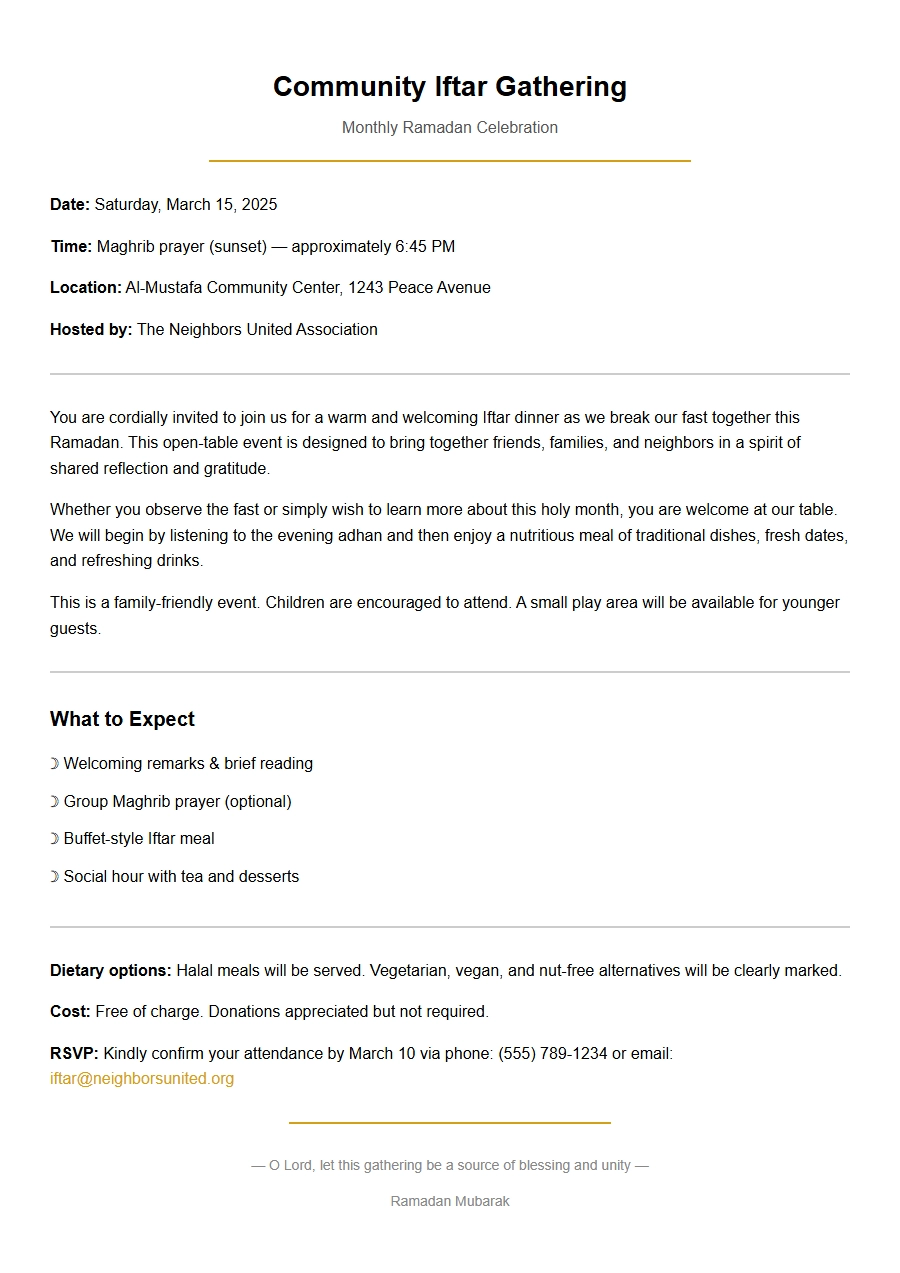 Ramadan Iftar Community Event Invitation
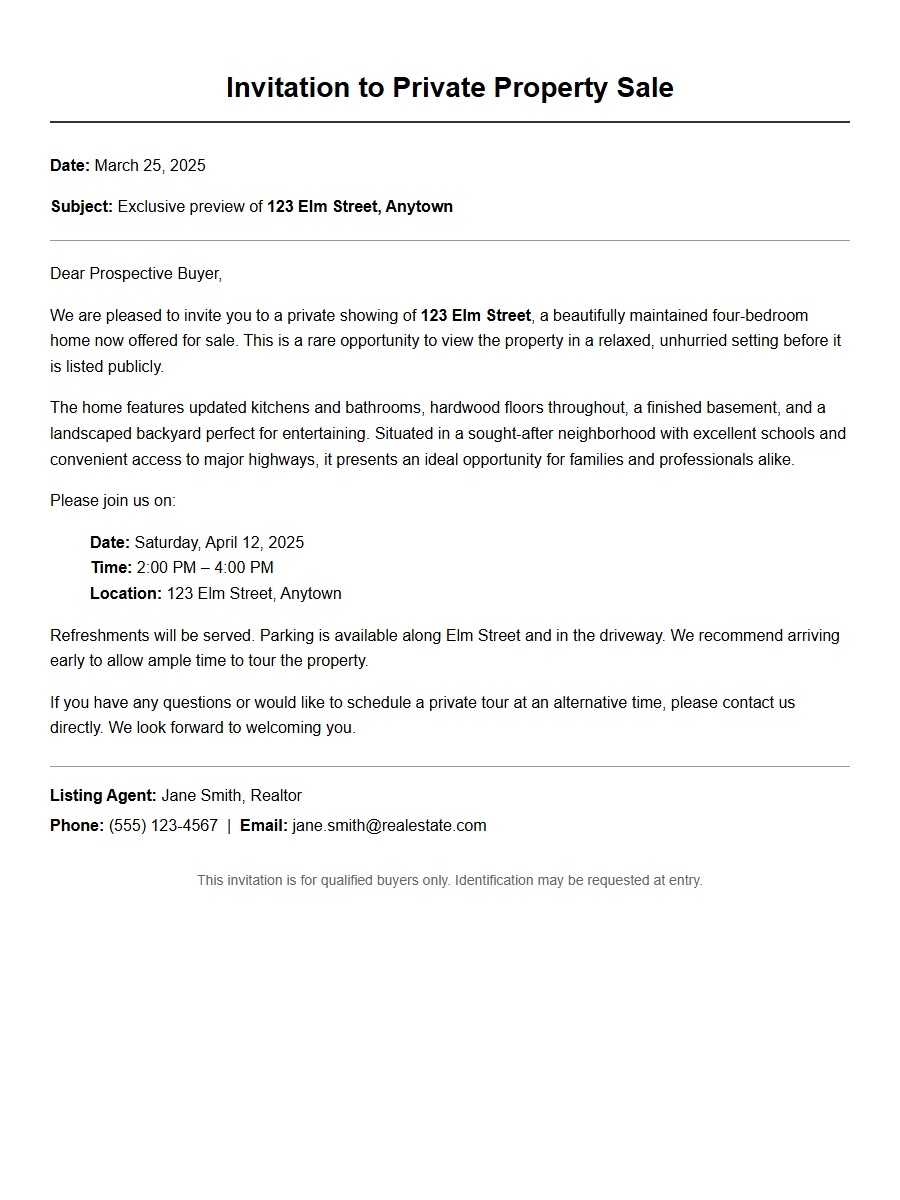 Sample Wording for Property Sale Invitations
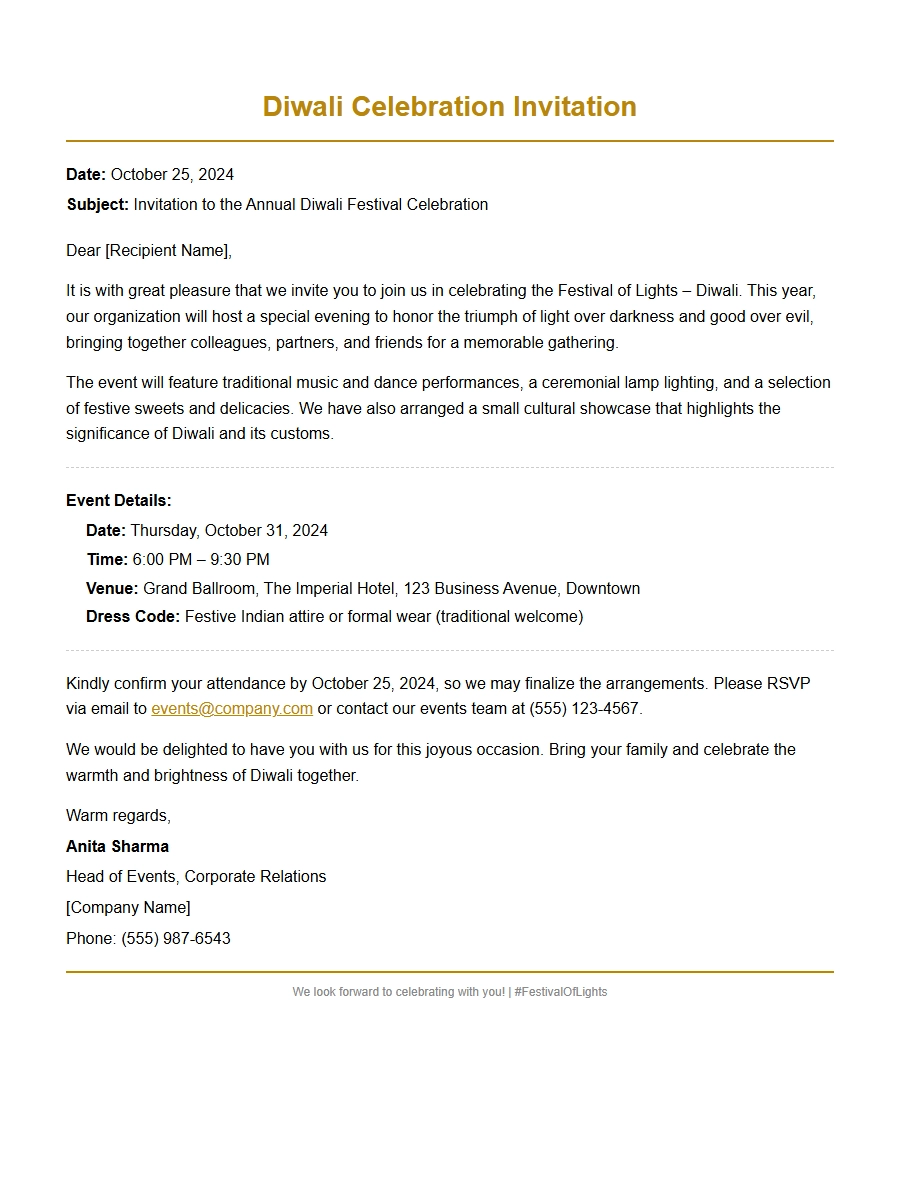 Diwali Festival Celebration Invitation Draft