You need to write an invitation text for a concert evening ticket event, and the blank page feels impossible. Maybe it’s a private recital, a jazz club night, or a charity gala with live music. The right words can turn a simple ticket offer into something people actually get excited about. But first, let’s clear up a common worry: using a sample isn’t cheating. It’s smart. A good template gives you structure, tone, and the key phrases you need—while leaving plenty of room to make it your own. Think of it as a map, not a script.
Category: Invitation Letters
What a Concert Evening Invitation Should Include
Every concert invitation text needs a few essentials: the event name, date, time, venue, and ticket details. But the tone matters too. Is it a black-tie classical performance or a casual outdoor gig? The salutation and closing should match that vibe. For example, “Dear Music Lover” works for a community concert; “Dear Mr. and Mrs. Lawson” fits a formal benefit evening. Don’t forget to specify whether the ticket includes dinner, drinks, or just the show. That’s often the deciding factor for guests.
Formal vs. Informal – Choose Your Tone
If you’re writing for a fund-raising gala, lean toward professional correspondence with a letterhead design and a formal closing like “Sincerely.” For a friend’s band debut, a warm, conversational tone is better. The mistake many people make is mixing the two—a casual opening with a stiff sign-off feels disjointed. Stick to one register. And if you’re sending the invitation by email, remember that digital letter format means shorter paragraphs and a clear subject line. “You’re invited to an evening of jazz under the stars” works far better than “Invitation to attend.”
How to Adapt a Sample Without Losing Your Voice
Start with a letter template that matches your situation. Then rewrite the opening paragraph to grab attention. Instead of “You are cordially invited,” try “We’d love to see you at the candlelight concert next Saturday.” That small shift makes the invitation feel personal and immediate. Keep the core structure—introduction, details, RSVP request—but swap out generic lines for specifics. Mention the artist’s name, a special song, or a unique venue feature. One quick tip: after the event details, add a short sentence about what the evening will feel like. “Imagine a string quartet playing under fairy lights in the garden” paints a picture better than “Refreshments will be served.”
Common mistakes include using outdated salutations like “To Whom It May Concern” (too cold for a concert) or ignoring the fact that your invitation might be read on a phone. Keep paragraphs short, and use bold for key details like the date and RSVP deadline. Proofreading is non-negotiable. A typo in the address or time can ruin the whole experience.
Real Sample: Concert Evening Ticket Invitation Text
Here’s a short example you can adapt:
Dear Sarah, You’re invited to a special evening of live acoustic music at The Lighthouse Lounge. Your ticket includes a welcome drink and a seat by the stage. The show starts at 8:00 PM on Saturday, June 14. Please RSVP by June 7 so we can reserve your spot. We can’t wait to share this night with you. Warmly, Alex
Notice how the tone is warm but still clear. It uses letter writing etiquette (proper salutation and closing) without being stiff. If you need to make it more formal, replace “You’re invited” with “We are pleased to invite you” and change “Warmly” to “Sincerely.” The structure stays the same.
Tailor the Opening to Grab Attention
Think about what matters most to your guest. If they’re a jazz enthusiast, mention the saxophonist. If it’s a date night, highlight the romantic setting. The first two lines decide whether someone reads on or scrolls past. For email invitations, use a subject line that includes the event name and date. And always include a clear RSVP request—whether it’s a reply email, a phone number, or a link to a form.
Mistakes to Avoid When Writing Concert Invitations
Using too many exclamation points – it looks desperate, not excited.
Forgetting ticket details (price, how to purchase, or if it’s complimentary).
Ignoring the difference between print and email format. For printed letters, include a letterhead design; for digital, a simple header is fine.
Not proofreading the date and time. Double-check the year especially.
Where to Go From Here
Use the sample above as a springboard, not a crutch. Change words until they sound like you. The best concert invitations feel both professional and personal—like a friend who knows how to get things right. If you need to reply to an invitation, you can adapt the same structure for an acceptance or decline. For other events, the same principles apply: clear details, appropriate tone, and a human touch. Practice once or twice, and the process will feel quicker each time.
Looking for more guidance on related invitations? Check out how to word a reply to a formal dinner invitation, or see what works for a college send-off party invite. For RSVP wording ideas, visit the page on writing an RSVP request in a letter. Each type shares the same core logic, just with a different mood.
Accepting a formal dinner invitation follows a similar structure but with a more reserved tone. If you’re hosting a larger event like a training session, you’ll find a sample invitation for training session attendees that balances professionalism with a warm welcome. And for milestone celebrations, an anniversary party invitation letter offers a template that mixes formality with personal touches.
Now go write that invitation—you’ve got this.
Common Sample Formats
Concert Evening Ticket Invitation Text
Formal Invitation to Classical Concert Evening
You are cordially invited to an evening of exquisite classical music performed by the City Philharmonic Orchestra. The concert will take place on Saturday, 15th April 2024 at the Grand Concert Hall, beginning promptly at 7:30 PM.
Your ticket grants access to the main auditorium and includes a complimentary programme booklet. Please present your printed ticket or digital copy at the entrance. The evening will feature works by Beethoven, Mozart, and Tchaikovsky, followed by a meet-the-artists reception.
Ticket Type
Seat Section
Price
Standard
Stalls
$75
Premium
Circle
$120
Student
Gallery
$40
We recommend arriving at least 20 minutes early to enjoy the prelude. Please note that latecomers will be seated at the first suitable interval. RSVP by 5th April via the link in your email.
Invitation to Rock Concert – General Admission
Get ready to rock! We invite you to an explosive evening with The Electric Waves at the Downtown Arena. The concert is on Friday, 22nd March 2024, doors open at 6:00 PM, show starts at 8:00 PM.
Your general admission ticket includes entry to the floor area and a free drink token. The lineup includes two supporting acts before the headliner. No reserved seating – arrive early to get close to the stage.
Support Act 1: Neon Shadows – 7:00 PM
Support Act 2: The Wild Echoes – 7:45 PM
Headliner: The Electric Waves – 8:45 PM
Please note that bags larger than 35cm x 40cm are not permitted. Earplugs will be available at the merch booth. Your ticket is non-refundable but transferable. See you in the pit!
Exclusive VIP Invitation to Jazz Night
You are personally invited to an exclusive Jazz Night featuring the renowned Marcus Delacroix Quartet. This intimate evening will be held at The Blue Note Lounge on Thursday, 10th April 2024 from 7:00 PM to 11:00 PM.
Your VIP ticket includes a reserved table for two, a champagne welcome, and a four-course dinner curated by Chef Elena. The setlist includes classic jazz standards and original compositions.
Inclusions
Value
Reserved Table
Guaranteed front row
Welcome Drink
Bottle of Brut Rosé
Dinner Menu
Appetizer, main, dessert, coffee
Meet & Greet
Photo with the band
Attire: Black tie optional. Please confirm your attendance by 3rd April. Limited to 50 guests – do not miss this magical evening.
Charity Gala Concert Invitation
Join us for a night of hope and song at the Annual Charity Gala Concert benefiting the Children’s Music Fund. The event will be held at The Royal Theatre on Saturday, 6th May 2024 at 7:00 PM.
Your ticket includes entrance to the concert, a post-show cocktail reception, and a commemorative programme. All proceeds go directly to providing music education for underprivileged children.
Performers: The National Youth Choir, Jazz Ensemble, and special guest soprano Elena Vasquez
Dinner Option: Add a three-course dinner for $50 per person (pre-order required)
Please bring your ticket (printed or mobile). A silent auction will be held in the foyer. Doors open at 6:30 PM. Your support changes lives – thank you for joining us.
Open Air Concert Invitation for Community
You’re invited to the Summer Sunset Open Air Concert in Riverside Park on Sunday, 14th July 2024 from 5:00 PM to 9:00 PM. This free community event features live performances from local bands and artists.
Your evening ticket (complimentary) grants you access to the main lawn area. Bring your own blanket or low-back chair. Food trucks and a beverage stall will be available.
Time
Performance
5:00 PM
DJ Warm-up Set
5:45 PM
Acoustic Duo – The Riverbends
6:30 PM
Folk Band – Maple & Pine
7:30 PM
Headliner – Soulfire Collective
In case of rain, the concert will move to the indoor pavilion. No glass bottles allowed. Pets on leash are welcome. Let’s celebrate summer together!
Invitation to Student Concert Evening
You are cordially invited to the Spring Student Showcase Concert at the University Music Hall. The event takes place on Wednesday, 24th April 2024 at 7:00 PM. Your ticket includes a seat in the main hall and a digital programme.
This concert features talented students from the School of Music performing solo and ensemble pieces ranging from Baroque to contemporary. A special jam session will follow in the lobby.
Piano Solo: Chopin Nocturne – performed by L. Chen
String Quartet: Dvorak “American” – performed by Quartet Alpha
Vocal Jazz: “Summertime” – performed by Jazz Ensemble
Grand Finale: Full Orchestra – Tchaikovsky’s 1812 Overture
Admission is free for students with ID; general public tickets are $10. Refreshments will be sold by the Music Society. We hope to see you there!
Corporate Gala Concert Invitation
You are officially invited to the Annual Corporate Gala & Concert hosted by GlobalTech Industries. This prestigious evening will be held at The Grand Ballroom, Hotel Majestic on Friday, 3rd May 2024. Cocktail hour begins at 6:00 PM, concert at 8:00 PM.
Your ticket includes access to the VIP lounge, a five-course gourmet dinner, and a premium seat for the concert by international pianist Yuki Tanaka. A networking reception will follow the performance.
Package
Includes
Price per Ticket
Standard
Concert seat + dinner
$250
VIP
Front row + lounge + parking
$400
Table (10)
Entire table + reserved service
$3,500
Please RSVP by 15th April. Business attire required. For dietary restrictions, contact our events team.
Birthday Surprise Concert Invitation
Shh! It’s a secret! You are invited to a surprise birthday concert for Alex (turning 30!) on Saturday, 8th June 2024 at 7:00 PM at The Secret Garden Venue. Your ticket covers entry, a drink on arrival, and a slice of cake.
The evening will feature live performances by Alex’s favourite local bands, including The Funky Monkeys and Electric Breeze. A DJ will keep the party going until midnight. Please keep the surprise under wraps – do not post on social media until after the event.
Surprise reveal: Alex will be led in blindfolded at 7:30 PM
Dress code: Neon and glitter – glow sticks provided
Gift policy: No gifts, just your presence and dance moves!
Your ticket is free but must be registered in advance. Limited to 80 guests. Contact Sarah for seat allocation. Let’s make it a night Alex will never forget!
Invitation to a Themed Retro Concert
Step back in time! You are invited to the Retro Rewind Concert at the Vintage Theatre on Saturday, 20th July 2024. Doors open at 6:30 PM, show starts at 8:00 PM. Your ticket transports you to the 80s with a live tribute to iconic pop and rock stars.
The evening includes a costume contest (best 80s outfit wins a prize), retro arcade games in the lobby, and a DJ spinning vinyl after the concert. Your ticket also comes with a free polaroid photo.
Ticket Type
Includes
Price
Regular
General admission + one drink
$45
Premium
Reserved front row + two drinks + photo book
$75
Group (4+)
10% discount per ticket
From $40
Dress to impress – neon, leg warmers, and big hair encouraged. No refunds. Get ready to groove!
Last-Minute Invitation to Concert with Guest Pass
Hey! We have a spare ticket and thought of you! Tonight – Friday, 12th April 2024 – at the Metro Music Hall, 8:00 PM. The band Lunar Eclipse is performing. Your guest pass (digital ticket) will be sent to your phone once you confirm.
This is a sold-out show, so we’re lucky to have an extra. The ticket includes standing area access and one free drink (redeemable at the bar). No seating – it’s all standing, so wear comfortable shoes. Meet us by the main entrance at 7:45 PM sharp.
Support: Local opener “Shadow Wolves” at 7:30 PM
Headliner: Lunar Eclipse from 9:00 PM to 11:00 PM
After-party: Backstage pass included (limited to 2 guests per ticket)
Please text back ASAP if you’re in. No need to print anything – just show your guest pass on your phone. Let’s rock!
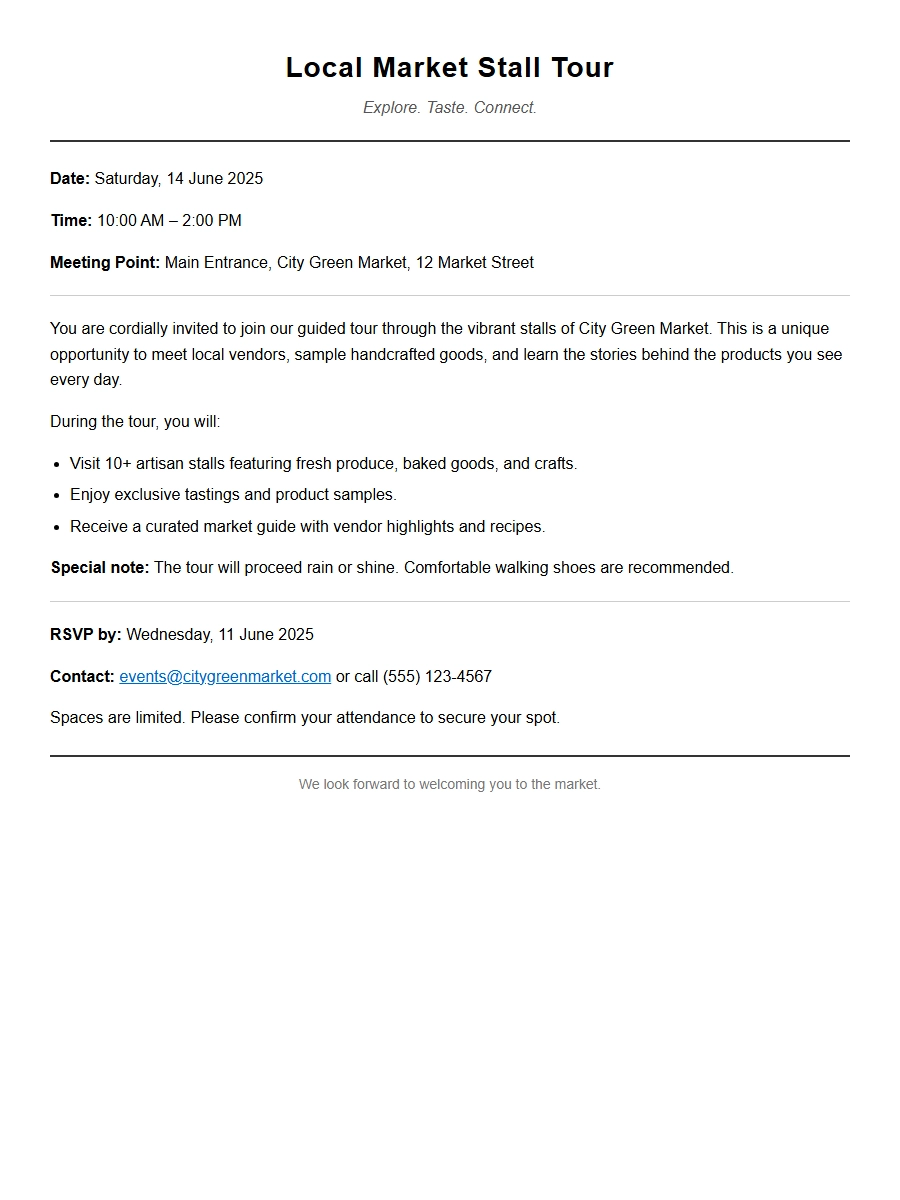 sample invitation for local market stall tour - Invitation Letters
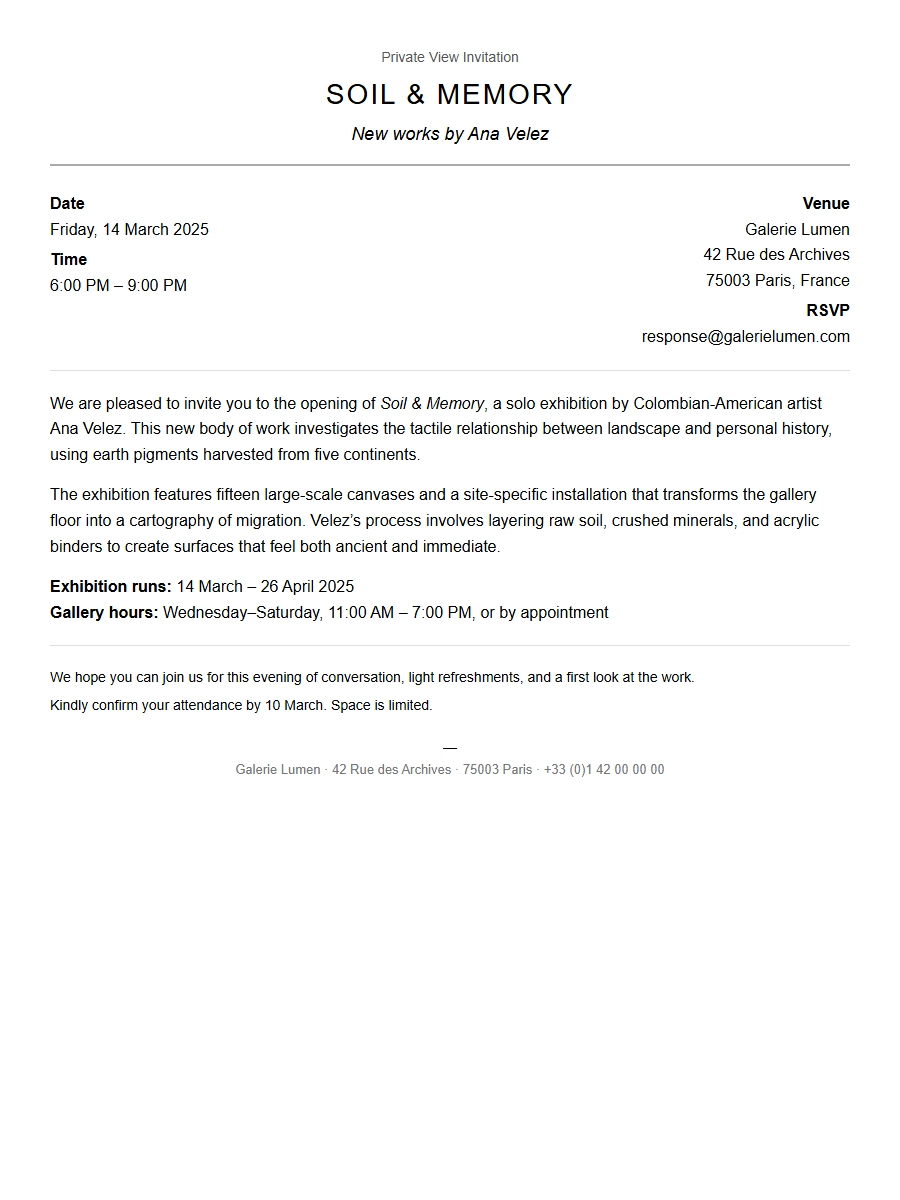 Art Exhibition Opening Invitation Wording Ideas
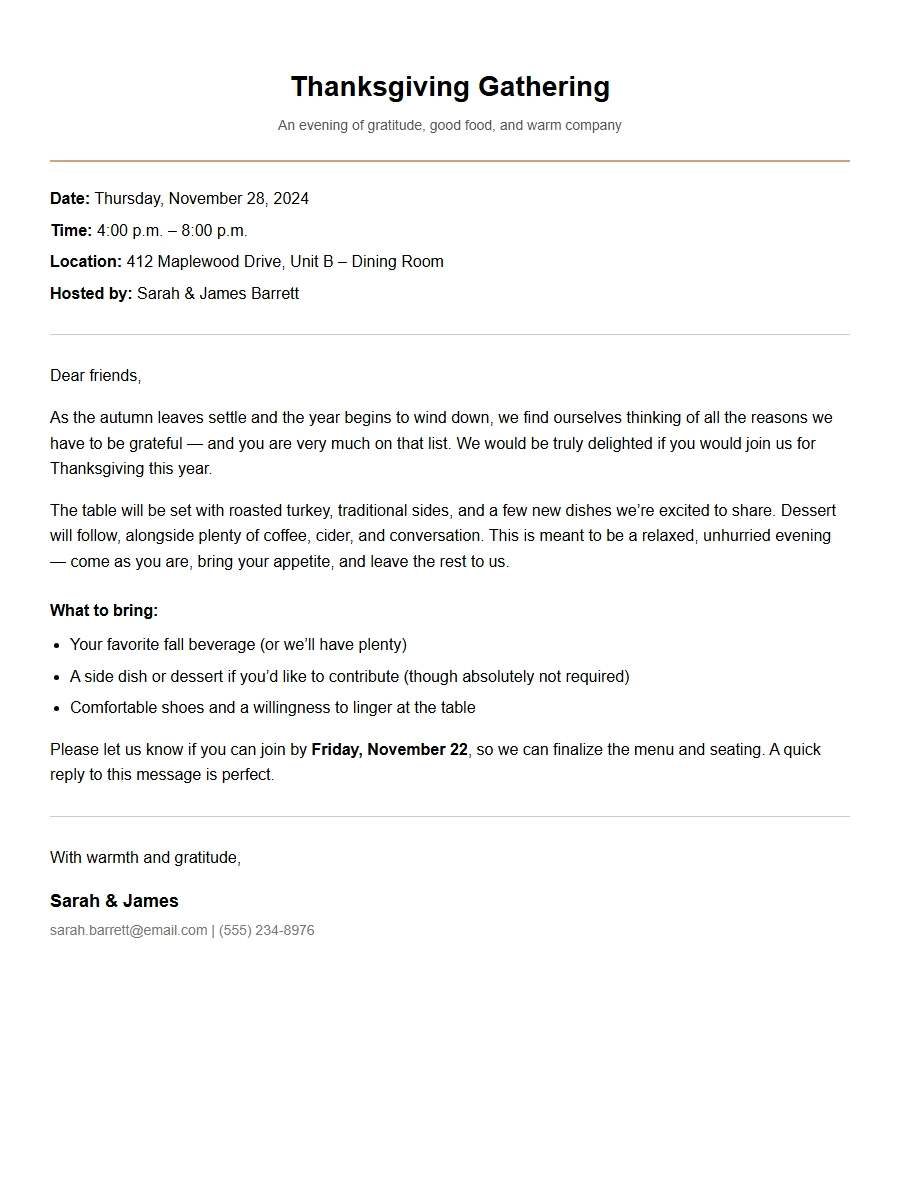 Thanksgiving Meal Gathering Invitation Text
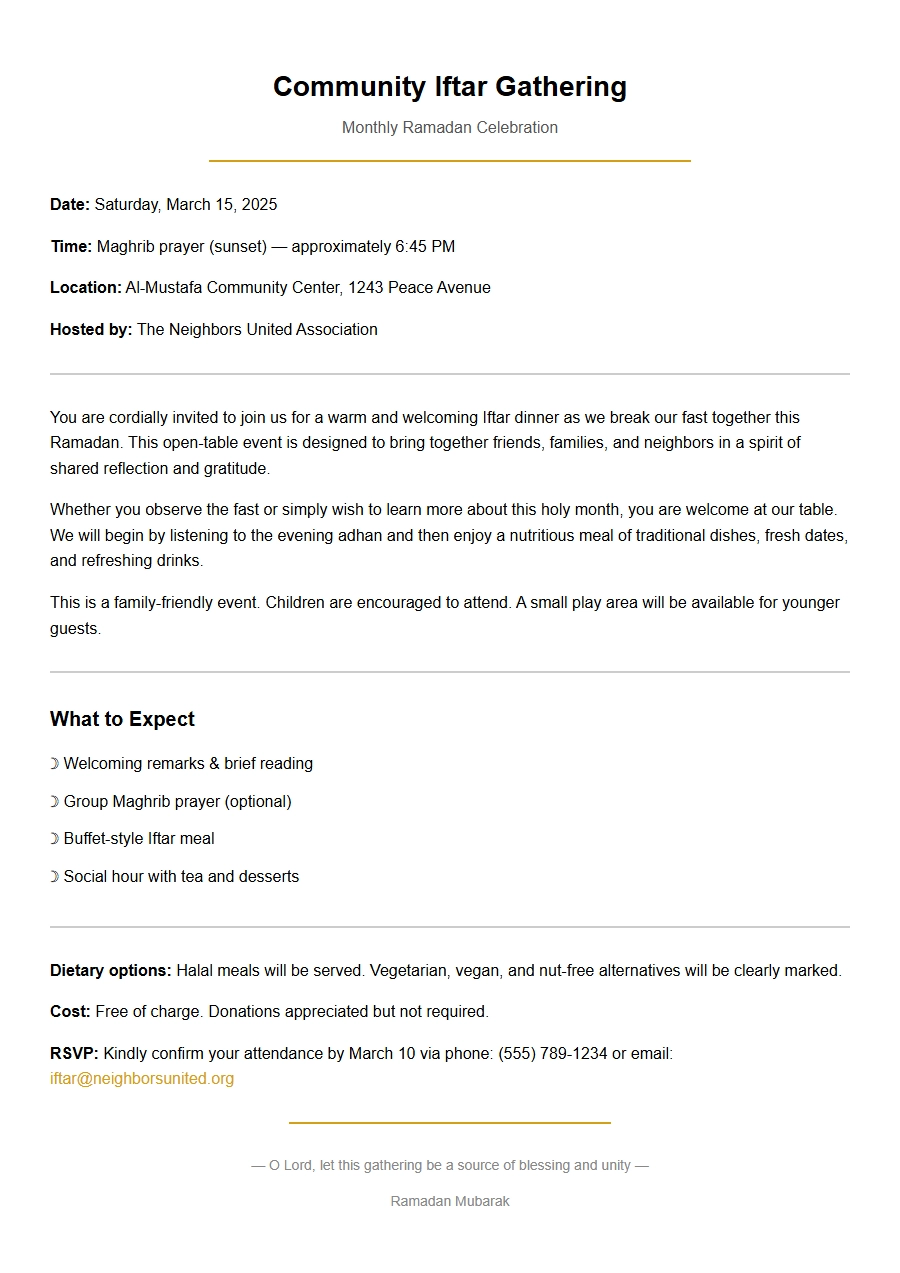 Ramadan Iftar Community Event Invitation
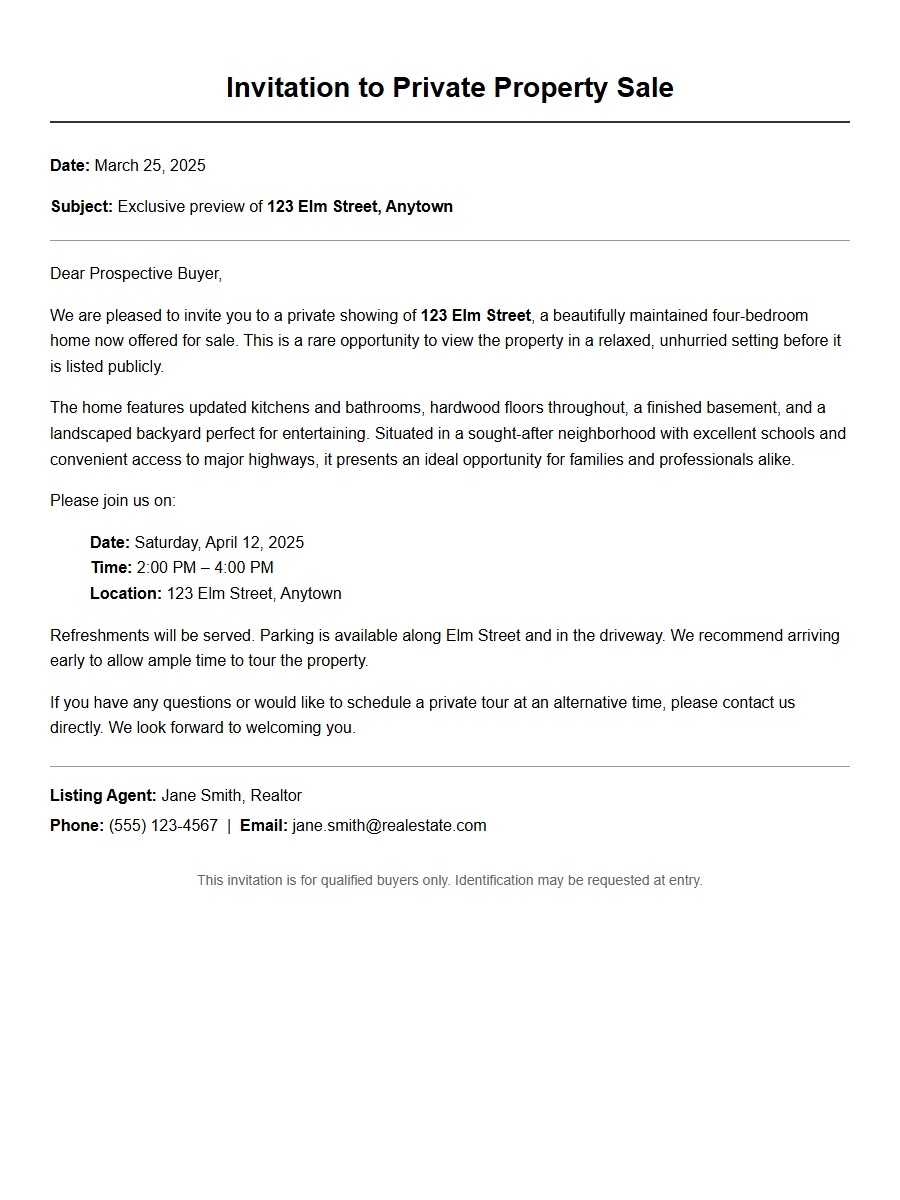 Sample Wording for Property Sale Invitations
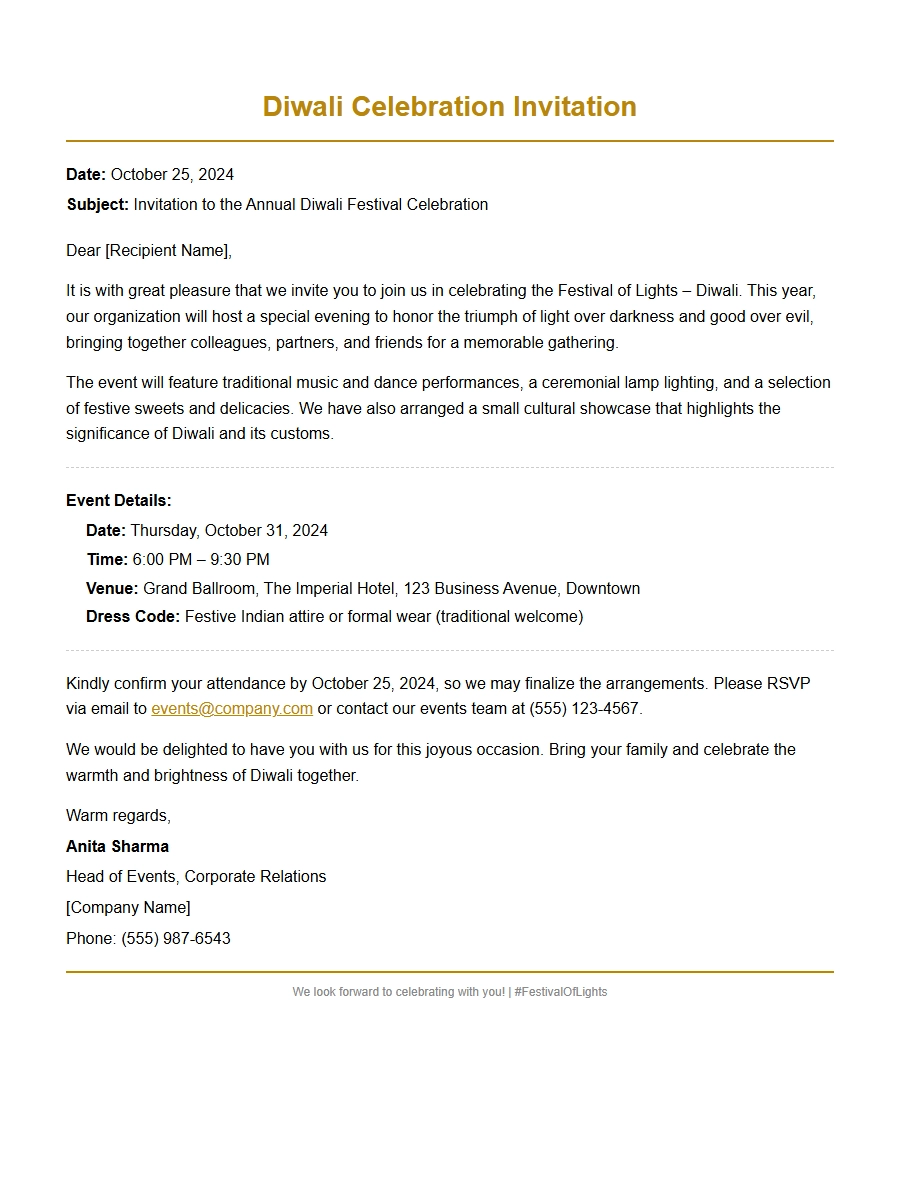 Diwali Festival Celebration Invitation Draft