Resignation Letter Example for Personal Development
You’re sitting there, knowing you need to send a resignation letter, but the cursor just blinks. Maybe you’re leaving for a new skill, a career shift, or a long-planned sabbatical tied to your growth. The frustration is real—you want to leave on good terms, but putting those personal development goals into a formal letter feels awkward. That blank page doesn’t have to be your enemy. A solid letter template can be the jumpstart you need.
Why borrowing a sample isn’t cutting corners
Using a sample resignation letter that cites personal development is not an admission of weakness. It’s a smart strategy. Professional correspondence has conventions you shouldn’t have to reinvent. A good sample shows you the letter structure, the right tone in writing, and key phrases that sound polished. The trick is choosing one that fits your situation and tweaking it until it sounds like you.
Think of a sample as a map, not a script. Your job is to navigate your specific reasons for leaving—whether that’s starting a graduate program, launching a side business, or transitioning into a new industry—without losing your voice.
Category: Resignation Letters
Choosing the right sample for your situation
Not all resignation letters are the same. If you’re in a formal corporate setting, you’ll want a sample that follows strict business letter format with proper salutation and closing. A research scientist or tenured professor, on the other hand, might need a sample for ending a tenured agreement that emphasizes professional growth and academic courtesy.
For someone still in a probation period, the tone shifts. You’ll want a shorter, direct note. This example of giving notice during a probation period shows how to balance gratitude with clarity when you haven’t been in the role long. The key is matching the formality to your workplace culture.
Adapting the sample without sounding fake
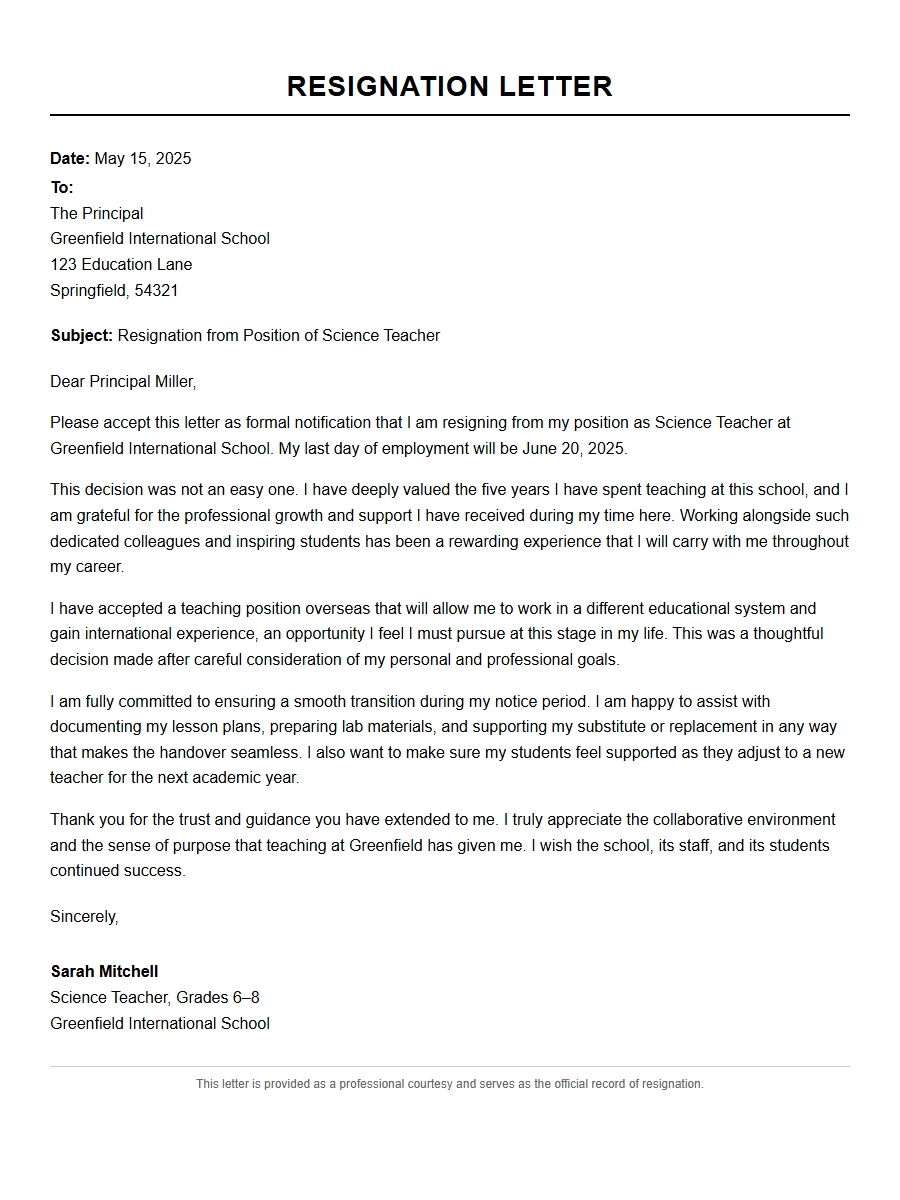
The biggest mistake people make is copying a sample word for word. It reads like a robot wrote it. Instead, read the sample, then rewrite the opening paragraph in your natural voice. If you’re a teacher leaving to pursue further training, don’t just say “I am resigning for personal development.” Say something like, “After much thought, I’ve decided to pursue a master’s degree in curriculum design, and I need to step away from my classroom duties to focus on that work.” It’s specific, honest, and clearly linked to growth.
For a research scientist role, the reason might be more technical. This resignation letter for a research scientist can guide you in explaining a career pivot towards a new specialization without burning bridges with your lab.
Common pitfalls when writing a personal development resignation letter
One big issue is getting the tone in writing wrong. You want to sound grateful, not defensive. Avoid saying things like “I’m leaving because I’ve outgrown this company.” Instead, focus on your own path: “This role has taught me a lot, and now I’m ready for a new challenge that aligns with my long-term goals.”
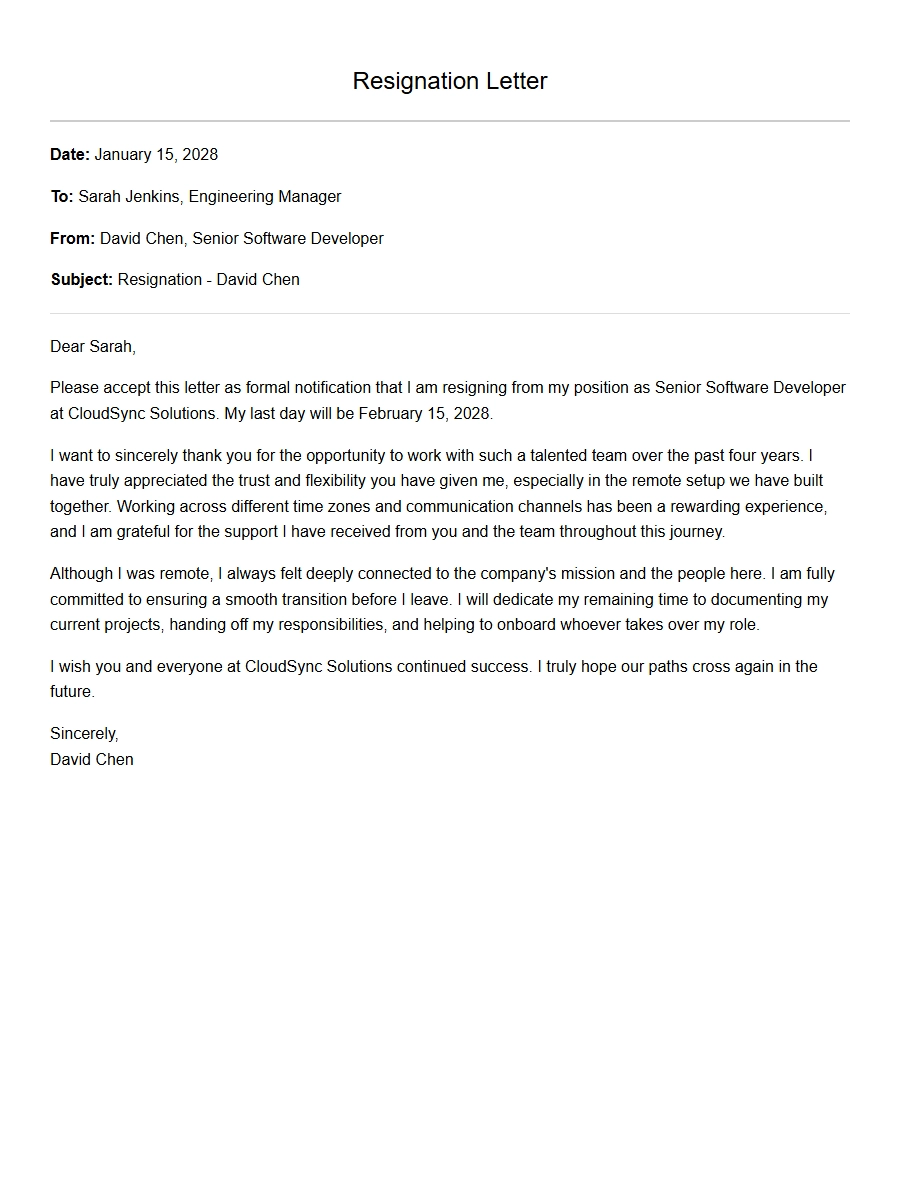
Another mistake is ignoring the format. If you’re sending an email, don’t use a printed letterhead design. Stick to digital letter format with a clean subject line and a simple signature block. This guide on digital format for sending a quit message covers exactly how to handle the email version without looking sloppy.
Also, watch out for outdated salutations. “To Whom It May Concern” feels cold in a resignation letter. Use the hiring manager’s name or “Dear [Name]” instead.
How to tailor the opening paragraph
Your first sentence sets the tone. Instead of a generic “Please accept this letter as my resignation,” try “I’m writing to formally resign from my position as [role], effective [date]. I’ve decided to take a step towards a personal goal I’ve been planning for some time.” This immediately connects your resignation to personal development without over-explaining.
If you’re a teacher leaving a job, you might open with gratitude for your students or colleagues, then pivot to your growth plans. That balance of warmth and professionalism makes the letter feel human.
Proofreading and final touches
Proofreading a letter is non-negotiable. A typo in a resignation letter can undermine the polished impression you’re trying to create. Read it out loud to catch awkward phrasing. Check that your salutation and closing match. If you start with “Dear [Name],” end with “Sincerely” or “Best regards,” not “Yours truly.”
Keep the length short—three to four paragraphs is plenty. Your employer doesn’t need a life story. They need the date, the reason (briefly), and a thank you.
Using the sample as a springboard
The best resignation letter feels professional but personal. It uses a sample for structure but layers in your own story. Start with a template for clarity, then customize it until it sounds like you wrote it over coffee, not copied it from a website. The more you practice this, the faster it gets. Next time you need to write professional correspondence—whether it’s a resignation letter, a letter of recommendation, or even a cover letter examples search—you’ll have the confidence to adapt quickly. That blank page won’t stand a chance.
Samples to Guide You
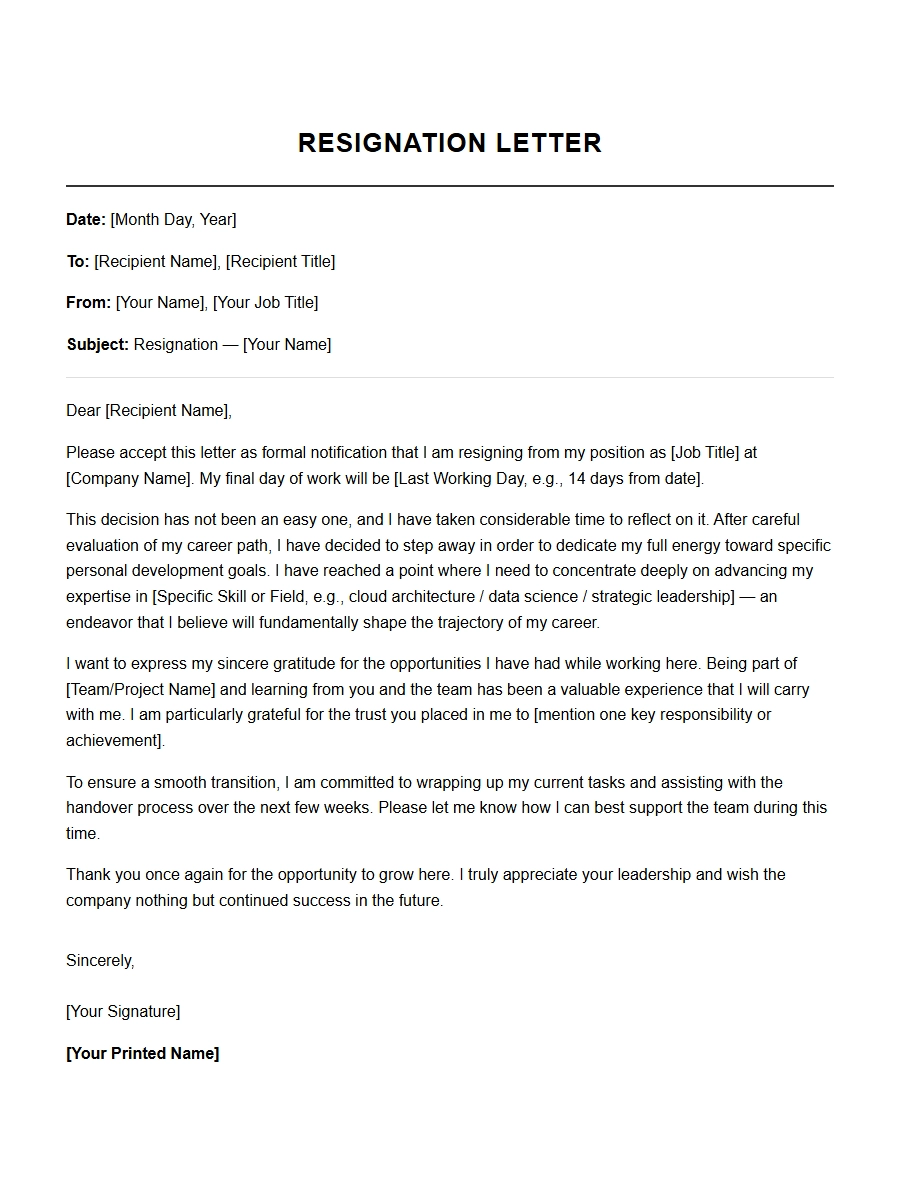
Resignation Letter Example for Personal Development
Pursuing Advanced Degree in Data Science
Dear [Manager's Name],
Please accept this letter as formal notification that I am resigning from my position as Senior Analyst, effective [last working date, typically two weeks from today]. This decision stems from my commitment to personal development goals that align with long-term career growth in data science.
I have been accepted into a full-time Master of Science in Data Science program at [University Name]. To fully immerse myself in this intensive curriculum, I must step away from full-time employment. My key developmental objectives include:
Mastering advanced machine learning algorithms and statistical modeling
Gaining hands-on experience with big data architectures (Spark, Hadoop)
Building a portfolio of predictive analytics projects
The table below outlines my planned transition timeline for ongoing projects:
Project
Current Status
Handover Plan
Customer Churn Model
Feature engineering phase
Complete documentation and train junior analyst by [date]
Sales Forecasting Dashboard
Testing
Transfer ownership to [Colleague Name]
I am grateful for the opportunities here and will ensure a smooth transition. Thank you for supporting my pursuit of this personal development milestone.
Sincerely, [Your Name]
Focusing on Leadership Coaching Certification
Dear [Manager's Name],
I am writing to formally resign from my role as Team Lead, effective [date]. After careful reflection, I have decided to dedicate the next phase of my career to a personal development goal: becoming a certified leadership coach.
This path requires significant investment in coach-specific training (ICF-accredited) and supervised practice hours, which I cannot fully commit to while maintaining my current responsibilities. My development plan includes:
Completing a 12-week intensive coaching certification program.
Logging 100+ hours of pro bono coaching sessions.
Building a coaching practice focused on mid-career professionals.
I have prepared a handover checklist for my current team responsibilities:
Responsibility
Status
Transition Partner
Weekly team stand-ups
Ongoing
[Colleague Name] will take over
Quarterly performance reviews
Completed for Q1
HR will assign
Project Alpha budget tracking
All updated to date
Provide access to finance team
I am proud of what we accomplished together. This personal development goal has been a long-held ambition, and I am excited to take this step.
Best regards, [Your Name]
Transition to Entrepreneurship – Skill Building Phase
Dear [Manager's Name],
Please accept this letter as my resignation from the position of Product Manager, effective [date]. This decision is motivated by my personal development goal of launching my own software startup.
To achieve this, I need to devote full attention to acquiring entrepreneurship skills that cannot be gained while working full-time. My key development areas include:
Learning full-stack web development (React, Node.js, PostgreSQL)
Understanding venture capital fundraising and pitch deck creation
Building an MVP for my business idea within 6 months
Below is a summary of my current project handoff plan:
Project
Key Deliverables
Successor
Mobile App Redesign
Wireframes and user flow docs
[Designer Name]
Vendor Evaluation for Analytics
Comparison matrix (attached)
[Analyst Name] to finalize
I deeply value the mentorship I received here and am committed to a seamless transition. Pursuing this personal development path is a dream I cannot postpone.
Warmly, [Your Name]
Career Change into Environmental Science
Dear [Manager's Name],
I am writing to resign from my position as Marketing Coordinator, effective [date]. After deep introspection, I have decided to pivot my career toward environmental science and sustainability, a personal development goal that requires a complete change of direction.
To prepare for this transition, I will be enrolling in a post-baccalaureate certificate program in environmental management. My development plan includes:
Completing courses in ecology, environmental policy, and GIS mapping.
Volunteering with local conservation organizations for field experience.
Networking with professionals in the green energy sector.
I have summarized the key handover items for my marketing role:
Task
Current Progress
Next Steps
Social Media Calendar May–June
Content drafted for 80%
Final review by [Colleague Name]
Vendor contract renewals
2 of 5 completed
Hand over list to procurement
I am grateful for the skills I gained here in communication and project management, which will serve me well in this new chapter. This personal development goal is the culmination of years of interest in sustainability.
Sincerely, [Your Name]
Seeking Personal Growth through International Volunteering
Dear [Manager's Name],
Please accept this letter as my resignation from the position of Customer Success Associate, effective [date]. I have made the decision to step away to pursue a deeply personal development goal: participating in a 12-month international volunteering program with [Organization Name].
This experience will allow me to develop skills outside the corporate world, including:
Cross-cultural communication and adaptability.
Community-based project management in low-resource settings.
Leadership in non-hierarchical team structures.
My main responsibilities and their transition status are listed below:
Client Account
Key Contacts
Handover Status
Acme Corp
Jane Doe (VP Ops)
Intro email sent to [Colleague]
Beta Inc
Mark Smith (Dir. Support)
Scheduled transition meeting 5/10
I have greatly enjoyed working with our team and clients. This personal development journey has been a lifelong aspiration, and I am thankful for your support.
Best wishes, [Your Name]
Pursuing Mental Health Counseling Credentials
Dear [Manager's Name],
I am writing to formally resign from my role as HR Specialist, effective [date]. This decision is driven by a personal development goal I have nurtured for years: becoming a licensed mental health counselor.
To achieve this, I will be enrolling in a master’s degree program in clinical mental health counseling, which includes a supervised internship requiring 15–20 hours per week. My development roadmap includes:
Completing a 60-credit graduate program over 3 years.
Working under a licensed supervisor during internship.
Obtaining state licensure upon graduation.
Below is a table summarizing my pending HR tasks and their status:
Task
Deadline
Proposed Handover
Benefits Open Enrollment Summary
May 15
[Colleague Name] will finalize
Employee Training Calendar Q3
Needs scheduling
Hand over to L&D team
I appreciate the understanding and encouragement I have received. This personal development goal is the most meaningful step I can take for my own growth and future contribution to others’ wellbeing.
Sincerely, [Your Name]
Dedicating Time to Creative Writing & Publishing
Dear [Manager's Name],
Please accept this letter as my resignation from the position of Content Strategist, effective [date]. After much thought, I have decided to pursue a long-standing personal development goal: completing and publishing a novel.
This creative endeavor requires sustained focus and time that my current role does not allow. My personal development objectives are:
Completing a first draft of 80,000 words within six months.
Enrolling in a creative writing workshop to refine craft.
Querying literary agents and exploring publishing options.
I have outlined key project handovers to ensure continuity:
Project / Asset
Current Owner
Handover Action
Blog editorial calendar June
Me
Hand over to [Freelance Writer]
Brand voice guidelines v3
In draft
Complete and share with design team
I am grateful for the writing skills I developed here in corporate storytelling opinions. This personal development goal is the next logical step in my journey as a writer.
With appreciation, [Your Name]
Relocating for Cross-Cultural Immersion and Language Learning
Dear [Manager's Name],
I am writing to resign from my position as International Sales Representative, effective [date]. This decision stems from a personal development goal to achieve fluency in Mandarin Chinese through full-immersion living and study in Taiwan.
My development plan for the next 18 months includes:
Enrolling in an intensive language program (20 hours/week).
Interning with a local tech company to practice business Mandarin.
Developing cross-cultural competencies for future global roles.
I have prepared a handover report for accounts I manage:
Region
Key Accounts
Transition Lead
China
Xiamen Electronics, ShanghaiTech
[Colleague A] will shadow
Taiwan
Formosa Tech, Taoyuan Auto
[Colleague B] with local agent support
I have valued the global exposure this role provided. This personal development goal will equip me with language skills and perspectives that I expect to bring back to my future career.
Thank you, [Your Name]
Pivoting to Public Health Research Fellowship
Dear [Manager's Name],
Please accept this letter as formal resignation from my role as Data Analyst, effective [date]. I have been awarded a competitive public health research fellowship, which aligns perfectly with my personal development goal to apply data skills to social impact.
The fellowship will allow me to:
Conduct community-based participatory research on health disparities.
Learn epidemiological methods and biostatistics.
Publish findings in peer-reviewed journals.
My current projects and transition plans are:
Project
Deliverable Status
Knowledge Transfer
Patient readmission analysis
Model built, validation pending
Present findings and code to team 5/12
Claims data quality dashboard
Mockup complete
Hand over requirements to BI team
I deeply respect our mission in healthcare analytics. This personal development goal has been forming since I volunteered at a free clinic. I am excited to merge data analysis with public health.
Warm regards, [Your Name]
Self-Directed Learning: Digital Nomad Program
Dear [Manager's Name],
I am writing to resign from my position as Senior Software Engineer, effective [date]. This decision is motivated by a personal development goal of becoming a highly skilled full-stack developer through a structured self-directed learning plan while traveling as a digital nomad.
My development plan includes:
Completing advanced courses in distributed systems and cloud architecture.
Contributing to open-source projects to build public portfolio.
Building a SaaS product from scratch to apply all skills.
I will ensure a smooth handover of code and documentation:
Repository
Documentation Status
Point Person
Payment API
Complete
[Dev 1] can handle
Notification microservice
Readme updated, unit tests 90%
[Dev 2] familiar with code
I have appreciated the mentorship and technical challenges here. This personal development goal will allow me to become a more autonomous and versatile engineer.
 Polite Resignation Email for Remote Employees
 Short Resignation Letter for Contractor Position
 Teacher Resignation Letter Example
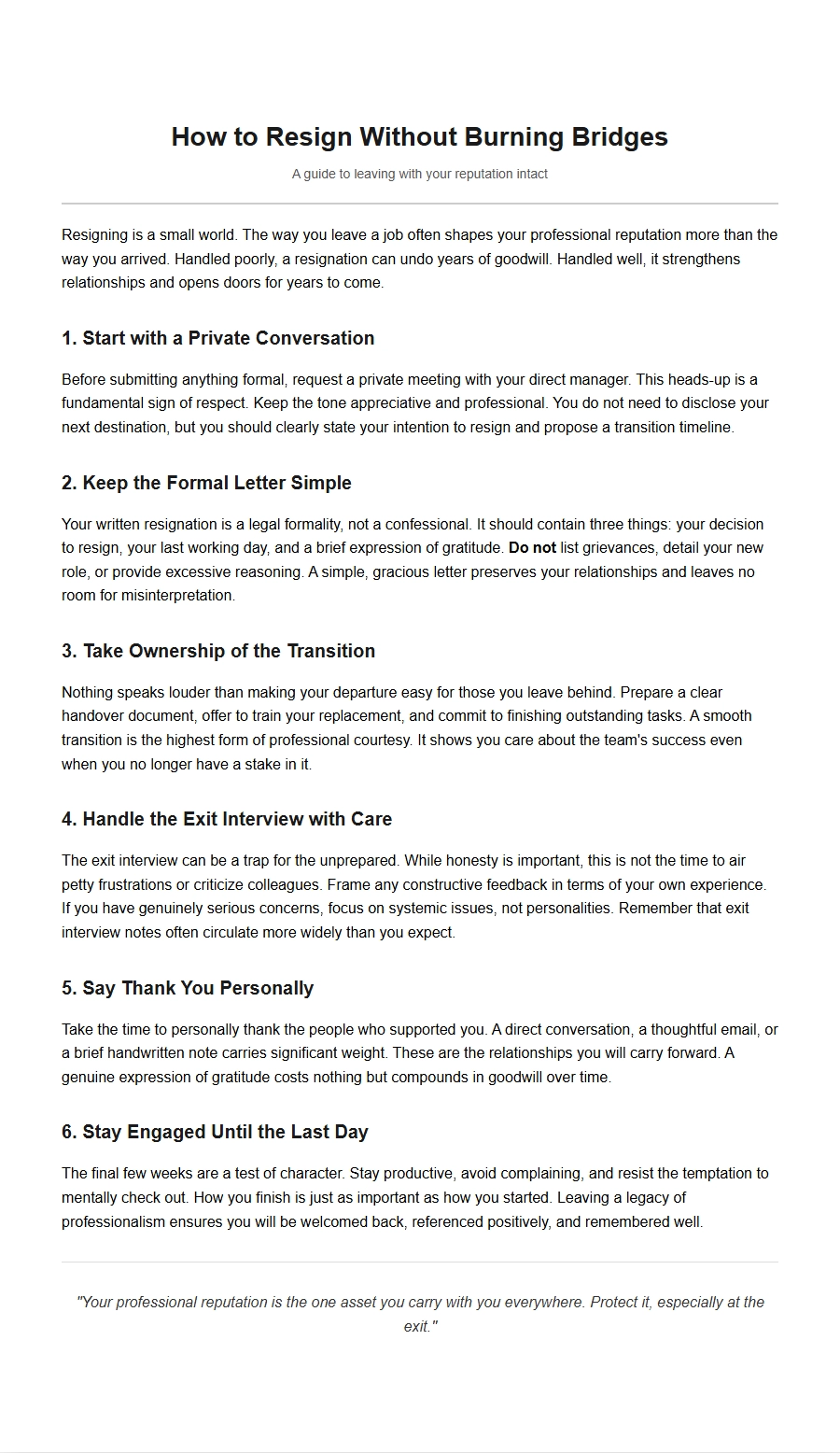 How to Resign Without Burning Bridges
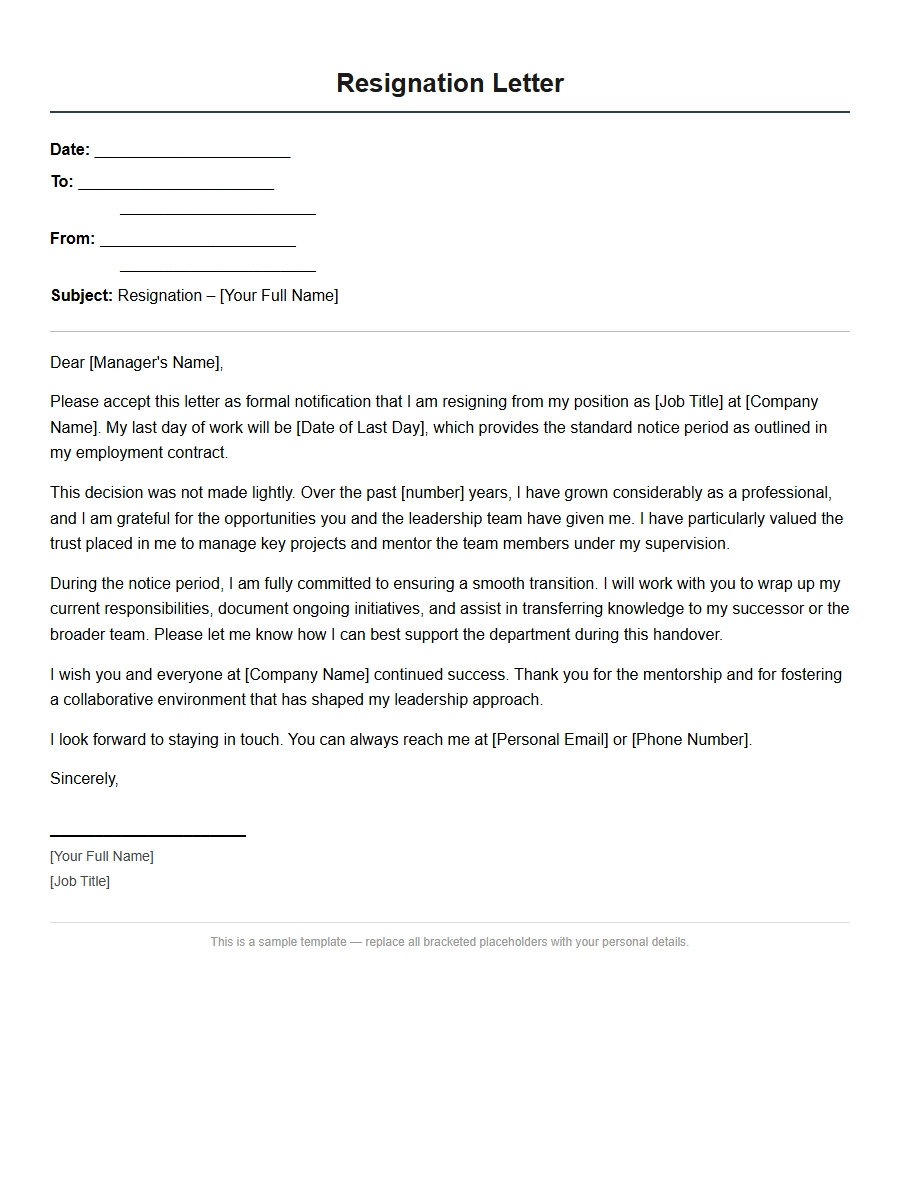 Formal Resignation Letter Sample for Manager
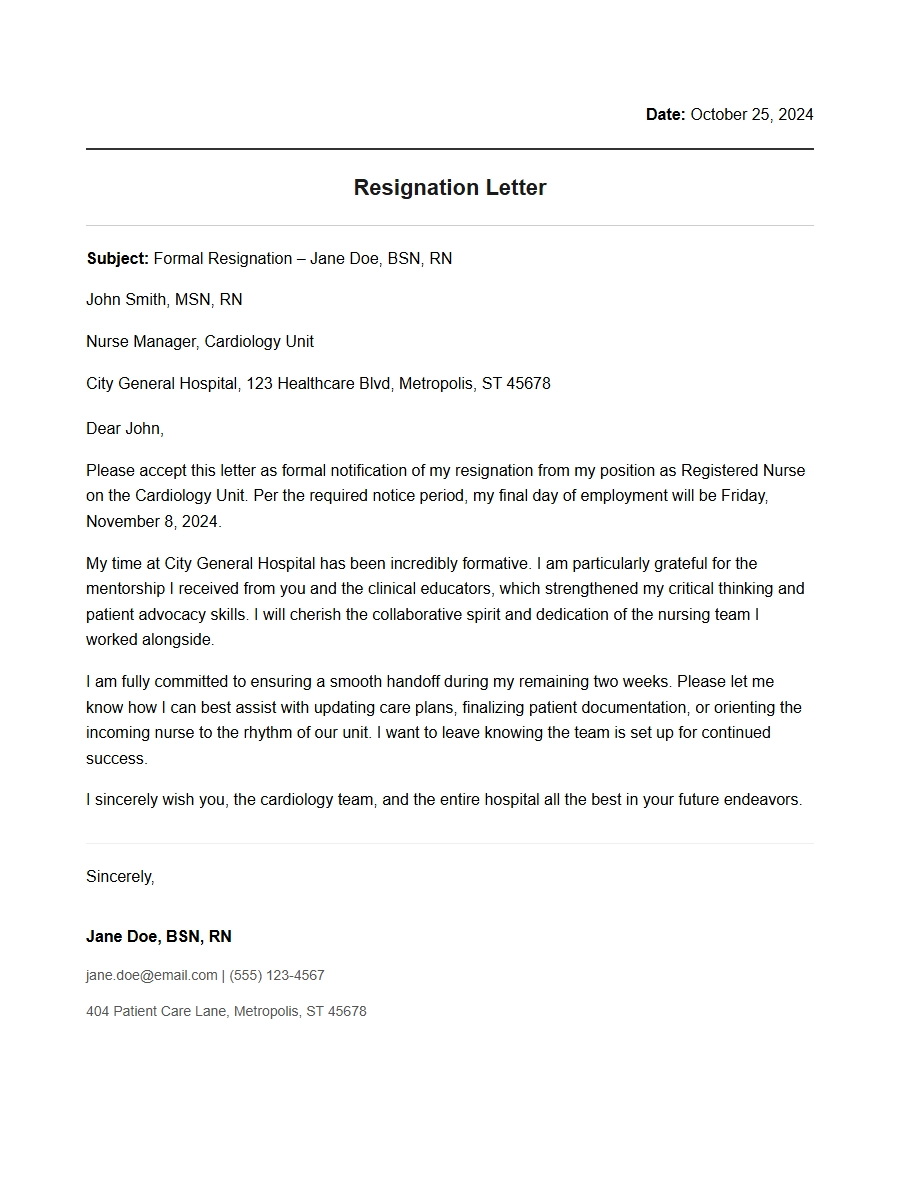 Nurse Resignation Letter with 2 Weeks Notice