Request for Medical Records from Previous Provider
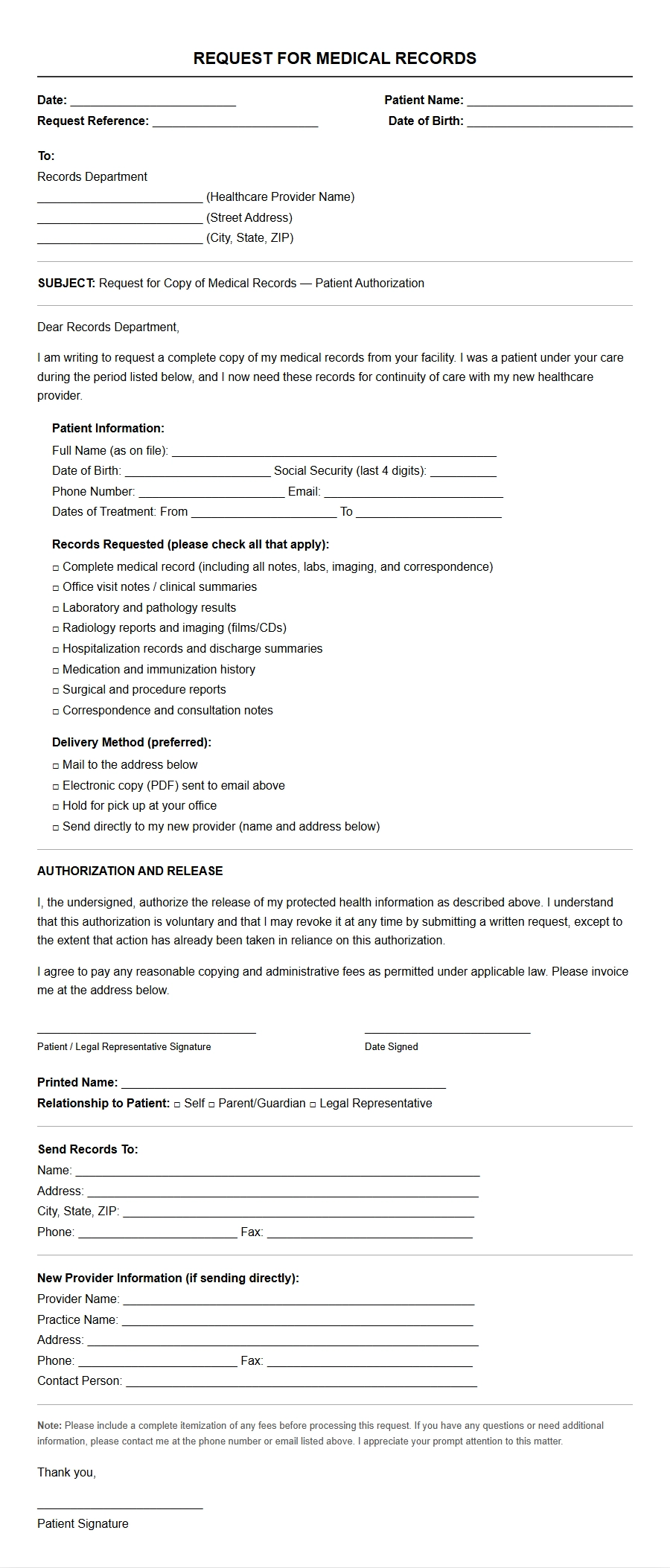
You’ve just switched doctors, and the new office needs your complete medical history. But getting those records from your previous healthcare provider feels like pulling teeth. You stare at a blank page, unsure how to ask—or even where to start. That anxiety is perfectly normal. The good news is that a solid letter sample can turn your frustration into a clean, professional request in minutes.
Using a sample isn’t cheating—it’s a smart shortcut. A well-built letter template gives you structure, the right tone, and key phrases you might forget when you’re stressed. It leaves room for personalization, so your request still sounds like you. Think of it as the skeleton you fill with your own details. That approach works whether you’re drafting professional correspondence for a job change or a sensitive request for healthcare records.
Category: Medical Records Request Letter
How to pick the right sample for your situation
Not all samples are created equal. For a healthcare records request, you want a formal but not stiff format. Look for samples that include the basics: your contact info, the provider’s address, a clear subject line like “Request for Copy of Medical Records,” and a polite request with the specific dates or types of records you need. Avoid samples that sound like legal threats or are too casual. The goal is a balanced business letter format that shows respect while being direct.
If you’re sending this by email, you might need a slightly shorter digital letter format—still professional, but without formal letterhead. For a printed letter, a simple letterhead design with your name and address at the top works fine. The key is consistency: your request should look intentional, not slapped together.
Adapting the sample without losing your voice
Once you have a good sample, customize it. Change the opening to sound like you. Instead of “Please be advised,” try “I’m writing to request copies of my medical records from [dates].” That small shift keeps your tone in writing friendly but still professional. Don’t copy a sample word for word—read it aloud and tweak any phrase that feels off.
Common mistake to avoid: using outdated salutations like “To whom it may concern.” In most cases, you can call the provider’s office and ask for the records department’s name. Use that person’s name in the salutation and closing. A specific “Dear Ms. Johnson” is far better than a generic greeting.
Tailoring the opening paragraph to grab attention
The first few sentences set the tone. Be clear and direct: state what you want, why, and any deadlines. For example: “I recently transferred my care to Dr. Smith at ABC Clinic. I need a complete copy of my records from January 2020 through June 2023 to ensure continuity of care. Please send them within two weeks if possible.” That’s respectful and concrete. Avoid vague language like “I was hoping you could help me get my records.”
Formatting and proofreading matter more than you think
A healthcare provider may handle dozens of record requests daily. If your letter is sloppy or missing information, it might get delayed. Use a standard letter structure: your address, date, recipient’s address, salutation, body, closing, and signature. Keep paragraphs short—two to four sentences each. Proofread for typos and readability. One misspelling of your own name could slow things down. Proofreading letter content is especially important for dates and patient ID numbers.
Don’t forget to include a release form if required. Many providers ask for a signed authorization. Check their website or call ahead. Attaching the form with your letter shows you’ve done your homework.
Mistakes that can trip you up
Using an overly casual tone: “Hey, can you send my records?” is too informal for professional correspondence—even in email.
Forgetting to specify format: indicate whether you want paper copies, digital files, or both. Also note if you need them mailed or emailed.
Skipping the date range: “all my records” is vague. List a specific timeframe or type (lab results, imaging, visit summaries).
Ignoring letter writing etiquette for email: use a clear subject line, avoid emojis, and include your signature block.
The best letters feel both professional and personal. Use your sample as a starting point, not a final draft. Change words until they sound like you. Add a sentence that shows you understand the provider’s process. And remember: the more you practice writing these requests, the faster and easier it becomes. Next time you need to request records, you’ll have your own proven template ready. That confidence is worth the few minutes you invest now.
If you’re also drafting a thank-you note for support during your care transition, our thanking someone for their support sample can help you keep that same clear, warm tone. No matter the letter, the principles are the same: be clear, be polite, and be yourself.
Samples for Inspiration
Request for Medical Records from Previous Provider
Standard Medical Records Request
To: Dr. Emily Carter, Internal Medicine Associates, 123 Main St., Springfield, IL 62701
From: Jane Doe, DOB 04/15/1980, 456 Oak Ave., Springfield, IL 62704
I am writing to request copies of my complete medical records from your office for the period of January 1, 2018 through December 31, 2023. I need these records to establish care with a new provider.
Please include the following documents:
Visit summaries and progress notes
Lab and diagnostic test results
Medication lists and prescription history
Immunization records
All correspondence with specialists
I authorize you to release these records to me directly. Please send them by mail to the address above or electronically to jane.doe@email.com. I understand a reasonable fee may apply; please inform me before processing if there is a charge. Thank you for your prompt attention to this request.
Urgent Request for Test Results
Date: March 20, 2025
To: Dr. Robert Liu, Gastroenterology Clinic, 789 Pine Road, Denver, CO 80202
From: Michael Torres, DOB 08/22/1975, 321 Birch St., Denver, CO 80210
I am writing to urgently request copies of my recent lab work and imaging reports from the colonoscopy performed on March 10, 2025. I have been scheduled for a follow‑up with a new specialist next week and they require these results for my consultation.
The specific items needed:
Complete blood count (CBC) and comprehensive metabolic panel (CMP) from March 8, 2025
Colonoscopy procedure report and pathology results
CT scan of abdomen and pelvis (March 5, 2025) – report and images on CD
Please send these documents via secure electronic fax to Dr. Sarah Patel’s office at 303-555-0123 or upload them to the health information exchange requested by my new provider. I authorize release of these records immediately. If your office requires a written authorization form, please call me at 720-555-4567. This is time‑sensitive; I appreciate your cooperation.
Request for Immunization Records (School Requirement)
To: Dr. Alicia Green, Maple Pediatric Clinic, 555 Child Lane, Austin, TX 78701
From: Karen Williams (parent of Sam Williams, DOB 06/10/2012), 100 School Rd., Austin, TX 78704
I am writing to request a complete copy of my son Sam’s immunization records from your clinic. Sam previously received all his vaccinations at your office between 2012 and 2020. We need this document to meet the enrollment requirements for Austin Independent School District.
Please include the following details on the immunization record:
Full name and date of birth
Vaccine type, date given, lot number (if available)
Provider’s signature and clinic stamp
If possible, please use the state‑mandated Texas DSHS Immunization Record Form. You may mail the completed form to the address above. I authorize the release of these records. Thank you for your prompt assistance. If there is a processing fee, please let me know beforehand.
Request for Mental Health Records (Confidentiality Notice)
To: Dr. Susan Hart, Licensed Clinical Psychologist, 200 Wellness Blvd., Suite 3, Portland, OR 97201
From: James Baker, DOB 11/30/1985, 450 Rose Ave., Portland, OR 97202
I am writing to request a copy of my mental health treatment records from your practice covering the period of January 2021 through December 2023. I am transitioning care to a new therapist and need these records for continuity of treatment.
Please include the following:
Intake and diagnostic evaluation reports
Progress notes (excluding personal process notes)
Medication management records (if applicable)
Copies of any assessments or testing results
I understand that mental health records may be subject to special confidentiality protections under HIPAA and Oregon law. I authorize you to release these records directly to me at the mailing address above. Please do not include any third‑party billing or insurance correspondence. I request that you send the records within 30 days. If a fee is required, please notify me in writing before processing.
Request for Dental Records
To: Dr. Peter Nguyen, DDS, Smile Dental Care, 789 Maple St., Seattle, WA 98101
From: Laura Mitchell, DOB 02/14/1988, 1234 Pine St., Apt 5, Seattle, WA 98103
I am writing to request a copy of my dental records from your office. I have been a patient at Smile Dental Care from 2019 to 2023 and recently relocated. My new dentist, Dr. Kevin Zhao, requires my full dental history to continue my care.
Please provide:
Full series of X‑rays (panoramic and bitewings) taken in 2022 and 2023
Periodontal charting and treatment plan notes
Records of any restorative work (fillings, crowns, bridges)
Treatment records for root canal and crown on tooth #19 (2021)
You may send the records electronically to drzhao@email.com or by mail to the address above. I have attached a signed HIPAA release form. Please let me know if there are any fees for copying or mailing. Thank you for your help.
Request for Surgical Records (Second Opinion)
To: Dr. Karen O’Neil, Orthopedic Surgery, 500 Medical Center Dr., Chicago, IL 60611
From: David Lee, DOB 09/12/1978, 88 Lake Shore Dr., Chicago, IL 60614
I am writing to request copies of my surgical records related to the left knee arthroscopy performed on November 15, 2023 at Mercy Hospital. I am seeking a second opinion and the consulting surgeon needs these documents.
Please include the following:
Operative report
Anesthesia record
Pre‑operative and post‑operative notes
Discharge summary
Any imaging (MRI, X‑rays) and radiologist reports
If you are not the direct holder of these records, please advise where I should direct my request. Otherwise, I authorize you to release the records to me by mail or secure electronic transmission to Dr. Angela Chu’s office at 312-555-7890. Please expedite this request; my second opinion is scheduled for March 28, 2025. Thank you.
Request for Imaging Reports and CDs
To: Dr. Mark Patel, Radiology Department, City Imaging Center, 2000 Hospital Lane, San Diego, CA 92101
From: Jessica Brown, DOB 03/28/1992, 77 Harbor Blvd., San Diego, CA 92109
I am writing to request copies of my imaging studies and reports performed at your facility. Specifically:
Exam Type
Date
Patient ID
MRI lumbar spine without contrast
Jan 10, 2025
JB‑1992‑03
X‑ray lumbar spine 2 views
Jan 10, 2025
JB‑1992‑03
CT abdomen/pelvis with contrast
Dec 20, 2024
JB‑1992‑03
Please provide the radiology reports in paper form and the actual images on a CD (DICOM format). I need these for a consultation with a new neurosurgeon. I authorize release to myself only. You may send the CD and reports to my home address above. If there is a fee for the CD, please contact me before processing. Thank you for your prompt service.
Request for Complete Chart (Disability Claim)
To: Dr. Alan Foster, Family Practice, 123 Wellness Way, Nashville, TN 37201
From: Rebecca Hill, DOB 07/19/1982, 456 Country Lane, Nashville, TN 37205
I am in the process of applying for long‑term disability benefits and my insurer, Liberty Mutual, requires a complete copy of my medical chart from your office for the period of January 1, 2020 through present. Please send the entire chart, including but not limited to:
All progress notes and office visit summaries
Laboratory and diagnostic test results
Imaging reports
Medication list and prescription history
Referral and consultation notes
Any disability or work‑restriction forms completed by your office
I have enclosed a signed medical release form authorizing you to release these records directly to me. Please mail the copies to my address. I also request that you provide a summary of my diagnoses and treatment plan. If any records are not in your possession, please note that. I understand a reasonable copying fee may apply; please bill me. I appreciate your cooperation in this matter.
Request for Prescription History
To: Dr. James Tanaka, Internal Medicine, 7890 Health Ave., Los Angeles, CA 90036
From: Sarah Chen, DOB 12/05/1990, 321 Sunset Blvd., Los Angeles, CA 90028
I am writing to request a detailed printout of my prescription medication history from January 2020 through February 2025. I have started seeing a new primary care physician and she needs a complete list of all medications prescribed, dosages, start/stop dates, and reasons for changes.
Please include:
All current and past medications (brand/generic, strength, frequency)
Dates prescriptions were written and refilled
Any medication allergies or adverse reactions noted in my chart
I also request that you include any notes regarding prior authorizations or step therapy requirements. You can fax the report to my new doctor’s office at 323-555-9876 or email a secured copy to me. I authorize the release of this information. If there is a fee, please let me know. Thank you.
Request for Records from Closed Clinic
To: Regional Health Records Manager, ABC Health System, 1 Medical Plaza, Suite 500, Toledo, OH 43604
From: William Harris, DOB 01/30/1965, 2000 Maplewood Dr., Toledo, OH 43615
I am trying to obtain my medical records from the former Oakwood Family Clinic, which closed in 2022. I understand that ABC Health System now maintains the archived records. I was a patient at Oakwood from 2010 to 2021 and need my complete chart for a new specialist appointment.
Please search for records under my name and date of birth. If you have them, please provide:
All visit notes and lab results (2010–2021)
Medication lists and immunizations
Any surgical or hospital records (including a 2017 hernia repair referral)
I have attached a signed authorization form, a copy of my photo ID, and a notarized statement of identity. Please mail the records to my home address. If records are stored off‑site, please advise the expected time to retrieve them. I appreciate your help in this matter; I have had difficulty locating my records.
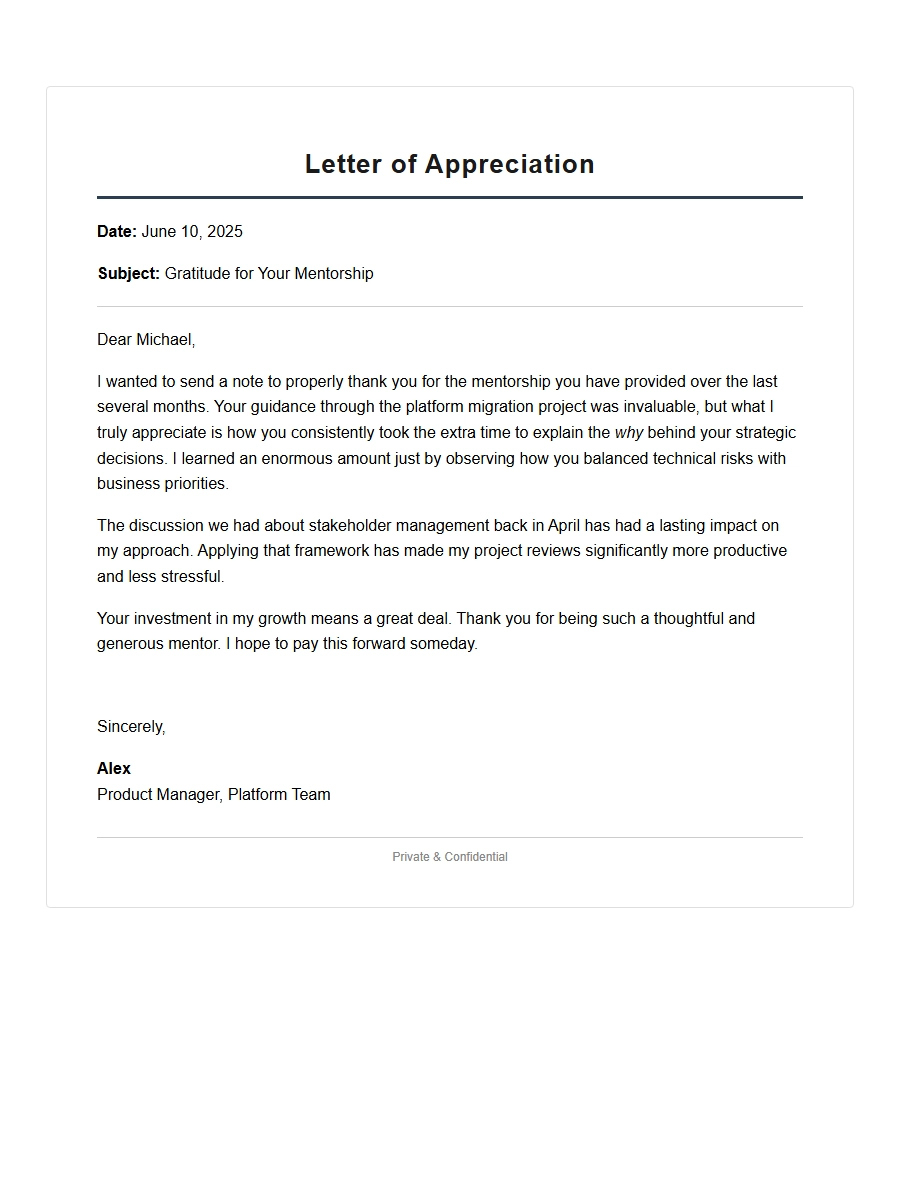 Thanking a Mentor for Guidance: Sample Messages
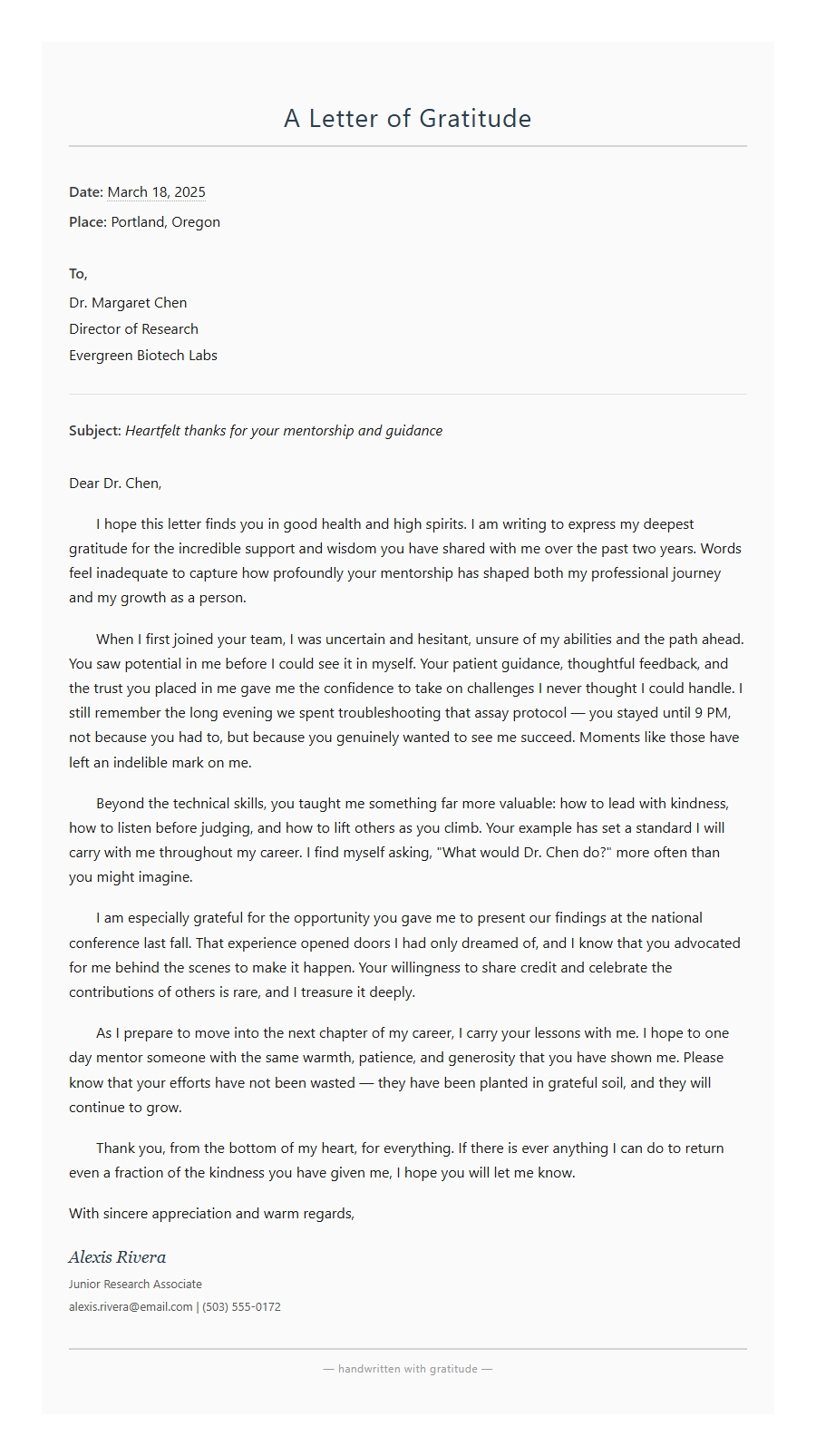 Expressing Gratitude: Handwritten Letter Example
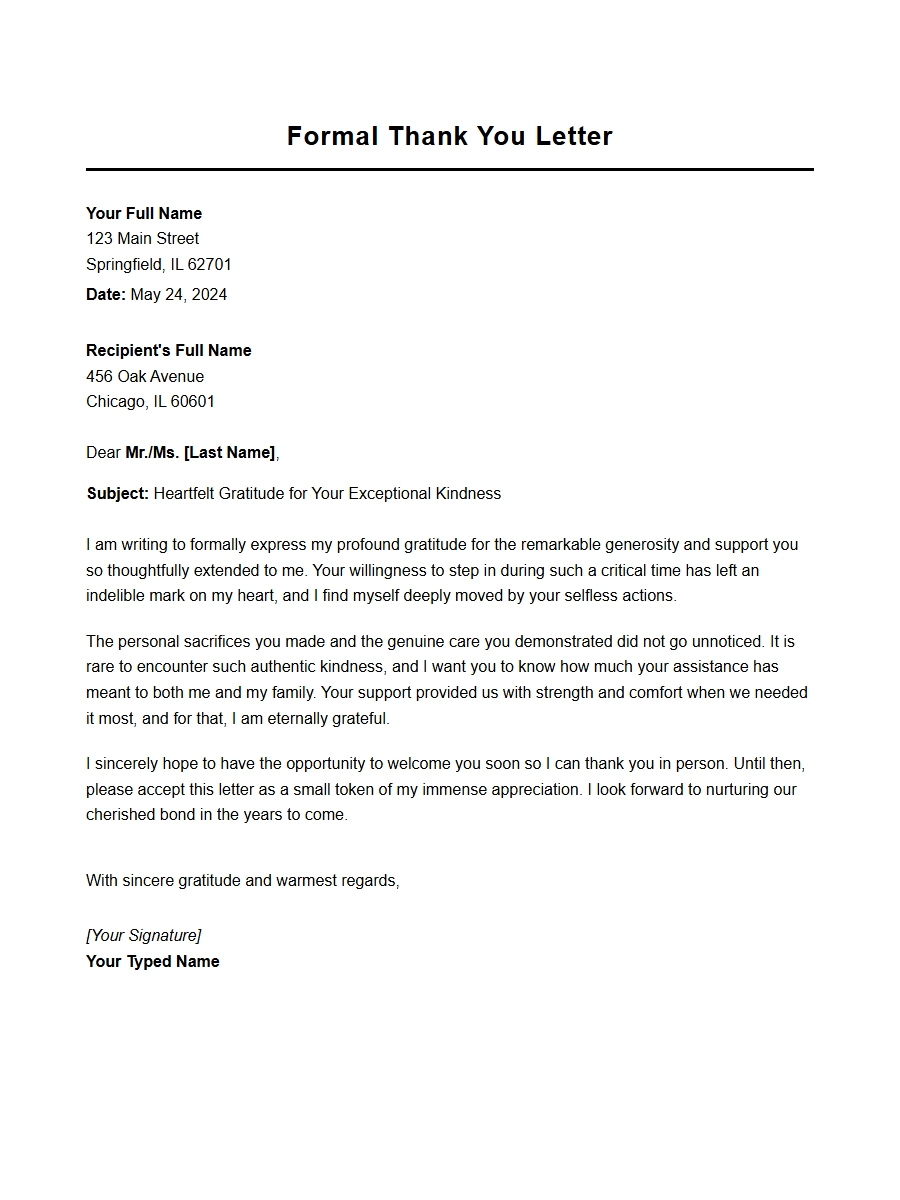 Expressing Thanks in a Formal Personal Letter
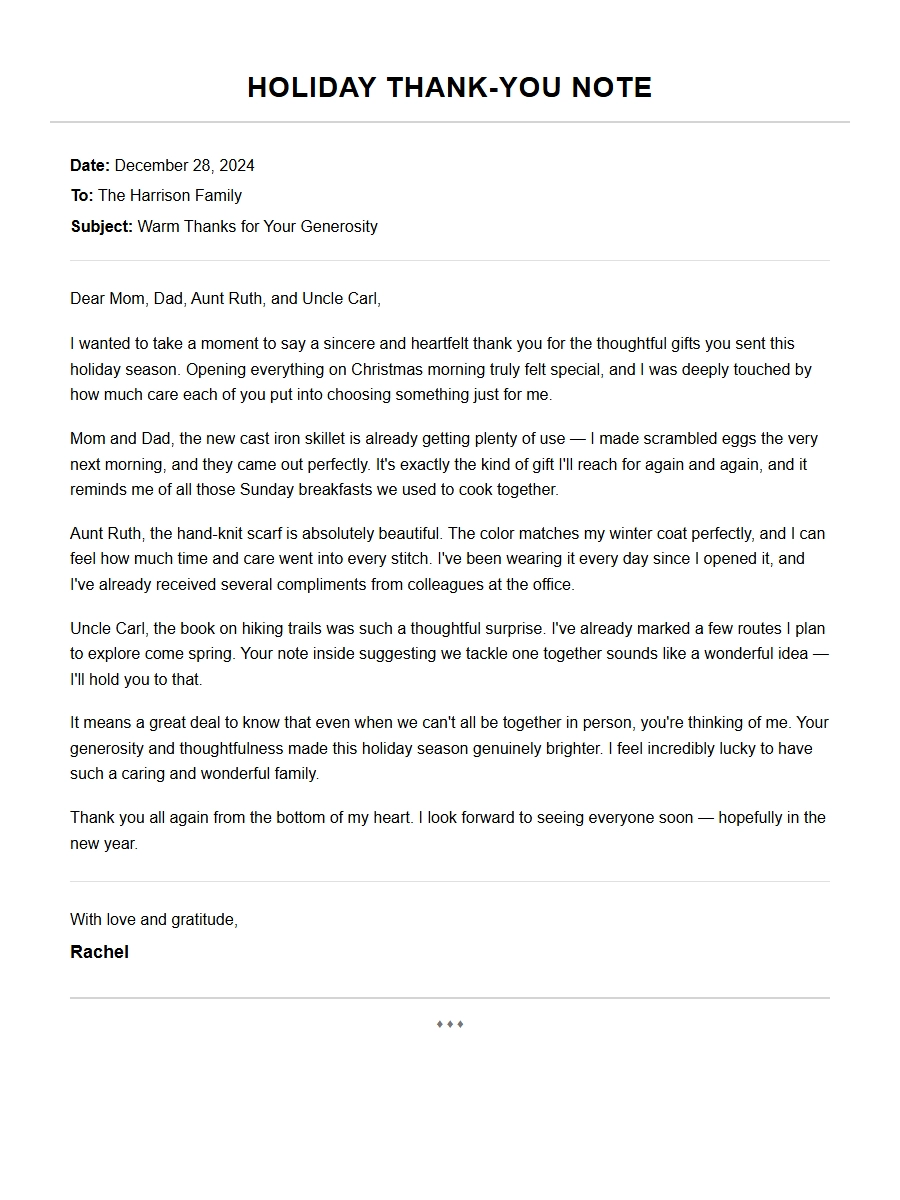 Thank You Letter Examples for Family Holiday Gifts
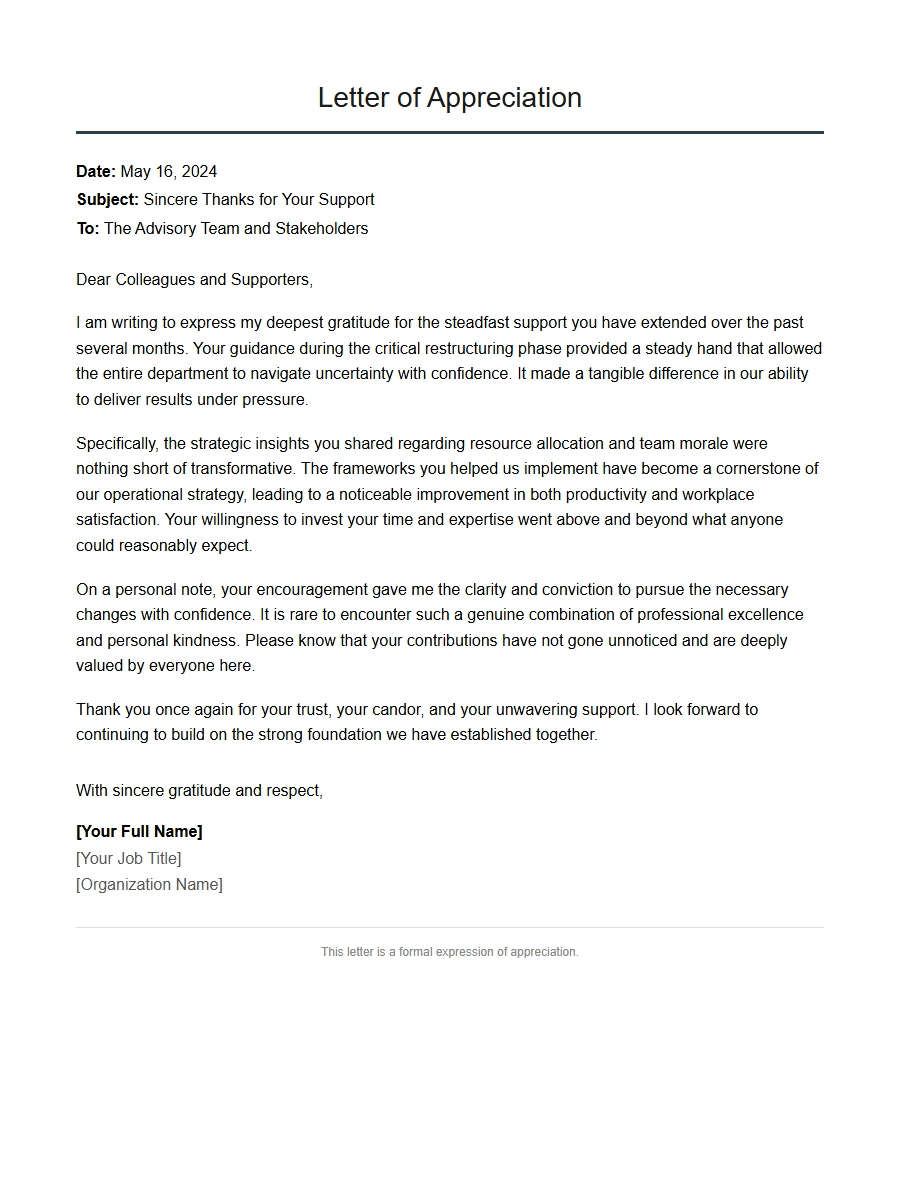 Sample Thank You Letter for Support
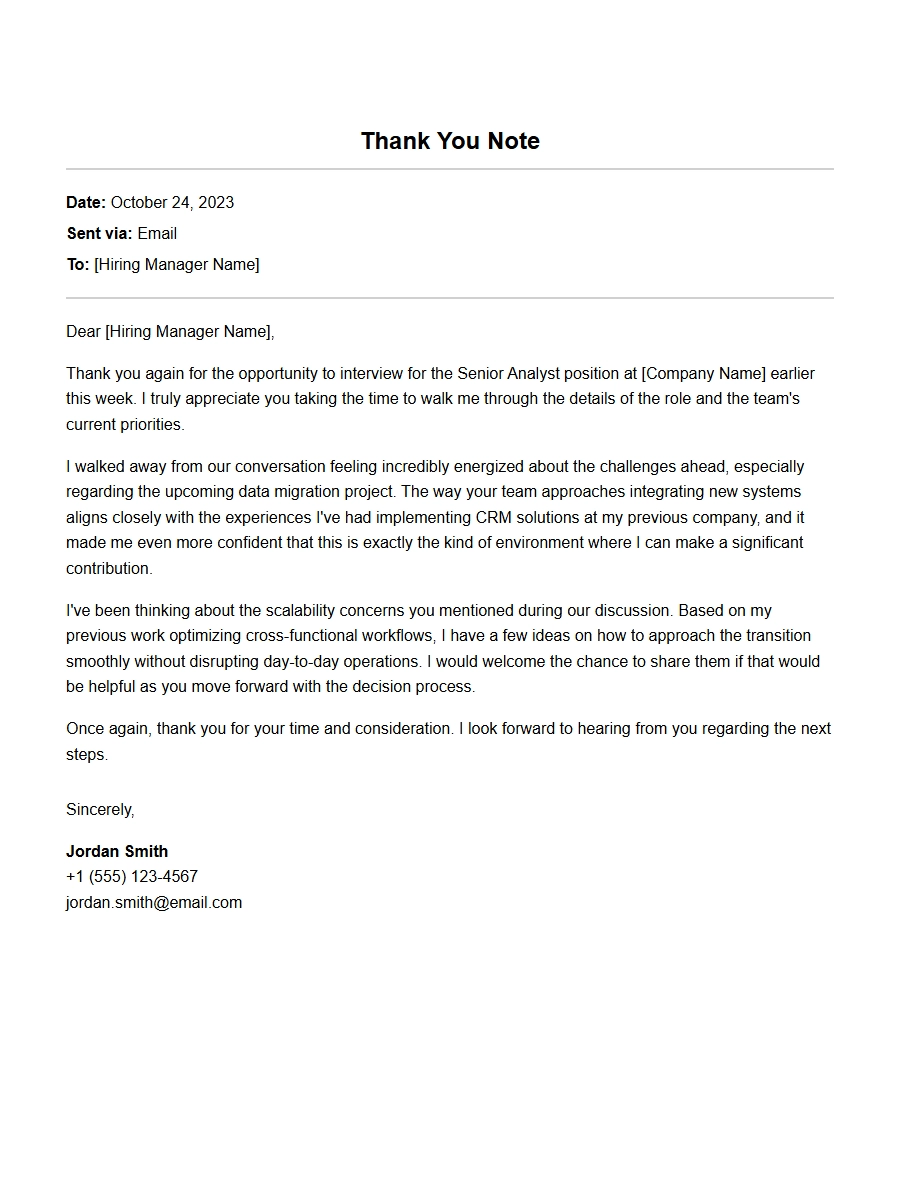 How to Write a Personal Thank-You Note After an Interview