Apology Letter for Two-Factor Authentication Lockout
You log in to your account, expecting a quick glance at your inbox, but instead you're met with a "two-factor authentication lock" message. Suddenly, you're stuck. You need to write a letter to request an unlock—or maybe to apologize for the security hassle. That blank document can feel intimidating, but a well‑chosen sample turns that frustration into a clear, professional letter in minutes.
Using a letter template for a two‑factor authentication lock is not cheating. It's a smart, time‑saving strategy. A good sample gives you the right structure, tone, and key phrases—like how to explain your account details and why the lock happened—while leaving plenty of room to personalize it with your specific situation. You don't need to reinvent formal writing every time.
[Category: Professional Correspondence]
What a letter for a two‑factor authentication lock should say
Whether you're writing to customer support or your IT department, the goal is clear: get the lock removed or confirm that it's been resolved. Start by stating who you are and the account affected. Then briefly describe what led to the lock (too many failed attempts, lost phone, etc.). The tone should be polite but direct—no blame, just facts. End with a request for action and a thank you.
For example: "My account [username] has been locked due to repeated two‑factor code entry errors. I have my backup recovery codes ready. Please unlock it at your earliest convenience." That's clean and helpful. No fluff.
How to adapt a sample without losing your voice
Don't just copy‑paste. Read the template, then rewrite the opening in your own words. If the sample starts with "I am writing to inform you," and that feels stiff, change it to "I'm writing about the lock on my account." Keep the structure—salutation, body, closing—but make it sound like you. Ever received a letter that felt too stiff or too casual? Aim for the sweet spot: respectful but human.
A quick tip: tailor the first paragraph to grab attention. Mention the specific lock date or error message. That shows you know what you're talking about and helps the support team find your case faster.
Common mistakes to avoid
One big one: using outdated salutations like "To Whom It May Concern" when you know the company name. Do a bit of research. "Dear Customer Support Team" works fine. Another mistake is ignoring the format. If you're sending the letter by email, keep it short and avoid attachments—paste it in the body with a clean digital letter format. For a printed letter, use a simple letterhead (your name and account number at the top).
Also, don't forget to proofread. A typo in your account ID can delay things. Read it out loud before sending.
When to use a more formal or informal tone
For a large financial institution or government service, stick to formal writing tips: no contractions, clear subject line, respectful closing. For a smaller service or internal IT, you can be slightly more relaxed. "I'm stuck and need help" is fine if it's an internal memo, but still keep the business letter format intact.
Much like a missed shift apology letter, you need to acknowledge the inconvenience. But here you're not apologizing for your behavior—you're acknowledging that the lock happened and you want it fixed. If the lock was due to a mistake you made (like repeated wrong codes), a quick "I realize my repeated attempts caused this" shows accountability.
Using samples as a springboard
A good letter template is like a recipe. You don't follow it blindly; you adjust it to your ingredients. Maybe you need to include the specific two‑factor authentication method (SMS, authenticator app, hardware key). Maybe you need to reference a previous support ticket. Add those details naturally.
The more you practice tailoring samples, the faster you'll get. Next time you face a two‑factor lock, you'll have your own go‑to format. That blank page won't scare you anymore.
Browse Sample Ideas
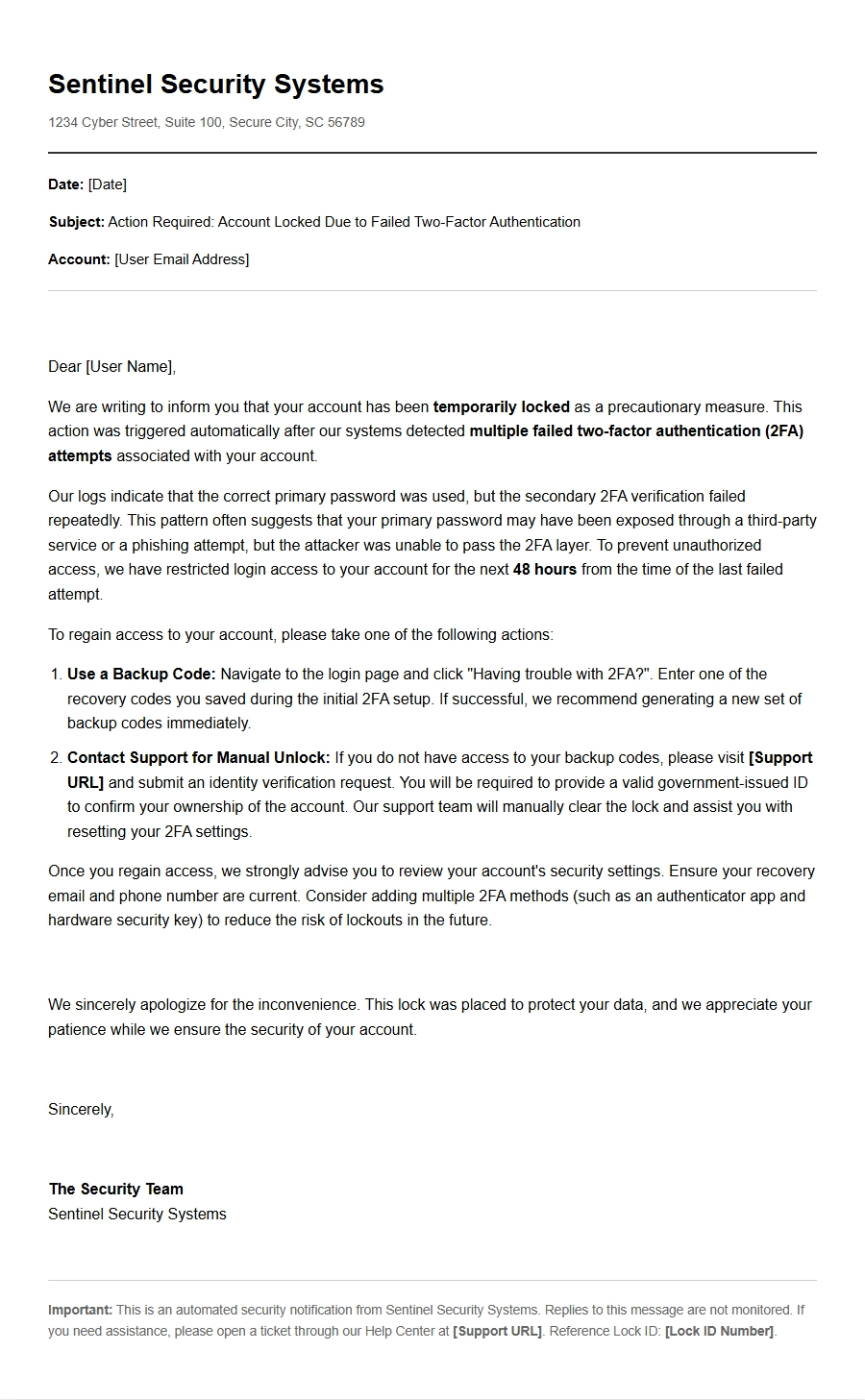
Apology Letter for Two-Factor Authentication Lockout
Apology for Accidental 2FA Lockout
Dear [User Name],
We sincerely apologize for the inconvenience caused by the recent lockout of your account due to repeated failed two-factor authentication attempts. This occurred because our system mistakenly flagged valid verification codes as incorrect, leading to a temporary security lock. Our team has already corrected the underlying issue and restored full access to your account.
To help you regain access smoothly, please follow these steps:
Use the password reset link sent to your registered email.
Reconfigure your authenticator app using the new setup code provided.
Contact our support team if you need a one-time bypass code.
We understand how frustrating this experience can be, and we are committed to preventing such errors in the future. As a goodwill gesture, we have extended your subscription by 7 days. Thank you for your patience.
Issue
Status
Resolution Time
Account lockout
Resolved
Within 2 hours
2FA flag error
Fixed
Immediate
If you have any further questions, please reply to this email. Again, our apologies for the trouble.
Apology for Delayed Account Unlock
Dear [Customer Name],
We apologize for the delay in responding to your request to unlock your account after a two-factor authentication lockout. Due to an unusually high volume of support tickets, your case was not addressed within our standard response time of 1 hour. We understand that this caused significant disruption to your work, and we deeply regret the oversight.
Our support team has now manually verified your identity and removed the 2FA lock. You should receive an email with a temporary access link within the next 15 minutes. To expedite future requests, we recommend the following:
Enabling backup codes in your security settings.
Registering a secondary authentication device.
Keeping your recovery email address up to date.
We have taken steps to improve our ticket routing system so similar delays are minimized. As compensation, we have added a $25 service credit to your account, valid for 30 days. Thank you for your understanding.
Metric
Expected
Actual
Response time
< 1 hour
4 hours
Resolution time
< 2 hours
5 hours
We value your business and apologize once again.
Apology for Forced 2FA Enrollment Lockout
Dear [Valued User],
We apologize for the confusion and inconvenience caused when our system forced a mandatory two-factor authentication enrollment, which immediately locked you out of your account. This was an unintended consequence of a security policy update that was rolled out without proper notification or grace period. We understand that this was especially frustrating if you were in the middle of important tasks.
We have rolled back the forced enrollment for all affected accounts and restored access. Going forward, we will implement 2FA enrollment with these safeguards:
A 7-day opt-in notice before mandatory activation.
Clear instructions on setting up authenticator apps or SMS codes.
24/7 support hotline for lockout assistance.
Your account is now fully active. To help you get started with voluntary 2FA, we have prepared a step-by-step guide that is attached to this email. Please accept our apologies and a free one-month premium upgrade as a gesture of goodwill.
Action
Status
Policy rollback
Completed
Account restored
Yes
Premium upgrade applied
Yes
We are sorry for any stress this caused.
Apology for System Error Causing Repeated Lockouts
Dear [Affected User],
We apologize for the repeated two-factor authentication lockouts you experienced over the past 48 hours. A system bug caused our authentication server to reject valid TOTP codes intermittently, resulting in multiple account locks. This was a critical failure on our part, and we are deeply sorry for the repeated frustration.
Our engineering team has deployed a hotfix that resolves the code rejection issue. Additionally, we have reset all failed attempt counters for affected accounts. To ensure access stability, we recommend the following:
Clear your browser cache and re-login.
Re-sync your authenticator app using the new secret key provided below.
Install the latest version of our mobile app for more reliable 2FA.
As a token of apology, we are adding 500 reward points to your account. We have also scheduled a post-mortem review to prevent recurrence. Thank you for your patience while we resolved this.
Time Period
Lockouts
Status
Day 1
3
Resolved
Day 2
4
Resolved
Please reach out if you encounter any further issues. We apologize for the disruption.
Apology for Lost Authenticator Device Lockout
Dear [User Name],
We sincerely apologize for the difficulty you faced in regaining access to your account after losing your authenticator device. We understand that being locked out due to a lost phone or hardware token is particularly stressful, and we regret that our standard identity verification process took longer than expected.
We have now processed your identity verification documents and lifted the 2FA lock. Your account is fully accessible with a temporary password (please change it upon login). To help you avoid this in the future, we strongly recommend the following:
Set up at least two backup methods (e.g., SMS, email codes, or backup codes).
Write down and store backup codes in a secure place.
Register a second device as a fallback authenticator.
We are also sending you a new physical security key free of charge as part of our apology. Please allow 5–7 business days for delivery. We appreciate your cooperation during the manual unlock process and apologize for the inconvenience.
Lost Device Type
Recovery Method Used
New Device Sent
Google Authenticator phone
ID verification + backup codes
YubiKey 5 NFC
Thank you for your understanding.
Apology for Missing Backup Codes During Lockout
Dear [Customer Name],
We apologize for the inconvenience caused when you were locked out of your account and found that your backup codes were not accessible. This happened because our system did not properly prompt you to save backup codes during initial 2FA setup, an oversight on our part. We understand how helpless it felt not having a recovery option.
We have since reset your 2FA configuration and generated a new set of backup codes, which are attached as a PDF. Please download and store them securely. To prevent future issues, we have implemented the following improvements:
Mandatory backup code creation during initial setup.
A one-click backup code email option in account settings.
Reminder notifications every 90 days to verify stored codes.
As compensation, we have added a 1-month free extension to your current plan. We sincerely regret the stress this caused and appreciate your patience while we manually verified your identity to restore access.
Issue
Fix Applied
No backup codes
Generated and emailed
Missing prompt
Updated setup flow
If you need additional assistance, please contact our dedicated recovery team. We apologize again.
Apology for 2FA Service Outage Lockout
Dear [All Affected Users],
We apologize for the widespread lockouts caused by a temporary outage in our two-factor authentication service earlier today. Due to a third-party dependency failure, many users were unable to receive or verify 2FA codes, resulting in accounts being locked after multiple failed attempts. This was a serious service disruption, and we are truly sorry for the impact on your work.
Our team restored the 2FA service within 90 minutes, and all locked accounts have been auto-unlocked. No further action is needed from your side. To prevent recurrence, we are implementing the following measures:
Multi-region redundancy for authentication servers.
Automatic disabling of lockout rules during service outages.
Improved internal monitoring and alerting.
As a goodwill gesture, we are applying a 10% discount on your next billing cycle. We have also published a detailed incident report on our status page. Thank you for your understanding and patience during this incident.
Outage Start
Outage End
Affected Accounts
10:15 AM UTC
11:42 AM UTC
~15,000
We deeply regret the inconvenience and are committed to earning back your trust.
Apology for Extra Verification Steps Lockout
Dear [User Name],
We apologize for locking your account after requiring additional verification steps during login. Our security system incorrectly triggered a higher-risk flag for your session, forcing you to provide multiple 2FA methods in sequence. This resulted in a lockout when one of the steps timed out. We understand that this was a confusing and frustrating experience.
We have reviewed your account and removed the erroneous risk flag. You can now log in normally using your primary 2FA method. To prevent this from recurring, we have adjusted our risk-scoring algorithms and added a clear explanation on the login page when extra steps are needed. We also recommend:
Ensuring your device clock is synchronized for accurate TOTP codes.
Using a trusted network to avoid IP-based flags.
Confirming your account recovery options are up to date.
As a token of apology, we are granting you priority support access for the next 30 days. We are sorry for the extra hassle and appreciate your patience in verifying your identity.
Step
Result
Password entry
Success
SMS code
Success
Authenticator code
Timed out → Locked
Please accept our sincere apologies.
Apology for Account Lock After Password Reset
Dear [Customer Name],
We apologize for the inconvenience caused when your account was locked immediately after you performed a password reset. Our 2FA system erroneously interpreted the password change as a suspicious activity, triggering an automatic lockout. This prevented you from accessing your account even with the new password and valid 2FA codes.
We have resolved the conflict and unlocked your account. You can now log in with your new password and complete the 2FA challenge as usual. To avoid this in the future, we have updated our logic so that password resets from authenticated sessions no longer trigger lockouts. We also suggest:
Initiating password resets only from trusted devices.
Keeping your registered email and phone number current.
Generating new backup codes after each password change.
We have credited your account with 1,000 loyalty points as compensation for the disruption. We are truly sorry for the additional step you had to go through. Thank you for your understanding.
Event
Old Behavior
New Behavior
Password reset
Triggered lockout
No lockout
2FA re-challenge
Required re-setup
Allowed immediate login
We value your trust and apologize once more.
Apology for Inconvenience of Manual Unlock Process
Dear [User],
We apologize for the cumbersome and time-consuming manual unlock process you had to go through to regain access to your account after a two-factor authentication lockout. We acknowledge that our standard recovery flow—requiring identity verification, security questions, and a support ticket—is overly complex and not user-friendly. This caused a significant delay for you.
We have since streamlined the process. The new recovery system allows you to unlock via a one-click email link if you have a verified backup email on file. For your account, we have manually enabled this option. To benefit from it in the future, please ensure your backup email is always current. Here are the improvements we made:
Reduced identity verification steps from 4 to 2.
Added an automated temporary unlock for low-risk accounts.
Reduced response time for manual verifications to under 30 minutes.
As a sincere apology, we are waiving your next month's subscription fee. Your account is now fully active. We are sorry for the extra effort you had to exert and hope you will find the new process much smoother.
Old Process Time
New Process Time
3–5 hours
15–30 minutes
Thank you for your patience and feedback that helped us improve.
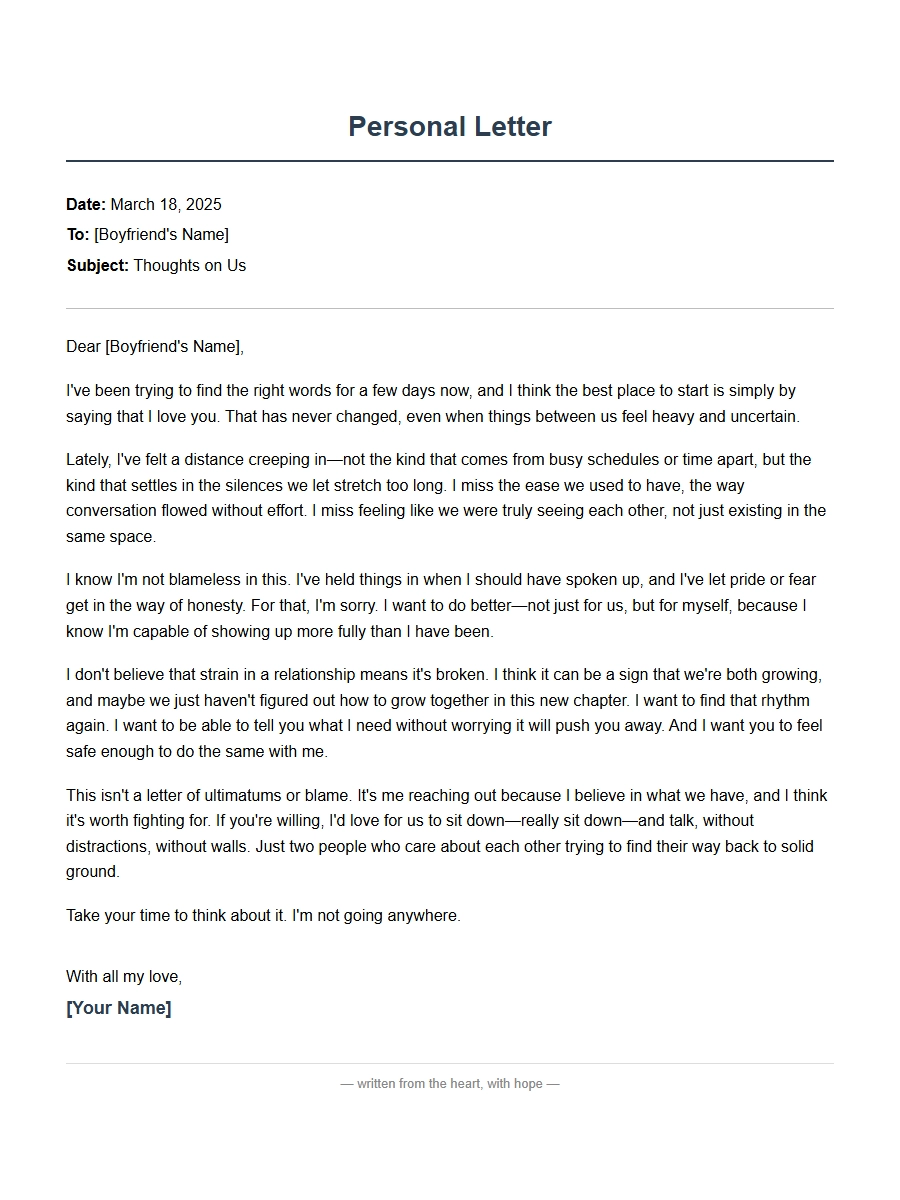 Personal Apology Letter for Boyfriend Relationship Strain
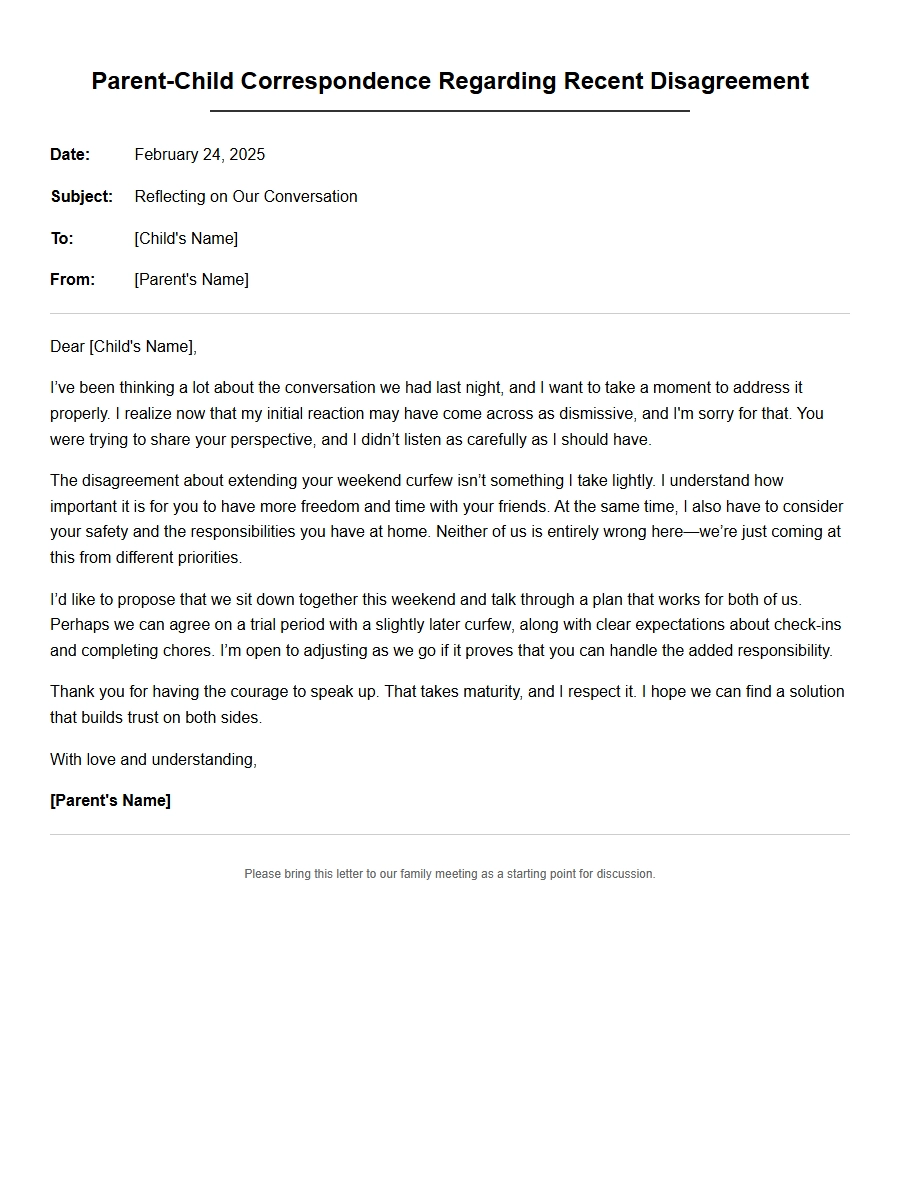 Apology Correspondence for Parent-Child Disagreements
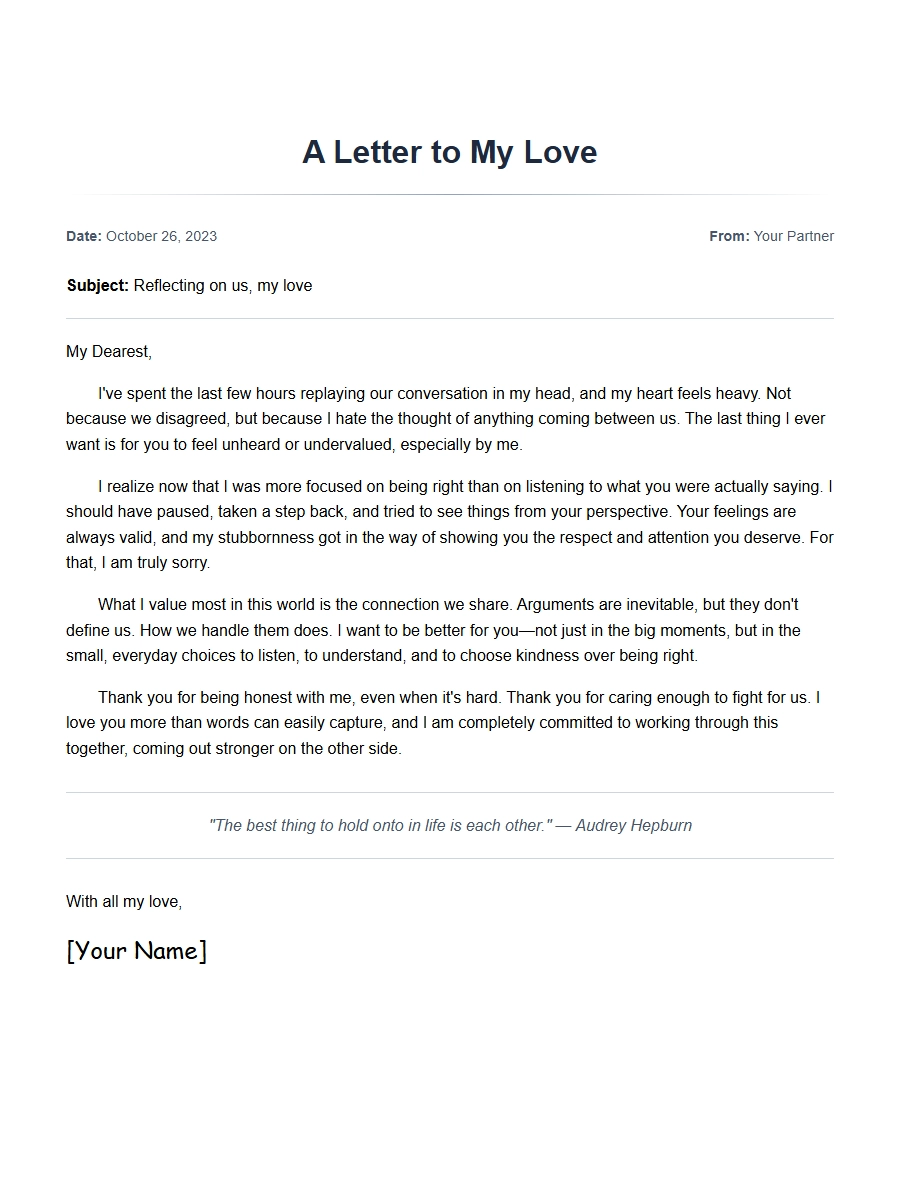 Apology Message for Girlfriend After Argument
 note for friend stealing item - Apology Letters
 Apology to Boss for Micromanagement Complaint
 Apology Document for Vendor Supply Chain Issue