You're staring at a blank email, trying to explain why you missed your shift. Your manager is waiting for a response. You know you need to apologize and explain, but the words won't come. That's normal. Writing a reply to a manager after a missed shift can feel tense, but it's a skill you can master with the right approach.
Using a letter sample isn't cheating. It's a smart shortcut. A good template gives you structure and tone, so you don't have to invent everything from scratch. You just need to personalize it. Think of it like using a recipe when cooking something new—you follow the steps, but you can adjust the seasoning to your taste.
Category: Work Correspondence
What Should Your Reply Look Like?
Professional correspondence like this often follows a standard business letter format. Whether you send an email or a printed letter, the salutation and closing set the tone. A formal approach might use "Dear [Manager's Name]" and "Sincerely," while a semi-formal reply could be "Hi [Name]" and "Best regards." Choose what fits your workplace culture.
For a missed shift, you want a sample that acknowledges your responsibility without over-explaining. Look for examples that focus on apologizing, stating the reason briefly, and offering to make up for the lost time. Avoid templates that are too lengthy or overly dramatic. Your goal is to be clear and professional.
How to Adapt a Sample Without Losing Your Voice
When you adapt a sample, don't copy it word for word. Read it through, then rewrite the key points in your natural voice. For instance, if the sample says "I sincerely apologize for my absence due to unforeseen circumstances," but you'd rather say "I'm sorry I wasn't able to make it to work—something came up," that's fine. The template is just a starting point.
Your opening paragraph is crucial. It sets the tone. Start with a direct apology, then briefly explain the situation. Avoid diving into a long story. For example, "I'm writing to apologize for missing my shift on Tuesday. A family emergency required my immediate attention." That's enough.
Common Mistakes to Avoid
One common mistake is using outdated salutations like "To Whom It May Concern" when you know your manager's name. Always address them directly. Another is ignoring the medium. If you're sending an email, use a clear subject line like "Regarding Missed Shift on [Date]". For a printed letter, include your contact details and the date. Proofreading is essential too. A typo in an apology letter can make you look careless.
Letter writing etiquette suggests you always proofread your letter before sending. The tone in writing should match your relationship with your manager—if you're close, a little more warmth is fine; if formal, stick to standard protocol. If your company uses a letterhead design for official correspondence, you can follow that for printed letters. For email, keep the digital letter format clean with a subject line and signature block.
Real Examples of What Works
Just as you would craft a sincere apology for a service error—like a double booking at a salon—your reply about a missed shift should convey genuine responsibility. The tone needs to be respectful and solution-focused. If you're unsure about overall structure, looking at examples like a formal takedown notice apology can help you understand how to organize a professional letter, but keep yours simpler and direct.
When acknowledging a mistake, a restaurant's apology for an allergy oversight shows how honesty and a concrete plan to fix the issue builds trust. Apply the same principle here: explain what happened and what you'll do to prevent it again. For email-specific tips, review how a customer journey mapping apology handles subject lines and salutations.
If you need to communicate a change in schedule—say, to confirm when you'll be back—consider the format used in a temporary office closure notice: clear, direct, and with next steps. That works perfectly for your reply too.
Make the Letter Your Own
Remember, the best letters feel both professional and personal. Use the sample as a springboard, not a crutch. Every time you write one of these, it gets easier. You'll develop a sense of what works. And if you're ever stuck, you know where to find a helpful template. Now take a deep breath, open that email, and write your reply.
Useful Writing Samples
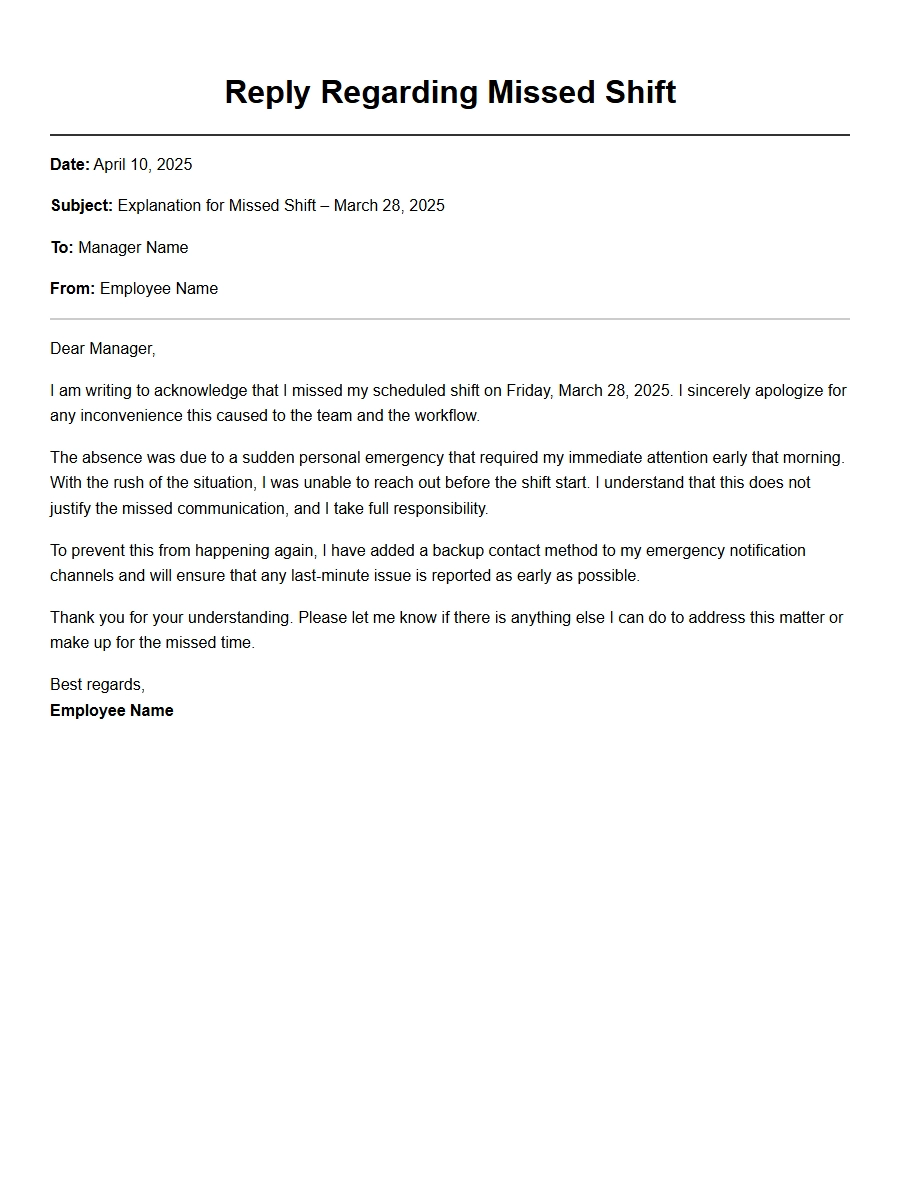
Apology to Manager for Missed Shift
Apology for Oversleeping Missed Shift
Dear [Manager's Name],
I am writing to sincerely apologize for missing my shift on [Date] due to oversleeping. I understand this disrupted the team schedule and caused inconvenience. I have no excuse and take full responsibility.
To make amends, I am available to cover any open shifts this week, including on my day off if needed. I have set multiple alarms and now use a backup clock to prevent recurrence.
Please let me know how I can make up for this lapse. Thank you for your understanding.
Sincerely, [Your Name]
Apology for Family Emergency Missed Shift
Dear [Manager's Name],
I deeply apologize for missing my shift on [Date]. A sudden family emergency required my immediate attention, and I was unable to notify you in advance. I understand the importance of communication and regret not calling earlier.
I have attached the relevant documentation if required. I am committed to ensuring this does not affect team morale. I can work extra hours to compensate for the missed shift.
Thank you for your empathy. I will ensure to contact you even during emergencies moving forward.
Best regards, [Your Name]
Apology for Transportation Breakdown Missed Shift
Dear [Manager's Name],
I apologize for missing my shift on [Date]. My car broke down unexpectedly while on the way to work, and I was stranded without immediate alternative transport. I tried to reach the office phone but was unable to connect.
I have since arranged a backup transportation plan with a coworker and will keep a rideshare app ready. I am willing to work a double shift tomorrow to cover the missed hours.
Please accept my sincere apology. I value my position and will do better.
Yours, [Your Name]
Apology for Illness Missing Shift
Dear [Manager's Name],
Please accept my apology for missing my shift on [Date] due to sudden illness. I woke up with severe [symptoms] and was advised by a doctor not to work. I should have messaged you earlier; I was preoccupied with seeking medical help.
I recognize the importance of timely notification. I have a doctor's note available if needed. I am feeling better now and can return for my next scheduled shift.
Thank you for your understanding. I take full responsibility for the missed communication.
Sincerely, [Your Name]
Apology for Schedule Misunderstanding Missed Shift
Dear [Manager's Name],
I am writing to apologize for not showing up for my shift on [Date] due to a misunderstanding of the schedule. I mistakenly thought my shift started later. I realize this was my error for not double-checking.
I have reviewed the schedule carefully now and set calendar reminders. I am available to work extra hours this week to compensate.
I am sorry for any inconvenience caused. I will verify my shifts daily going forward.
Thank you for your patience.
Best, [Your Name]
Apology for Notification Failure Missed Shift
Dear [Manager's Name],
I sincerely apologize for missing my shift on [Date]. I did not receive the schedule update notification due to a phone malfunction. I understand that it is ultimately my responsibility to check the schedule.
Since then, I have resolved the technical issue and also set manual reminders. I am ready to cover any open shifts to make up for this absence.
Please let me know if there is any further action I need to take. I regret the disruption.
Sincerely, [Your Name]
Apology for Personal Emergency Missed Shift
Dear [Manager's Name],
I am deeply sorry for missing my shift on [Date] due to a personal emergency that required immediate attention. I was unable to contact you beforehand as the situation escalated quickly. I understand this was unprofessional.
I have since spoken with HR about emergency protocols. I am committed to making up for the lost time by working extra shifts this week.
I value your leadership and apologize for the inconvenience my absence caused the team.
Thank you for your consideration.
Regards, [Your Name]
Apology for Weather-Related Missed Shift
Dear [Manager's Name],
I apologize for missing my shift on [Date] due to severe weather conditions. Roads were impassable, and I was unable to leave my neighborhood despite attempting multiple routes. I left a voice message for the office but understand it might not have been received.
I have now downloaded the company's emergency notification app and will ensure alternate communication. I am available to work extra hours to compensate.
Thank you for understanding the circumstances.
Sincerely, [Your Name]
Apology for Childcare Issue Missed Shift
Dear [Manager's Name],
Please accept my sincere apology for missing my shift on [Date]. My child's daycare was unexpectedly closed, and I could not arrange backup care in time. I tried calling but could not reach you.
I have since established an emergency childcare plan with a neighbor. I also understand that I should have notified you earlier. I am willing to work additional hours to make up for the missed shift.
I regret any disruption and appreciate your understanding.
Best regards, [Your Name]
Apology for Prior Commitment Conflict Missed Shift
Dear [Manager's Name],
I am writing to apologize for missing my shift on [Date]. I had a prior commitment that I mistakenly believed was on a different day. I realize I should have confirmed my schedule sooner and avoided this conflict.
I have now fully aligned my commitments with the shift schedule. I am available to work a double shift on [day] to compensate.
I am sorry for letting the team down. I will be more diligent in the future.
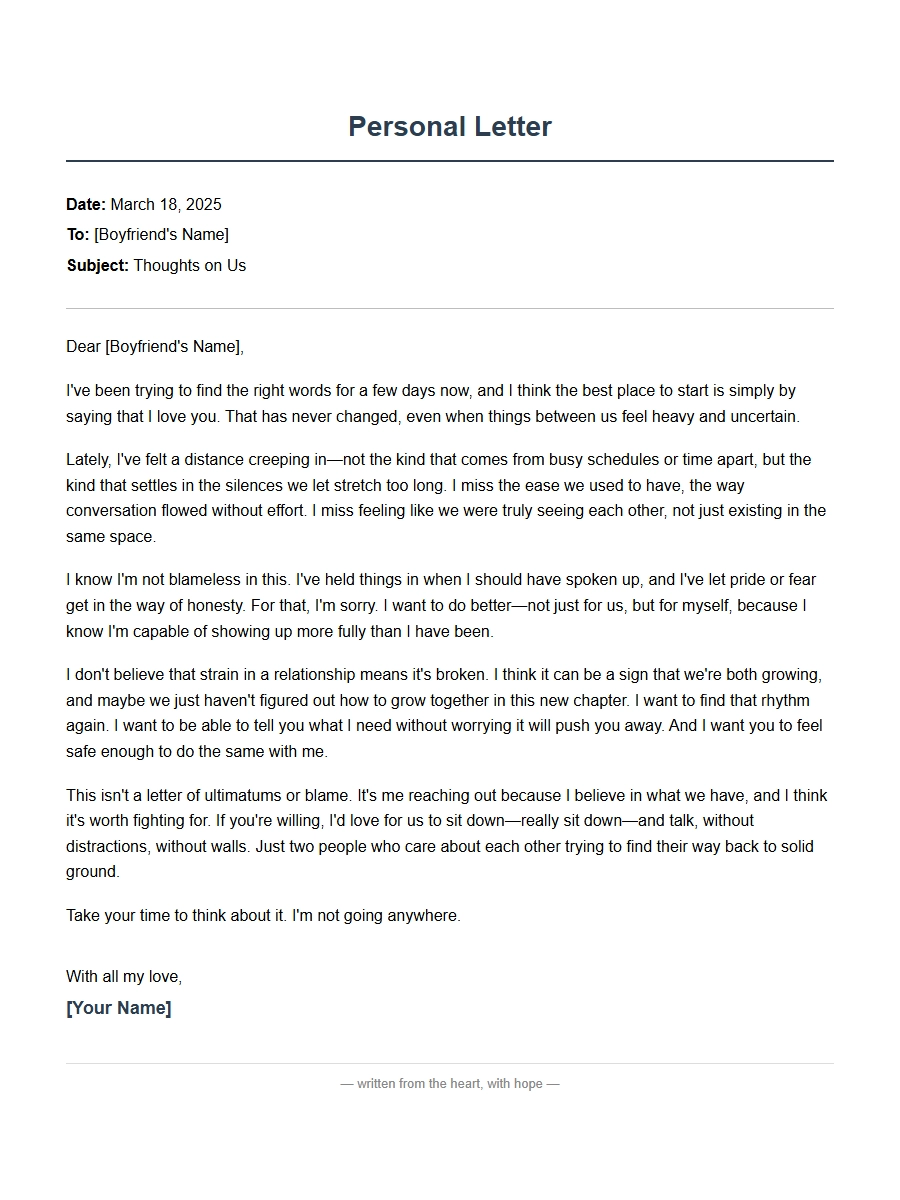 Personal Apology Letter for Boyfriend Relationship Strain
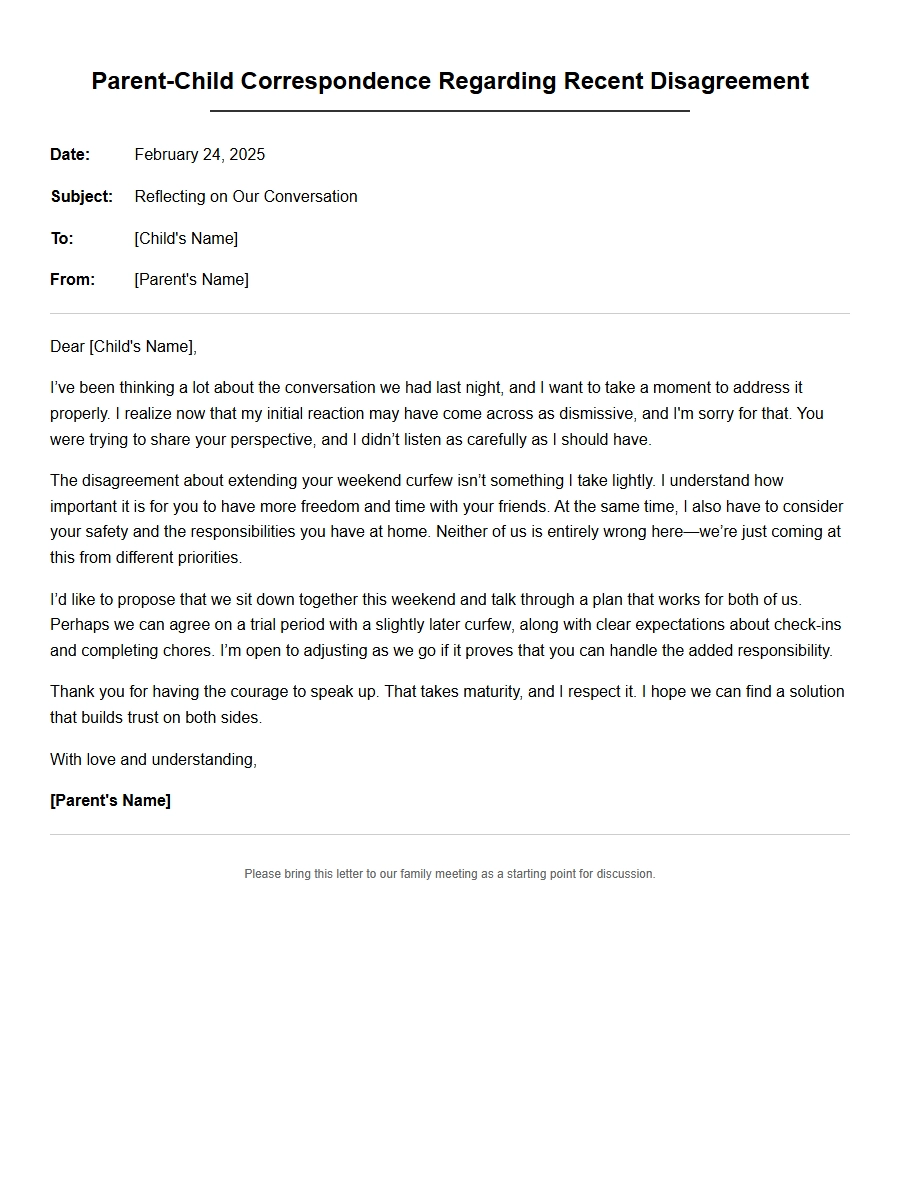 Apology Correspondence for Parent-Child Disagreements
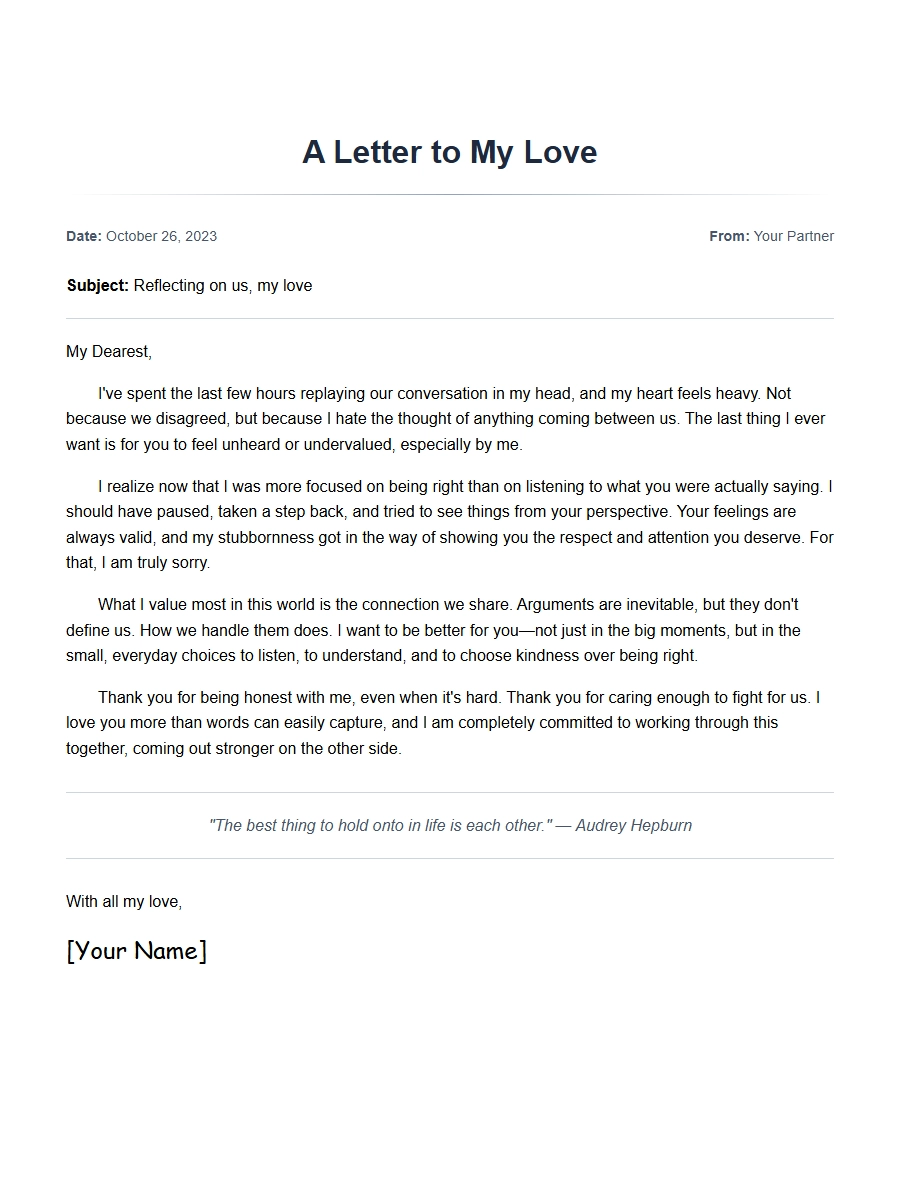 Apology Message for Girlfriend After Argument
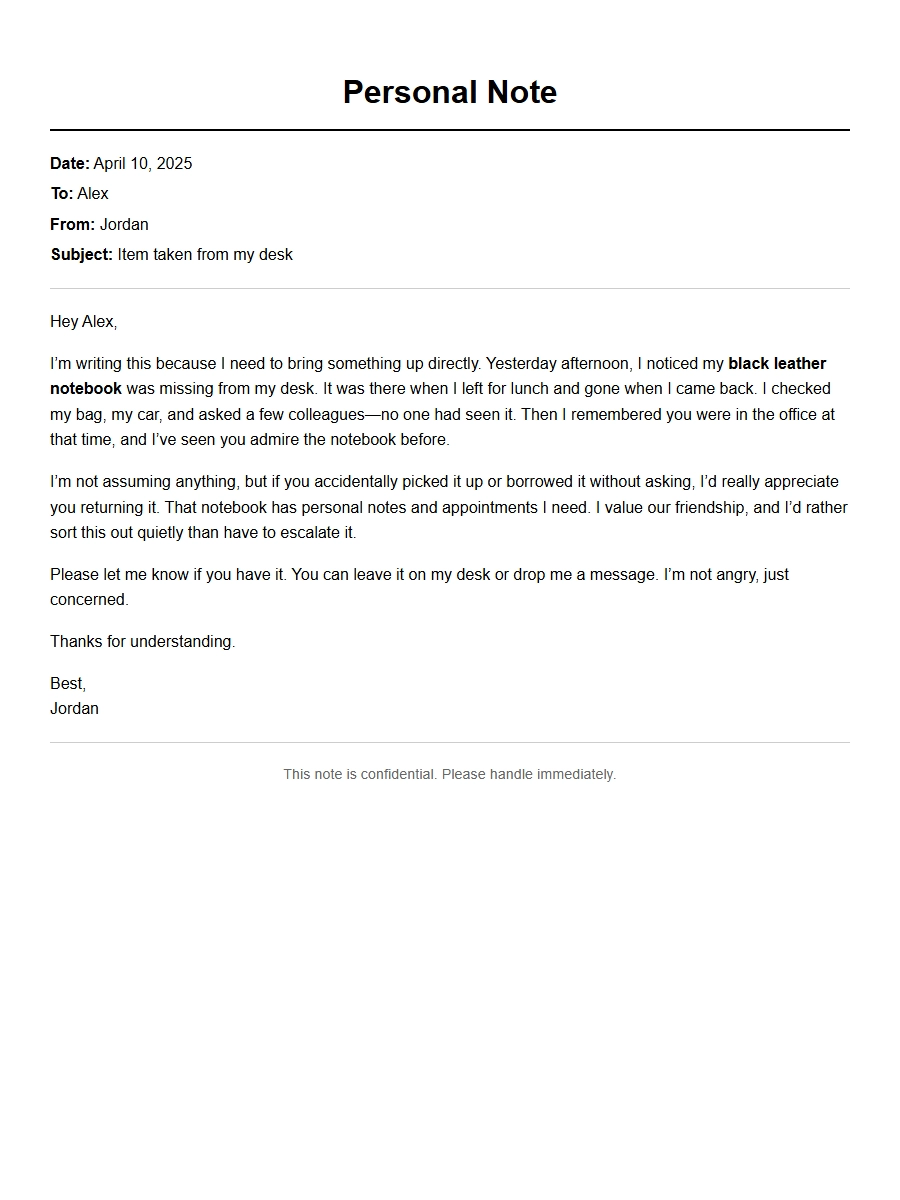 note for friend stealing item - Apology Letters
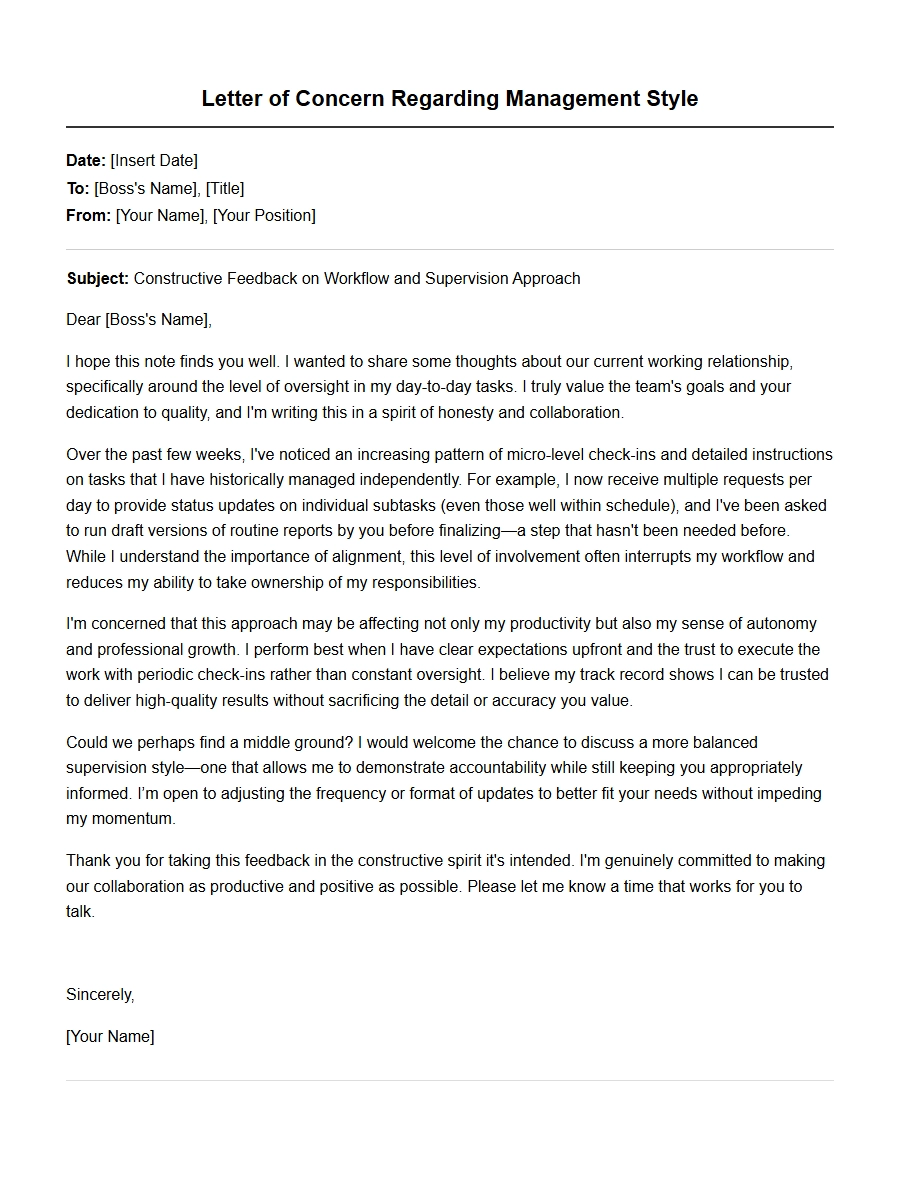 Apology to Boss for Micromanagement Complaint
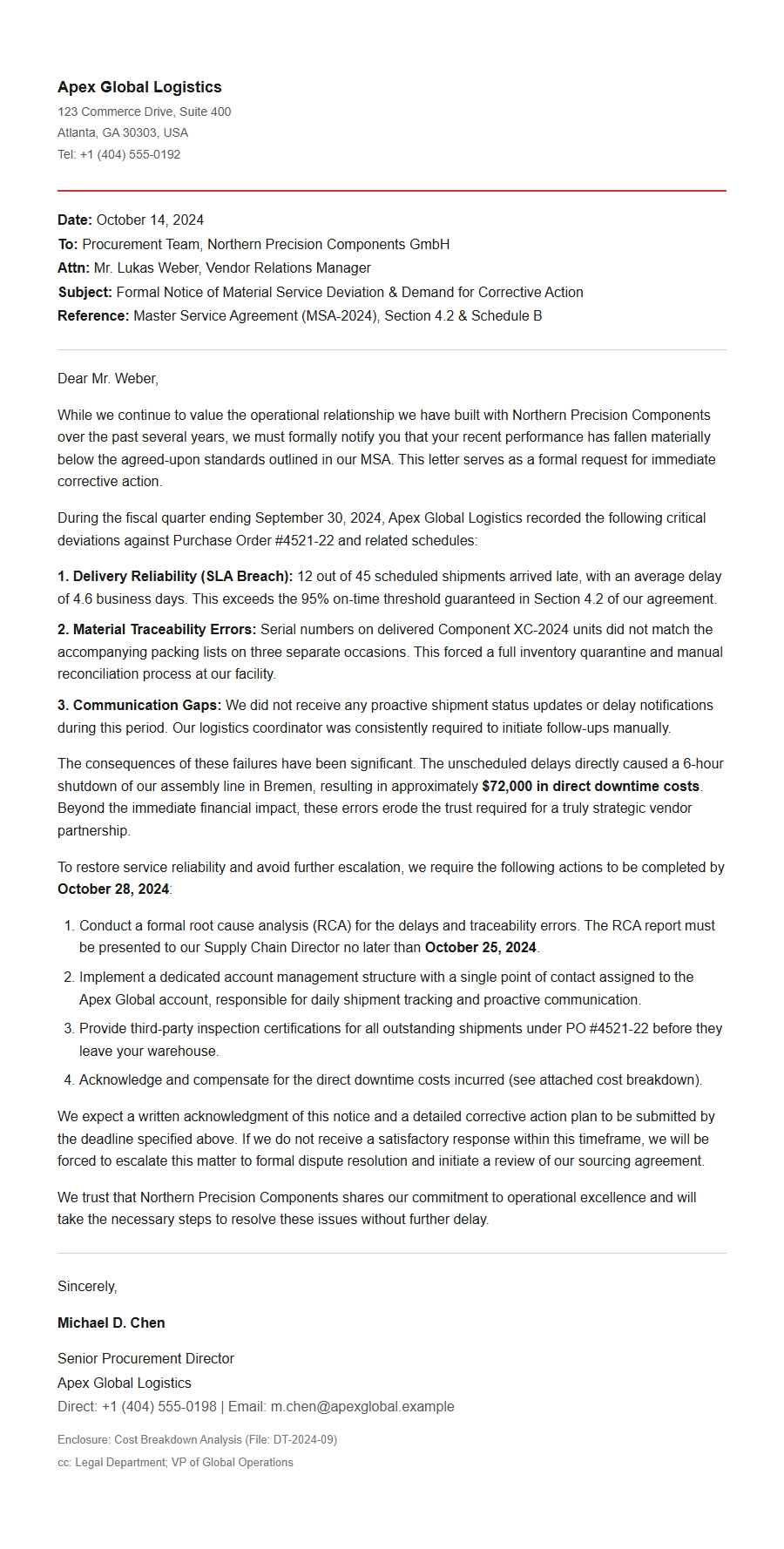 Apology Document for Vendor Supply Chain Issue