So you’ve made the decision to resign. That knot in your stomach isn’t doubt—it’s the dread of writing the actual resignation letter. You know it needs to be professional, but you also want to leave on good terms without sounding like a corporate robot. The blank page stares back at you. It’s normal to freeze.
Here’s the truth: using a sample isn’t cheating. It’s smart. A good resignation letter sample gives you the structure you need so you can focus on your specific situation. It saves you from forgetting key details—like the correct date format or a proper salutation. You get a framework for professional correspondence without having to invent the wheel. The key is to customize it so it still sounds like you.
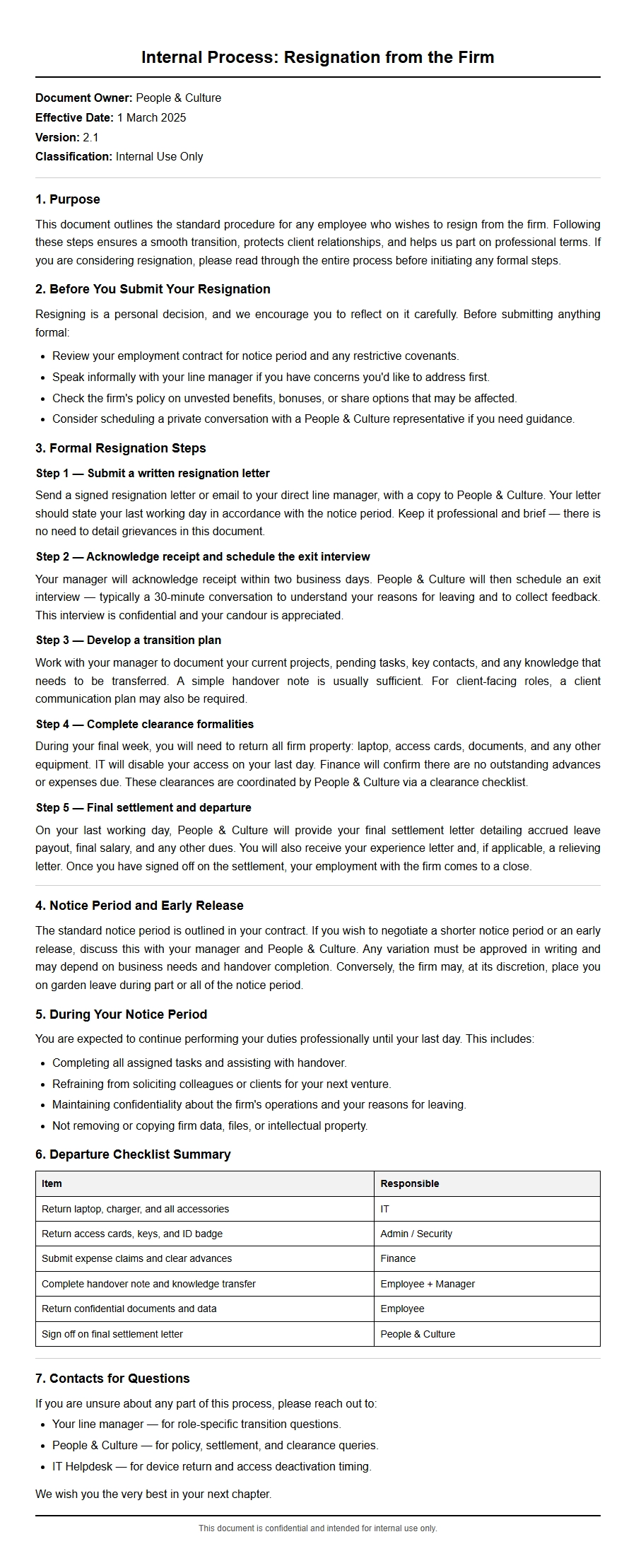
What a good internal resignation process looks like
Most firms expect a formal resignation, not a disappearing act. The internal process usually starts with a verbal conversation with your direct manager, followed by a written letter. That letter becomes part of your personnel file, so it needs to be clear and respectful. Understanding the letter writing etiquette for your workplace culture matters. If you work in a casual startup, your tone will differ from someone leaving a law firm or a bank.
Think of the letter as official notice. It’s not the place to air grievances. It’s a clean, professional handoff. Most HR teams appreciate a standard business letter format with your name, the date, your manager’s name, and a clear statement of resignation. You do not need a fancy letterhead design—plain text is fine for email, but for a printed copy, use company letterhead if available.
How to pick and adapt the right resignation letter sample
Not all samples fit every situation. For example, some letters are written to step aside for a successor, which works well if you are leaving for internal promotion opportunities or retirement. But if you’re in a high stress environment, a sample written for that context might feel more authentic. The right letter template should match your industry and your relationship with your boss.
When you adapt a sample, read it aloud. Does it sound like you? Change the phrasing until it does. If the sample says “I have decided to pursue other opportunities,” but you genuinely want to say “I am moving to a role that fits my growing family,” then say that. Just keep it brief. A customizable letter is only useful if you make it yours.
Category: Resignation Letter Examples
Common mistakes people make when writing a resignation letter
One of the biggest pitfalls is using an outdated salutation. “To whom it may concern” feels impersonal and lazy. Address the letter directly to your manager. Another mistake is ignoring the format: an email resignation needs a clear subject line like “Resignation – [Your Name]” and a digital letter format that is plain text or a professional PDF. For printed letters, include a proper salutation and closing—something like “Dear [Name]” and “Sincerely” works perfectly.
People also forget to mention their last working day. This is critical. Be specific about your final date. Also, resist the urge to write a novel. The best resignation letters are short and polite. If you need to explain why you’re leaving, save that conversation for your exit interview. The letter is simply the formal record.
For roles like PR officer resignations or research scientist resignations, the samples will vary significantly. A PR officer might need a more diplomatic tone because their network is everything. A scientist might need to reference ongoing projects or data handoffs. Do not copy-paste blindly. Adjust the tone in writing to match your field.
How to write a resignation letter that feels like you
Start with the opening paragraph. It should state your intention and your last day. That’s it. For example: “Please accept this letter as formal notice that I am resigning from my position as Account Manager, effective [date].” Then the second paragraph can express gratitude. Keep it simple: “I am grateful for the mentorship I received during my time here, especially on the [project name] campaign.” Specificity adds warmth without rambling.
If you are leaving due to stress or burnout, a letter that references timing around the fiscal quarter end can help you frame your departure professionally. It shows you are considerate of the team’s workflow. That kind of thoughtfulness goes a long way when maintaining relationships.
Once you finish writing, proofreading is non-negotiable. Read it twice. Check for typos, incorrect dates, or a messed up salutation. A single spelling mistake can make you look careless. Ask a friend to glance at it if you are nervous. Then send it with confidence.
Use the sample as a springboard, not a cage
The best resignation letters feel professional and personal at the same time. That balance comes from practice. After you write one or two, it gets easier. You will learn which cover letter examples (if you are using a similar style for job applications) or resignation templates fit your natural voice. Over time, you will rely less on samples and more on your own instincts. But for now, starting with a solid structure is the smart move. Take a deep breath, pick a sample that feels right, and make it yours.
Samples You Can Use
Firm Resignation Process: Step-by-Step Guide
Formal Resignation Letter
Date: March 1, 2025
To: Human Resources Manager From: Jane Smith, Senior Analyst
Subject: Resignation from Position – Internal Process Notification
Dear [Manager Name],
Please accept this letter as formal notification of my resignation from my position as Senior Analyst at [Firm], effective April 30, 2025. This decision was not made lightly, and I am grateful for the opportunities I have had during my six years here.
In accordance with the firm’s internal resignation process, I am prepared to:
Complete all pending assignments and documentation
Transition responsibilities to my successor over the next four weeks
Participate in an exit interview upon request
I will submit all required forms, including the clearance checklist, by the end of this week. Please advise on the next steps regarding the return of company property and final settlement.
Thank you for your understanding. I look forward to ensuring a smooth transition.
Sincerely, Jane Smith
Email Notification of Resignation
To: hr@firm.com Subject: Resignation – Immediate Notification per Internal Process
Dear HR Team,
I am writing to formally notify you of my resignation from the position of Marketing Coordinator at [Firm], effective March 15, 2025 (last working day).
As part of the internal resignation process, I have already:
Notified my direct supervisor
Saved all project files to the shared drive
Compiled a handover document
Please share the necessary forms for resignation, including:
Document
Status
Resignation letter (signed)
Attached
Exit interview form
Pending
Asset return checklist
Not yet received
Kindly acknowledge receipt and let me know the schedule for the clearance procedure.
Regards, Alex Chen Extension 4301
Resignation with Handover Plan
To: Department Head
Subject: Resignation and Proposed Handover Schedule
Dear [Name],
I hereby submit my resignation as IT Support Lead, effective April 1, 2025. During my notice period, I will focus on a seamless handover. Below is the proposed transition plan.
Week 1: Document all ongoing tickets and system configurations.
Week 2: Train two team members on critical procedures.
Week 3: Finalize knowledge transfer and update the internal wiki.
I have also prepared a table of pending tasks:
Task
Owner
Deadline
Server patch cycle
Myself (until transition)
March 25
New hire setup guide
Myself
March 28
VPN audit completion
Team B
April 2
Please confirm if this plan aligns with the internal resignation process requirements.
Thank you, Maria Lopez
Request for Exit Interview
To: HR Department
Subject: Resignation – Request for Exit Interview
Dear HR Team,
I have submitted my resignation as Financial Analyst on February 20, 2025. According to the firm’s internal process, I would like to schedule an exit interview to provide feedback and ensure all formalities are completed.
My available time slots for the exit interview are:
Monday, March 3, 2025 – 10:00 to 11:00
Wednesday, March 5, 2025 – 14:00 to 15:00
Friday, March 7, 2025 – 09:00 to 10:00
Additionally, please send me the following documents via the internal process portal:
Resignation clearance form
Final settlement statement
Non-disclosure agreement reminder
I will ensure all pending deliverables are completed before the meeting.
Best regards, Ravi Patel
Acceptance of Resignation (Manager Reply)
Date: March 2, 2025
To: Jane Smith From: HR Manager
Subject: Acceptance of Resignation – Next Steps
Dear Jane,
This letter confirms that we have received and accepted your resignation as Senior Analyst, effective April 30, 2025. We appreciate your dedication and the notice you have provided.
Per the internal resignation process, please complete the following steps:
Return all company property (laptop, badge, keys) to the IT desk by April 25.
Submit the signed clearance form to HR by April 15.
Attend an exit interview on April 20 at 11:00 AM (conference room B).
Your final paycheck will include accrued vacation pay and will be issued on the regular pay date following your departure. Below is a summary of your settlement:
Item
Amount/Details
Base salary (up to April 30)
$X,XXX
Accrued PTO (12 days)
$X,XXX
Bonus (pro-rated)
$X,XXX
We wish you success in your next role.
Sincerely, HR Manager
Resignation with Immediate Effect (Unforeseen Circumstances)
To: HR Director
Subject: Urgent – Resignation with Immediate Effect – Internal Process
Dear [Name],
Due to an unforeseen personal emergency, I am compelled to resign from my position as Project Manager with immediate effect, effective March 10, 2025. I apologize for the short notice and the disruption this may cause.
I have completed the following per the firm’s emergency resignation protocol:
Sent this notification to HR and my manager
Uploaded key files to the shared workspace
Contacted my deputy to take over current projects
I will cooperate fully with the clearance process, including returning assets within two business days. Please advise on any urgent documentation I must sign remotely.
I deeply regret leaving under these circumstances and am grateful for the flexibility the firm provided.
Regards, Sarah Kim
Internal Notice of Resignation (for HR Record)
Date: March 5, 2025
To: HR Records
From: David Lee, Senior Developer
Subject: Formal Resignation – Internal Process Record
Pursuant to the firm’s internal process for resigning employees, I hereby notify of my separation effective April 10, 2025. My last working day will be April 10, 2025, and I will use my remaining vacation days (5 days) following that date.
Attached are the completed forms required by the employee offboarding checklist:
Form
Submitted
Resignation letter
Yes
Exit interview questionnaire
Yes
Asset return agreement
Pending (scheduled for March 25)
I request that the HR system be updated accordingly, and that my access to internal systems be revoked on April 11. Please confirm receipt of this notice and provide the final settlement calculation.
I have submitted my resignation as Sales Manager effective May 15, 2025. As part of the internal process, I kindly request that the clearance process be initiated. Below are the items I need assistance with:
Final expense reimbursement (last travel claim dated March 1)
Return of company credit card and mobile phone
Signature on the confidentiality agreement
I have also prepared a list of pending client contracts for handover:
Client
Contract End
New Contact
XYZ Corp
June 30, 2025
Emily R.
ABC Ltd
August 15, 2025
Tom H.
Please let me know the schedule for asset return and the clearance meeting.
Best, Linda Zhou
Resignation – Team Notification (Manager Template)
To: All Team Members
Subject: Announcement – Resignation of Michael Brown
Dear Team,
It is with mixed emotions that I inform you that Michael Brown has resigned from his role as Senior Designer, effective April 20, 2025. Michael has been an invaluable contributor, and we thank him for his dedication.
Per the internal process, we will manage the transition as follows:
Week 1: Michael will document ongoing projects and share access keys.
Week 2: He will conduct knowledge transfer sessions with the design team.
Week 3: Final handover and removal of system access.
Michael’s last day in the office will be April 18. We will arrange a small farewell gathering on April 17 at 3 PM in the break room.
Please direct any urgent questions to me or to Michael during the transition period. We wish him the best in his new endeavors.
Best regards, Anna Green Design Director
Resignation – Final Settlement Request
To: Payroll Department
Subject: Request for Final Settlement – Resignation Process
Dear Payroll Team,
This is a follow-up to my resignation submission dated March 1, 2025. My last working day is March 31, 2025. According to the internal resignation process, I am requesting the calculation and release of my final settlement.
Please confirm the details below:
Component
Expected Amount
Base salary (March 1–31)
$4,200
Unused vacation (8 days)
$1,680
Bonus (Q1 pro-rata)
$800
Less: Pending advances
($200)
I have already completed the clearance checklist and returned all assets. The signed clearance form is attached. Please let me know if any additional documentation is required for processing the final paycheck.
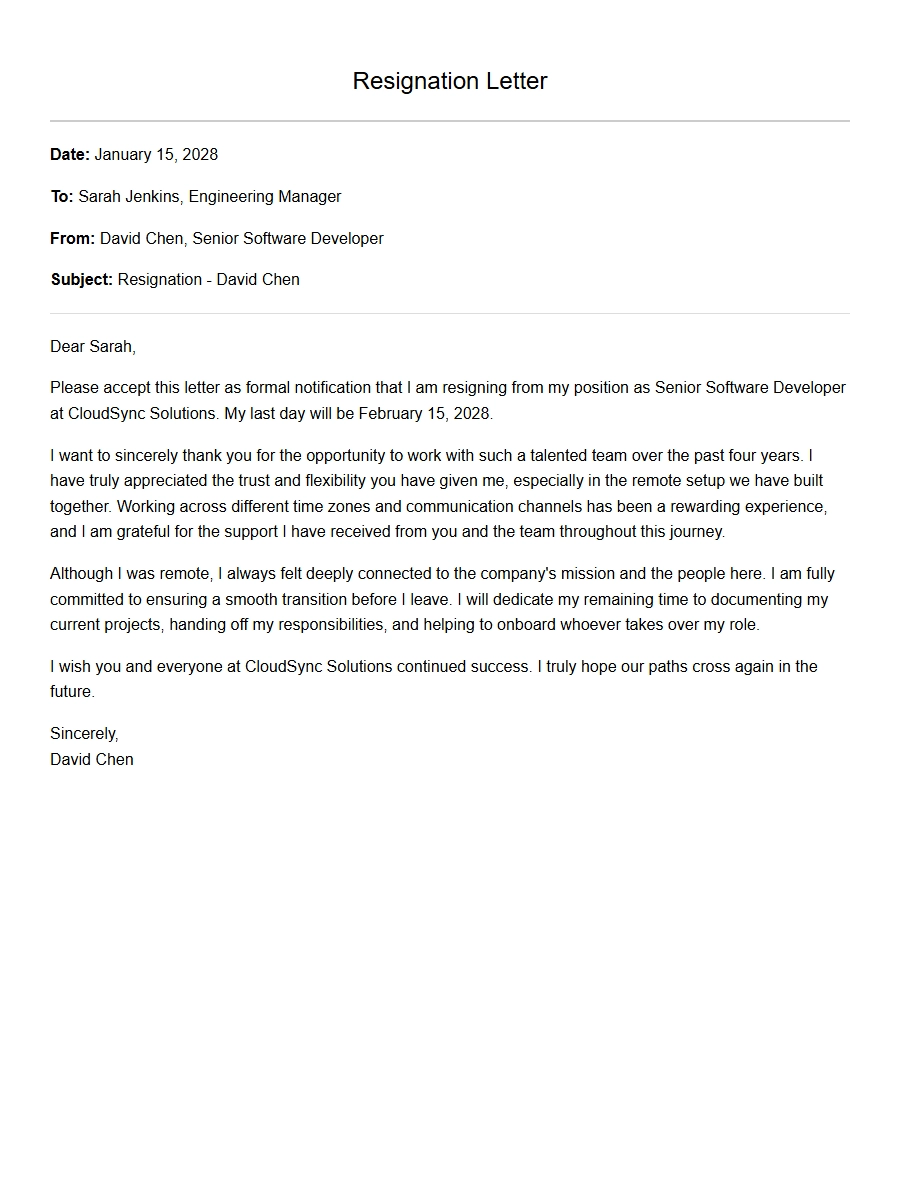 Polite Resignation Email for Remote Employees
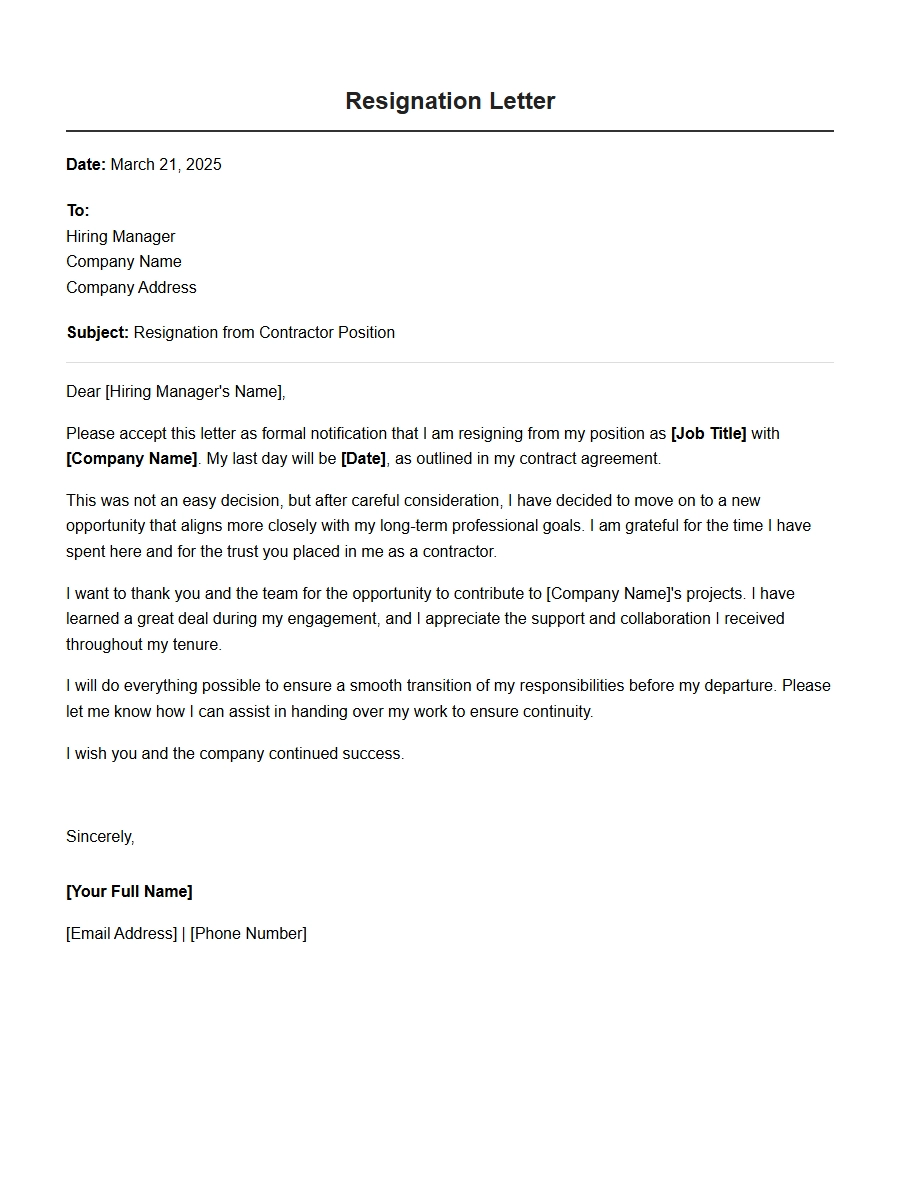 Short Resignation Letter for Contractor Position
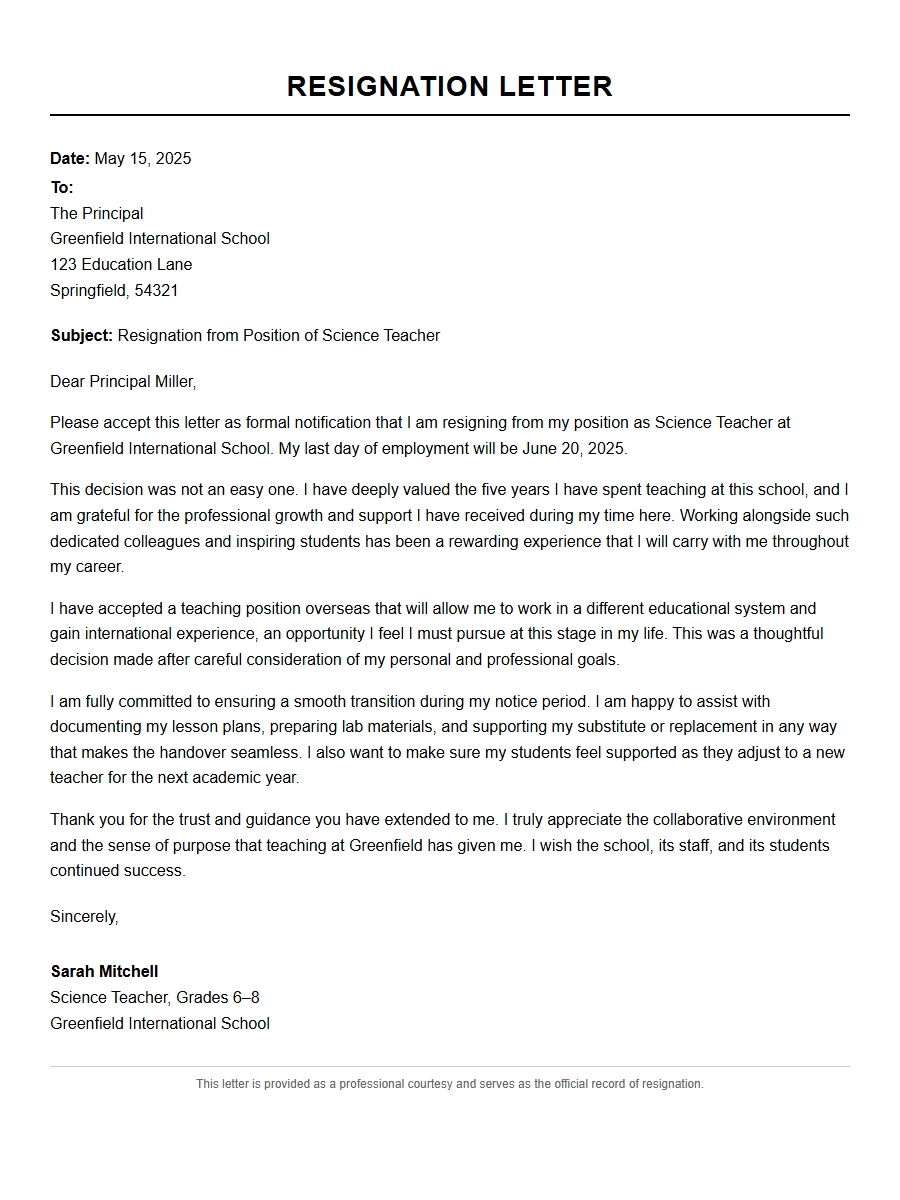 Teacher Resignation Letter Example
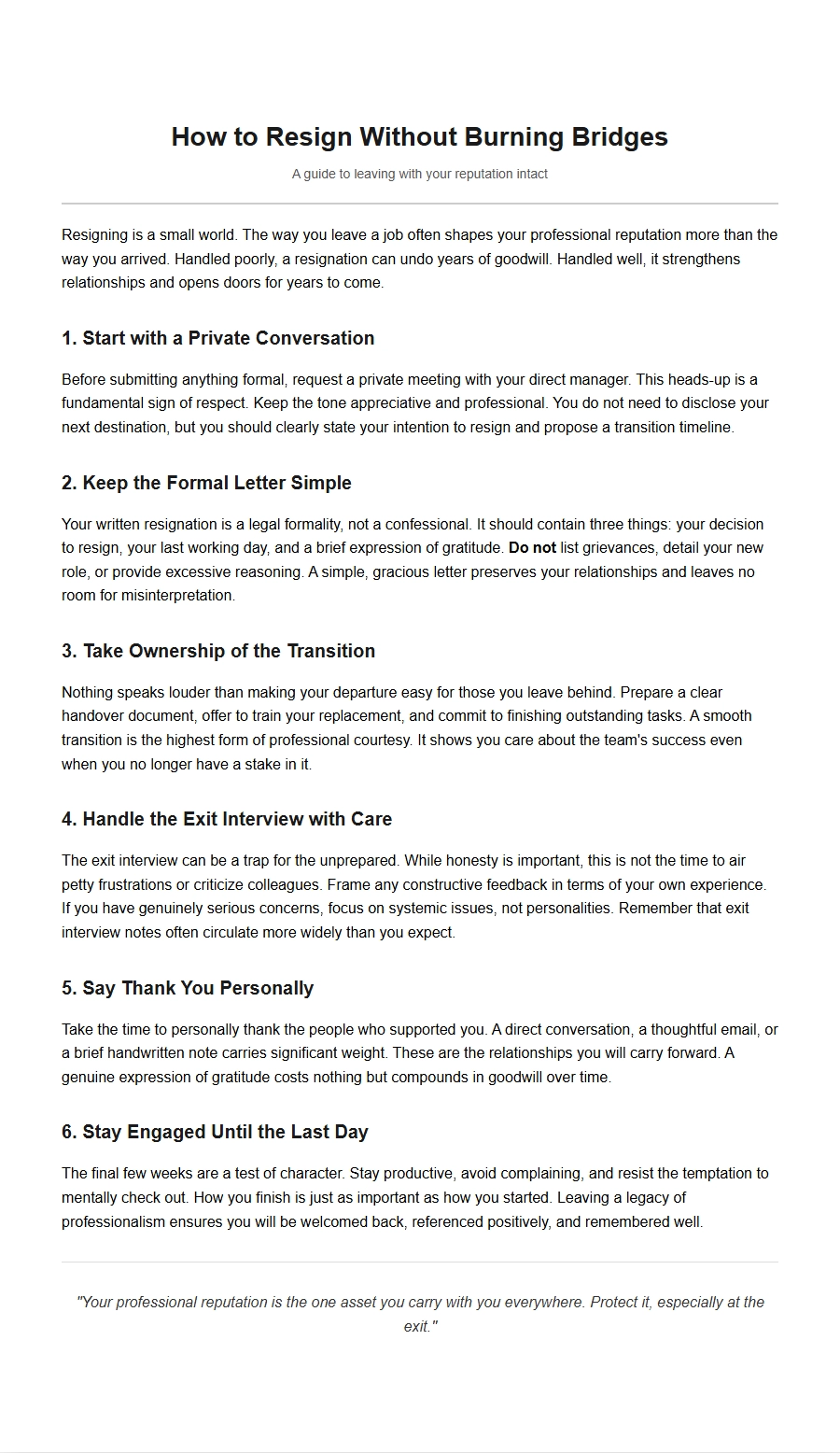 How to Resign Without Burning Bridges
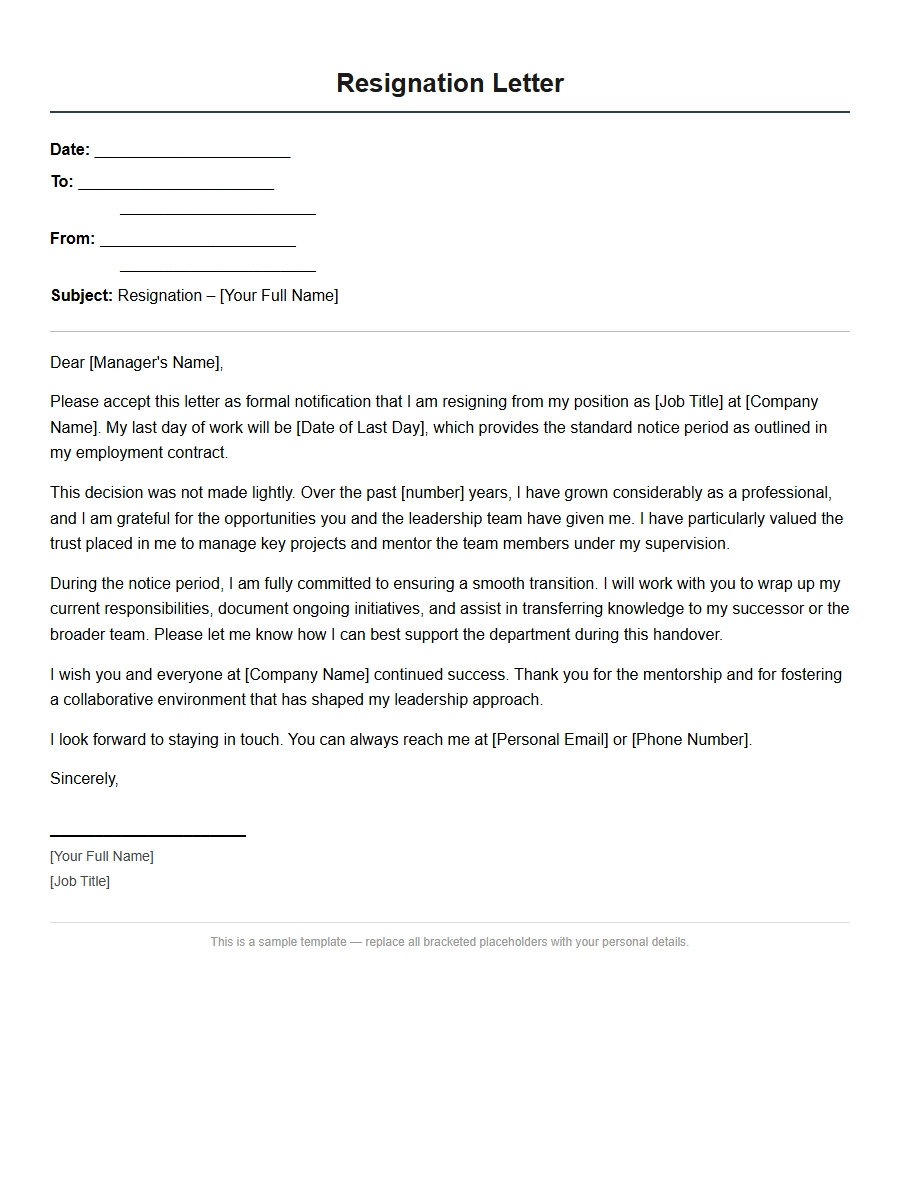 Formal Resignation Letter Sample for Manager
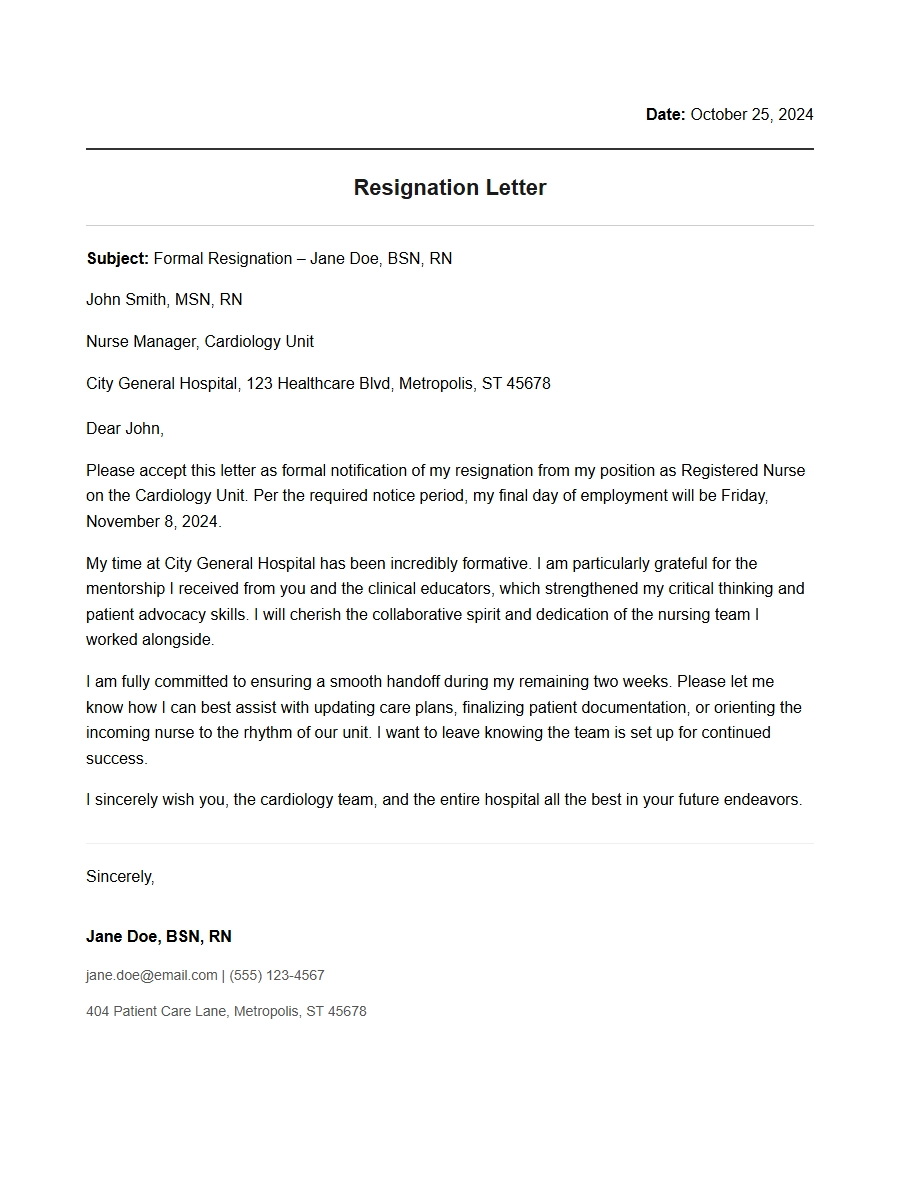 Nurse Resignation Letter with 2 Weeks Notice