You’ve just seen the moving truck pull away, and now you’re standing at your kitchen window wondering if you should knock on that new neighbor’s door—and if you do, what exactly do you say? Grabbing a pen to write a welcome note can feel awkward, especially when you don’t know their name yet or whether they’d prefer a handshake or a wave from across the lawn. A short, well-written letter or note is a simple way to break the ice without the pressure of an unexpected conversation.
Using a sample to write that welcome isn’t cheating—it’s smart. A solid letter template gives you the structure and polite phrases you need, so you’re not staring at a blank page wondering how to start. It saves you time and keeps the tone warm without crossing into formal or stiff territory. Think of it as borrowing a friendly script that still leaves plenty of room for your own voice.
What makes a welcome note feel genuine, not forced
The best welcome letters are short, specific, and helpful. Instead of a generic “welcome to the neighborhood,” try mentioning something you’ve noticed: the flowers they planted, the kids’ bikes in the driveway, or the friendly dog. That small detail shows you’ve paid attention and turns your note from a form letter into a genuine gesture.
Keep your professional correspondence instincts in check here. This isn’t a business letter, so skip the overly formal salutation and closing. “Dear New Neighbor” works fine when you don’t have a name, and “Best” or “Warmly” is plenty for a closing. The goal is to sound like a real person, not a real estate agent.
How to adapt a sample without losing your authenticity
When you find a sample you like, read it through once. Then rewrite the first sentence in your own words. That opening is where your personality shows up. For example, a sample might say, “We were so excited to see you moving in.” You might prefer, “I noticed your moving truck this morning and wanted to say hello.” Both work—yours just sounds more like you.
After that, keep the sample’s structure but swap in details from your own street. Mention a local coffee shop, the best pizza delivery spot, or the fact that the block has a loose dog that sometimes escapes. These small touches make the letter feel lived-in and useful. Also, pay attention to tone in writing—aim for warm but not overbearing. A new neighbor might be overwhelmed with boxes, so a short note they can set aside is better than a long story about your own moving day.
Common mistakes that make a welcome note miss the mark
Ever received a letter that felt too stiff or too casual? That’s usually a letter writing etiquette issue. Here are a few traps to avoid:
Using an outdated salutation. “To Whom It May Concern” feels cold and impersonal. Stick with “Dear Neighbor” or a simple “Hello.”
Ignoring the format. If you’re sliding a note under their door, handwrite it. If you’re sending it digitally, a short email is fine. A printed, perfectly formatted business letter feels odd for a neighborly welcome.
Forgetting to introduce yourself. Include your name and house number. It sounds obvious, but many people forget to say who they are.
Making demands too early. Avoid asking for favors—“Can you water my plants next week?”—before you’ve even met. Keep the focus on offering help, not requesting it.
This kind of personal outreach is similar to writing a networking outreach to connection cold email, where the tone matters more than the length. You’re starting a relationship, not closing a deal.
When a welcome note becomes something more
Sometimes that first hello leads to a real connection. A neighbor might thank you for the note and invite you over, or you might find yourself exchanging recipes and phone numbers. That’s when a simple welcome letter turns into something like an appreciation letter for volunteer work example, where you’re writing to thank them for joining the block party or helping with a shared project.
If a neighbor later faces a tough loss, the same warm tone you used in your welcome note can carry over into a sympathy card message extension in letter form. Starting with a friendly, genuine note builds a foundation that makes harder conversations easier later.
What to do after you write the note
Don’t just drop it in their mailbox and disappear. Walk it over, say a quick “hi” if they’re outside, or leave it with a small welcome gift—a store-bought cookie or a local map works great. If you mention your name and house number, they know exactly where to knock when they need a cup of sugar or a recommendation for a plumber.
Proofreading your letter is a quick step that saves you from an embarrassing typo. Read it out loud or have someone else glance at it. A misspelled street name or an accidentally rude phrase (like “we thought you’d never move in”) can undo all your goodwill.
For a longer, more formal welcome—like one you might send on behalf of a homeowners’ association—you might want to look at the structure of a requesting recommendation from professor personally personal letter. It has a clear introduction, body, and closing that you can adapt for a group welcome.
Think of your welcome note as a springboard, not a crutch. The sample gets you started, but your personal details and warmth make it land. The more you write these notes, the easier they get. Next time a new neighbor moves in, you’ll grab a pen and know exactly what to say.
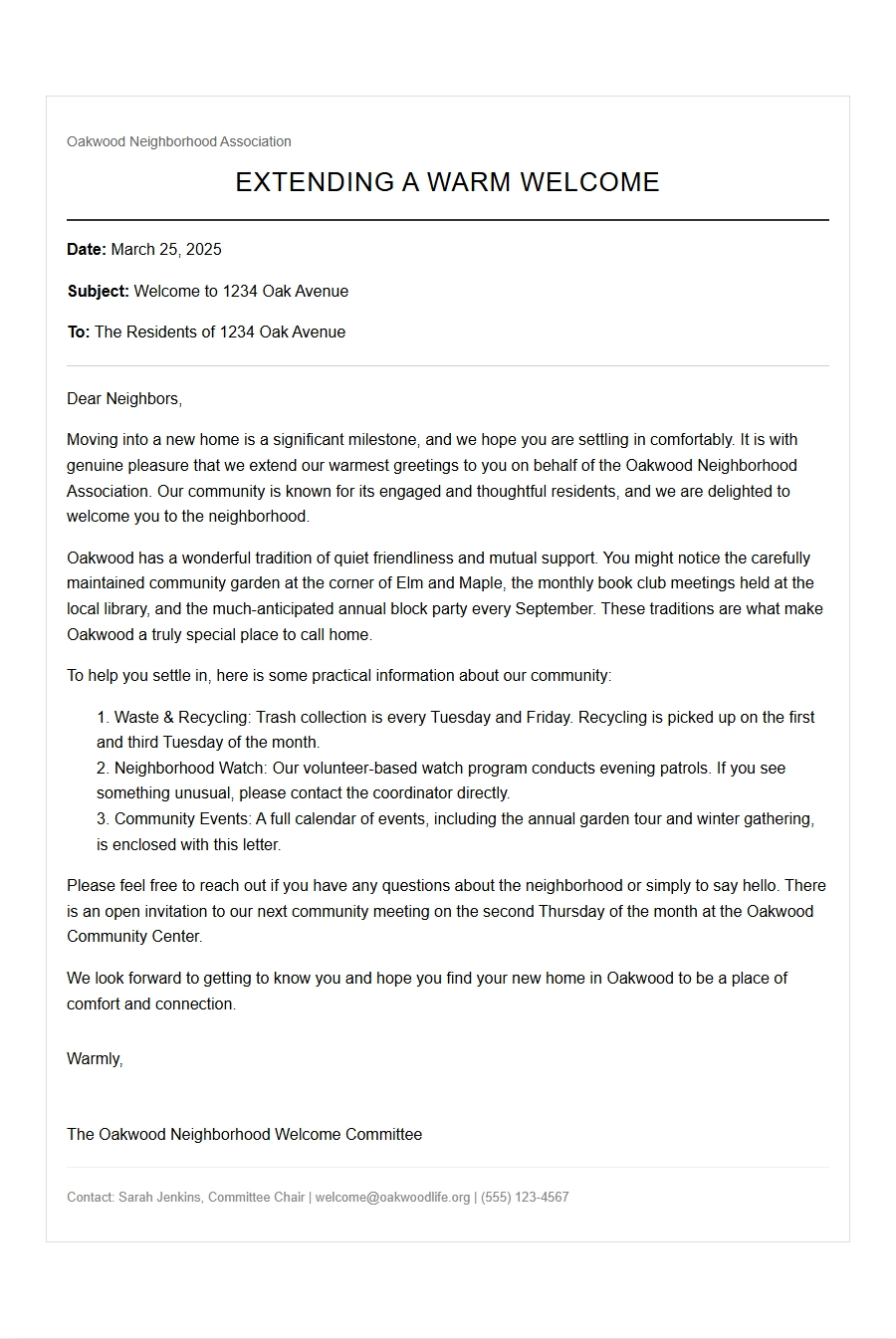
Examples for Different Needs
A Warm Welcome Letter for New Neighbors
A Warm Welcome from Next Door
Dear Neighbor,
Welcome to the neighborhood! I'm Sarah from the house next door. Moving can be overwhelming, so I wanted to reach out and offer a friendly hand. If you need help with anything—unpacking boxes, finding a good pizza place, or just figuring out the trash schedule—please don't hesitate to knock on my door.
A few things to help you settle in:
Trash pickup: Tuesdays and Fridays. Recycling is every other Tuesday.
Nearest grocery: Greenway Market, about 5 minutes by car.
Park rule: Dogs allowed off-leash before 9 am.
We have a block party every spring, and I'll make sure you get an invitation. In the meantime, please feel free to join our street's WhatsApp group—just text me your number and I'll add you.
Wishing you a smooth move and many happy years here!
— Sarah
Welcome to the Street! (Block Captain)
Hello and welcome to Maple Avenue!
I'm your block captain, James. On behalf of everyone living here, I'd like to extend a genuine welcome. Our street is known for being friendly and safe, and we want you to feel at home right away.
To help you get acquainted, I've put together a quick list of trusted neighbors who can help with various needs:
Service
Neighbor
Phone
Pet sitting
Mrs. Chen (No. 42)
555-2345
Emergency plumber
Tom (No. 38)
555-6789
Kids' after-school
Lisa (No. 31)
555-1122
I also coordinate a monthly street cleanup on the first Saturday. If you'd like to join, I'll drop by with details. Seriously, we're here for you. Welcome again!
Invitation to Neighborhood Meet-and-Greet
Dear New Resident,
You're invited! To help you get to know the wonderful people in our community, the Elmwood Neighborhood Association is hosting a Meet-and-Greet next Saturday, May 18th, from 3:00 to 5:00 pm at the community center (145 Oak Street).
This is a casual event with light refreshments. We'll have a welcome table with maps, local business directories, and sign-up sheets for clubs. You'll meet members of the garden club, the hiking group, and the potluck dinner team—all excited to meet you.
Please bring a friendly smile and any questions you have about the area. Kids are welcome too. If you have food allergies, let me know by replying to this note and I'll ensure there are options for you.
We really hope you can join us. It's the best way to start feeling at home.
Welcome to the community! My name is Alex, and I live two houses down. I remember feeling lost when I first moved in, so I jotted down some practical tips that made my transition smoother.
Parking: Street parking is free but residential permits are required between 8 am and 6 pm. You can get one at City Hall or online.
Home security: The neighborhood watch meets the first Tuesday of every month at the library. Highly recommended.
Garbage and recycling: Details are in the handy brochure attached—I'm leaving a copy in your mailbox.
Local gems: Try the Sunday farmer's market at the park and grab a croissant from Le Petit Bakery on Main Street.
If you ever need a recommendation for a reliable handyman or just want to borrow a cup of sugar, my door is open. Welcome home!
Best, Alex
Welcome to the Community Garden
Greetings and welcome to the neighborhood!
I'm the coordinator of the Willow Creek Community Garden at the corner of Pine and 5th. Growing fresh vegetables and flowers is our passion, and we'd love to have you join us. Our garden has 20 raised beds, a compost station, and a small orchard.
If you're interested, here's what you can do:
Visit the garden any Saturday morning at 9 am for a tour.
Send me an email to reserve a plot (annual fee is only $25).
Attend our monthly workshop on organic gardening—next one is June 8th.
You don't need experience; we share tools and knowledge. It's a wonderful way to meet neighbors and relax. Plus, the tomatoes are amazing!
Please come by and say hi. Warmest welcome!
In bloom, Maria Santos
Welcome to the Book Club
Dear New Neighbor,
A big welcome from the Oakwood Book Club! We meet every third Thursday at the public library's meeting room. If you love reading (or just want to make new friends over a good story), you're invited to join us.
Our group chooses books by vote, and we read a mix of fiction, non-fiction, and occasional classics. For our next meeting on May 24th, we'll discuss The Midnight Library by Matt Haig. You can grab a copy at the library's front desk—I've reserved one for you under your name.
We also enjoy a small potluck during meetings (usually snacks). Don't worry about bringing anything your first time—just bring your thoughts and curiosity.
If you'd like to come, please drop me a line so I can save you a seat. I look forward to welcoming you in person!
Happy reading, Colleen Brown 555-9876 (text is fine)
Introducing Your Neighborhood Watch
Hello and welcome!
We—the Sunnyside Neighborhood Watch—would like to officially welcome you to the area. Our group is made up of volunteers who help keep our streets safe and connected. We patrol on foot and share alerts via a phone tree and a private social media group.
As a new resident, you'll receive a welcome packet with safety tips and emergency contact numbers. Here's a quick reference:
Contact
Name
Phone
Watch Captain
David Kim
555-0011
Block Representative
Your block (assigning soon)
—
Non-emergency police
Precinct 7
555-1212
We also hold a quarterly meeting (next one is June 12th at 7 pm, in the community room). You're welcome to attend and learn more. Safety is a shared effort, and we're glad to have you on board.
Stay safe and welcome!
Welcome from the Homeowners Association
Dear New Resident,
On behalf of the Green Valley Homeowners Association, welcome to our community! We strive to maintain a clean, friendly, and vibrant neighborhood. As a member of the HOA, there are a few key items to be aware of.
Please review the attached Welcome Packet (delivered with this letter) which includes:
Architectural Guidelines: For any exterior changes to your home.
Community Rules: Trash, parking, noise, and pet regulations.
Facilities Map: Pool, clubhouse, tennis courts, and their hours.
Our monthly HOA fee is $75 (due by the 5th). You can pay online or by check. We also have an annual block party in September—details will follow.
If you have questions, our property manager, Linda, can be reached at 555-3300. I, as board president, am also happy to help: email president@greenvalleyhoa.org.
We're glad you chose Green Valley. Welcome!
Sincerely, Mark Thompson HOA President
Welcome with Local Favorites
Dear Newcomer,
Welcome to the area! I'm a longtime resident and local food enthusiast. I wanted to share a list of my go-to spots that I think every new neighbor should try. You'll quickly see why we love living here.
Here's a short list to get you started:
Best coffee: Brew & Bean on Main St. Their cold brew is legendary.
Family-friendly restaurant: Luigi's Pizza, a 2-minute walk from the park.
Dry cleaner: CleanRight at the corner of 2nd and Pine. Fast and friendly.
Gym: FitHub on Maple Ave—first month free for new neighbors.
Also, if you have kids, the library runs a storytime every Wednesday at 10 am. And for weekend fun, the farmer's market at the square is unbeatable.
I know moving is chaotic, so please reach out if you need a recommendation for anything else. I've attached a map with these spots marked (you should find it in your mailbox). Once again, welcome!
Yours, Rebecca Lu
Welcome to the School District
Dear New Family,
Welcome to the Riverside School District! Moving is especially busy when you have children, so I wanted to share some information that can help your family settle in.
Here's a quick overview of the schools your child may attend based on your address:
School Level
School Name
Contact
Elementary
Riverside Elementary
555-7700
Middle School
Oak Hill Middle
555-8811
High School
Riverside High
555-9922
Enrollment: bring proof of residency (utility bill or lease), birth certificate, and immunization records. The district office is at 123 School Street, open Monday–Friday 8 am–4 pm.
We also have strong after-school programs, sports, and a parent-teacher association that welcomes new members. I'm the PTA secretary, so feel free to email me at pta.riverside@gmail.com with questions.
We're thrilled to have you in our school community. Welcome!
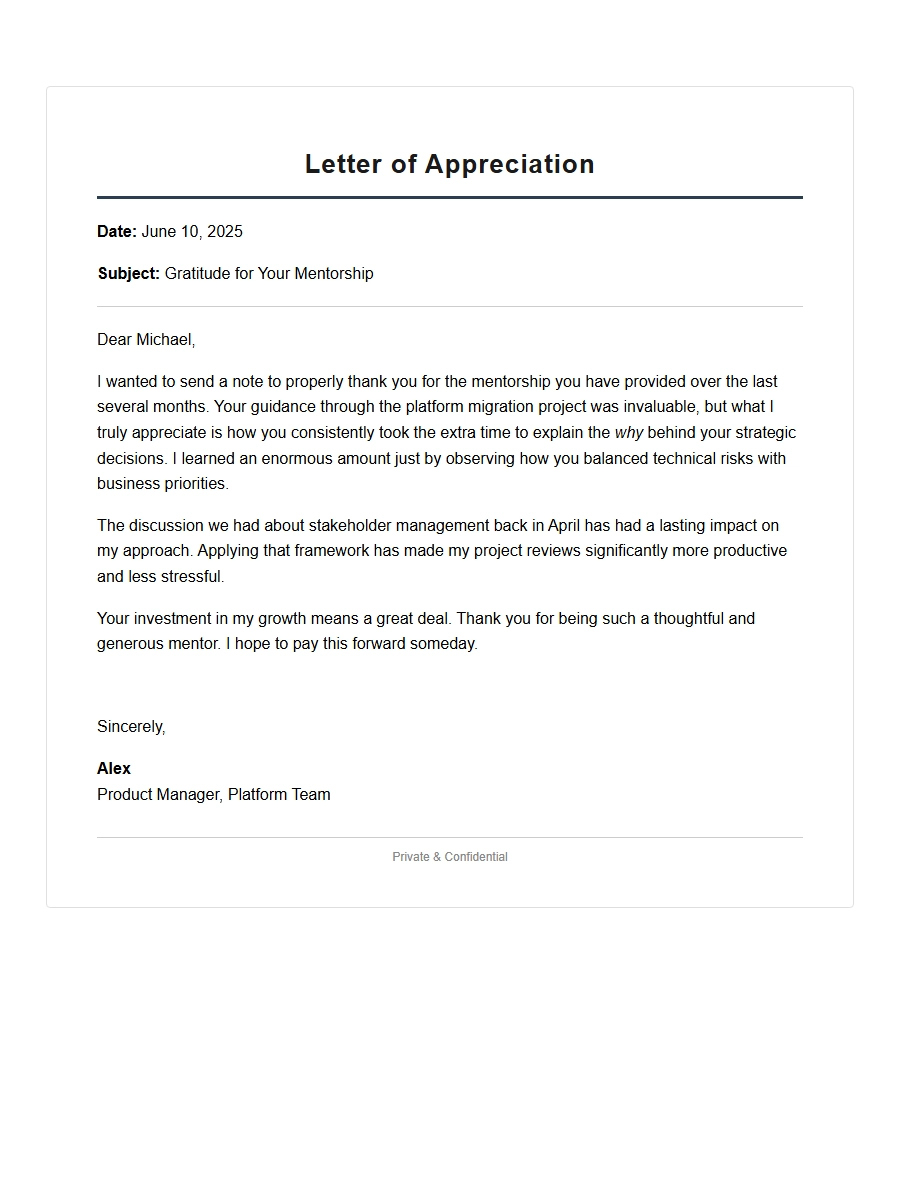 Thanking a Mentor for Guidance: Sample Messages
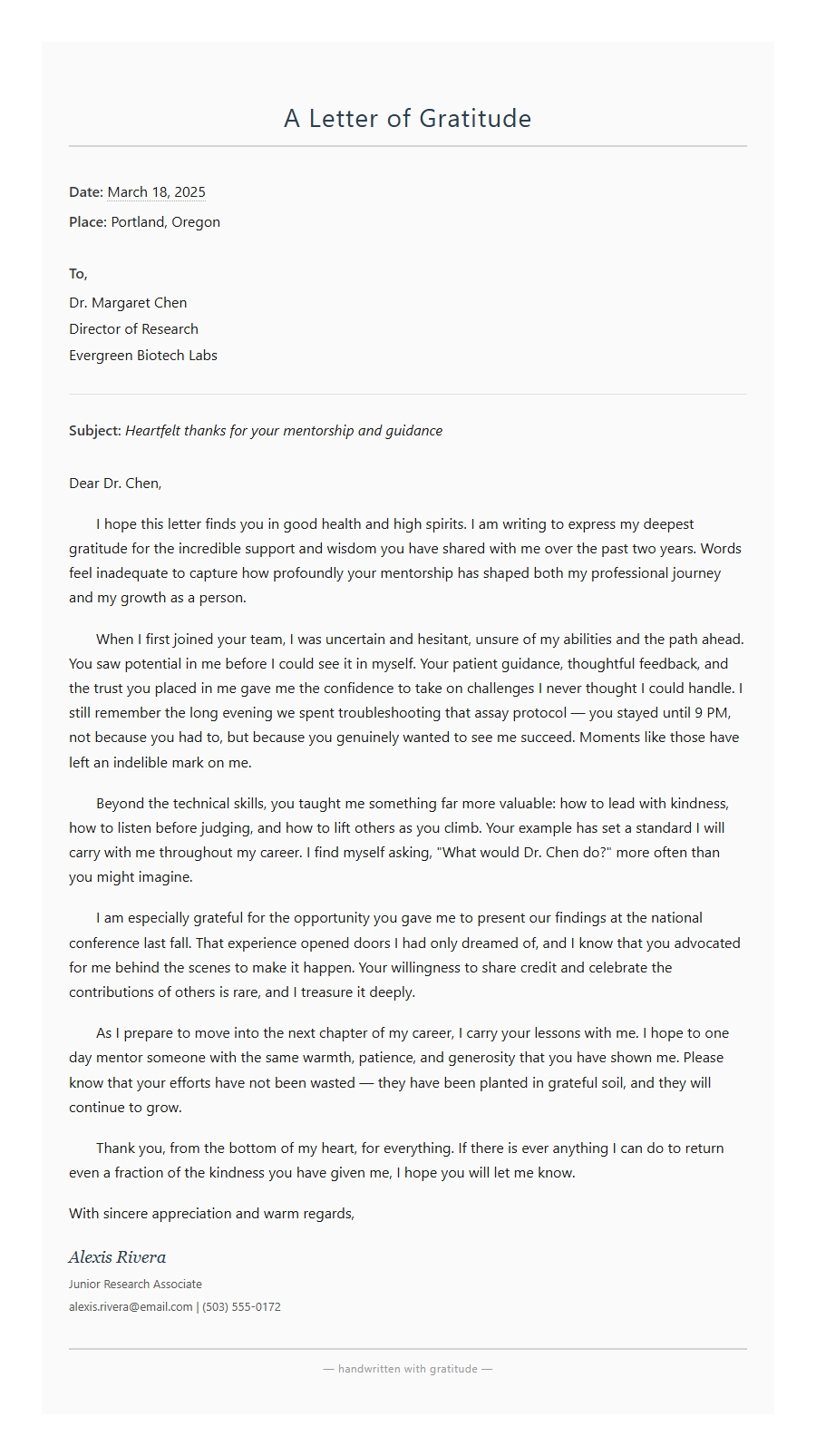 Expressing Gratitude: Handwritten Letter Example
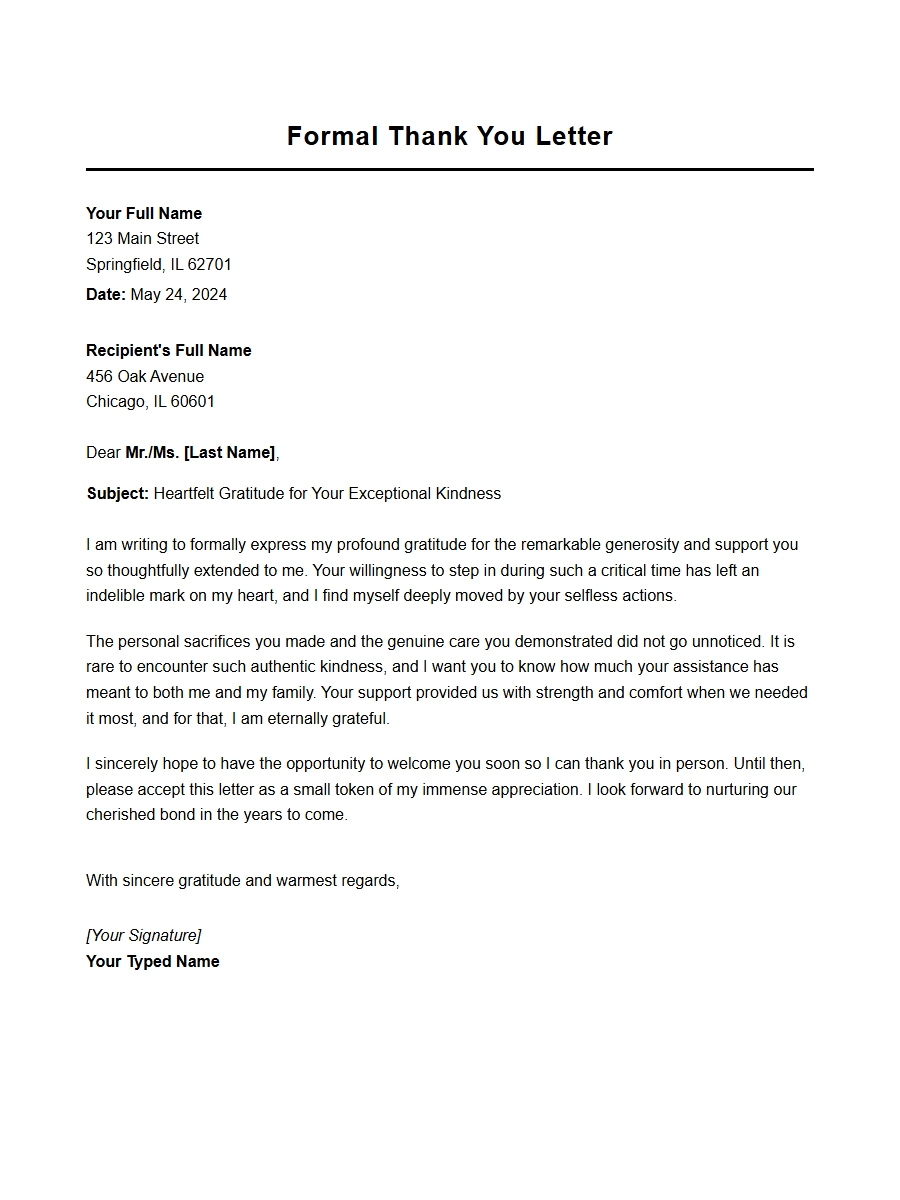 Expressing Thanks in a Formal Personal Letter
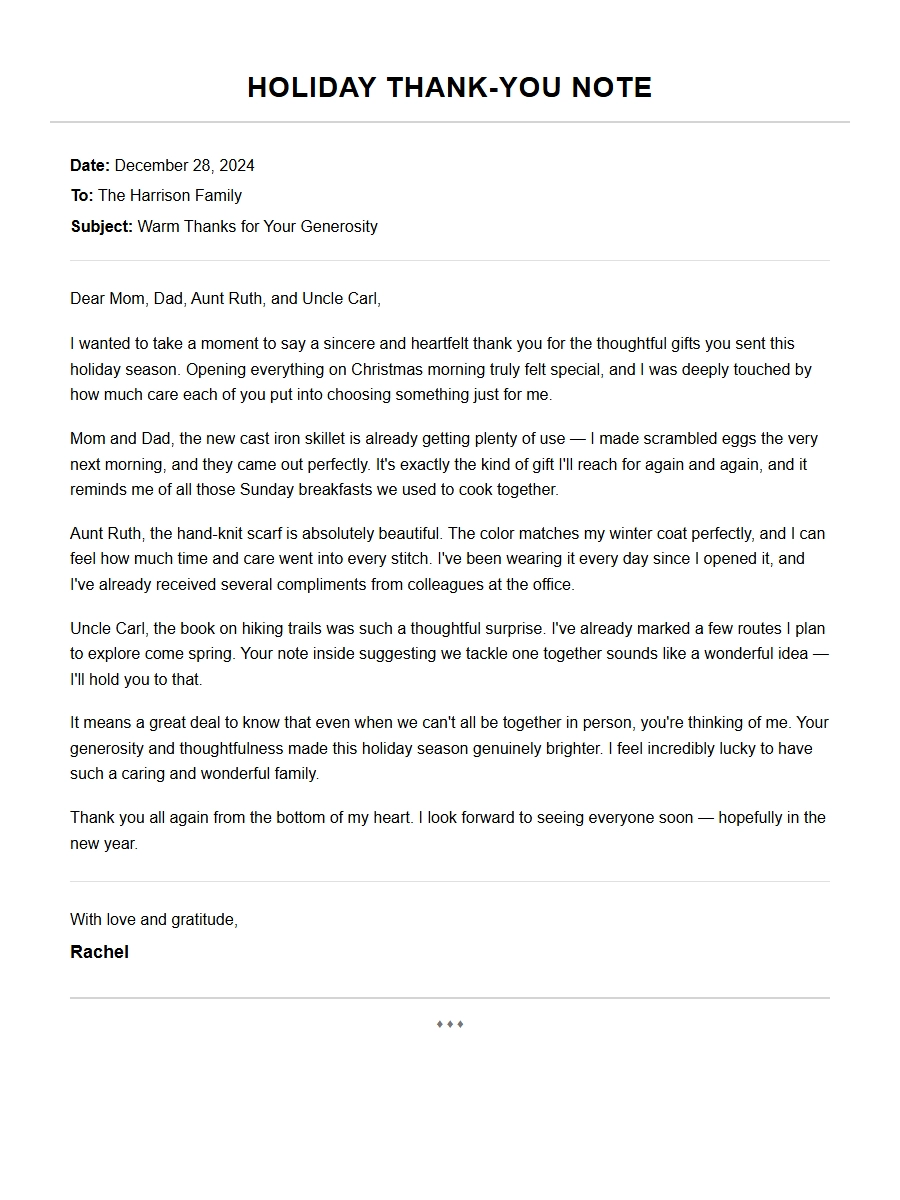 Thank You Letter Examples for Family Holiday Gifts
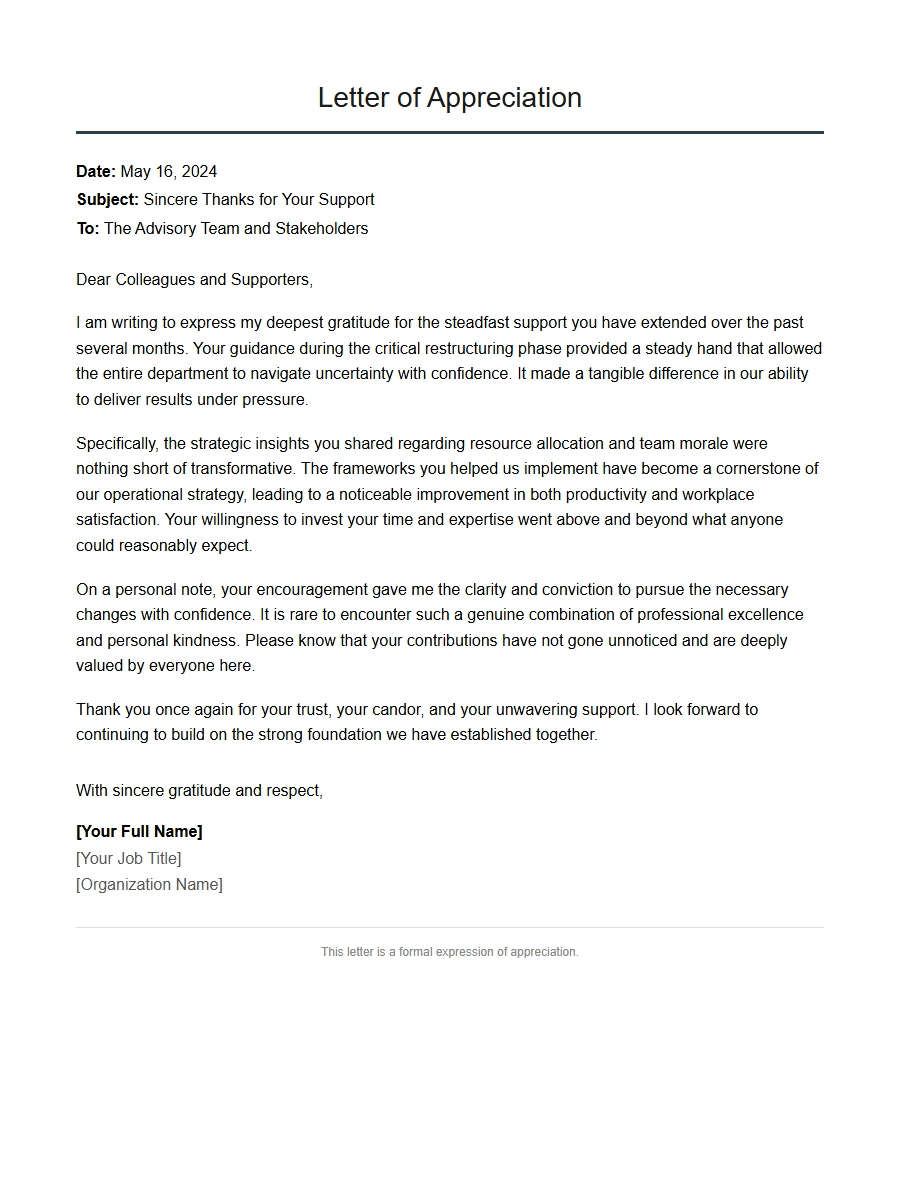 Sample Thank You Letter for Support
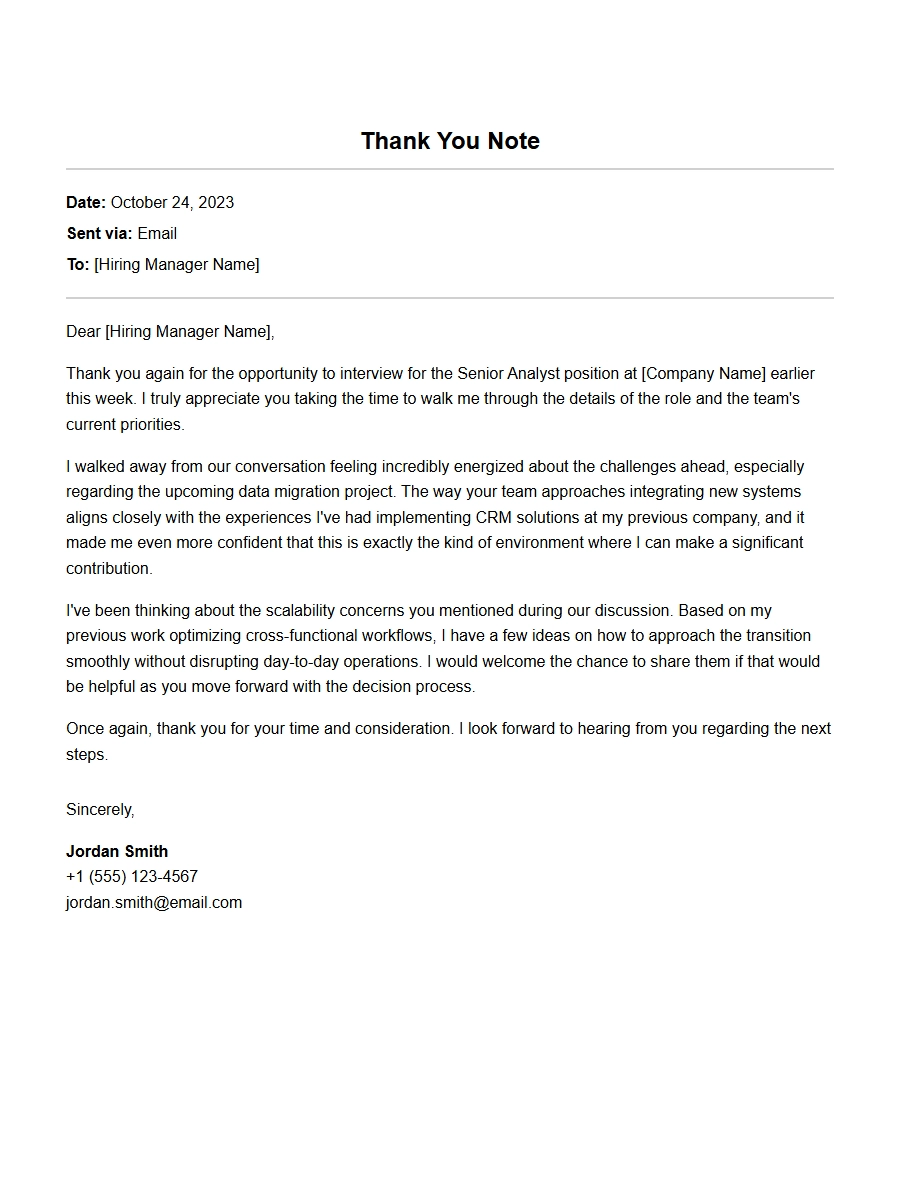 How to Write a Personal Thank-You Note After an Interview