You’ve just received help that made a real difference—maybe a colleague stayed late to fix a critical error, a friend connected you with a job lead, or a mentor spent hours giving you feedback. Now you need to say thank you in a way that shows you actually mean it. But writing that letter can feel awkward. You want to be professional, but not stiff. You want to sound grateful, but not over-the-top. Using a letter sample isn’t a shortcut. It’s a smart way to get the structure right so you can focus on what matters: your actual message.
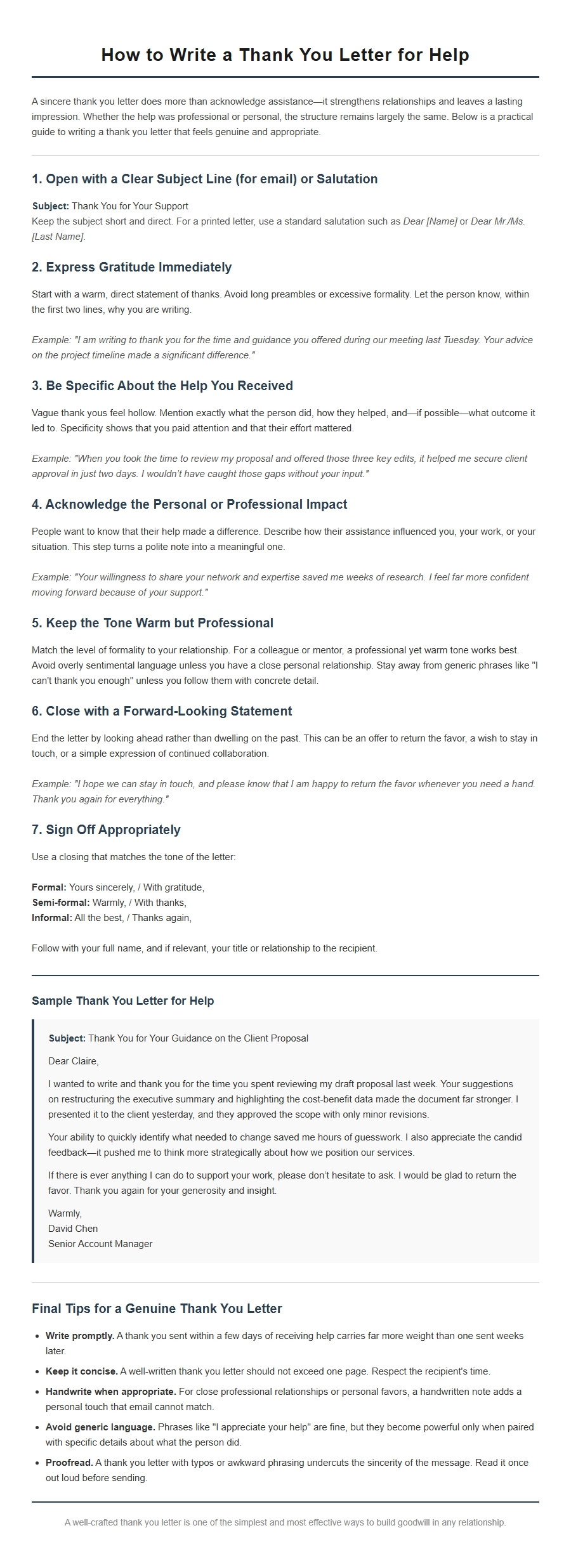
A good thank you letter for help accomplishes two things. First, it acknowledges the specific act of kindness or effort. Second, it reinforces your relationship with the person. The sample you choose gives you a reliable framework—the salutation and closing, the right tone in writing, and a logical letter structure. But the heart of the letter has to come from you. That’s where the real value lives.
Choosing the right sample for your situation
Not all help is the same, and your letter shouldn’t be either. If someone gave you professional guidance, lean toward formal writing tips and a respectful tone. If a neighbor helped you move furniture, you can be warmer and less structured. Think about your relationship with the person. A thank you letter for help from a boss will look different than one for a friend. Pick a letter template that matches that dynamic, not just the format you find first.
For business settings, stick to a clean business letter format. Use a standard letterhead design if you’re sending a printed note, or a simple subject line if you’re emailing. For personal situations, a handwritten note often lands better. Digital letter format is fine for quick thanks, but handwritten still carries more weight for significant help.
Making the sample your own
Once you have a sample, resist the urge to just swap in names and hit send. Read it out loud. Does it sound like you? If the language feels too formal, rewrite it. If it’s too casual for the situation, tighten it up. The goal is a customizable letter that keeps your authentic voice while following proven letter writing etiquette.
Start with the opening paragraph. Be specific about what you’re thanking them for. Instead of “Thanks for your help,” try “When you walked me through the budgeting process last Tuesday, you saved me hours of confusion.” Specific details make gratitude feel genuine. Then explain how their help affected you. Did it save you time? Reduce stress? Open a door? That context is what makes your letter memorable.
Common mistakes to avoid
One of the biggest errors is using outdated phrases like “To Whom It May Concern” or “Dear Sir or Madam” when you know the person’s name. Always address them directly. Another mistake is ignoring the medium. If you’re sending an email, skip the full letterhead design and use a clear subject line instead. If you’re printing the letter, check your formatting—margins, spacing, and font consistency matter. And always proofreading letter carefully. A typo in a thank you note can undercut your sincerity.
Category: Personal Letters & Professional Correspondence
Also, don’t overthink the length. A thank you letter for help doesn’t need to be long. Two or three short paragraphs are often perfect. What matters is that every sentence serves a purpose. If you’re sharing a story or explaining how their help made a difference, keep it relevant. If you’re writing a letter of recommendation or referencing someone else’s help, make sure it flows naturally into your thanks.
Putting it all together
Think of the sample as a practice run. The first draft might feel clunky, but that’s okay. Revise it until it sounds like something you would actually say. If you need help finding the right words, look at cover letter examples for professional phrasing, but adapt them to your situation. Even a resignation letter sample can teach you how to close a note with grace and professionalism.
For some common situations, you might find it helpful to see how others have handled specific requests. For instance, if you’re writing to community members about gathering support, you can check a petition signature request letter for tone ideas. If you’re thanking someone after moving into a new place, a welcome letter to a new tenant can show you how friendly yet formal notes work. For more official situations, like when you’re applying for documentation, an application for citizenship letter offers insight into structured gratitude. Even an apology for missing an appointment can help you understand how to express sincerity. And if you’re thanking a vendor for better rates, a letter negotiating better rates shows how to balance politeness with directness.
The best thank you letters feel both professional and personal. They respect the relationship without being stiff. They show genuine appreciation without being overwhelming. Over time, writing these letters gets easier. You’ll learn what works and what doesn’t. And every time you send one, you strengthen a connection that matters.
Helpful Examples
How to Write a Thank You Letter for Help
Job Interview Thank-You Letter
Subject: Thank You for the Interview Opportunity
Dear [Hiring Manager Name],
I wanted to sincerely thank you for taking the time to interview me yesterday for the [Job Title] position. Our conversation confirmed my enthusiasm for the role and for [Company Name].
I especially appreciated learning about:
The team’s collaborative approach to problem-solving
The upcoming projects in the [Department]
Your emphasis on professional development
Since we spoke, I’ve been reflecting on how my experience with [specific skill] aligns with the needs of your team. I am confident I can contribute meaningfully from day one.
I look forward to hearing about the next steps. Please feel free to reach out if you need any additional information. Thank you again for this opportunity.
Best regards, [Your Name]
Thank You for Help Moving
To: [Friend’s Name]
Subject: Heartfelt Thanks for Moving Help
I can’t thank you enough for dedicating your Saturday to help me move into the new apartment. Your strength, patience, and positive attitude made a stressful day feel like a team effort.
Things you helped with (and I’m especially grateful for):
Carrying the heavy sofa up three flights of stairs
Organizing the kitchen boxes so I could find the coffee maker first thing
Cheering me up when the elevator was broken
Quick breakdown of your help (so you know how much it meant):
Task
Hours
Difficulty
Heavy lifting
4
High
Packing/unpacking
2
Medium
Moral support
6
Priceless
I owe you a home-cooked meal once the boxes are gone. Thank you for being such a wonderful friend.
Warmly, [Your Name]
Neighbor’s Help During Illness
Dear [Neighbor’s Name],
I’m writing this note with a heart full of gratitude. While I was recovering from [illness/surgery], your kindness made such a difference. From bringing over soup to walking my dog, you showed me what true neighborly care looks like.
Acts of kindness I’ll always remember:
Dropping off homemade chicken noodle soup three times
Taking out my trash bins on collection day
Checking on me daily – just a quick text or knock
Your help allowed me to rest and heal without worrying about daily chores. I’m feeling much better now, thanks in part to your support. I hope I can return the favor soon – maybe bring over some cookies or help with your garden.
With sincere thanks, [Your Name]
P.S. – I still owe you a proper thank-you card, but this note is just the start.
Mentor’s Guidance Thank-You
Dear [Mentor’s Name],
I’ve been wanting to write this letter for weeks. Your guidance during my [project/career transition] has been absolutely invaluable. Not only did you help me sharpen my resume, but you also gave me the confidence to pursue opportunities I had previously dismissed.
Key takeaways from our sessions:
How to structure my portfolio to highlight impact
The importance of networking with intention
Strategies for negotiating my first salary
I’m happy to share that I recently accepted a position at [Company Name] – something I directly attribute to your coaching. I’ve attached a quick overview of my progress for your reference:
Milestone
Date
Outcome
Resume revision
Feb 10
4 interview requests
Mock interview
Feb 20
Improved confidence
Offer acceptance
Mar 5
New job started
Thank you for investing your time in me. I promise to pass it forward.
Gratefully, [Your Name]
Colleague Covering Your Shift
Hi [Colleague’s Name],
I owe you a huge thank-you for covering my shift last [day]. Your willingness to step in at the last minute saved me from a really tough situation – my [child/family member] came down with a fever and I couldn’t leave them alone.
What I truly appreciated:
You didn’t hesitate when I texted you
You handled the [specific task] flawlessly (I heard from [Manager] that you did a great job)
You even sent me a kind message asking how my family was doing
Shifts you covered for me this month:
Date
Shift Time
Reason
March 12
2 PM – 10 PM
Sick child
I’d love to return the favor – just let me know when you need a shift covered or even a coffee break. You’re a true team player.
Thanks again, [Your Name]
Family Financial Help Thank-You
Dear [Family Member’s Name],
I’m not sure where to begin, except to say thank you from the bottom of my heart. Your financial support during this difficult time has been a lifeline. When [unexpected expense – e.g., car repair/medical bill] hit, I didn’t know how I would manage. Your generosity lifted that weight.
How you helped (and how it was used):
Amount received: $500
Used for: Emergency plumbing repair
Impact: Avoided a major water damage and restored home safety
I’ve started a repayment plan and will send you the first installment by [date]. However, please know that even if repayment takes time, I am eternally grateful. I’ll also be sure to pay it forward to someone else in need someday.
Timeline of events:
Feb 20: Issue discovered
Feb 22: Your generous transfer arrived
Feb 24: Repair completed successfully
Thank you for being the kind of family who shows up. I love you.
With deepest gratitude, [Your Name]
Volunteer Contribution Thank-You
Dear [Volunteer’s Name],
On behalf of [Organization Name], I want to express our heartfelt thanks for your incredible volunteer effort during our [Event Name/Project]. Your dedication and hard work directly contributed to the event’s success – we served over 200 meals and organized donations for 50 families.
Your specific contributions:
Sorted and packed 150 food boxes
Managed the registration desk for 4 hours
Trained two new volunteers on the spot
Impact summary:
Area
Result
Families helped
50
Volunteer hours saved
30+ (thanks to your efficiency)
Positive feedback from attendees
95% rated event excellent
We would love to have you back for future events. If you’d like a formal reference letter for your resume, please reach out.
Thank you for making a difference!
With appreciation, [Your Name] Volunteer Coordinator
Teacher Extra Tutoring Thanks
Dear [Teacher’s Name],
I wanted to write and thank you for the extra tutoring you provided last semester. Your patience and clear explanations helped me finally understand [subject/topic]. I went from failing my quizzes to scoring a B+ on the final exam.
Specific ways you helped:
Breaking down complex formulas into simple steps
Extra practice sheets tailored to my weak areas
Staying after school twice a week, even when you had other commitments
My grade progression:
Assessment
Score Before
Score After
Quiz 1
65%
–
Midterm
70%
–
Final Exam
–
85%
Your belief in my ability to improve gave me the motivation to keep going. I will carry that lesson far beyond this classroom. Thank you for being an amazing teacher.
Warmly, [Your Name]
Stranger’s Kindness Thank-You
To the kind stranger at [Location],
I don’t know your name, but I’ll never forget your generosity. Last [day], when I dropped my groceries and my phone battery died, you stopped without hesitation. You helped me gather everything, offered to call a friend, and even gave me $20 for a cab – refusing to take it back.
What you did:
Helped pick up scattered items (even a broken jar – you handled it carefully)
Let me use your phone to call for a ride
Insisted on giving me cash when I mentioned I couldn’t carry the bags home
I tried to get your name, but you just smiled and said “pay it forward.” So I’m writing this as a promise that I will. I’ve already donated to a local food bank in your honor. Thank you for restoring my faith in humanity.
Gratefully, [Your Name]
Support Group Encouragement Thanks
Dear [Support Group Name/Facilitator],
I’m writing to thank every single member of [Group Name] for the encouragement you’ve given me over the past few months. When I first joined, I felt alone and overwhelmed by [challenge – e.g., grief/chronic illness/recovery]. Your stories, advice, and empathetic listening gave me strength I didn’t know I had.
How the group helped me:
Shared resources for coping strategies
Listened without judgment during my toughest sessions
Celebrated small victories with me (like my first day back at work)
My personal progress since joining:
Date
Milestone
Jan 5
Attended first meeting (nervous)
Feb 12
Shared my story
Mar 20
Started volunteering to help others
You all show that community heals. I will be forever grateful. Thank you for being my rock.
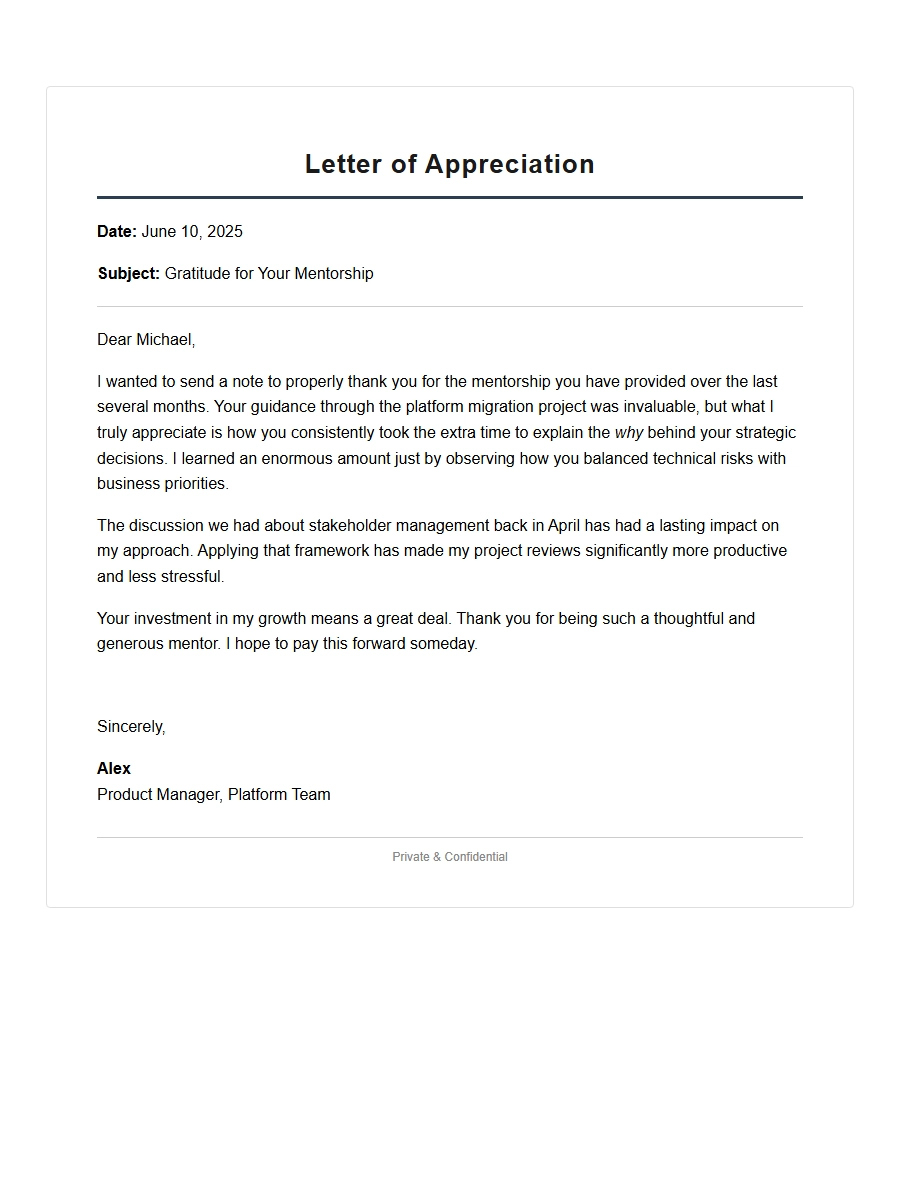 Thanking a Mentor for Guidance: Sample Messages
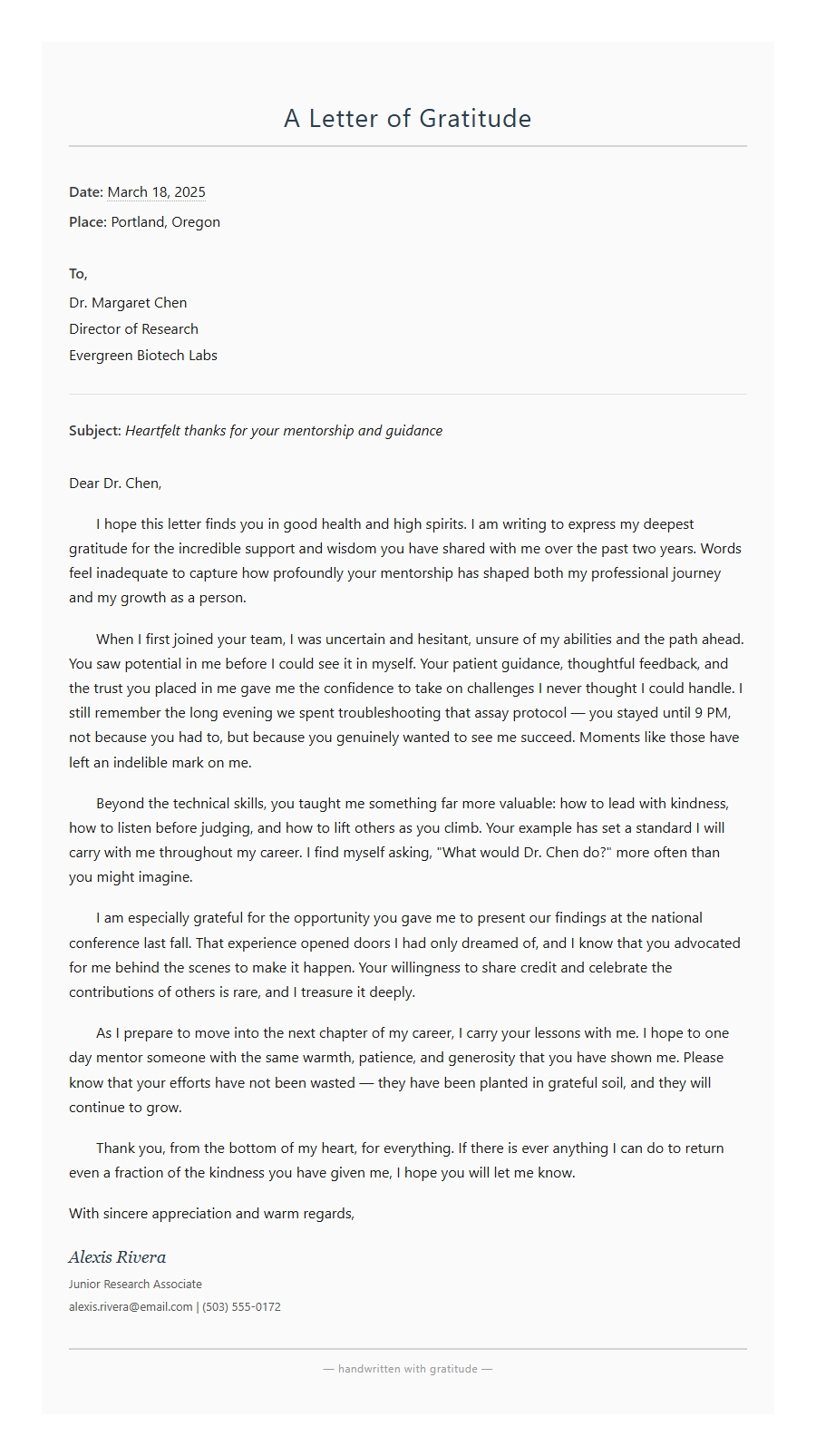 Expressing Gratitude: Handwritten Letter Example
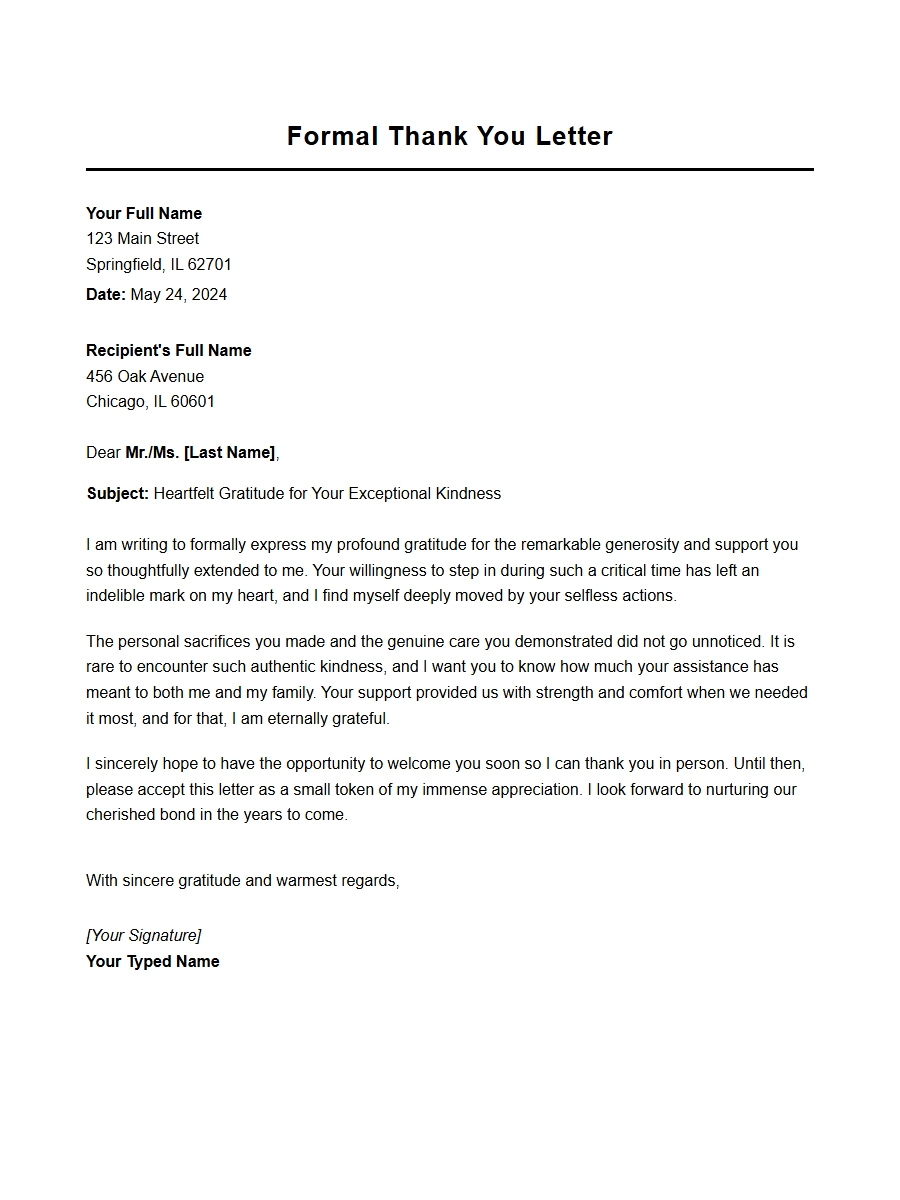 Expressing Thanks in a Formal Personal Letter
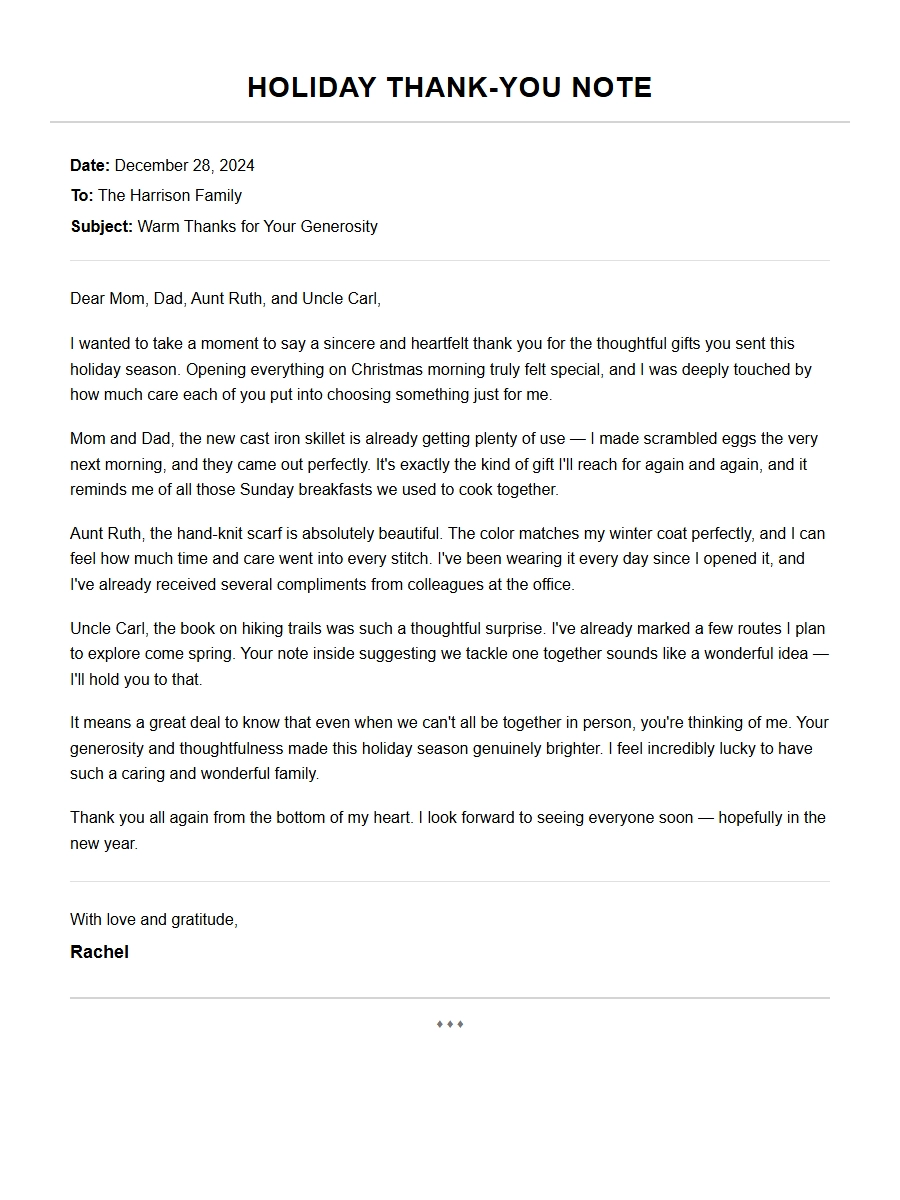 Thank You Letter Examples for Family Holiday Gifts
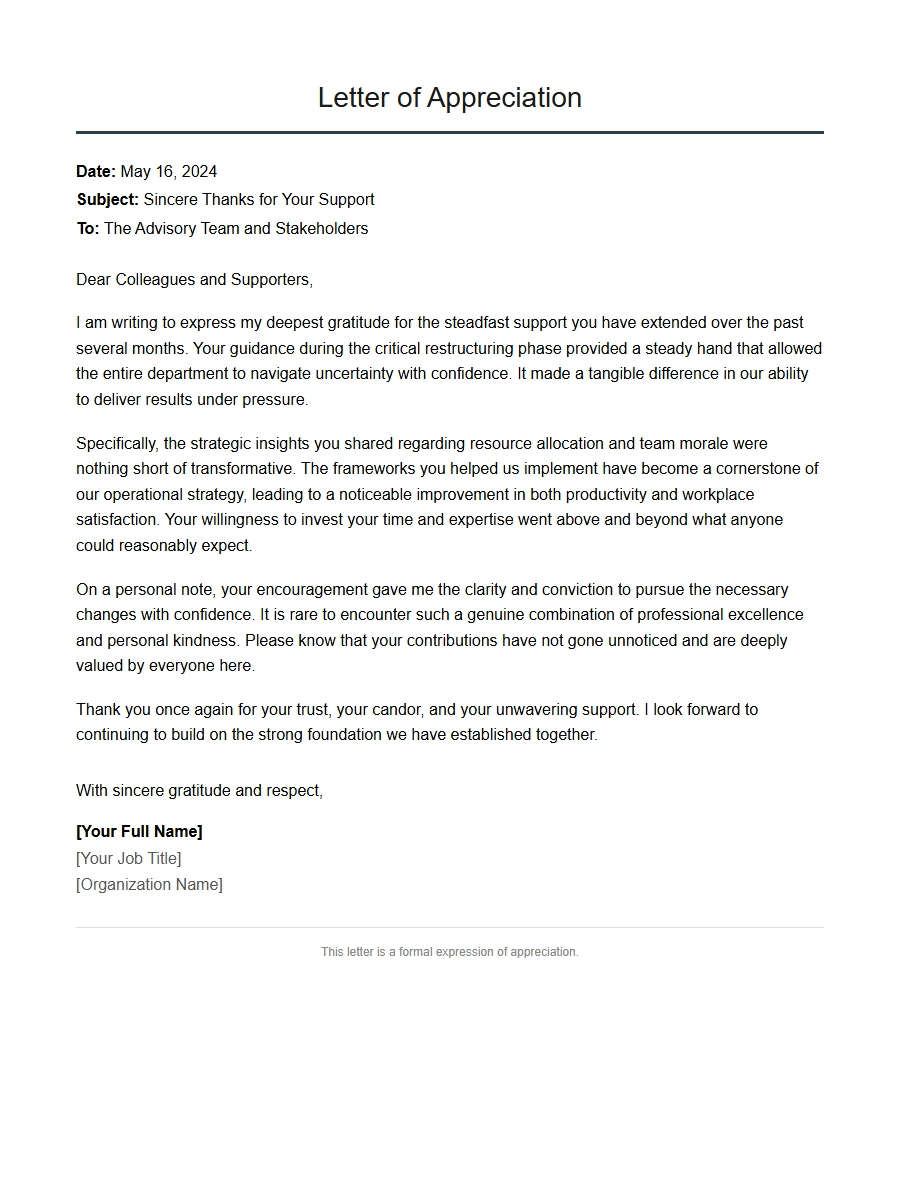 Sample Thank You Letter for Support
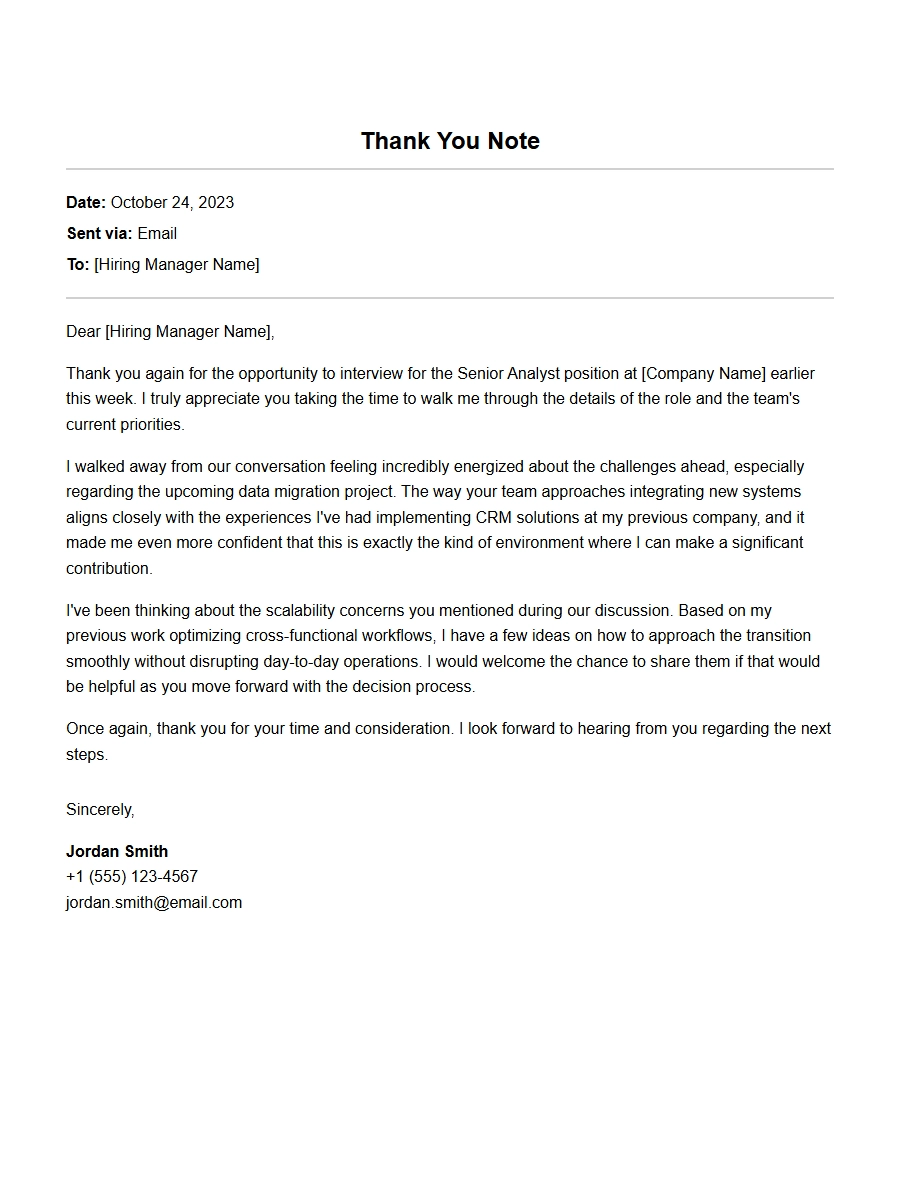 How to Write a Personal Thank-You Note After an Interview