How to Mention Confidentiality in a Resignation Letter
You're staring at a blank document, trying to figure out how to tell your boss you're leaving—and whether you even need to mention confidentiality in your resignation letter. It's a common worry. You don't want to sound paranoid, but you also don't want to accidentally break a promise you made when you signed that employment agreement.
Here's the thing: mentioning confidentiality in a resignation letter isn't about being dramatic. It's about showing professionalism and protecting both you and your soon-to-be-former employer. And yes, using a resignation letter sample is a smart shortcut—not cheating. A good sample gives you the structure, the tone in writing, and the key phrases so you can focus on personalizing it to your situation.
Category: Resignation Letters
When and why you need to address confidentiality
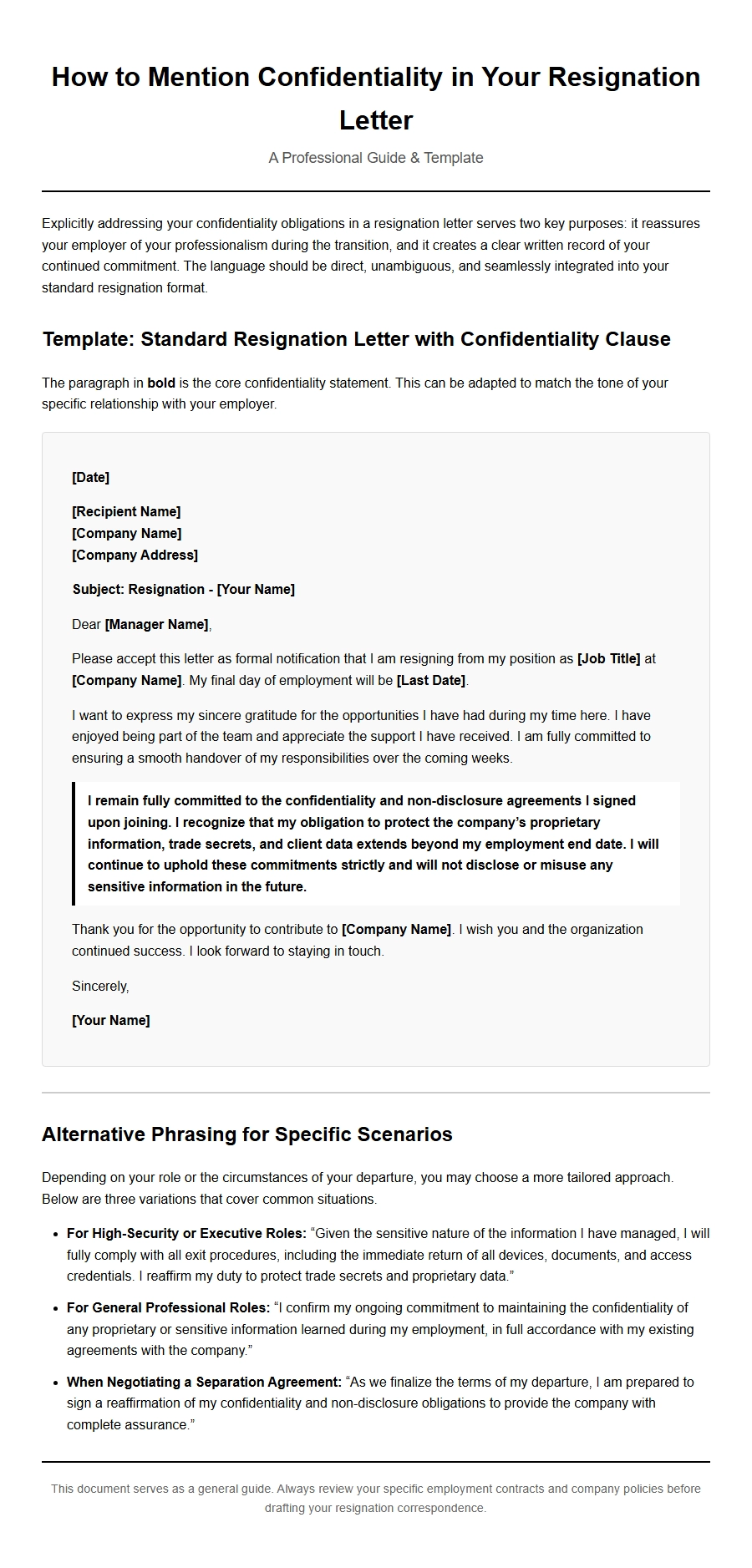
Most employees sign a confidentiality agreement (NDA) when they join. If you handle proprietary data, client lists, or trade secrets, your resignation letter is a great place to reaffirm that you'll continue to respect that. It's also useful if you're moving to a competitor or starting your own business. It shows good faith and reduces the chance of legal headaches later.
But you don't have to write a long paragraph. A single, clear sentence is often enough: "I will continue to respect the confidentiality of all proprietary information, as outlined in my employment agreement." That's it. No fluff.
How to choose the right sample for your situation
Not all resignation letters are the same. The letter structure and tone in writing should match your relationship with your manager and your industry. For formal corporate settings, stick to a business letter format with a proper salutation and closing. If you're in a creative or startup environment, a slightly less formal digital letter format (like an email) is fine—but still keep the confidentiality mention.
Need a sample for a specific scenario? Check out these examples:
Once you pick a letter template, don't copy it word for word. Read it, understand the logic, then rewrite the opening paragraph to sound like you. For example, if the sample says "It is with regret that I submit my resignation," but you'd never talk like that, change it to "I'm writing to let you know I'll be leaving my position." The cover letter examples idea—personalizing a structure—applies here too.
One common mistake: using outdated salutation and closing like "Dear Sir" or "Respectfully submitted." Unless your workplace is very traditional, stick with "Dear [Name]" and "Best regards" or "Sincerely."
Where to place the confidentiality mention
Put it near the end, right before your closing. It's a natural spot for a professional promise. For example:
"I appreciate the opportunities I've had here, and I will continue to protect the company's confidential information as agreed."
Don't lead with it—that can feel aggressive. And don't italicize it or make it a big deal. Just a simple, confident sentence.
Mistakes to avoid
First, don't over-explain. You're not giving a legal deposition. Second, avoid vague phrases like "I will keep things quiet." Be specific if your NDA lists certain types of info. Third, if you're sending an email, remember that digital letter format matters—use a clear subject line, skip letterhead design for email, but do add a professional signature.
Also, always proofread your letter. A typo in a confidentiality sentence can look careless. Run it through a simple spell-check, or read it aloud.
Your next step
Find a resignation letter sample that fits your situation, adapt it, and add that one confidentiality sentence. Then treat it as your starting point—not the final draft. The best letters feel both professional and personal. And every time you write one, it gets easier. You've got this.
Browse Sample Ideas
How to Mention Confidentiality in a Resignation Letter
Standard Resignation with Confidentiality Reminder
Subject: Resignation and Confidentiality Commitment
Dear [Manager's Name],
Please accept this letter as formal notification that I am resigning from my position as [Job Title], effective [Last Working Day]. I appreciate the opportunities I have had during my tenure and will ensure a smooth handover of my responsibilities.
As part of my departure, I want to reaffirm my understanding and commitment to the confidentiality obligations outlined in my employment agreement. I will continue to protect all proprietary information, including client data, internal strategies, and trade secrets, both during my notice period and after my exit.
Key obligations I will uphold:
Return all company documents, devices, and access credentials on or before my last day.
Refrain from discussing or disclosing any confidential business information externally.
Adhere to the post-employment restrictions regarding solicitation and use of proprietary knowledge.
I am prepared to sign a confirmation acknowledging these confidentiality terms if needed. Thank you for your guidance, and I wish the organization continued success.
Sincerely, [Your Name]
Resignation Letter Emphasizing Trade Secret Protection
To: Human Resources & Management
I am writing to formally resign from my role as Senior Product Developer, effective [date]. My time here has been rewarding, particularly in designing innovative solutions that rely on proprietary algorithms and formulas.
Given the sensitive nature of our trade secrets, I wish to explicitly state that I understand and will continue to honor my confidentiality and non-disclosure obligations. I will not remove, copy, or share any technical specifications, source code, or process documentation outside the company.
Confidential assets I am returning:
Item
Status
Return Date
Laptop
To be returned
[Last Day]
Development server access
Revoked
[Immediate]
Hardcopy schematics
Pending return
[Last Day]
I am available to discuss any additional steps to protect our trade secrets during the transition. I hope to leave with a clean record of confidentiality upheld.
Respectfully, [Your Name]
Resignation with NDA Reference
Date: [Date]
Dear [Supervisor],
This letter serves as my resignation from the position of Financial Analyst, effective [date]. I have valued the trust placed in me, especially regarding sensitive financial data and client portfolios.
I am writing to acknowledge the Non-Disclosure Agreement (NDA) signed upon employment. I confirm that I will comply fully with its terms both during my notice period and indefinitely after departure. No confidential information—whether about investment strategies, client identities, or internal forecasts—will be disclosed to any unauthorized party.
My NDA compliance checklist:
Return all physical and digital confidential materials.
Delete all company-related files from personal devices.
Refrain from discussing proprietary financial models in future roles.
Please let me know if you require a signed reaffirmation of the NDA. I am committed to a respectful and legally sound separation.
Yours sincerely, [Your Name]
Resignation in Healthcare: Patient Confidentiality
To: Chief Medical Officer
I am writing to submit my resignation as Registered Nurse, effective [date]. My decision is personal, and I am grateful for the opportunity to serve patients at this facility.
Patient confidentiality has always been a cornerstone of my practice. I want to assure you that I remain bound by HIPAA and our facility's privacy policies even after my employment ends. I will not access, discuss, or share any protected health information (PHI) beyond what is necessary for a safe handoff.
Patient data security measures I will follow:
Complete all medical records and notes before departure.
Return my badge and computer access on my last shift.
Refrain from taking any patient lists, charts, or contact details.
I am also prepared to undergo an exit interview to confirm compliance with confidentiality protocols. Thank you for understanding the importance of this commitment.
Best regards, [Your Name, RN]
Resignation for Legal/Financial Client Confidentiality
Re: Resignation and Confidentiality Acknowledgment
Dear [Partner/Hiring Manager],
Please accept this letter as my formal resignation from the position of Associate [in Legal/Advisory], effective [date]. Working with high‑stakes client matters has been a privilege, and I take my ethical duties seriously.
I am writing to reiterate my commitment to attorney‑client privilege (or duty of confidentiality) and to financial secrecy regulations that govern our practice. I will continue to safeguard all client communications, case strategies, and billing information. I will not disclose any confidential details to competitors, media, or third parties.
Confidentiality tasks to complete before departure:
Responsibility
Deadline
Return all client files and documents
[Last Day]
Transfer encrypted data archive to [Colleague Name]
[Notice Period End]
Sign confidentiality reaffirmation form
[Exit Interview]
I trust this confirms my integrity and respect for the profession.
Very truly yours, [Your Name]
Resignation for Research & Development Role
Subject: Resignation – Confidentiality in R&D
Dear [Lead Researcher/Manager],
I am formally resigning from my position as Research Scientist, effective [date]. It has been exciting contributing to breakthrough projects, some of which are patent‑pending.
Given the proprietary nature of our experimental data and methodologies, I want to explicitly confirm that I will maintain confidentiality regarding all unpublished results, reagent formulas, and experimental protocols. I understand that these materials are the company’s intellectual property and must not be shared or reused.
My departure plan for confidential materials:
Return all laboratory notebooks and digital data files.
Erase any company IP from personal devices.
Provide a complete inventory of samples and compounds in my possession.
I am willing to participate in an exit debriefing to clarify any confidentiality questions. Thank you for the collaborative environment—I leave with great respect for the team’s work.
Warmly, [Your Name]
Resignation in IT with Data Privacy Focus
To: IT Director & HR
I am writing to resign from my position as Systems Administrator, effective [date]. My role required access to confidential user data, infrastructure passwords, and security configurations.
I take data privacy and confidentiality very seriously. I confirm that I will not disclose, copy, or misuse any company information, including employee personal data, client databases, or security credentials. I will cooperate fully with the offboarding process to ensure that all my access is revoked and that no backdoors remain.
Access revocation checklist:
Access Level
Revocation Action
Responsible Party
Database admin
Password change & account disable
Security Team
VPN & remote access
Revoked at end of notice
IT
Cloud environment keys
Rotated on departure
DevOps
I am happy to sign any additional confidentiality or data destruction acknowledgment. Thank you for the opportunity to serve on the IT team.
Sincerely, [Your Name]
Resignation in HR – Employee Confidentiality
Date: [Date]
Dear [HR Director],
I am providing formal notice of my resignation as HR Coordinator, effective [last working day]. My role has given me access to highly confidential employee records, compensation data, and disciplinary information.
I write to confirm that I understand and will maintain the confidentiality of all employee personal information, even after my departure. I will not discuss salaries, performance reviews, or sensitive HR matters with anyone inside or outside the organization. I will return all physical and digital HR files on or before my last day.
Confidential items to return:
Employee personnel folders (in secure cabinet)
HRIS system login credentials (transferred)
Company phone with sensitive messages
Please let me know if there are additional confidentiality procedures, such as an exit interview or non‑disclosure reaffirmation. I remain committed to ethical handling of employee trust.
Best regards, [Your Name]
Resignation for Government/Classified Information Role
MEMORANDUM
Subject: Resignation and Security Clearance Responsibilities
I hereby resign from my position as Security Analyst, effective [date]. I have held a Top Secret clearance and handled classified materials daily.
I am fully aware of my continuing obligations under the Security Agreement and the Classified Information Nondisclosure Agreement (SF‑312). I will not divulge any classified information to unauthorized persons, even after my clearance is terminated. I will adhere to the pre‑publication review process if I ever intend to discuss my past work.
Confidentiality steps upon departure:
Turn in all classified documents and storage media to the security office.
Undergo an exit debriefing with the security team.
Report any post‑employment contacts that may involve classified topics.
I understand that unauthorized disclosure could lead to legal consequences under the Espionage Act. I respect these duties and will comply fully.
I am writing to resign from my position as [Job Title], effective [date]. While I am excited about my next chapter, I want to emphasize that my commitment to confidentiality does not end here.
I understand that my role involved access to sensitive business strategies and partner information. To make the separation seamless, I propose signing an additional Confidentiality Acknowledgment form that explicitly lists the categories of information I will protect. This can include, but is not limited to:
Pricing models and margin data
Customer lists and accounts
Product roadmaps and launch timelines
Internal financial reports
I will also return all company property and certify that I have no copies. I am available for an exit interview to finalize this agreement. Please let me know if you would like me to complete a standard confidentiality reaffirmation letter or a custom document.
Thank you for the professional development opportunities. I remain trustworthy and reliable.
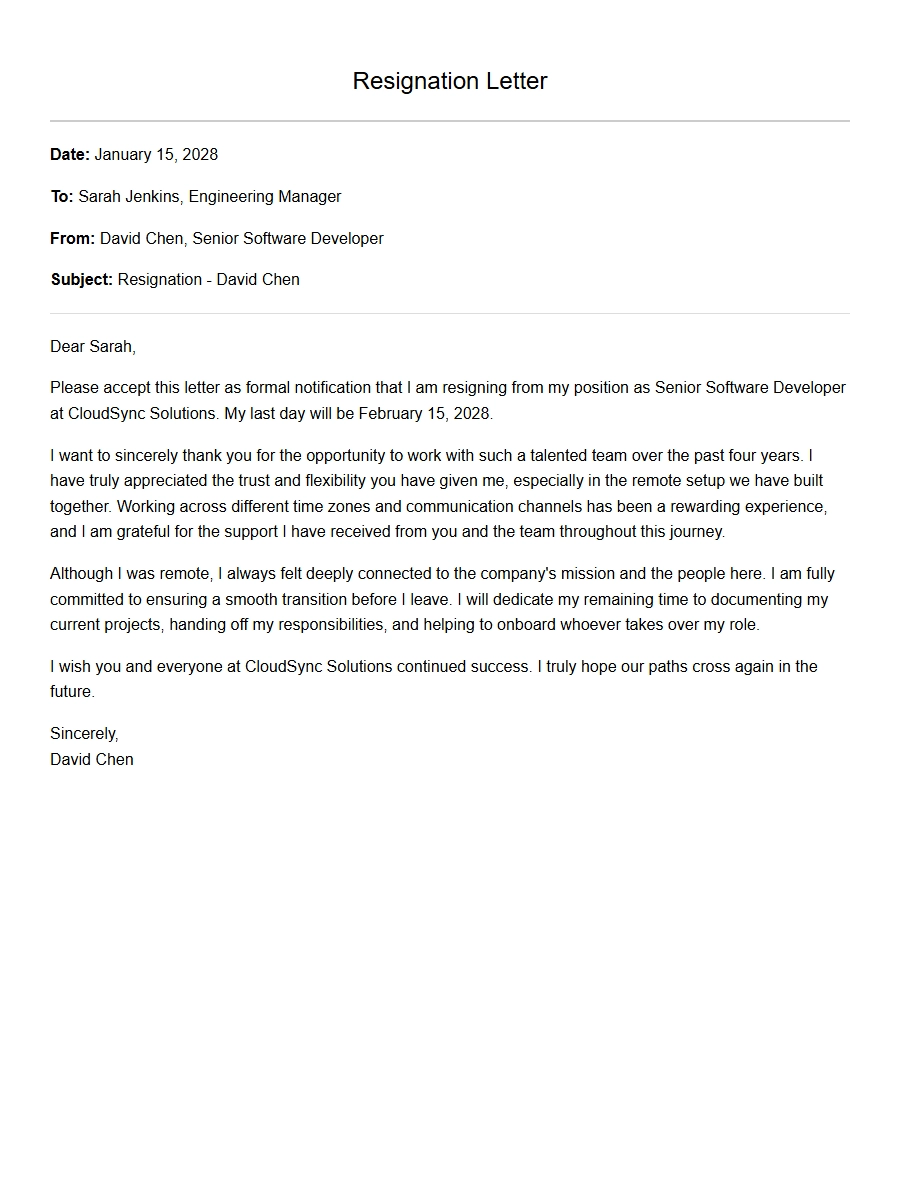 Polite Resignation Email for Remote Employees
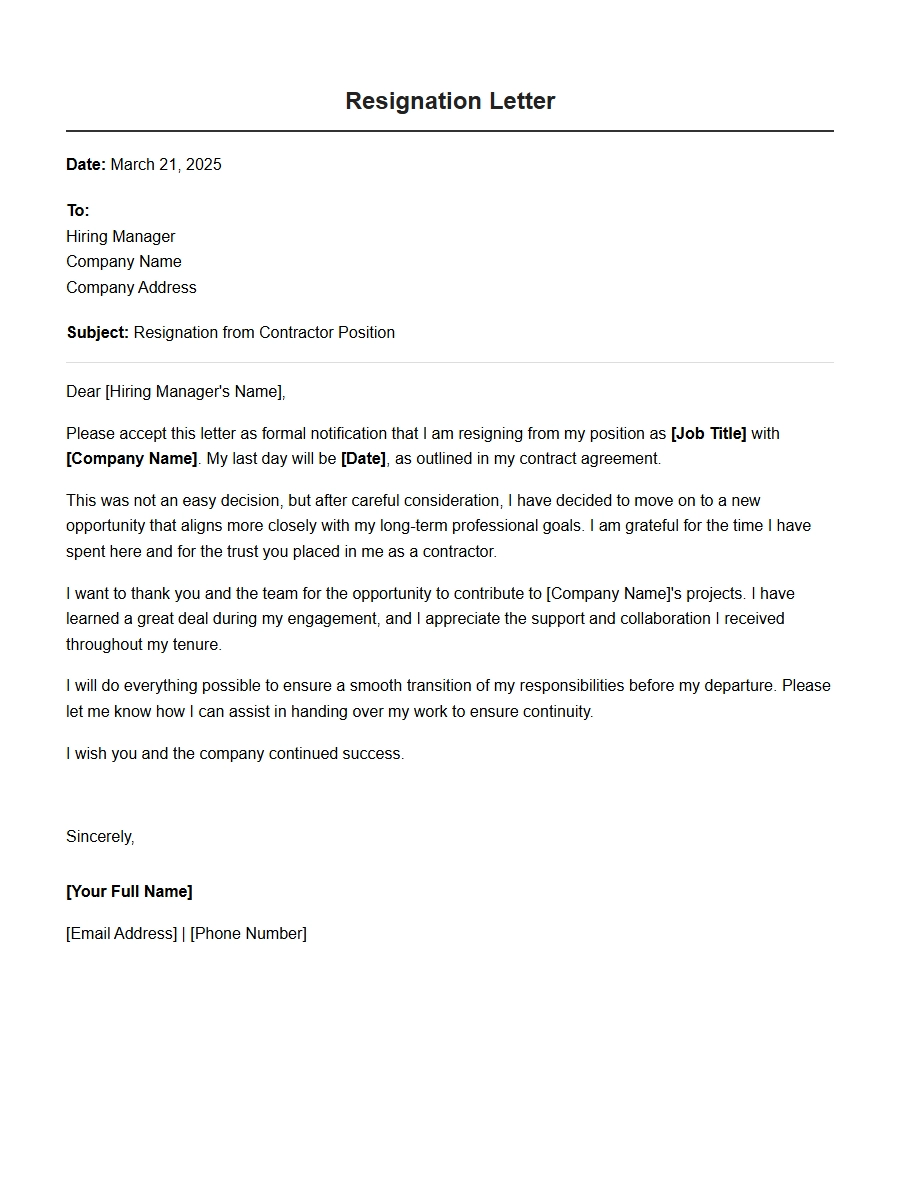 Short Resignation Letter for Contractor Position
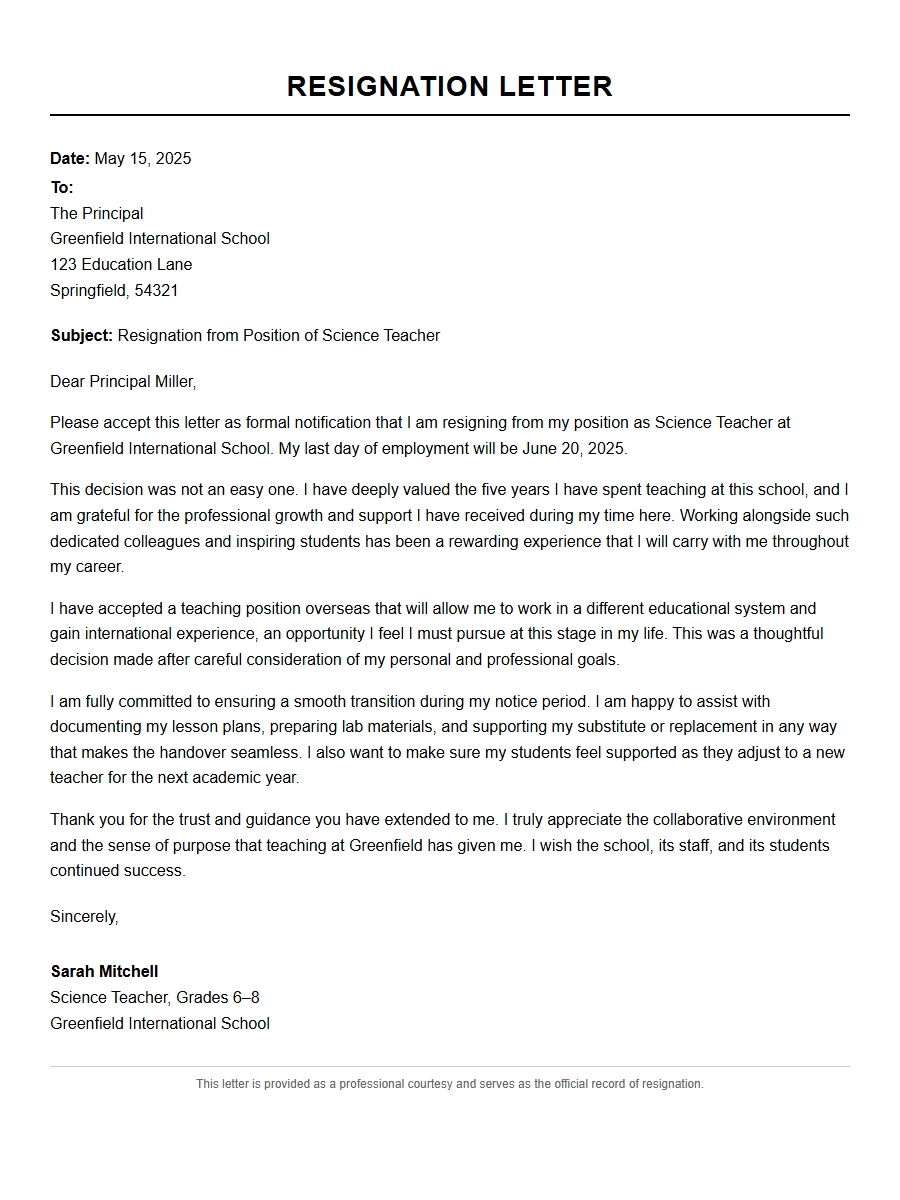 Teacher Resignation Letter Example
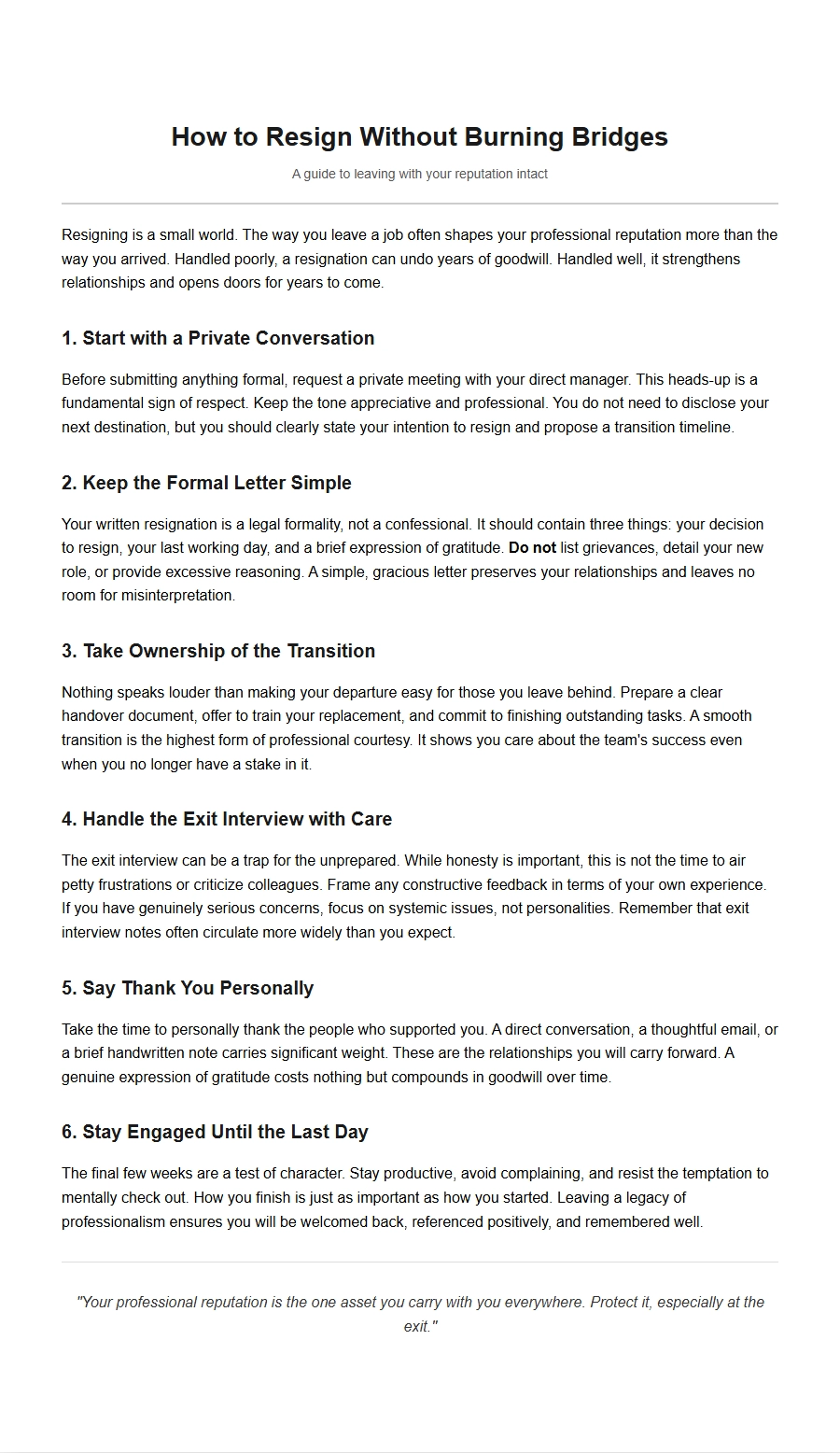 How to Resign Without Burning Bridges
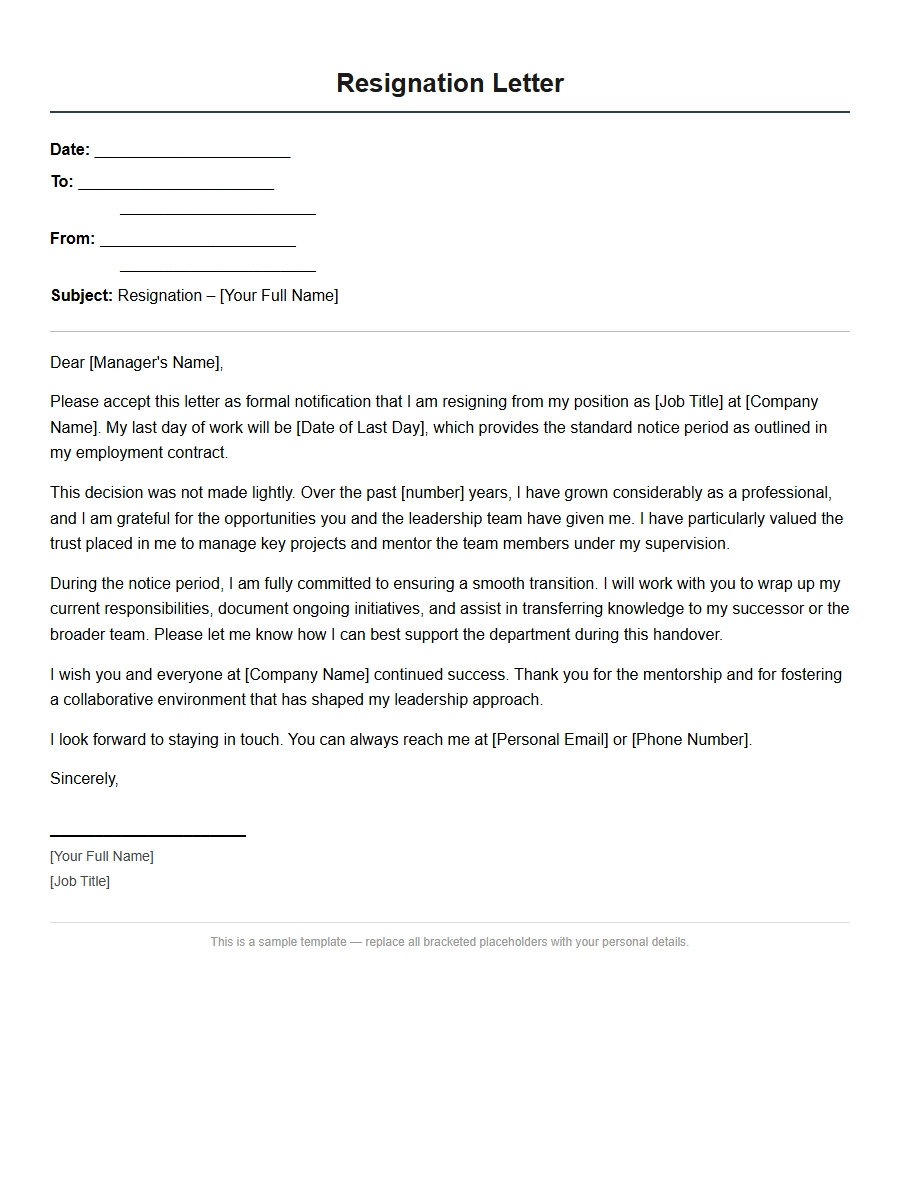 Formal Resignation Letter Sample for Manager
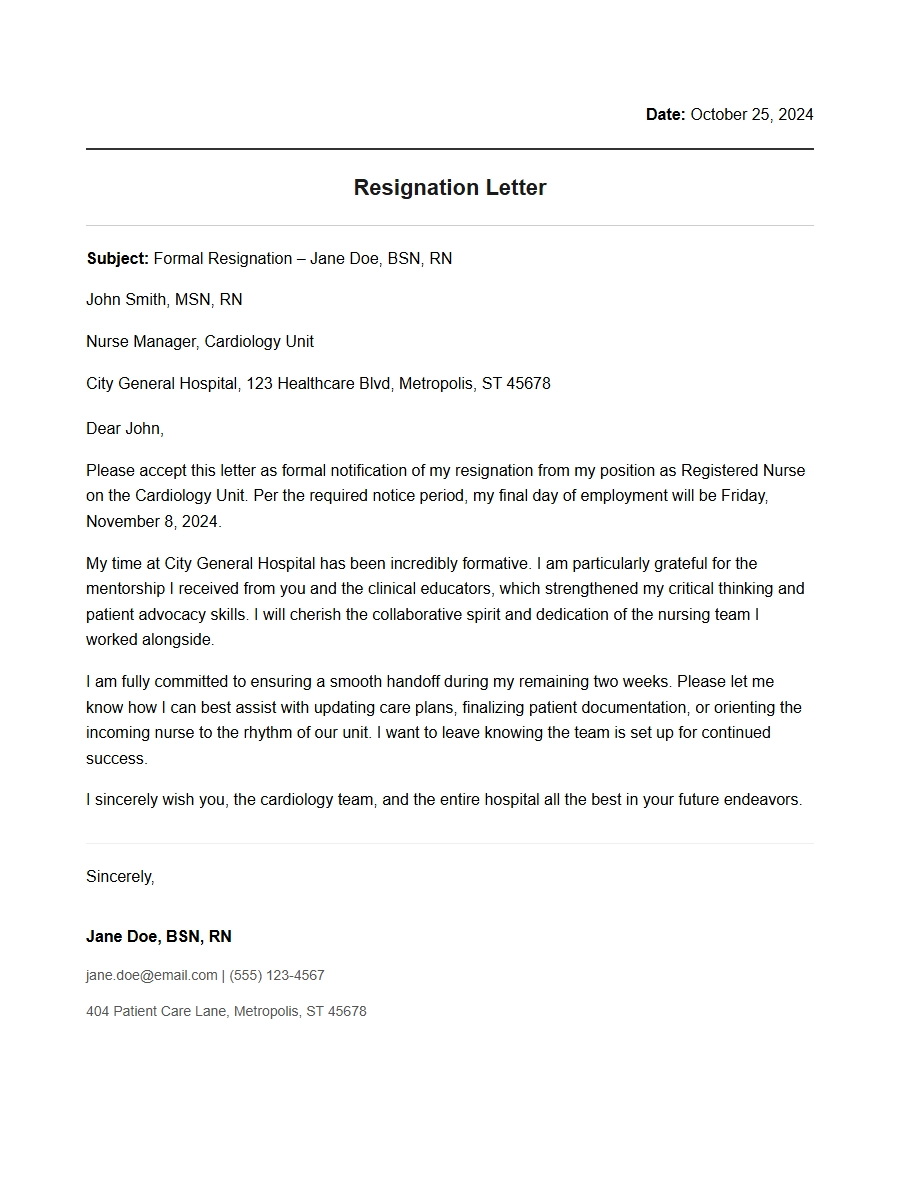 Nurse Resignation Letter with 2 Weeks Notice