You’ve done the hard part—you’ve decided to move on. But now you have to sit across from your manager and explain why. That resignation interview can feel like walking into a performance review where you already know you’re quitting. It’s awkward, emotional, and easy to stumble through without a clear plan. But with the right approach, you can handle it professionally and leave with your reputation intact.
Why a letter sample isn’t cheating—it’s preparation
Many people think using a resignation letter sample is a shortcut. It’s not. A good sample gives you a structure to build on, so you’re not inventing everything from scratch while you’re already nervous. Think of it as a scaffold. You bring your own words, your own reasons, and your own tone. The sample just makes sure you don’t forget the basic parts—like a proper salutation and closing, or the date you plan to leave.
This same logic applies to the resignation interview itself. A sample letter helps you organize your thoughts before you speak. It’s easier to explain your decision calmly when you’ve already written it down.
Category: Resignation Letters
How resignation interviews usually go
Most resignation interviews follow a predictable pattern. Your manager will ask why you’re leaving, when your last day is, and whether anything could change your mind. They might also ask about your next role or how to make the transition smoother. These are fair questions, and you don’t need to dodge them. But you also don’t need to over-share.
A written resignation letter gives you a fallback. You can hand it over at the start of the conversation, which signals that you’ve already made a firm decision. That keeps the discussion focused on logistics rather than persuasion.
Choosing the right tone before the meeting
Not every resignation situation is the same. Your tone in the letter—and in the interview—should match your relationship with your manager. If you work in a formal corporate environment, stick with standard business letter format and professional correspondence etiquette. If your workplace is more relaxed, a direct but respectful tone works better.
Look at a few resignation letter samples before you write yours. Pay attention to the salutation and closing. A sample written for a bank will feel different from one written for a startup. Find one that matches your industry, and adapt the language to sound like you.
Adapting a sample without losing your voice
The best letter samples are customizable. You take the structure, replace the specific details, and rewrite the key sentences in your own words. For example, a sample might say “I have accepted a position at another company.” You can change that to “I’ve decided to pursue a role that aligns more closely with my long-term goals.” Both say the same thing, but one sounds like a real person.
When you personalize a template, avoid the temptation to over-explain. Keep your reasons short and positive. If you’re leaving because of financial constraints, you don’t need to list them in the interview unless you want to. A simple statement like “This opportunity was too good to pass up” usually closes the conversation smoothly.
Common mistakes people make in resignation interviews
One mistake is treating the interview like a negotiation. If you’ve already decided to leave, don’t ask what your manager can offer to keep you. That undermines your position and makes the conversation messy. Another mistake is criticizing the company or your coworkers. Even if you have legitimate frustrations, keep them out of the resignation meeting. It doesn’t benefit you, and word gets around fast.
Formatting matters too. If you plan to send the letter digitally, use a clean digital letter format without fancy fonts. If you’re handing over a printed copy, pay attention to letterhead design and overall presentation. A sloppy letter undermines the professionalism you’re trying to project.
What to do with the sample after the interview
Your resignation letter isn’t just for the interview. It also serves as a formal record. Your HR department will likely file it, and your manager may reference it later. Keep a copy for yourself. If your employer asks for a letter of recommendation later, you can look back at your resignation letter to remember the exact timeline and your stated reasons.
If you’re still nervous about the interview, write your letter first. Then read it out loud. That helps you rehearse what you’ll say. You’ll walk into the meeting with more confidence and less fear of forgetting something important.
Use samples wisely, but grow beyond them
The first time you write a resignation letter, a sample is your best friend. But over time, you’ll internalize the structure and the etiquette. You’ll know how to start, how to close, and how to strike the right balance between warmth and formality. Treat the sample as training wheels, not a permanent crutch. With practice, you’ll be able to write a clear, professional letter in minutes.
And when you sit down for that resignation interview, you’ll feel ready. Not because you memorized a script, but because you put in the work beforehand. That preparation shows. It makes the conversation easier and leaves your manager with a positive final impression.
The goal is not to write a perfect letter. It’s to write a letter that feels like you and handles the situation with grace. That’s what people remember.
Useful Writing Samples
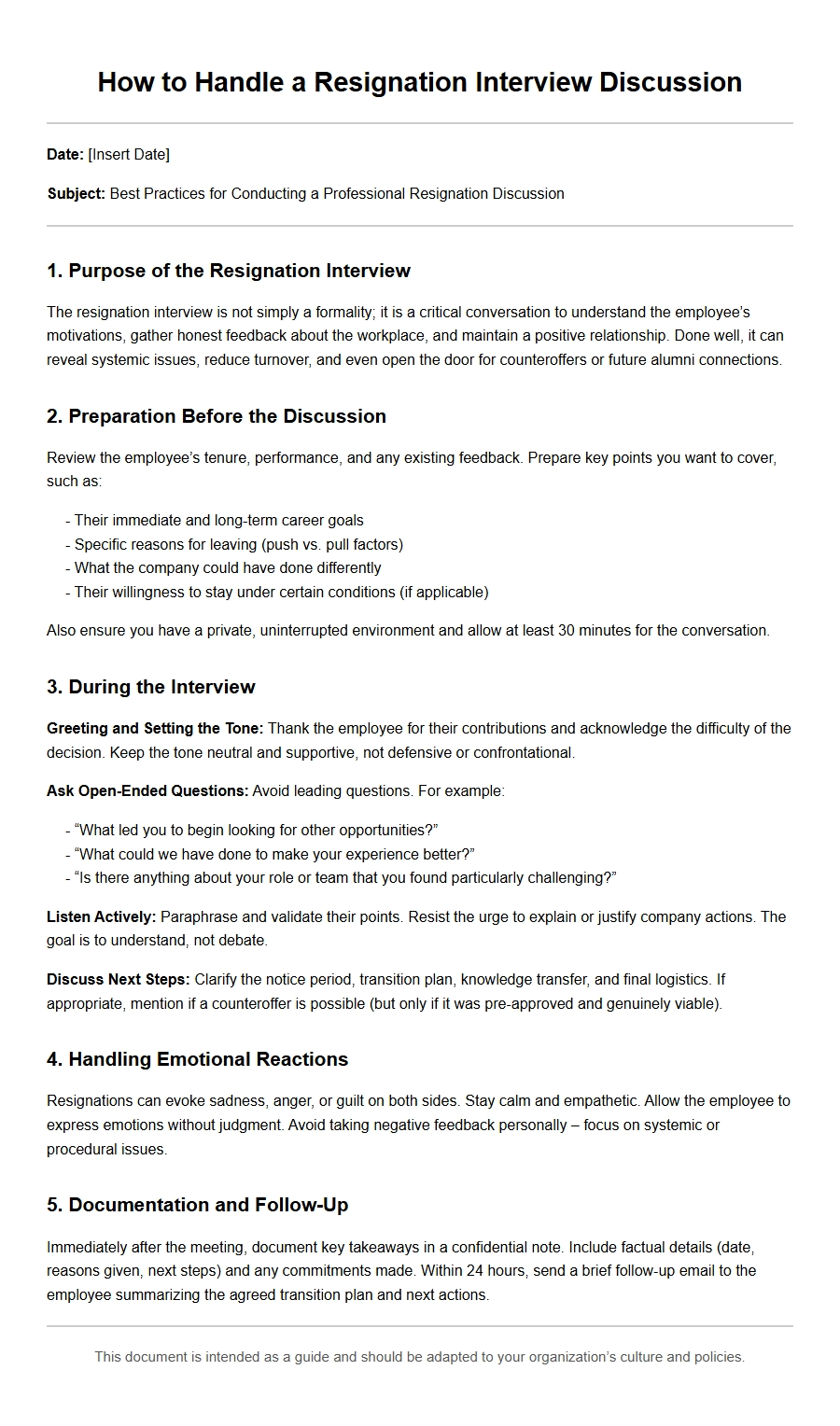
Handling Resignation Interview Discussions
Preparing Your Key Talking Points
Before the resignation interview, list the essential points you want to communicate. Focus on facts and future plans, not complaints. Your goal is a professional exit that leaves a positive impression.
Reason for leaving: State it succinctly (e.g., new opportunity, career change). Avoid negative details about the current role.
Notice period: Confirm your intended last working day and willingness to discuss transition needs.
Appreciation: Mention specific skills you gained or projects you enjoyed under this employer’s guidance.
Handover plan: Prepare a short summary of pending tasks and proposed transfer steps.
Rehearse these talking points aloud so you sound calm and clear. Keep body language open—sit upright, maintain eye contact, and speak at a steady pace.
Sample Resignation Interview Script
Manager: "Thank you for meeting. How are things going?" You: "Thank you for your time. I’ve decided to accept a new role that aligns with my long-term career goals. This was not an easy decision, as I value the team and the opportunities I’ve had here."
Manager: "Can you share more about what led to this decision?" You: "The new position offers a focus on project management, which I want to develop further. I’m grateful for the mentorship I received here, especially on the Q3 launch."
Manager: "How can we support your transition?" You: "I propose a one-week handover plan. I’ve already documented my current tasks and will work with Jane to ensure a smooth transfer. I’m happy to stay until the end of my notice period."
Manager: "Could you reconsider if we offer a raise?" You: "I appreciate the offer, but my decision is based on career direction, not compensation. I hope to stay connected on LinkedIn."
Counteroffer Handling Strategy
When a manager tries to counteroffer, stay composed and respectful. Use these steps to avoid derailing your plans:
Acknowledge gratitude: Say, "Thank you for wanting to keep me. I value that."
Restate your reason: Reiterate that your decision is based on career growth or personal factors, not money.
Politely decline: Use phrases like, “occusional offers are generous, but my new role is the right step for me.”
Reaffirm your commitment to a smooth exit: Offer to train a replacement or finish pending projects.
Remember that accepting a counteroffer can signal wavering loyalty. Stay firm on your original decision to maintain professional integrity.
Answering Tough Questions Gracefully
During the interview, you may be asked uncomfortable questions. Prepare calm, honest answers that protect your reputation.
Question
Sample Answer
"Are you leaving because of a conflict?"
“No, I’ve enjoyed the team. This move is about new challenges.”
"What could we have done differently?"
“Overall, I’ve had a positive experience. If I could suggest anything, more cross-team collaboration would be beneficial.”
"Will you share where you’re going?"
“I’ll share once I start the new role)Skip to maintain privacy now.”
Keep answers brief and forward-looking. Avoid complaining about colleagues or management.
Resignation Letter to Hand During the Interview
Below is a short letter you can print and hand to your manager during the meeting. It formalizes your verbal notice.
[Date] Dear [Manager’s Name],
Please accept this letter as formal notification of my resignation from [Company Name]. My last day will be [Date, typically two weeks from today].
I sincerely appreciate the opportunities I’ve had to work on [specific project/team] and grow under your leadership. I will ensure a smooth transition by completing pending tasks and assisting with handover documentation.
Thank you again for your support. I wish the company continued success.
Sincerely, [Your Name]
Managing Emotions During the Discussion
Resignation interviews can feel tense, especially if you have strong connections or unresolved frustrations. Follow these emotional management tips:
Breathe slowly: Take a deep breath before you begin speaking to steady your voice.
Pause before reacting: If a question stuns you, say, “That’s a good question—let me think for a moment.”
Stay professional, not personal: Use business language like “career decision” rather than “I’m unhappy.”
Have a closing line ready: “Thank you for understanding. I’m committed to leaving on a high note.”
If a manager becomes defensive, listen calmly, then restate your appreciation. Your composure will define your legacy at the company.
Sample Exit Interview Form Completion
Some companies ask you to fill out a form after the verbal discussion. Here’s a realistic example of common fields and how to fill them:
Field
Sample Entry
Primary reason for leaving
Career advancement in a different industry
Would you recommend this employer?
Yes, to those seeking a collaborative environment
Current workload feedback
Manageable with good team support
Management style comments
Appreciate the regular feedback and autonomy
Improvement suggestions
More structured onboarding for new hires
Be honest but constructive. Overly negative remarks could burn bridges, while vague praise offers no useful feedback.
Post-Interview Email to Confirm Details
After the resignation interview, send a brief email summarizing what was discussed. This creates a paper trail and clarifies next steps.
Thank you for the conversation earlier. As we discussed, my last working day will be [Date]. I will submit a formal resignation letter today.
I will prepare a handover document by [Date] and offer to train [Colleague's Name] on critical tasks. Please let me know if you’d like any additional documentation.
I’m grateful for the opportunities here and will work to ensure a seamless transition.
Best regards, [Your Name]
What Not to Say During the Interview
Avoiding certain phrases preserves your professional reputation and prevents awkwardness.
“I hate this job.” Instead say, “I’m pursuing a role that aligns better with my goals.”
“My manager is unfair.” Focus on yourself: “I’m looking for different leadership styles.”
“They offered more money.” Emphasize growth instead of salary.
“I’m leaving because of [specific person]. Keep it generic and objective.
“You should have done [X]. Frame suggestions constructively for exit forms.
Every word may be noted or shared. Stick to neutral, factual language that won’t hinder future references.
Timeline of a Professional Resignation Process
Use this timeline to ensure no step is missed before, during, and after the resignation interview:
Time
Action
1 week before
Update your resume, review offer details, and prepare talking points.
Day of interview
Deliver verbal notice, stay calm, answer questions, hand over resignation letter.
Within 24 hours
Send a follow-up email confirming notice period and handover plan. Notify HR if required.
Notice period
Complete tasks, train colleagues, offboard systems, return company property.
Last day
Submit exit form, exchange goodbye messages, connect on LinkedIn.
Following a timeline reduces stress and shows the employer you respect their processes.
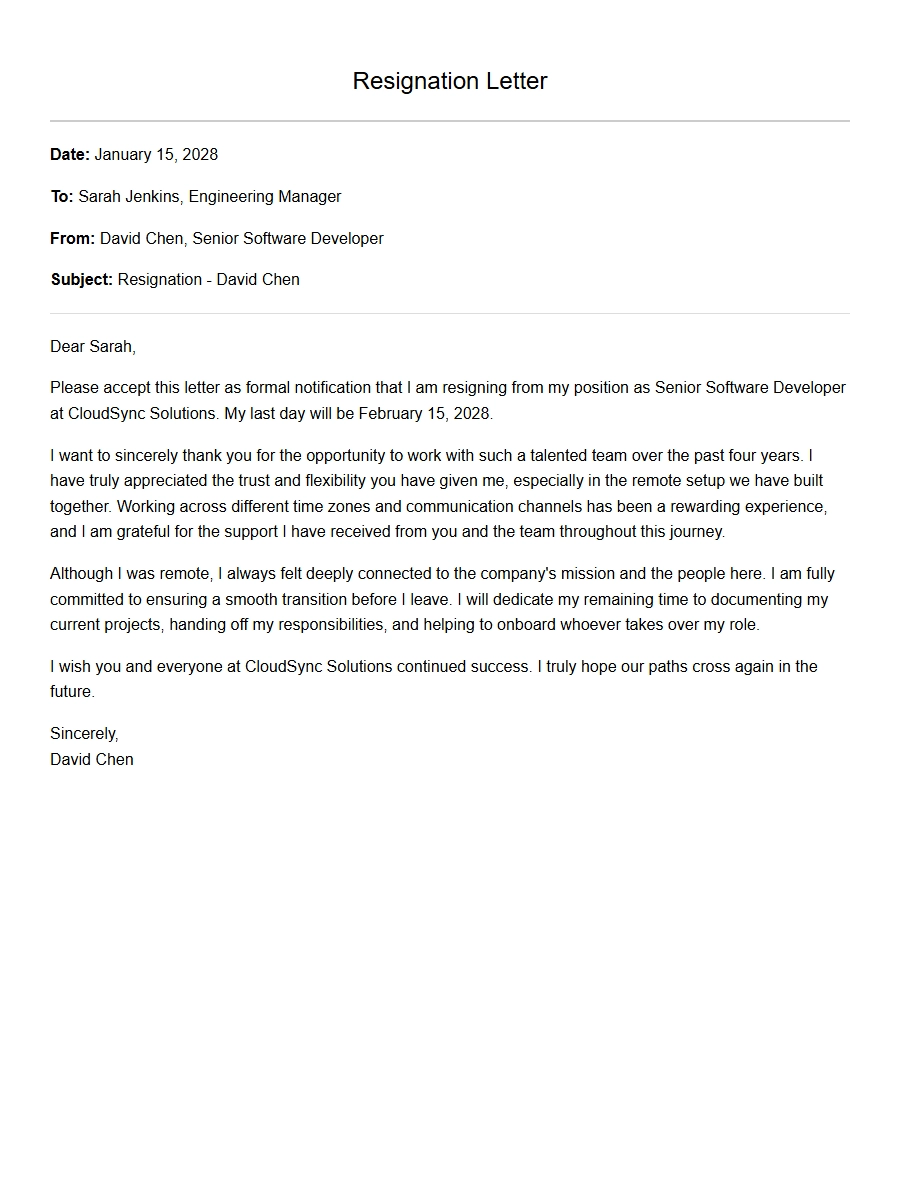 Polite Resignation Email for Remote Employees
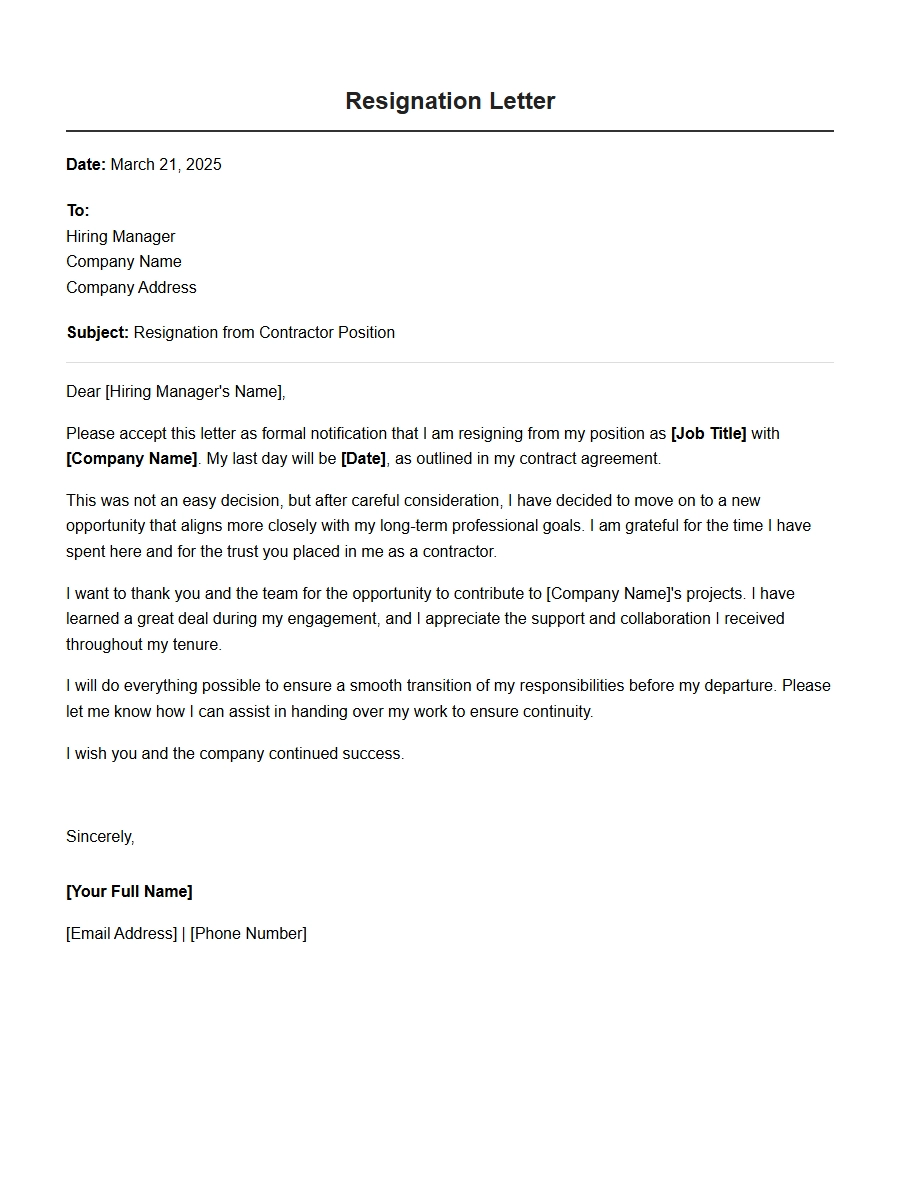 Short Resignation Letter for Contractor Position
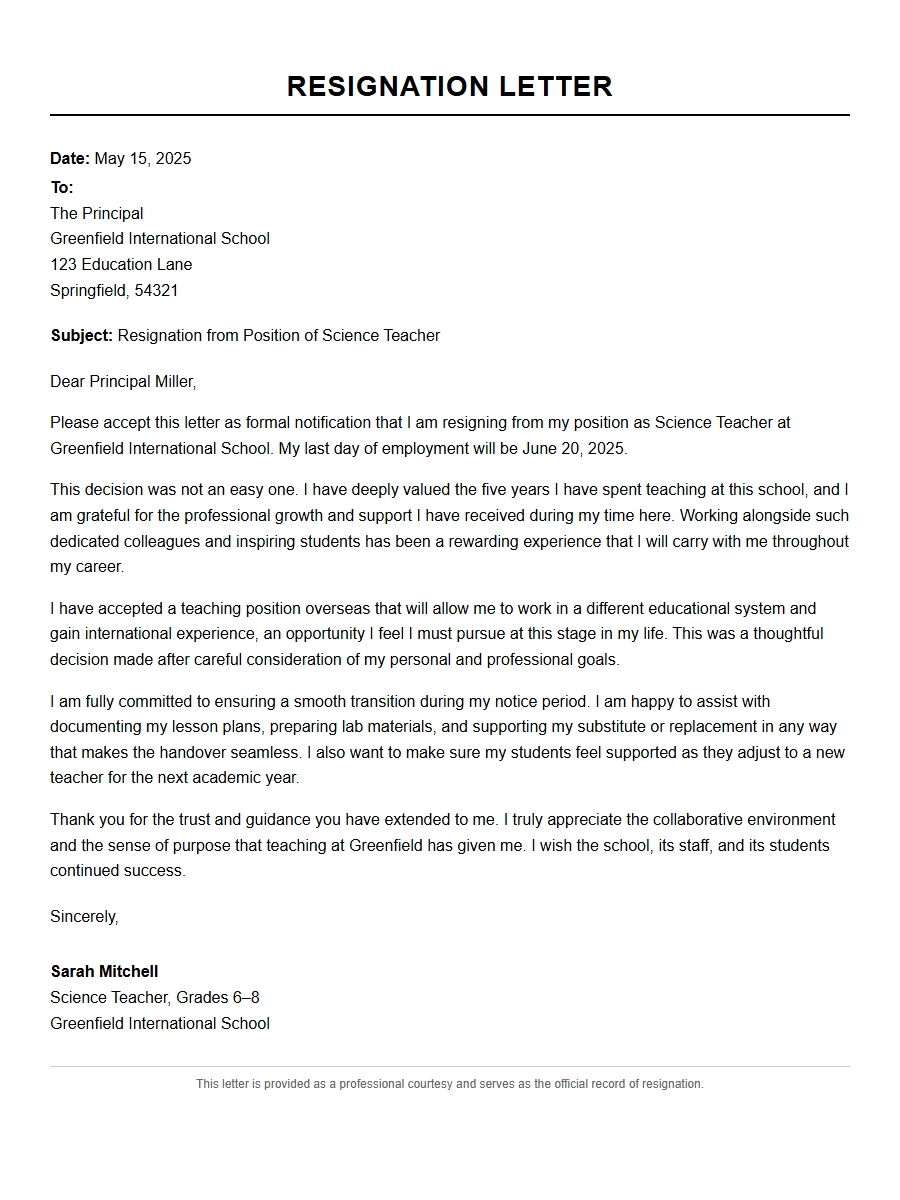 Teacher Resignation Letter Example
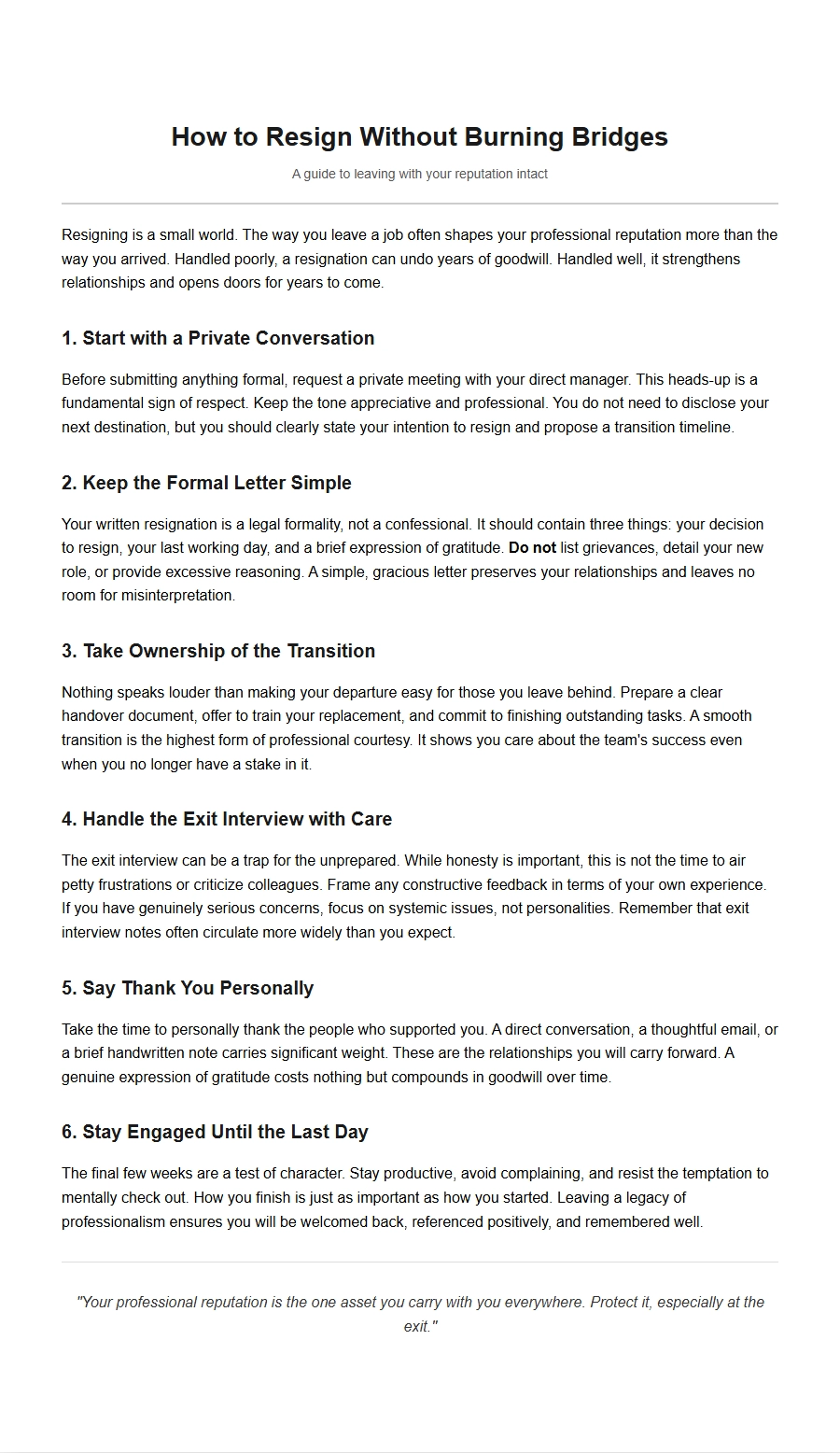 How to Resign Without Burning Bridges
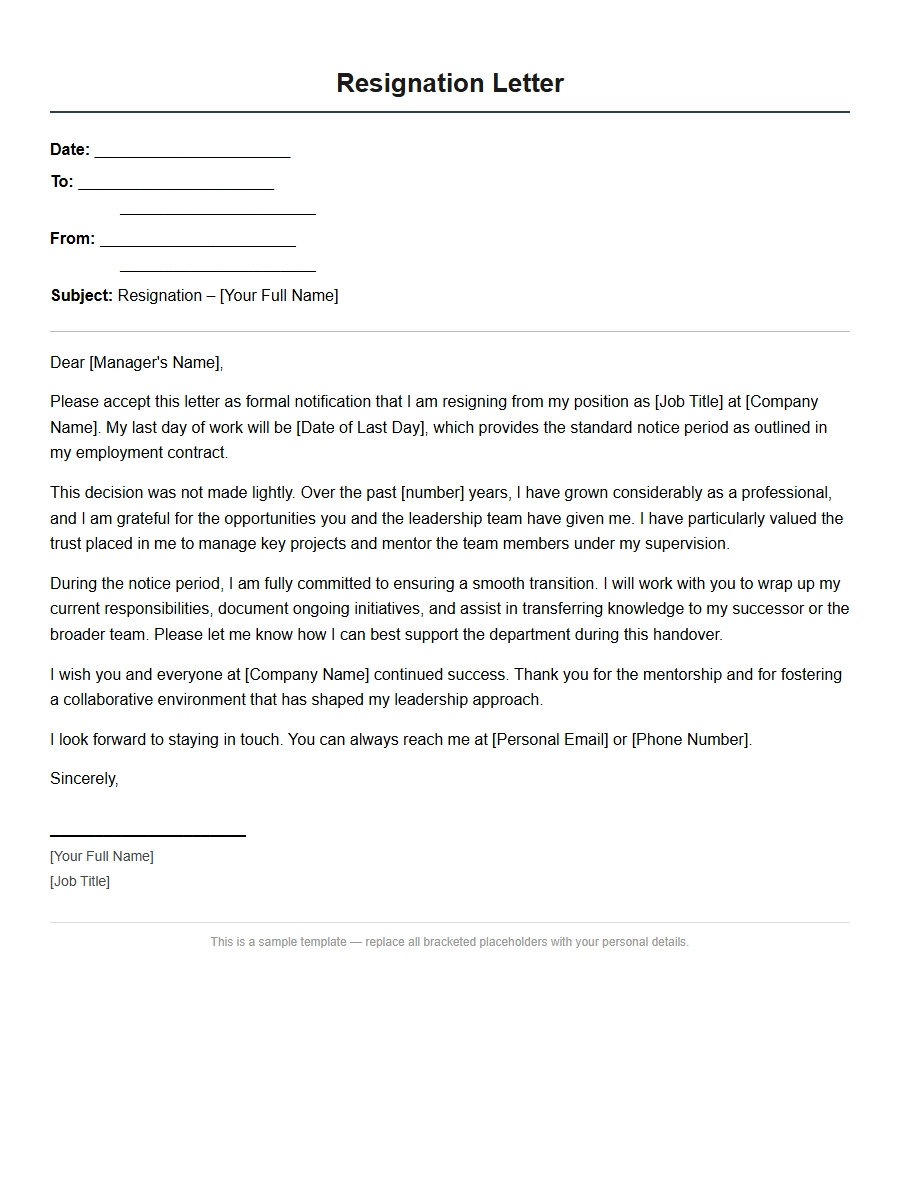 Formal Resignation Letter Sample for Manager
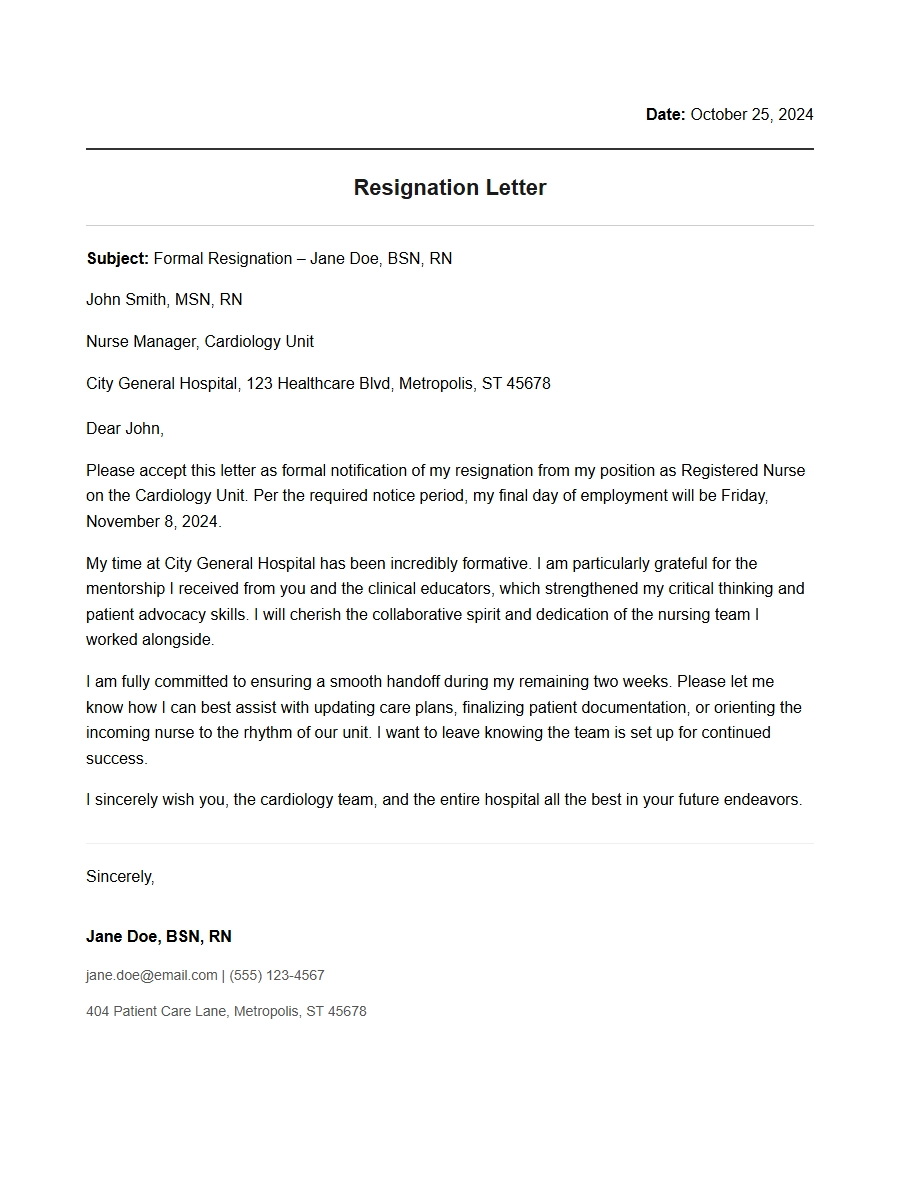 Nurse Resignation Letter with 2 Weeks Notice