You've got a potential deal on the line, and now you need to write a proposal letter that seals it. That blank page stares back at you, and the pressure to get the tone exactly right can freeze anyone. But a well-chosen sample can turn that anxiety into a confident draft in minutes.
Let's be clear: using a letter sample isn't cheating. It's a smart shortcut. A good template gives you structure, professional tone, and key phrases you can adapt. The trick is knowing how to personalize it so your voice still comes through. That's what we'll cover here.
Category: Business Proposal Letters
Why a Sample Works for a Deal-Closing Letter
A closing deal proposal letter isn't just any business letter. It's often the final push—the document that summarizes your value, addresses last objections, and makes it easy for the other party to say yes. You need the business letter format right: salutation, body, closing. You also need the right tone in writing—confident but not pushy, professional but not stiff. A sample gives you a starting point that already has those elements balanced.
Think of it as a scaffold. You build your own content on top of it. The letter structure is already there, so you can focus on what matters: your specific offer, timeline, and terms.
How to Choose the Right Sample for Your Situation
Not all samples are created equal. You need one that matches your industry and relationship with the recipient. For example, a catering business contract proposal letter will sound different from a government tender bid letter. The first is often warmer and more personalized; the second is formal and compliance-heavy. If you're sending a financial advisory business proposal letter, your tone should be consultative and grounded in data.
Look for a sample that uses a salutation and closing that fits your audience. "Dear Mr. Smith" vs. "Hi Jane" changes the whole feel. If you're unsure, err on the side of respectful but not archaic. Avoid "To Whom It May Concern" unless you have no other option.
Adapting the Sample Without Losing Your Voice
Once you pick a sample, don't just swap in names. Read it aloud. Does it sound like you? If not, rewrite sentences until they match how you actually talk. Formal writing tips often say to avoid contractions, but that can make you sound robotic. Use "you'll" and "we're" if that's natural for your relationship.
Pay special attention to the opening paragraph. That's where you grab attention. Instead of "I am writing to propose…" try "After our last conversation, I put together a plan that I think addresses your biggest concern." That's specific and engaging.
A common mistake is ignoring the format for where the letter will be read. If you're sending via email, skip the letterhead design and just use a clean digital signature. If it's a printed letter, include your company's letterhead. Always use a digital letter format that's easy to scan—short paragraphs, bold for key points, and a clear call to action.
What to Avoid in a Deal-Closing Letter
Outdated salutations are one thing, but here are a few more pitfalls:
Being too vague. "We can help you grow" is weak. "We can increase your monthly leads by 30% within three months" is strong.
Ignoring the recipient's pain points. If they mentioned budget concerns, address that directly. Show how your proposal saves money or pays for itself.
Skipping proofreading. A typo in a closing letter can kill trust. Proofreading letter carefully is non-negotiable. Read it once for content, then once for errors.
Forgetting to customize the sample. If your letter reads like a template, the client will notice. Change at least half of the wording to reflect your unique situation.
Making the Letter Feel Personal and Professional
The best professional correspondence walks the line between warmth and authority. You can use a cover letter examples style for some parts, but remember that a deal-closing letter is more direct. You're asking for a decision. Don't hide that.
A useful trick: after adapting your sample, have a colleague read it and tell you what impression it gives. Is it too pushy? Too timid? Adjust accordingly. And always include a specific next step—a meeting time, a signature deadline, or a phone call date.
If you need more inspiration, look at related examples. A rejection of partnership proposal letter can teach you what not to do. A enterprise software implementation proposal letter shows how to handle technical detail without losing clarity. Each sample teaches something.
Let the Sample Be Your Springboard
No sample will write the perfect letter for you—but it can get you 80% of the way there. The remaining 20% is your expertise, your understanding of the client, and your willingness to revise. The more you practice customizing samples, the faster the process becomes. After a few times, you won't need the template at all. You'll know the letter writing etiquette by heart.
So grab a sample, open a document, and start typing. Let the structure hold you up while you fill in the details that only you can provide. That mix of template and personal touch is what creates a letter that gets a signed deal.
Samples You Can Use
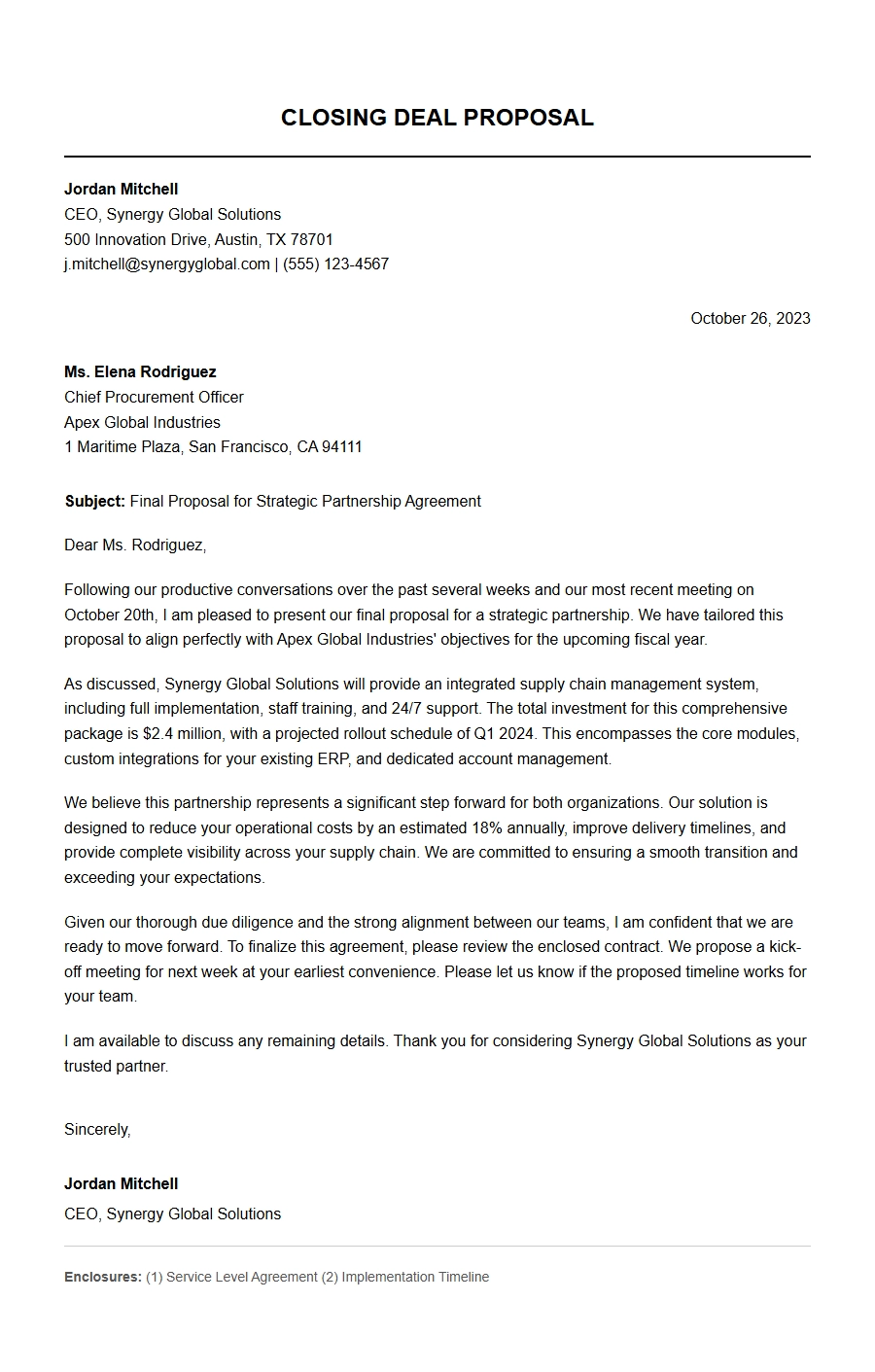
Craft a Winning Closing Deal Proposal Letter
Final Proposal Acceptance Letter
Subject: Final Acceptance of Proposal – Project Phoenix
Dear Mr. Harrison,
We are pleased to formally accept your business proposal dated October 12, 2024. After careful evaluation, our board has approved the terms outlined. Please find the critical acceptance details below:
Item
Value
Contract Value
$75,000
Payment Terms
30% upfront, 70% upon completion
Project Duration
6 months
Start Date
November 1, 2024
To finalize this agreement, please provide a signed copy of the enclosed contract by October 25, 2024. We look forward to collaborating with your team.
Should you have any questions, do not hesitate to contact our procurement office.
Best regards, Sarah Mitchell Chief Operations Officer Global Solutions Inc.
Urgent Closing Offer – Limited Availability
Subject: Special Urgent Closing Offer – Save 15%
Dear Mr. Chen,
Time is of the essence. Our proposal for the digital transformation project remains valid until this Friday at 5:00 PM EST. We value your business and want to help you secure the best deal.
Discount: 15% off total project cost if signed by the deadline
Free Training: Two additional training sessions included
Priority Support: 24/7 dedicated account manager for first 3 months
This offer is exclusive to your organization. To accept, simply reply to this email with a confirmation and we will send the final agreement immediately.
Don't miss this chance to accelerate your digital transformation. I am available for a quick call at your convenience.
Sincerely, Jessica Lee Senior Account Executive
Negotiated Closing Letter
Subject: Revised Proposal – Closing the Deal
Dear Ms. Patel,
Thank you for the productive negotiation session yesterday. Based on your feedback, we have revised our proposal to better align with your budget and timeline constraints.
Below are the key changes:
Price Reduction: $45,000 to $38,500 (14% discount)
Milestone Payments: We will accept 25% upfront, then three equal payments at each phase completion.
Extended Warranty: 12 months of free support, starting at go-live.
We believe this revised offer demonstrates our strong commitment to a long-term partnership. Please review the attached updated contract. If you agree, kindly sign and return by November 5, 2024.
I look forward to our positive collaboration.
Warmly, David Okafor Business Development Manager
Partnership Closing Proposal
Subject: Strategic Partnership – Final Proposal
Dear Dr. Kim,
We are excited to present this final partnership proposal to merge our AI capabilities with your marketing expertise. This agreement will create a joint venture with shared revenue and mutual growth.
Proposed Terms:
Component
Details
Revenue Split
60% (us) / 40% (you)
Minimum Commitment
12 months
IP Ownership
Jointly held under new entity
Exit Clause
90-day written notice
We have prepared the draft partnership deed and a roadmap for the first year. A signature from both parties will lock in these favorable terms for the next fiscal year.
Let’s schedule a signing ceremony next week. Please let me know your availability.
Yours truly, Mark Rivera VP of Strategic Alliances
Limited-Time Discount Closing Letter
Subject: Act Now – 20% Off If Signed This Week
Dear Ms. Torres,
As we near the end of the quarter, we are offering a one-time limited discount to help our valued prospects close quickly.
Discount: 20% off total package price
Bonus: Free premium analytics dashboard for one year
Deadline: December 20, 2024
This offer is not available to the general public. We want to show our appreciation for your continued interest. The original proposal value of $12,500 would be reduced to $10,000 if signed by the deadline.
To take advantage, simply reply “Accept” and we will send the official invoice and contract. Hurry, this opportunity expires soon.
Best regards, Andrea Cole Sales Director
Testimonial-Based Closing Letter
Subject: Proof of Success – Let’s Close This Deal
Dear Mr. Singh,
We know you are evaluating multiple vendors. To help you make a confident decision, here is what one of our long-term clients said after implementing our solution:
“Working with [Your Company] transformed our workflow. Within two months, productivity increased by 35% and costs reduced by 20%. Their support is unmatched.” — Karen White, CFO of TechLogix.
We also have a proven track record in your industry.
Metric
Average Improvement
Response Time
40% faster
Customer Satisfaction
+25 points
Revenue Growth
15% within first year
Let’s finalize the agreement this week so you can start seeing similar results. I can arrange a call with our existing client if desired.
Sincerely, Tom Nguyen Client Solutions Manager
Referral Incentive Closing Letter
Subject: Close the Deal and Earn Referral Rewards
Dear Mr. Garcia,
We are pleased to offer an additional incentive for closing this proposal promptly. When you sign the contract by month-end, you will be enrolled in our referral partner program.
Referral Bonus: 10% commission on any new business you refer to us for the next 12 months.
How It Works: Share a unique referral link; we track and pay quarterly.
No Cap: Earn unlimited bonuses.
This is in addition to the excellent pricing and service already included in the proposal. We believe in rewarding loyalty and partnership.
Please review the referral program terms attached. To accept both the proposal and the referral agreement, sign the main contract and the referral addendum.
Looking forward to a profitable partnership.
Best, Laura Benson Partnership Manager
Summary of Benefits Closing Letter
Subject: Why Our Proposal Is Your Best Option
Dear Mr. Petersen,
Before you make a final decision, please review the key benefits our proposal offers compared to other options.
Cost Efficiency: Total cost of ownership is 30% lower than competitors over five years.
Implementation Speed: We can go live in 6 weeks, versus industry average of 12.
Dedicated Support: 24/7 support with a named account manager.
Scalability: Our solution grows with your business without additional license fees.
We have also included a one-year performance guarantee. If we don't meet agreed KPIs, you receive a full refund.
To secure these benefits, simply sign the electronic agreement we sent earlier. The offer expires once we begin full onboarding with another client.
Let’s get started today.
Regards, Sophia Anders Senior Consultant
Next Steps Letter – Closing the Loop
Subject: Next Steps to Finalize Our Agreement
Dear Ms. Johansson,
We are thrilled that you have decided to move forward with our proposal. To finalize the deal, please complete the following steps:
Step 1: Review and sign the digital contract (link included below).
Step 2: Submit the initial deposit payment of $5,000 via bank transfer or credit card.
Step 3: Provide your IT contact details for onboarding scheduling.
Payment Options:
Method
Details
Bank Transfer
Account #: 12345, Routing: 987654
Credit Card
Secure link: https://pay.example.com
Once we receive the signed contract and payment, we will initiate the kick-off meeting within 3 business days. Our team is ready to deliver exceptional results.
Thank you for trusting us.
Warm regards, Kevin Drew Account Executive
Conditional Acceptance Closing Letter
Subject: Conditional Acceptance – Let’s Finalize
Dear Dr. Li,
We are happy to accept your proposal subject to the following conditions, which will ensure mutual success.
Payment Milestones: 20% before launch, 40% at beta, 40% at final deployment.
Data Security Compliance: You will implement recommended encryption as per our audit.
Reporting: Monthly progress reports to both stakeholders.
Once you agree to these conditions, we will create the final contract incorporating all points. Our standard terms from the original proposal remain unchanged.
Please confirm your acceptance of these conditions by replying to this email. We will then expedite the paperwork and begin work immediately.
We are confident this partnership will yield outstanding results for both organizations.
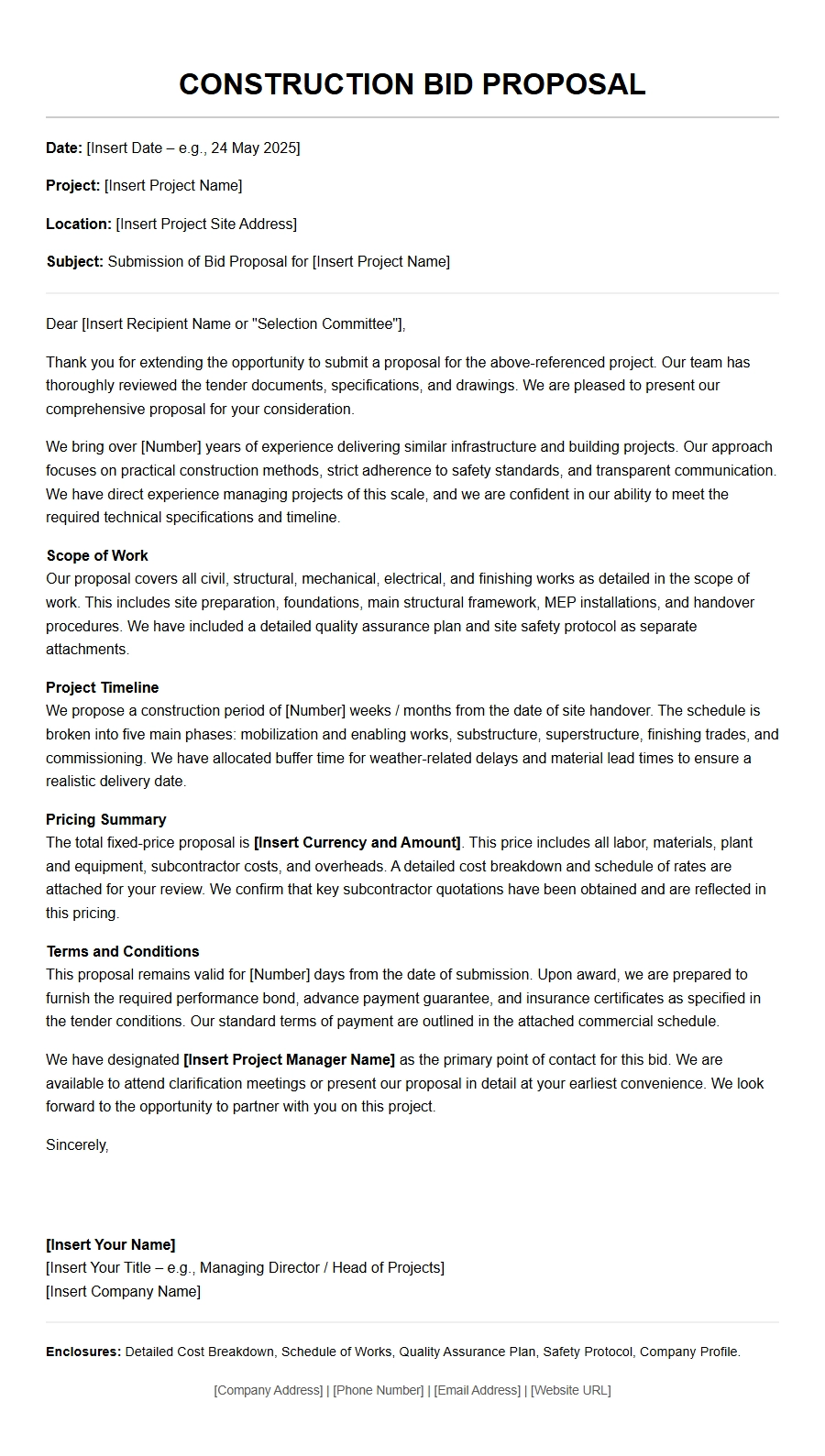 Sample Construction Bid Proposal Letter
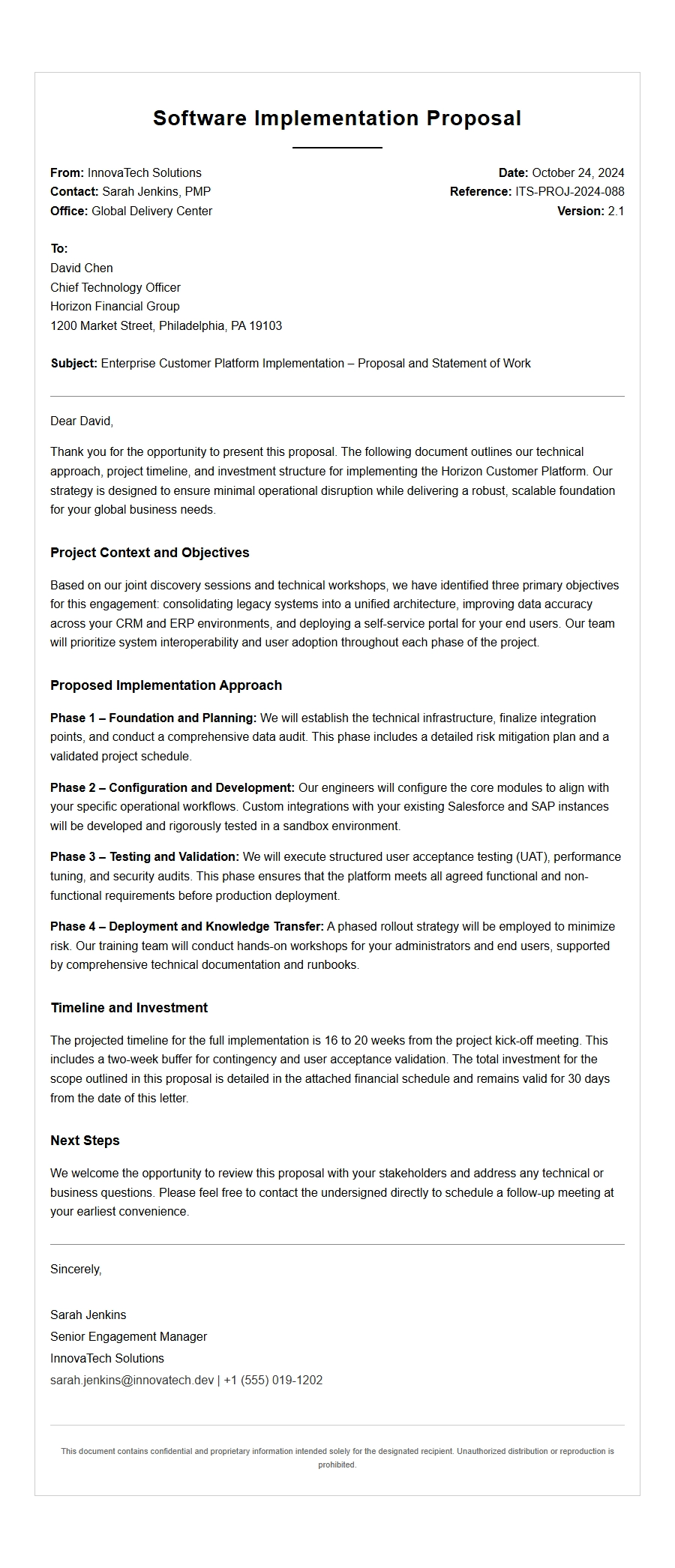 Enterprise Software Implementation Proposal Letter Example
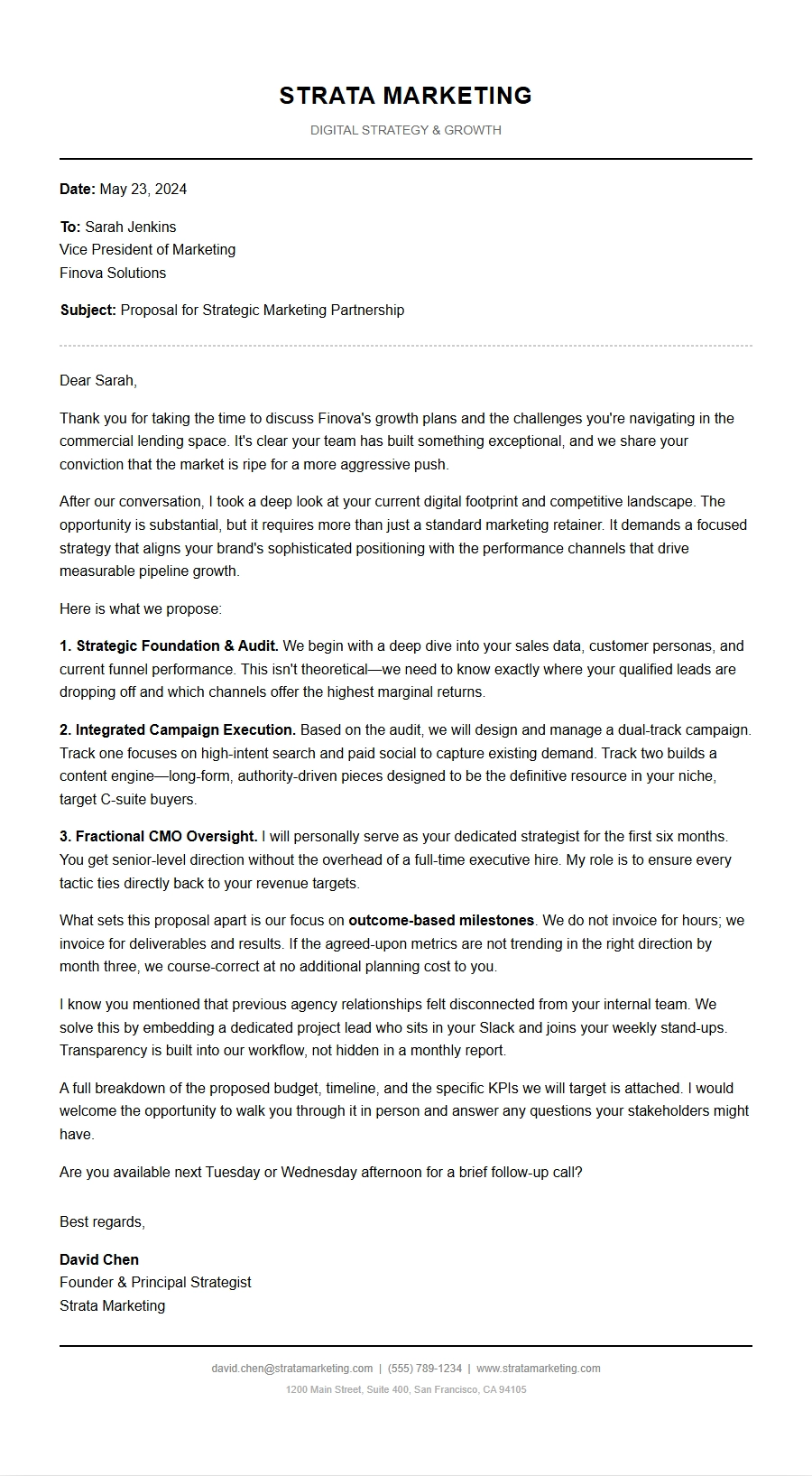 Marketing Agency Service Proposal Letter Template
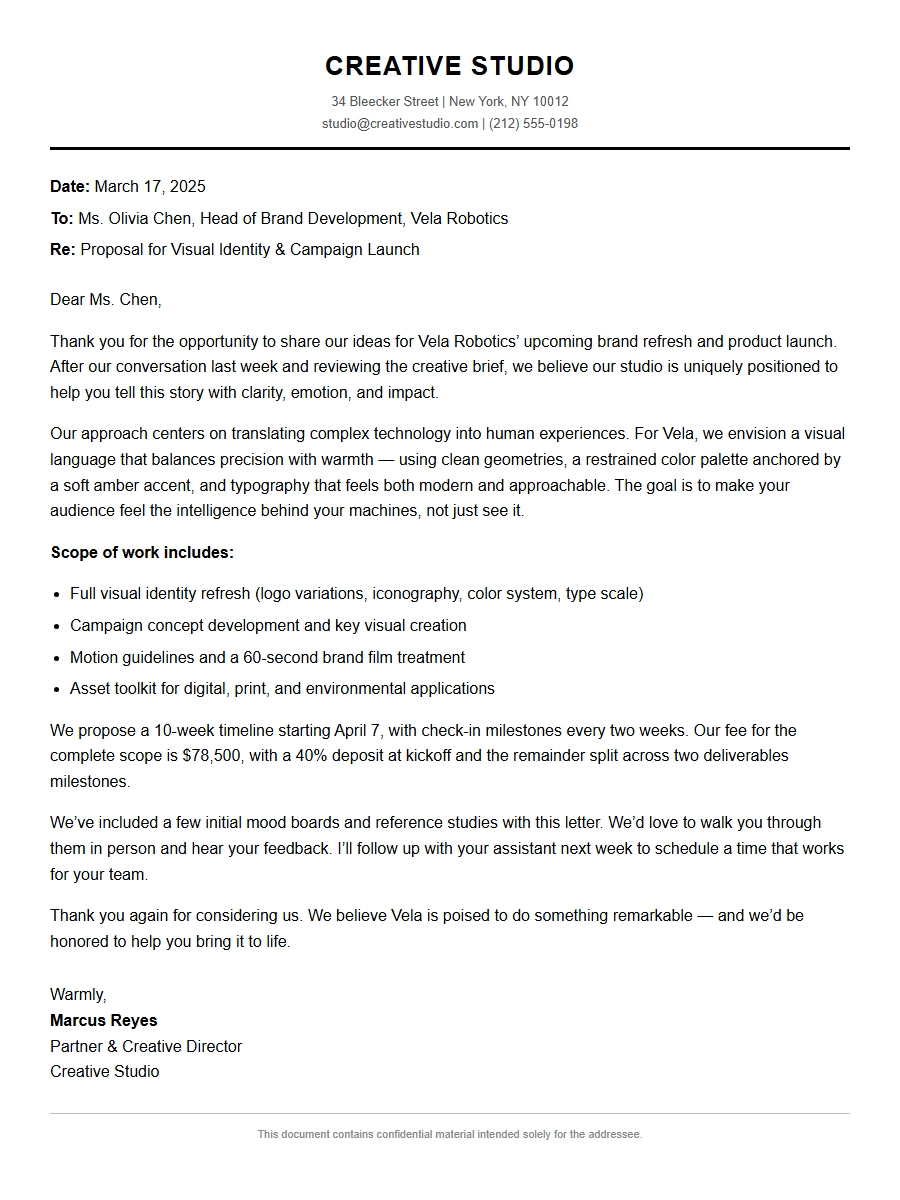 Creative Studio Project Proposal Letter
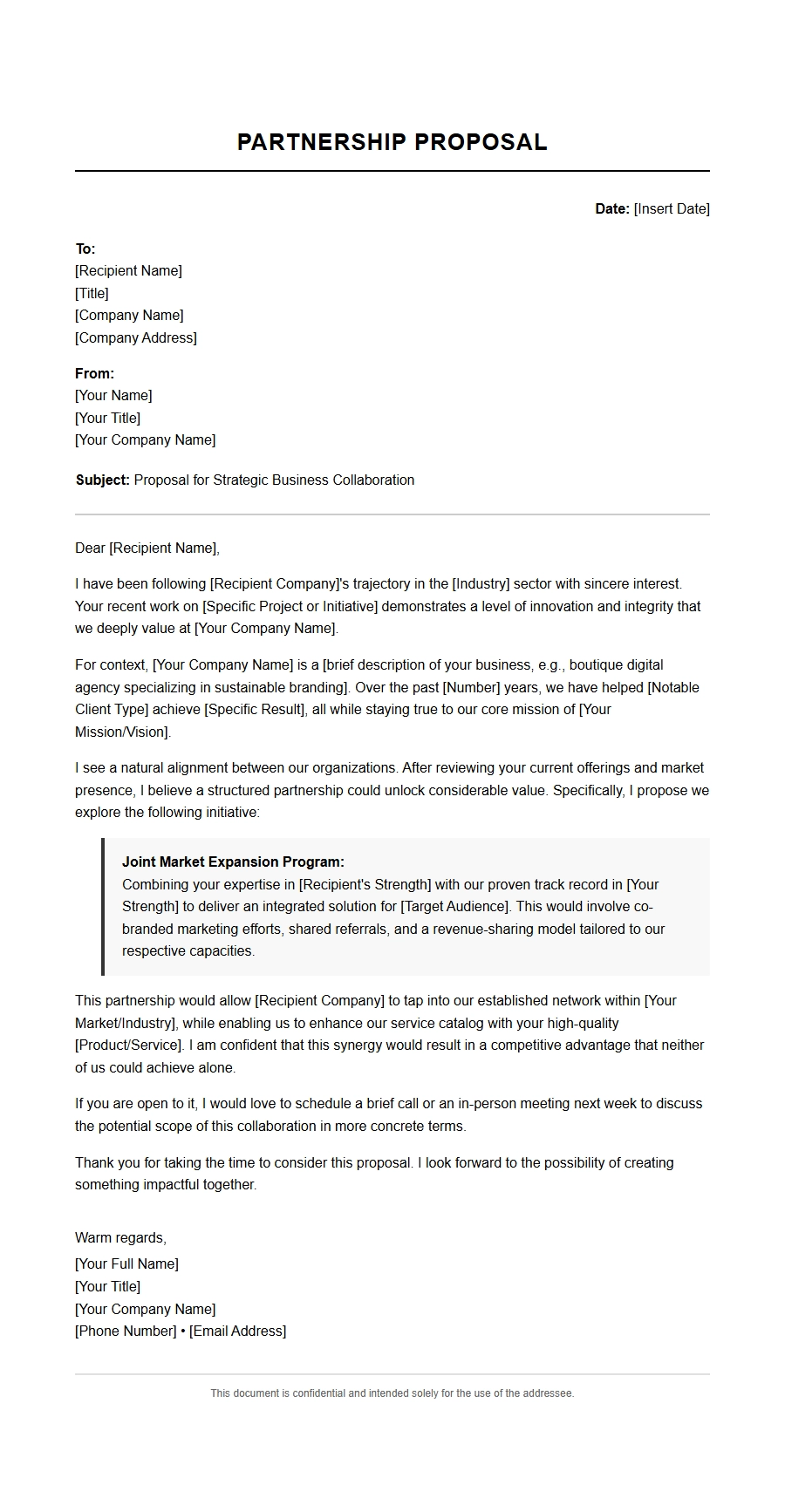 Small Business Partnership Proposal Letter Template
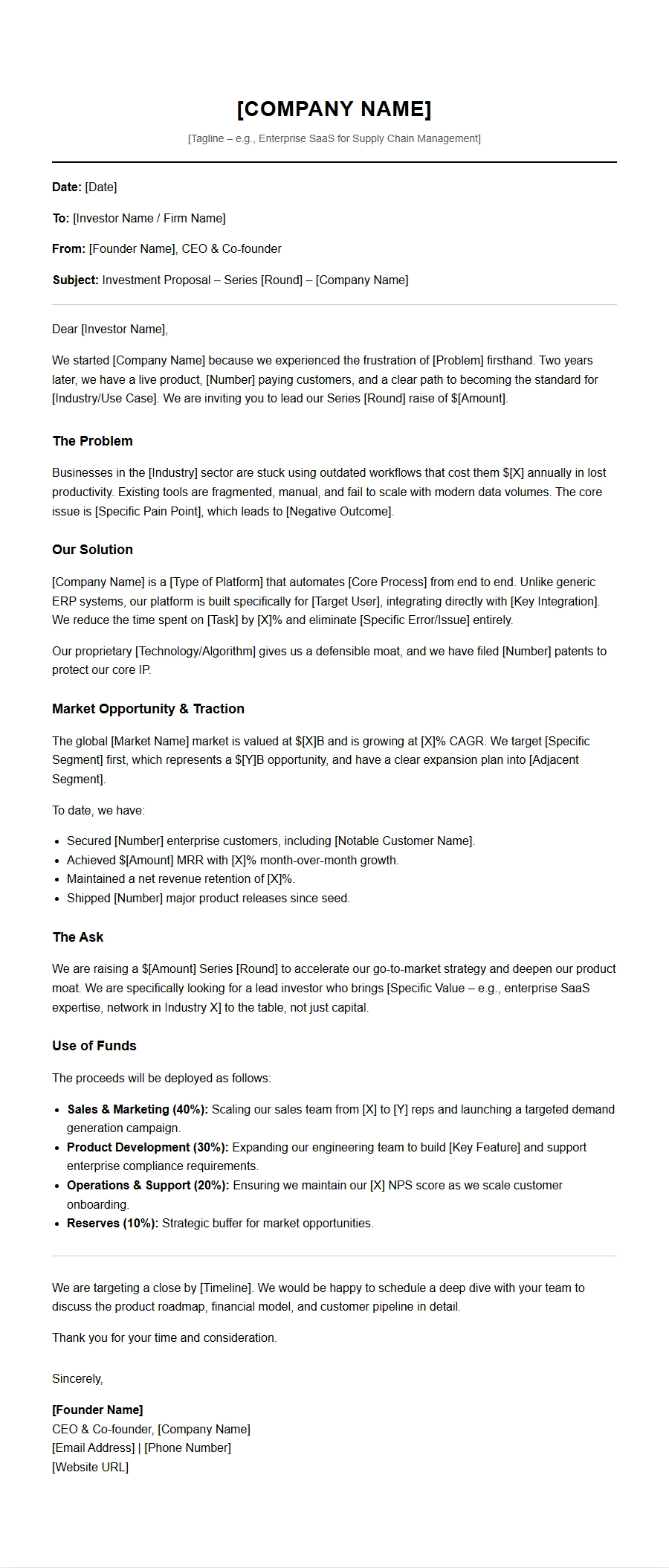 Startup Investment Proposal Letter Template