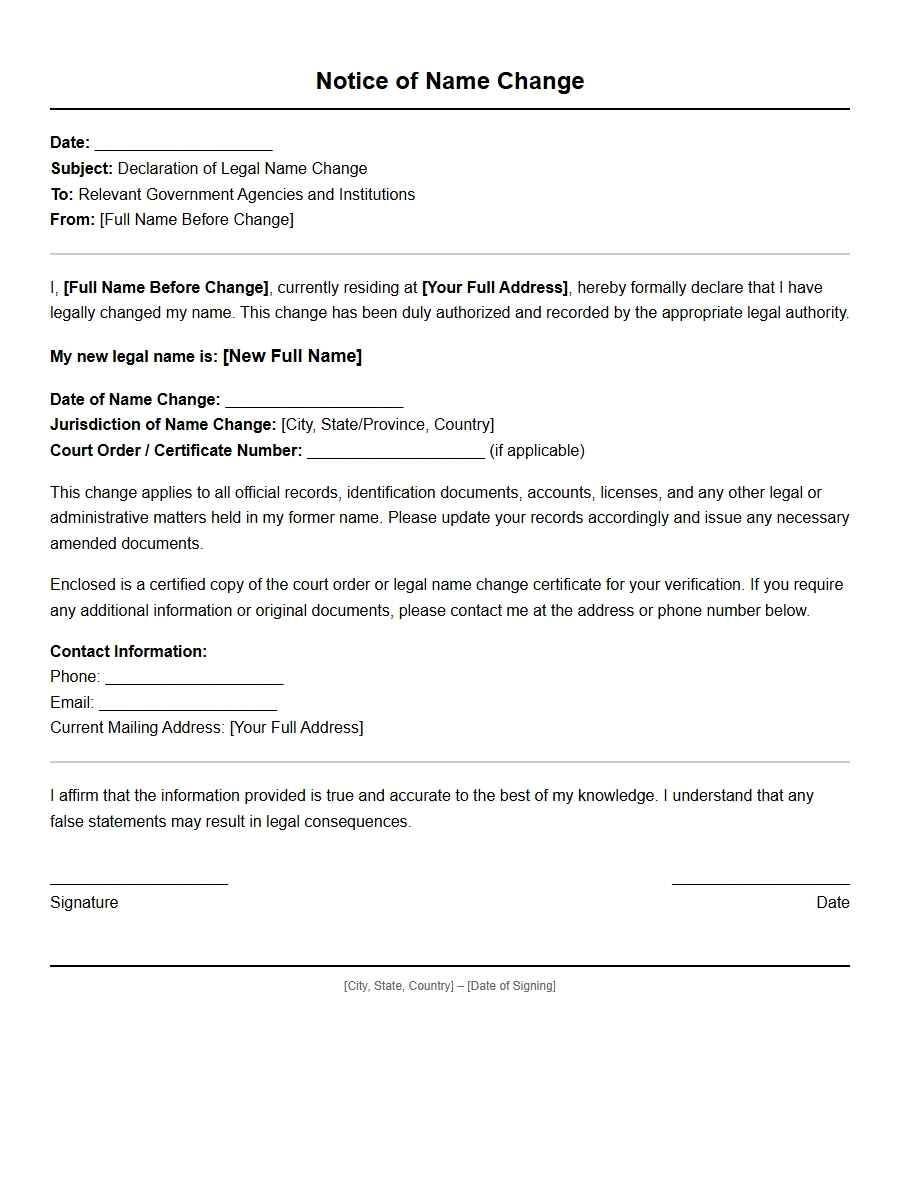
You’ve just legally changed your name, and now the real work begins: notifying every official agency. It can feel like a second job. Social Security, the DMV, your bank, passport office, insurance companies—each one wants a formal notice. Staring at a blank page, wondering what to say, is frustrating. But you don’t need to guess. A well-written letter sample gives you the structure and tone you need, leaving you only to fill in your personal details.
Why using a letter sample is a smart move
Writing a formal letter from scratch takes time, especially when you’re already juggling paperwork and deadlines. A letter template isn’t cheating—it’s a time-saver. It provides the essential parts: proper salutation and closing, clear subject line, and the key phrases that agencies expect. You then customize the rest. Think of it as a starter house you can decorate without rebuilding the walls.
What a good name change letter should include
Before you grab any template, know the must-haves: your full old name and new name, the date the change became legal, your contact information, and a list of any enclosures (like a certified court order or marriage certificate). The business letter format works best for most agencies—your address at the top, the recipient’s address, date, a clear subject line (“Name Change Notification”), and a polite request to update records.
Pay attention to tone in writing. You’re not asking a favor; you’re providing official information. Keep it direct and respectful. Avoid emotional language or overly long explanations. Agencies process thousands of these letters—make it easy for them.
Choosing the right sample for your situation
Not all name change letters are the same. A letter to the Social Security Administration needs more detail than one to a magazine subscription. Look for a sample labeled for professional correspondence with an official agency. If you’re emailing, use digital letter format—a clear subject line, proper greeting, and your typed signature. Printed letters benefit from a simple letterhead design (your name and address at the top) to look professional.
Category: Personal Document Updates
How to adapt a sample without losing your voice
Once you pick a sample, treat it as a guide, not a script. Replace generic phrases with your actual details. For example, if the sample says “I recently changed my name due to marriage,” and you changed it for another reason, write “pursuant to a court order.” Keep the official language but make it true to you. A good sample will have placeholders like [Your Old Name] and [Date of Change]—use them.
Ever received a letter that felt too stiff? That happens when someone copies a template word for word. Your letter should feel both professional and personal. One way is to tailor the opening paragraph: mention your specific relationship with the agency (e.g., “I hold a driver’s license with number XYZ”) to show you’re not a generic case.
Common mistakes to avoid
The biggest blunder? Using outdated salutations like “Dear Sir” when you don’t know the recipient’s gender. Use “To Whom It May Concern” or “Dear Records Department” instead. Another mistake is ignoring the format difference between email and printed letters. Emails don’t need your address at the top, but they do need a clear subject line. Printed letters should be signed in blue or black ink.
Proofreading is non-negotiable. A proofreading letter step catches typos in your new name or the spelling of the agency. Ask someone else to read it, or read it aloud yourself. One wrong digit in your Social Security number can delay everything.
If you’re notifying multiple agencies, keep a log of who you’ve contacted and when. This is similar to how you’d track a room availability rental inquiry—organization saves time later. And just like you might explain an absence from a group trip with clarity, a name change letter needs a clear explanation of the situation. For instance, explaining your absence from a group trip requires stating the reason and dates—same principle here: state the change and effective date.
Making the process faster next time
Once you’ve written one name change letter, save your customized version. You can reuse it for other agencies with slight tweaks. Over time, you’ll get faster and the letter structure will feel natural. Don’t be afraid to use similar formal writing skills if you ever need to address a service issue—the same formal writing tips apply.
Use the sample as a springboard, not a crutch. The best letters feel professional yet authentic—they show you took the time to make them yours. Practice once or twice, and the process becomes routine. Soon you’ll have all your records updated, and that blank page will feel like an old friend.
Useful Formats
How to Notify Agencies of Your Name Change
Request to Social Security Administration for Name Change
To the Social Security Administration,
I am writing to request a change of name on my Social Security card. My current legal name is Jane Alice Smith, and I am requesting to update it to Jane Alice Johnson due to my recent marriage. My Social Security number is 123-45-6789. Enclosed are the following supporting documents:
Document
Description
Marriage Certificate
Certified copy issued by the County Clerk
Identification
Copy of current driver's license
Please process this change and issue a new Social Security card reflecting my married name. If you require any additional information, contact me at (555) 123-4567 or by email at jane.a.johnson@email.com. Thank you for your assistance.
Request to Department of Motor Vehicles for Driver’s License Update
To the Department of Motor Vehicles,
I am requesting an update to my driver’s license name following a legal name change. My current license number is D1234567, issued under the name Robert James Parker. My new name is Robert James Parker-Miller. My date of birth is 03/15/1985. Attached is a certified copy of the court order granting the name change. Please advise if an in-person visit is required or if I may submit this by mail. I can be reached at (555) 987-6543. Thank you for your prompt attention to this matter.
Notification to Bank for Name Change on Accounts
To the Customer Service Department,
I am writing to request a name change on my accounts with your institution. My current name on file is Emily Rose Carter, and my new legal name is Emily Rose Chen. My account numbers are:
Checking Account: 987654321
Savings Account: 123456789
I have enclosed a notarized copy of my marriage certificate as evidence. Please update all account records, debit cards, and online banking profiles to reflect my new name. Kindly confirm once the change is complete. If you need further verification, call me at (555) 234-5678. Thank you.
Request to U.S. Passport Agency for Name Amendment
To the U.S. Department of State Passport Services,
I am writing to request an amendment to my passport due to a legal name change. My current passport number is 987654321, issued under the name Michael David Thompson. My new name is Michael David Thompson-Lee. Enclosed are DS-5504 form, a certified copy of my marriage certificate, and my current passport. Please issue a new passport reflecting my married name. I plan to travel internationally on June 1, 2025, so I request expedited processing. Contact me at (555) 345-6789 with any questions.
Notification to Employer for Payroll and Personnel Records
To the Human Resources Department,
This letter formalizes my request to update my name in all company records, including payroll, benefits, and employee directory. My current name is Lisa Marie Brown, employee ID 4521. Effective immediately, I am using my new legal name Lisa Marie Garcia. My marriage certificate is attached for verification. Please update my email address accordingly to lisa.garcia@company.com and issue a new badge. Confirm receipt and the effective date of this change. I can be reached at extension 4321.
Request to Insurance Company for Policyholder Name Update
To the Policy Services Department,
I am writing to update the name on my auto insurance policy, number AUTO-789456, currently under the name Kevin Andrew Wright. My new legal name is Kevin Andrew Wright-Petrov. Attached is a copy of the court order authorizing the name change. Please reflect this change on my policy documents, ID cards, and billing records. I also have a health insurance policy under the same name (policy HLT-654321) – please update both. My contact number is (555) 456-7890. Thank you.
Notification to Utility Company for Account Name Change
To the Customer Service Team,
I am requesting a name change on my electricity account, number 1122334455, at service address 789 Oak Street, Springfield. The current account holder name is David Alan White, and the new name should be David Alan White-Harris. This change follows my recent marriage. I have attached a certified copy of the marriage certificate. Please update all future bills and correspondence accordingly. For verification purposes, I can provide my SSN (last four digits 1234) upon request. Call me at (555) 567-8901 with any concerns.
Request to Credit Bureau to Update Name on Credit Report
To the Consumer Affairs Department,
I am writing to request an update to my name on my credit report. My current name on file is Jennifer Louise Baker, and my new legal name is Jennifer Louise Chen. My Social Security number is 987-65-4321. Enclosed is a copy of my marriage certificate as proof of the name change. Please correct my name in your database and provide me with a copy of my updated credit report. I can be contacted at (555) 678-9012 or jennifer.chen@email.com. Thank you.
Notification to School Registrar for Student Record Update
To the Office of the Registrar,
I am a student at your institution, currently enrolled under the name Andrew James Miller, student ID 2024-5678. I have legally changed my surname to Miller-Stevens following my marriage. Please update my student records, transcripts, and directory information to reflect my new name: Andrew James Miller-Stevens. Attached is a certified copy of the marriage certificate. My email address will become a.miller-stevens@university.edu. Confirm when the change is completed. Thank you.
Notification to U.S. Citizenship and Immigration Services of Name Change
To the U.S. Citizenship and Immigration Services,
I am writing to notify USCIS of my legal name change. My current name on my pending application (Receipt Number: MSC1234567890) is Maria Elena Rodriguez. My new legal name is Maria Elena Rodriguez-Chen. My Alien Number is A098-765-432. Attached is a certified copy of the marriage certificate. Please update my records and issue any correspondence under my new name. My mailing address remains 456 Maple Avenue, Suite 100, Los Angeles, CA 90001. Contact me at (555) 789-0123 for any additional information.
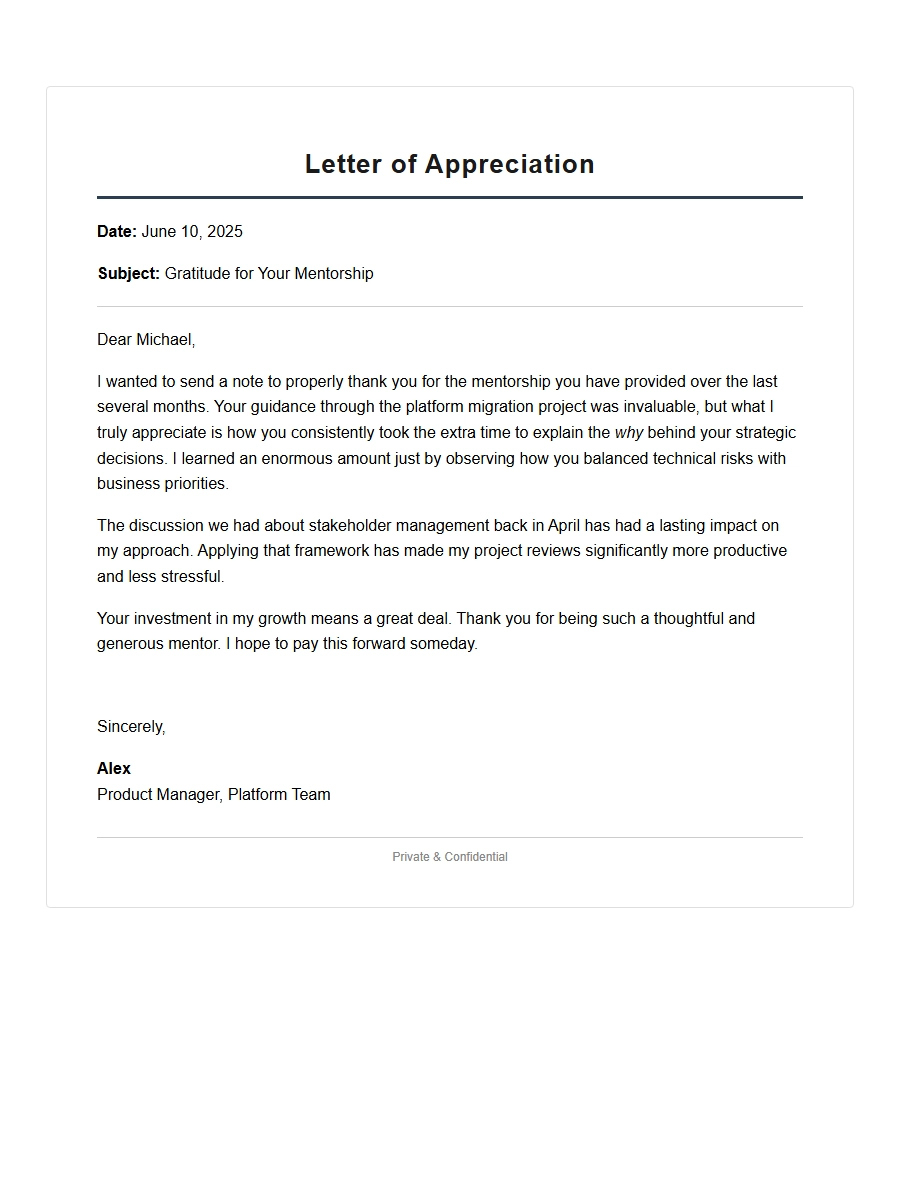 Thanking a Mentor for Guidance: Sample Messages
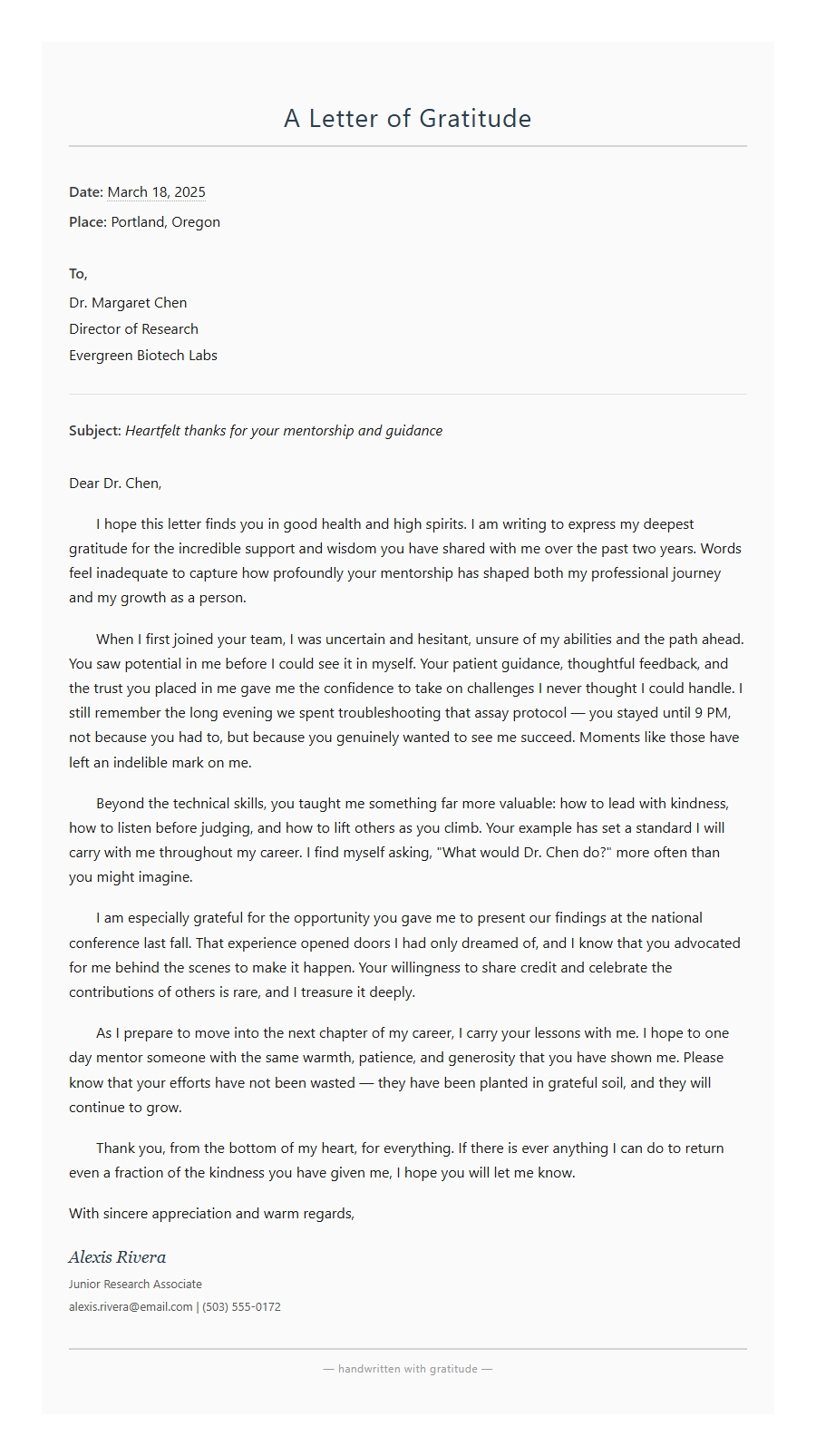 Expressing Gratitude: Handwritten Letter Example
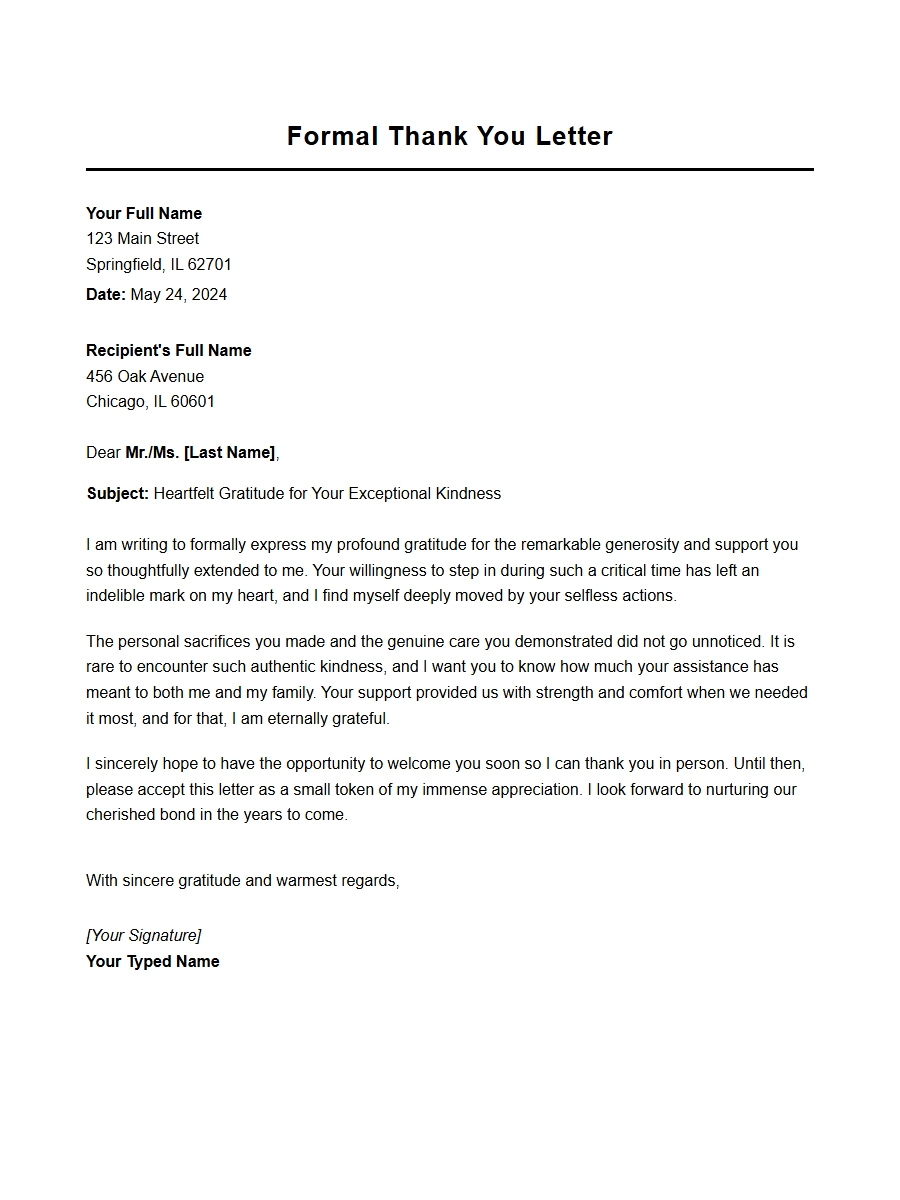 Expressing Thanks in a Formal Personal Letter
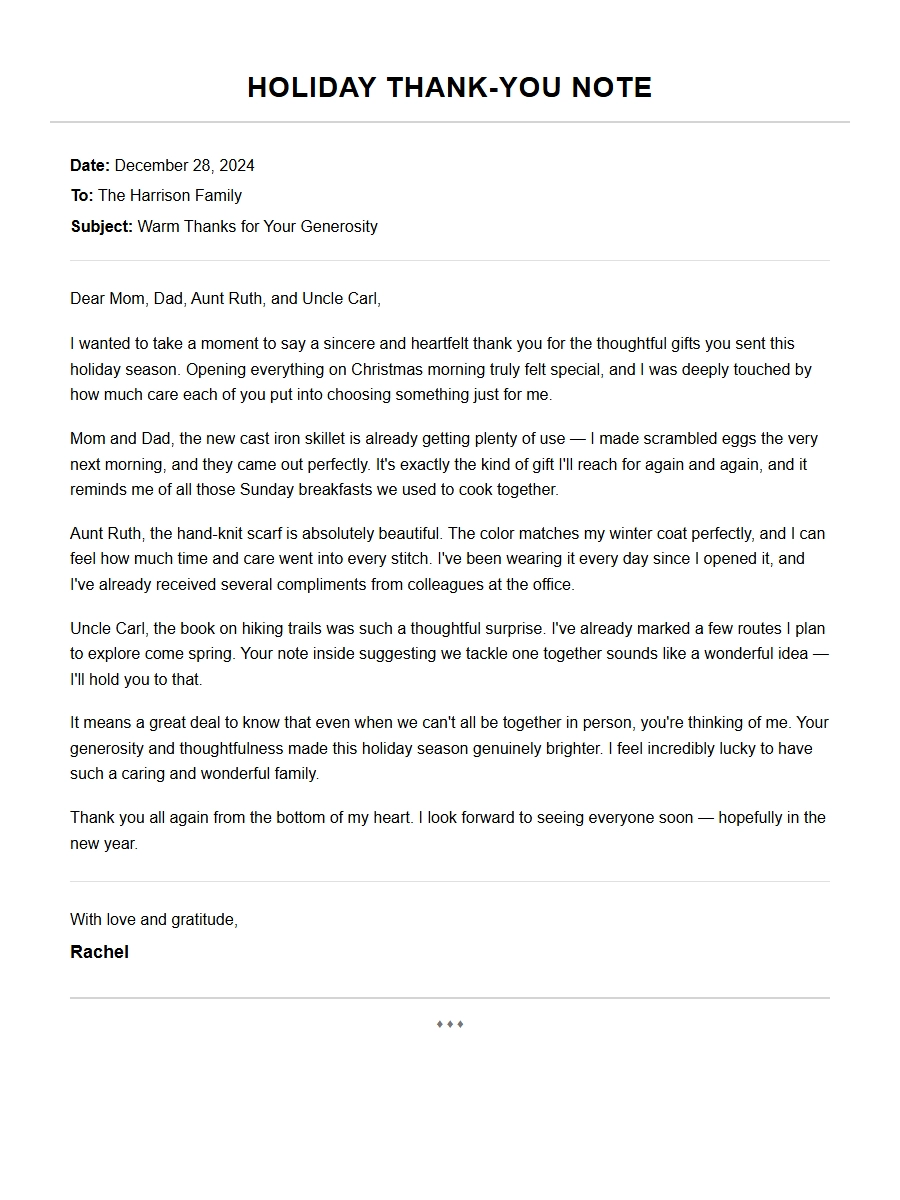 Thank You Letter Examples for Family Holiday Gifts
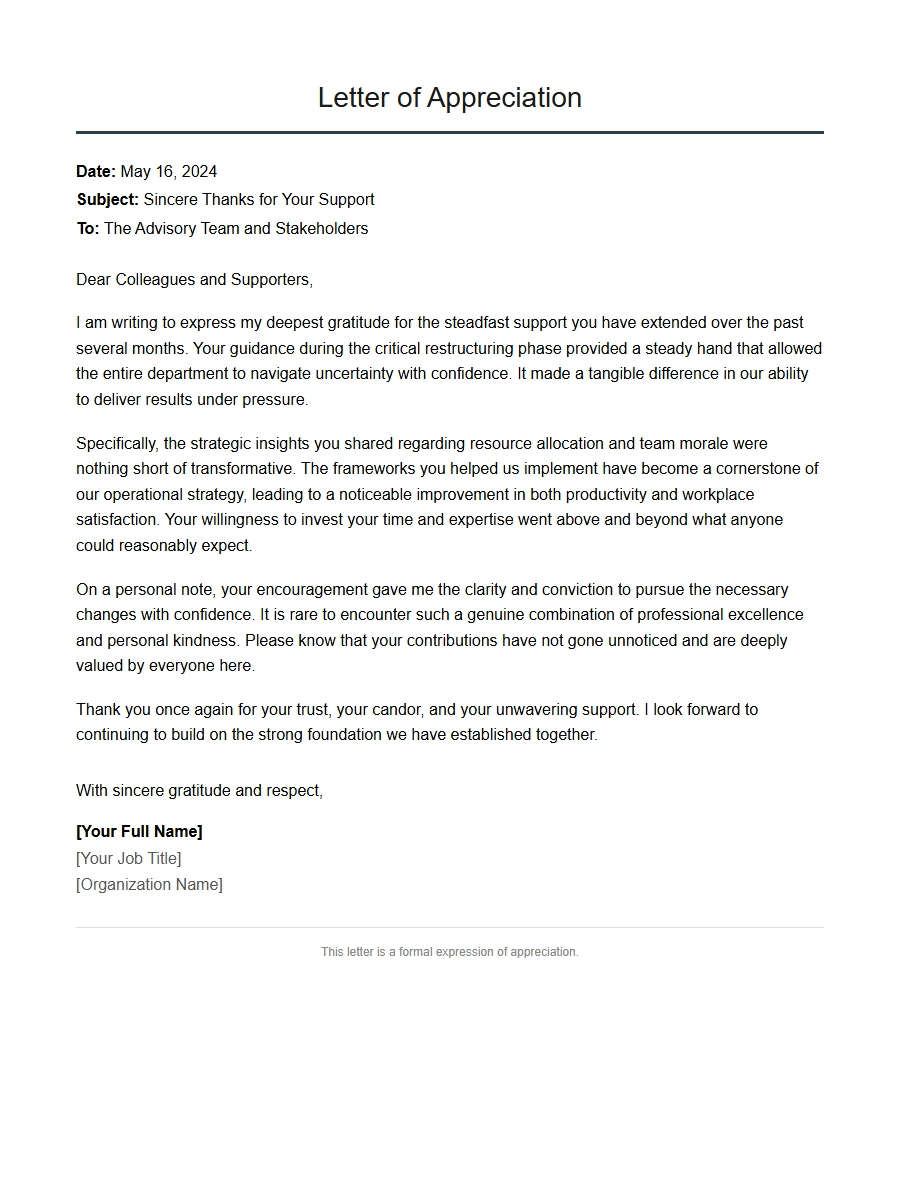 Sample Thank You Letter for Support
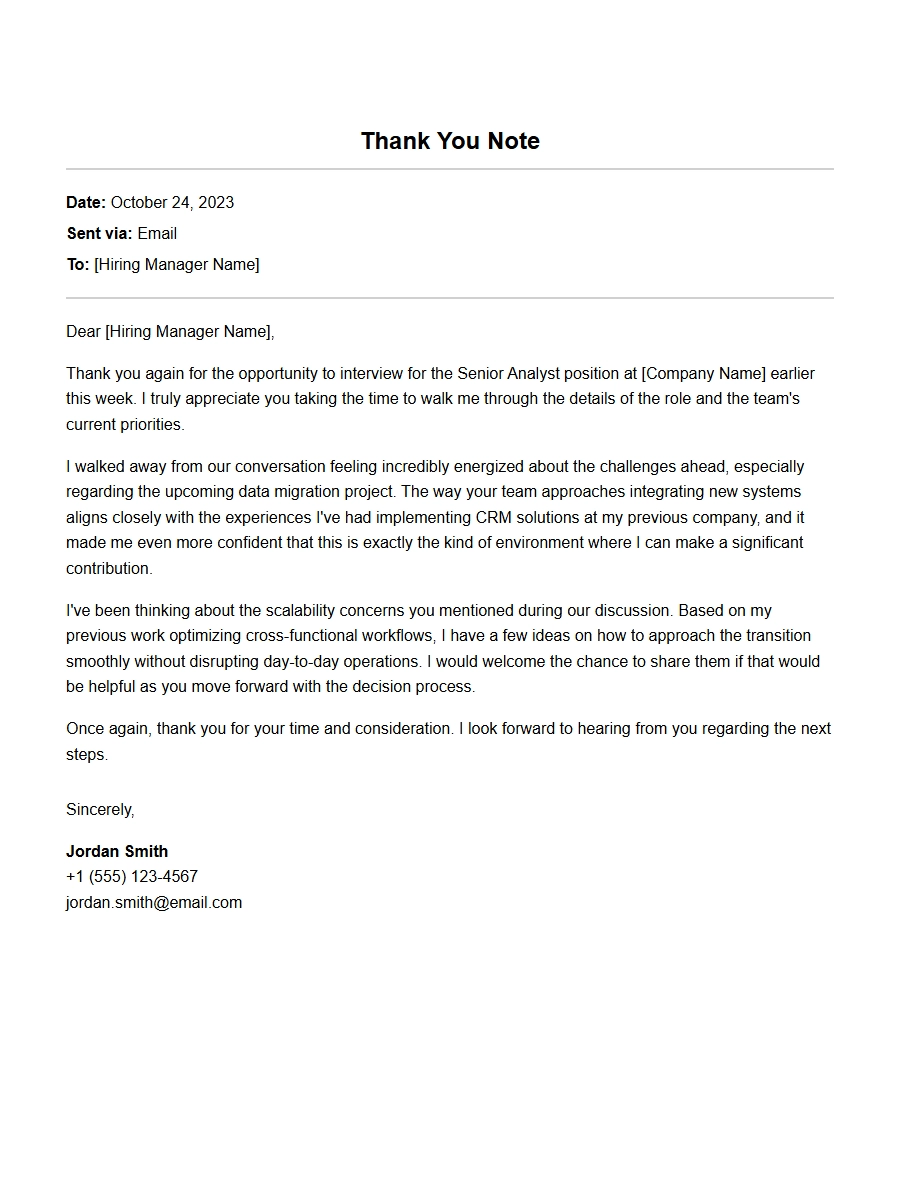 How to Write a Personal Thank-You Note After an Interview