You finally got that stubborn tech issue fixed—the one that’s been slowing you down for days. Now you want to thank the IT person or the colleague who helped, but when you sit down to write, the words feel awkward or too stiff. You don't want to sound robotic, but you also need it to be professional. That’s where a solid sample comes in. It’s not cheating; it’s a smart shortcut that gives you a proven structure and tone so you can focus on what really matters: sounding genuine.
A thank-you note after a technical troubleshooting fix is more than politeness. It builds goodwill, especially if you might need help again. Using a letter template helps you include the right details without overthinking. You get a clear professional correspondence framework—salutation, body, closing—and you can swap in your own specifics. No more staring at a blank page.
Category: Professional Thank-You Letters
How to pick the right sample for your situation
The best sample matches the relationship and formality. Is this a quick email to an internal IT teammate? Or a formal letter to an external vendor? For a casual fix at work, a semi-formal tone works: “Thanks so much for jumping on my laptop issue yesterday—really saved my deadline.” For a vendor who went above and beyond, go slightly more formal: “I appreciate the thorough diagnosis and quick resolution of our server problem.” Look for formal writing tips in the sample that match your needs. Don’t force a stiff business letter format if an email is fine.
Pay attention to salutation and closing. “Dear [Name],” is safe for formal letters; “Hi [Name],” works for internal or frequent contacts. Close with “Sincerely” or “Best regards.” The tone in writing should be warm but respectful—not gushing, not cold. If the sample feels too wordy, trim it. Your genuine appreciation matters more than fancy phrasing.
Adapting the sample without losing your voice
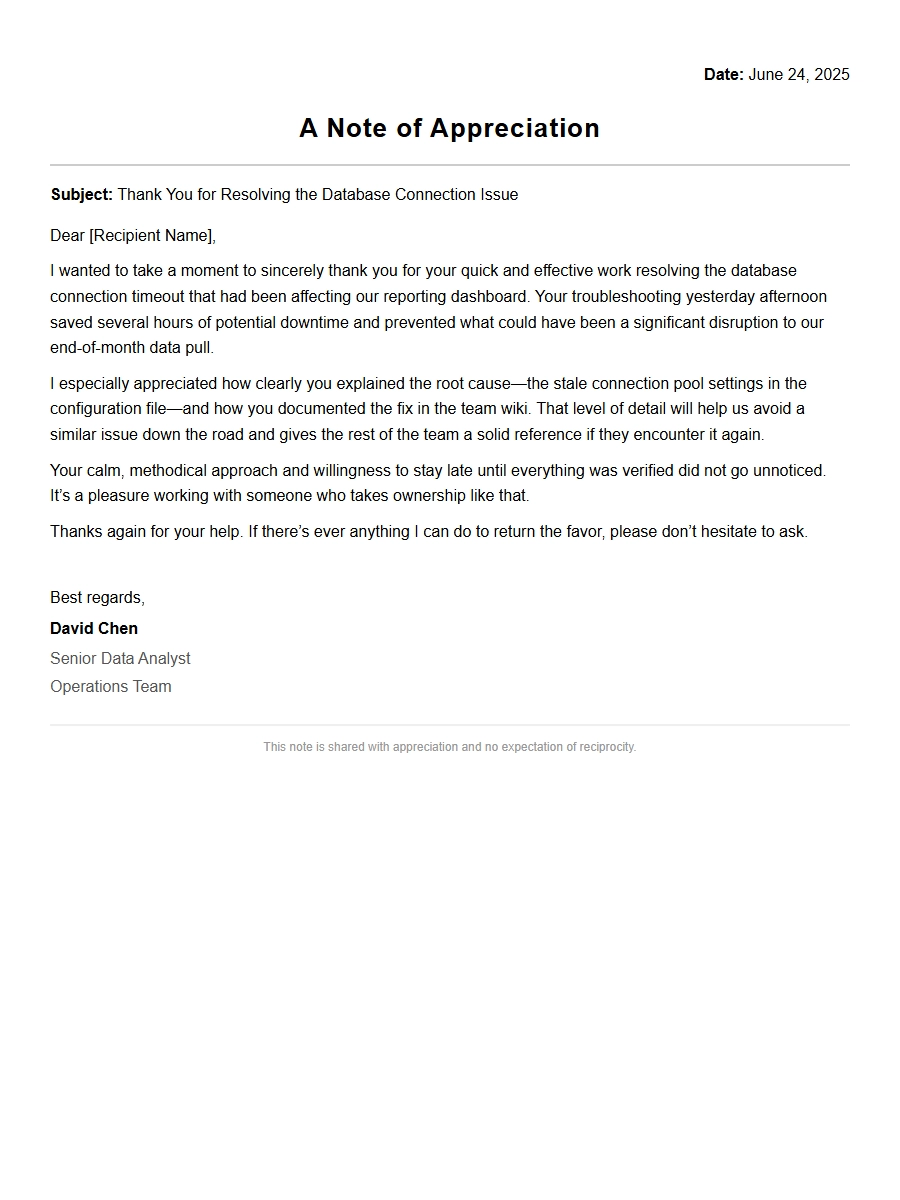
Once you have a sample, customize it. Mention the exact issue: “Thanks for fixing the database connection error last Tuesday.” Acknowledge the effort: “I know you had to dig through logs for hours.” Then state the outcome: “The system’s back up and our team can work again.” Keep your natural speech patterns—if you’d normally say “you’re a lifesaver,” use it. The sample is a scaffold, not a script. You can apply this same approach when writing appreciation notes for other services, like thanking a catering team for great food at an event or acknowledging a babysitter’s care.
A common mistake is using outdated greetings like “To Whom It May Concern” when you know the person’s name. Another is ignoring the format difference between an email and a printed letter. For email, skip the letterhead design and use a clear subject line. For a printed letter, include your contact info and date. Always proofread your final version—a typo in a thank-you note undermines the gratitude. Read it aloud to catch awkward spots.
Making the first line count
Your opening sets the tone. Instead of “I am writing to thank you,” try “Thank you so much for resolving the printer error today.” It’s direct and personal. Mention something specific about the fix—like the time it took or the complexity. That shows you value their effort, not just the outcome. If the fix involved multiple steps, you can say “I really appreciate how you walked me through the troubleshooting steps on the phone.” That kind of detail makes the note feel thoughtful.
Other cover letter examples and resignation letter samples follow similar logic: match tone to audience, personalize the details, and keep it concise. The same letter writing etiquette applies here—be polite, specific, and timely. Send your thank-you within a day or two of the fix for maximum impact.
One last tip: practice makes it faster
Don’t overthink it. Use a sample, swap in your words, and send it. If you’re unsure about tone, ask yourself: does this sound like me? If yes, you’re good. Over time, you’ll get comfortable enough to write these notes without a template. Think of it as building muscle memory. The same way you might thank a partner for planning a birthday celebration or politely refuse an offer, the principles hold: be clear, be kind, be specific.
Your thank-you note doesn’t need to be long. A few sentences, well-chosen, can leave a lasting positive impression. And if the fix was huge, you can also thank someone for providing a reference check in a similar tone—professional with a personal touch. The more you practice, the more natural it feels. Start with a sample today, and you’ll have that note sent in minutes.
Examples for Different Needs
Thank You Note for Tech Support Resolution
Appreciation for Server Issue Resolution
Dear Support Team,
I am writing to express my sincere gratitude for your prompt and effective resolution of the server outage we experienced on March 10, 2025. The downtime was critical, and your team's quick diagnosis and fix restored operations within two hours.
Below is a summary of the issue and resolution:
Issue
Root Cause
Resolution
Time to Fix
Server 500 error
Memory leak in database
Restarted services and applied patch
1h 45min
Your expertise and professionalism made a significant difference. Thank you for minimizing disruption to our operations.
Best regards, John Doe
Thank You for Fixing Email Delivery Failure
Dear IT Support,
Thank you for resolving the email delivery failure that affected our sales team yesterday. The issue where outgoing messages were bouncing back has been completely fixed, and we are now receiving confirmations again.
Here is a quick recap of the troubleshooting steps you performed:
Checked SMTP server logs and identified an authentication error
Updated the mail relay credentials in our email client
Tested delivery to multiple external domains
Confirmed that all queues are now processing correctly
We really appreciate your methodical approach and clear communication throughout the process. It saved us hours of guesswork.
Sincerely, Maria Lopez
Gratitude for Network Connectivity Fix
Hi Network Team,
I want to thank you for resolving the intermittent connectivity issue we were facing across the second floor. Since the fix was applied on April 2, 2025, all workstations have maintained stable connections with no drops.
The problem and solution are summarized below:
Problem
Diagnosis
Fix Applied
Frequent WiFi disconnects
Access point interference on ch. 6
Switched to ch. 11 and repositioned AP
Your quick response saved us from a day of lost productivity. Please extend my thanks to the field technician who came onsite.
Best, Alex Chen
Thanks for Database Recovery Assistance
Dear Database Administrator,
I am deeply grateful for the rapid recovery of our customer database after the corruption incident on March 28, 2025. Your ability to restore the latest backup and apply transaction logs meant we lost only 15 minutes of data.
Here are the details of what was recovered:
All 12,450 customer records restored
Order history from the past 48 hours fully intact
User permissions and roles reapplied correctly
Without your expertise, this situation could have caused major revenue loss. Thank you for staying late to ensure everything was verified before morning.
Warm regards, Priya Singh
Appreciation for Software Bug Fix
Dear Development Team,
Thank you for promptly addressing the bug in the invoice generation module that caused incorrect tax calculations. The fix deployed in version 3.2.1 has resolved the issue entirely.
I have outlined the key aspects of this fix for our records:
Bug ID
Description
Fix Summary
Tested By
BUG-4521
Tax rounding error on international orders
Updated rounding logic and added unit tests
QA Team
Your thorough testing and clear release notes made deployment smooth. We appreciate the high quality of your work.
Best regards, Karen O'Brien
Thank You for Printer Troubleshooting
Hello IT Helpdesk,
Thanks for fixing the printer jam and driver issues in the accounting office this morning. The HP LaserJet is now working perfectly, and all users can print without errors.
The steps you took were clear and efficient:
Cleared a paper jam in the duplex unit
Reinstalled the printer driver with the correct PCL6 version
Verified network queue settings
Performed test prints from three workstations
Your friendly manner and fast turnaround made our morning much less stressful. Please keep up the great work.
Sincerely, David Kim
Gratitude for VPN Configuration Fix
Dear Remote Access Support,
I want to thank you for resolving the VPN connectivity problem that prevented me from accessing our internal systems while traveling. The fix you applied on March 15, 2025 now lets me connect reliably from any location.
Here is a summary of the troubleshooting you performed:
Symptom
Cause
Solution
Connection timeout after 2-factor auth
Outdated client certificate
Revoked old cert and issued new one
Your patience in walking me through the reinstallation and testing was exemplary. I can now work productively on the road.
Many thanks, Lisa Wang
Thanks for Password Reset and Account Recovery
Hi Security Team,
I appreciate the swift help in resetting my locked account after multiple failed login attempts yesterday. The process was seamless, and I was back online within 20 minutes.
Your team provided clear instructions and followed security protocols without unnecessary delays. Here is what happened:
Verified my identity via the security questions
Reset the password and enforced a strong policy
Enabled multi-factor authentication as a precaution
Logged all actions for audit purposes
Thank you for balancing security with user experience. I feel more confident knowing my account is properly protected.
Best regards, Tom Harris
Appreciation for Hardware Repair on Workstation
Dear Hardware Support Team,
Thank you for the excellent repair of my workstation's faulty power supply on April 5, 2025. The system had been randomly shutting down, but after your intervention it runs stable under full load.
The work performed included:
Component
Issue
Action Taken
Warranty Status
Power supply unit (550W)
Intermittent voltage drops
Replaced with new certified 650W PSU
Covered under warranty
I also appreciate that you cleaned the internal fans and tested all components before returning the unit. This proactive care extends the life of the machine.
Well done, Rachel Adams
Thank You for Cloud Service Restoration
Dear Cloud Operations,
I am writing to thank you for restoring access to our cloud file storage after the service disruption on March 22, 2025. The issue affected file syncing across multiple devices, but your team resolved it within an hour.
The key details of the incident are as follows:
Root cause: Expired authentication token in the sync engine
Impact: 23 users unable to upload or download files
Resolution: Regenerated API keys and forced token refresh on all clients
Post‑fix: Verified sync status and no data loss
Your timely updates kept everyone informed, and the solution was elegant. Thank you for ensuring business continuity.
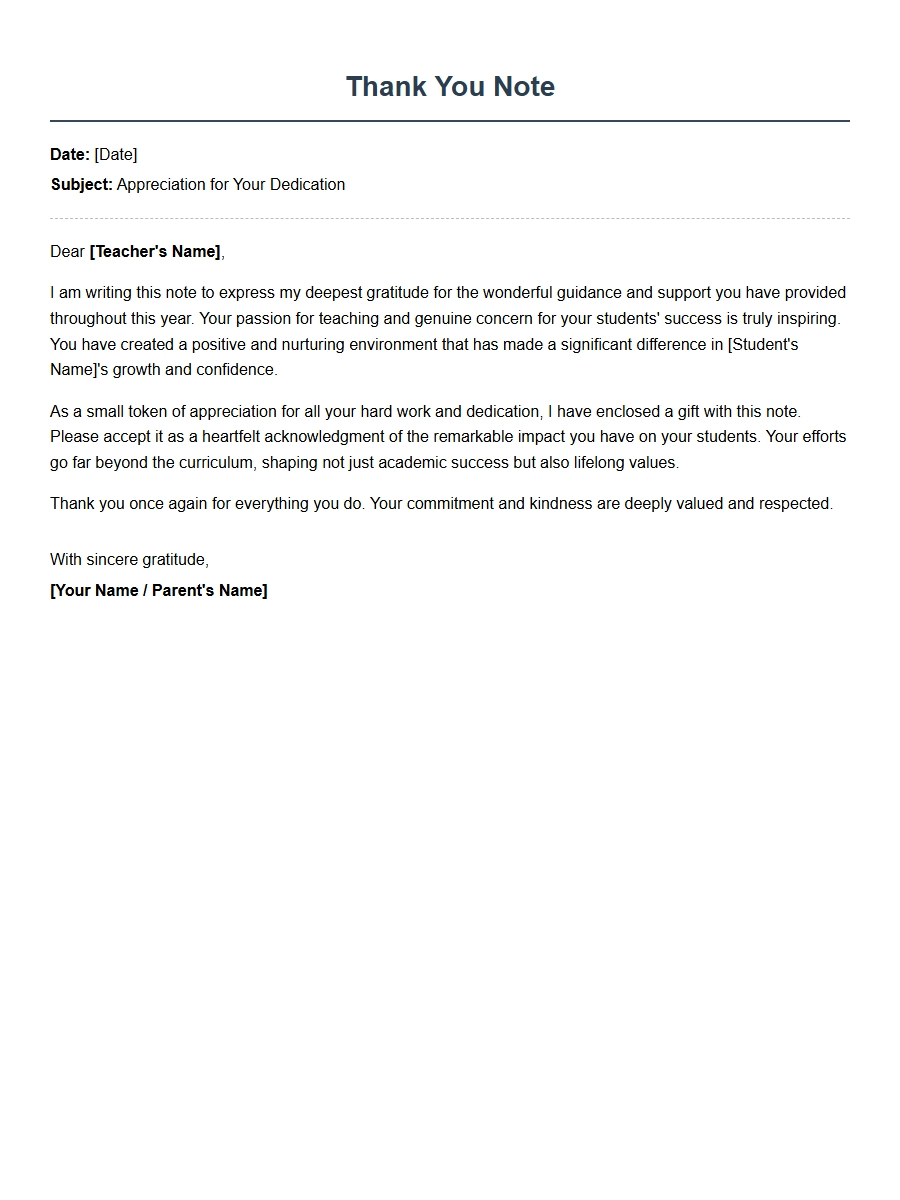 Sample Thank You Note for Teacher Gift
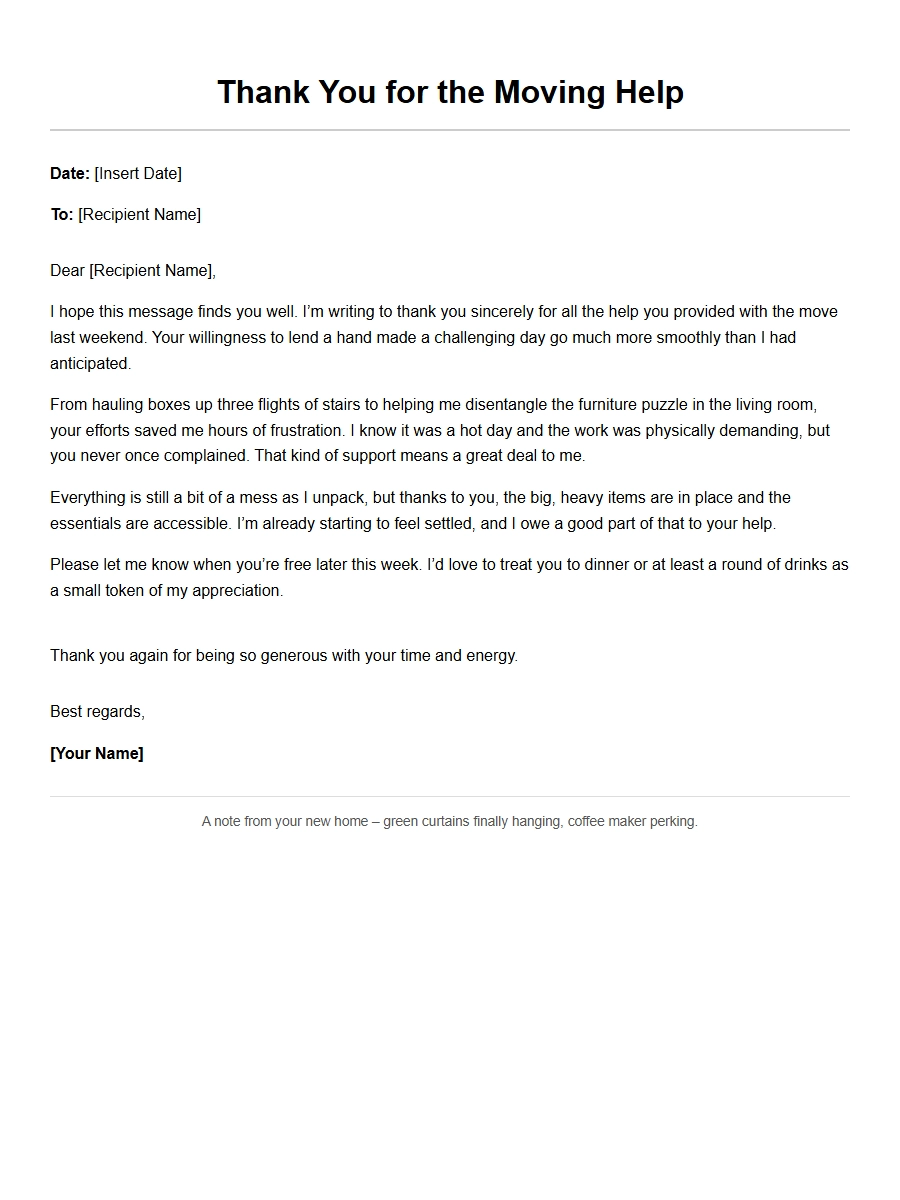 Thank-You Letter for Help with Moving
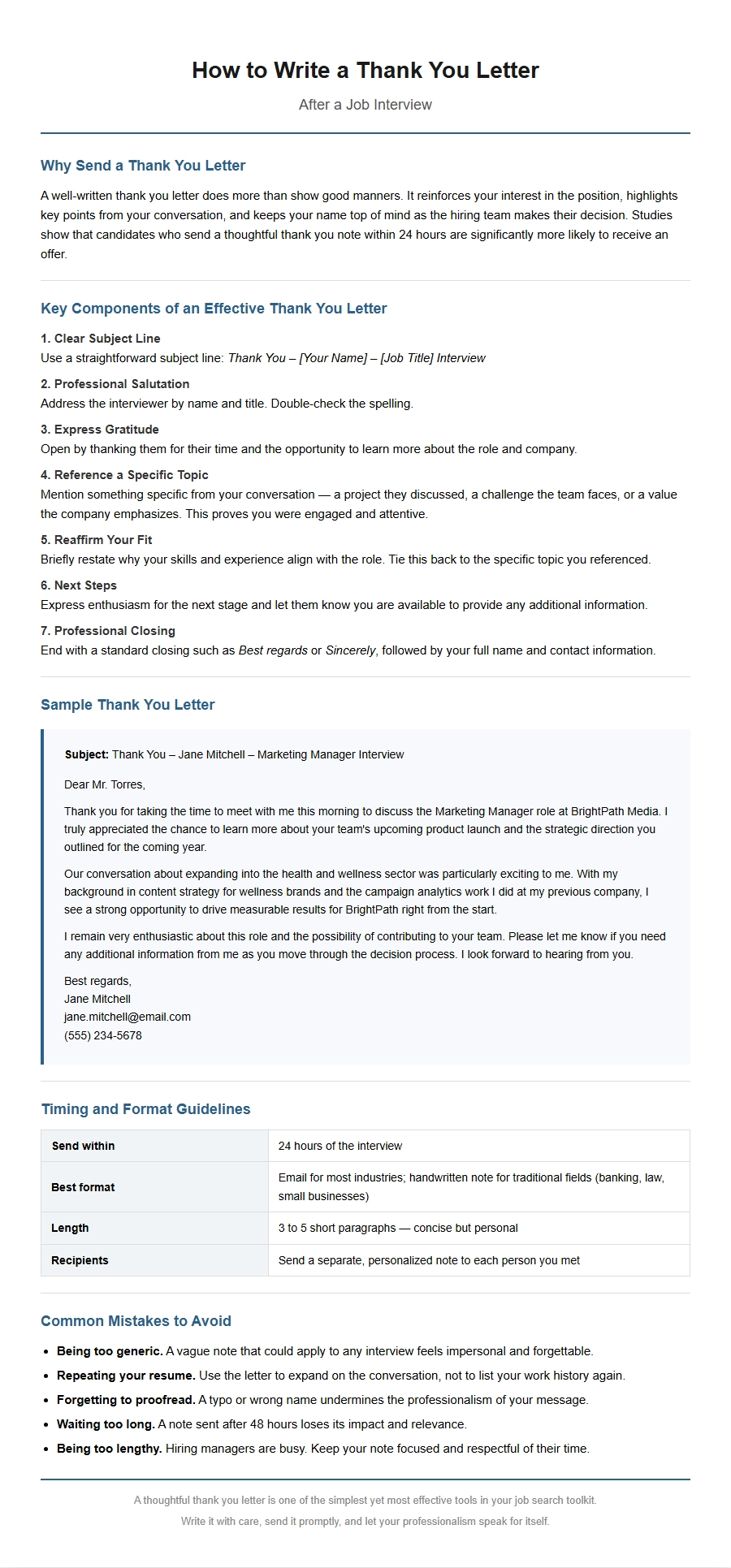 How to Write a Thank You Letter After an Interview
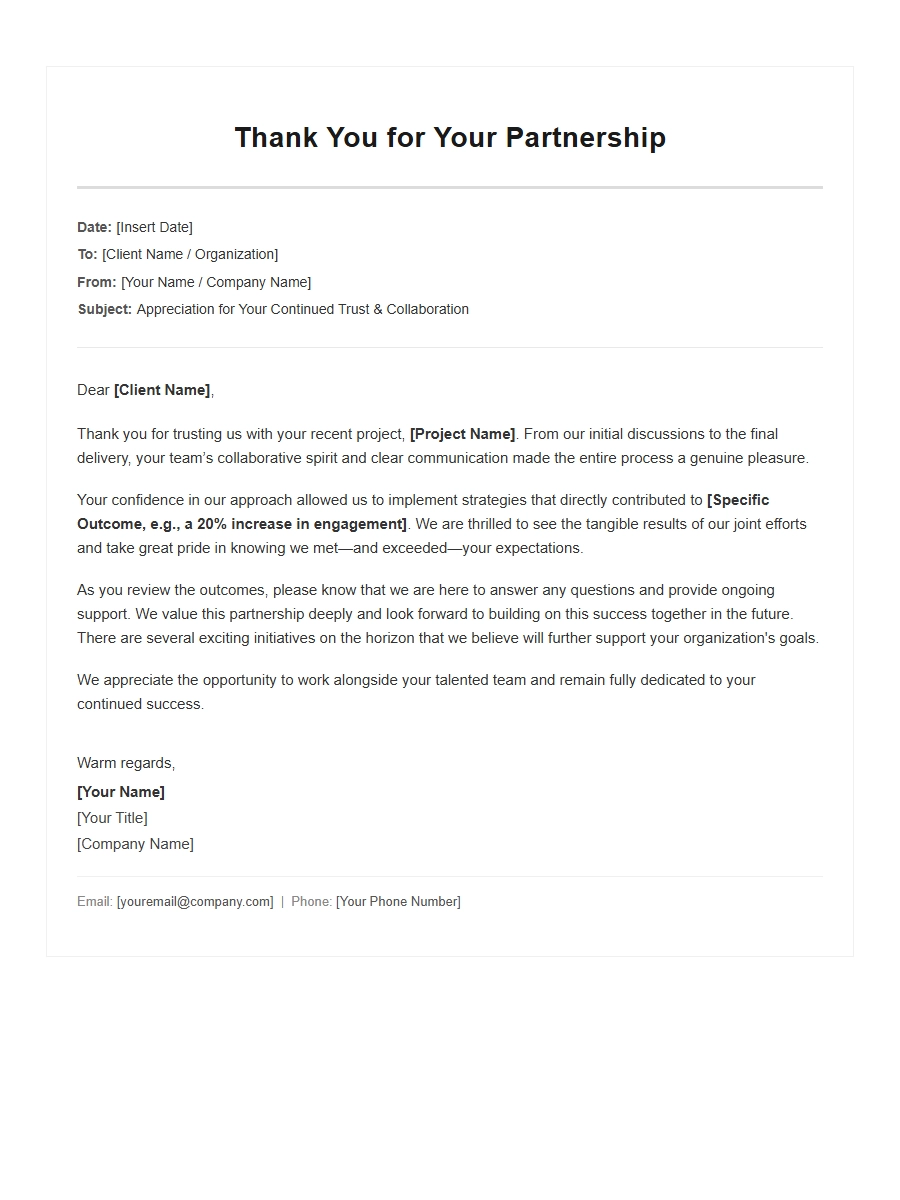 professional thank you email example for client - Thank-You Letters
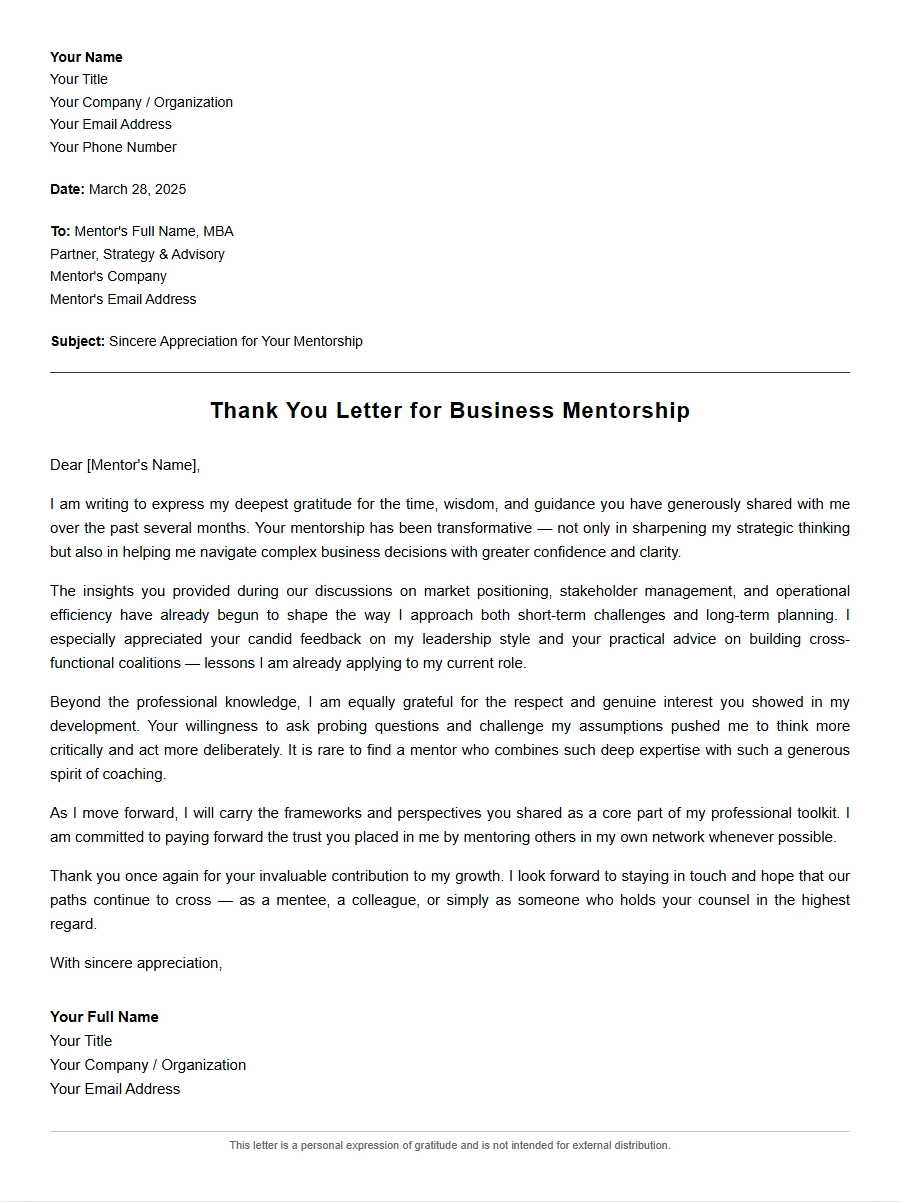 Business Mentor Thank-You Letter Guide
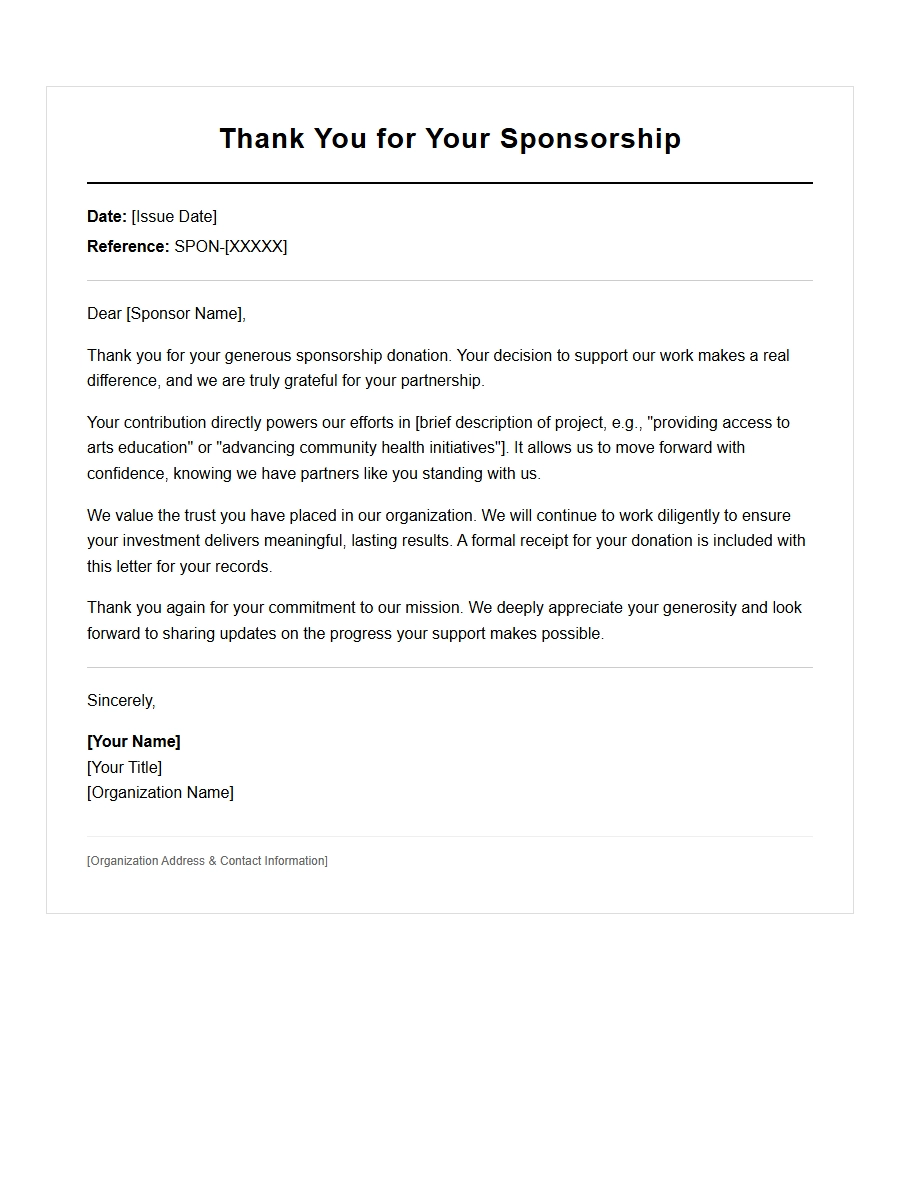 Thank You Letter for Sponsor Donation