Thank You Letter for Landlord Maintenance Response
You just submitted a maintenance request, and your landlord responded quickly to fix the leaky faucet or the broken heater. Now you want to send a thank-you note, but you’re not sure how to word it without sounding awkward or too formal. That blank screen makes you second-guess every sentence. A simple thank-you letter for that maintenance response doesn’t need to be complicated—and using a sample as a starting point is one of the smartest shortcuts you can take.
Why a letter template is a time-saver, not a cheat
Professional correspondence doesn’t have to be written from scratch every time. A good letter template gives you the right structure, salutation and closing, and the appropriate tone in writing. You still get to add your own voice and specific details. Think of it like using a recipe: you follow the base, then tweak the seasoning. That’s how you write a customizable letter that feels genuine without the anxiety of starting from zero. The same approach works for other types of letters—like a letter of recommendation or a resignation letter sample—so you’re building a useful skill.
Category: Appreciation Letters
Choosing the right sample for your landlord situation
The best sample matches the kind of relationship you have with your landlord. If you communicate mostly by email, stick with a digital letter format. For printed notes, consider a simple letterhead design (even just your name and date at the top) to make it feel respectful. If your landlord is very formal, use a classic business letter format with "Dear [Name]" and "Sincerely." If you’re on friendlier terms, a shorter, warmer note works fine. The key is to match the letter writing etiquette of your past exchanges. Ever received a letter that felt too stiff or too casual? You’ll avoid that by observing how your landlord usually writes to you.
How to adapt a sample without losing your authentic voice
Start by replacing generic phrases with your specific details. Instead of “Thank you for your prompt response,” say “Thanks for sending the plumber so quickly—the drip is gone and the kitchen floor is dry.” That small change makes the note personal. Keep your natural sentence rhythms: if you usually write short, direct messages, don’t suddenly switch to flowery language. Also check the letter structure—most thank-you notes have three parts: a greeting, a specific reason for thanks, and a closing. Stick to that framework, and you’re set. A quick tip: open with the exact repair you’re grateful for. It grabs attention and shows you’re not just sending a generic form.
Common mistakes to avoid when thanking your landlord
One big mistake: using outdated salutations like “To Whom It May Concern” when you know your landlord’s name. Another: ignoring the format differences between email and printed letter. For email, skip the full letterhead design and just use a clear subject line (e.g., “Thanks for the quick fix on the water heater”). For a printed letter, include your address and date. Also, don’t forget proofreading letter basics—a typo in “maintenance” can make the note feel rushed. Read it aloud once before sending.
So next time your landlord handles a request quickly, grab a sample, personalize it, and hit send. You’ll maintain a good relationship and save yourself the blank-page panic.
Common Sample Formats
Thank You Letter for Landlord Maintenance Response
Quick Response to Faucet Leak
Dear [Landlord's Name],
Thank you for the incredibly fast response to my maintenance request regarding the leaking kitchen faucet. I submitted the request yesterday afternoon, and your team arrived this morning to replace the cartridge. I truly appreciate how promptly you handled this—it saved me from potential water damage and a higher water bill.
Here is a quick summary of the repair for my records:
Date Reported
Issue
Date Fixed
Technician
March 5, 2025
Kitchen faucet leaking steadily
March 6, 2025
Mike from ABC Plumbing
Everything is working perfectly now. Your efficiency gives me great confidence in this tenancy. Thank you again!
Sincerely, [Your Name]
Thanks for Thorough Heating Repair
Dear [Landlord's Name],
I want to express my sincere gratitude for the thorough heating system repair you arranged last week. The furnace had been making strange noises and not heating evenly, but your service team not only fixed the igniter but also cleaned the ducts and replaced the air filter.
The steps they completed include:
Replaced faulty igniter
Cleaned burner assembly
Inspected and sealed ductwork leaks
Installed a new programmable thermostat
The apartment is now warm and comfortable, and the repair has noticeably reduced my energy bills. Thank you for going the extra mile—it shows you truly care about your tenants’ comfort.
Best regards, [Your Name]
Follow-Up After Successful Repair
Dear [Landlord's Name],
I just wanted to follow up on the maintenance request I submitted last week for the broken garbage disposal. The repair was completed on Tuesday, and I am happy to report that the disposal is working perfectly—no more jams or strange smells.
I especially appreciated that your maintenance team cleaned the unit and flushed the drain line as a preventive measure. That small extra step made a big difference. Thank you for responding promptly and for keeping me updated throughout the process.
Please pass along my thanks to the technician. It’s reassuring to know that you have such reliable support for your properties.
Warmly, [Your Name]
Thanks for Handling Multiple Issues
Dear [Landlord's Name],
Thank you so much for addressing the list of maintenance items I reported last month. It was a long list, and I know it required coordination across multiple contractors. I really appreciate that you took each issue seriously and completed all repairs within a single visit.
Here are the items that were fixed:
Running toilet in guest bathroom
Sticky front door lock
Broken window screen in the bedroom
Slow-draining shower
Every single fix was done professionally. The apartment feels fully functional again. Thank you for your responsiveness—it makes living here a pleasure.
Best, [Your Name]
Emergency Pipe Burst Response
Dear [Landlord's Name],
I cannot thank you enough for your immediate response to the burst pipe emergency last night. When I called at 11:00 PM, I never expected anyone to arrive until morning. But your on-call plumber was here within 30 minutes and had the water shut off and the pipe patched before any serious flooding occurred.
The quick action saved my belongings and prevented structural damage. I also appreciate that you followed up this morning to check on the cleanup and schedule the permanent repair. Your dedication to tenant safety and property maintenance is outstanding.
I will be recommending you as a landlord to friends without hesitation.
Gratefully, [Your Name]
Thankful for Preventative Gutter Maintenance
Dear [Landlord's Name],
Thank you for arranging the seasonal gutter cleaning and downspout inspection last week. I know that preventative maintenance like this often goes unseen, but it makes a huge difference in avoiding leaks and water damage during heavy rains.
The team performed the following tasks:
Removed leaves and debris from all gutters
Flushed downspouts to ensure free flow
Checked for any loose brackets or rust spots
Installed gutter guards on the rear section
It’s clear that you take a proactive approach to property care, which gives me peace of mind as a tenant. Please keep up the excellent work.
With appreciation, [Your Name]
Praise for Professional Maintenance Team
Dear [Landlord's Name],
I want to sincerely thank you for sending such a professional and courteous maintenance team to fix the malfunctioning dishwasher. From the moment they arrived—on time and with a friendly attitude—to the final test run, the experience was excellent.
The technician diagnosed a clogged pump and a faulty seal, replaced both parts, and even cleaned the filter as a courtesy. He also explained what had caused the issue and gave me tips to prevent future clogs. This level of service is rare and genuinely appreciated.
Thank you for maintaining such high standards for your property and for treating tenants with respect.
Best wishes, [Your Name]
Polished Acknowledgment of Repairs
Dear [Landlord's Name],
Thank you for promptly responding to my maintenance request for the electrical outlet that stopped working in the living room. The repair was completed yesterday, and the outlet is now functional and safe.
For my own records, I have summarized the interaction below:
Request Date
Issue
Response Date
Resolution
April 2, 2025
Dead outlet in living room (no power)
April 3, 2025
Replaced faulty wiring and outlet
I appreciate your efficient communication and the quality of the work. It’s a pleasure renting from someone so responsible.
Sincerely, [Your Name]
Offering Future Assistance
Dear [Landlord's Name],
Thank you for taking care of the refrigerator ice maker issue so quickly. The unit is now producing ice consistently, and the water line replacement seems to have solved the problem. I’m very grateful for your swift action.
If you ever need me to provide access for future maintenance or inspections, please feel free to contact me directly. I work from home most days and can easily accommodate visits. I’m also happy to send photos or describe issues thoroughly before a technician arrives.
Having a responsive landlord like you makes my rental experience truly positive. Thank you again.
Warm regards, [Your Name]
Appreciative of Quick Future-Readiness
Dear [Landlord's Name],
Thanks again for the recent repair of the bathroom exhaust fan. It was making a grinding noise and barely moving air. Your technician replaced the motor and cleaned the vent duct, and now the fan is quiet and effective.
Because of your fast work, I’m reassured that if any other issues arise, you will handle them just as efficiently. I’ll be sure to report any concerns promptly, knowing you’ll act quickly.
It’s a great comfort to know that you prioritize both the property and your tenants’ comfort. Thank you for setting such a high standard.
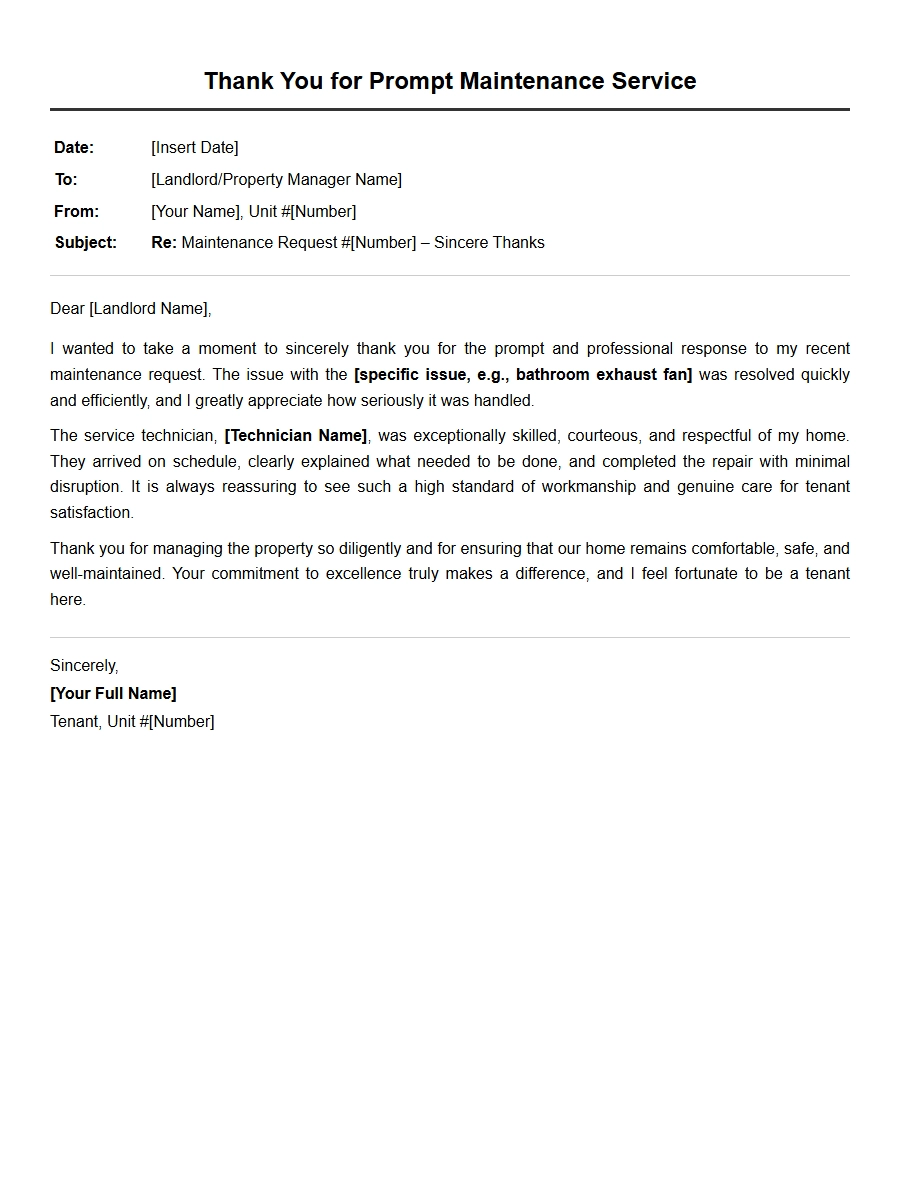
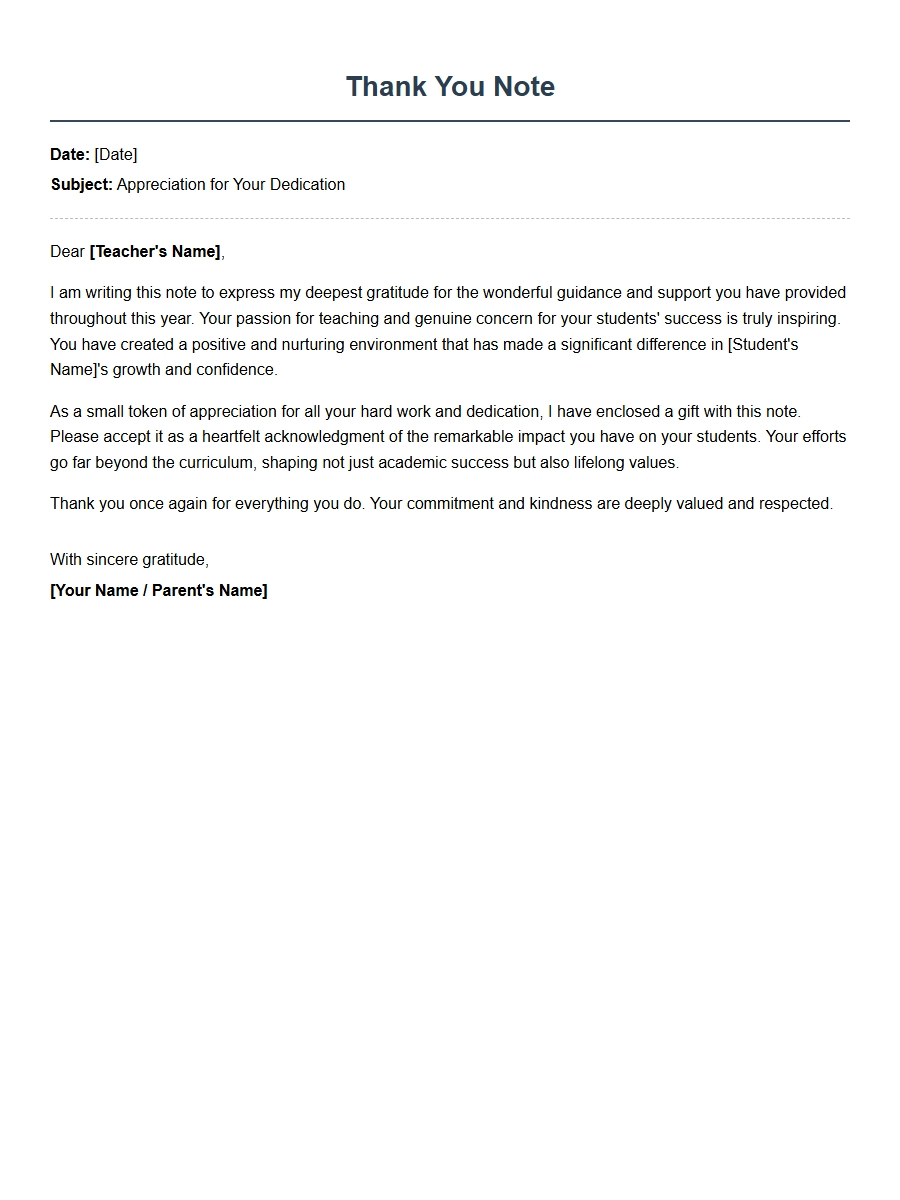 Sample Thank You Note for Teacher Gift
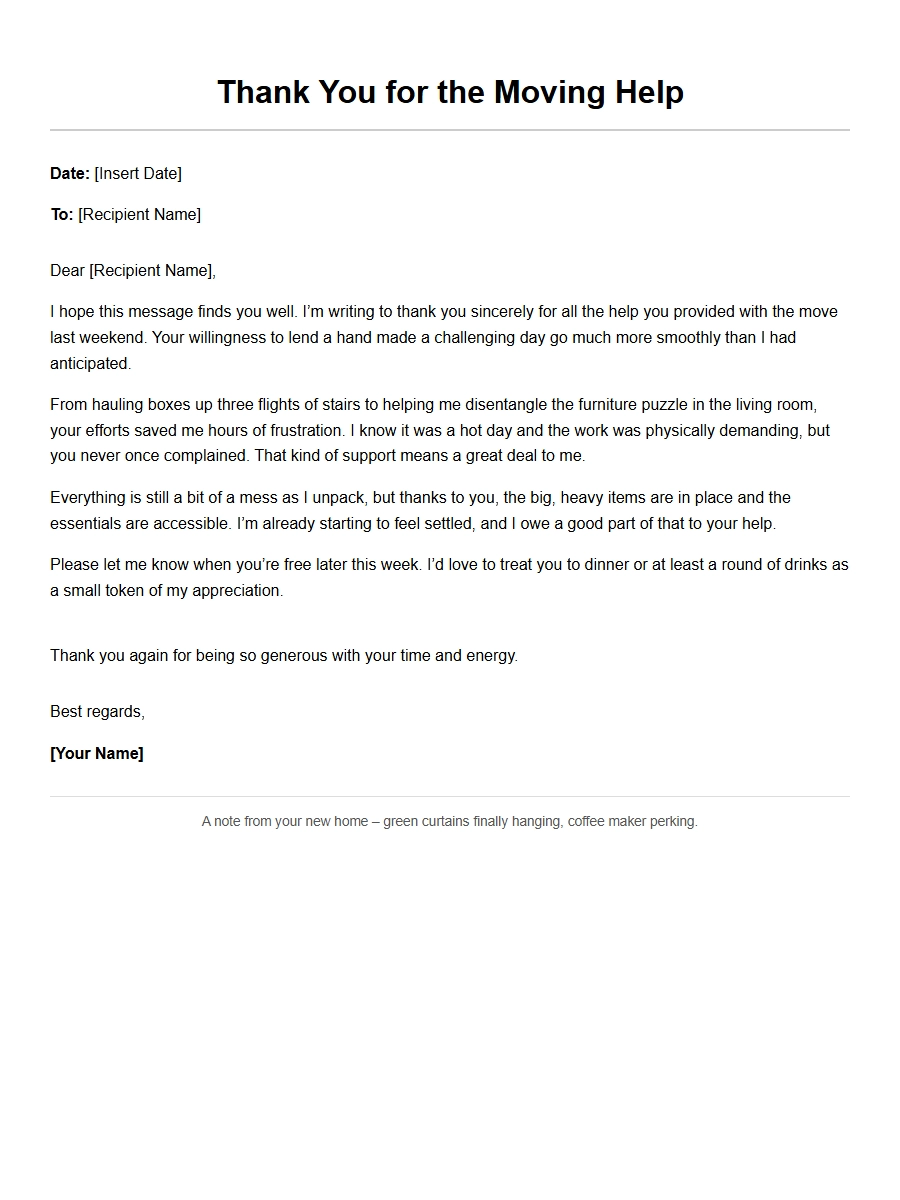 Thank-You Letter for Help with Moving
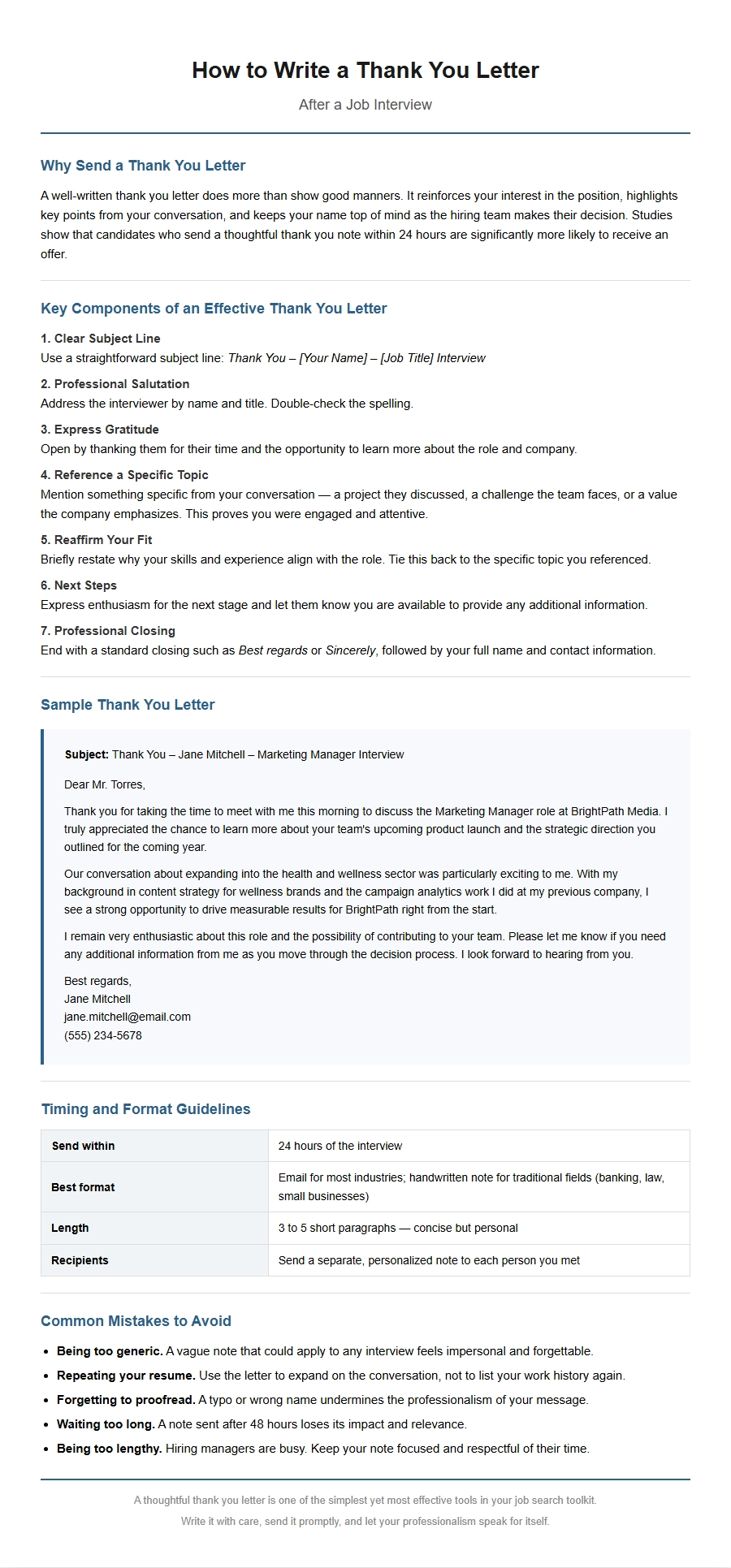 How to Write a Thank You Letter After an Interview
 professional thank you email example for client - Thank-You Letters
 Business Mentor Thank-You Letter Guide
 Thank You Letter for Sponsor Donation