Sample Thank-You Letter for Politely Refusing an Offer
You just received a job offer, but your gut says it’s not the right fit. Or maybe a client proposal lands in your inbox and you need to say no without burning bridges. Either way, that blinking cursor on a blank page makes it tempting to just ghost them. Don’t. Using a sample text for refusing an offer politely gives you a proven structure so you can respond quickly and keep your reputation intact.
Why a sample isn’t cheating
Think of a letter template like a map. It shows you the route, but you still drive the car. Professional correspondence follows certain conventions—salutation, body, closing—and a good sample handles those details so you can focus on your actual message. It also saves time when you’re under pressure. The best part? You can personalize it until it sounds like you, not a robot.
Category: Professional Correspondence Tips
How to pick the right sample for your situation
Not all refusals are the same. Declining a full-time job after a formal interview process calls for a different tone than turning down a freelance gig from a former colleague. Look for a sample that matches your relationship with the recipient. If you’ve never met them, lean toward formal writing tips with full business letter format. If it’s someone you know well, a warmer tone works fine.
Pay attention to the letter structure too. A printed letter might need your address and a date line. An email can skip those but still needs a clear subject line and proper salutation and closing. Many cover letter examples use a three-paragraph flow: thank them, state your decision, explain briefly (optional), and end gracefully. That same structure applies here.
Adapting a sample without losing your voice
Ever received a letter that felt too stiff or too casual? That happens when you copy a sample word for word. Instead, read the sample once to get the gist. Then rewrite the opening paragraph in your own words. If the original says “I am writing to formally decline…” and that sounds like a robot, change it to “Thank you so much for the offer. After careful thought, I’ve decided to go in another direction.” Keep the key phrases from the sample—like “I appreciate your time” or “I wish you the best in finding the right candidate”—but fill in the rest naturally.
One quick tip: make your first sentence specific. Mention the role or opportunity by name. That shows you’ve actually thought about it. If you say “I’m writing to decline your offer” it sounds generic. Instead: “Thank you again for offering me the Marketing Manager position.” Specificity builds credibility.
Common mistakes to avoid
Outdated salutations are a classic slip. “To whom it may concern” feels impersonal in 2024. If you know the person’s name, use it. If not, “Dear [Company Name] Team” or “Dear Hiring Manager” works. Also watch your formatting. An email refusal should be concise—no letterhead design needed. A printed letter might require a letterhead or at least your contact info at the top. And always proofread your letter before sending. A typo says you didn’t care enough to double-check.
Another mistake: over-explaining. You don’t owe a long list of reasons. A simple “I’ve accepted another opportunity” or “I’ve decided this role isn’t the best fit right now” is enough. Keep the tone positive and forward-looking.
Real-world examples that work
Imagine you’re turning down a job offer but you really liked the recruiter. Your sample text might start with genuine appreciation: “It was a pleasure meeting you and learning about the team.” Then state the refusal politely: “After careful consideration, I’ve decided to pursue a different path at this time.” End with: “I hope we can stay connected on LinkedIn.” That’s professional and leaves the door open.
If you’re declining a business proposal from a vendor, keep it even shorter: “Thank you for submitting your proposal. After reviewing it, we’ve decided to go with another option. We appreciate your time and effort.” No need to explain further.
Connecting this to other letter types
Once you send your refusal, you might want to follow up with a thank-you to someone who helped you decide. For example, if an advisor guided you during your job search, you can use a thank-you letter to an advisor to express gratitude. Or if you recently attended a workshop that clarified your career goals, a gratitude letter for workshop attendance can reinforce that connection. Even an acknowledgement for a patent application follows similar principles of professionalism and courtesy.
Learning the tone in writing for one type of letter makes it easier to adapt for others. The same structure—open with thanks, state your decision, close warmly—works across professional correspondence, whether you’re refusing an offer, accepting one, or writing a letter of recommendation for someone else.
Use the sample as a springboard, not a crutch
The best letters feel both professional and personal. A sample gives you the skeleton, but you add the heartbeat. The more you practice adapting samples, the faster you’ll get at writing your own versions from scratch. Next time you need to politely say no, you won’t even hesitate. You’ll open a sample, tweak a few lines, and hit send with confidence.
Simple Examples
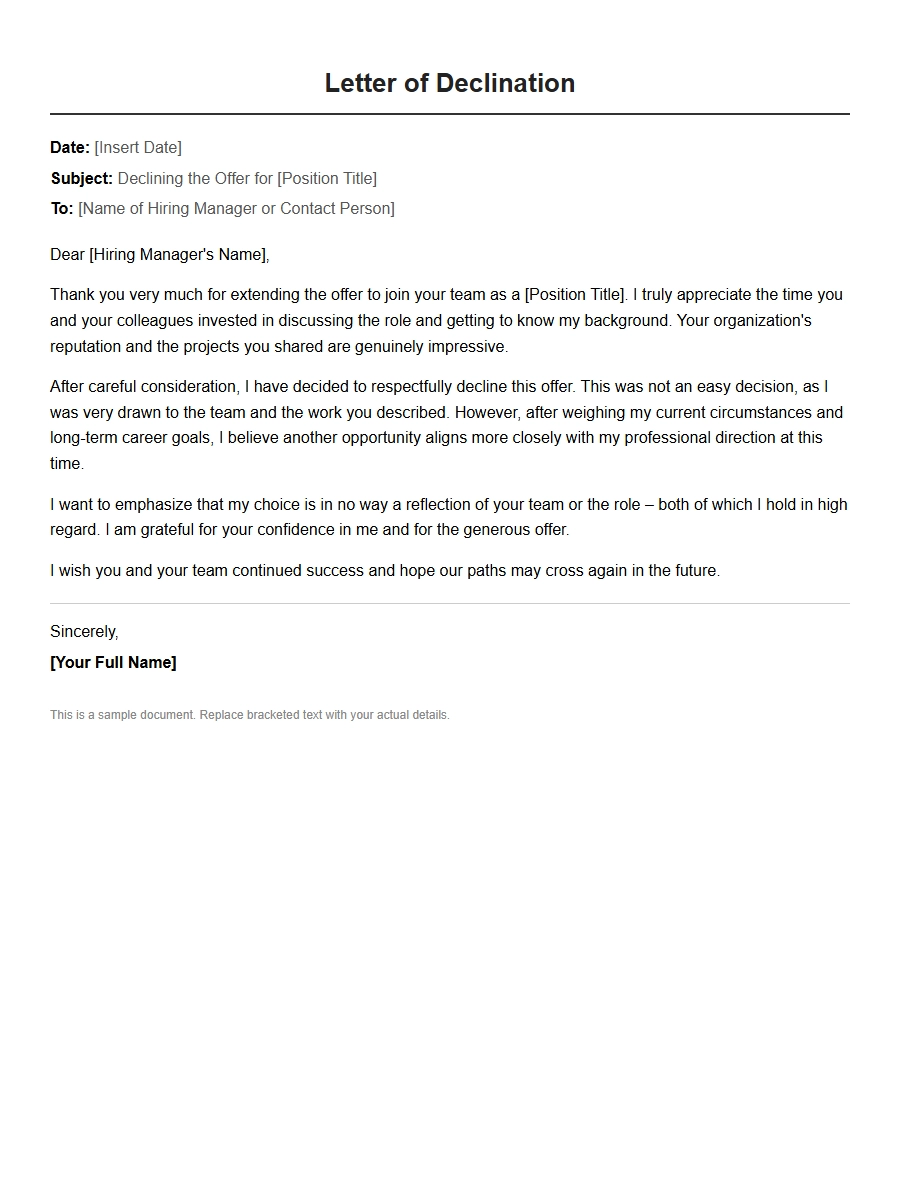
Sample Thank-You Letter for Politely Refusing an Offer
Polite Decline for a Job Offer
Thank you so much for offering me the position of Marketing Specialist at your company. I truly appreciate the time you and your team spent discussing the role and answering my questions. After careful consideration, I have decided to decline the offer at this time.
This was a difficult decision, as I was impressed by your organization’s mission and culture. However, I believe it is best for my career path to pursue another opportunity that aligns more closely with my long-term goals. I wish you and your team continued success.
Thank you again for this opportunity, and I hope we may cross paths in the future.
Gracious No to a Partnership Proposal
I am writing to express my sincere gratitude for your proposal to partner on the upcoming community event. Your vision and dedication are truly commendable.
After reviewing our current commitments, we must politely decline this partnership opportunity. Our resources are fully allocated to existing projects at the moment, and we would not be able to give this partnership the attention it deserves.
We hope you understand our position and wish you great success with the event. Please keep us in mind for future collaborations.
With warm regards,
Thank-You for the Invitation, But Regretfully Declining
Thank you so much for inviting me to speak at your annual industry conference on June 15. I am truly honored by your request.
Unfortunately, I must decline the invitation due to a prior travel commitment. I have already scheduled an overseas business trip that week, making it impossible to attend.
I hope you will consider me for future speaking opportunities, as I admire your organization’s work greatly. Best wishes for a successful conference.
Polite Refusal of a Vendor Offer
Dear Vendor Team,
Thank you for submitting your proposal for supplying office equipment to our company. We carefully reviewed all details, including your pricing and service terms.
Item
Your Offer
Our Preference
Printer Model X200
$450 per unit
$420 per unit
Warranty Period
1 year
2 years
While your products are of high quality, we have decided to go with another vendor whose terms better suit our budget and extended warranty needs. We appreciate your time and effort in preparing the proposal.
We hope to work with you in the future under different circumstances.
Declining a Speaking Engagement with Thanks
I am writing to thank you for the kind invitation to deliver the keynote address at your upcoming leadership summit. I am truly flattered to have been considered.
After checking my schedule, I regretfully must decline due to a prior commitment. I mentor a nonprofit board each quarter, and the date of your summit coincides with our annual strategy session.
I wish you and your attendees a memorable and inspiring event. Please feel free to reach out for future engagements.
Event: Leadership Summit 2025
Date: March 20
Decline Reason: Prior nonprofit board commitment
Polite No to a Funding Request
Thank you for reaching out to us with your funding request for the youth arts program. We appreciate the important work you do in the community.
After careful deliberation, our foundation is unable to provide funding at this time. Our current grant cycle is already fully allocated, and we do not have remaining discretionary funds for this quarter.
We encourage you to reapply during our next grant period, which opens in January. We have included a brief summary of your request below for your records.
Request Detail
Information
Organization
Creative Youth Network
Amount Requested
$5,000
Purpose
Art supplies for after-school program
Best of luck with your initiatives.
Declining a Sales Offer with Gratitude
Dear Sales Team,
Thank you for providing a detailed quote for your software subscription package. We appreciate the time you took to demonstrate how your tool could enhance our workflow.
After evaluating multiple options, we have decided to stay with our current provider for the time being. While your product is impressive, our team is already accustomed to our existing system, and the transition cost outweighs the benefits.
We may revisit your offer in the future. Thank you again for your professionalism.
Product: ProCRM Enterprise
Annual Cost: $12,000
Declined due to: Transition effort and current integration
Polite Refusal of an Internship Candidate
Thank you for applying for the summer internship position at our firm. We were thoroughly impressed with your qualifications and enthusiasm during the interview process.
After careful consideration, we have decided to offer the position to another candidate whose skills align more closely with our current project needs. This was a difficult decision given the high caliber of applicants.
We encourage you to apply for future openings and wish you the best in your career journey.
Position
Application Date
Status
Summer Intern – Finance
March 10, 2025
Regretfully declined
Thank-You for the Discount Offer, But Declining
Dear Customer Service,
Thank you for offering me a 20% discount on my next purchase as a loyalty bonus. I truly value your brand and the quality of your products.
However, I must respectfully decline the offer at this time. I have recently stocked up on similar items and do not have an immediate need. I would not want the generous discount to go to waste.
Please let me know if there is a way to defer the discount to a future purchase. I look forward to continuing our relationship.
Thank you for understanding.
Polite Decline of a Volunteer Role
Thank you so much for asking me to serve as the volunteer coordinator for the upcoming charity gala. I am honored by your trust.
Regrettably, I must decline this role due to my current workload. I am already committed to two other volunteer projects in the same month, and I would not be able to give this role the energy it deserves.
I hope you will consider me for a less demanding volunteer opportunity in the future. I am happy to help with smaller tasks leading up to the event.
Role: Volunteer Coordinator
Event: Charity Gala, May 10
Reason for decline: Overlapping volunteer commitments
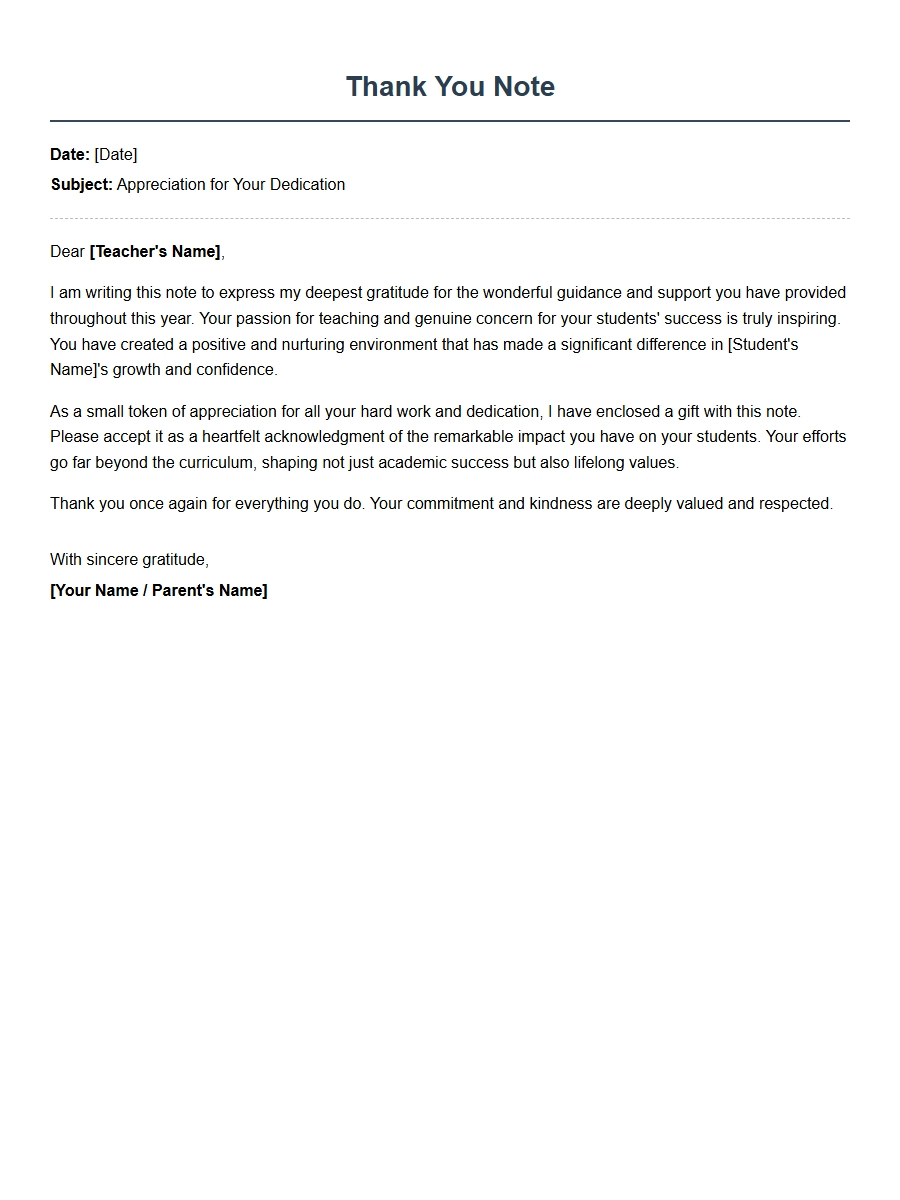 Sample Thank You Note for Teacher Gift
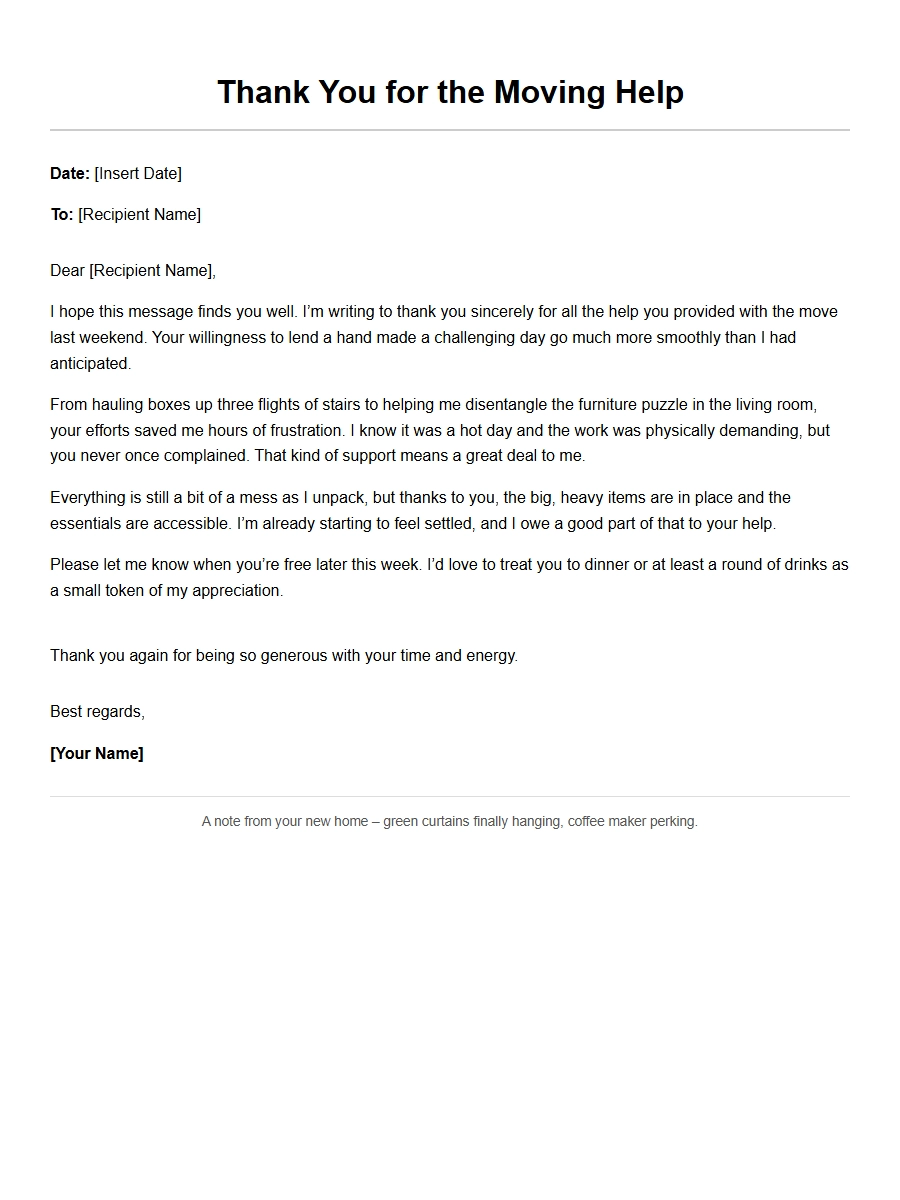 Thank-You Letter for Help with Moving
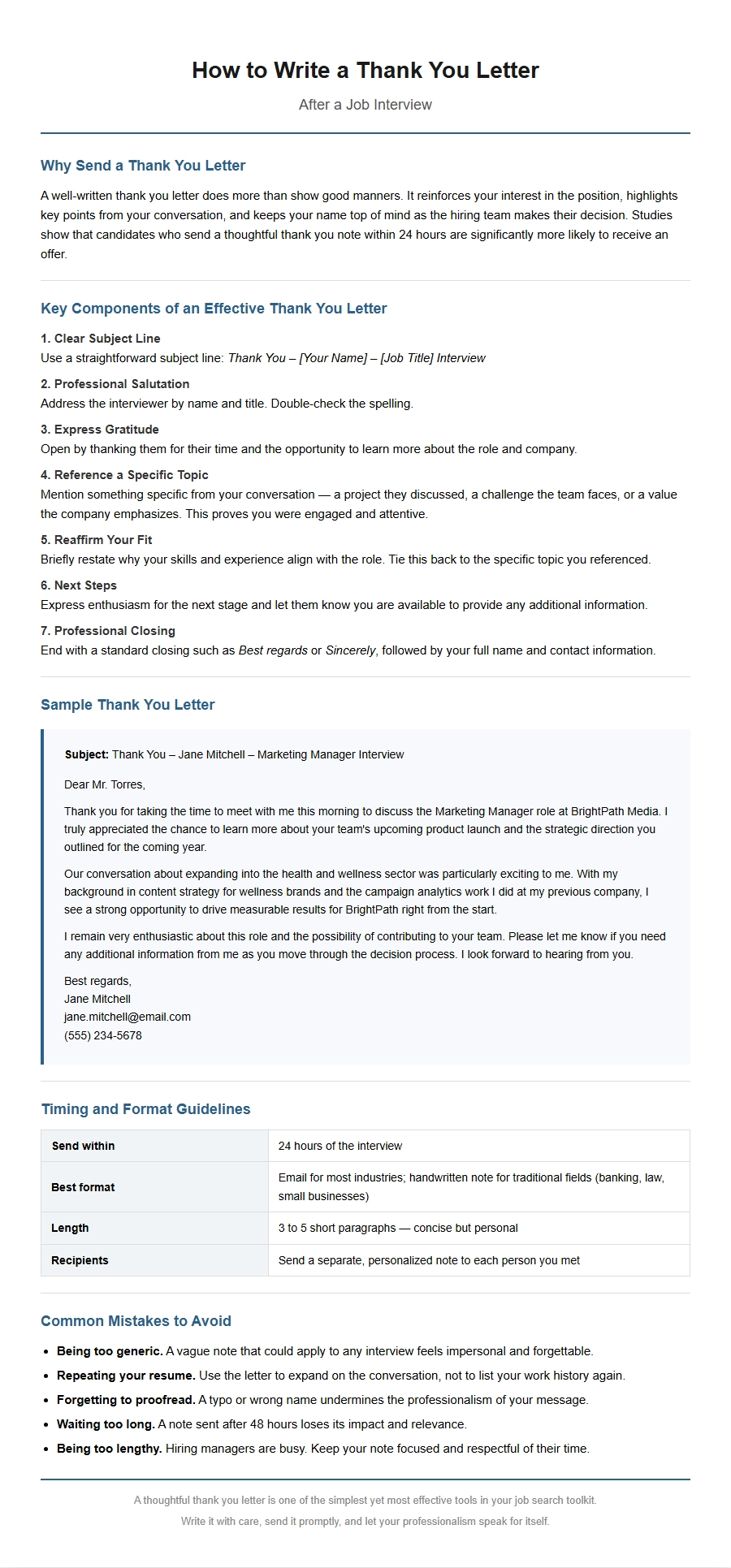 How to Write a Thank You Letter After an Interview
 professional thank you email example for client - Thank-You Letters
 Business Mentor Thank-You Letter Guide
 Thank You Letter for Sponsor Donation