custom invitation wording for engagement party - Invitation Letters
You’ve got the ring picked out and the date set. But when you sit down to write the engagement party invitation, your mind goes blank. That moment of staring at an empty page is surprisingly common—and surprisingly frustrating. The good news? You don’t need to invent the perfect wording from scratch. A solid invitation sample gives you a structure, the right tone, and the key phrases you need, then leaves room for your own personality to shine.
Category: Invitation Wording
Using a sample isn’t cheating—it’s a smart shortcut. Think of it as a scaffold. You still get to decide how formal or casual the language feels, whether to include a host line, and how to handle the RSVP. The sample just saves you from guessing what’s standard. That means you can focus on making the invitation sound like you and your partner, not like a generic template.
Should You Go Formal or Casual?
Start by deciding the overall feel of your party. A backyard barbecue with close friends calls for a different tone than a sit-down dinner with both sets of parents and extended family. For a formal engagement party, choose a more traditional structure: “Mr. and Mrs. James Carter request the honor of your presence…” For a casual gathering, something like “We’re getting married! Come celebrate with us…” feels right. The tone in writing should match the vibe you’re planning. Your invitation is the first clue guests get about what to expect.
How to Personalize a Sample Without Losing Your Voice
Once you pick a sample that fits your formality level, start tweaking. Change the host line if you’re hosting yourselves (use “Together with their families” or just “We invite you”). Swap out generic phrases for details that matter to you—mention the location’s name, a funny inside joke, or the reason you chose that date. The best custom invitation wording mixes standard etiquette with something unique to your story. For instance, if you met at a coffee shop, you could include a line like “Join us for drinks and dessert as we toast to our next chapter.”
Common mistake: using an outdated salutation and closing. For printed invitations, “Mr. and Mrs. John Smith” is still common for married couples, but many people now prefer “John and Jane Smith” or “The Smiths.” For email invites, you can drop formal titles entirely. Always proofread your invitation letter carefully—one wrong date or misspelled name can cause real confusion. Have a friend read it aloud to catch awkward phrasing.
Tips for the Opening Line and RSVP Details
The opening paragraph needs to grab attention quickly. Don’t bury the reason for the party. Start with “We’re engaged!” or “Celebrate with us” and then add the who, what, when, where. If you’re using a customizable invitation template, treat the first line as the hook. For digital letter format, keep the subject line clear: “You’re Invited to Emma & Jake’s Engagement Party.”
RSVP wording should be simple. Include a deadline, a phone number or email, and whether guests can bring a plus-one. If you’re using an online RSVP, add the link in a separate line. For a printed card, include a small response card with a stamped envelope. It’s also polite to mention if gifts are not expected—something like “Your presence is the only present we need.”
Don’t overcomplicate the wording. Short paragraphs and clear directions are better than flowery sentences that confuse readers. Avoid vague time slots like “afternoon” without an end time. If your party runs from 2 to 5 p.m., say so. Also, skip all-caps or excessive exclamation points—they make the invitation look frantic. One or two exclamation marks for enthusiasm is fine; ten is noise.
Finally, remember that the best invitation feels both professional and personal. Use the sample as a springboard, not a crutch. After you send your first few, you’ll notice the process gets faster. Each time you write one, you learn what works for your circle. So take the sample, add your own flavor, and send it with confidence.
Realistic Samples
custom invitation wording for engagement party - Invitation Letters
Elegant Formal Invitation
We joyfully invite you to celebrate the engagement of our beloved children, Sarah Mitchell and James Anderson. Your presence at this elegant affair will make the occasion even more memorable.
Detail
Information
Date
Saturday, 14th June 2025
Time
6:30 p.m. – 10:30 p.m.
Venue
The Ritz-Carlton, Grand Ballroom, 1500 Peachtree Street, Atlanta
Attire
Black Tie
RSVP by
1st June 2025
Please respond to Mrs. Helen Mitchell at 555-0102 or mitchell.party@example.com. We look forward to an evening of champagne, dancing, and heartfelt toasts.
Casual BBQ Bash
No stuffy ballroom – just good food, cold drinks, and great company! Come celebrate Mike and Jenny’s engagement at a laid-back backyard barbecue.
Date: Saturday, July 19, 2025
Time: 2:00 p.m. – 8:00 p.m.
Location: 456 Oak Street, Backyard of the Smiths
What to bring? Just yourself and your appetite. We’ll have burgers, hot dogs, sides, and a cooler full of beer and sodas. If you’d like, bring a dish to share – but no pressure! Lawn games and music will keep things lively.
RSVP to Jenny by July 5 so we know how many burgers to grill. Text 555-0911 or reply to this email. Can’t wait to see you there!
Rustic Garden Party
We invite you to a romantic garden gathering as we toast to Emma and Liam’s engagement. Set among blooming roses and twinkling lights, this evening will be simple yet unforgettable.
When: Sunday, 10th August 2025, at 4 p.m. Where: The Hidden Meadow, 782 Country Road, Millbrook
Dress in your garden best – think floral prints and comfortable shoes. We’ll have farm-to-table appetizers, a cider bar, and live acoustic music.
Kindly let us know if you can join by July 25. Contact Megan at 555-0345 or megan.garden@example.com. Your presence is the only gift we need.
Destination Beach Celebration
Pack your sunscreen and flip-flops! We’re celebrating Noah and Ava’s engagement with a weekend getaway at Sunset Cove Beach. Join us for sun, sand, and celebration.
Activity
Day & Time
Welcome Beach Bonfire
Friday, Aug 22, 7 p.m.
Engagement Party Picnic
Saturday, Aug 23, 12 p.m. – 5 p.m.
Farewell Brunch
Sunday, Aug 24, 9 a.m.
Location: Sunset Cove Resort, 1 Ocean Drive, Malibu. A block of rooms is reserved under “Anderson-Noah” until August 1. Please book your own travel and lodging.
RSVP by August 5 to noah.ava.beach@example.com. Gifts are not expected – your presence at the shore is perfect.
Vintage Tea Party
You’re cordially invited to an afternoon tea in honour of Charlotte and Henry’s engagement. Think dainty sandwiches, scones with clotted cream, and a vintage charm.
Date: Sunday, 7th September 2025 Time: 2:30 p.m. – 5:00 p.m. Location: The Rose Teahouse, 23 Willow Lane, Cambridge
Wear your favourite tea-party attire (hats and gloves welcomed but not required). We’ll have a selection of fine teas, a tower of pastries, and a champagne toast at 4 p.m.
Please respond by August 25. Call Eleanor at 555-0789 or email tea.charlottehenry@example.com. In lieu of gifts, consider a donation to the local animal shelter.
Modern Cocktail Soiree
Raise a glass at the chic engagement party of Zoe and Ethan. Join us for an evening of craft cocktails, stylish bites, and upbeat vibes.
Event Details
Info
Date
Friday, 3rd October 2025
Time
7:00 p.m. – 11:00 p.m.
Venue
Luminous Rooftop, 500 Main Street, Suite 400
Cocktail attire – dress to impress. A curated signature drink will be served at the bar. Please RSVP via the Evite link by September 20. Your presence is the only present we need. For any questions, text Ethan at 555-1234.
Family & Friends Gathering
Come together with both sides of the family to celebrate the engagement of Daniel and Sophia. This is a warm, casual gathering for all ages.
When: Sunday, 26th October 2025, 1 p.m. – 5 p.m. Where: The Lodge at Pinecrest Park, 900 Greenway Drive
Enjoy a potluck lunch – please bring a dish to share!
Kids’ activities and games will be provided.
Gift suggestions: contributions to their honeymoon fund (details upon RSVP) or a heartfelt card.
We’d love to know you’re coming by October 10. Please RSVP to Aunt Marie at 555-6789 or marie.gathering@example.com. Let’s make this a celebration full of love and laughter.
Surprise Engagement Party
Shhh! It’s a surprise! We’re throwing a party for Olivia and Ryan to celebrate their engagement – but Olivia doesn’t know yet! We need your help to keep it secret.
Timeline
Action
3:45 p.m.
Guests arrive and hide in the backyard
4:00 p.m.
Ryan brings Olivia under the guise of a “romantic picnic”
4:05 p.m.
Surprise! Shout “Congratulations!”
Location: 123 Cherry Lane, the Roberts’ home. Date: Saturday, November 8, 2025. Time: Guests arrive by 3:45 p.m. Please do not post on social media before the party!
RSVP to Ryan’s sister, Claire at 555-2345 or claire.surprise@example.com by October 25. Bring a dish or drink if you’d like, but your presence is the best surprise.
Virtual Celebration
Though we can’t be together in person, we invite you to join Mia and Jack from the comfort of your home for an online engagement party. Let’s toast through the screen!
Date: Saturday, 6th December 2025 Time: 7:00 p.m. – 8:30 p.m. (EST) Platform: Zoom – link will be sent after RSVP
Please have your favourite drink ready for a group toast at 7:15 p.m.
We’ll play a few virtual games – camera on is encouraged!
A short “advice for the couple” segment: prepare a 30-second wisdom.
RSVP by December 1 to virtual.miajack@example.com to receive the link and password. No gifts, but we’d love if you shared a photo for our virtual memory board.
Black Tie Affair
Mr. and Mrs. William Hart request the honour of your presence at a black-tie engagement gala for their daughter Isabella Hart and Mr. Alexander Knight.
Formal Details
Description
Date
Saturday, 20th December 2025
Time
8:00 p.m. – Midnight
Venue
The Grand Regency, Crystal Ballroom, 100 Park Avenue, New York
Dress Code
Black Tie (tuxedo or floor-length gown)
Dinner and dancing will follow a champagne reception. The evening will include a sit-down five-course meal and live orchestra. Please indicate any dietary restrictions when you RSVP.
Kindly respond by December 5 via the enclosed card or to hart.knight.gala@example.com. Gift registry is at Bloomingdale’s under “Hart-Knight.”
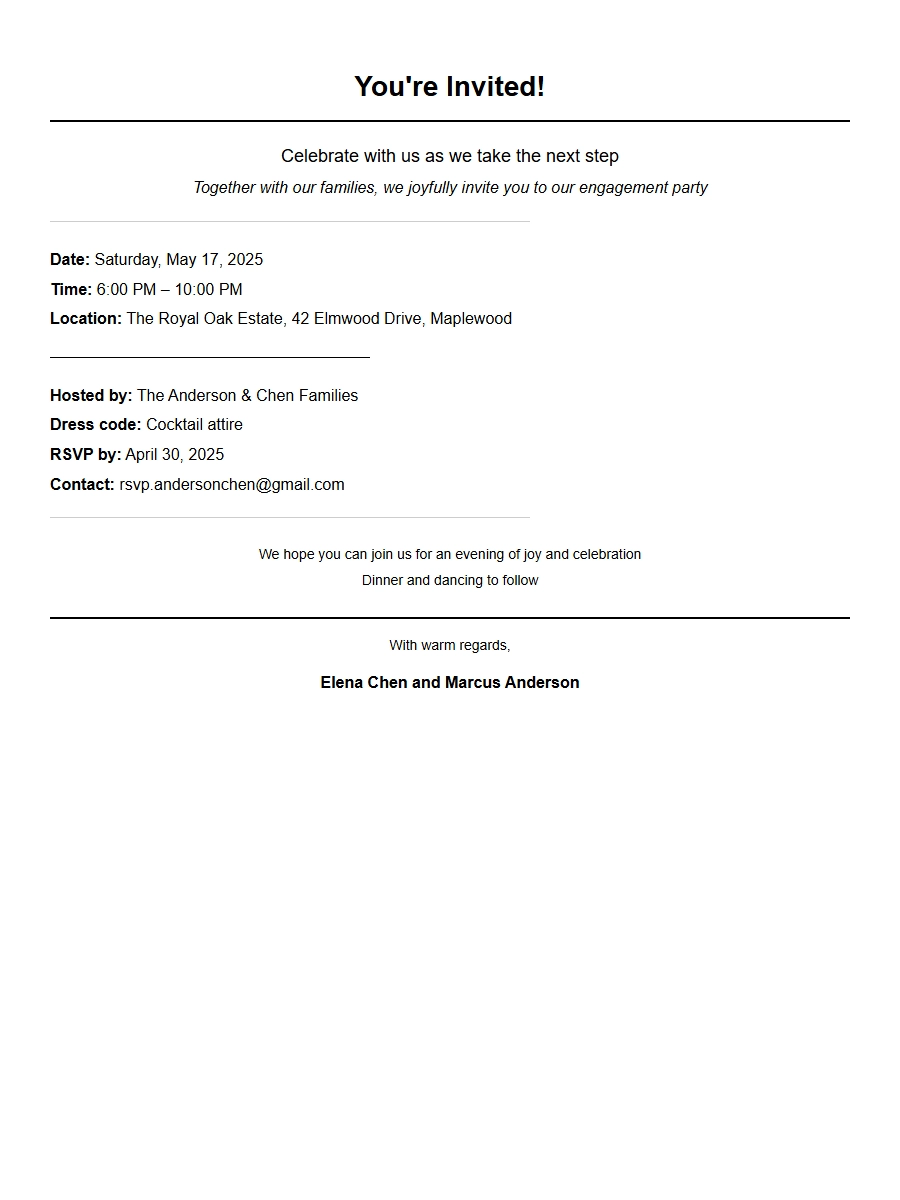
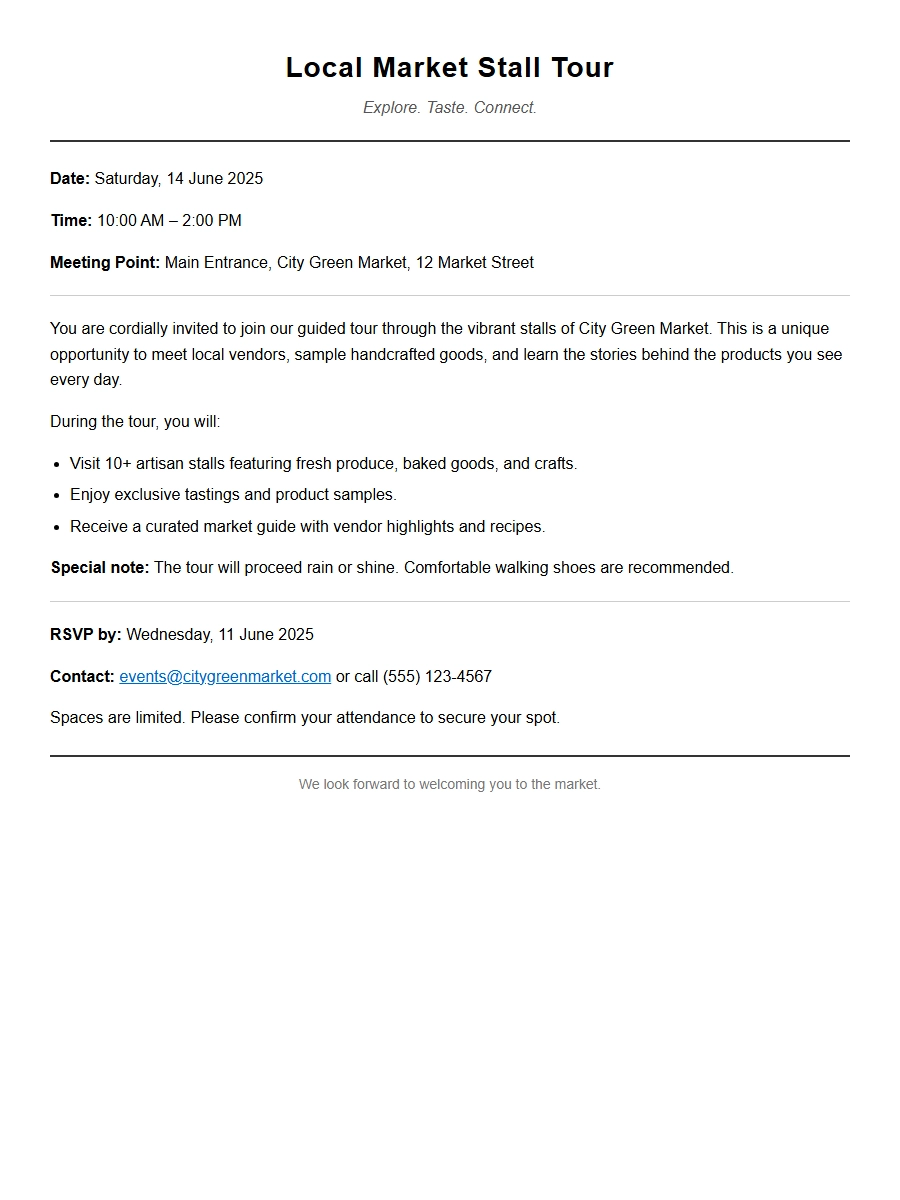 sample invitation for local market stall tour - Invitation Letters
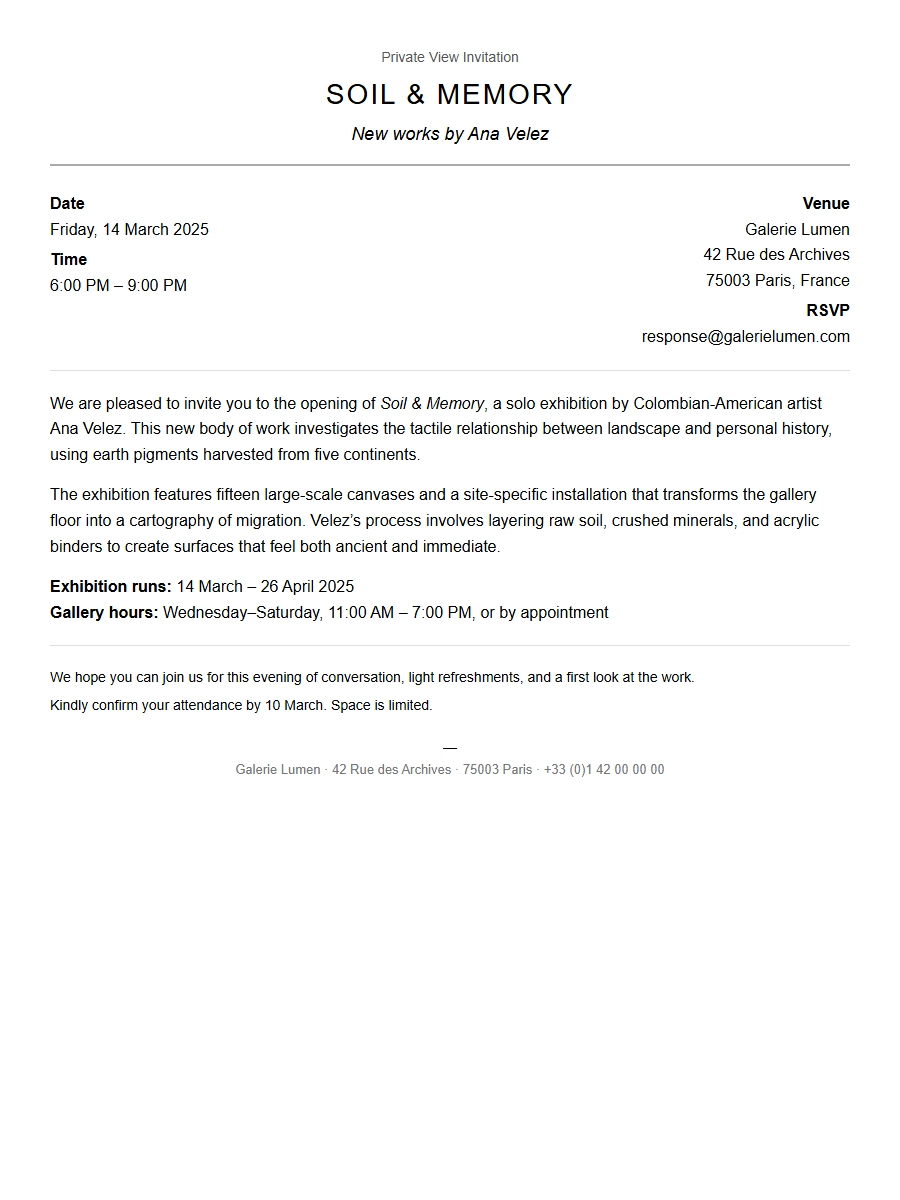 Art Exhibition Opening Invitation Wording Ideas
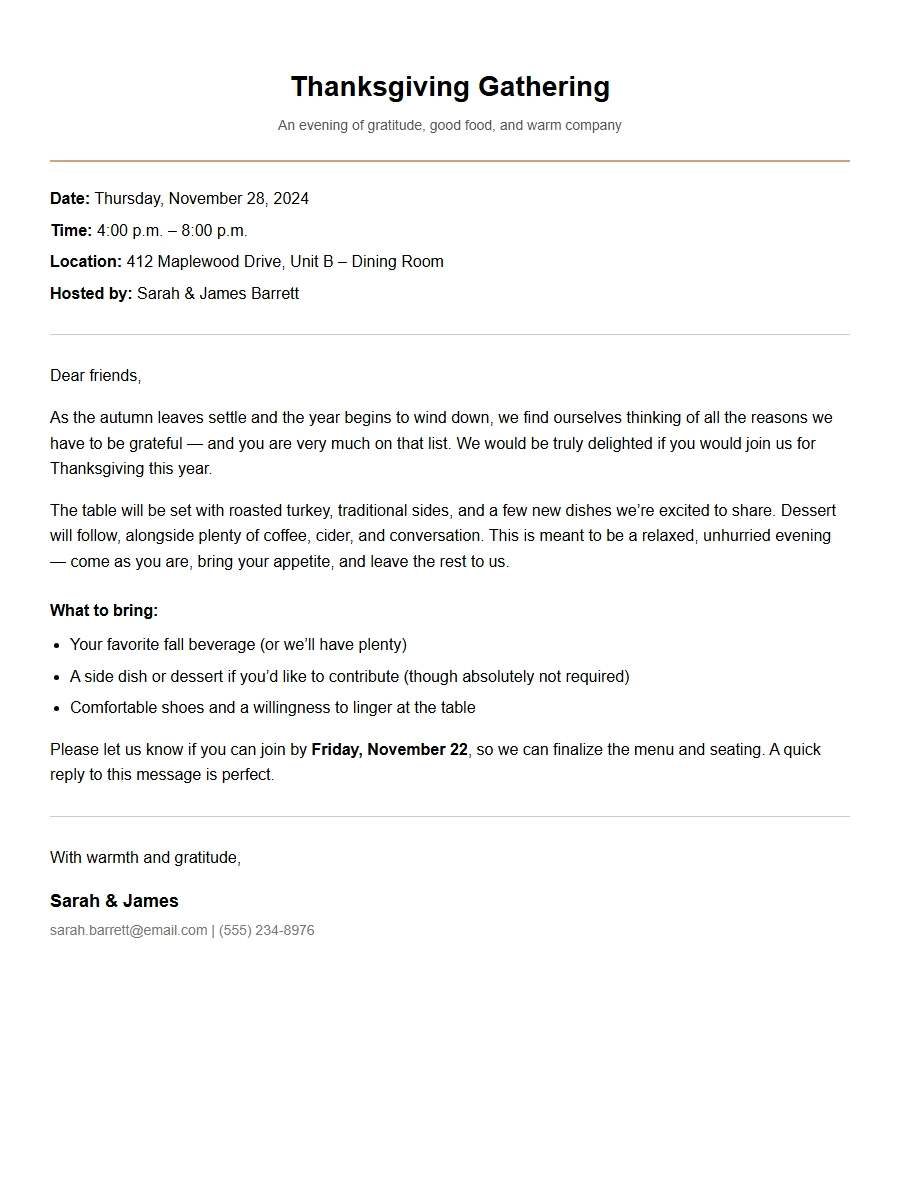 Thanksgiving Meal Gathering Invitation Text
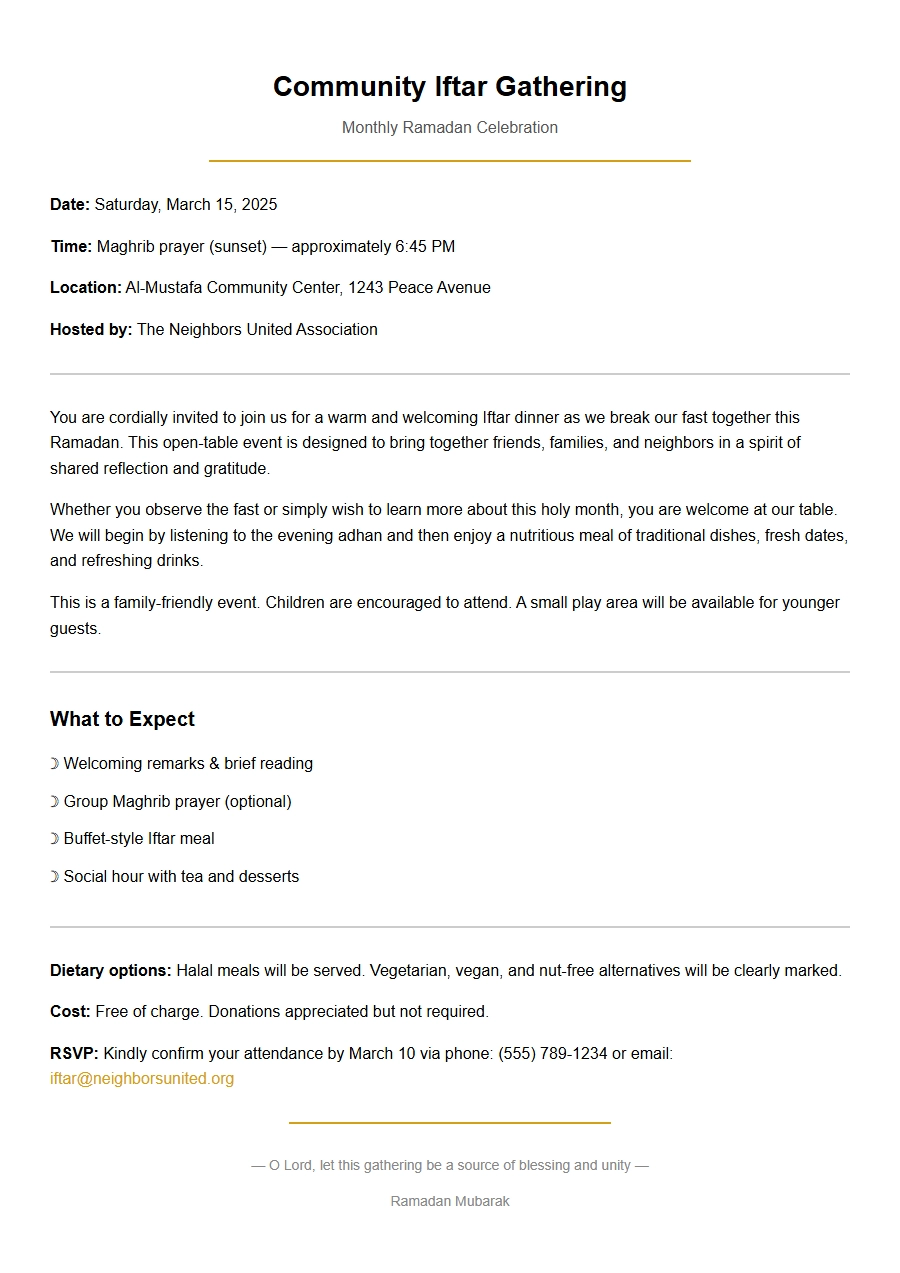 Ramadan Iftar Community Event Invitation
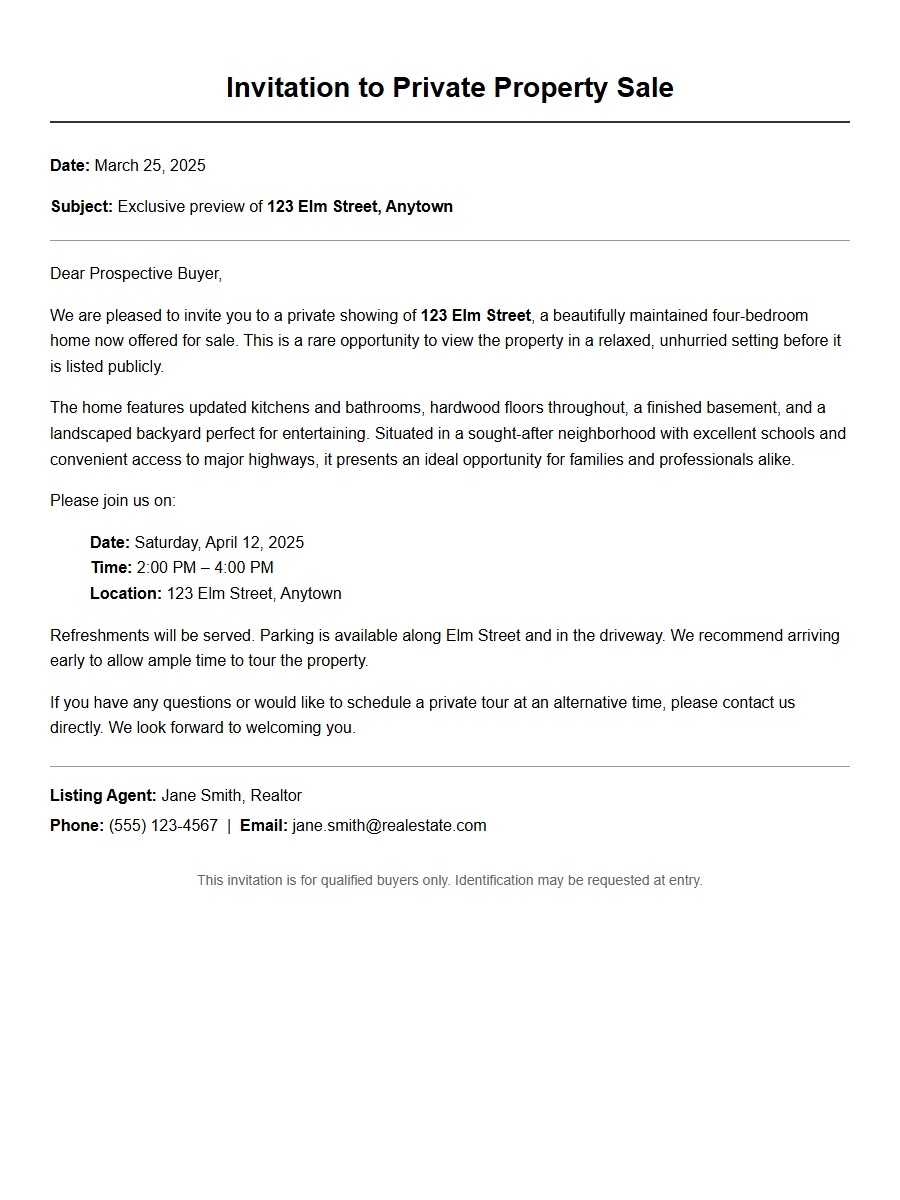 Sample Wording for Property Sale Invitations
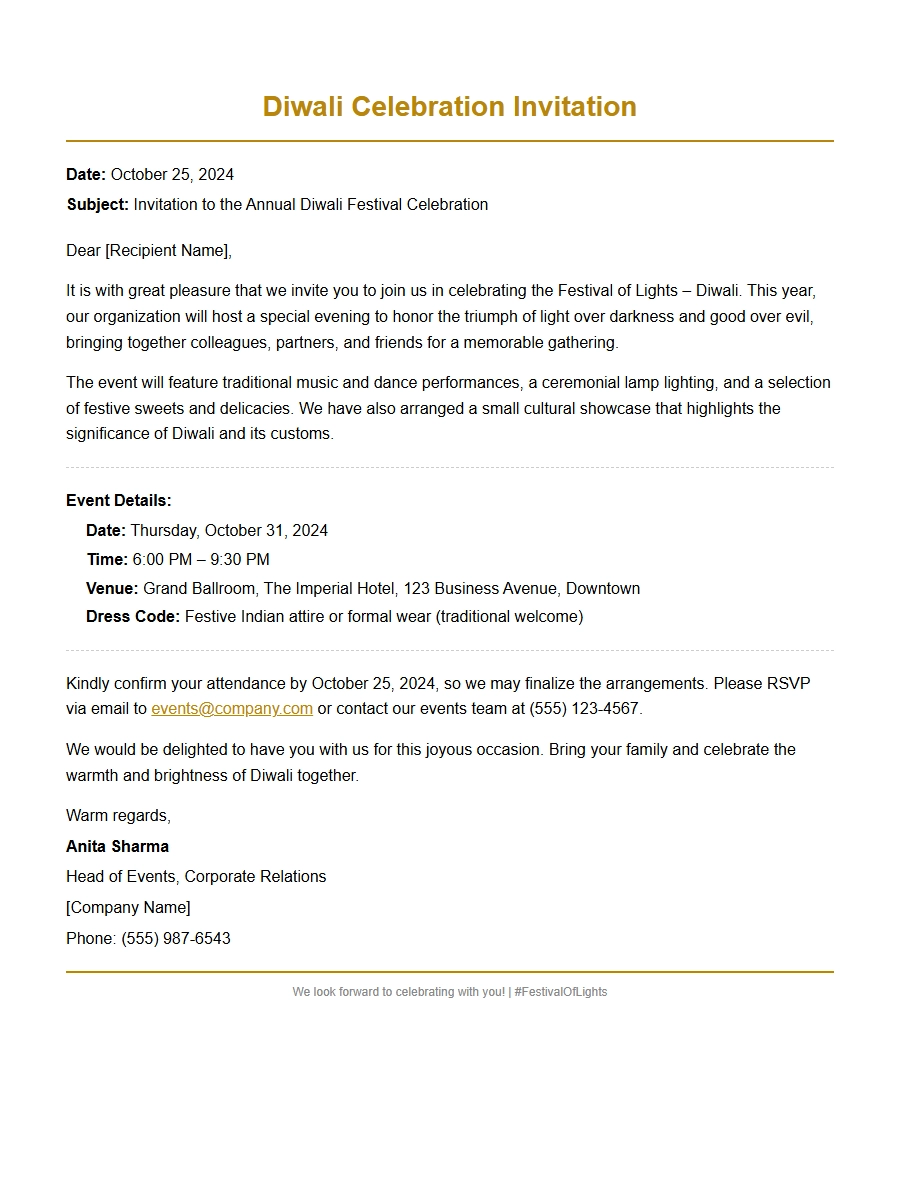 Diwali Festival Celebration Invitation Draft