You’ve got a great product, solid numbers, and a deck that’s ready to go. But none of that matters if the right investors don’t show up. Drafting an invitation letter for an investor presentation can feel like the last hurdle before a big pitch. You want it to sound professional, but not stiff. Urgent, but not desperate. It’s a tricky balance.
Using a sample letter isn’t cutting corners. It’s working smarter. A good sample gives you the structure—the right salutation, the appropriate closing, the flow that feels familiar to busy professionals. What it doesn’t do is write your story for you. That part is yours. Think of a template as the frame; you still get to fill in the picture.
Let’s walk through how to adapt a sample so it sounds like you, not a robot.
Pick the right tone for your audience
Not all investor presentations are the same. If you’re inviting angel investors for a seed round, the tone can be warmer and more direct. For a formal pitch to venture capital partners, lean toward professional correspondence that sticks to business letter format.
Here’s the thing: investors read dozens of these emails. They can spot a generic copy-paste job instantly. Your invitation letter draft should signal that you’ve done your homework. Mention a reason you’re reaching out to them specifically. Something like, “Given your focus on early-stage SaaS, I thought you’d want to see what we’ve built.” That small detail makes the letter feel customized, even if you’re working from a template.
Structure your invitation for scanning
Busy people skim. Keep your letter short and use clear paragraphs. Start with a direct subject line: Invitation: Product Demo & Fundraising Pitch – [Date]. In the opening sentence, state who you are and why you’re writing. Don’t bury the lead.
A solid structure looks like this:
Subject line: Clear and specific
Salutation: Use their name. “Dear [Name]” still works. “Hello [Name]” is fine too.
First paragraph: Who you are, what you’re doing, and why it matters to them
Second paragraph: What they’ll see at the presentation (product demo, market data, team intro)
Third paragraph: Logistics—date, time, location or video link, duration
Closing: A clear call to action, like “Please RSVP by Friday” or “I’ll send a calendar invite once you confirm.”
If you are sending a digital letter format via email, remove letterhead design. Keep it clean. If you’re mailing a printed invitation, a simple logo at the top is enough.
Common mistakes to avoid
Ever received a letter that started with “To whom it may concern”? It feels cold and lazy. Always use a name if you can find it. If you cannot, “Dear [Fund Name] team” is better than a generic placeholder.
Another mistake is writing a wall of text. Break it up. Short sentences. One idea per paragraph. And please—proofread your letter. A typo in the date or the wrong hyperlink for the video call makes you look careless. Read it out loud before you hit send.
One more thing: do not attach a full business plan to the invitation. Attach a one-page teaser or a deck summary if you want, but the letter itself should be quick to read. The goal is to get them to show up, not to pitch everything in the email.
Adapting a sample without losing your voice
Start with a strong sample. Then change the opening sentence to something only you would say. If your company culture is casual, use “Hey [Name]” and a warm tone. If you’re in a more formal industry like biotech, stick with “Dear Dr. [Name]” and keep the tone respectful.
Swap out placeholder details immediately. Replace “We are excited to invite you” with “I’d love to walk you through what we’ve built.” That slight shift makes it personal. The best letters feel like they were written for one person—even if you’re sending five versions of the same template.
Need inspiration for other kinds of invitations? You might find useful patterns in how you frame an invitation for a gender reveal party—the same principle of creating anticipation applies. Or look at the casual energy in a networking mixer invite; that tone can work if you’re pitching to a more informal group. Even the language from a child’s birthday invite teaches you how to build excitement in a few sentences.
For more seasonal inspiration, the structure of an Easter brunch invite or a Hanukkah gathering letter can show you how to combine warmth with clear logistics—a skill that translates directly to investor communication.
Your next step
Grab a sample that feels close to what you need. Then rewrite the first and last paragraphs completely in your own voice. Keep the middle for structure. That combination gives you a polished letter that still sounds human.
You’ll get faster with practice. The first invitation will take an hour. The tenth will take ten minutes. And when that investor walks into the room because your letter made them curious? That’s when the real work begins.
Browse Sample Ideas
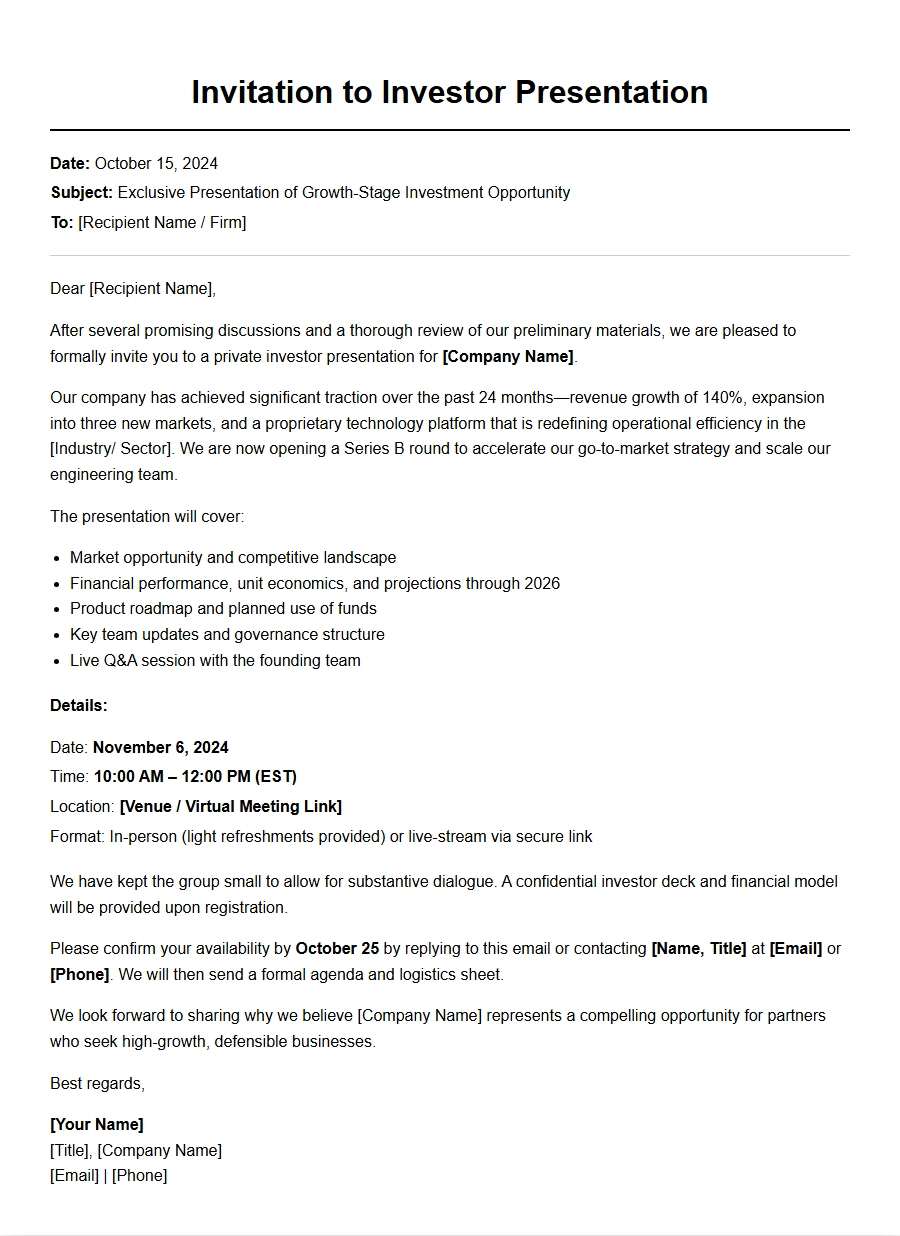
Draft an Investor Presentation Invitation Letter
Formal Angel Investor Invitation
Dear Angel Investor,
We are pleased to invite you to an exclusive presentation of our Series A investment opportunity. Join us to explore how our innovative AI-driven platform is disrupting the logistics industry.
Event Details:
Item
Details
Date
Thursday, November 14, 2024
Time
3:00 PM – 5:00 PM (EST)
Venue
Innovation Hub, 200 Tech Park Drive, Suite 400, San Francisco, CA
RSVP
By November 7, 2024 to investor@example.com
Agenda:
Company overview and market opportunity
Product demo and traction
Financial projections and use of funds
Q&A session
We look forward to your presence and valuable feedback. Please confirm your attendance at your earliest convenience.
Warm regards, Jane Doe, CEO Example Tech Inc.
VC Firm Partner Invitation
Dear [Partner Name],
On behalf of the entire team at GreenEnergy Solutions, I cordially invite you to a private dinner and investment presentation. We believe our renewable energy technology aligns perfectly with your firm’s portfolio.
Meeting Schedule:
Time
Activity
6:30 PM
Cocktails and networking
7:15 PM
Presentation begins
8:30 PM
Q&A and one-on-one discussions
9:00 PM
Dinner served
Location: The Capital Club, 100 Wall Street, New York, NY
We have prepared a comprehensive investment memorandum that highlights our growth metrics and scalable business model. Please let us know if you require any additional information in advance.
Kindly RSVP by October 20th to confirm your attendance. We are eager to share our vision with you.
Sincerely, Dr. Alan Turing, Chief Strategy Officer GreenEnergy Solutions
Startup Pitch Event Invitation
Dear Investor,
You are invited to the quarterly Startup Showcase where five pre-seed companies will present their disruptive ideas. This is an excellent opportunity to discover early-stage ventures before they hit the mainstream.
NeuroSync – Brain-computer interface for healthcare
FreshByte – AI-powered food waste reduction
QuantumLeap – Quantum computing-as-a-service
EcoWrap – Biodegradable packaging materials
MediLink – Telemedicine platform for rural areas
Each startup will have 10 minutes to pitch, followed by a 5-minute Q&A. A networking reception will follow. We hope you can join us to meet the founders and potentially lead their next funding round.
Please register at http://example.com/showcase to secure your spot.
Best regards, Michael Chen Event Director, Startup Hub
One-on-One Presentation Invitation
Dear [Investor Name],
Thank you for your interest in our company. We would like to invite you to a private one-on-one presentation at your convenience. Our CEO will walk you through our Series B round and demonstrate the product.
Proposed Meeting Options:
Date
Time Slots
Location
Monday, Dec 2
10:00 AM or 2:00 PM
Virtual (Zoom link sent upon confirmation)
Wednesday, Dec 4
11:00 AM or 3:00 PM
Our Office: 123 Market St, Floor 12, SF
Friday, Dec 6
9:00 AM or 1:00 PM
Your Office (if preferred)
We will cover:
Our traction: 200% YoY revenue growth
Market size and competitive advantage
Detailed financial model and valuation
Use of funds and milestones
Please let us know which slot works best for you. We are flexible and happy to accommodate your schedule.
Looking forward to a productive discussion.
Warmly, Sarah Kim, Investor Relations DataVault Inc.
Demo Day Invitation for Early Investors
Dear Early Supporter,
You are cordially invited to our annual Demo Day. As one of our first believers, we would love to share our progress and the next phase of growth with you.
Event Program:
Time
Activity
9:00 AM
Registration & Coffee
9:30 AM
Keynote by CEO: 12-month milestones
10:15 AM
Product demos (3 teams)
11:15 AM
Financial results & forecast
12:00 PM
Lunch & networking with founders
1:30 PM
Informal Q&A session
Venue: The Garage, 88 University Ave, Palo Alto, CA
We have secured a follow-on investment from a strategic partner and are opening a limited opportunity for existing investors to increase their stake. Detailed terms will be shared during the event.
Please RSVP by November 30th to ensure we have adequate arrangements.
Thank you for your continued support.
Best, Alex Rivera, Co-Founder & COO NextGen Robotics
Webinar Investment Presentation Invitation
Dear Investor,
We invite you to a live webinar where we will unveil our new product line and present our pre-Series B investment round. This virtual session will be interactive and include a Q&A.
Webinar Details:
Topic: Scaling HealthTech with AI Diagnostics
Date: Tuesday, January 14, 2025
Time: 11:00 AM – 12:30 PM PST
Platform: Zoom (link will be sent after registration)
What we will cover:
Clinical trial results and FDA pathway
Sales pipeline and pilot programs with 3 major hospitals
Financial projections for the next 18 months
Investment terms: convertible note with a 20% discount
There is no cost to attend, but registration is required at http://example.com/webinar. We encourage you to submit questions in advance to ensure we address your interests.
We look forward to seeing you there virtually.
Sincerely, Dr. Emily Park, Chief Medical Officer MediVision Labs
You are invited to the official launch of our flagship product, along with a presentation of our Series A funding round. Join us for an evening of innovation and networking.
Event Outline:
Segment
Description
Product Unveiling
Live demo of our smart home energy optimizer
Business Case
Market analysis, unit economics, and scalability
Investment Terms
Minimum investment $50k, preferred shares with 1x liquidation preference
Networking
Meet the founding team and early adopters
Date & Time: February 5, 2025, 6:00 PM – 9:00 PM
Location: The Edge Center, 500 Innovation Blvd, Boston, MA
We have already secured interest from two institutional investors and are opening the round to select individuals. An investment memorandum will be distributed at the event.
Please confirm your attendance by January 30th.
Cheers, Maya Patel, CEO EcoWatt Energy
Private Equity Round Table Invitation
Dear [Investor Name],
We are hosting an intimate round table discussion for a select group of private equity professionals to explore a unique investment in the sustainable infrastructure sector.
Agenda:
12:00 PM – Lunch and welcome
12:30 PM – Presentation: “Bridging the Green Gap”
1:30 PM – Facilitated round table discussion on risk/return profiles
2:30 PM – Deal structure overview and Q&A
3:00 PM – Informal networking
Location: The Carlton Club, 50 Park Ave, New York, NY
Space is limited to 12 participants to encourage candid dialogue. We will discuss our proprietary technology that reduces carbon emissions by 40% in industrial processes. Historical returns from similar projects in our pipeline have averaged 18% IRR.
Please RSVP by November 10th to receive the pre-reading package. We look forward to a fruitful exchange of ideas.
Best regards, Jonathan Lee, Managing Director GreenBridge Capital Partners
Strategic Investor Meeting Invitation
Dear [Investor Name],
We value your strategic insight and would like to invite you to a collaborative meeting to explore how your expertise and network could accelerate our growth. This invitation is for a small group of industry-leading investors.
Meeting Details:
Item
Value
Date
Wednesday, December 11, 2024
Time
10:00 AM – 1:00 PM
Location
Cloud9 Lounge, 800 Tech Square, Cambridge, MA
Attendees
Founders, CTO, and 2 board members
Topics for discussion:
Roadmap to market leadership in cloud security
Partnership opportunities with existing portfolio companies
Customized investment structure (equity, SAFE, or convertible)
Due diligence timeline and data room access
We have prepared a concise presentation followed by an open dialogue. Please let us know if you would like to bring a colleague.
Kindly respond by December 4th.
Warmly, Carlos Mendez, CEO SecureCloud Inc.
Annual Investor Presentation (Follow-on Round)
Dear Investor,
Thank you for being part of our journey. We invite you to our annual investor day where we will report on our achievements and present our Series C funding round.
Schedule:
Time
Session
9:00 AM
Breakfast & registration
9:45 AM
CEO address: Year in review
10:30 AM
Financial results (audited) & KPIs
11:15 AM
Product roadmap & new verticals
12:00 PM
Investment terms for Series C
12:30 PM
Q&A panel with execs
1:30 PM
Networking lunch
Venue: Headquarters, 1000 Innovation Drive, Seattle, WA
We have grown revenue 150% this year and are profitable. The Series C will enable expansion into Europe and Asia. Existing investors will have pro-rata rights. The data room will be open one week before the event.
Please RSVP by March 1 to investor.relations@example.com.
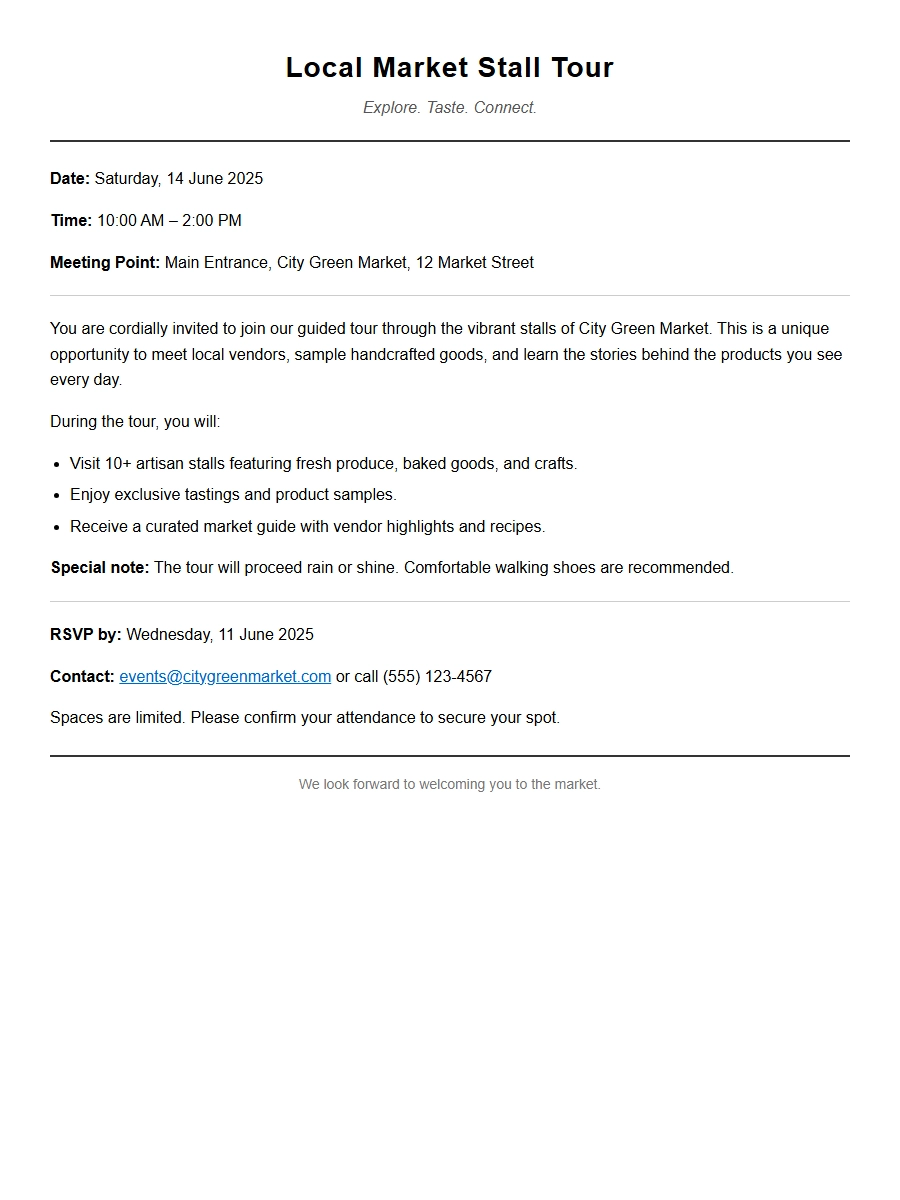 sample invitation for local market stall tour - Invitation Letters
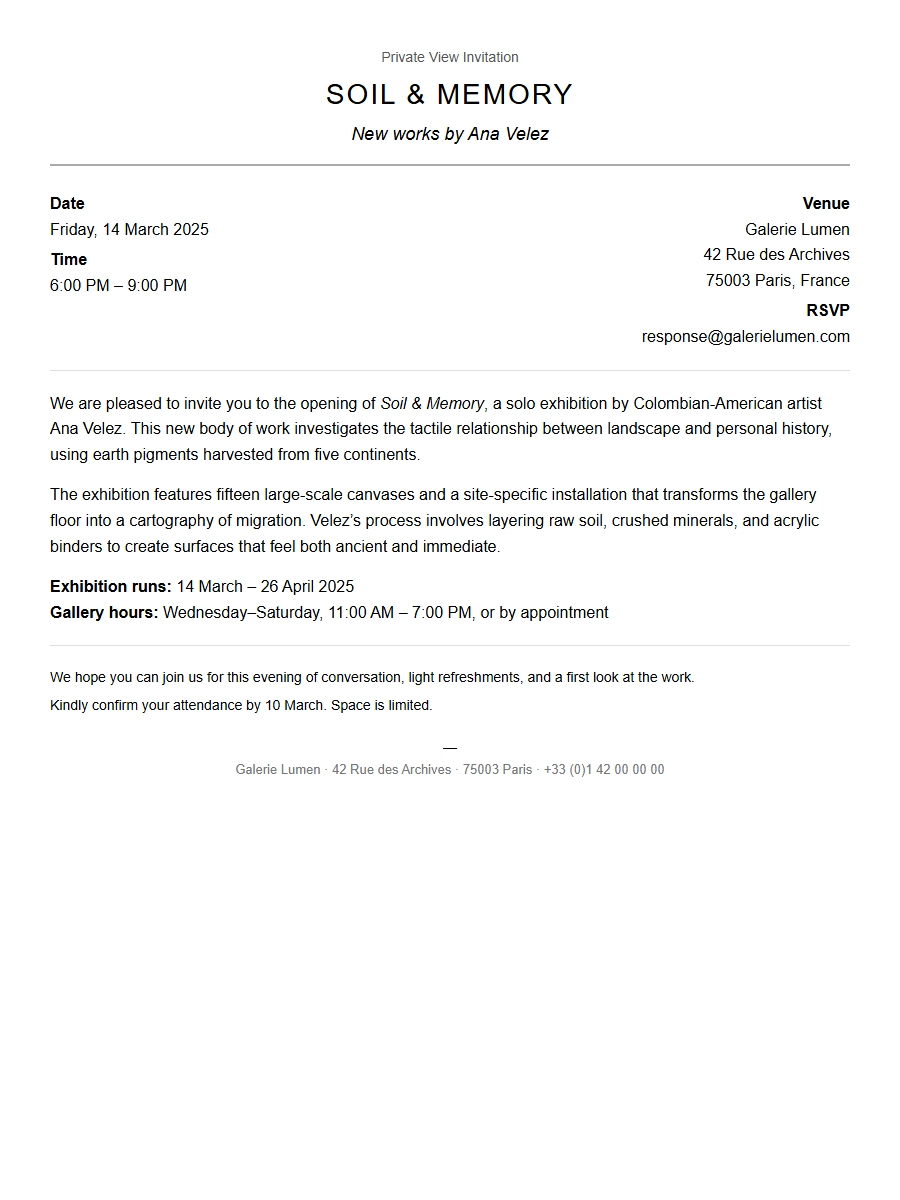 Art Exhibition Opening Invitation Wording Ideas
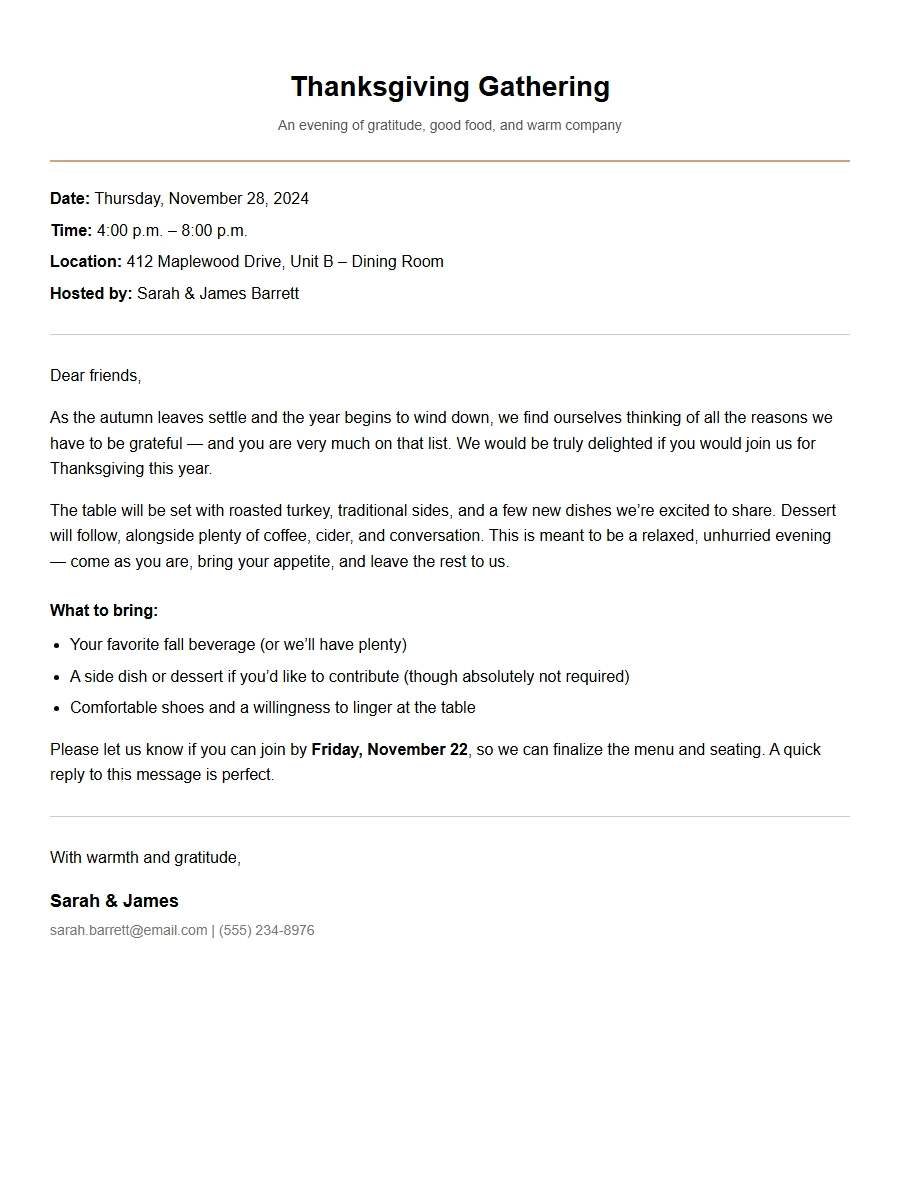 Thanksgiving Meal Gathering Invitation Text
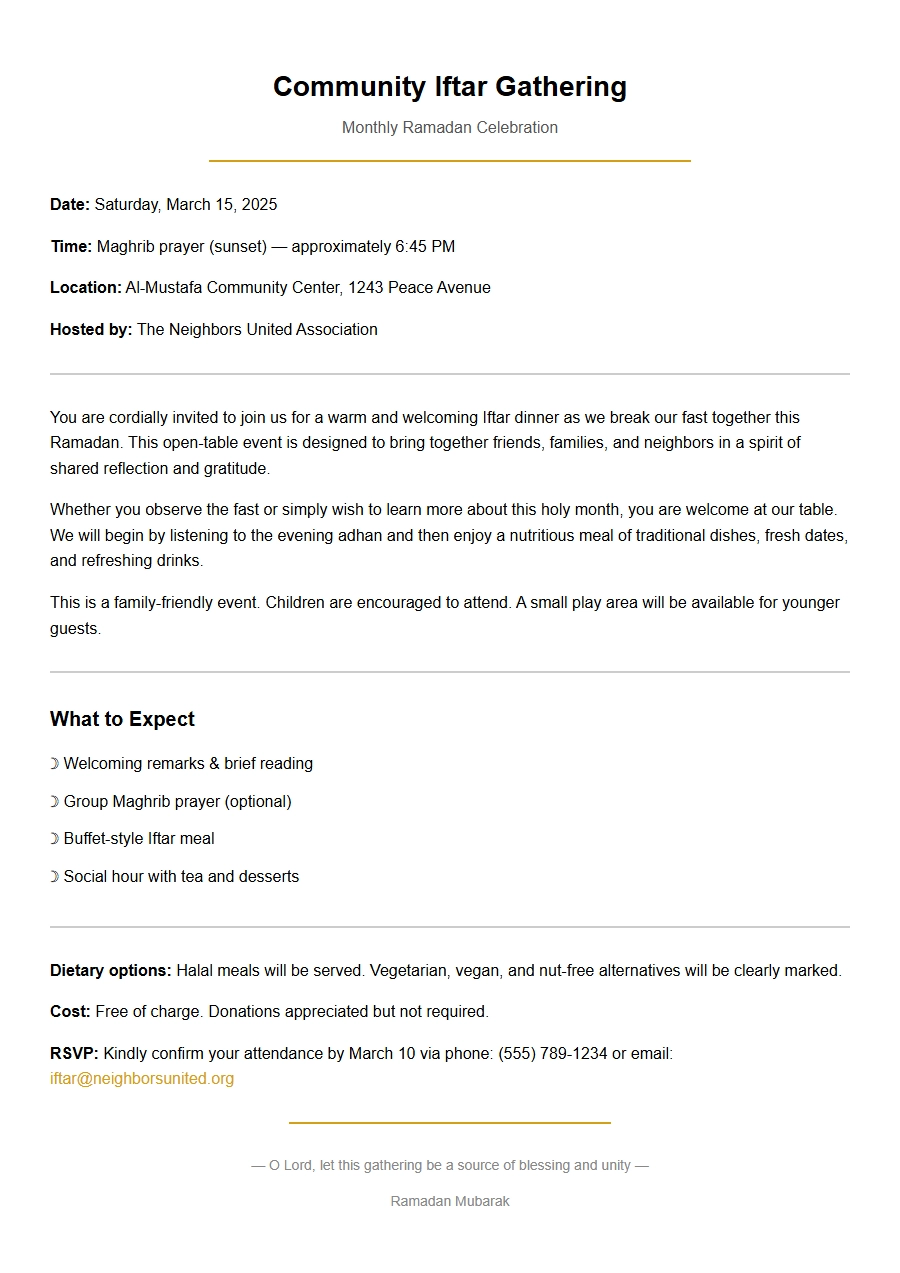 Ramadan Iftar Community Event Invitation
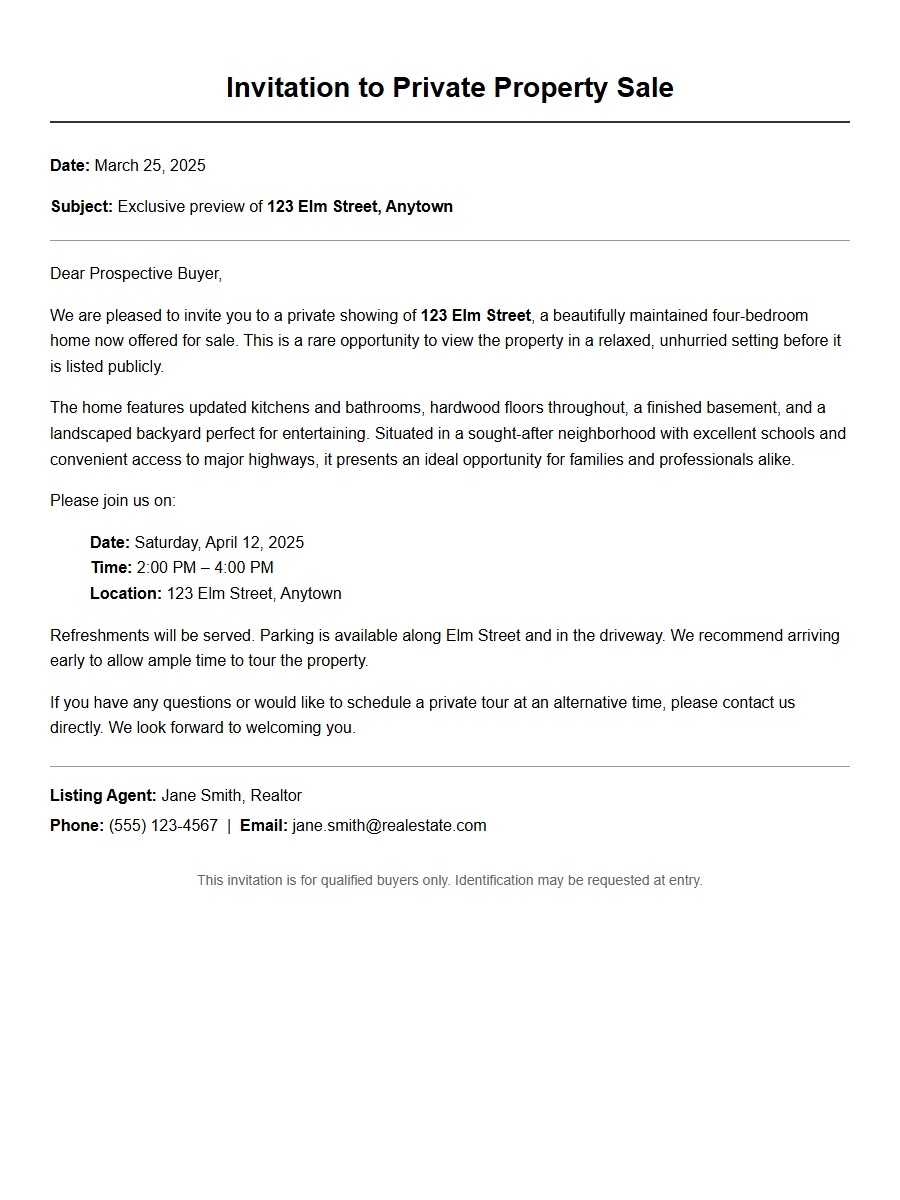 Sample Wording for Property Sale Invitations
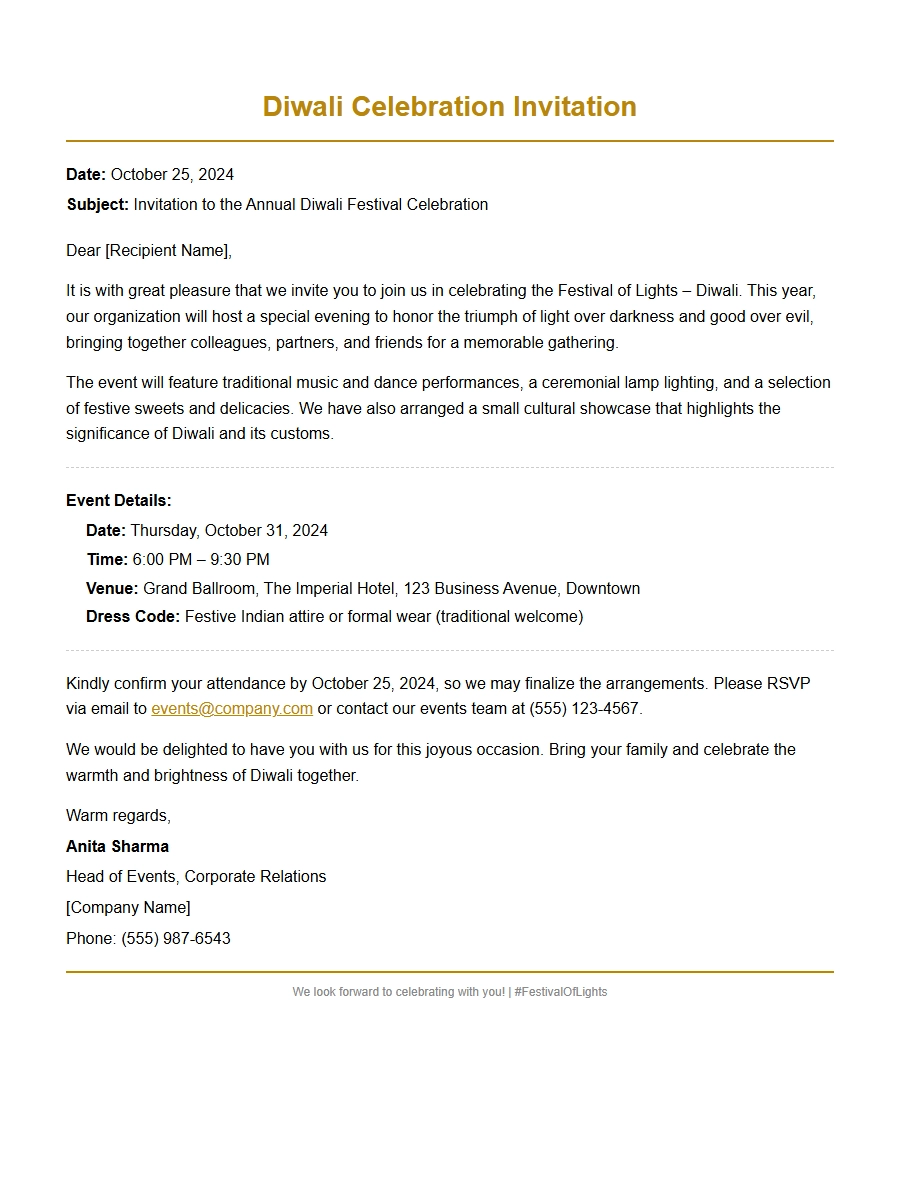 Diwali Festival Celebration Invitation Draft