You’ve got a great portfolio and a solid reputation, but reaching out to the right agent feels like sending a message into a black hole. Crafting that first email to a creative agent—whether you’re a photographer, illustrator, or designer—can stall your momentum. You want to sound professional without sounding like everyone else. The trick is having a solid foundation to work from, not a script to copy.
Using a letter template isn’t cheating. It’s smart. A good sample gives you the business letter format and the standard letter structure that agents expect. But the real value is in the head start it gives you. Instead of staring at a blinking cursor, you’re editing and personalizing. That’s where the time-saving magic lives.
Start by choosing the right sample for your situation. Are you emailing an agent for the first time? That’s an introductory note, not a formal cover letter. If you’re following up after a meeting or a referral, you need a different tone in writing—warmer, more direct. Don’t grab a generic template and hope it fits. Pick one that matches the relationship you’re building.
When you adapt the sample, your authentic voice matters more than perfect wording. If you sound stiff, the agent will notice. Read the sample out loud. Does it sound like you? If not, rewrite the opening sentence until it does. That first line is your hook. A simple “I’ve admired your work with [specific artist/client] for years” beats “I am writing to express my interest in representation” every time. Be specific. It proves you did your homework.
One common mistake is ignoring the format. Most agent contact happens via email now. A digital letter format skips the letterhead design and the physical address block. Put your name, portfolio link, and contact info right in the signature. Keep the subject line clear: “Portfolio Inquiry – [Your Name] – [Your Specialty].” If you’re mailing a physical letter (rare but still done for some fine art fields), then use a clean letterhead. Otherwise, keep it simple.
Another slip-up is using outdated salutation and closing phrases. “To whom it may concern” tells the agent you didn’t bother to learn their name. “Dear [First Name]” is standard in creative fields unless you know they prefer formality. Close with something direct like “Thanks for your time. I’d love to chat if my work resonates with you.” That’s better than “Sincerely.”
Category: Recommendation Letter Samples
You might find yourself in a situation where you need a letter of recommendation from a past client or colleague to send to an agent. That happens more than you’d think. Agents want to know you’re reliable. A strong peer review can back up your portfolio. If you’re an SEO specialist, a ranking improvement recommendation from a previous client can give an agent concrete proof of your skills. If you’ve worked in collaborative settings, a peer review from a colleague shows you’re easy to work with. Even less obvious fields like housing assistance or youth work can produce references that speak to your professionalism. A housing voucher support letter isn’t relevant to agents, but the same principle applies: a trusted voice vouching for your reliability carries weight.
Before you hit send, proofreading letter details matter. A typo in an agent email looks careless. Read it twice. Once for spelling, once for tone. Check that your portfolio link works. Make sure you didn’t accidentally leave a placeholder like [Your Name] in the body. That happens more than people admit.
Think of the sample as your scaffolding. It holds up the structure while you build the real content—your story, your style, your specific reason for contacting this agent. The best professional correspondence feels both polished and personal. You want the agent to think, “This person knows their stuff and seems like someone I’d enjoy working with.” That’s the sweet spot.
You’ll get faster with practice. The first email takes an hour. The tenth takes ten minutes. Each time, you’ll get better at spotting what works and what feels off. Keep a few customizable letter drafts saved so you can adapt them quickly. And don’t overthink it. Agents are busy. They appreciate clarity, brevity, and a clear reason to look at your work.
Recommendation for Graphic Designer to Creative Agency
To the Creative Portfolio Agent,
I wholeheartedly recommend Anna K. for any graphic design role at your agency. Over the past three years at Studio Bright, Anna has consistently delivered outstanding visual concepts that elevate brand identities.
Her portfolio includes work for top-tier clients, with measurable results:
Project
Client
Outcome
Brand refresh
EcoLife
30% increase in engagement
Campaign assets
UrbanThreads
Featured in Design Weekly
Anna is proficient in Adobe Creative Suite, Figma, and motion design. She communicates effectively with both clients and teams. For a direct conversation, contact me at jane.doe@example.com or +1-555-0100.
Best regards, Jane Doe, Creative Director
Recommendation for Photographer to Modeling Agent
Dear Agent,
I am pleased to recommend Marcus Lee as a commercial photographer seeking representation. His work combines technical precision with an artistic eye, perfect for fashion and editorial portfolios.
Marcus recently shot a campaign for Vivid Magazine with models from top agencies. Key strengths include:
Lighting mastery (studio and natural)
Retouching and color grading
Directing talent on set
He is reliable, meets tight deadlines, and maintains excellent rapport with models and crew. For contact: marcus.lee@photoexample.com, +1-555-0201.
Sincerely, Sarah Chen, Fashion Editor
Recommendation for Illustrator to Literary Agent
To the Literary Agent of Creative Portfolios,
I enthusiastically recommend Elena Rossi, an illustrator whose style blends whimsy and narrative depth. Her portfolio is ideal for children’s books or editorial illustration.
Elena illustrated a best-selling picture book in 2023, earning a nomination for the Caldecott Medal. Her skills include:
Medium
Project Example
Publisher
Watercolor
“The Moon Garden”
Star Press
Digital
“City of Whispers”
Blue Oak Books
She is easy to work with, takes feedback gracefully, and consistently delivers on schedule. Contact: elena.rossi@artexample.com.
Warmly, Tom H., Senior Editor
Recommendation for Web Developer to Creative Agency
Dear Creative Agent,
I confidently recommend Dev Patel for front‑end development roles at your agency. He combines strong coding skills with a designer’s sensibility, making him a valuable asset for any creative team.
Dev’s recent projects include:
Portfolio site for a top photographer – load time under 2 seconds
Interactive art installation using Three.js for a museum
He is proficient in React, GSAP, and WebGL, and communicates clearly with both designers and clients. For further details: dev.patel@devexample.com, +1-555-0302.
Best, Laura K., Tech Lead
Recommendation for Musician to Talent Agent
To the Talent Agent,
I am delighted to recommend Maya Johnson, a singer‑songwriter and multi‑instrumentalist seeking representation. Her original compositions have been streamed over 2 million times on Spotify, and she captivates live audiences with ease.
Maya’s achievements include:
Year
Accolade
2023
Winner – Indie Music Award (Best Folk)
2024
Opened for Grammy nominee at Red Rocks
She is professional, well‑connected, and ready for touring or recording projects. Contact: maya.j@musicmail.com, +1-555-0403.
Sincerely, Mark T., Festival Director
Recommendation for Filmmaker to Production Company
Dear Producer,
I recommend Carlos Mendez for representation as a film director and cinematographer. His short film “Echoes” won Best Narrative at Sundance and showcases his visual storytelling talent.
Carlos brings strengths in:
Script development and storyboarding
Cinematography (digital and film)
Post‑production editing (Premiere, DaVinci)
He is collaborative, respects budgets, and delivers high‑quality work under pressure. For contact: carlos.m@filmmail.com, +1-555-0504.
Best, Lisa R., Film Instructor
Recommendation for Fashion Designer to Fashion Agent
To the Fashion Portfolio Agent,
I am thrilled to recommend Sophie Lambert, a ready‑to‑wear designer whose collections blend sustainability with avant‑garde aesthetics. Her work has been featured in Vogue and sold in boutiques across Europe.
Sophie’s portfolio highlights:
Collection
Season
Key Retailer
“Reclaimed”
SS24
Dover Street Market
“Urban Flora”
AW24
Opening Ceremony
She excels in pattern making, sustainable sourcing, and brand storytelling. For direct contact: sophie.l@fashionmail.com, +1-555-0605.
Sincerely, Emma W., Design Director
Recommendation for Writer to Literary Agent
Dear Literary Agent,
I enthusiastically recommend James Holt for representation as a fiction writer. His debut novel “The Glass City” received a starred review from Kirkus and was shortlisted for the National Book Award.
James’s strengths include:
Rich character development and dialogue
Research for historical settings
Editing and revision discipline
He is punctual, professional, and open to collaboration. For further discussion: james.holt@writeremail.com, +1-555-0706.
Warmly, Nina S., Publishing Consultant
Recommendation for Architect to Design Firm
To the Design Agent,
I am pleased to recommend Liam O’Brien for representation in architectural design. His portfolio demonstrates innovative use of light and sustainable materials in residential and commercial projects.
Key completed works:
Project
Cost (USD)
Awards
Hillside Residence
$1.2M
AIA Honor Award
EcoHub Office
$4M
LEED Platinum Certified
Liam is proficient in Revit, Rhino, and BIM. He communicates effectively with contractors and clients. Contact: liam.ob@archmail.com, +1-555-0807.
Best regards, Dr. Maria K., Professor of Architecture
Recommendation for Content Creator to Digital Agency
Dear Creative Agent,
I recommend Priya Sharma for representation as a digital content creator. Her YouTube channel and Instagram presence have grown organically to 500K+ followers, producing lifestyle and tech content.
Priya’s metrics demonstrate influence:
Avg. engagement rate: 8.5%
Sponsored campaigns: 20+ with recurring brands
Video production: scripting, filming, editing
She is adaptable, data‑driven, and excellent in client pitches. For contact: priya.s@contentmail.com, +1-555-0908.
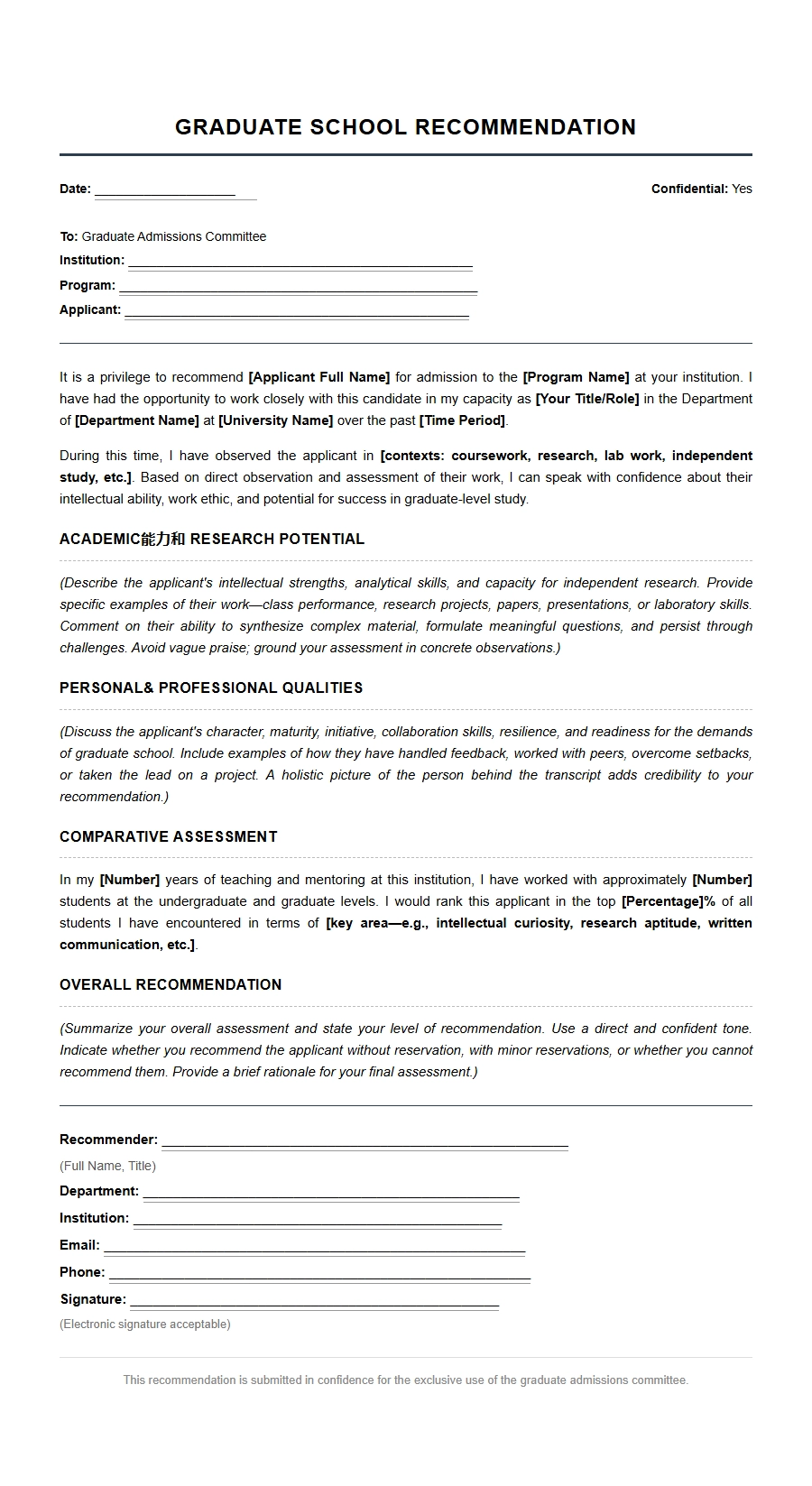 Format for Graduate School Faculty Recommendation Letters
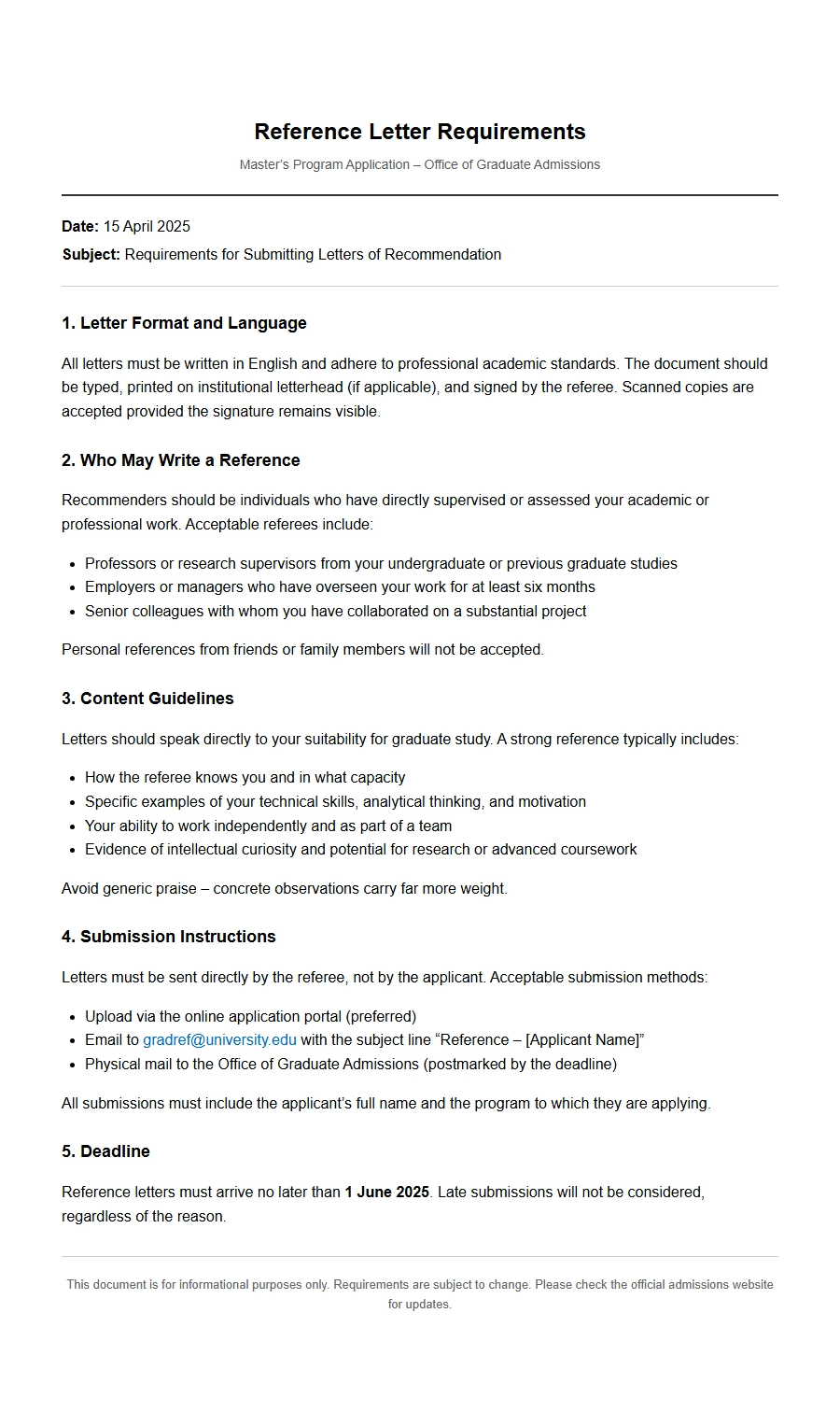 Master's Program Reference Letter Requirements
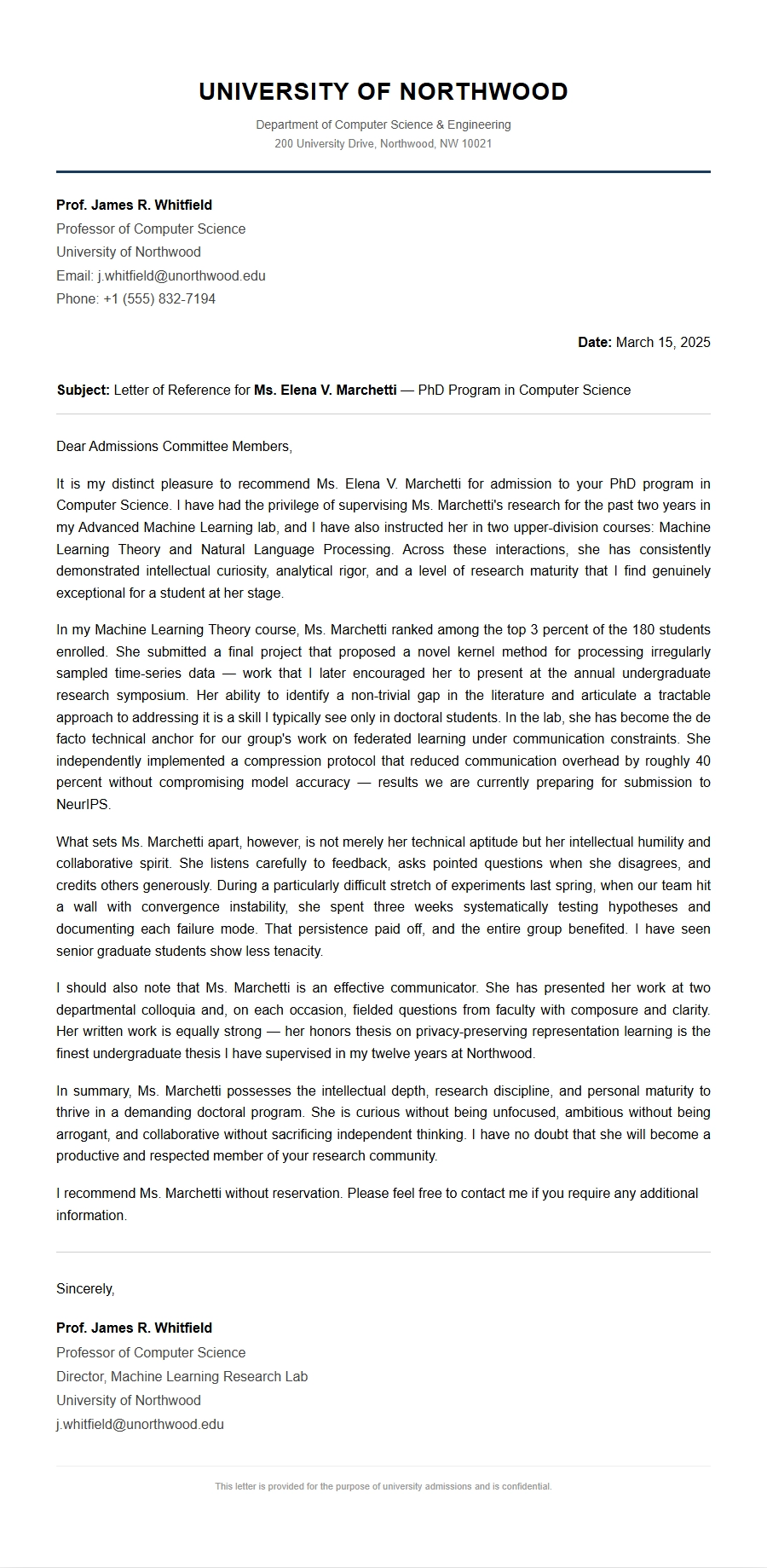 The Perfect Structure for a University Reference Letter
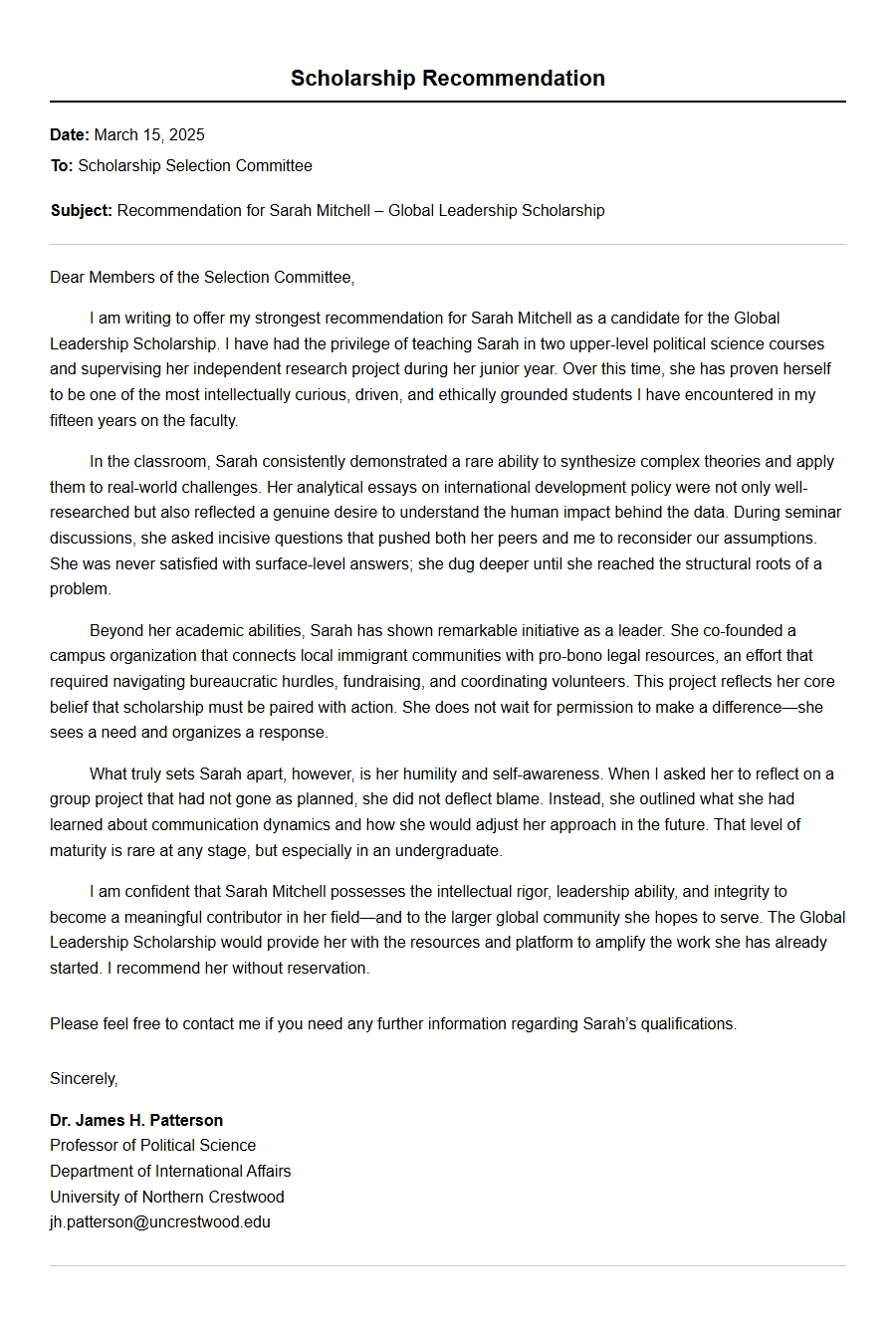 scholarship essay recommendation portion - Recommendation Letters
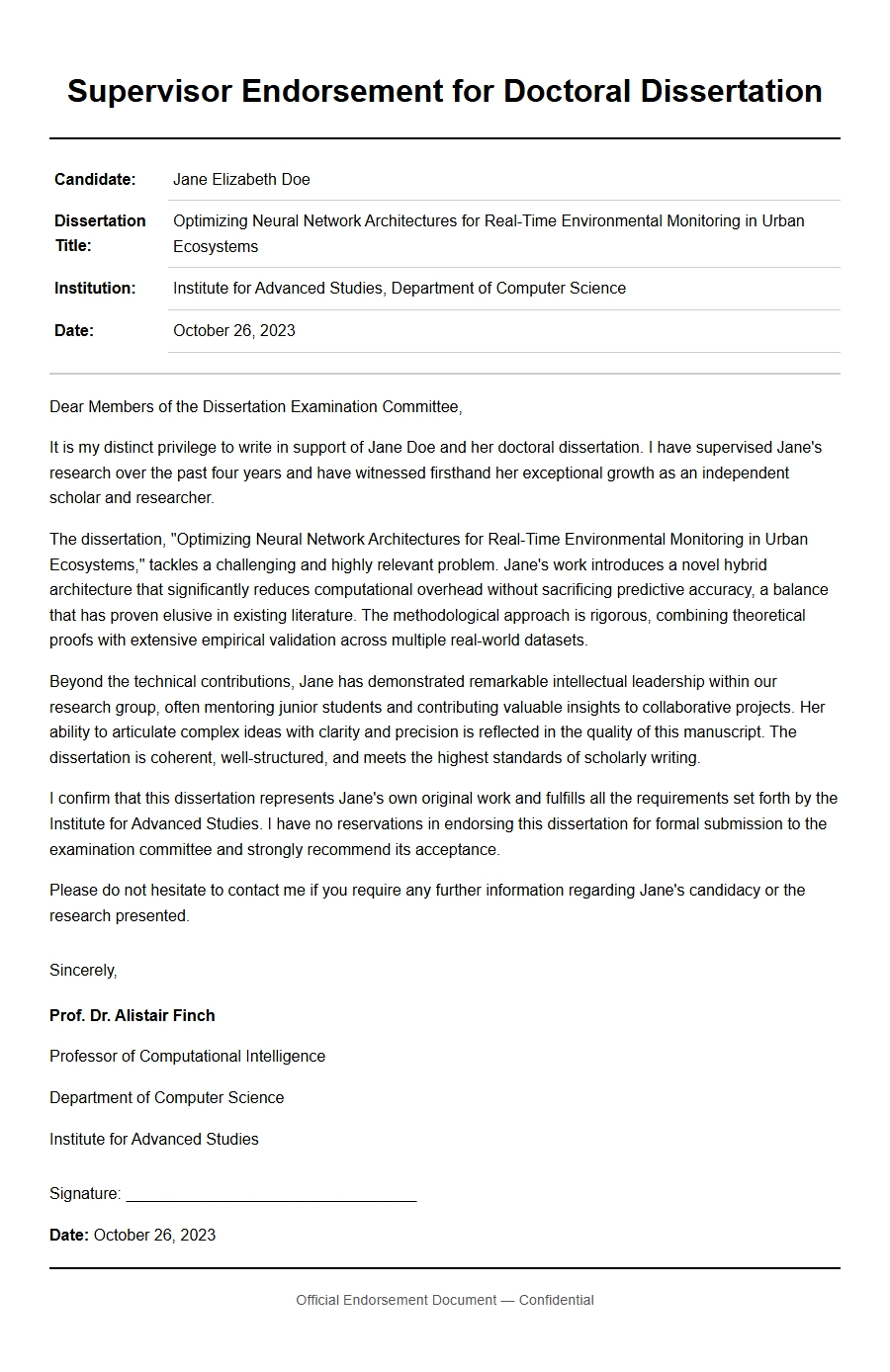 Sample PhD Supervisor Endorsement Letter
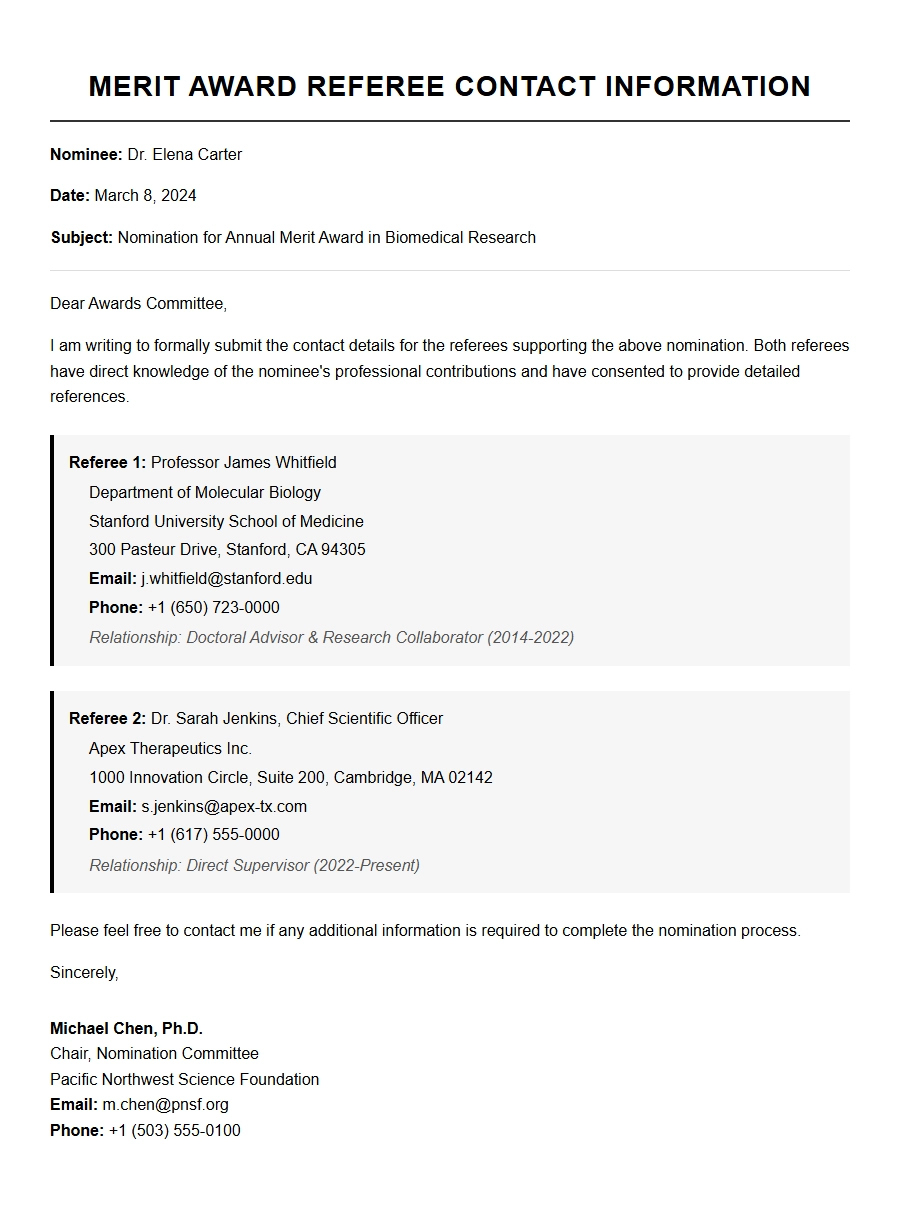 How to Find Your Merit Award Referee Contact Info