You’ve been asked to write a reference letter for someone applying to a master’s program. It’s a big responsibility. The applicant trusts you to capture their strengths, potential, and character. But staring at a blank page can feel paralyzing. You know what you want to say—but getting the structure, tone, and details right takes time. That’s where a good sample helps.
Using a letter template isn’t cutting corners. It’s a smart way to start. A sample gives you a clear structure, a professional tone, and key phrases you can adapt. You still need to fill it with your own observations and specific examples. The sample saves you from reinventing the format so you can focus on what actually matters: describing why this candidate deserves a spot. Think of it as a blueprint, not a script.
Category: Masters Program Reference Letter Requirement
The first step is picking the right sample. Not all reference letters look alike. A letter for a research-heavy master’s program might emphasize analytical skills and project leadership. A professional master’s degree (like an MBA or MPA) may want more focus on teamwork and real-world impact. Look for a letter of recommendation sample that matches the level of formality your field expects. If you’re unsure, lean toward a business letter format with a standard salutation and closing. Avoid overly casual language—“Hey, this person is great” won’t cut it.
Once you have a sample, adapt it without losing your voice. Start with the opening paragraph. Grab the reader’s attention by stating your relationship with the applicant and how long you’ve known them. Instead of “I am writing to recommend Jane Doe,” try “I’ve supervised Jane Doe for three years in a demanding research lab, and I’ve never seen anyone turn setbacks into breakthroughs as consistently.” That shows you know her work, not just her name.
Pay attention to salutation and closing. If the application doesn’t specify a name, “Dear Admissions Committee” is safer than “To Whom It May Concern.” For the closing, a simple “Sincerely” followed by your title and contact info is professional. Avoid old-fashioned closings like “Respectfully yours” unless you’re in a very traditional field. Also remember the digital letter format—if you’re submitting via an online portal, you don’t need a physical letterhead design. A plain text or PDF with your name and title at the top works fine.
Now, the meat of the letter: specific examples. Don’t just call the applicant “hardworking.” Describe a situation where they stayed late to fix a dataset or led a team through a tight deadline. That’s where proofreading letter matters—read it aloud to catch awkward phrasing. A common mistake is using vague praise. Another is ignoring the program’s requirements. If the master’s program asks for evidence of leadership, make sure your examples highlight that.
If you’re writing for a specialized field, it helps to see how others handle similar letters. For instance, a recommendation letter for an ultrasound sonographer will stress clinical competency and patient interaction. Or, if you’re recommending someone for a creative or technical role, looking at a script supervisor’s reference letter can show you how to weave attention to detail into the narrative. For workplace references, a supervisor testimonial for promotion has a similar structure but different emphasis—you can borrow the progression from current performance to future potential. Even peer recommendation letters offer insights into tone and authenticity, especially when you want to sound like a real person, not a HR robot. And if you’re writing a letter for a job application alongside the master’s application, the job application referral request email example can help you keep the request polite and professional.
Keep the letter to one page if possible. Admissions readers scan quickly. Use short paragraphs and skip the fluff. Every sentence should serve a purpose: either show a skill, a character trait, or a concrete result. And always check the program’s submission guidelines. Some want the letter uploaded directly, others prefer a sealed envelope. Ignoring those details can hurt the applicant’s chances.
Finally, use the sample as a springboard, not a crutch. The best letters feel both professional and personal—they belong to you, not a template library. The more you practice, the faster the process gets. Next time someone asks, you’ll have a starting point ready. And that blank page won’t look so scary.
Simple Examples
Master's Program Reference Letter Requirements
Reference Letter Requirement Checklist
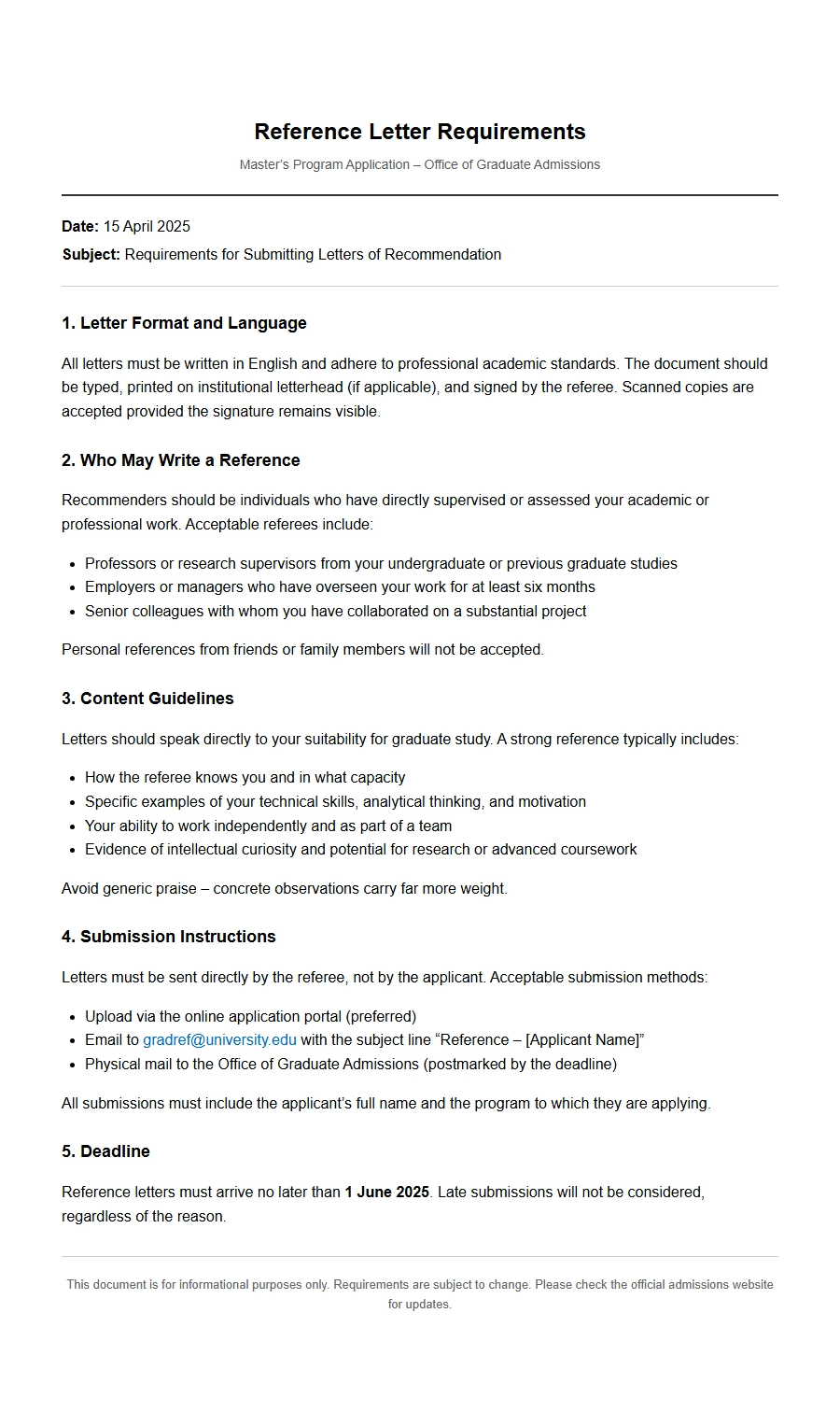
To ensure your masters program application is complete, verify that your reference letters meet the following criteria:
Number of letters: Usually 2–3, depending on the program.
Source: At least two from academic professors; one may be from a professional supervisor.
Content focus: Specific examples of your research potential, analytical skills, and teamwork.
Format: On official institutional letterhead or submitted via an online portal.
Confidentiality: Most programs require you to waive your right to view the letter (FERPA waiver).
Deadline: Letters must arrive by the application deadline; late submissions may disqualify your file.
Language: English unless the program explicitly accepts other languages.
Double-check each program’s website, as requirements can vary. Missing or incomplete letters are a common cause of application delays.
Sample Request Email to a Professor
Subject: Request for Recommendation Letter – Masters Program Application
Dear Professor [Last Name],
I hope this message finds you well. I am applying to the Master of Science in Data Science program at University X, and I would be honored if you could write a strong recommendation letter for me. I greatly appreciated your course on Advanced Statistics last semester, where I earned an A and completed a project on predictive modeling.
The application deadline is March 15, 2025. I have attached my CV, draft statement of purpose, and a list of the programs I am applying to. I will also provide a brief summary of my contributions in your class to refresh your memory.
If you are willing, please let me know what additional documents you need. I am happy to meet during office hours to discuss further. Thank you for considering my request.
Best regards, [Your Name]
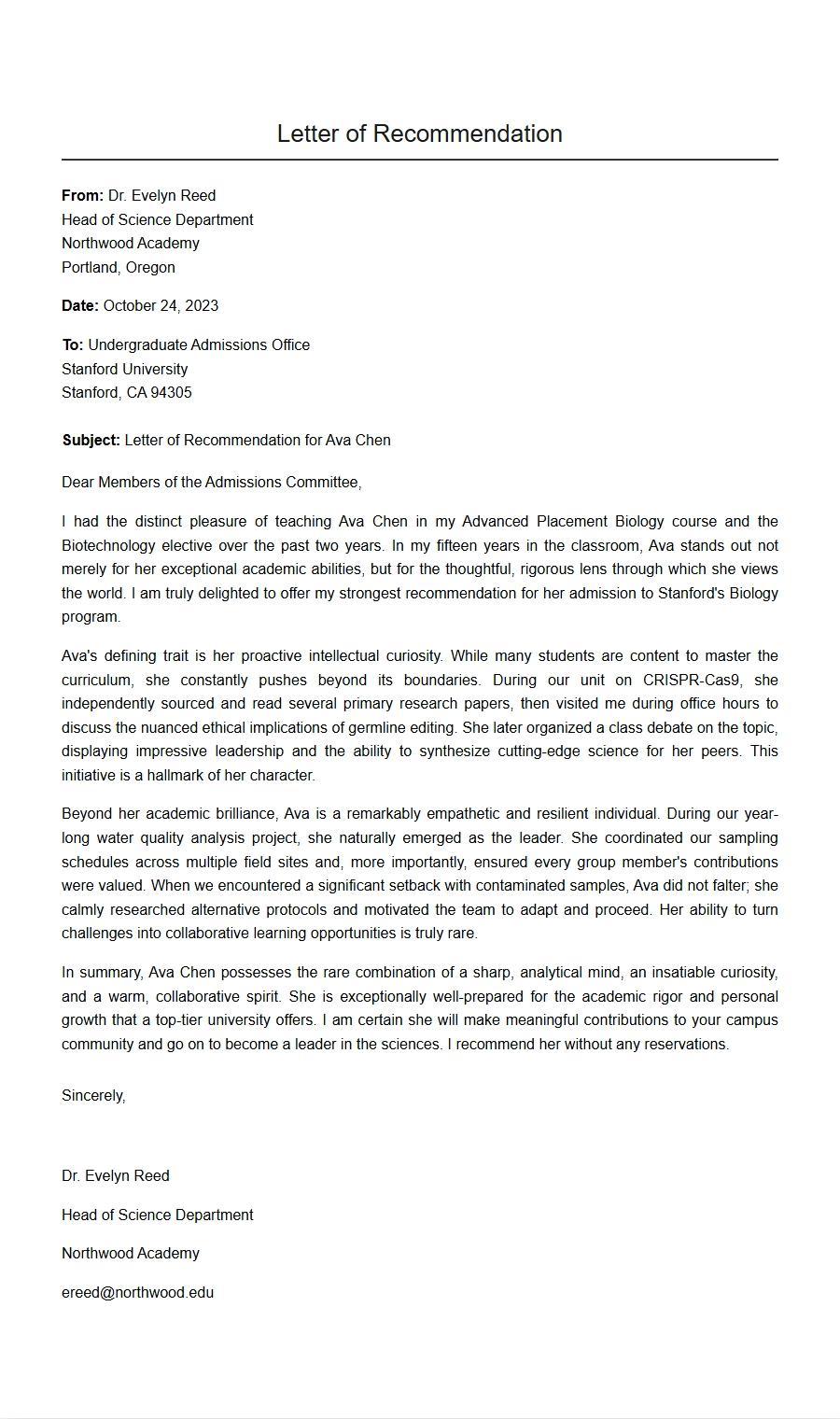
Sample Recommendation Letter (Fictional)
Dear Admissions Committee,
It is my pleasure to recommend Jane Smith for the Masters in Computer Science program at ABC University. I have known Jane for two years as her professor for Machine Learning and Deep Learning courses, where she consistently ranked in the top 5% of the class.
Jane possesses exceptional analytical skills. For her final project, she designed a novel neural network architecture for image segmentation that achieved 94% accuracy on the validation set. She also demonstrated strong collaboration skills by leading a team of four students to present their work at the university research symposium.
Beyond grades, Jane is intellectually curious and proactive. She often stayed after class to discuss recent papers in reinforcement learning. I am confident she has the rigor and creativity to excel in your program and contribute to cutting-edge research.
Please contact me if you require further information.
Sincerely, Dr. Alan Turing Professor, Department of Computer Science XYZ University
Common Mistakes in Reference Letters
Recommenders often fall into these pitfalls when writing for masters programs:
Vague praise: Saying "good student" without specific examples of projects or achievements.
Missing comparison: Not ranking the applicant relative to peers (e.g., "top 5% of students I've taught").
Too short: A single paragraph fails to provide depth. Aim for at least half a page.
Ignoring program specifics: A generic letter that does not mention the target university or program is less effective.
Negative or faint praise: Statements like "did okay but could improve" hurt the application.
Format errors: Missing letterhead, date, or contact information.
Applicants should gently remind recommenders to avoid these issues. A well-crafted letter can significantly strengthen an application.
Guide for Recommenders: What to Include
When writing a recommendation letter for a masters program, include the following key elements:
Your relationship with the applicant: How long you have known them and in what context (e.g., professor, research advisor).
Specific academic or professional achievements: Describe a research project, paper, or internship where the applicant excelled.
Personal qualities: Mention traits like intellectual curiosity, perseverance, leadership, or collaboration with concrete examples.
Comparison with peers: Place the applicant in context (e.g., "among the top 3 students in five years").
Program fit: Explain why you believe the applicant is a good match for the specific masters program.
Confidence statement: A clear endorsement of their potential for success in graduate studies.
Use official letterhead and sign the letter. Submit it through the application portal or as a PDF attachment to the admissions office.
Comparison Table of Reference Letter Requirements
Below is a comparison of reference letter requirements across three popular masters programs:
Program
Number of Letters
Preferred Recommenders
Format
Deadline Type
MIT Master of Finance
3
2 academic, 1 professional
Online portal with letter upload
Rolling (priority deadline Dec 1)
Stanford MS in Computer Science
3
All academic (professors)
Online portal with evaluation form
Strict deadline Jan 15
Harvard T.H. Chan School of Public Health
2
At least 1 academic; 1 professional acceptable
Upload PDF or via portal
Feb 1
Always verify directly with each program, as requirements can change yearly.
Recommender Information Form
Please complete the following information for your reference letter submission:
Recommender Name: [Full Name]
Title: [e.g., Professor, Associate Professor, Supervisor]
Institution/Company: [Name]
Email: [Official email address]
Relationship to Applicant: [Course instructor, research advisor, work supervisor, etc.]
Duration of Association: [Number of months/years]
How well do you know the applicant?Rate: Very well / Moderately / Slightly
Letter Submission Method: Online portal / Email to admissions / Postal mail
If submitting via portal, you will receive an invitation link from the university. Do not share this link with the applicant.
FERPA Waiver Statement for Letters of Recommendation
Many masters programs require you to indicate whether you waive your right to read the recommendation letters. The typical waiver statement reads:
"I waive my right to inspect and review confidential letters of recommendation submitted on my behalf as part of this application. I understand that this waiver is voluntary and that I may choose not to waive my right."
Waiving your right is generally recommended because:
Recommenders may write more candidly and provide stronger evaluations.
Admissions committees view waived letters as more credible.
Some programs treat non-waived letters with less weight.
Instructions: Check the box labeled "I waive my right" on the application form. If you choose not to waive, the letters will still be accepted but may be considered less reliable.
Reference Letter Submission Timeline
Task
Suggested Deadline
Identify recommenders and ask for permission
At least 6–8 weeks before application deadline
Send recommenders materials (CV, SOP, reminder of achievements)
4–6 weeks before deadline
Send formal request via application portal
3–4 weeks before deadline
Send first gentle reminder
2 weeks before deadline
Send final reminder (if not yet submitted)
1 week before deadline
Confirm receipt in application status portal
Within 3 days after deadline
Important: Some universities allow a short grace period, but never rely on that. Late letters can result in your application being marked incomplete and not reviewed.
Follow-Up Reminder Email for Recommenders
Subject: Gentle reminder: Recommendation letter for [Your Name] – due [Date]
Dear Professor [Last Name],
I hope you are doing well. I am writing to kindly remind you about the recommendation letter for my masters program application to [University Name]. The deadline is [date], which is about [number] days away.
Please let me know if you need any additional materials from me, such as a list of my accomplishments in your class or my current resume. I have already sent you the portal link via the application system.
Thank you again for your support. Should the deadline be a problem, please let me know as soon as possible so I can make alternative arrangements.
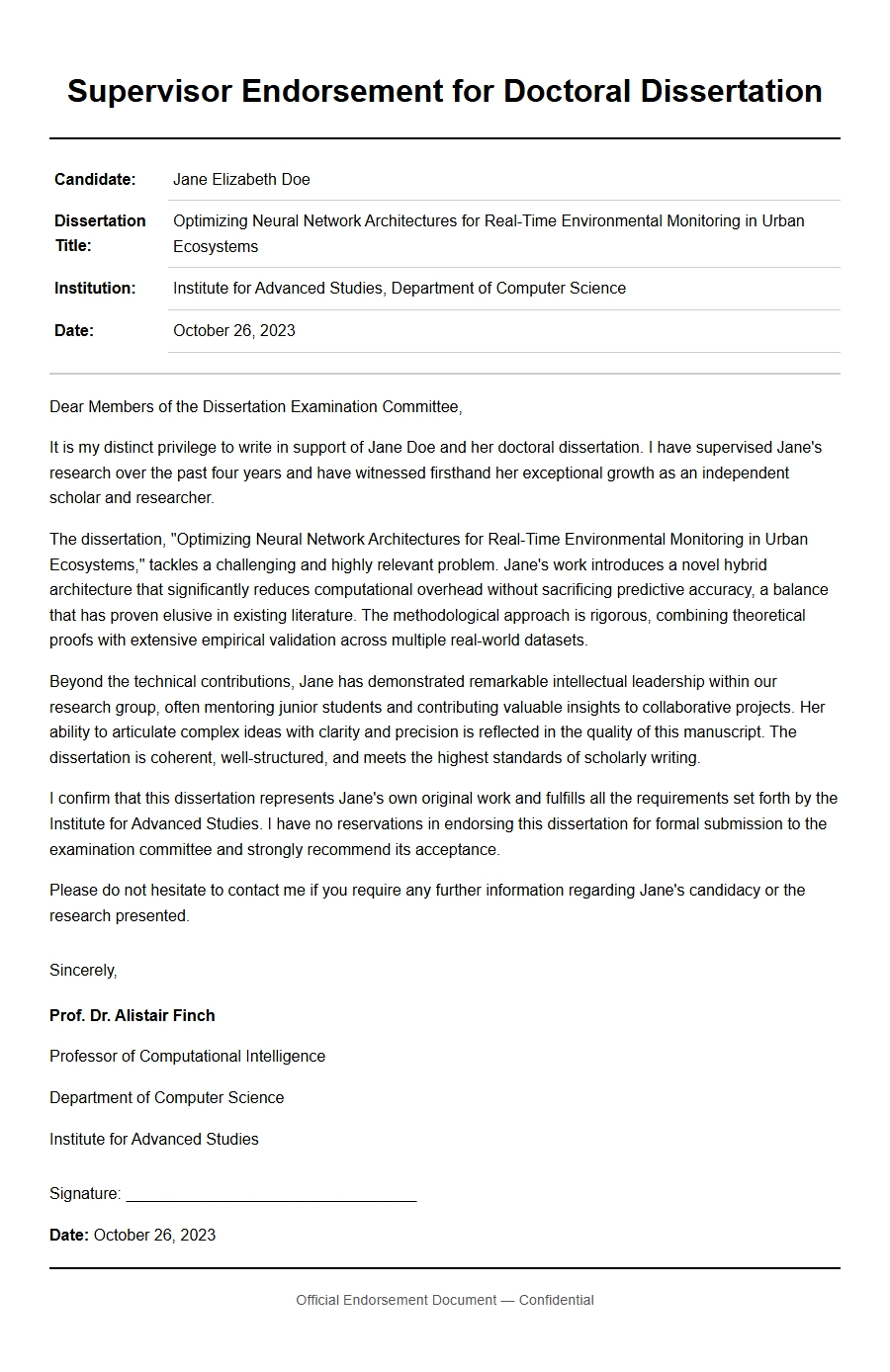
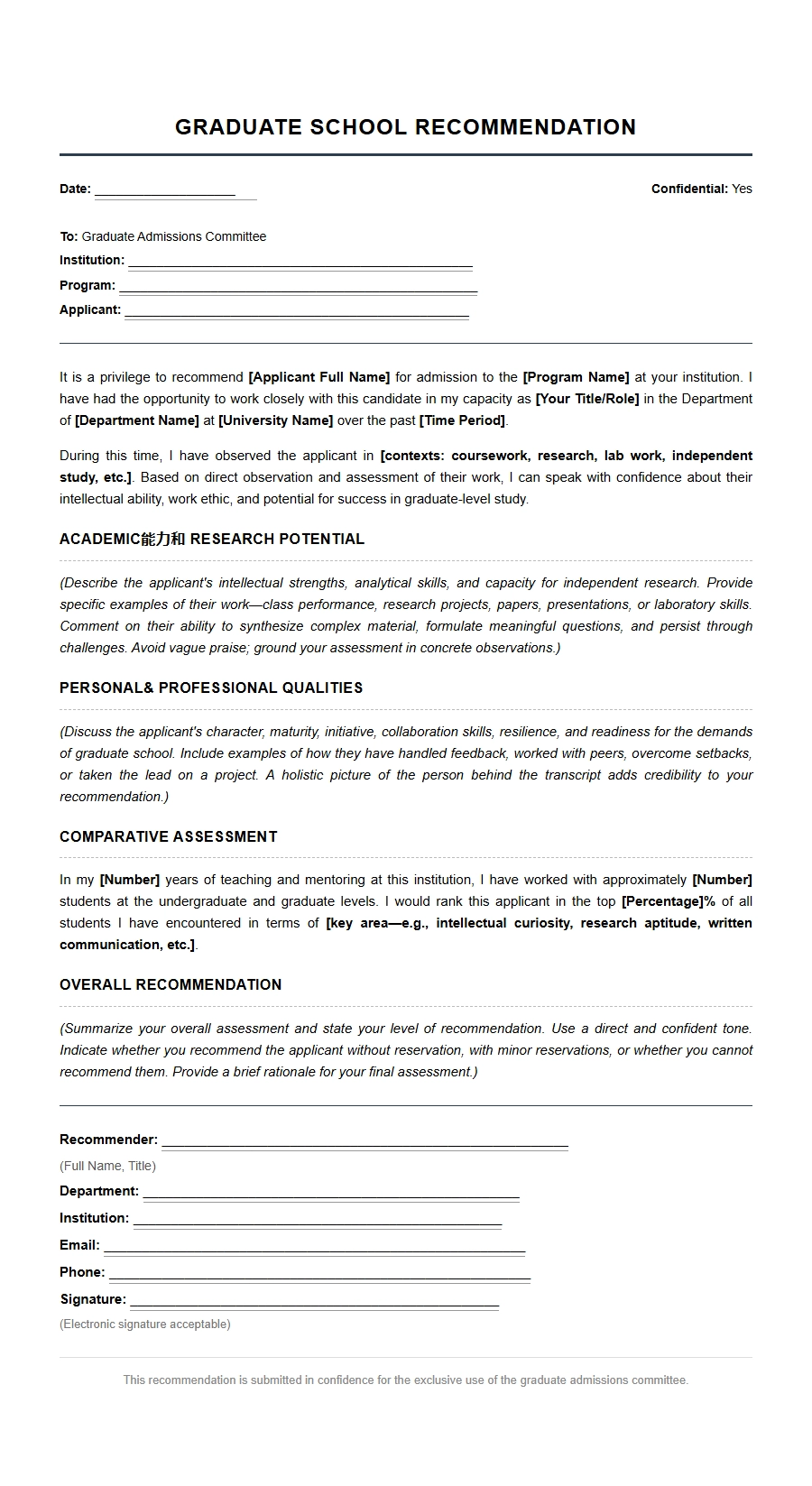 Format for Graduate School Faculty Recommendation Letters
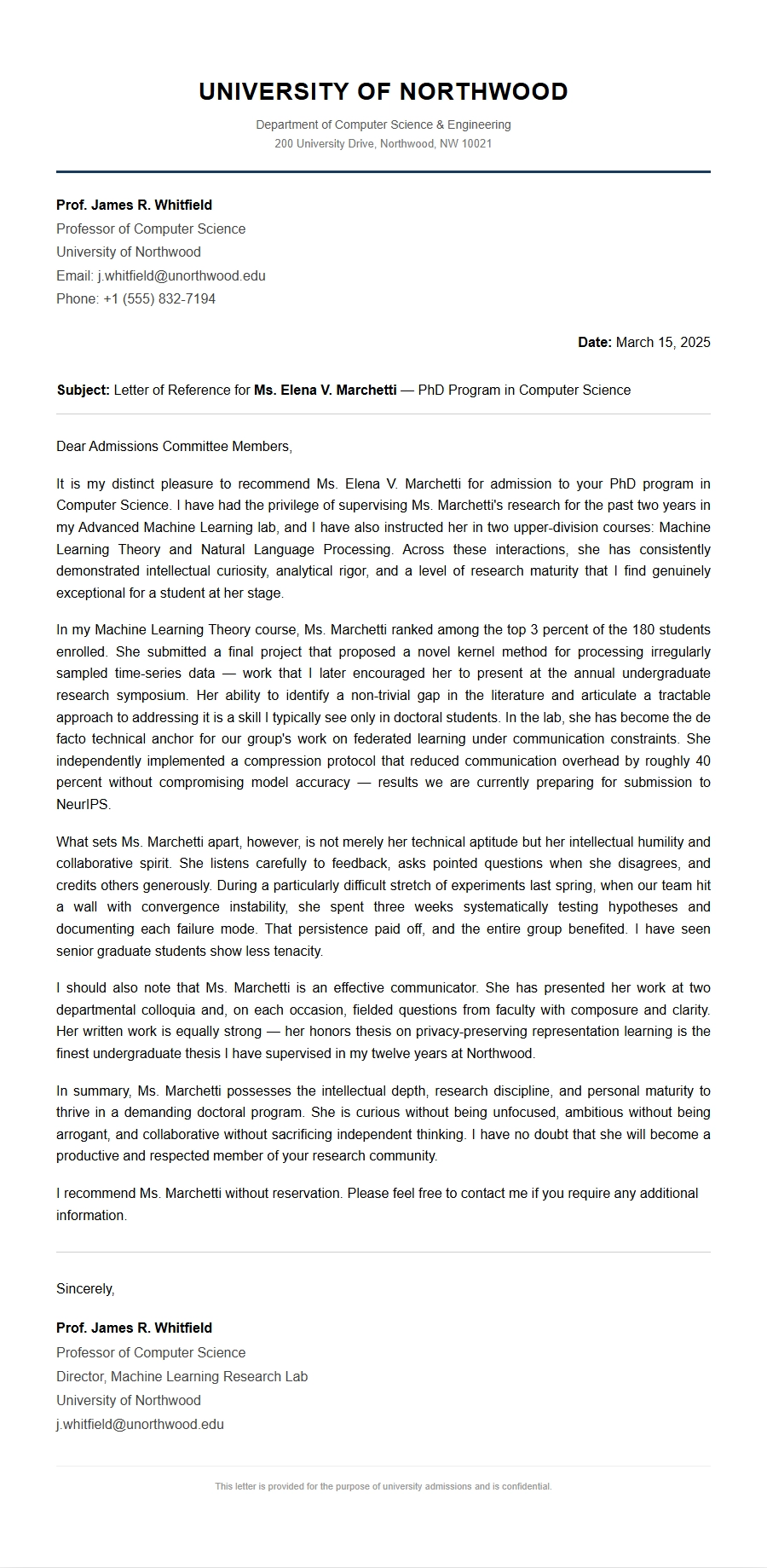 The Perfect Structure for a University Reference Letter
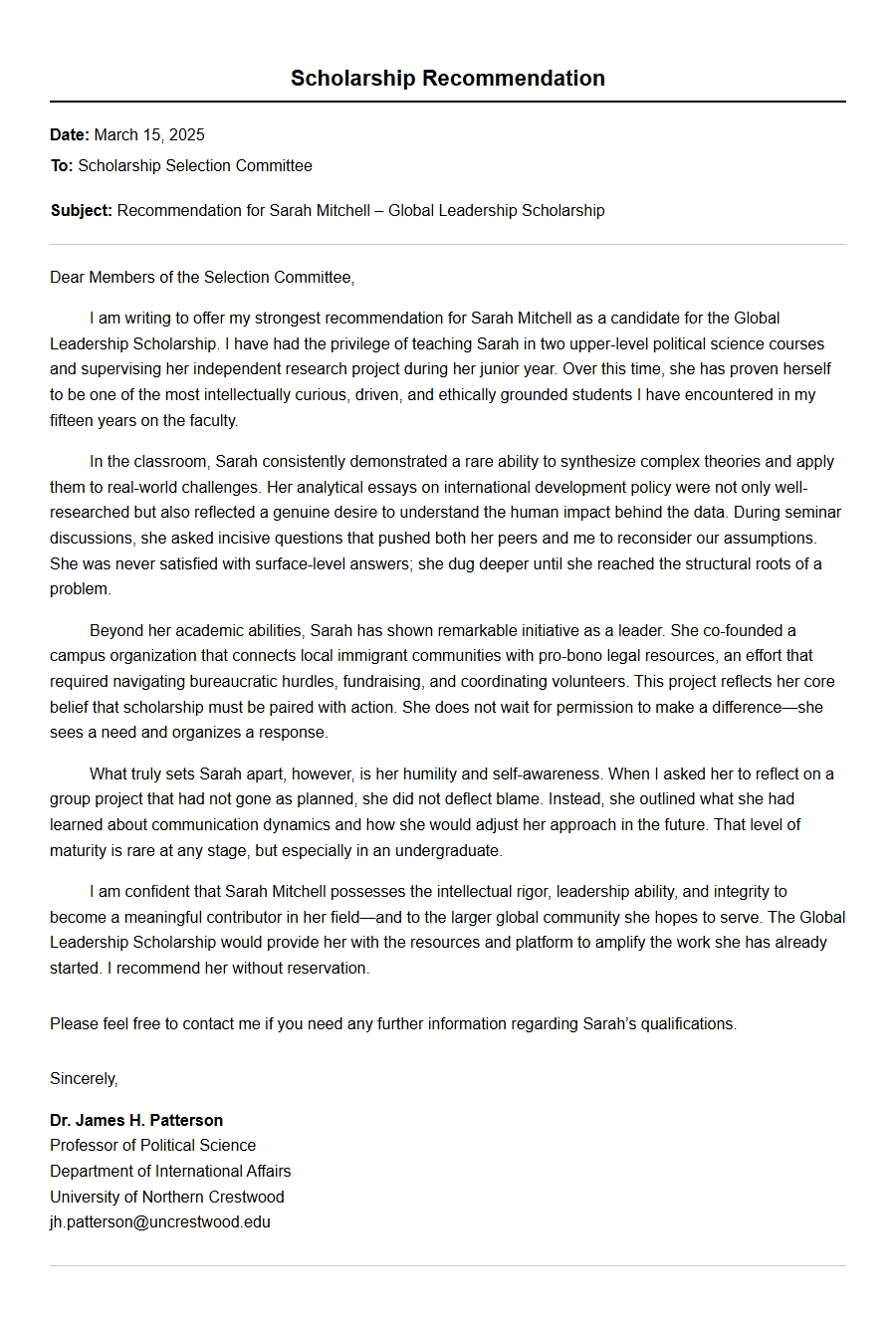 scholarship essay recommendation portion - Recommendation Letters
 Sample PhD Supervisor Endorsement Letter
 How to Find Your Merit Award Referee Contact Info
 college application recommendation letter example - Recommendation Letters