Format for Graduate School Faculty Recommendation Letters
Staring at a blank page when you need to ask a professor for a graduate school recommendation letter can feel paralyzing. You wonder what format the letter should follow, what details to include, and how to make it stand out. But having a clear idea of the right graduate school faculty recommendation format turns that anxiety into a confident, polished request—and ultimately a better letter.
Using a letter template isn’t cheating. It’s a smart, time-saving strategy. A good sample gives you structure, tone, and key phrases while leaving plenty of room for personalization. Think of it as a blueprint. You still add your own stories and specifics, but you don’t have to invent the framework from scratch.
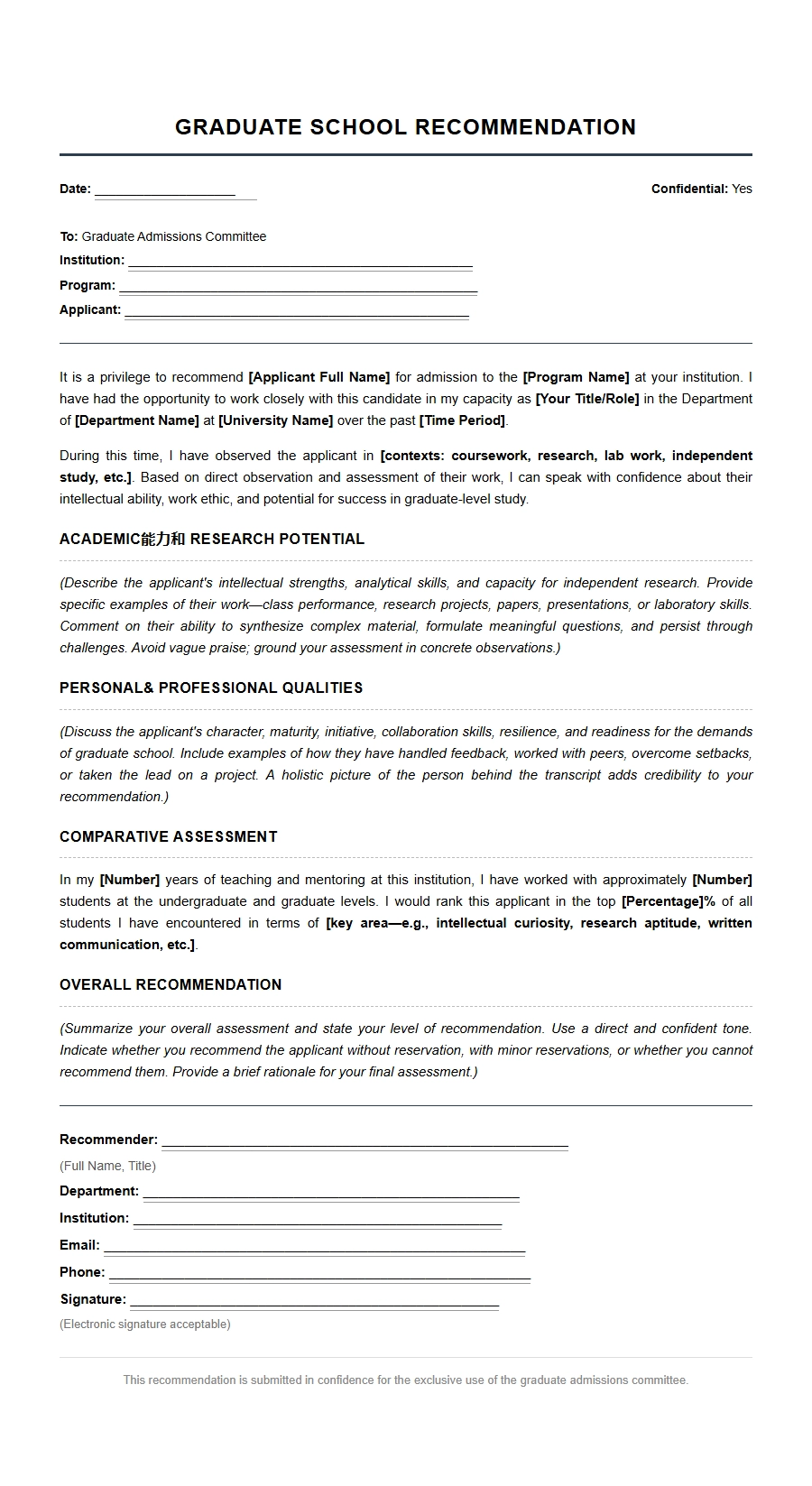
Graduate School Recommendation Letter Format
What does a grad school recommendation letter look like?
Most faculty recommendation letters follow a standard business letter format. They include a professional salutation and closing, clear paragraphs, and a formal yet warm tone. The writer’s authentic voice should come through—the letter shouldn’t sound like it was written by a robot. If you’re helping your professor prepare, share a sample that highlights letter structure: introduction, body paragraphs with specific examples, and a strong final endorsement.
How to choose the right sample for your situation
Not all recommendation letters are the same. A letter from a research advisor might emphasize lab skills and intellectual curiosity. A letter from a lecturer might focus on classroom performance and work ethic. Look for a customizable letter sample that matches the relationship you have with your recommender. Also consider whether the letter will be submitted online (digital letter format) or printed on official letterhead design. For digital submissions, PDF is standard; for printed letters, proper letterhead and signature matter.
Understanding letter writing etiquette helps too. Common mistakes include using outdated salutations like “To Whom It May Concern” when you could address the admissions committee directly. Another error is ignoring the difference between email and a formatted letter. For email submissions, keep it concise and avoid fancy formatting—use a plain digital letter format that’s easy to copy and paste.
Adapting a sample without losing your authentic voice
Once you have a solid letter template, the key is personalization. The opening paragraph should grab attention—mention a specific project, class, or moment that made you memorable. Avoid generic praise like “hardworking” or “dedicated” without a concrete example. Instead, ask your recommender to describe a time you solved a problem or led a discussion. That kind of detail makes the letter feel genuine.
Professional correspondence requires careful proofreading. A recommendation letter with typos or awkward phrasing can hurt your chances. Encourage your professor to run it through a spell-checker or ask a colleague to review it. Simple formal writing tips—like keeping sentences short, varying length, and avoiding jargon—make the letter more readable.
Tailoring the tone for the audience
The tone in writing for graduate admissions should be respectful but not stiff. It’s okay for a professor to say “Jane is one of the best students I’ve taught in five years” rather than “Jane has demonstrated exceptional academic prowess.” Real language resonates more than overblown praise. Ever received a letter that felt too stiff or too casual? The best ones strike a balance—professional enough to earn trust, warm enough to feel human.
Likewise, a remote work productivity testimonial highlights self-discipline and communication skills, while a radiology tech safety certification letter emphasizes technical competence and safety protocols. Each uses the same core business letter format but tweaks the content to match the goal. That’s the power of starting with a good sample—it gives you a solid base to adjust.
What to do next
Use the sample as a springboard, not a crutch. The best recommendation letters feel both professional and personal—they show the professor’s genuine belief in you. Practice makes the process faster. The more you work with templates, the easier it becomes to spot what’s needed and what’s fluff. Next time you need a recommendation letter, you’ll know exactly where to start and how to guide your professor toward a strong, clear format.
Examples for Different Needs
Format for Graduate School Faculty Recommendation Letters
Formal Letter Structure
Dear Graduate Admissions Committee,
I am pleased to recommend Jane Doe for admission to your Master’s program in Biomedical Engineering. I have had the privilege of supervising Jane’s undergraduate research for two years. Her intellectual curiosity and perseverance consistently impressed me.
In my advanced cell biology course, Jane placed in the top 2% of over 150 students. She also designed and executed a complex protocol for CRISPR editing in zebrafish, demonstrating exceptional technical skill. Her senior thesis was nominated for the department’s highest award.
Beyond technical ability, Jane is a collaborative team member. She mentored two junior students and presented her work at a regional conference. I am confident she will thrive in a rigorous graduate environment.
I give Jane my strongest recommendation. Please contact me for further information.
Sincerely, Dr. John Smith Professor, Department of Biology University of Science
Structured with Rating Table
To the Admissions Committee,
I write to recommend Alex Chen for graduate study in Computer Science. Below is a summary of Alex’s capabilities based on a departmental evaluation scale (1–5, 5 being highest).
Criterion
Rating
Comments
Research Potential
5
Published two conference papers as first author
Analytical Skills
5
Developed novel algorithm for data compression
Teamwork
4
Led a group of three in a hackathon project
Communication
4
Clear presenter; won “Best Talk” at symposium
Overall
5
One of the top undergraduates I have taught
Alex has the maturity and drive to succeed at your program. I recommend full admission with financial support.
Bullet List of Achievements
Dear Graduate Admissions,
It is my distinct pleasure to recommend Maria Garcia for your Ph.D. program in Chemistry. Maria worked in my lab for three semesters, and I have observed her growth into an independent researcher. Key achievements include:
Publication: Co-authored a paper in the Journal of Organic Chemistry on green synthesis methods.
Presentation: Won second place at the university-wide research symposium.
Award: Received the Undergraduate Research Excellence Award.
Leadership: Organized a weekly journal club for organic chemistry students.
GPA: 3.95 overall, with all A’s in upper-level chemistry courses.
Maria combines creativity with rigorous experimental design. She is among the top 5% of students I have taught in 20 years. She will excel in your program.
Warmly, Dr. Lisa Brown Associate Professor, Chemistry
Comparison with Peers
To the Graduate Committee,
I am writing in strong support of Robert Kim for your Master’s in Mechanical Engineering. I have taught Robert in two courses: Thermodynamics and Fluid Mechanics. He consistently scored in the top 3% of the class.
To give context, over the past five years I have taught approximately 500 undergraduates. Robert ranks in the top 1% in problem-solving ability and theoretical understanding. In contrast to many peers who rely on memorization, Robert grasps underlying physical principles and applies them to novel scenarios. For example, he redesigned a heat exchanger system that improved efficiency by 12% in a class project.
His communication skills are also above average: he won the department’s technical writing contest. I have no doubt he will be a valuable addition to your program.
Sincerely, Dr. Patricia Nguyen Professor, Mechanical Engineering
Short Paragraph with Emphasis
Dear Admissions Committee,
I wholeheartedly recommend Sarah Williams for your graduate program in Public Health. Sarah took my course in Epidemiology and later worked as my research assistant. She is the most intellectually curious student I have encountered in five years.
During our project on disease outbreak modeling, Sarah independently learned Python and contributed code that streamlined data analysis by 40%. She also presented findings at a state health conference, receiving positive feedback from public health professionals.
Sarah’s empathy and drive to improve community health are extraordinary. She volunteered at a free clinic and integrated that experience into her research questions. I am certain she will become a leader in the field.
Please contact me for additional details. I give Sarah my highest recommendation.
Best regards, Dr. James Lee Associate Professor, Public Health
Sections: Introduction, Assessment, Closing
To Whom It May Concern,
Introduction: I have known Michael Johnson for four years as his academic advisor and instructor in three physics courses. He is applying to your Ph.D. program in Physics.
Assessment: Michael possesses a rare combination of theoretical insight and experimental skill. In my quantum mechanics course, he derived a novel solution to the particle-in-a-box problem, which I now use as a teaching example. He also repaired a malfunctioning laser in the lab, saving weeks of work. His GRE Physics score was 970 (94th percentile). He communicates complex ideas clearly, both orally and in writing.
Closing: Michael is exceptionally well-prepared for graduate study. I am confident he will contribute significantly to your department. I recommend him without reservation.
Sincerely, Dr. Karen Davis Professor of Physics University of Technology
Detailed Research Capabilities
Dear Graduate Selection Committee,
I am pleased to recommend Emily Zhang for your Ph.D. program in Neuroscience. Emily has worked in my lab for two years, focusing on neuroimaging analysis of Alzheimer’s patients. Her contributions have been substantial.
She mastered fMRI preprocessing pipelines within the first semester and later developed a Python script that reduced processing time by 30%. Emily also co-designed a study protocol that was approved by the IRB with minimal revisions. She has presented preliminary results at two national conferences.
Beyond technical skills, Emily excels at communicating with interdisciplinary teams. She collaborated with clinicians to interpret imaging data, showing maturity beyond her years. Her undergraduate thesis received a perfect score from both readers.
I give Emily my unqualified recommendation. She has the intellect, perseverance, and passion to succeed in your program.
Respectfully, Dr. William Clark Associate Professor, Neuroscience
Non‑Traditional Student Strengths
To the Admissions Committee,
I recommend David Martinez for your graduate program in Social Work. David is a non‑traditional student who returned to college after several years as a community organizer. His life experience brings a unique perspective to the classroom.
In my social policy course, David consistently enriched discussions with concrete examples from his work with underserved populations. He earned an A and wrote a policy brief that was cited by a local non‑profit. His grades in all courses have been above 3.8.
David also founded a student group that facilitates dialogues on immigration reform. His leadership skills are exceptional. He has demonstrated resilience and a clear commitment to social justice. I believe he will thrive in your program and become a change‑maker in the field.
My recommendation is emphatically positive. Please contact me with any questions.
Sincerely, Dr. Rachel Adams Professor, Social Work
Team Project and Leadership Focus
Dear Graduate Admissions,
I am delighted to recommend Kevin Brown for your Master’s in Engineering Management. Kevin took two of my courses: Project Management and Systems Engineering. He stood out for his ability to lead diverse teams.
In the capstone project, Kevin managed a team of five students from different engineering disciplines. They designed a prototype for a low‑cost water filtration system. Kevin kept the project on schedule, mediated disagreements, and ensured each member contributed. The final prototype won the department’s innovation award.
His technical competence is solid (GPA 3.7), but his soft skills are even more notable. He communicates effectively, delegates wisely, and maintains morale under pressure. These qualities are essential for graduate study and beyond.
I recommend Kevin without hesitation. He will be an asset to your program.
Best wishes, Dr. Laura Evans Associate Professor, Engineering
Academic Potential and Recommendation Scale
To the Graduate Committee,
I am writing to recommend Jennifer Taylor for your Master’s program in Economics. I have taught Jennifer in two courses: Microeconomic Theory and Econometrics.
On a scale from 1 (lowest) to 10 (highest), I rate Jennifer as follows:
Analytical ability: 10 – She consistently solved complex microeconomic models and derived original insights.
Quantitative skills: 9 – Proficient in Stata and R; her econometric analysis of wage inequality was exceptional.
Writing clarity: 9 – Her term papers were well‑organized and persuasive.
Motivation and initiative: 10 – She independently sought a summer internship at the Federal Reserve.
Jennifer is one of the top three students I have taught in the past decade. She has a clear research interest in labor economics and would benefit from your program’s strong faculty in that area. I strongly recommend her for admission and financial aid.
Regards, Dr. Michael Harris Professor of Economics
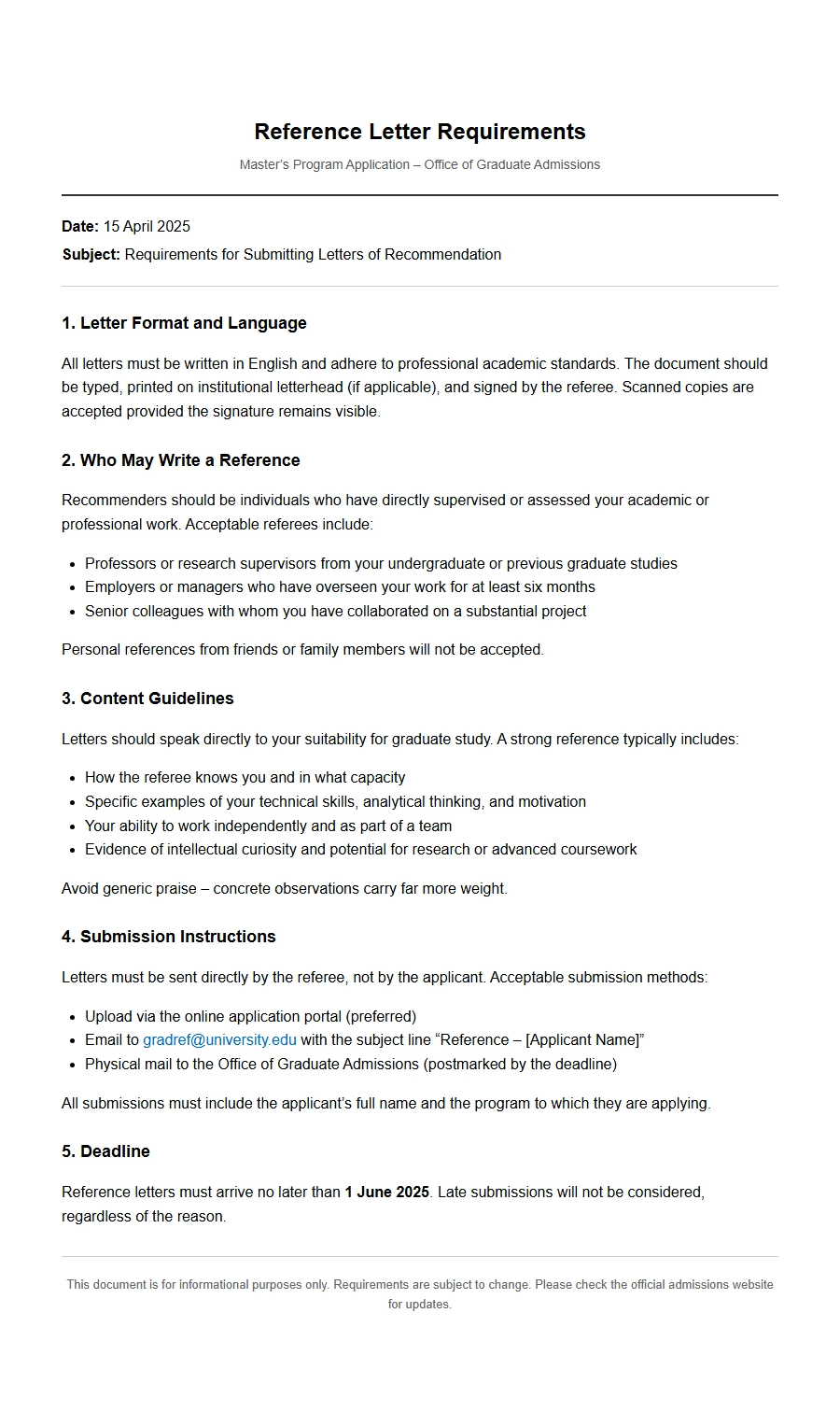 Master's Program Reference Letter Requirements
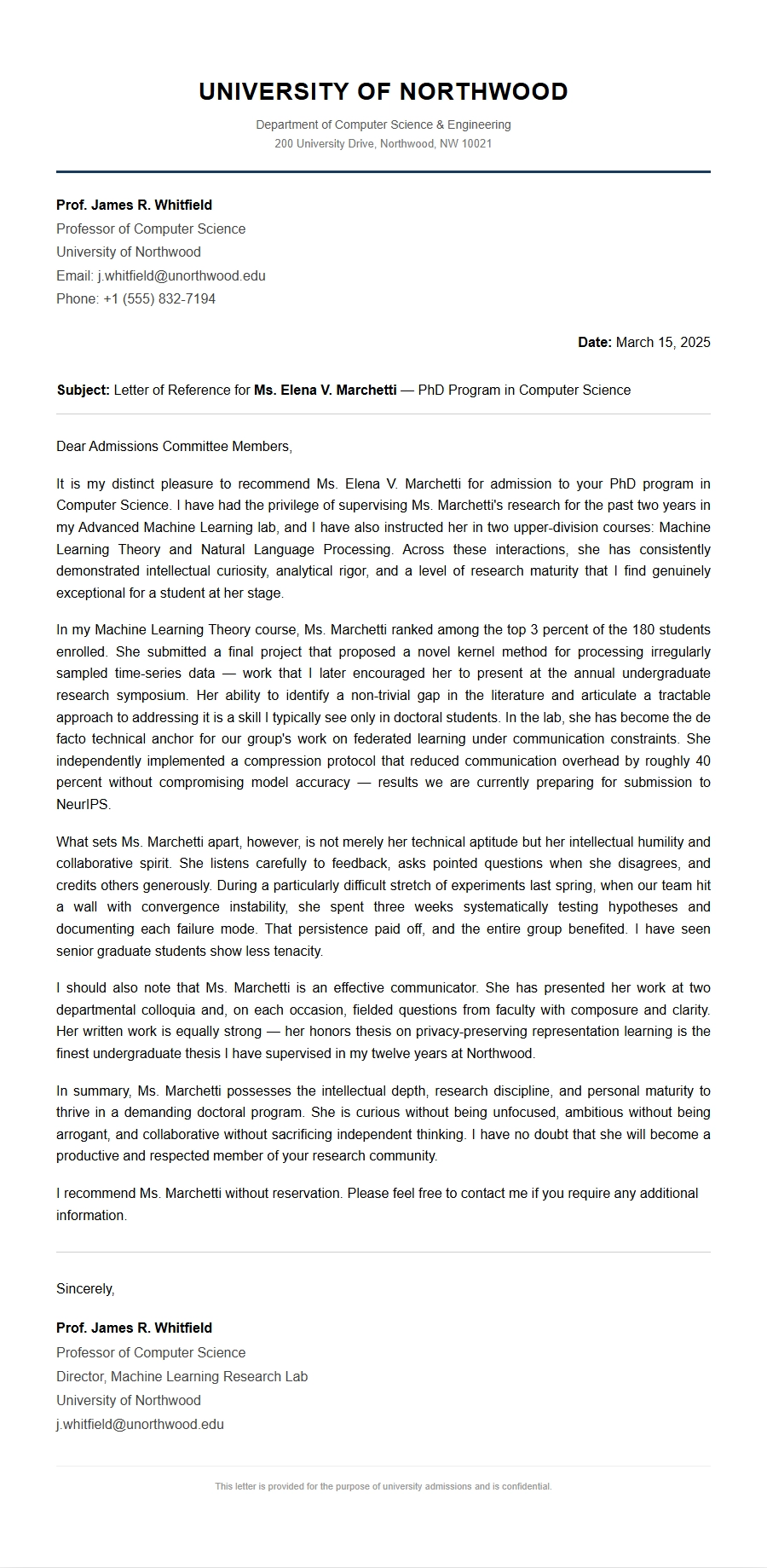 The Perfect Structure for a University Reference Letter
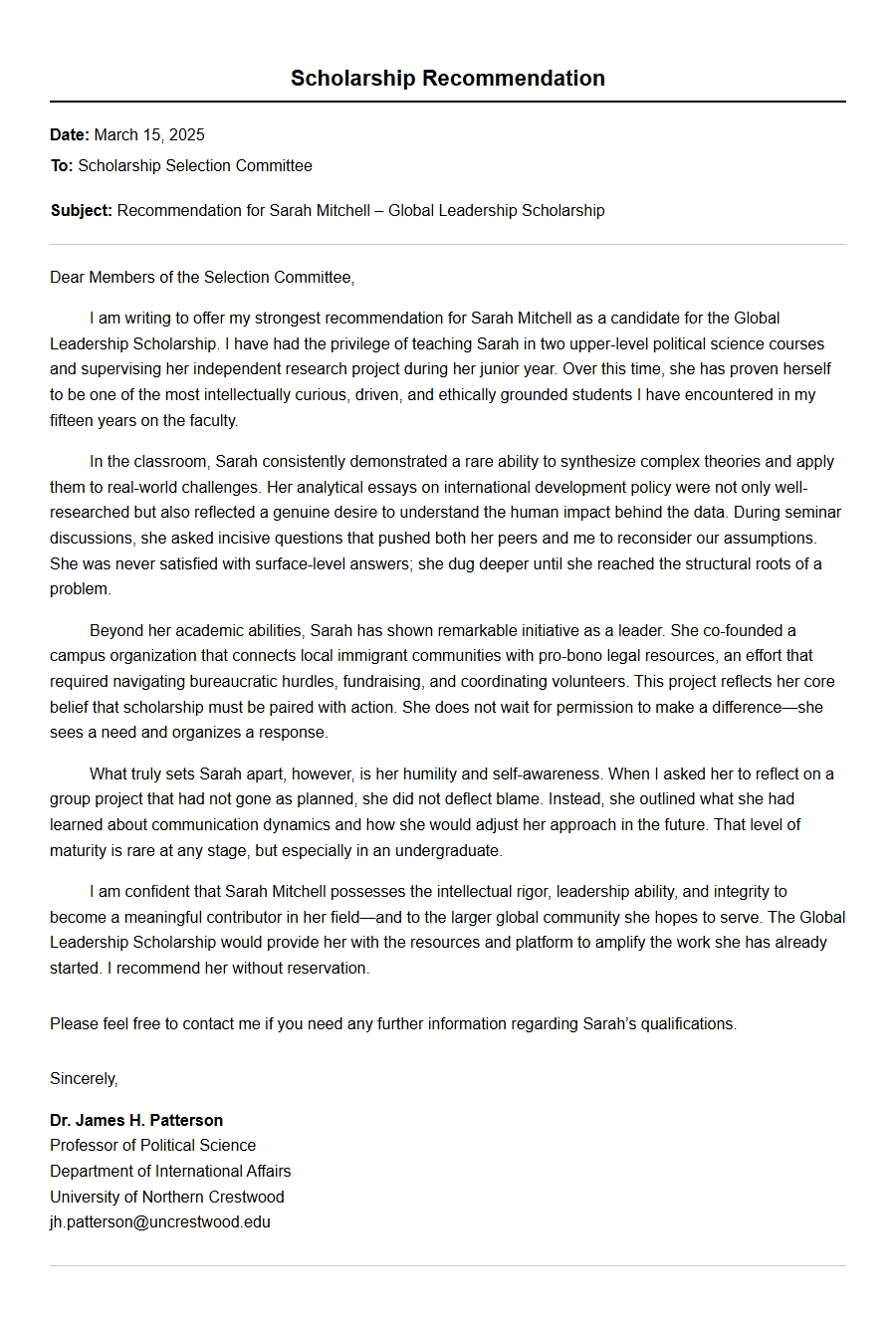 scholarship essay recommendation portion - Recommendation Letters
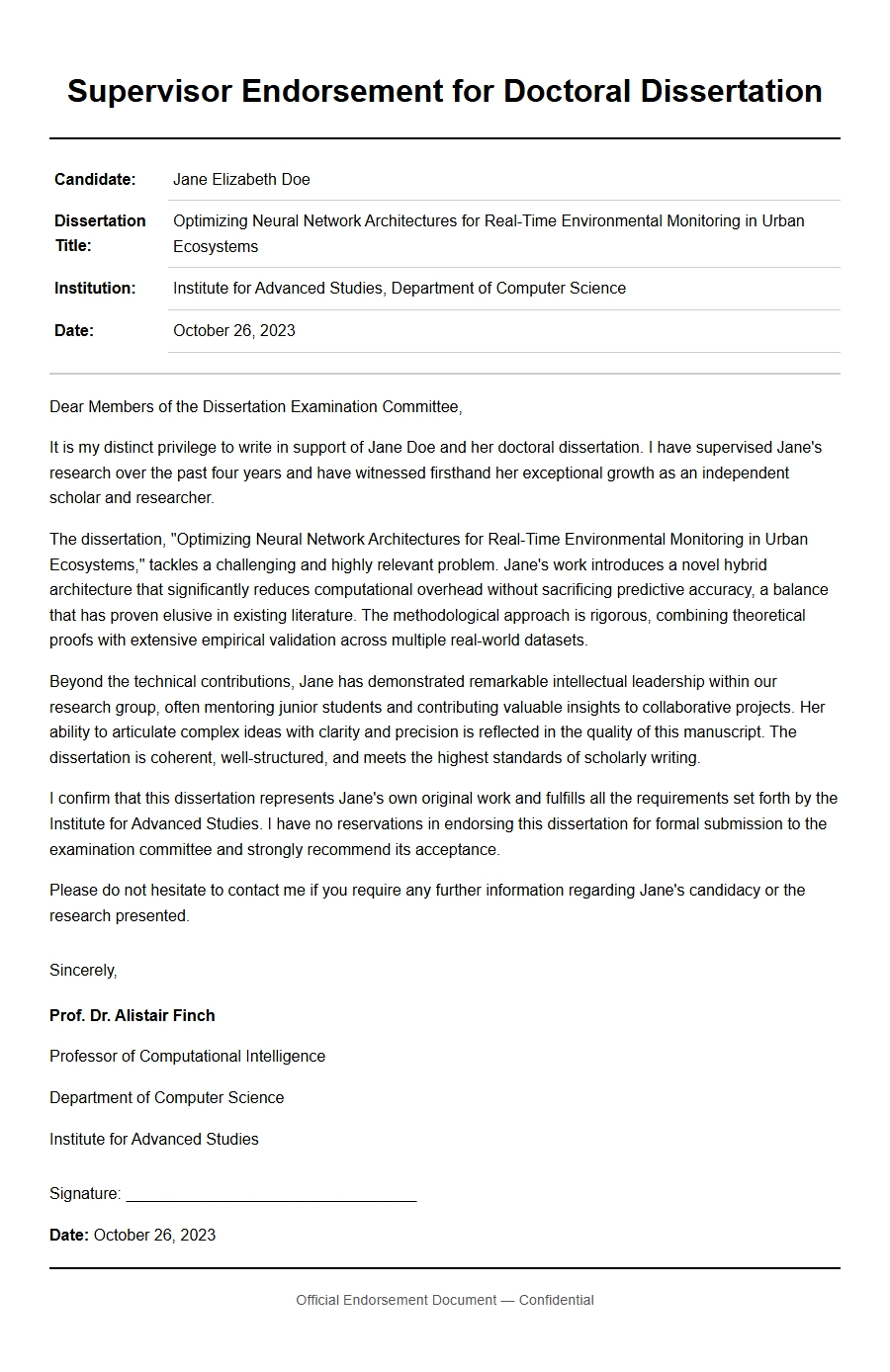 Sample PhD Supervisor Endorsement Letter
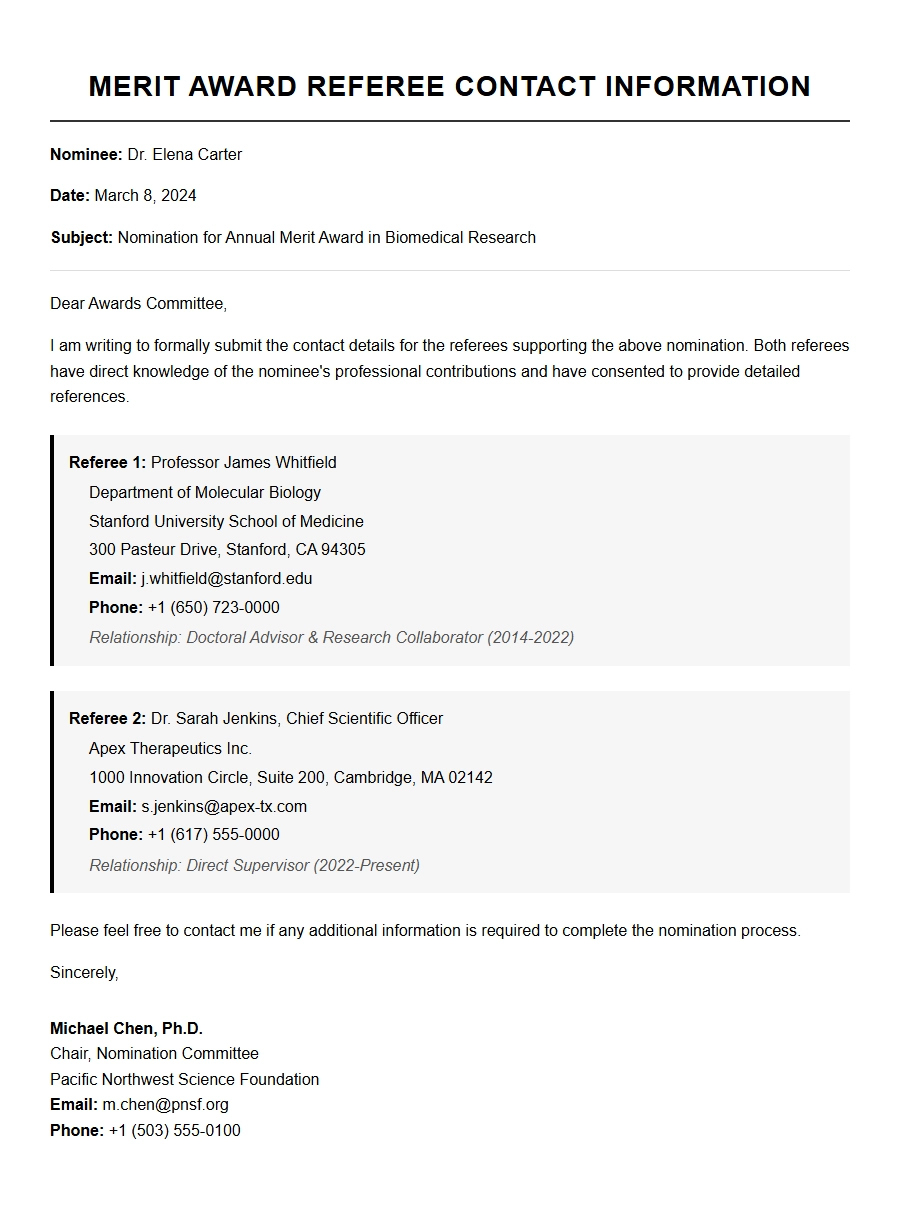 How to Find Your Merit Award Referee Contact Info
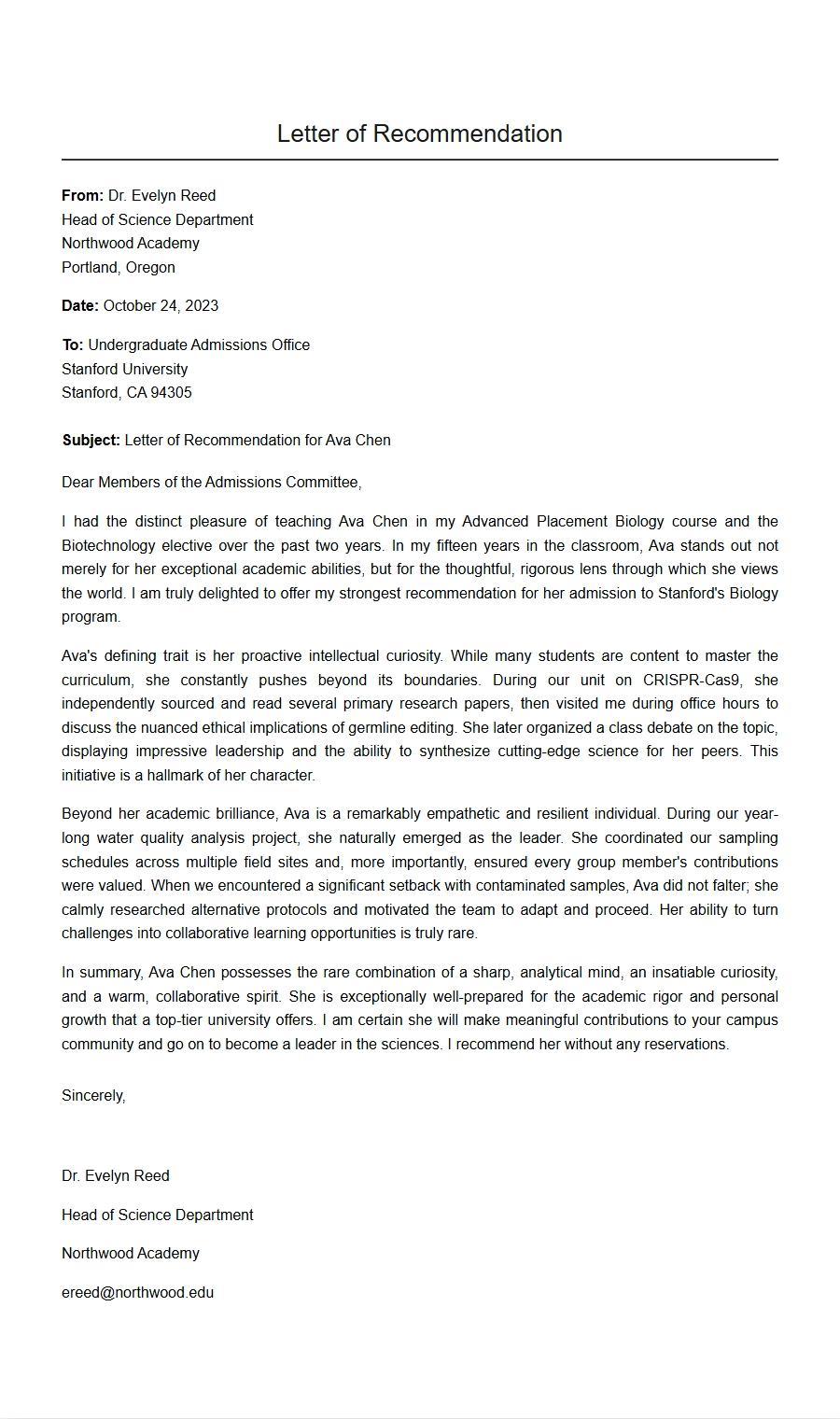 college application recommendation letter example - Recommendation Letters