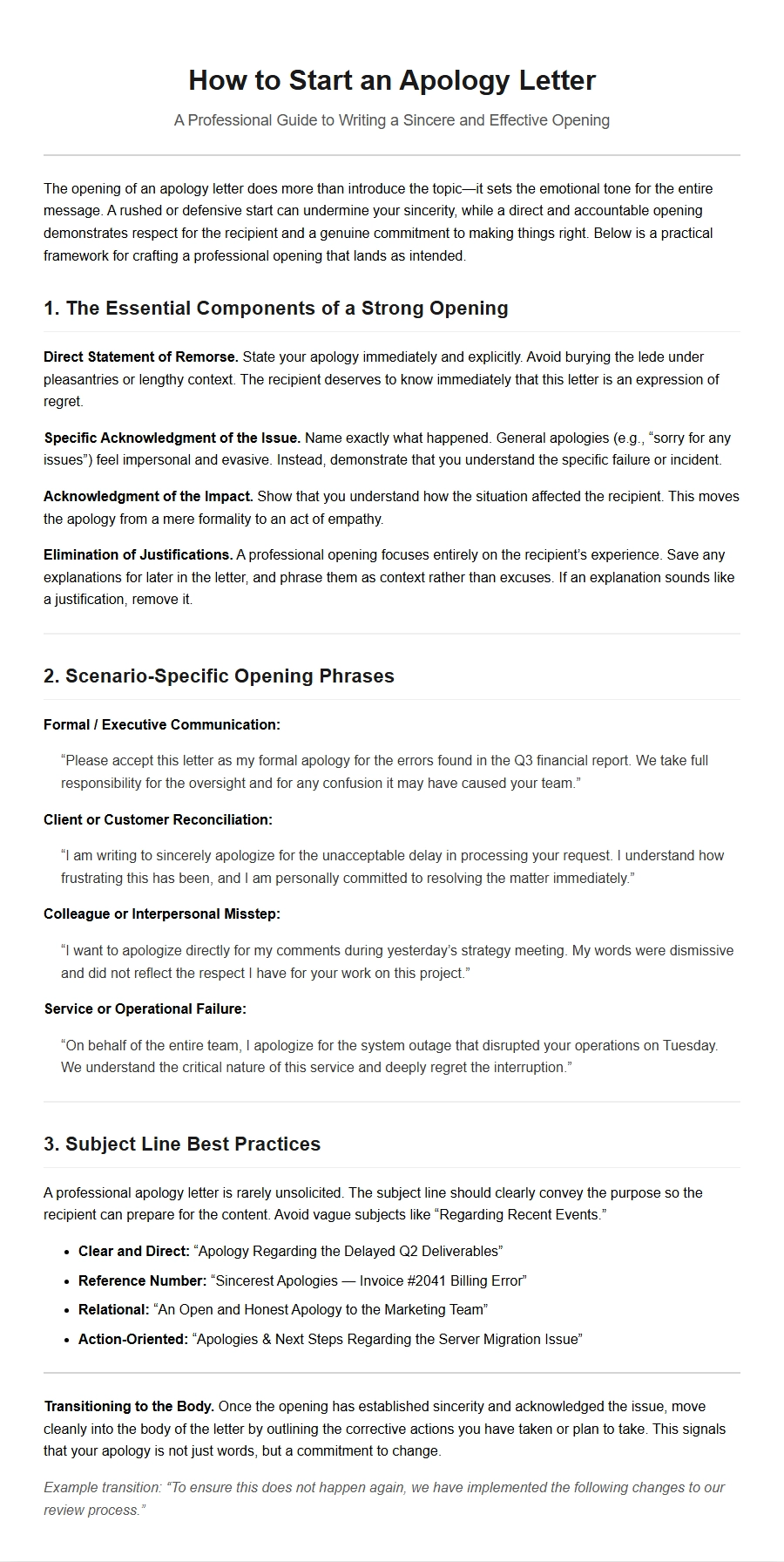
Staring at a blank page when you need to write a professional apology letter can feel paralyzing—but the right sample turns that anxiety into a confident, polished draft in minutes. You’re not alone if you’ve ever typed “I’m sorry” then deleted it ten times. The trick is to know how to start an apology letter professionally, without sounding robotic or insincere.
Let’s be clear: using a letter template isn’t cheating. It’s a smart time-saver that gives you structure, polished phrasing, and a proven format. A good sample acts like training wheels—you still steer and pedal. You just don’t have to worry about getting the basic shape wrong first. Once you know the framework, you can focus on making the apology feel genuine.
What makes the start of a professional apology work?
Your opening sets the tone for everything that follows. In professional correspondence, you want to acknowledge the mistake or offense directly, but without groveling or making excuses. A common mistake is jumping into a long explanation before saying “I’m sorry.” That can sound like you’re defending yourself, not apologizing.
Instead, try this pattern: a respectful salutation, a clear statement of regret, and a brief context for what happened. For example: “Dear Ms. Chen, I am writing to sincerely apologize for the oversight in the quarterly report I submitted on Friday.” This is direct, professional, and opens the door for you to explain how you’ll fix it.
Ever received a letter that felt too stiff or too casual? That’s where tone in writing matters. If you normally email colleagues informally, a formal printed apology might seem out of place. Match your tone to your relationship and the medium. A digital letter format can be slightly less formal, but still keep letter writing etiquette in mind—always use a proper salutation and closing.
How to adapt a sample without losing your voice
You find a resignation letter sample or a cover letter examples page, and it looks perfect. But you can’t just copy-paste. First, read through and underline the parts that feel true to your situation. Then rewrite them in your own words. Keep the letter structure intact—salutation, body, closing—but change specifics like the reason for the mistake or the steps you’re taking.
One quick tip: customize the opening paragraph to grab attention. Instead of “I am writing to apologize for my error,” say “I am writing to apologize for the error in last week’s invoice, which caused a delay in your payment.” That shows you understand exactly what went wrong. Formal writing tips suggest being specific without being verbose.
Common mistakes? Using outdated salutations like “Dear Sir” when you know the recipient’s name, or ignoring formatting differences between printed and email apologies. If you’re sending via email, the subject line should clearly state “Apology” or “Sincerest apologies.” For printed letters, consider letterhead design that matches your company’s business letter format.
Mistakes to avoid when starting your apology
The biggest error is starting with an excuse. Don’t write “I’m sorry, but I was overwhelmed with other projects.” That “but” negates the apology. Instead, own the mistake first, then later explain context if needed. Another pitfall: using passive language like “mistakes were made.” Be direct: “I made a mistake.”
Also, watch your salutation and closing. For a formal apology, “Sincerely” or “With deepest regrets” works. For someone you know well, “Best regards” or “Warmly” might fit. If you’re unsure, err on the side of formality. You can always soften the tone in the proofreading letter stage—read it aloud to hear if it sounds natural.
Making the sample work for your specific situation
Not all apologies are the same. Apologizing to a customer for a delayed shipment differs from apologizing to a boss for missing a deadline. Choose a sample that matches your context. A letter of recommendation is obviously not helpful, but a cover letter examples site might have templates for professional apologies buried in their resources. Look for samples labeled “business apology” or “formal apology.”
If you’re writing to request something like a RSVP for a home gathering or a power of attorney document, the same principle applies: adapt the sample’s opening to suit your need. The key is to keep the core respectful and clear.
Your next step: use the sample as a springboard
Don’t treat the sample as the final product. Treat it as a first draft that needs your personality. After you’ve written your apology, set it aside for an hour, then come back and read it with fresh eyes. Does it sound like you? Would you accept this apology if you were the recipient? If not, tweak the opening until it feels both professional and personal.
Practice makes this process faster. The more you write, the less you’ll need to lean on samples. But even seasoned professionals appreciate a good template now and then. Print out a few samples, keep them in a folder, and next time you’re staring at a blank page, you’ll know exactly where to start.
Extra Samples
How to Start an Apology Letter Professionally
Professional Apology to a Supervisor for a Missed Deadline
I am writing to sincerely apologize for missing the deadline on the quarterly report. I understand that this delay has impacted the team’s workflow and caused unnecessary stress. There is no excuse for my oversight, and I take full responsibility for the lapse in my time management.
The factors that contributed to this error were:
Underestimating the time needed for data validation
Failing to communicate my progress early enough
Not prioritizing the task as I should have
To prevent this from happening again, I have already set up a stricter schedule with daily check-ins and I will provide weekly status updates to you. Please accept my apologies and I am ready to discuss how I can make up for the lost time. I value your guidance and am committed to earning back your trust.
Next steps: I will have the report completed by tomorrow noon. Thank you for your understanding.
Sincere Apology to a Friend for an Overreaction
I need to start by saying I am deeply sorry for the way I reacted during our conversation yesterday. My words were harsh and completely uncalled for, and I regret the hurt I caused you. You have always been there for me, and my outburst was unfair and disrespectful.
Looking back, I realize I was stressed about work and I took it out on you, which was wrong. You deserve better from a friend. I value our friendship more than anything, and I never want a moment of frustration to damage what we have built over the years.
I hope you can forgive me. I am ready to listen whenever you feel comfortable talking. In the meantime, I will reflect on my behavior and work on managing my emotions more constructively. Please know that my apology comes from the heart, and I am grateful for your patience.
Formal Apology to a Client for a Service Error
Please accept our sincere apologies for the billing error that appeared on your last invoice. We pride ourselves on accuracy, and we clearly fell short in this instance. The mistake was due to an internal miscommunication between departments, and it has already been corrected.
Here is a summary of the adjustment made to your account:
Charge
Original Amount
Corrected Amount
Consulting fee (August)
$2,500
$2,100
Late fee (incorrectly applied)
$50
$0
We have also issued a credit of $100 for your next invoice as a gesture of goodwill. To prevent future errors, we are implementing a double-check system on all invoices before dispatch. Thank you for bringing this to our attention and for giving us the chance to make it right. We value your partnership and look forward to continuing to serve you.
Apology to a Colleague for Taking Credit
I am writing to apologize for mistakenly taking full credit for the proposal you helped shape. During the team meeting, I should have explicitly mentioned your contributions, and I regret that I did not. Your input on the financial projections and risk analysis was critical to the project’s success.
To set the record straight, I have already spoken with our manager and clarified your role. I have also sent an email to the entire team acknowledging your work. I know that words alone cannot undo my mistake, but I am committed to ensuring this never happens again. Moving forward, I will always highlight team efforts and give proper attribution.
I value your collaboration and I hope we can continue to work together effectively. Please let me know if there is anything else I can do to make amends.
Apology to a Family Member for a Broken Promise
I am so sorry for not showing up to your birthday dinner last Saturday. I know how much that celebration meant to you, and my absence was disappointing and hurtful. There is no good excuse—I lost track of time while finishing a work project, and I should have called you earlier.
You always make time for me, and I failed to return that love and consideration. I promise to be more present and to communicate better in the future. I have already blocked the weekend of your next event in my calendar and set multiple reminders.
To show how sorry I am, I would like to treat you to dinner this Friday—just the two of us, no work distractions. Your forgiveness would mean the world to me. Thank you for understanding and for being such a patient and wonderful part of my life.
Apology to a Mentor for Not Following Advice
I want to apologize for not following your career advice regarding the job offer last month. You spent time explaining the risks and benefits, and I chose to ignore your guidance, which led to a difficult situation. Your advice was well‑intended and based on experience I should have respected.
I now see that I was too hasty and overconfident. Specifically, I neglected to negotiate the role’s responsibilities and ended up in a position that does not fit my skills. I have learned a hard lesson about listening to those who have my best interests at heart.
I value your mentorship greatly and I hope you can forgive my stubbornness. I am ready to learn from this mistake and will be more open to your suggestions in the future. Thank you for continuing to support me despite my errors.
Apology to a Neighbor for Noise Complaint
I am writing to apologize for the loud music last Saturday night. I know it disturbed your peace and that you asked us to keep it down earlier in the evening. I take full responsibility for not respecting your request and for the inconvenience it caused you and your family.
We were celebrating a birthday, but that does not excuse the noise. I have since reminded everyone in my household about the building’s quiet hours policy and we have agreed to set a volume limit after 10 PM. I also bought a pair of headphones for late‑night movie watching.
If you ever have an issue again, please feel free to knock or leave a note—I will respond immediately. I value the friendly relationship we have and I hope this does not affect that. Thank you for your patience and for accepting my apology.
Apology to a Volunteer Group for Tardiness
I sincerely apologize for arriving 45 minutes late to the clean‑up event yesterday. I understand that every volunteer’s time is valuable, and my lateness put extra pressure on the team. The reason was a traffic jam, but I should have left earlier knowing the area is busy on weekends.
I have already spoken to the event coordinator to offer an extra shift next month as a way to make up for my poor time management. Below are the tasks I missed and the hours I will contribute:
Morning registration setup (missed 1 hour) – will cover afternoon cleanup on Oct 15
Trash sorting (missed 30 min) – will lead sorting session on Oct 22
I am committed to punctuality going forward and I appreciate your understanding. The group’s mission matters to me, and I will do better to respect everyone’s commitment. Thank you for the chance to apologize personally.
Apology to a Romantic Partner for Being Distant
I need to apologize for how distant I have been the past two weeks. I have been preoccupied with work and I allowed stress to shut me off from you. That was unfair, and I am sorry for making you feel ignored and unimportant.
You deserve my full attention and affection, especially when I am overwhelmed. I realize now that pushing you away only made things worse. I have decided to set clearer boundaries with work hours and to dedicate our evenings to us—no phones, no emails.
I love you and I miss the closeness we share. I hope you can forgive my behavior and give me a chance to reconnect. This weekend, I want us to do something just for fun, whatever you choose. Thank you for your patience and for still being here.
Apology to a Teacher for Late Assignment Submission
I am writing to apologize for submitting my term paper two days late. I understand that deadlines are important for fair grading and course planning, and my tardiness disrupted the schedule. The delay was caused by an unexpected family emergency, but I should have informed you earlier rather than remaining silent.
Here is what I have done to address the situation:
Sent you a brief email on the due date explaining the situation (though I did not follow up properly)
Completed the paper yesterday and attached it to this message
Accepted the late penalty as per the syllabus without question
I value your class and the knowledge you have shared. I assure you this will not happen again. I have already set backup reminders and a personal rule to submit work 24 hours before the deadline. Thank you for your understanding and for your continued teaching.
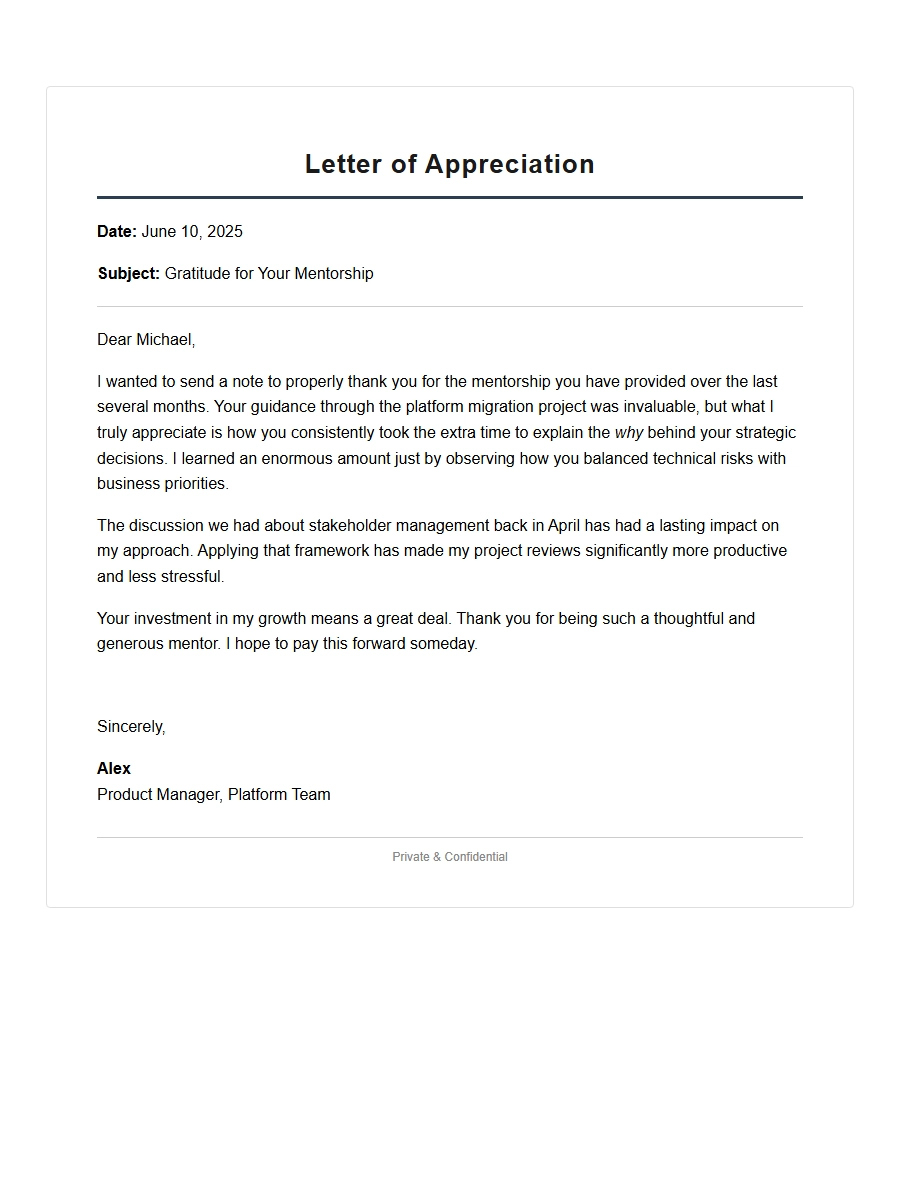 Thanking a Mentor for Guidance: Sample Messages
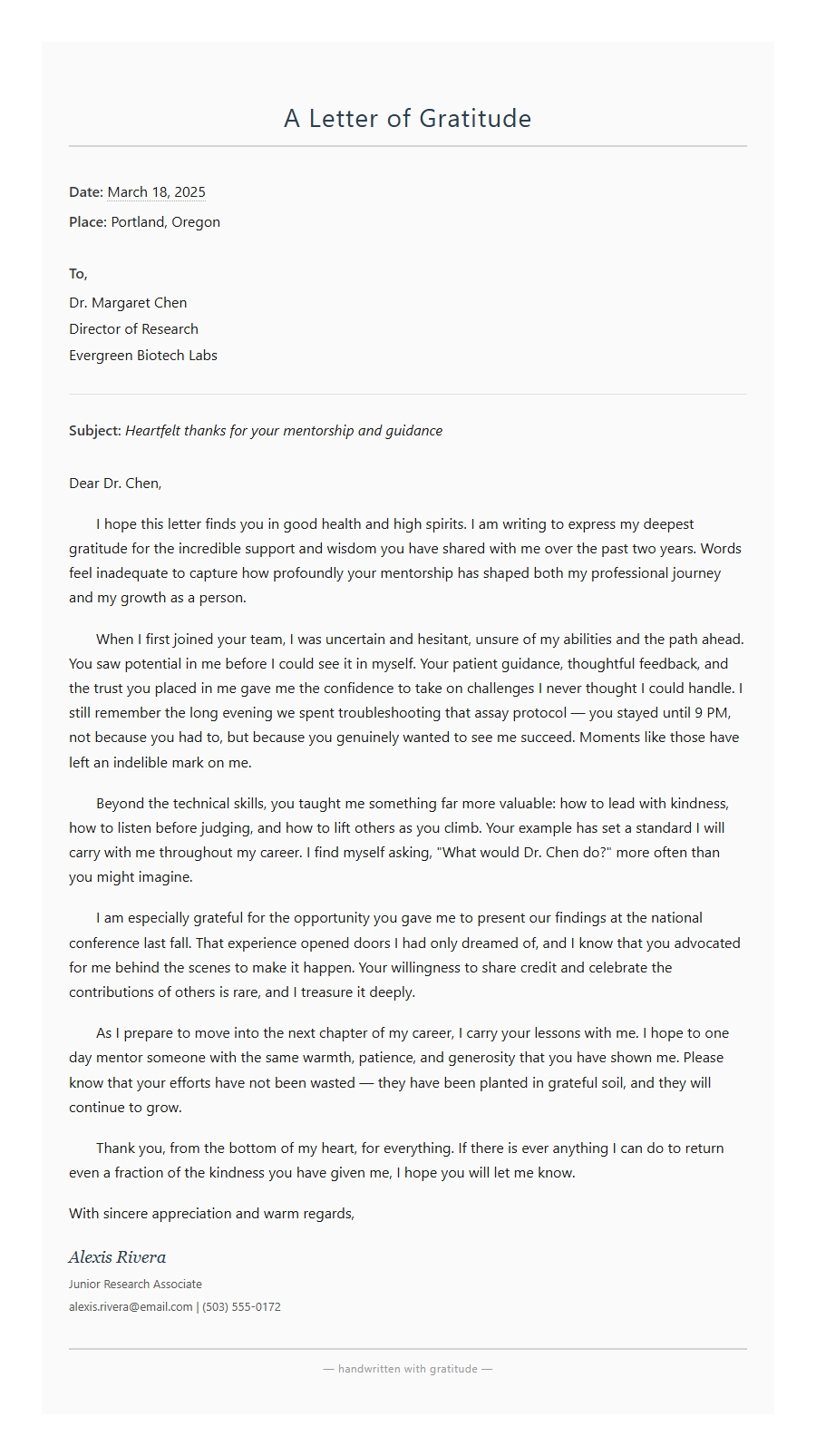 Expressing Gratitude: Handwritten Letter Example
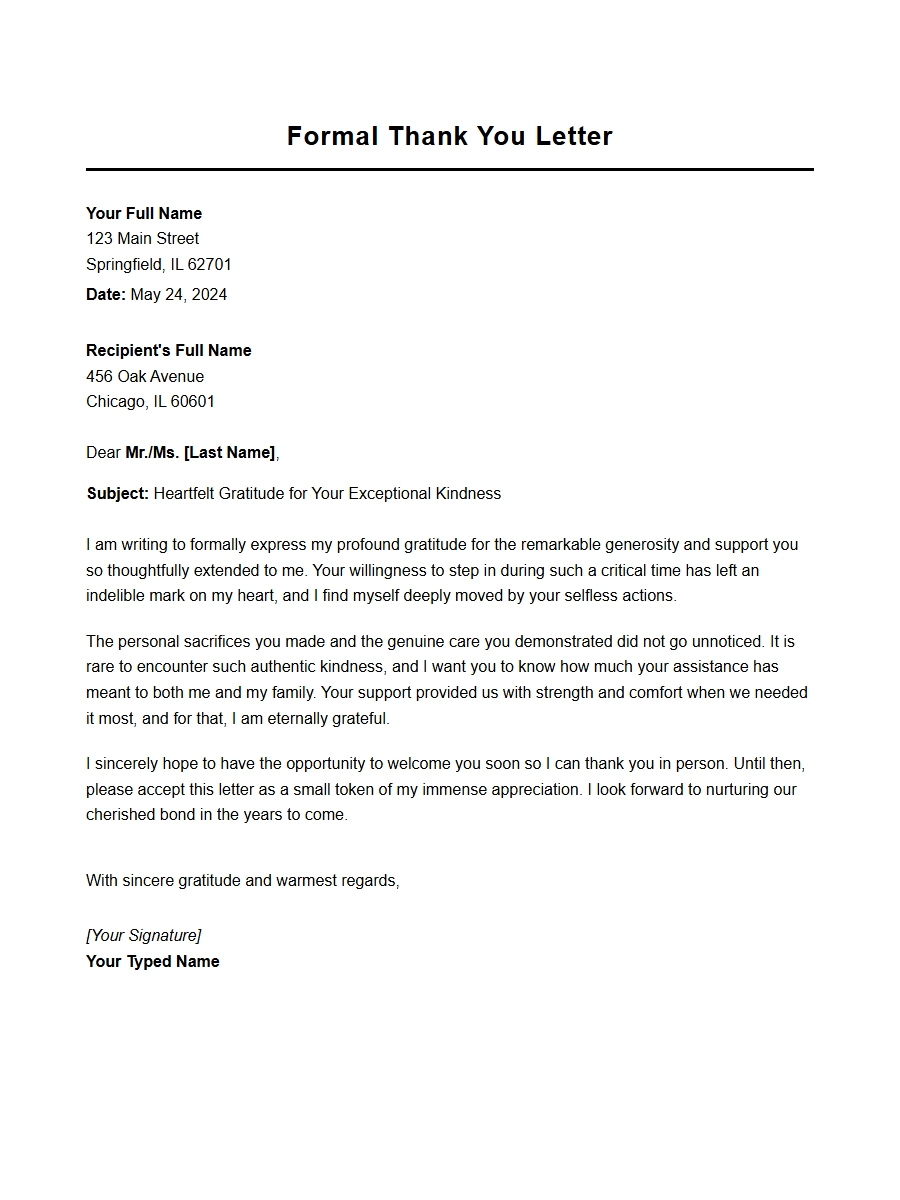 Expressing Thanks in a Formal Personal Letter
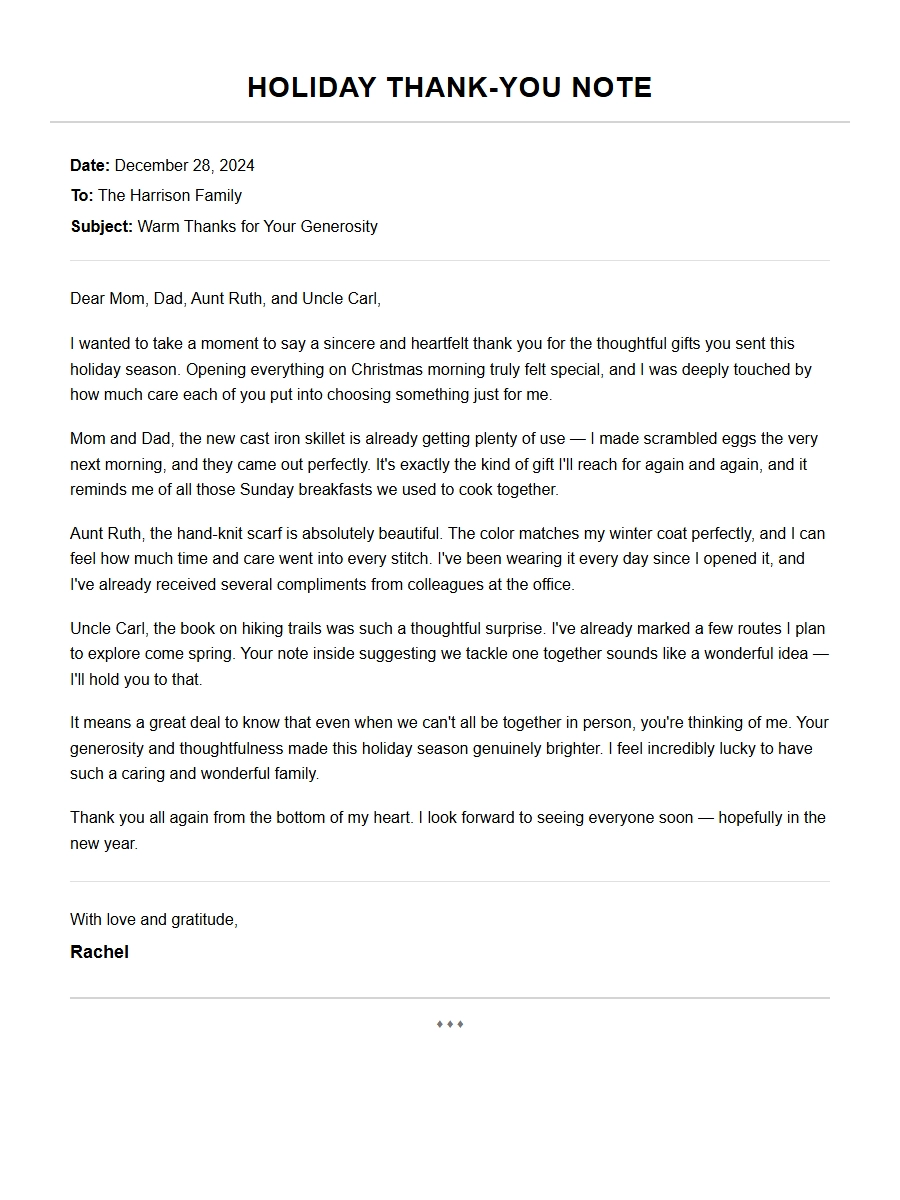 Thank You Letter Examples for Family Holiday Gifts
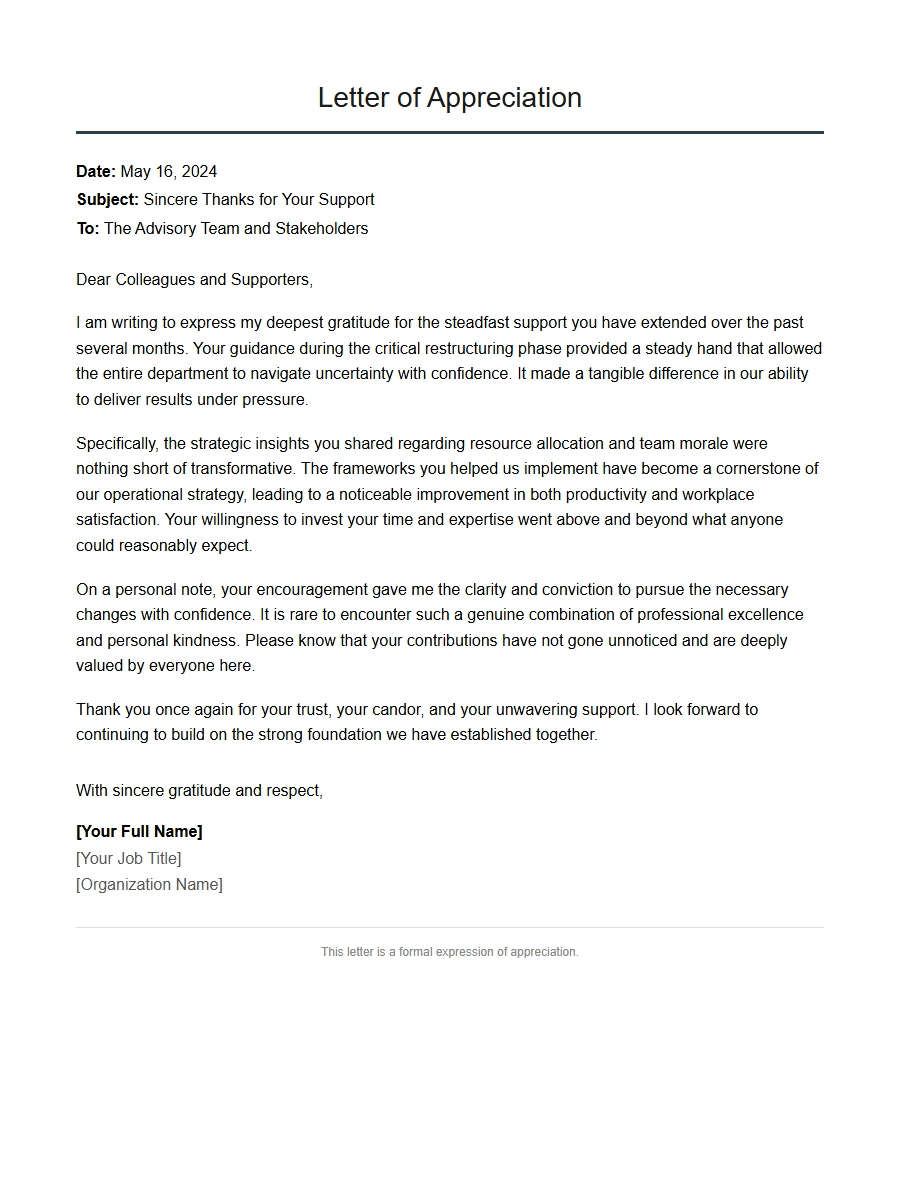 Sample Thank You Letter for Support
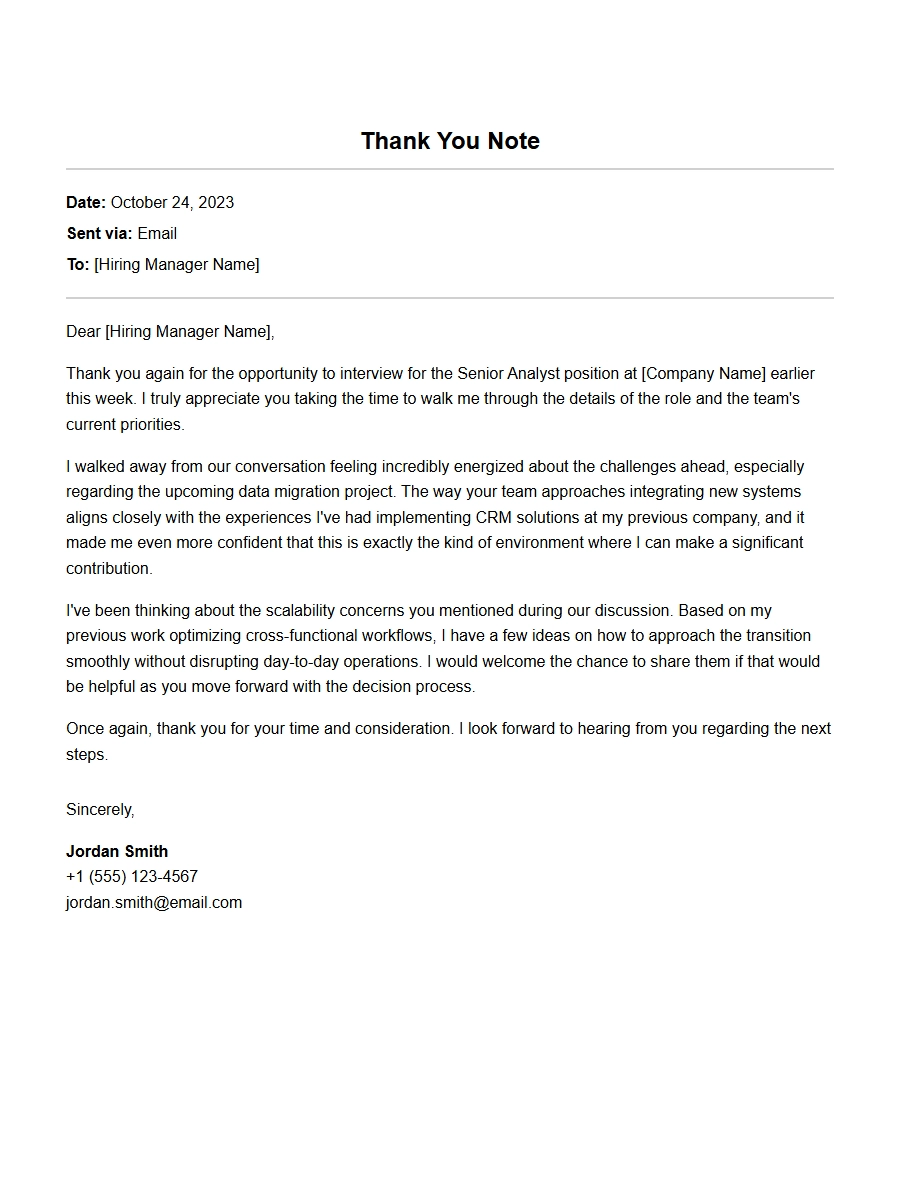 How to Write a Personal Thank-You Note After an Interview