You had people over, cooked a meal, and now you want to say thanks. Maybe you’re the guest who needs to send a note. Or maybe you hosted and want to acknowledge someone who brought a dish or helped clean up. Either way, a short thank you letter for hosting a dinner party is simple to write—once you know what to say.
A good sample gives you a starting point. It shows you the structure: a warm opening, a specific mention of what you enjoyed, and a closing that feels natural. The tone matters too. A formal dinner party might call for a slightly more polished note, while a backyard barbecue with friends works better with casual, grateful language. The key is matching your letter to the occasion.
Why use a sample for your thank you note?
Using a sample isn’t cheating. It saves time and gives you a framework so you don’t start from scratch. You get the basic letter structure, the right salutation and closing, and a few phrases you can tweak. The best part? You make it personal. Change the details, add a line about a specific conversation, or mention the dessert you loved. That turns a generic template into a genuine note.
What to include in a thank you for hosting dinner party letter
Think about what made the evening memorable. Was the food excellent? Did you meet new people? Did the host go out of their way to make you comfortable? Mention one or two specifics. This shows you paid attention and aren’t just sending a form letter.
Here’s a quick structure that works for most situations:
Greeting: Use the host’s name. “Dear Sarah” or “Hi Mark and Jen” depending on how close you are.
Opening line: Thank them directly for the invitation and hospitality.
Body: Share something specific you enjoyed. The lasagna, the garden seating, the playlist—anything that felt personal.
Closing: Express a hope to return the favor or see them soon. End with a warm sign-off like “With thanks” or “Warmly.”
If you’re writing as the host to thank a guest for a gift or help, the same structure works. Just swap the gratitude: “Thanks for bringing that amazing wine” or “I really appreciated you helping with the dishes.”
Common mistakes to avoid in dinner party thank you letters
Ever received a note that felt too stiff or too casual? That happens when the tone doesn’t match the relationship. For a formal dinner with colleagues, stick to professional correspondence norms. For a close friend, you can be more relaxed.
Another mistake is forgetting to proofread. A typo in a thank you note can feel careless. Read it once before sending. Also, don’t forget the format. An email works fine for most situations, but a handwritten card for a more formal dinner feels thoughtful. If you’re sending a digital letter, keep the digital letter format clean—no weird fonts or long blocks of text.
Adapting a sample without losing your voice
When you find a letter template you like, change it to sound like you. If you’re naturally funny, add a light joke. If you’re more reserved, keep it sincere and simple. The sample gives you the bones; you add the personality.
For example, a customizable letter might start: “Thank you so much for having us over last Saturday.” That works. But you could say: “We’re still talking about your roasted chicken. Thank you for such a wonderful evening.” See the difference? Both are polite, but the second one feels personal and real.
What about thanking a guest for organizing a dinner?
Maybe you didn’t host, but you want to thank someone who coordinated a group dinner at a restaurant or organized a potluck. The same principles apply. Be specific. Mention the venue or the effort they put in. A quick email or text works, but a short note leaves a stronger impression.
If you’re writing to someone who went out of their way—like a friend who planned a surprise birthday dinner—take a little extra time to make the letter heartfelt. That’s when letter writing etiquette really matters. A few sincere sentences can mean a lot.
Use a thank you note as a springboard
Don’t overthink it. Writing a thank you letter for hosting a dinner party gets easier with practice. The first one takes the longest. After that, you’ll have a sense of what to say and how to say it. A good sample helps you start, but your own words make it meaningful.
Next time you need to write a dinner party thank you, grab a sample, make it yours, and send it fast. Your host will appreciate the thought, and you’ll feel good knowing you handled it well.
Useful Formats
Thank You Message for Dinner Party Hosting
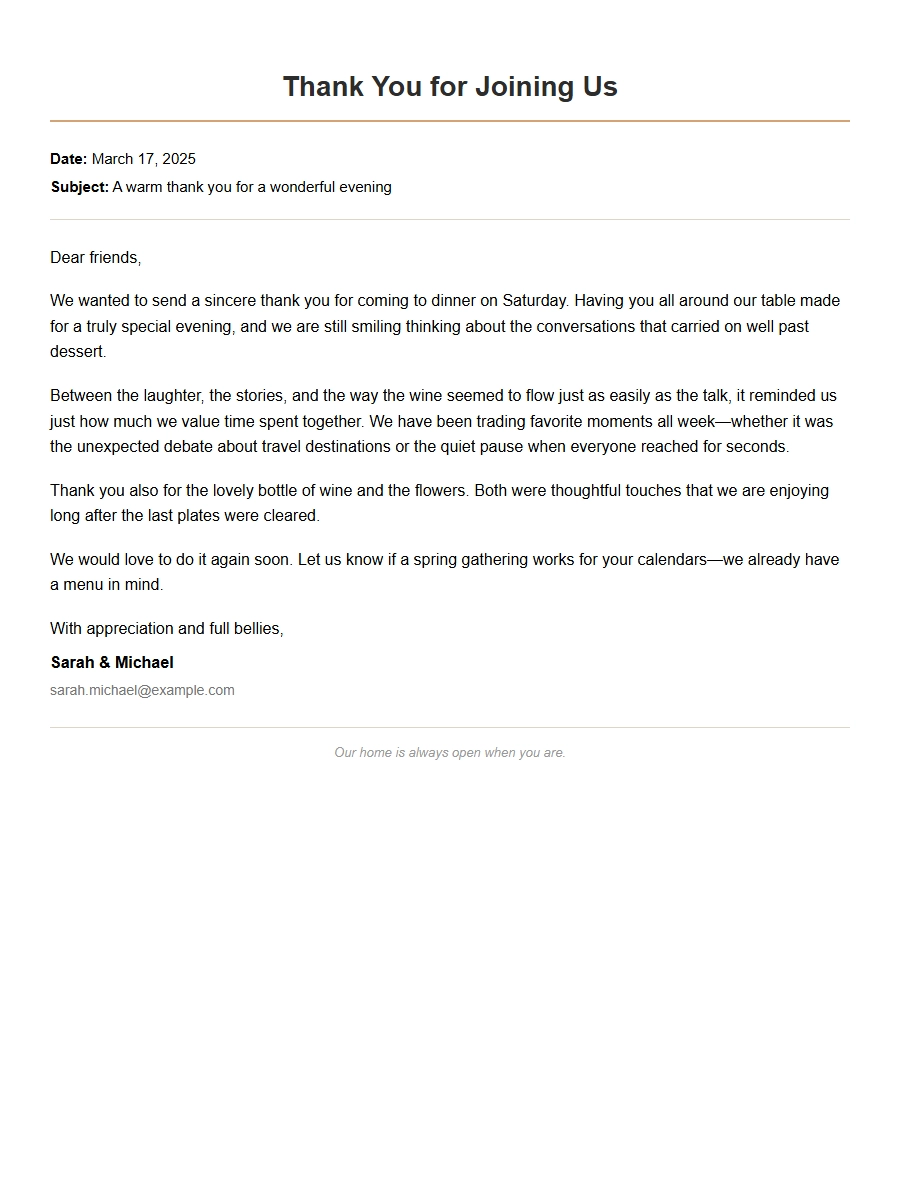
Thank You for a Wonderful Evening
Dear Sarah and Mark,
Thank you so much for hosting last Saturday’s dinner party. Everything from the warm ambiance to the carefully prepared menu made it an unforgettable evening. We especially loved the roasted lamb and the chocolate lava cake—you both outdid yourselves.
It was a pleasure catching up with everyone. I’ve listed a few highlights that made the night so special:
Your thoughtful seating arrangement that sparked lively conversations
The perfectly paired wine with each course
The beautiful table setting with fresh flowers
We feel so lucky to have friends like you who open their home so graciously. Please let us return the favor soon. Until then, warmest thanks again.
With gratitude, Emily and James
Gratitude for Your Hospitality
Dear Linda,
I’m writing to express my sincere thanks for hosting such a delightful dinner party. Your hospitality made everyone feel immediately at ease. The appetizers were exquisite, and the roasted vegetables were a highlight for me.
I particularly appreciated how you introduced each guest, helping us connect beyond surface-level chat. The evening flowed beautifully, thanks to your careful planning.
Below are the dishes I’m still dreaming about:
Course
Dish
My Rating
Starter
Smoked salmon bruschetta
Excellent
Main
Herb-crusted chicken
Outstanding
Dessert
Lemon tart
Perfect
Thank you again for your generosity. I can’t wait to host you next time!
Best, Rachel
Appreciating the Delicious Dinner
Dear Tom and Anna,
What an incredible dinner party you threw! The moment we walked in, the aroma of garlic and herbs promised a special evening—and you delivered. Every course was a masterpiece, especially the mushroom risotto and the tiramisu.
Your ability to manage multiple conversations while ensuring everyone’s glass was full (and their plate even fuller) is admirable. Thank you for including me in the seating near the fireplace—it was cozy and conducive to great stories.
Please find a quick summary of what I enjoyed most:
The warm welcome at the front door
Your fascinating travel stories from Italy
The perfect balance of savory and sweet flavors
The way you gracefully accommodated my dietary needs
I’m truly grateful. Looking forward to our next gathering!
Yours, Chris
Thanks for Hosting Our Group
Dear Julia and Richard,
Thank you for opening your home to our entire book club last Friday. The evening was a perfect blend of stimulating discussion and delicious food. We all felt so welcome.
I know hosting nine people is no small feat, yet you managed it with such ease and warmth. The buffet-style dinner allowed everyone to mingle freely, and the playlist in the background was spot-on.
To give you a sense of how much we appreciated everything, here’s a quick rundown from the group:
Guest
Favorite Moment
Favorite Dish
Maya
Conversation about the book’s ending
Butternut squash soup
Leo
Tour of your garden
Grilled salmon
Priya
Watching the sunset from your deck
Chocolate mousse
Thank you again for your generosity. We’ll take turns hosting next time, but you’ve set a high bar!
Warmly, David
A Note of Thanks for the Gathering
Dear Helen,
I wanted to send a quick note to thank you for the lovely dinner party last night. Your new home is beautiful, and the way you decorated the dining room made the evening feel extra special.
The roast beef was cooked to perfection, and I still can’t believe you made that decadent chocolate cake from scratch. Beyond the food, I truly enjoyed meeting your other guests. The conversation flowed naturally, thanks to your skill at bringing people together.
Here’s what I’ll remember most:
Your hilarious story about the camping trip
The homemade bread that melted in my mouth
Your thoughtful party favors—the small jar of honey
You’re a wonderful host. I’d be delighted to have you over soon. Thank you again for a memorable evening.
With appreciation, Sophie
Thank You for the Lovely Dinner Party
Dear Greg and Emma,
Thank you so much for hosting last Saturday’s dinner party. The moment we stepped in, we felt the warmth of your hospitality. The spaghetti carbonara was divine, and the wine pairing was impeccable.
We especially appreciated how you took time to ensure every guest felt included, even those who were shy at first. The evening had a wonderful rhythm—appetizers, main course, dessert, and then coffee on the patio.
Below is a quick list of what made the night perfect:
Your attention to dietary restrictions without fuss
The candlelit tablescape
Dessert: the panna cotta with berry compote
The spontaneous guitar sing-along in the living room
We left feeling full in every sense—of good food, good company, and joy. Thank you for your generosity. We look forward to reciprocating soon.
Gratefully, Nina and Paul
Grateful for Your Warm Welcome
Dear Mrs. Patterson,
Thank you ever so much for the wonderful dinner party you hosted last weekend. As a newcomer to the neighborhood, I was deeply touched by your kindness in including me. Your home felt instantly welcoming.
The roast chicken and roasted root vegetables were comforting and delicious. I especially enjoyed the story you told about the history of your dining table—it added a layer of meaning to the meal.
Please allow me to share my appreciation with this small overview:
Element
What I Loved
Welcome
Your warm hug and immediate smile
Food
Perfectly seasoned dishes
Conversation
Learning about the community
Farewell
The homemade cookies you sent home
I feel lucky to have such a gracious neighbor. I look forward to returning your hospitality soon.
With gratitude, Alex
Thanks for a Memorable Night
Dear Chris and Maria,
What a night! Thank you for hosting such a memorable dinner party. From the moment we arrived until we reluctantly left, everything was perfect. The grilled sea bass and the mango sorbet were highlights.
I was particularly impressed by how you orchestrated the evening—from the aperitifs in the garden to the cheese course after dessert. The conversation sparkled, thanks to your eclectic mix of guests.
Here’s a taste of what I’ll remember:
The breathtaking view from your terrace
Your stories from your travels to Japan
The way you made my vegetarian preference feel celebrated
The playlist—jazz standards set just the right mood
Thank you for including me. You are master hosts. I already look forward to the next invitation!
Warmest thanks, Olivia
Appreciation for Hosting and Great Company
Dear Daniel and Anne,
Thank you for a truly delightful dinner party last evening. Your hospitality is legendary, and you lived up to every bit of that reputation. The lamb tagine was aromatic and tender, and the couscous complemented it beautifully.
I’m writing not only to thank you for the food but also for the wonderful company you assembled. I had fascinating conversations with several people I’d never met before. Your ability to create a relaxed yet sophisticated atmosphere is rare.
Let me enumerate a few reasons this evening was so special:
The welcome cocktail—a creative twist on a classic
Your thoughtful naming cards that sparked conversations
The surprise dessert: baklava with homemade ice cream
The warm farewell with hugs and promises to meet again
You made everyone feel like family. Thank you again. I hope to reciprocate soon with a small gathering at my place.
With sincere thanks, Michael
Thank You for the Elegant Dinner
Dear Elizabeth,
Thank you for hosting such an elegant dinner party last Friday. Every detail, from the crisp white linens to the handwritten menu cards, reflected your impeccable taste. The beef Wellington was a triumph, and the crème brûlée was the perfect finish.
I especially appreciated how you managed the seating so that everyone had stimulating conversation. I learned so much from your other guests—the art historian and the composer were fascinating.
For the record, here are the courses that wowed us:
Course
Dish
Wine Pairing
First
Oysters with mignonette
Chablis
Main
Beef Wellington, truffled mash
Bordeaux
Dessert
Crème brûlée
Late harvest Riesling
Thank you for a night of elegance and warmth. I feel honored to have been included. I hope to one day host you with equal grace.
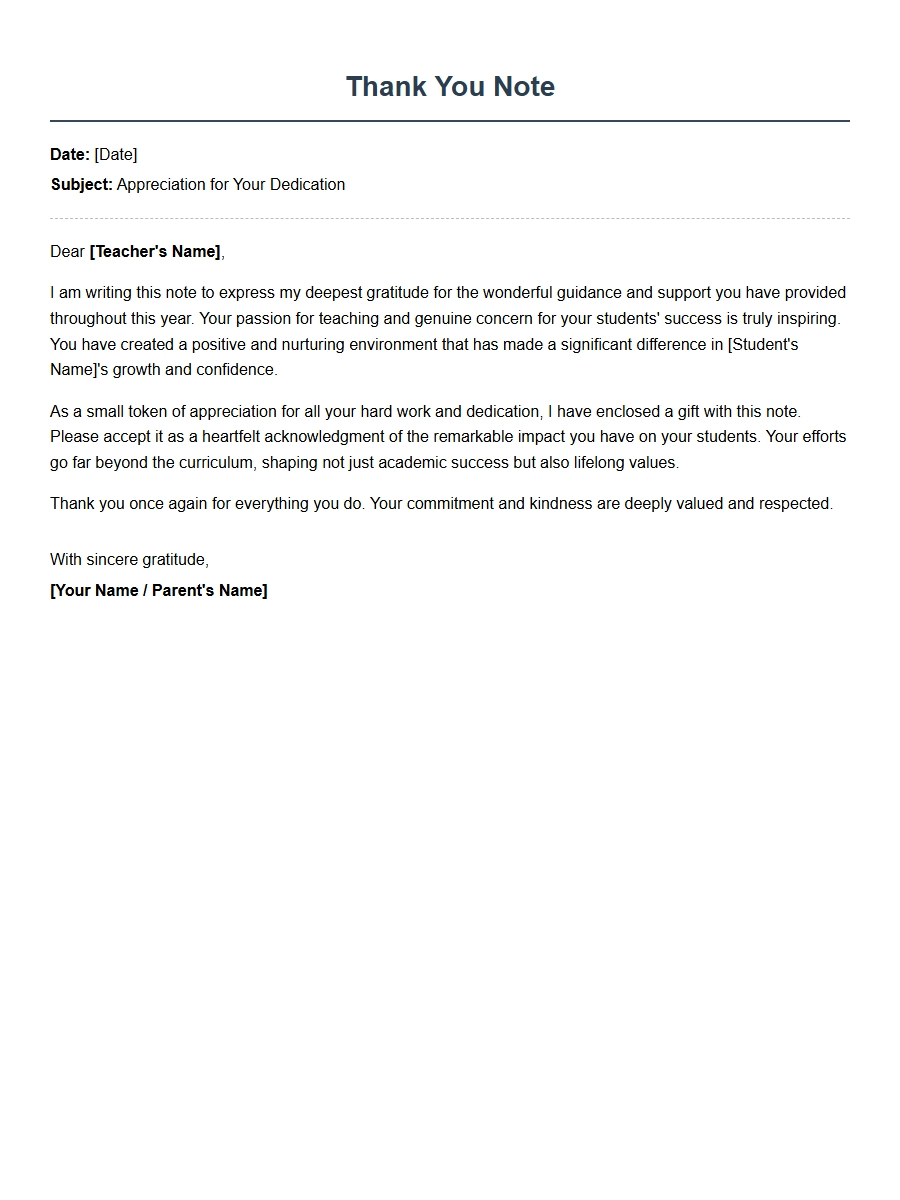 Sample Thank You Note for Teacher Gift
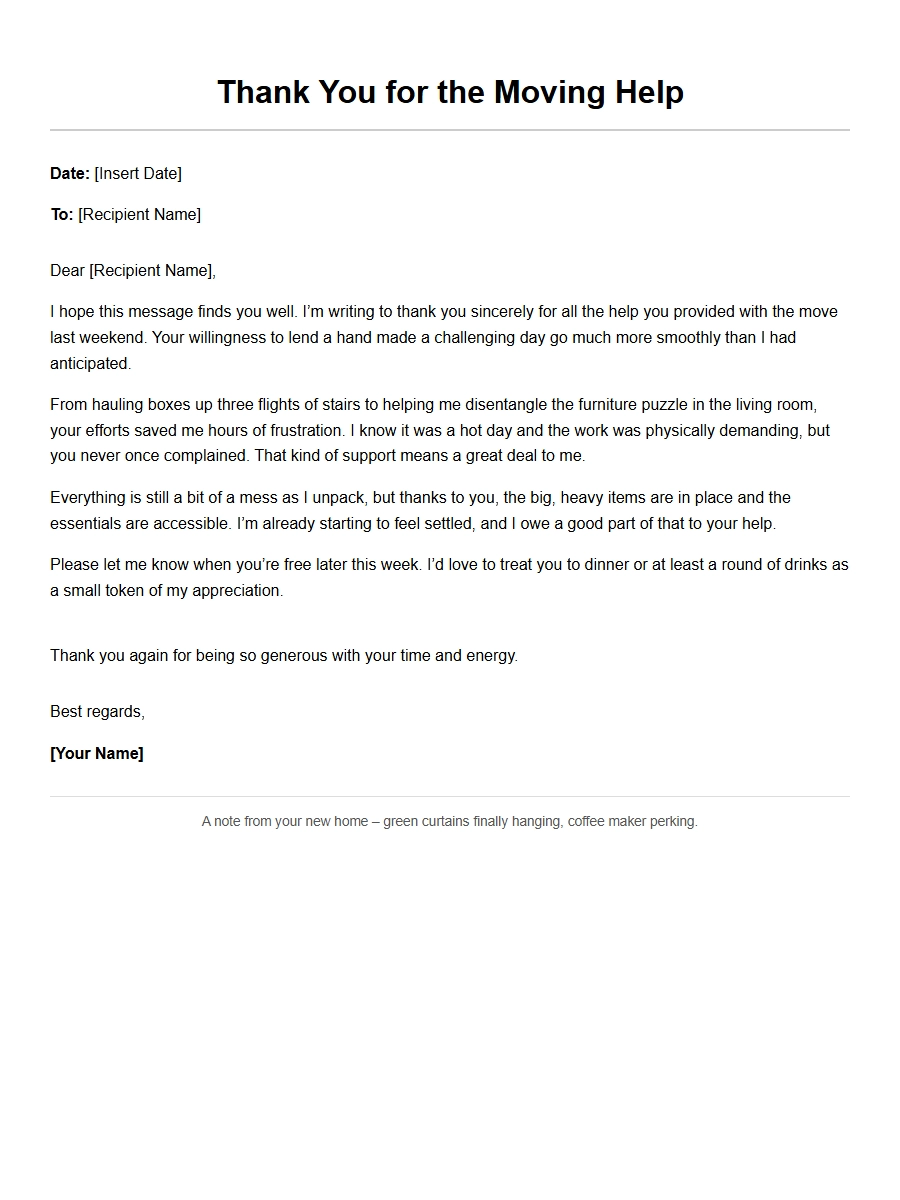 Thank-You Letter for Help with Moving
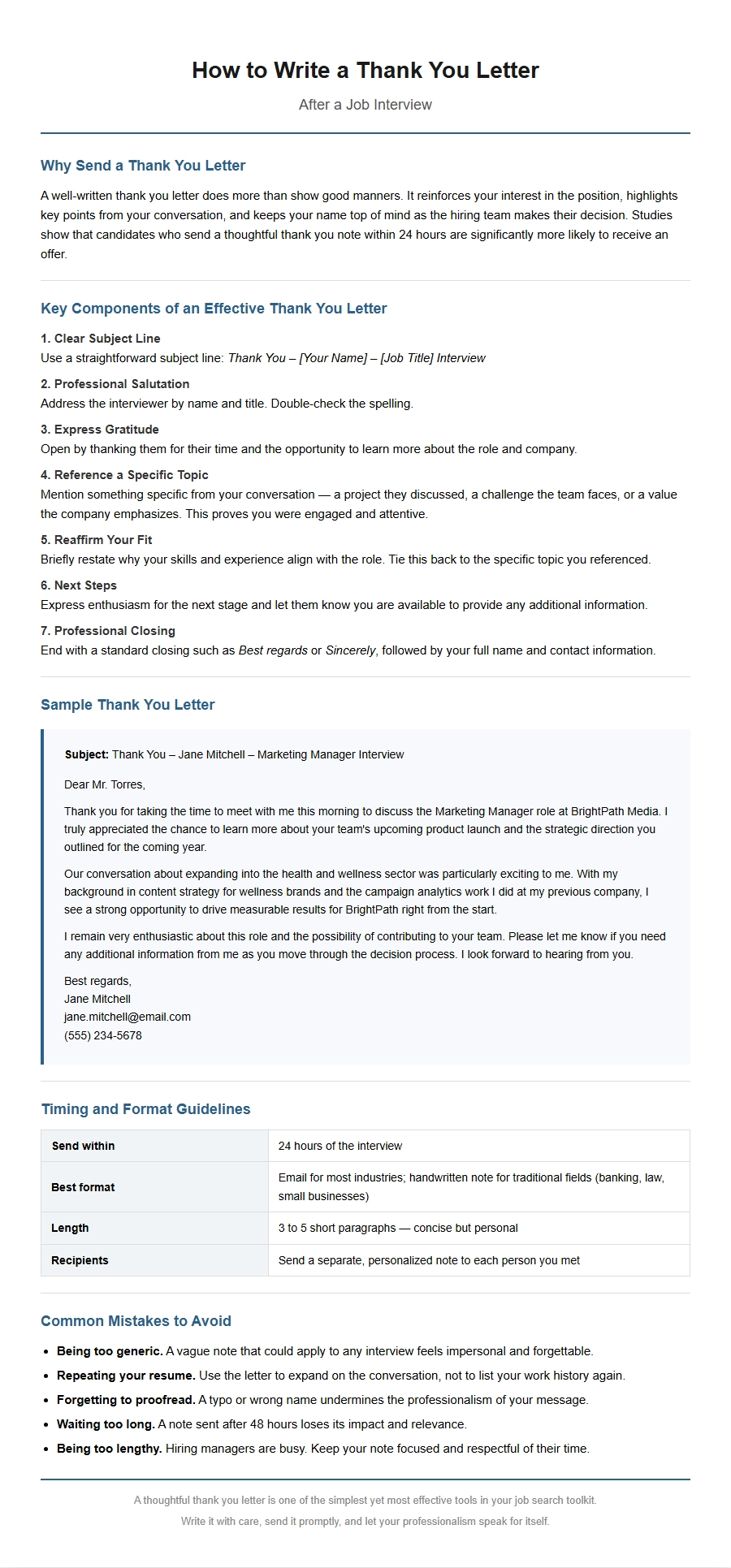 How to Write a Thank You Letter After an Interview
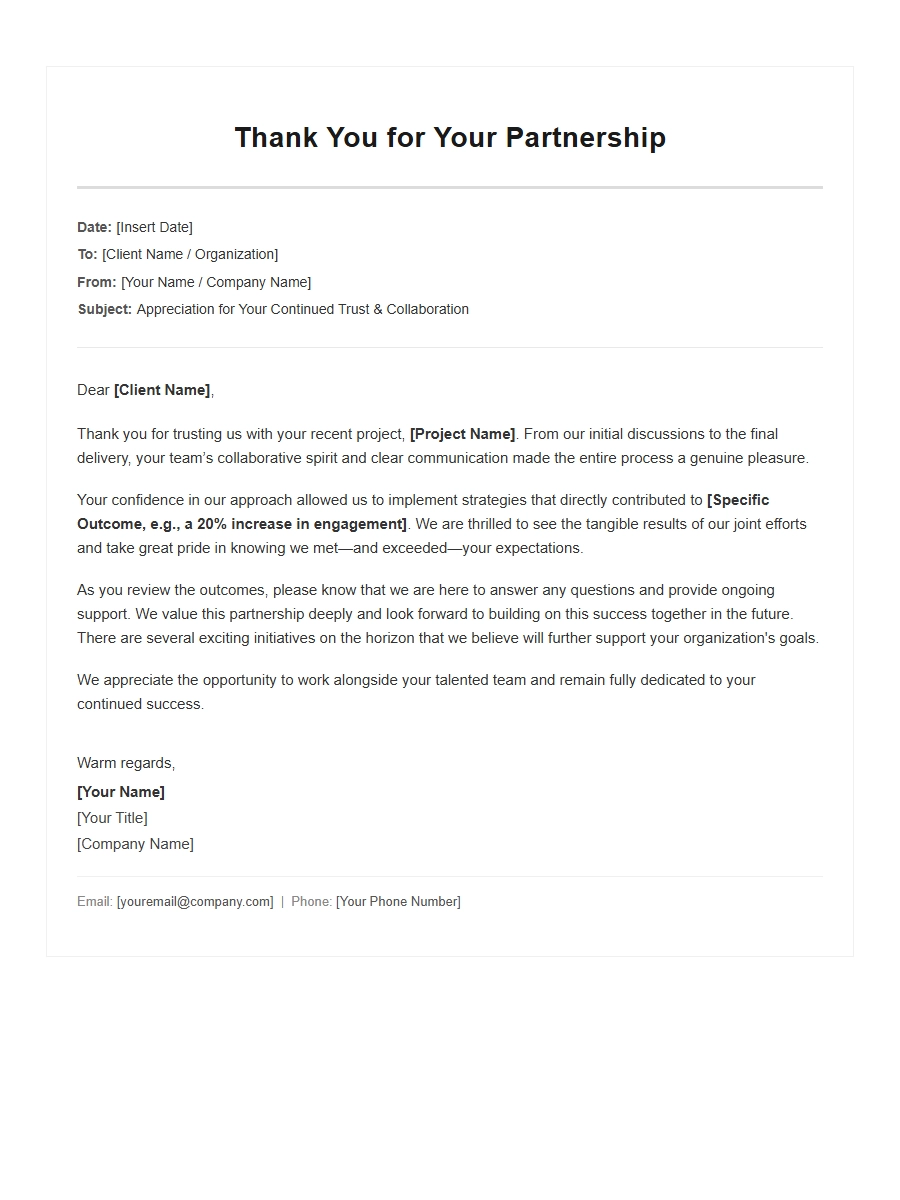 professional thank you email example for client - Thank-You Letters
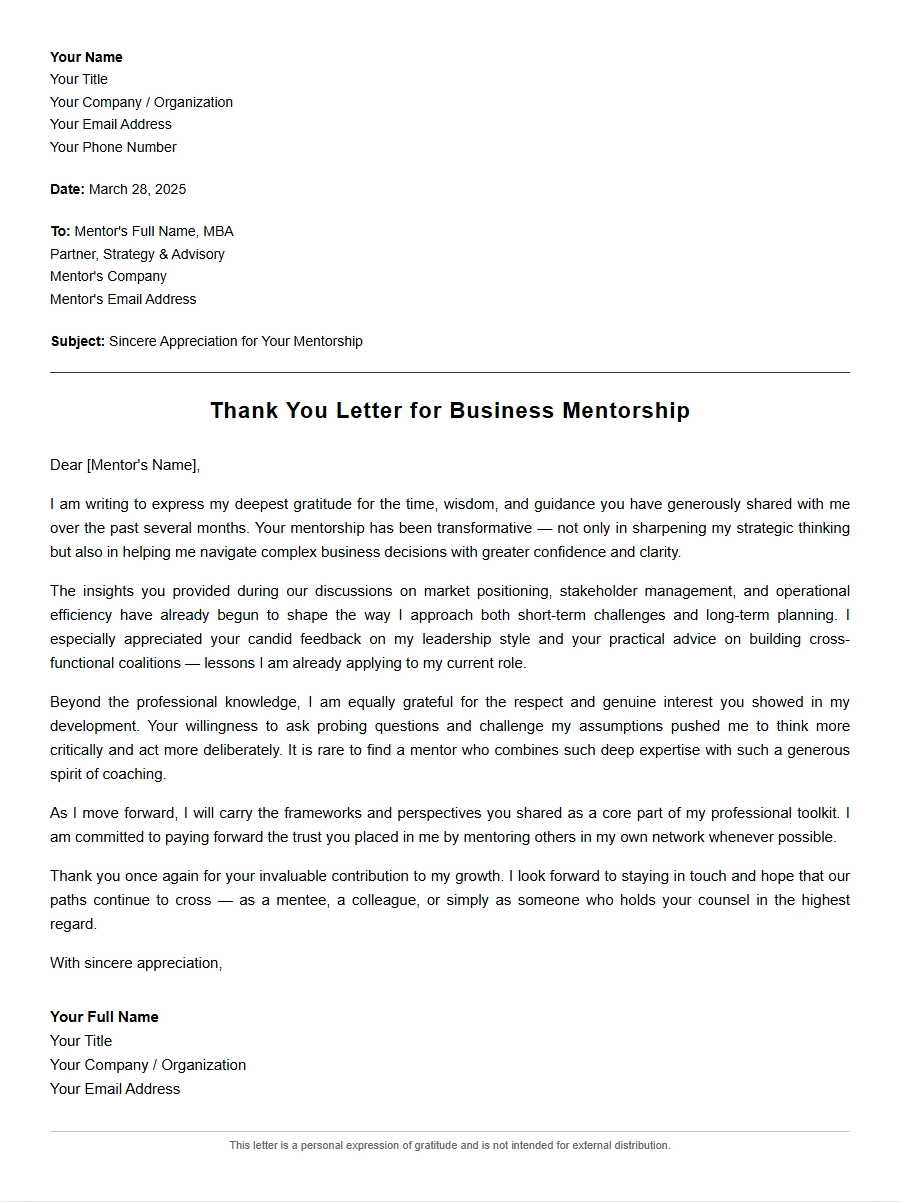 Business Mentor Thank-You Letter Guide
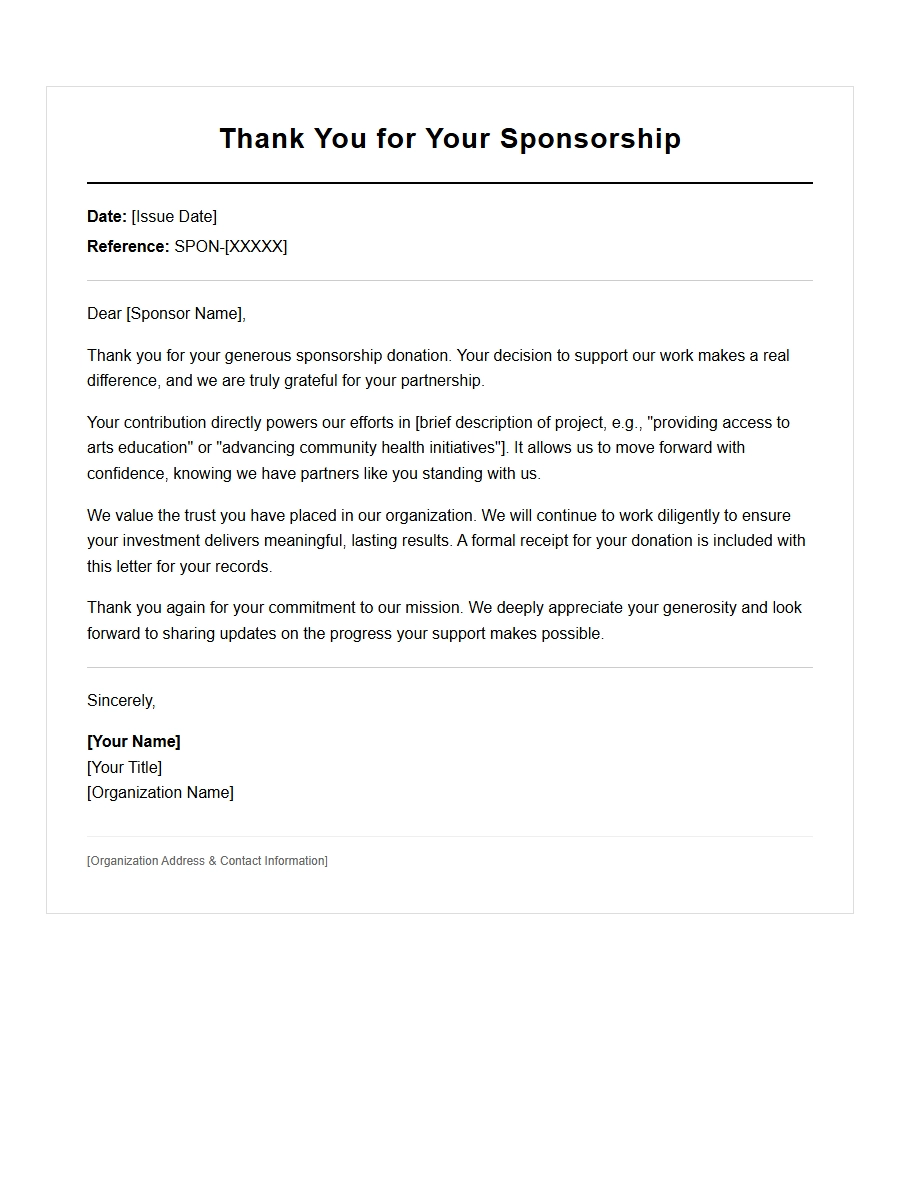 Thank You Letter for Sponsor Donation