You’ve just bought a new gadget, signed up for a service, or tried a new feature — and something didn’t quite click. Maybe it was confusing to set up, or maybe it impressed you so much you want to tell the company. Writing a feedback submission on product experience sounds simple, but figuring out what to say — and how to say it professionally — can stop you cold. That blank page stares back, and suddenly your clear opinion turns into vague, jumbled thoughts.
The good news is you don’t need to start from scratch. Using a letter template isn’t taking a shortcut; it’s working smarter. A good sample gives you the letter structure, the right tone, and the key phrases you need — while leaving plenty of room for your own voice. It’s like having a professional correspondence coach quietly guiding your hand. The goal is to save you time and frustration, so you can focus on what actually matters: sharing your honest experience.
Before you pick any sample, stop and think about your specific situation. Are you writing a quick email to customer support, or a more formal letter to a product manager? The setting matters. For a casual bug report or a feature request, a semi-formal tone with a friendly salutation (“Hi [Name],”) works fine. But if you’re providing detailed feedback to a vendor or submitting a review that might go on a company record, stick with traditional business letter format — including a proper salutation and closing like “Dear [Name],” and “Sincerely,”.
Avoid the common mistake of copying a sample word-for-word. Your feedback loses its punch when it sounds generic. Instead, use the sample as a skeleton. Start with the standard opening: state your name, the product or service, and when you used it. Then, in the body, swap out the sample’s generic phrases for your real experience. Did the setup take too long? Say that. Did a specific feature save you hours? Describe it. This keeps your tone in writing authentic and useful. A good rule: if a sentence from the sample sounds like it could apply to any product, rewrite it to be specific to yours.
Your opening paragraph matters most. It sets the context and grabs the reader’s attention — especially if someone has to read dozens of these submissions. Lead with the most relevant detail. Something like: “I’ve been using your new scheduling tool for the past two weeks, and while the calendar sync works perfectly, the notification settings are causing confusion.” That tells them exactly what you’re talking about and whether the news is positive or negative, right away.
One overlooked detail is formatting. If you’re sending your feedback as an email, keep it short and scannable. Avoid letterhead design in an email — it looks cluttered and often breaks on mobile. Stick to plain text or a simple signature. If you’re mailing or attaching a printed digital letter format (like a PDF), a clean letterhead with your name and contact info adds polish. And no matter the format, always proofread your letter before hitting send. A typo can undermine your credibility, even if your feedback is spot-on.
Another practical detail: pay attention to the closing. Don’t end with just “Thanks.” Instead, restate your hope or suggestion. “I hope this feedback helps you improve the onboarding flow. Please let me know if you need more details.” It shows you’re invested in the conversation, not just venting.
If you’re new to this kind of writing, you might also find it useful to look at examples of expressing gratitude in a formal note — which can help you balance positive feedback with constructive points. Similarly, if you’re writing about a service experience, the structure used in a billing clarification letter can teach you how to state a problem clearly without sounding accusatory. Even sample letters for personal situations, like explaining a medical leave, can show you how to maintain a respectful tone while being direct about an issue.
Remember that feedback is a conversation starter. The best product teams genuinely want to hear what worked and what didn’t. Your honest observations help shape better experiences for everyone — including yourself. Use a customizable letter sample to get past the blank page, but always make the final version sound like you. Over time, writing this kind of formal writing tips becomes second nature. You’ll start seeing the structure without needing a sample at all.
So next time you have something to say about a product, grab a template, adapt it with your specific story, and send it off. You’ll be helping the company — and making your own voice heard. That’s a win for both sides.
Ready-to-Use Examples
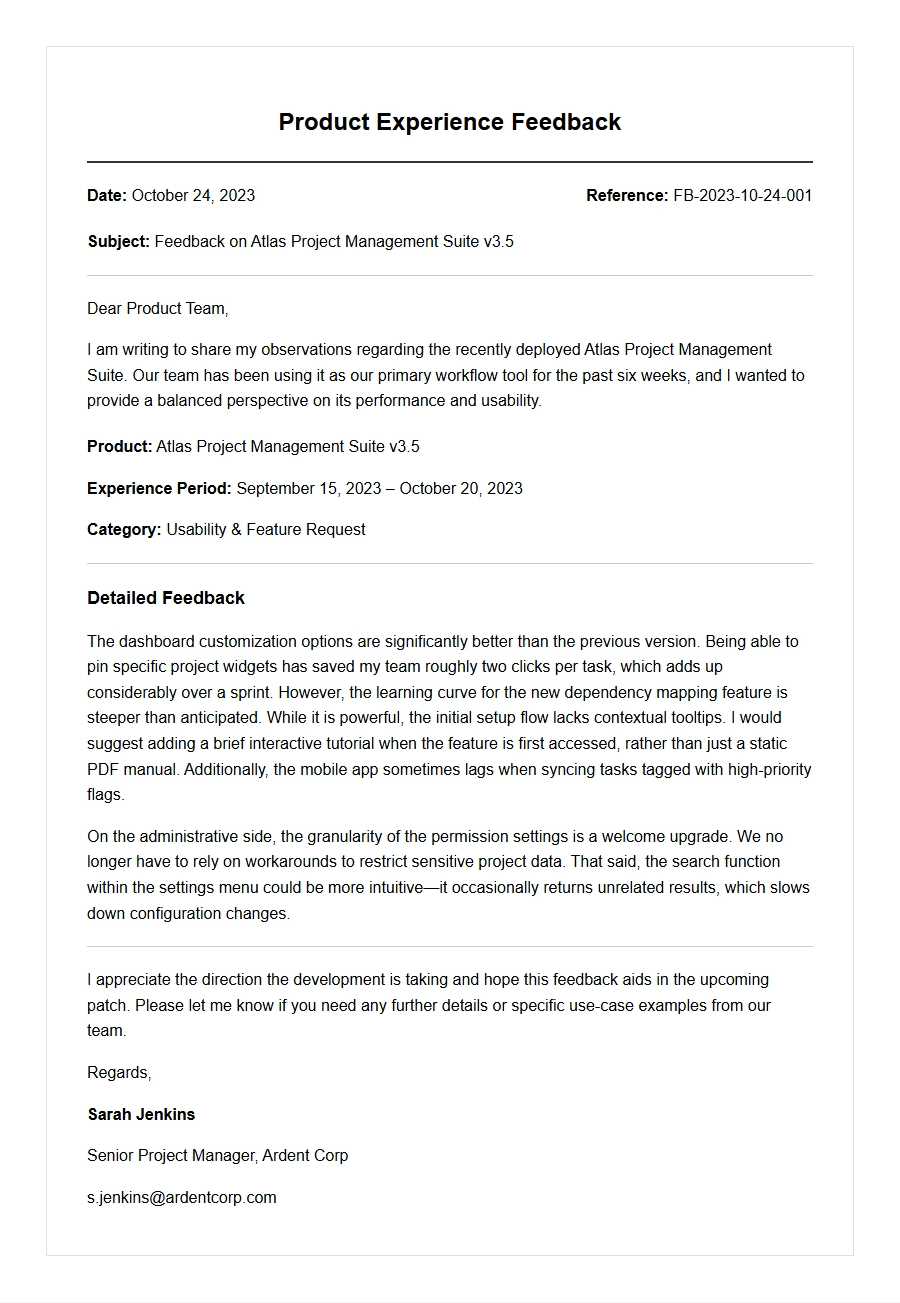
Share Your Product Experience Feedback
Defective Product Complaint
Dear Customer Service Team,
I recently purchased your SmartBlend Pro Blender (order number #12345) from your online store. Unfortunately, after three uses, the motor emitted a burning smell and stopped working entirely. This is not what I expected from a premium product.
To assist with your investigation, here are the details:
Product: SmartBlend Pro Blender (Model SBP-2024)
Purchase Date: March 10, 2025
Issue: Motor failure after brief use
Attached: Photo of the base, receipt copy
Please let me know how to proceed with a replacement or refund. I look forward to your prompt resolution.
Sincerely, Jane Smith jane.smith@email.com
Positive Feedback to a Craftsperson
Hello Margaret,
I just wanted to drop a note about the hand-thrown ceramic mug set I received last week. The glazing is even more beautiful in person—the way the light catches the subtle swirls is simply stunning.
I've been using one every morning for my coffee, and it feels perfectly balanced in my hand. The customer care you showed during the custom order process was also outstanding. You patiently answered all my questions about colour options and firing techniques.
If you ever start a loyalty programme or need a testimonial for your shop, I'd be happy to help. Thank you for bringing such quality craftsmanship into my daily routine.
Warmly, David Chen
Product Recommendation to a Friend
Hey Sam,
Remember when we talked about finding a good wireless earbuds for running? I finally tried the SoundVibe Air Pro and they are amazing! They stay snug even during sprints, and the sound clarity beats any buds I've used before.
Here's what stood out to me:
Battery life: 8 hours on a single charge – perfect for long days.
Water resistance: IPX7 – survived a sudden rain shower.
Controls: Tap to skip tracks, no fumbling with phone.
The only downside is the case is a bit bulky, but honestly it's worth it for the battery. I think you'd love them. Let me know if you want to try mine first before buying.
Cheers, Maya
Formal Quality Complaint to Manufacturer
To the Quality Assurance Team at HomeEase Furniture,
I am writing to formally express my disappointment with the Athens Bookshelf (model AB-320) that I assembled yesterday. After following the instructions precisely, I discovered several issues that compromise both safety and aesthetics.
Issue
Detail
Missing hardware
Two cam bolts for the top shelf were not included.
Misaligned holes
Side panel pre-drilled holes do not align with the back panel slots.
Scratches
Visible marks on the front edge of the middle shelf.
I have attached photos and a copy of the assembly manual with the problematic steps highlighted. I request a full replacement or, if that is not possible, a complete refund including shipping costs. Please respond within 5 business days.
Regards, Olivia Nguyen +1 (555) 987-6543
Thank You for Product Support
Dear Support Team at TechGlow,
I wanted to thank you for the outstanding assistance I received when my LumaDesk LED Lamp stopped responding to touch controls. Your representative, Alex, guided me through a firmware reset and even sent a replacement control module when the reset didn't work.
The lamp has been working perfectly for two weeks now, and I appreciate how quickly you resolved the issue—no long hold times or repetitive questions. It's rare to find such attentive customer care these days.
If you ever need a volunteer for beta testing or a customer quote for your website, I'd be glad to share my experience. Keep up the great work!
Gratefully, Samuel Okafor
Detailed Survey Response
Dear Product Team,
I just completed your FitTrack Smart Scale survey and wanted to expand on my answers. I've been using the scale for three weeks, and here is my honest feedback:
Setup: Easy. The app paired within 30 seconds. However, the instructions for multi-user profiles could be clearer.
Accuracy: Seems consistent with my doctor's scale. I tested it with a known 5 kg weight and it showed 5.02 kg — acceptable.
App Interface: Clean but a bit slow when loading history charts. Also, I'd love a trend line overlay for weight versus body fat percentage.
I also suggest adding a guest mode so visitors can step on without being added as a user. That would be a nice touch. Overall, I'm satisfied and would recommend it to friends.
Best, Priya Kapoor
Testimonial for Review Site
I've been using the EcoCharge Solar Power Bank for a month now, and I'm genuinely impressed. I bought it for camping trips, but it's become my daily carry for hiking and even occasional workdays at the park.
Key highlights:
Charging speed: Two USB-C ports deliver fast charging for my phone and watch simultaneously.
Solar efficiency: On a sunny day, it gains about 10% per hour—not lightning fast, but enough to keep devices topped up over a long weekend.
Durability: It's survived a drop onto rocks and a splash in a puddle. The rugged casing works.
One minor caveat: the battery indicator light is hard to see in direct sunlight. But that's a small quibble for an otherwise excellent product. Five stars from me.
Feedback on Subscription Box Item
Hi Team at SnackVoyage,
Just received the April box and I have to say—the Spicy Mango Chili Jerky is an absolute winner! I finished the whole pouch in one sitting (oops). The balance of sweet, spicy, and savoury is perfect.
However, I had a mixed feeling about the Matcha Cacao Bites. The texture was a bit dry, and the matcha flavour was almost invisible. I suggest either reducing the cacao content or adding a hint of vanilla to smooth it out.
Overall, I love the variety and the surprise element of each box. Keep up the curation! I'd rate this month 8/10.
Cheers, Liam O'Brien
Feedback to a Product Designer
Dear Emma,
Thank you for the custom leather journal you designed for me. The craftsmanship is superb, and the personalisation—my initials embossed in gold foil—looks elegant. I've already started using it for my daily sketches, and the paper handles fountain pen ink beautifully without bleeding.
If you're open to a small design suggestion: the elastic closure strap currently sits quite tight when the journal is new, making it a bit hard to slip over the pages. Perhaps a longer strap with a sliding bead would offer more flexibility as the journal fills up.
I'd love to see this as an option for future batches. Thank you again for your wonderful work. I will definitely order another for a gift.
With appreciation, Nadia J.
Loyalty Feedback to Brand Ambassador
Hi Alex (Brand Ambassador at GreenStep Shoes),
I've been a customer for three years, and your new EcoTrek Hiker boots are hands-down my favourite purchase. I bought them for a recent backpacking trip through the Alps, and they exceeded every expectation.
Here's why I'm writing: your loyalty programme gave me early access to this product, and I really appreciate that perk. However, I noticed that my points balance from the last six months hasn't been updated correctly. I made two purchases in February and March, but only one set of points appears.
Purchase Date
Order Number
Points Expected
Points Show
Feb 15
#GSS-2025-1023
150
150
Mar 20
#GSS-2025-1147
200
0
Could you please check and credit the missing points? I'd like to use them toward my next purchase. Thanks for all you do!
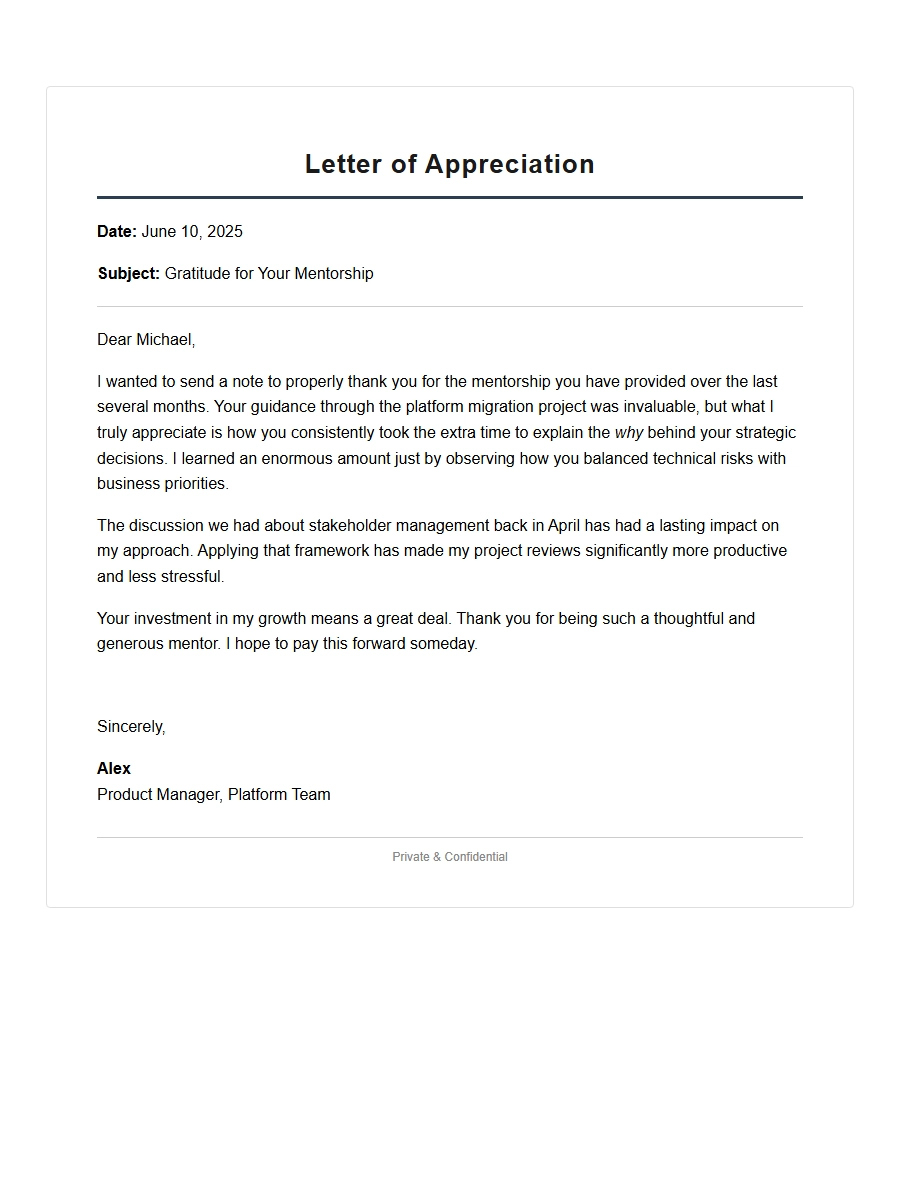 Thanking a Mentor for Guidance: Sample Messages
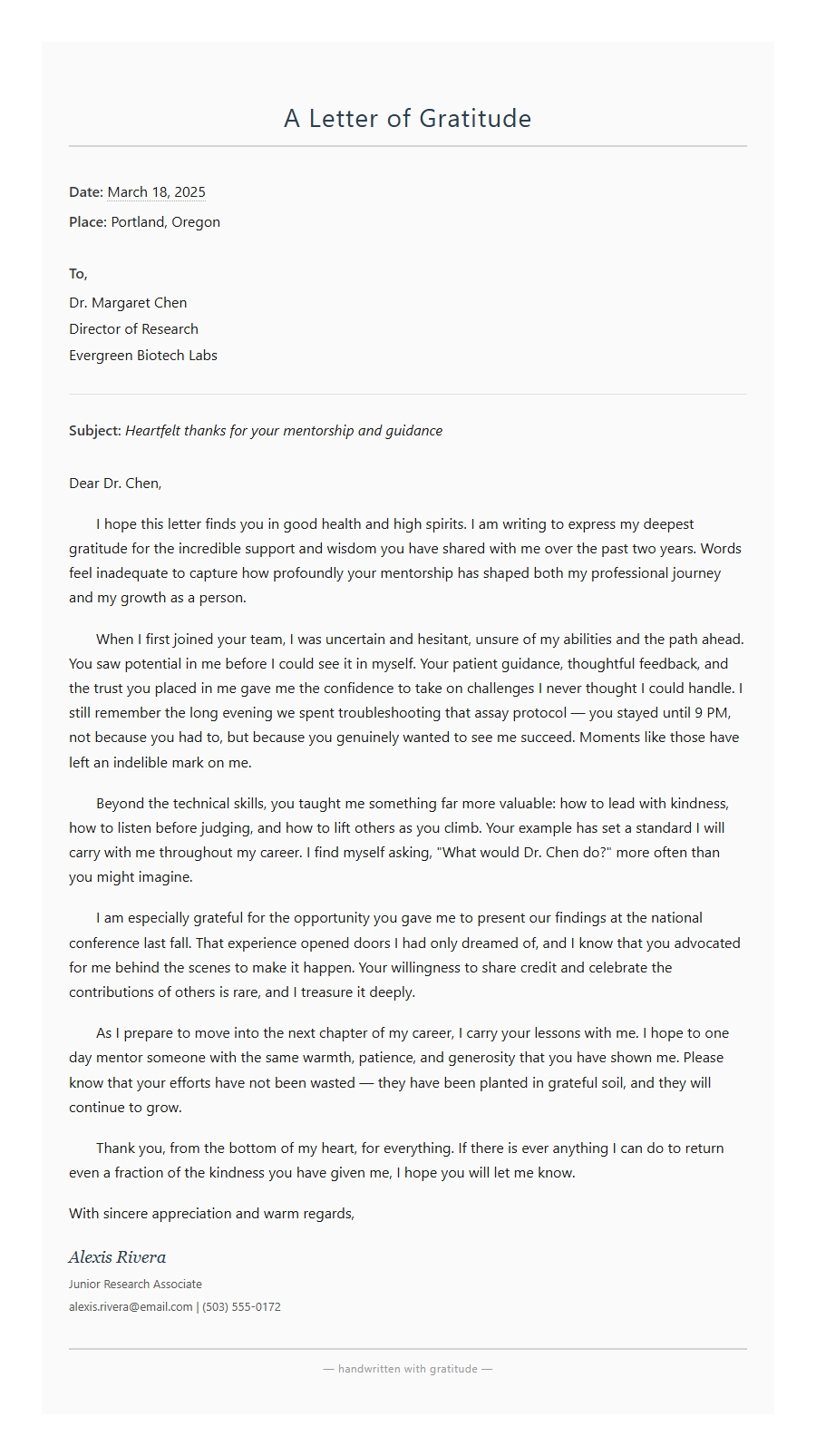 Expressing Gratitude: Handwritten Letter Example
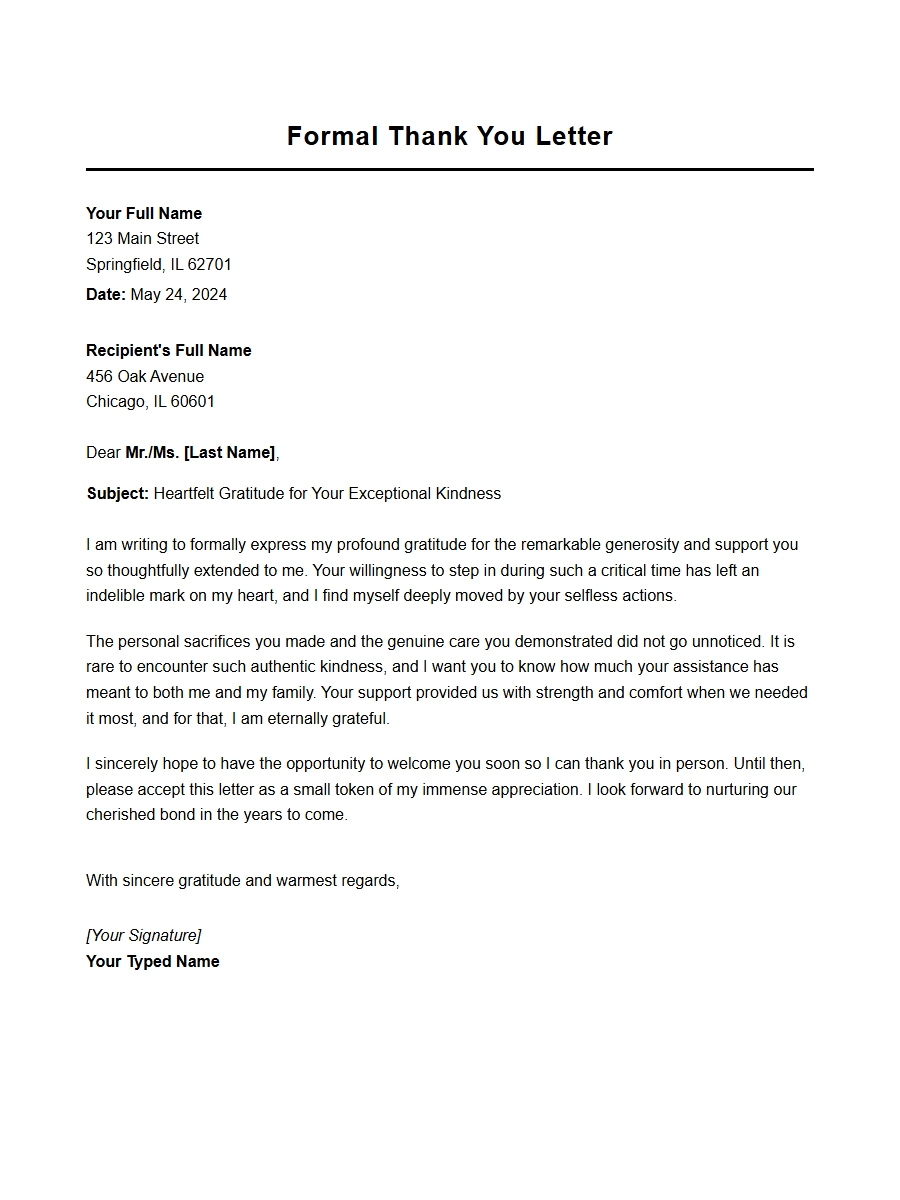 Expressing Thanks in a Formal Personal Letter
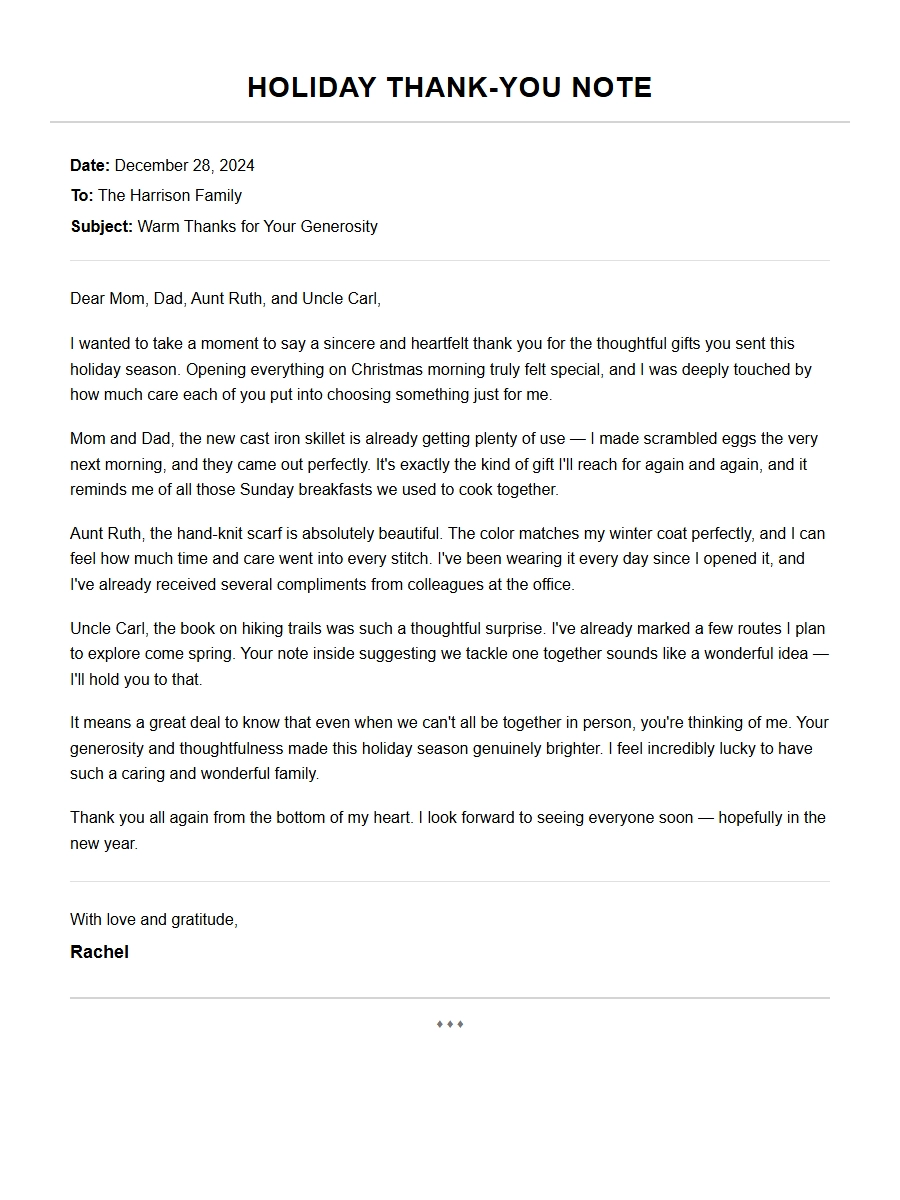 Thank You Letter Examples for Family Holiday Gifts
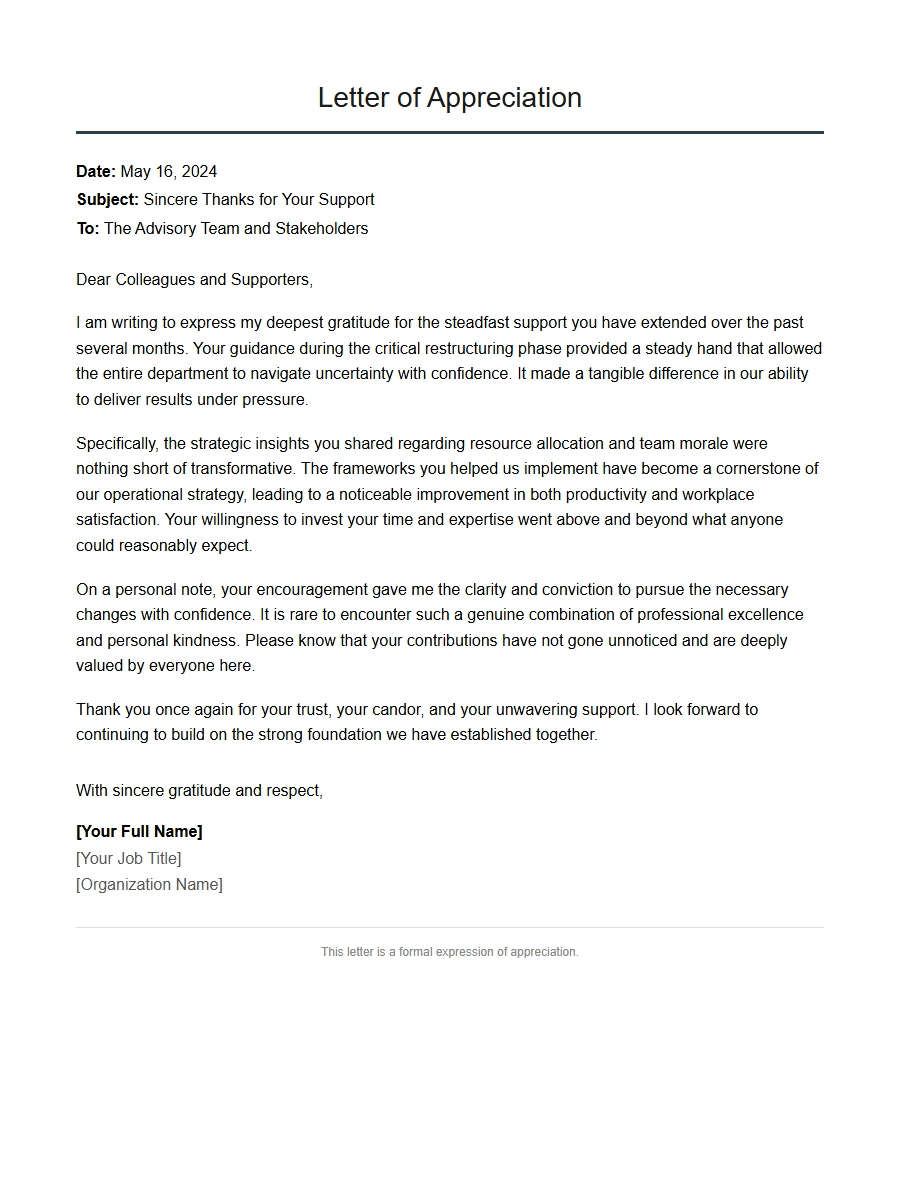 Sample Thank You Letter for Support
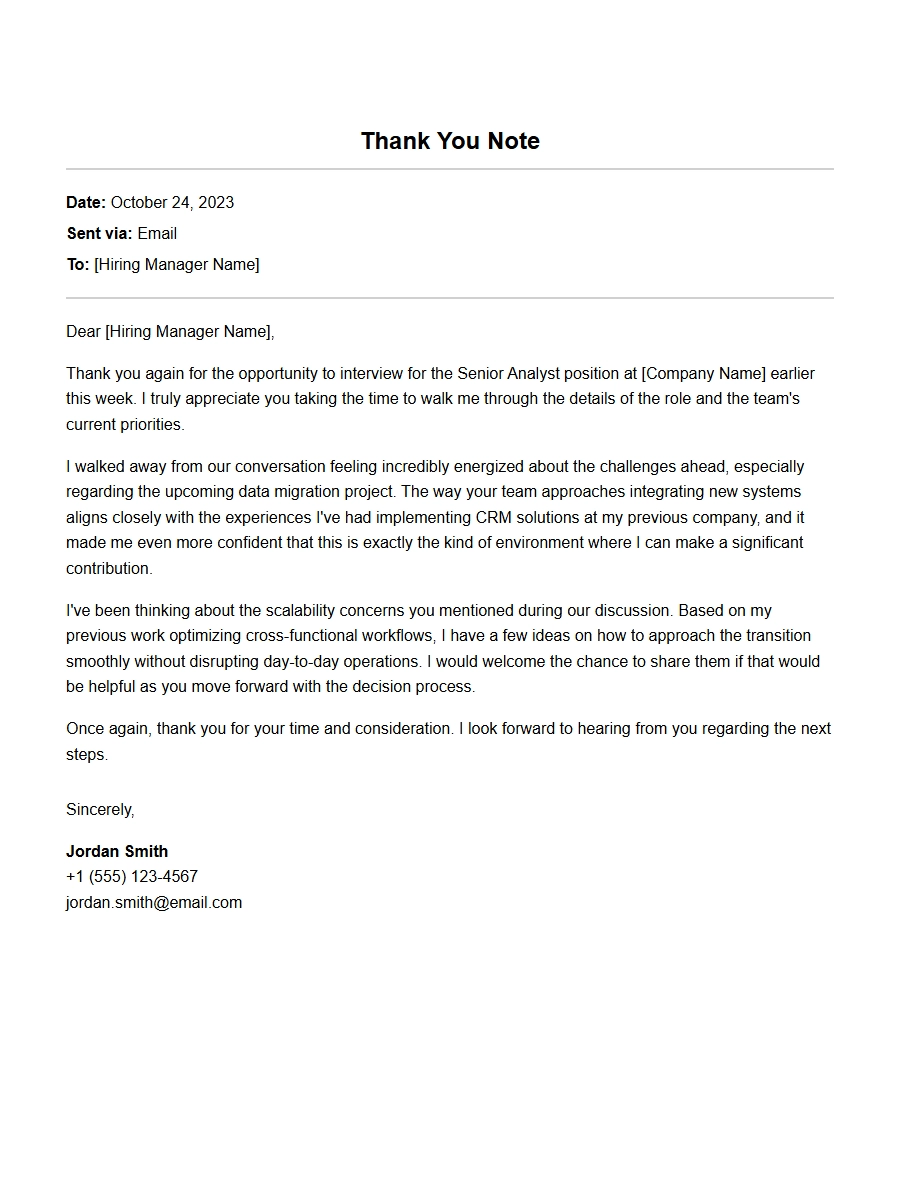 How to Write a Personal Thank-You Note After an Interview