You’re hosting a housewarming and you want to say something warm and welcoming—but the words just won’t come. Maybe you’re nervous about speaking in front of a group, or you’ve never given a toast before. It’s a common moment of panic. The good news is you don’t have to start from scratch. A well-chosen sample wording for house warming toast gives you a solid structure, a fitting tone, and key phrases you can adjust to sound like you.
Why use a sample toast?
Using a sample isn’t lazy—it’s smart. Think of it as a ready-made blueprint. You save time and avoid the awkwardness of a rambling speech. A sample shows you the right length, the natural flow from greeting to thanks to a wish for the home, and how to wrap it up without trailing off. Your job is to personalize it with your own details and voice.
Choosing the right style for your crowd
Before you pick a sample, consider your audience. Is this a casual backyard barbecue with close friends, or a more formal dinner with coworkers and neighbors? For a relaxed gathering, keep it short and light. For a semi-formal crowd, you can be a bit more polished. The best sample wording for house warming toast matches the vibe of your party. If you’re not sure, err on the side of sincerity and brevity—people remember feeling welcomed more than they remember your exact words.
Sample wording you can adapt
Here’s a simple template that works for most house warmings. Fill in the blanks with your own details.
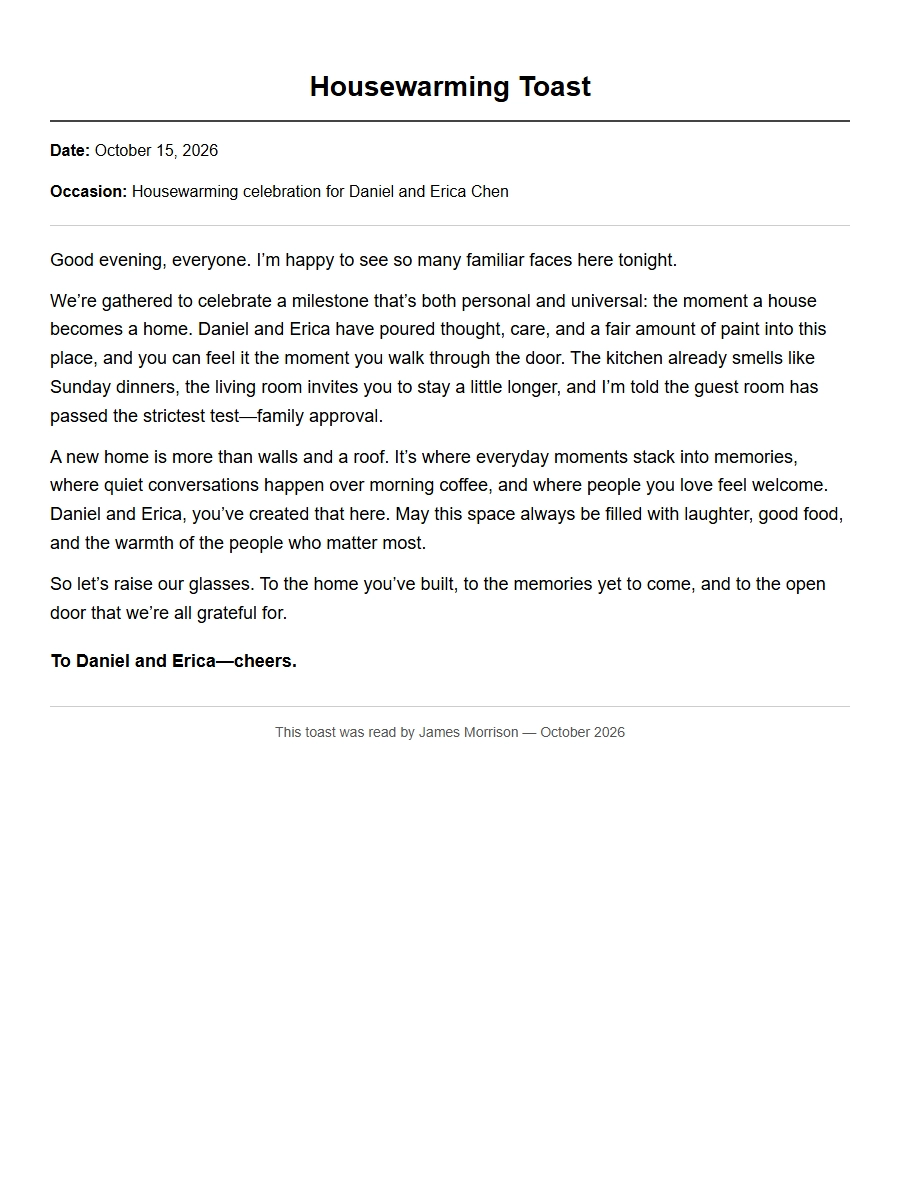
“Thank you all for coming. [Name] and I are so happy to have you here in our new home. This place already feels like ours because you’re in it. We hope this house becomes a place of laughter, good food, and wonderful memories. So please, raise your glasses with me: to new beginnings and the people who make them special.”
Notice how it starts with gratitude, uses a personal touch (“you’re in it”), and ends with a clear toast. You can swap “new beginnings” for something more specific—like “to many game nights in this living room” or “to the first of many dinners together.”
Adapting a sample without losing yourself
The easiest way to make a sample feel yours is to change one or two lines. Add a funny story about finding the house, or mention a specific friend who helped you move boxes. If you’re more formal, replace “happy to have you here” with “delighted to welcome you.” Keep the structure of the sample—introduction, thanks, wish, toast—but swap the words that feel stiff. Also, read it aloud. If a sentence trips you up, rewrite it until it sounds like something you’d actually say.
Common mistakes to avoid
One big mistake is trying to cram too much into a single toast. Stick to one or two ideas. Another is using outdated language like “verily” or “hitherto”—it sounds wooden. Also, don’t forget to actually ask people to raise their glasses. It’s the signal that the toast is happening. If you’re sending an invitation letter that mentions a toast, make sure the wording in the letter matches the tone of your spoken toast. For instance, if your invitation promises a “short, heartfelt toast,” keep that promise when you speak.
Tying your toast to the invitation
You might be writing a housewarming party invitation that includes a line about the toast. Your sample wording for house warming toast can inform that invitation line. For a casual event, you could write: “We’ll raise a glass around 7pm—bring your own toast or just your smile.” For a more organized party, something like: “Please join us for a brief toast to our new home at 8pm.” This consistency makes the event feel cohesive. If you need inspiration for the invitation itself, you might look at how other event invitations handle wording. For example, the structure used in vow renewal ceremony invitations often mixes formality with warmth, which can translate well to a housewarming. Similarly, product launch customer invites use clear calls to action that you can adapt for “join us for a toast.” And if your gathering is followed by a meal, the pacing from farewell gathering invitations can help you time the toast. Even engagement announcements — check engagement invitation text — often center around a celebratory toast, so the language there can give you ideas. For a more event-specific vibe, local market stall tour invitations show how to sound exciting without being over the top.
Practice and polish
Once you’ve adapted your sample, practice it once or twice in front of a mirror. You don’t need to memorize it—just get comfortable with the flow. If you stumble, that’s fine. A little imperfection is more charming than a robot-perfect speech. The goal is to make your guests feel welcome, not to deliver a Broadway monologue.
Next step: Write your own version of the sample above, swapping in your house’s name, a personal memory, and your guests’ vibe. Keep it to about 20 seconds when spoken aloud. That’s long enough to be meaningful and short enough to keep everyone’s glass raised. Your toast is a gift to your guests—and with a good sample in hand, you’ll give it with confidence.
Useful Formats
Sample Housewarming Toast Wording for Invitations
Formal House Warming Toast Invitation
You are cordially invited to celebrate the warmth of a new home. Join us for an evening of elegance and good cheer as we toast to new beginnings.
Event Details:
Detail
Information
Date
Saturday, March 25, 2023
Time
7:00 PM – 10:00 PM
Address
123 Maple Street, Anytown
Attire
Cocktail Attire
Sample Toast Wording:
"To the walls that hold our laughter, the floors that bear our steps, and the door that welcomes all our friends. May this home be filled with love, peace, and joy. Cheers!"
RSVP by March 18 to [email] or [phone]. We look forward to raising a glass with you.
Casual BBQ House Warming Invitation with Toast
Hey everyone! We finally moved in and we want to celebrate with a laid-back BBQ at our new place. Come hungry, bring your favorite drink, and get ready for a fun evening.
What's happening:
Grilled burgers, hot dogs, and veggie options
Backyard games
Good music and great company
Sample Toast Wording (if you want to make a speech):
"Here's to new neighbors, cold drinks, and a home that's already full of love. Thanks for making this place feel like home. Cheers, y'all!"
Details:
Item
Info
Date
April 8, 2023
Time
4:00 PM onwards
Place
456 Oak Avenue, Anytown
No need to RSVP, just show up! But let us know if you're bringing a dish to share.
Elegant Cocktail Party House Warming Invitation
You are invited to an intimate cocktail party at our newly renovated home. Help us christen the space with sparkling conversation and signature drinks.
Evening Program:
6:30 PM – Welcome cocktail
7:15 PM – Toast and house blessing
8:00 PM – Dinner & dancing
Sample Toast from the Hosts:
"May every room hold a memory worth keeping, may every window let in light, and may every guest feel at home. To friendship and new beginnings!"
Event Details:
Detail
Information
Date
Friday, May 12, 2023
Time
6:30 PM – 11:00 PM
Address
789 Pine Street, Anytown
RSVP
By May 5 to [email]
Cocktail attire requested. We can't wait to celebrate with you.
Short and Sweet House Warming Toast Invitation
We moved! Come see the new digs and raise a glass with us. No fancy speeches needed – just your smiling faces.
Quick Info:
Item
Details
When
Saturday, April 1, 3 PM
Where
1010 Elm Street, Apt 4B
Sample Toast (short & sweet):
"To home, to health, and to the people who make life beautiful. Cheers!"
We'll have snacks and drinks. Please let us know if you can make it by texting [phone]. Hope to see you there!
Humorous House Warming Toast Invitation
We finally own a place where we can leave dishes in the sink without judgment. Come help us break in the new home – and maybe the new sofa.
Party Plan:
Tour the house (and marvel at our unmatched interior design skills)
Eat pizza from the best local joint
Drink whatever you bring (no judgment)
Optional: give a toast (please keep it G-rated, the neighbors are watching)
Sample Humorous Toast:
"To this house: may the WiFi be strong, the plumbing be quiet, and the mortgage be forgotten. Cheers to our first real adult decision!"
Details:
What
When
Date
June 10, 2023
Time
7 PM – late
Address
222 Birch Lane
RSVP by June 3 or forever live with the guilt. Hope to see you!
Family-Style House Warming Invitation with Toast Suggestions
Our family is thrilled to welcome you to our new home. This house warming is all about togetherness – good food, great stories, and heartfelt toasts.
Schedule:
2:00 PM – Open house & snacks
3:00 PM – Family gathering for a blessing
3:30 PM – Toasts (you are welcome to share one!)
Sample Toast from the Kids:
"Thank you for making this house a home. We promise to fill it with laughter and hide-and-seek spots."
Sample Toast from the Parents:
"To our ancestors who built the foundation and to our children who build the future – may this home always be a sanctuary."
Event Details:
Detail
Information
Date
Sunday, July 16, 2023
Time
2:00 PM – 6:00 PM
Address
555 Cedar Court
RSVP
By July 9 to [email]
Bring a photo for our memory wall! We can't wait to share this milestone with you.
Modern Minimalist House Warming Invitation
Less is more. Join us for a simple gathering at our new minimal home – no fuss, just good company and a toast.
What to Expect:
Light bites and refreshments
A brief house tour (if you're curious)
A single toast at 8 PM sharp
Sample Toast:
"To simplicity: may our home be filled with moments that matter, not things that clutter. Cheers."
Details:
Item
Info
Date
Saturday, August 5, 2023
Time
6:00 PM – 9:00 PM
Location
777 Walnut Street, Unit 12
RSVP
Text [phone] by August 1
We kindly ask no gifts – your presence is the only present we need.
Themed House Warming Party Invitation (Tropical)
Let's escape the ordinary! We're throwing a tropical-themed house warming – think Hawaiian shirts, lei's, and fruity drinks. Help us turn our new home into a paradise.
Party Vibes:
DIY tiki bar
Limbo contest (prize for winner)
Island music playlist
Sample Toast with a Tropical Twist:
"To the sun that shines through our windows, the breeze on our patio, and the friends who make every day feel like a vacation. Cheers to our island home!"
Event Details:
Detail
Information
Date
Saturday, September 2, 2023
Time
5:00 PM – 11:00 PM
Address
123 Palm Drive (yes, it's real!)
Dress Code
Tropical casual
Please bring your favorite island cocktail ingredient to share. RSVP by August 26 to [email]. Aloha!
Potluck House Warming Invitation with Toast
You're invited to a potluck house warming! Everyone brings a dish, we provide the drinks and the new home. Let's fill this place with delicious food and warm memories.
What to Bring:
An appetizer, main dish, or dessert (enough for 6-8 people)
Your favorite drink (or something to share)
A toast – short or long, funny or heartfelt
Sample Toast for the Occasion:
"Here's to a home that's built not just of bricks and mortar, but of shared meals, late-night talks, and the best friends anyone could ask for. Cheers!"
Details:
Item
Info
Date
Sunday, October 8, 2023
Time
3:00 PM
Place
999 Spruce Street
RSVP
With your dish choice by Oct 1
We'll set up a sign-up sheet – let us know your dish when you RSVP. Can't wait to feast and toast!
Traditional House Warming Invitation with Blessing
We cordially invite you to a traditional house warming ceremony to bless our new home. Prayers, hymns, and a family toast will mark this special occasion.
Ceremony Order:
Welcome & prayer
Lighting of the hearth
Blessing of the doorways
Toast by the elders
Open house & refreshments
Sample Toast for the Elders:
"May the Lord bless this home with peace, prosperity, and love. May every room be filled with His grace, and may those who dwell here be forever grateful. To the glory of God and the joy of family."
Event Details:
Detail
Information
Date
Sunday, November 19, 2023
Time
10:00 AM – 1:00 PM
Address
333 Faith Lane
RSVP
By November 12 to [email]
Please join us in prayer and fellowship as we dedicate this house to God and our family.
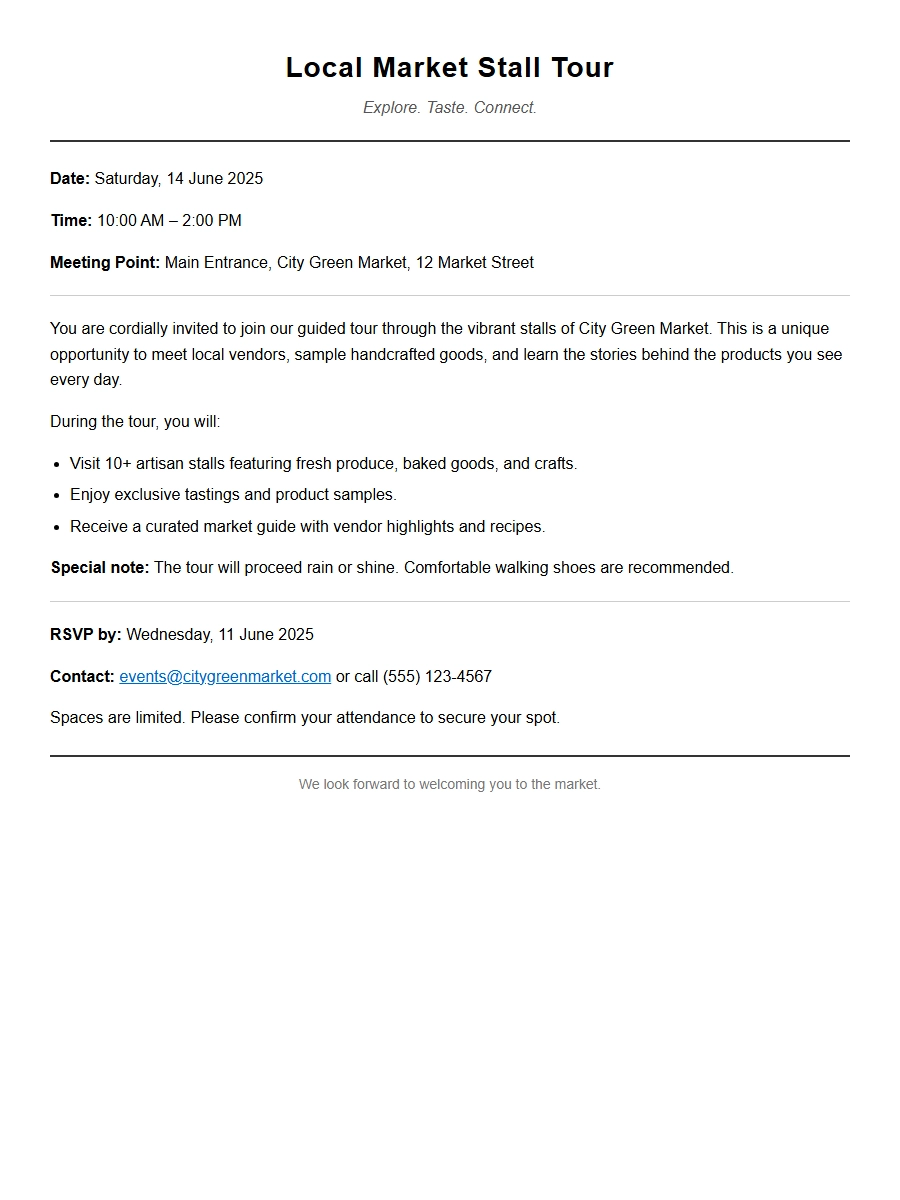 sample invitation for local market stall tour - Invitation Letters
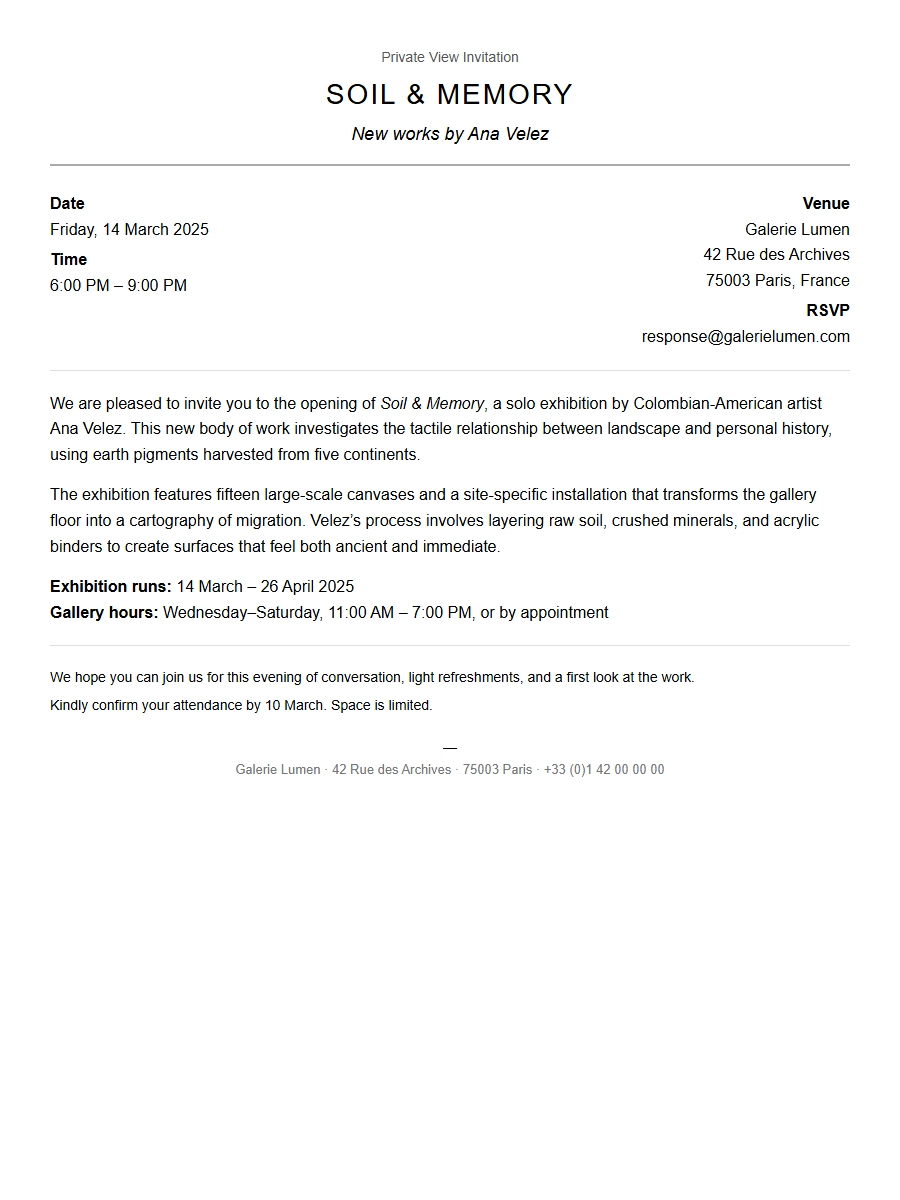 Art Exhibition Opening Invitation Wording Ideas
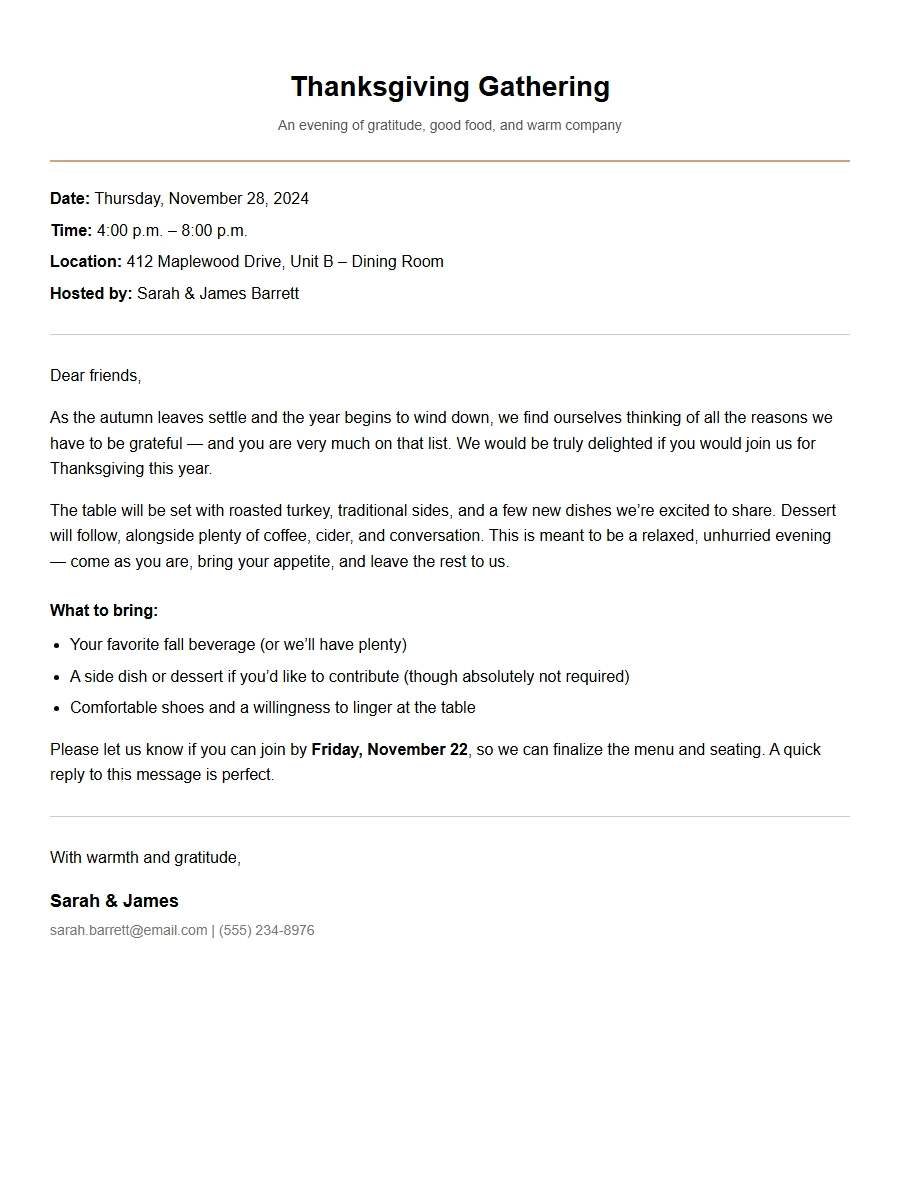 Thanksgiving Meal Gathering Invitation Text
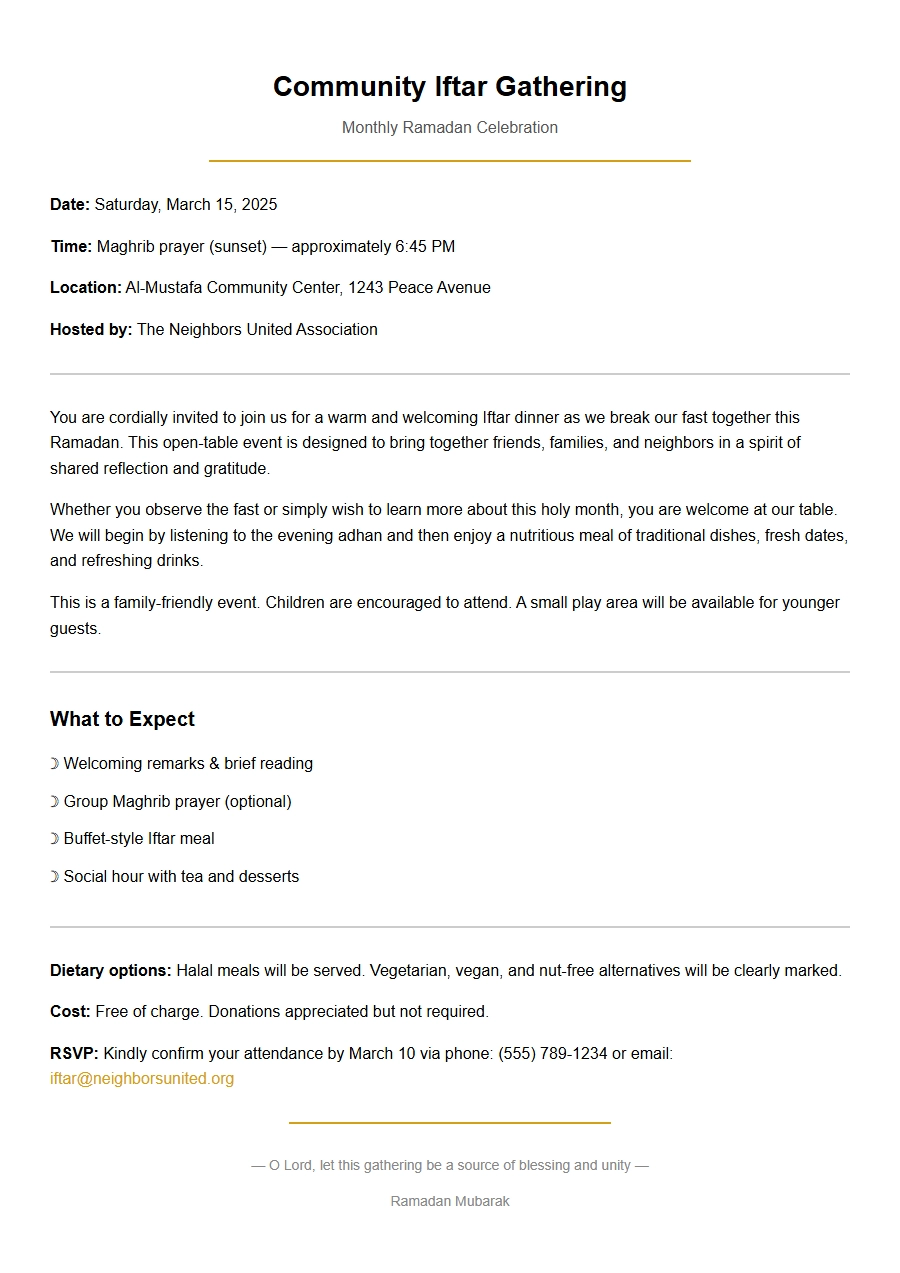 Ramadan Iftar Community Event Invitation
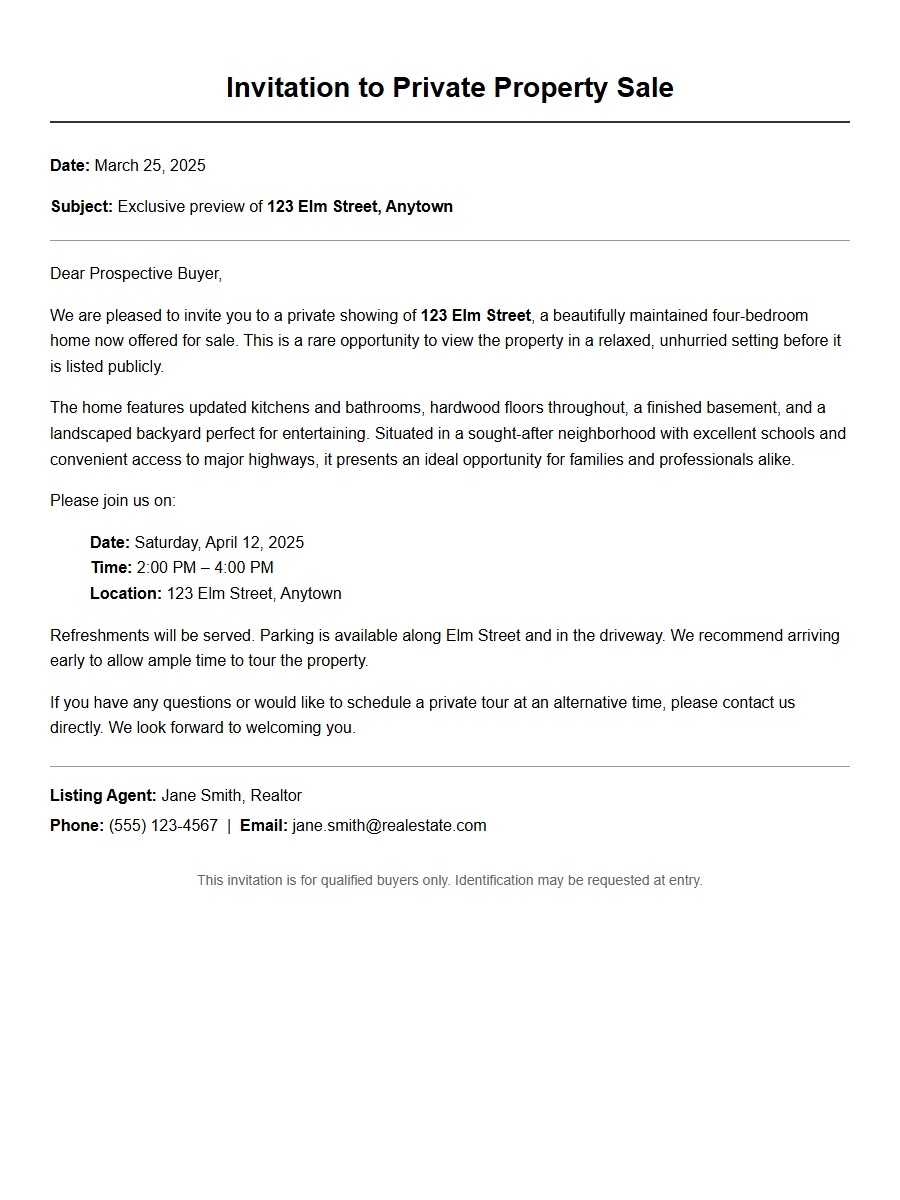 Sample Wording for Property Sale Invitations
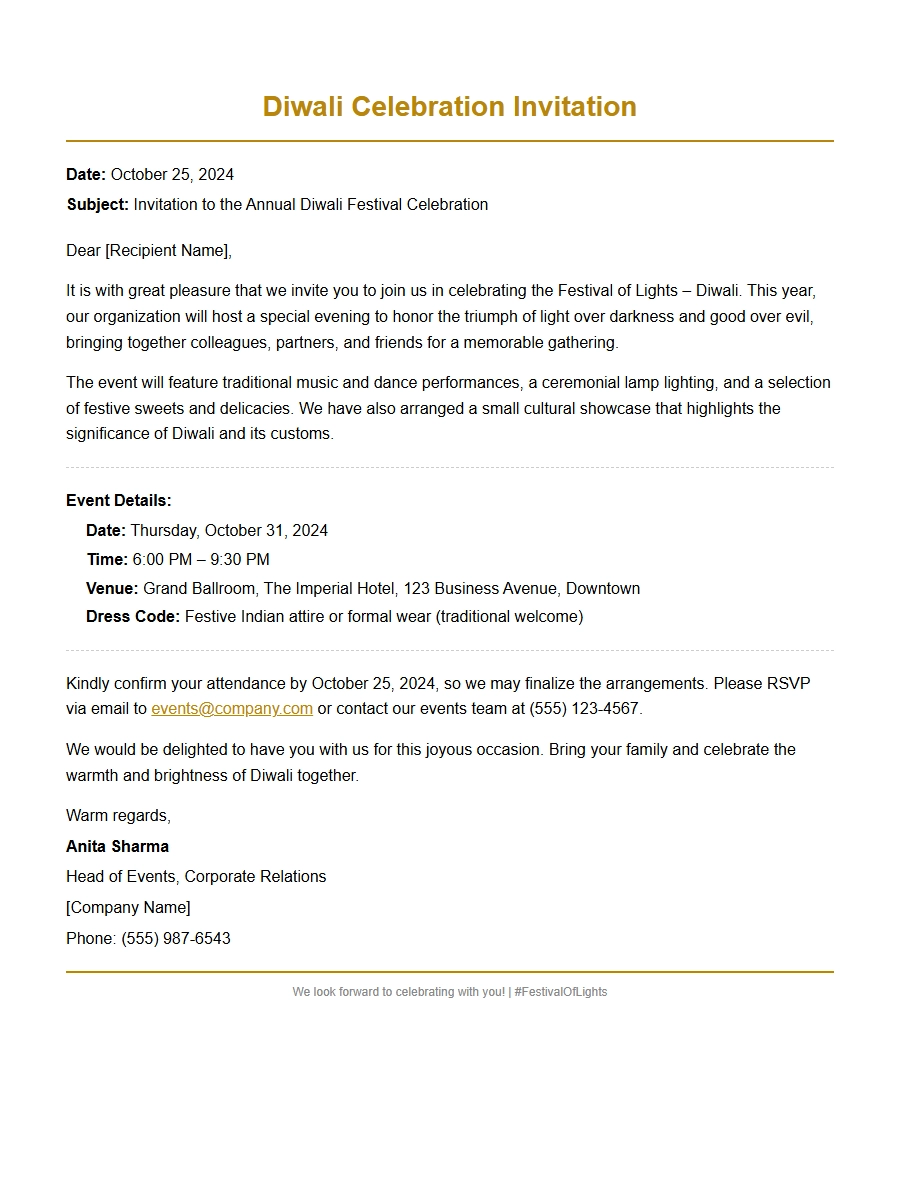 Diwali Festival Celebration Invitation Draft