Staring at a blank page when you need to write a professional letter can feel paralyzing—but the right sample turns that anxiety into a confident, polished draft in minutes. The same logic applies after a networking event. You’ve made the connection, exchanged cards, and now you need a follow-up that cements that impression before it fades.
Using a sample thank-you note isn’t cheating. It’s a practical starting point. A solid template gives you a proven structure for professional correspondence, freeing you up to focus on what matters: personalizing the message. It saves time and reduces the risk of forgetting key etiquette.
Category: Professional Networking Correspondence
How soon should you send a networking thank-you note?
Aim for within 24 hours. The conversation is still fresh in both your minds. A quick follow-up shows you’re organized, interested, and respectful of their time. Waiting longer makes it harder to recall specific details, which weakens your message.
What if you don’t remember exactly what they said?
It happens. You don’t need a verbatim transcript. Just capture the general topic or vibe. “I enjoyed our discussion about content marketing trends” works perfectly. If you’re truly blank, reference the event itself. “It was great connecting with you at the industry mixer on Tuesday” is better than nothing, but try to add one specific detail.
How do you personalize a sample without losing the professional tone?
A customizable letter is only useful if you actually customize it. Don’t just swap out the name. Change the adjectives. Instead of “it was great meeting you,” say “I really appreciated your perspective on hybrid work models.” The right tone in writing should mirror the energy of your in-person interaction. If they were formal, stay formal. If they were relaxed, loosen up slightly. Match the salutation and closing accordingly. “Best regards” is safe. “Looking forward to staying in touch” signals openness without pressure.
What are the most common follow-up mistakes?
Proofreading your letter is non-negotiable. A single typo can undo a strong first impression. Read the message out loud before hitting send. Another common mistake is asking for something too soon. Don’t request a job, a referral, or a major favor in the first note. Just nurture the connection. Forgetting the subject line is another slip—keep it clear and simple, like “Great meeting you at [Event Name].”
How to choose the right sample for your specific connection?
For more concrete business discussions—like arranging a storage unit rental agreement—your follow-up needs to confirm specifics politely. A focused template helps you stay on track. Even when the context shifts to funding, such as a gratitude email for an investor funding opportunity, the core etiquette remains: be prompt, be specific, and be professional. And if the event itself was a fundraiser, acknowledging the organizer’s hard work with a sample gratitude for organizing a charity fundraiser event builds goodwill for future collaboration.
Is a physical letter better than an email?
Email is faster and easier for busy professionals. But a handwritten note can make you unforgettable if you had a deep, personal connection. For most networking follow-ups, stick with email. If you choose a physical letter, keep the format clean. Use standard business letter format for the closing and signature. Avoid fancy fonts or distracting paper.
A sample is just the starting line. The real value comes from making the words sound like you. Think of it as a scaffold that supports your own message. The more you practice personalizing these notes, the faster and more natural it becomes. Eventually, you won’t need the sample at all—you’ll just know what feels right. That’s the goal.
Samples to Guide You
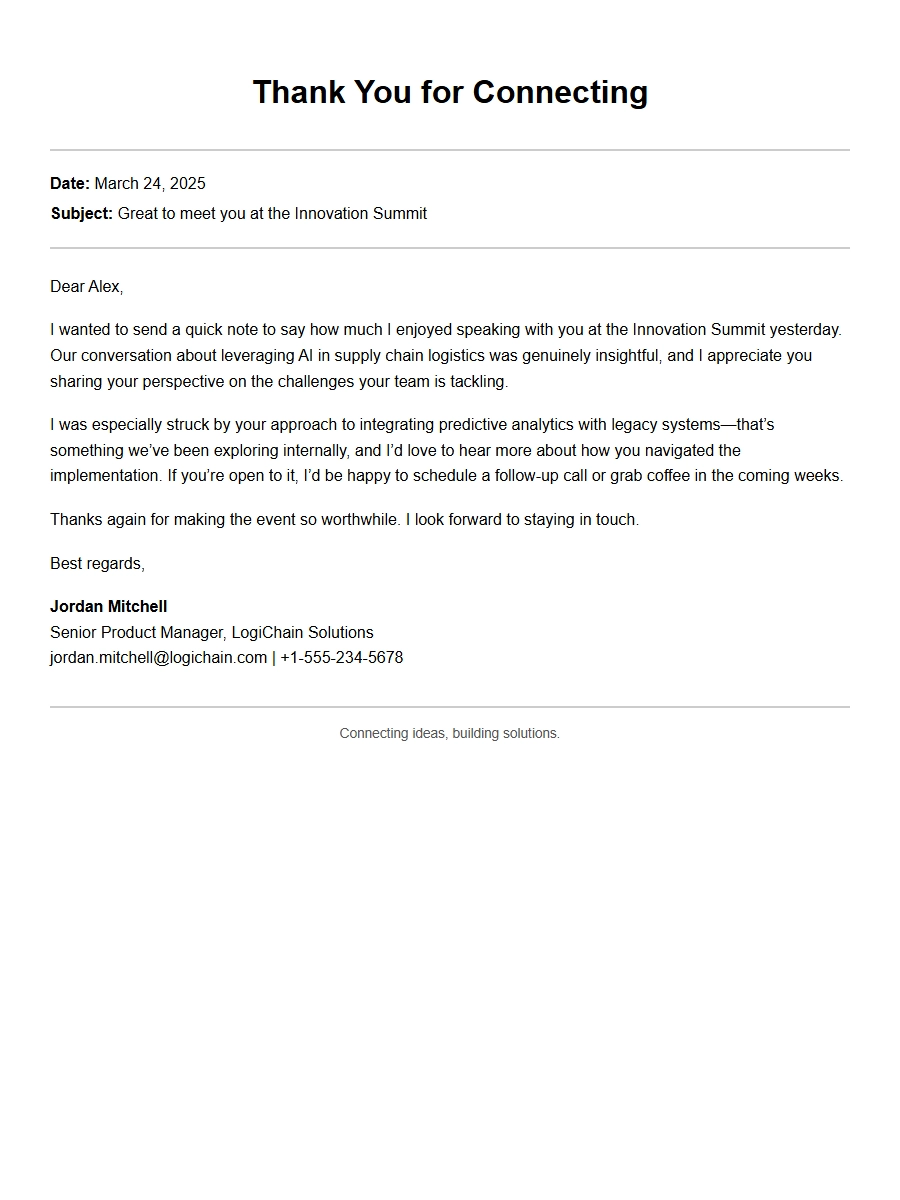
Sample Thank You Letter for Networking Event
Thank You for the Conference Meeting
Dear [Contact Name],
Thank you so much for taking the time to speak with me at the [Event Name] last Tuesday. I truly appreciated hearing about your experience in [industry/field] and the challenges you overcame while scaling your team.
As we discussed, I will follow up on the following resources you recommended:
The Lean Startup by Eric Ries
The recent Harvard Business Review article on remote leadership
Your colleague Sarah’s profile on LinkedIn
I’ve already connected with Sarah and look forward to learning from her as well. Thank you again for your generosity—your insights have given me a clearer direction for my own career path. I hope we can stay in touch and perhaps grab coffee at the next industry meetup.
Best regards, [Your Name]
Thank You for Career Transition Advice
Dear [Contact Name],
Thank you for the thoughtful advice you gave me at the [Event] about transitioning from finance to product management. Your story about moving from a non‑technical background into tech was incredibly encouraging.
I’ve started working on the action items you suggested:
Enroll in a part‑time UX/UI basics course (starting next month)
Reach out to three product managers for informational interviews
Join the local ProductTank meetup
I also signed up for the free webinar series you mentioned. Thank you for being so open and for sharing your network—I now have a concrete roadmap. I hope to keep you updated on my progress and would love to buy you a coffee soon.
With gratitude, [Your Name]
Thank You for Mentor Connection
Dear [Contact Name],
I’m writing to thank you again for introducing me to [Mentor Name] at the [Event]. The subsequent conversation we had over email was incredibly valuable, and I’ve already scheduled a follow‑up call for next week.
You were right—our interests align perfectly, especially in the areas of data analytics and customer retention strategies. I’ve attached a brief summary of the ideas we exchanged (for your reference).
Please let me know if there is ever anything I can do to reciprocate your kindness. I’m happy to offer my help with any upcoming projects or introductions in my own network.
Warmly, [Your Name]
Thank You for the Job Lead
Dear [Contact Name],
Thank you so much for telling me about the product manager opening at [Company] during our chat at the [Event]. I’ve just submitted my application and included your name as a referral (with your permission).
If it’s helpful, here’s a quick overview of the qualifications I highlighted in my cover letter:
Requirement
My Experience
3+ years in agile environments
5 years as scrum master for a SaaS team
User research skills
Led 20+ usability studies in past role
Cross‑functional collaboration
Worked with engineering, design, and marketing
I will keep you posted on the outcome. Thank you again for thinking of me—this opportunity is exactly what I’ve been looking for.
Best, [Your Name]
Thank You for the Introduction to a Colleague
Dear [Contact Name],
Thank you for introducing me to [Colleague Name] at the [Event]. We had a great conversation about the future of sustainable supply chains, and I believe there is real potential for collaboration between our teams.
I’ve sent them a calendar invitation for a follow‑up meeting next Thursday. In the meantime, I’m sharing a few notes from our discussion:
Joint webinar on circular economy practices — potential date: Q2
Cross‑company research group on carbon footprint reporting
Exchange of best practices in supplier auditing
Your generosity in bridging us together is truly appreciated. Please let me know if I can return the favor.
Sincerely, [Your Name]
Thank You for the Industry Trends Discussion
Dear [Contact Name],
I thoroughly enjoyed our conversation at the [Event] about the latest trends in artificial intelligence and ethical data usage. Your perspective on balancing innovation with regulation was eye‑opening.
Based on your suggestions, I’ve started following these resources:
Podcast: “AI Today” – especially the episode on bias mitigation
Book: Weapons of Math Destruction by Cathy O’Neil
Newsletter: The Algorithm from MIT Technology Review
I also shared a few of your talking points with my team—they were equally inspired. Thank you for taking the time to exchange ideas; I look forward to continuing the dialogue.
Warm regards, [Your Name]
Thank You for Inviting Me to a Professional Group
Dear [Contact Name],
Thank you for inviting me to join the [Group Name] at the [Event]. I’ve already completed the membership form and submitted it to the group coordinator.
I am particularly excited about the following upcoming activities listed on the group’s calendar:
Event
Date
Focus
Monthly roundtable
March 10
Leadership in distributed teams
Workshop
March 22
Effective networking strategies
Guest speaker
April 5
Future of remote work
I appreciate you thinking of me—this community aligns perfectly with my professional development goals. I hope to contribute actively and maybe even present a topic later this year.
Thank you again for the warm welcome.
All the best, [Your Name]
Thank You for Interest in Collaborating
Dear [Contact Name],
Thank you for expressing interest in collaborating on a project at the [Event]. I was delighted to hear about your work in content strategy and brand storytelling.
To move forward, I propose the following next steps:
Schedule a 30‑minute call to define scope and deliverables
Draft a brief project charter with roles and timeline
Identify any shared resources we can pool (tools, contacts, etc.)
I’ve already block‑booked some tentative time slots in March—please let me know what works best for you. I’m confident that combining our expertise will result in something impactful.
Looking forward to building something great together.
Cheers, [Your Name]
Thank You for the Follow‑Up Resources
Dear [Contact Name],
Thank you for your time at the [Event] and for sending over the follow‑up resources so promptly. I’ve already read the whitepaper you shared on blockchain in supply chain and found it extremely insightful.
Here’s a quick summary of my key takeaways:
Transparency through distributed ledgers can reduce fraud by up to 30%
Small‑scale pilots are recommended before full implementation
Several case studies from European ports show measurable ROI
I’ve also registered for the webinar you mentioned next month. Your willingness to share knowledge is a true gift—thank you again. I hope we can meet again at a future event.
With thanks, [Your Name]
Thank You for the Client Referral
Dear [Contact Name],
Thank you so much for referring [Client Name] to me after our conversation at the [Event]. I’ve already reached out to them and scheduled an initial discovery call for next Tuesday.
I appreciate your trust in referring someone from your network. To give you a sense of what I’ll be offering, here’s a quick overview:
Service
Description
Consulting
Strategic planning for digital transformation
Workshops
Team upskilling in agile methodologies
Support
Monthly progress reviews and adjustments
I will keep you updated on the outcome and am more than happy to reciprocate with introductions or referrals in the future. Thank you again for your generous support.
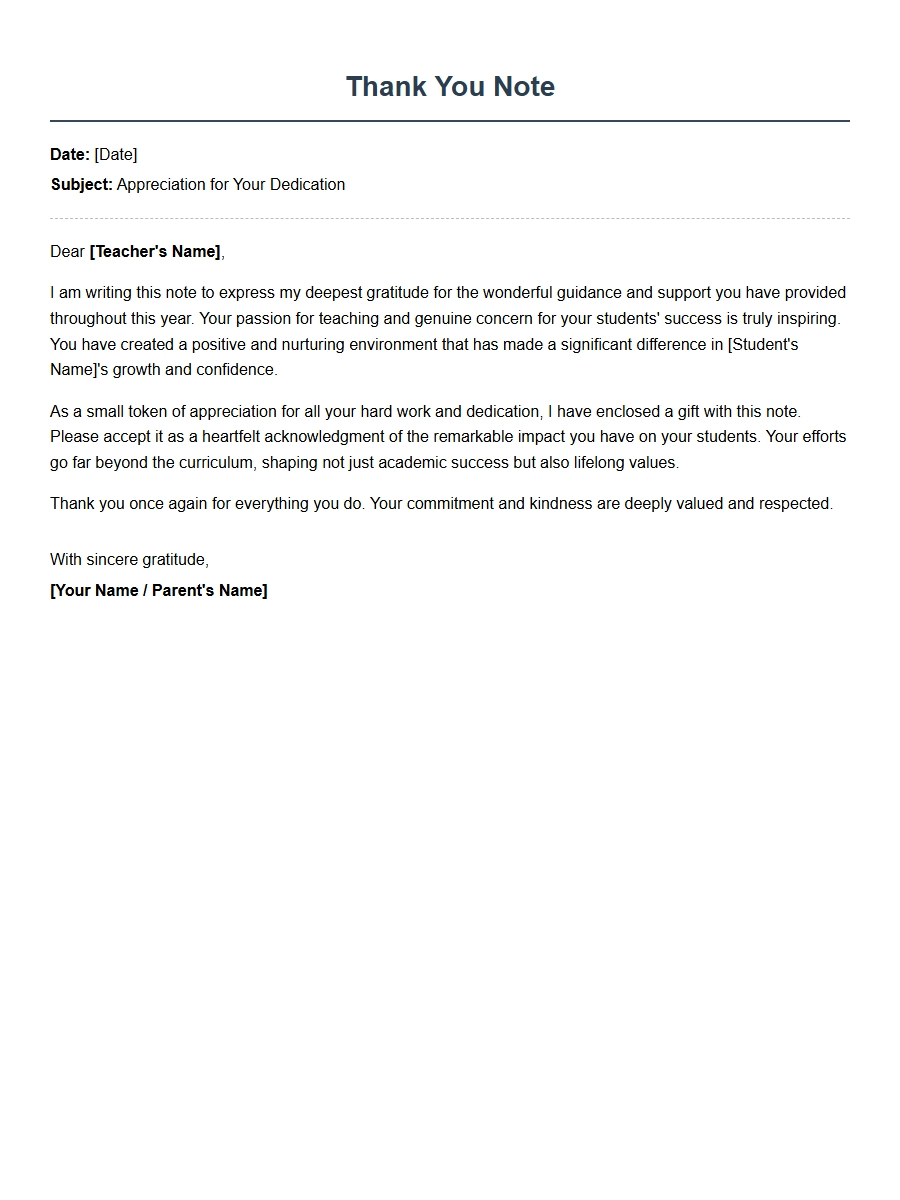 Sample Thank You Note for Teacher Gift
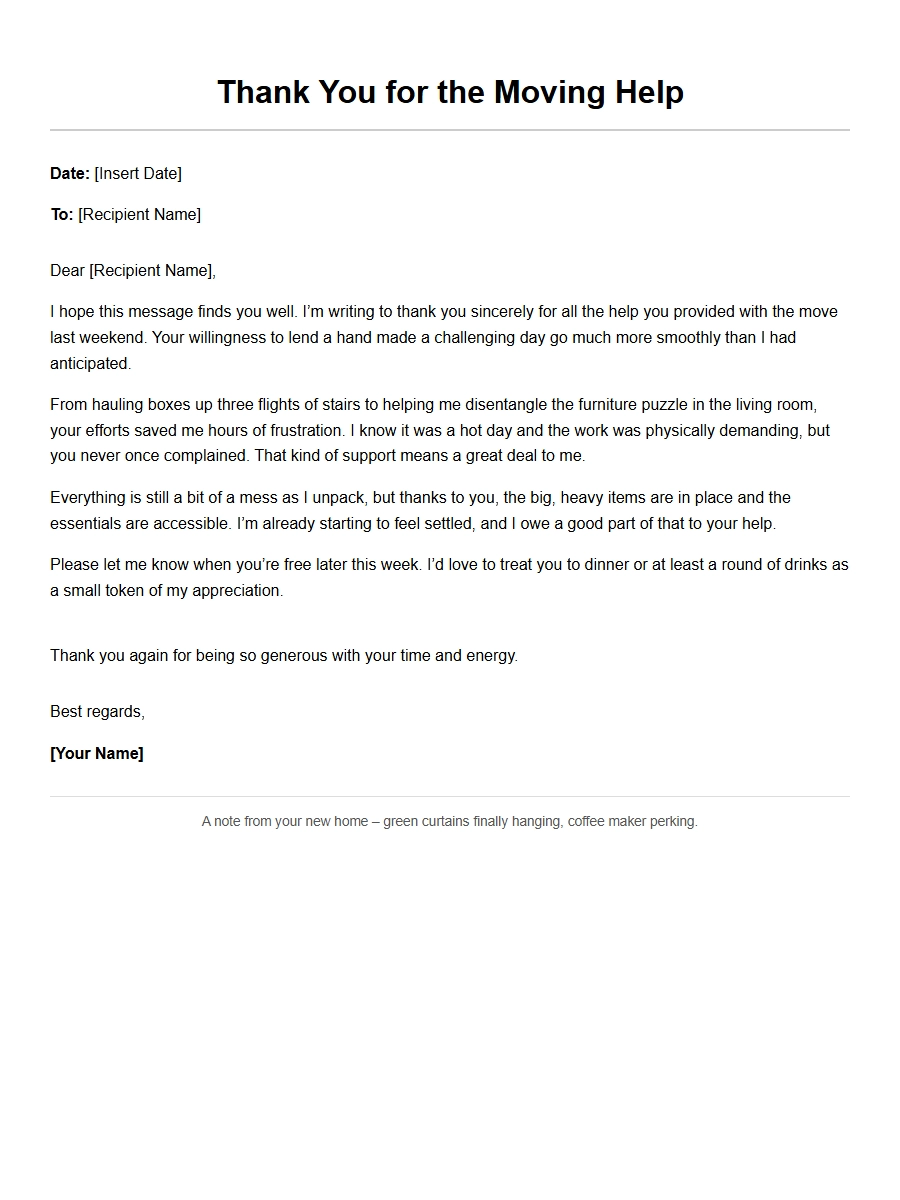 Thank-You Letter for Help with Moving
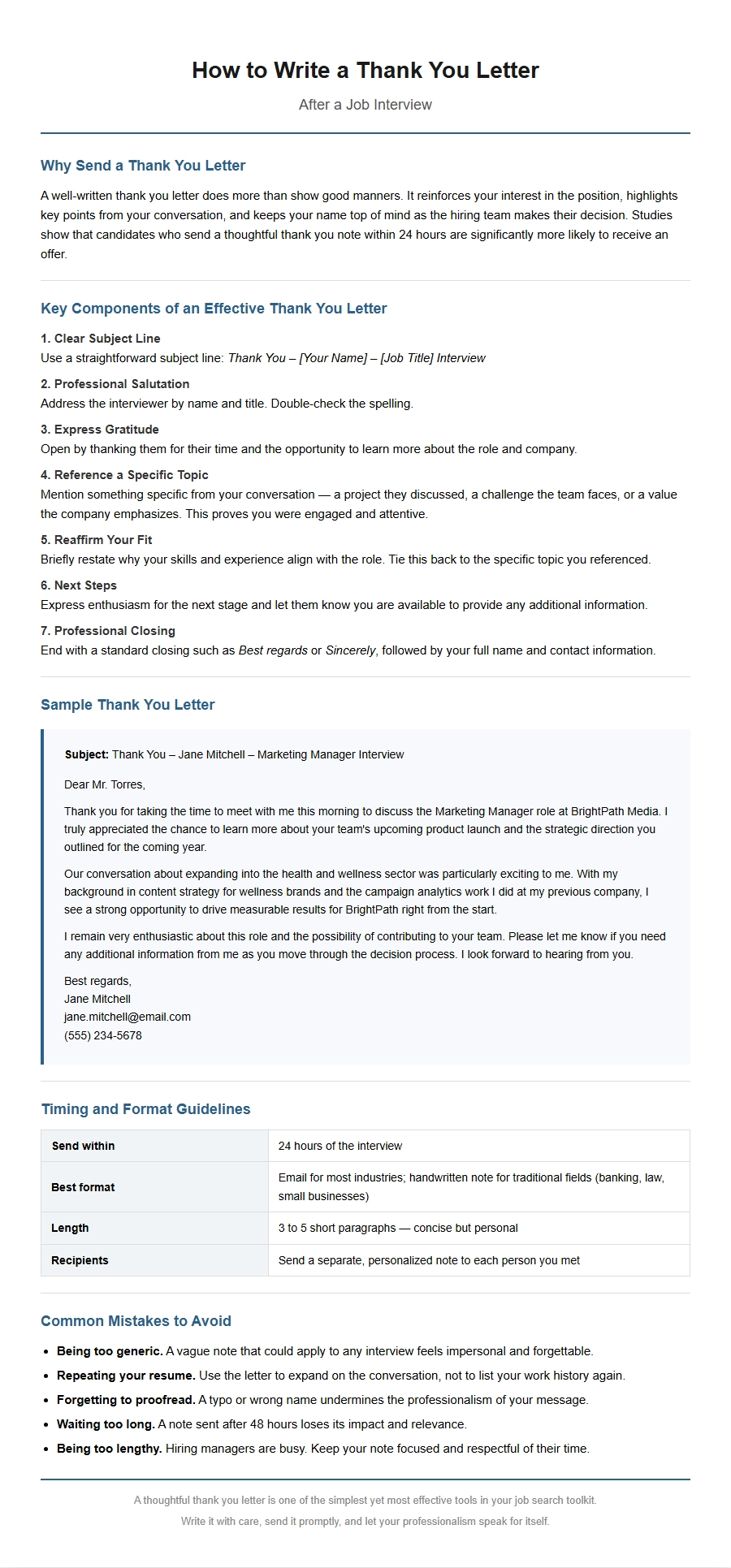 How to Write a Thank You Letter After an Interview
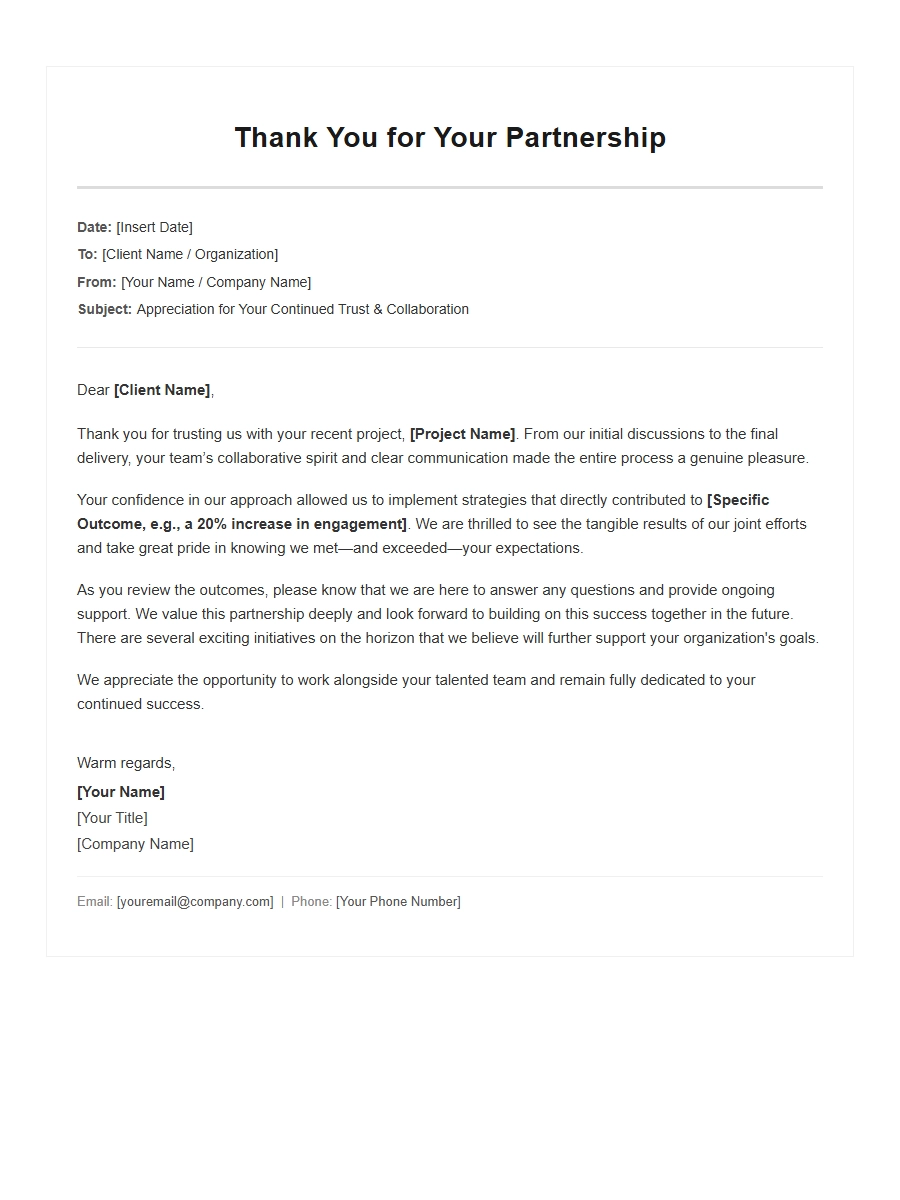 professional thank you email example for client - Thank-You Letters
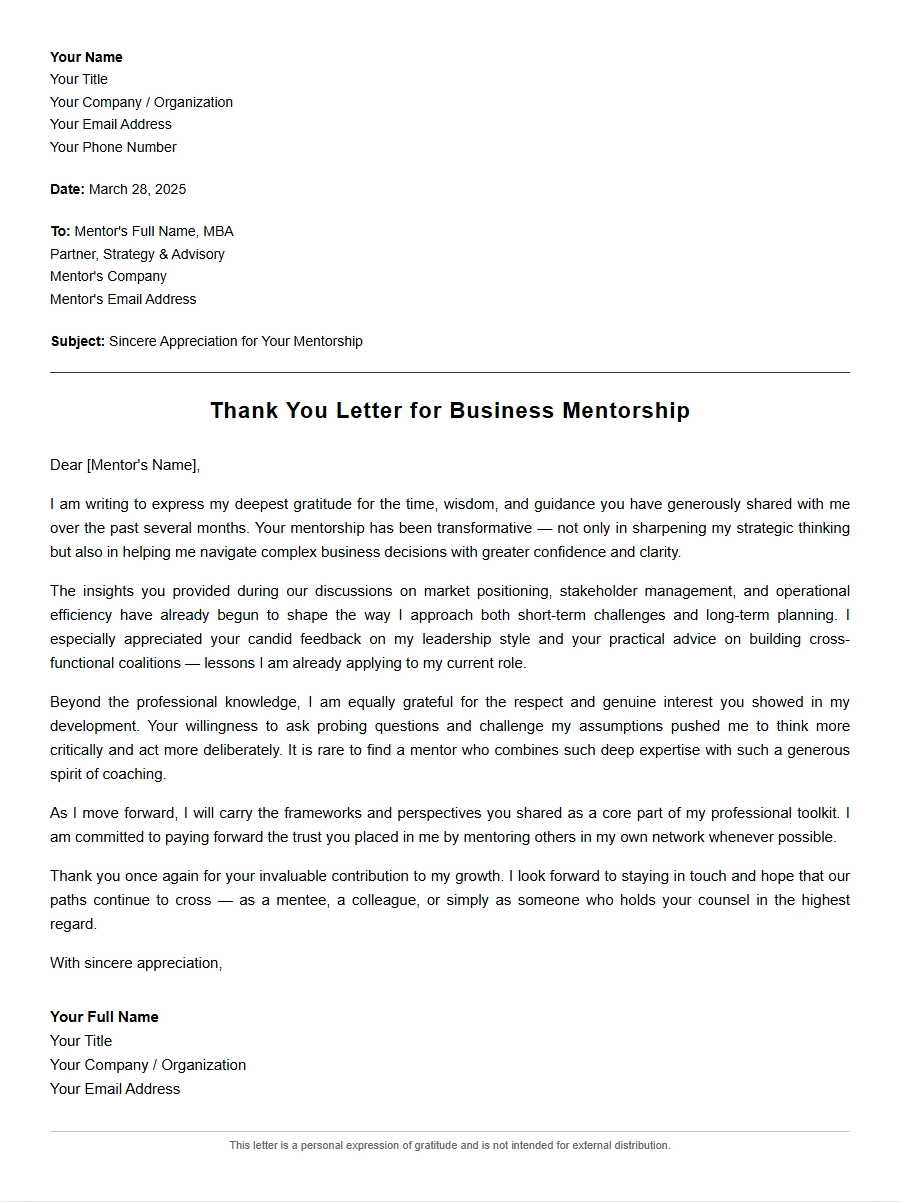 Business Mentor Thank-You Letter Guide
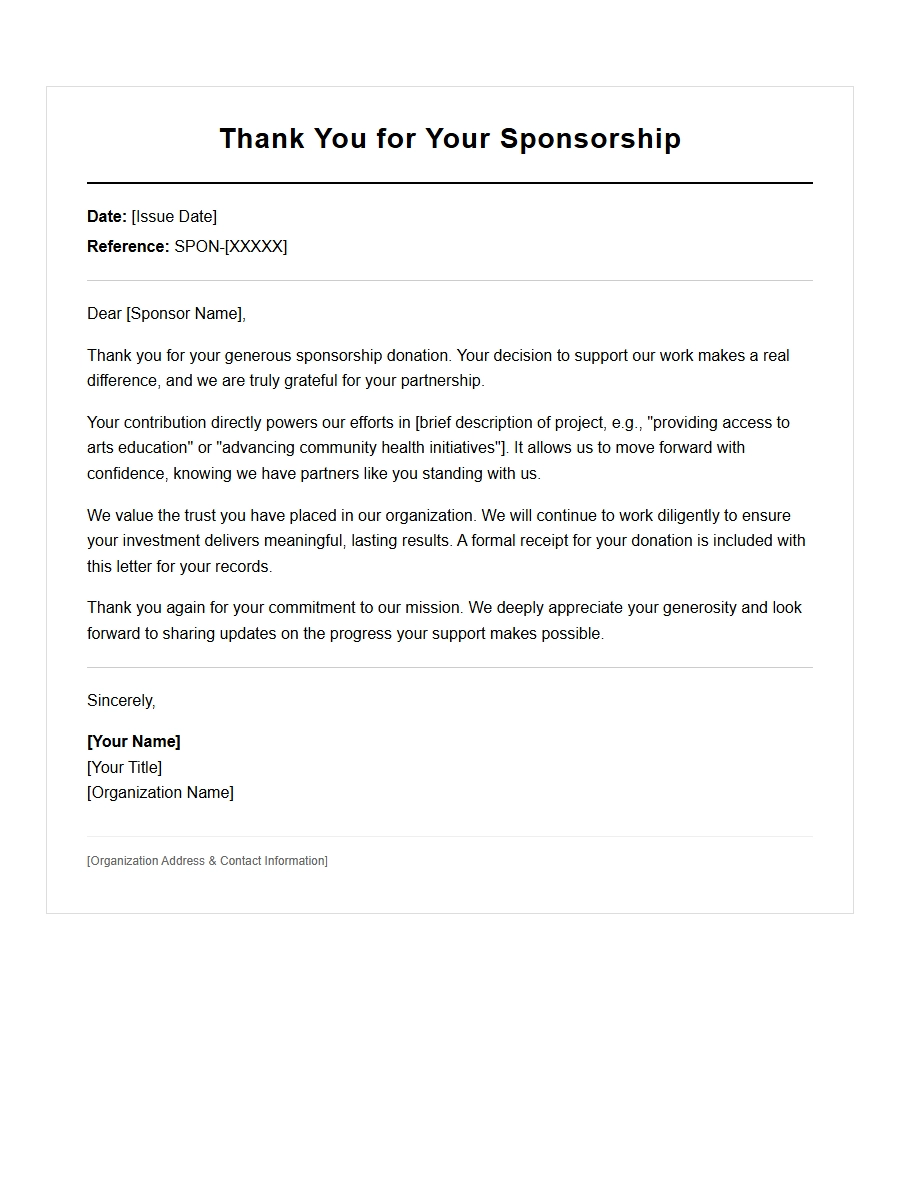 Thank You Letter for Sponsor Donation