You’ve got an employee who’s been with you for years. Maybe they’ve helped shape projects, mentored new hires, or just quietly kept things running. You want to write a letter that shows real gratitude—but the blank page stares back at you. You don’t want it to sound like a generic form letter, and you also don’t want to miss the mark and sound cold.
Let’s fix that. A well-written expression of appreciation for a long term employee doesn’t have to be complicated. It just needs to feel genuine and specific. And yes, using a sample to get started is a smart move—not cheating. A letter template gives you the structure you need (salutation, body, closing) so you can focus on the personal details that make the note meaningful.
Why a sample helps more than starting from scratch
Starting from zero invites writer’s block. You spend time worrying about business letter format or letter writing etiquette when you should be thinking about what this person means to your team. A good sample shows you the standard letter structure—things like salutation and closing conventions—so you don’t have to invent them. Then you can pour your energy into the words that matter.
How to choose the right sample for your situation
Not every appreciation letter needs the same tone in writing. For a long-term employee, you’ll probably want something between formal and warm. If they’re retiring, you might lean more formal. If you’re thanking them for 10 years of steady work, a semi-formal note works better. Look for a sample that matches the relationship you have with the person. A stiff, corporate letter will feel hollow. A too-casual one might feel dismissive of their service.
If you’re writing on company letterhead, pay attention to letterhead design and digital letter format—especially if you’re sending by email instead of print. For email, skip the letterhead and use a clear subject line like “Thank you for 15 years with us.”
The key parts your appreciation letter needs
Here’s what every good note includes, and how to make it your own.
Start with a warm, specific opening. Don’t just say “Thank you for your service.” That’s what everyone writes. Instead, mention a moment: “I still remember how you stepped in during the 2019 audit—we wouldn’t have made the deadline without you.” That one line shows you see them as a person, not just a tenure number.
Explain the impact. Tell them what their steady presence has done for the team or the company. Did they mentor three junior staff who later became managers? Did they create a system that saved everyone hours each week? Be concrete. Generic praise feels hollow.
Keep the middle paragraphs focused. One or two specific examples is plenty. You don’t need to list every accomplishment from the last decade. Pick the ones that feel most meaningful to you or to them.
End with a forward-looking thought. Even if they’re retiring or moving on, close with warmth. Something like “We’ll miss your steady hand around here, but we’re so glad for everything you’ve given us.” That leaves a lasting positive impression.
Mistakes to avoid when writing appreciation letters
I’ve seen a few common slip-ups that kill the sincerity of an otherwise good letter.
Using outdated salutations. “To whom it may concern” has no place in a personal appreciation letter. Use their name. “Dear Maria” is fine. “Dear Ms. Torres” is fine if you’re being formal. But address them directly.
Ignoring the format for email vs. printed letter. If you’re printing it on nice paper, use a full business letter format with your address and date. If you’re sending it by email, drop the address block and use a friendly subject line instead. Don’t paste a printed-letter format into an email—it looks odd.
Skipping the proofread. A typo in an appreciation letter feels careless. Read it aloud. Have someone else glance at it. Good proofreading letter habits show you care enough about the person to get it right.
How to adapt a sample without losing your voice
Take the sample’s structure—the opening, the body, the closing. Then rewrite the middle in your own words. If the sample says “your dedication over the years has been invaluable,” and that sounds stiff to you, change it to “you’ve been the person we could always count on.” That’s still professional, but it sounds like you, not a template.
The best customizable letter is one where the heart comes from you and the structure comes from the sample. That balance saves time and keeps things genuine.
When to send a printed letter versus an email
For a long-term employee milestone (5, 10, 20 years), a printed letter on nice paper still carries weight. For a quick thank-you after a project milestone, email is fine. The medium should match the significance of the occasion. If you’re unsure, printed is rarely wrong.
Quick next step
Find a sample that feels close to what you want. Adapt the opening paragraph with one specific memory. Then fill in the rest with their real impact on the team. Keep it short—three to four paragraphs max. Read it once for tone, once for spelling, and send it. You’ll be glad you took the time.
Examples for Different Needs
Thank-You Letter for a Long-Term Employee
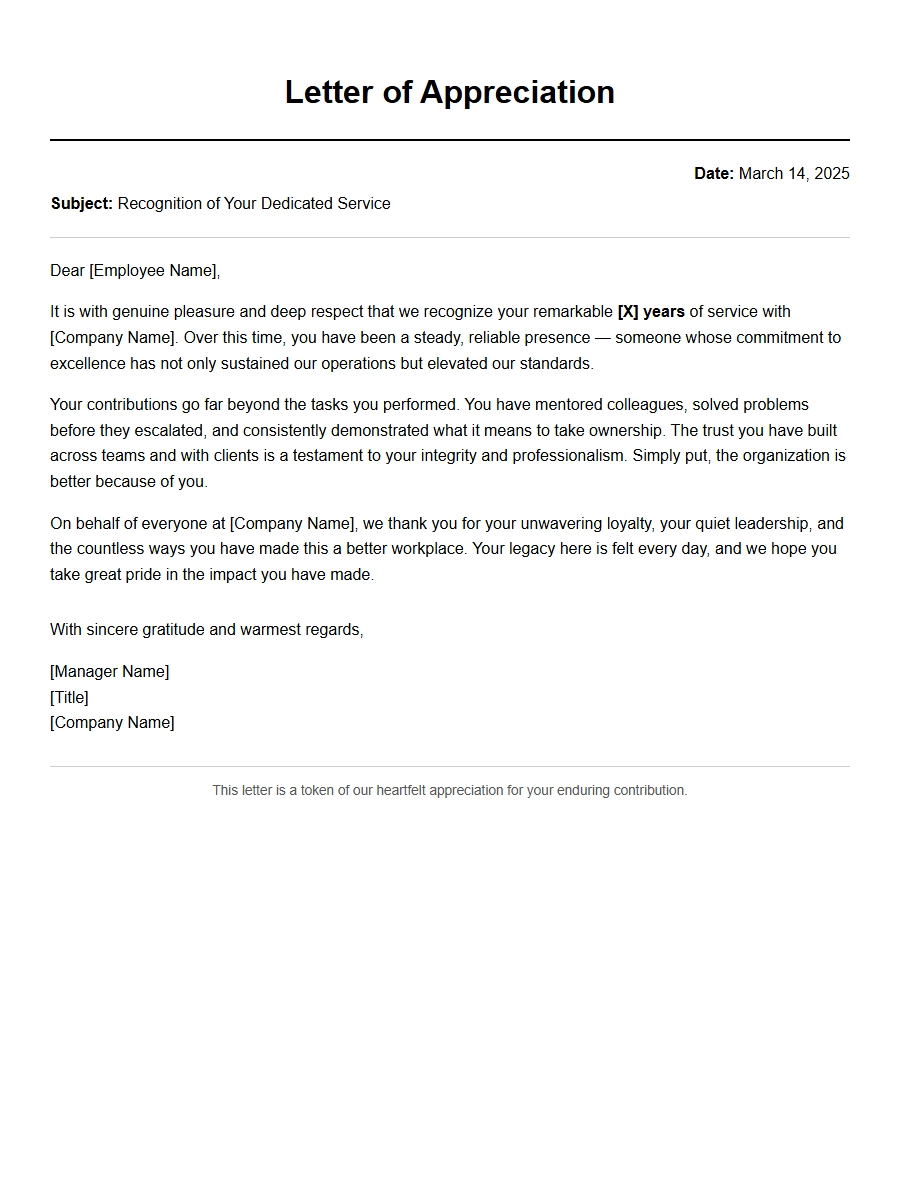
Letter of Appreciation for 10-Year Service Milestone
Date: October 26, 2023
To: James Miller
From: Sarah Chen, HR Director
Dear James,
On behalf of the entire leadership team, I want to express our deepest appreciation for your ten years of dedicated service to Acme Corp. Your unwavering commitment, professionalism, and positive attitude have been instrumental in our growth and success.
To mark this milestone, we have arranged the following recognition package for you:
Recognition Item
Details
Tenure Award
Engraved crystal plaque with service dates
Monetary Bonus
$2,500 net deposit to your payroll account
Extra Vacation Days
3 additional paid days off, usable within 12 months
Special Lunch
Team celebration lunch on November 15th at noon
Thank you again for your loyalty and hard work. We look forward to many more years of collaboration.
With sincere thanks, Sarah Chen
Thank-You Note for Mentorship Over Many Years
Date: October 26, 2023
To: Linda Okafor
From: David Park, Product Manager
Dear Linda,
I wanted to write a personal note to express my genuine gratitude for your incredible mentorship over the past eight years. When I joined this company as a fresh graduate, your guidance shaped my career path more than you may realize.
Here are just a few ways you have made a difference:
Technical skills: You patiently taught me project management frameworks that I still use daily.
Leadership: You showed me how to lead with empathy and integrity during tough deadlines.
Confidence: You encouraged me to speak up in meetings and take on challenging assignments.
Your long tenure at the company has set a standard of excellence for everyone. I am proud to be part of your legacy. Thank you for being a true mentor and friend.
Warmly, David Park
Formal Company Announcement Honoring a Long-Term Employee
Date: October 26, 2023
To: All Staff
From: CEO Office
It is with great pleasure that we announce the recognition of Maria Santos for her 15 years of exceptional service with BrightStar Solutions.
Maria has been a cornerstone of our finance department since 2008. Her contributions include:
Leading the migration to a new accounting system in 2014 with zero downtime
Mentoring over 20 junior analysts, many of whom are now team leaders
Consistently achieving 100% audit compliance for her department
To honor her dedication, Maria will receive:
Honor
Value
Service Award Plaque
Custom engraved with 15-year emblem
Gift Card
$1,000 to a retailer of her choice
Additional Paid Leave
5 days, non-expiring
Please join us in congratulating Maria at the all-hands meeting on Friday, November 3rd at 3 PM in the main conference room.
Thank you for your continued hard work, Maria.
Sincerely, The CEO Office
Personal Thank-You Card for Long-Term Remote Employee
Date: October 26, 2023
To: Alex Rivera
From: Your Team at InnovateTech
Dear Alex,
As you reach your 12th anniversary with InnovateTech, we want to send a heartfelt thank-you across the miles. Even though you work remotely from three states away, your impact is felt every day by every team member.
Your reliability and expertise in software architecture have made complex projects possible. Specifically:
You designed the core framework for our flagship product, saving thousands in development hours.
You have never missed a deadline despite working across time zones.
Your virtual mentoring sessions are a highlight for junior developers.
To celebrate your milestone remotely, we are sending you:
A premium care package with gourmet treats and branded merch
A $500 Amazon gift card for your home office upgrade
A personalized video message from the whole team
We appreciate you, Alex. Here’s to many more years of success together.
Warmly, Your InnovateTech Family
Thank-You Letter for Retiring Long-Term Employee
Date: October 26, 2023
To: Robert Kim
From: The Board of Directors
Dear Robert,
As you prepare to retire after 25 outstanding years with Greenfield Industries, we want to express our profound gratitude for your lifetime of dedication. Your leadership in operations transformed our company into an industry leader.
Highlights of your career include:
Year
Achievement
2003
Implemented Lean Six Sigma, reducing waste by 30%
2010
Opened our first international facility in Singapore
2019
Led pandemic response plan, protecting all 500 employees
In recognition, we present you with:
A framed resolution from the Board
A lifetime pass to all company events
A retirement gift of $10,000
Your legacy will guide us for years to come. Best wishes for a joyful retirement.
With deepest thanks, The Board of Directors
Peer-to-Peer Appreciation for a Long-Term Colleague
Date: October 26, 2023
To: Grace Thompson
From: Your Team in Marketing
Dear Grace,
We just learned that you’ve been with the company for 20 years, and we wanted to surprise you with a note of appreciation from your peers. You are the glue that holds our department together.
Here’s what we love about working with you:
Patience: You always explain things calmly, even when we ask the same question twice.
Institutional knowledge: You remember campaign details from a decade ago that save us from repeating mistakes.
Humor: Your Friday funny emails are legendary and boost morale every week.
To honor you, we have pooled together to give you:
A spa gift certificate worth $300
A custom photo book of team memories through the years
A framed group photo signed by everyone
Thank you for being an amazing colleague and friend. We appreciate you more than words can say.
With love, Your Marketing Team
Client Appreciation Letter for Long-Term Employee Service
Date: October 26, 2023
To: Helen Carter, Senior Account Manager
From: John Walsh, VP of Client Relations, MegaCorp
Dear Helen,
On behalf of MegaCorp, I want to extend our sincere thanks for your 18 years of dedicated support to our account. Your consistent excellence has been a cornerstone of our successful partnership with your firm.
We have compiled a few statistics that show your incredible impact:
Metric
Value
Projects Delivered
47 major initiatives
Average Satisfaction Score
4.9 out of 5.0
Response Time
Under 2 hours, always
Issues Escalated
Zero in the last 5 years
You have set a benchmark for what client service should be. Thank you for making our company feel valued every single day.
We look forward to continuing our partnership for many years to come.
Warmly, John Walsh
Thank-You Letter to Long-Term Volunteer Employee
Date: October 26, 2023
To: Samuel Green
From: Nonprofit Partnership Committee
Dear Samuel,
We are writing to thank you for your 10 years of volunteering with our corporate social responsibility program. Your dedication to serving the community while working full-time is truly inspiring.
Over the decade, you have contributed:
Over 500 hours at local food banks
Mentorship for 30 at-risk youth through our career readiness program
Leadership of 12 company-wide charity drives, raising over $200,000
In gratitude, we will donate $1,000 to the charity of your choice in your name. Additionally, you will receive a certificate of appreciation signed by the CEO.
Your long-term commitment shows that our company values extend beyond profit. Thank you for being a role model.
Gratefully, The Nonprofit Partnership Committee
Departmental Thank-You for a Long-Term Team Lead
Date: October 26, 2023
To: Dr. Emily Foster
From: Research & Development Team
Dear Emily,
As you celebrate 14 years as our team lead, we want to collectively thank you for your visionary leadership and dedication. Under your guidance, our department has become a powerhouse of innovation.
Key achievements during your tenure:
Filed 34 patents, 12 of which led to commercial products
Reduced product development cycle from 18 months to 9 months
Built a diverse, highly engaged team with 95% retention rate
To show our appreciation, we have organized:
A surprise party this Friday at 4 PM in Lab B
A group gift of a high-end espresso machine for the break room
A framed collage of team photos from every year you’ve led us
You have made coming to work a joy. Thank you for believing in us.
Your grateful team, R&D Department
CEO’s Personal Thank-You to a Long-Term Executive
Date: October 26, 2023
To: William Hart, CFO
From: Michael Roberts, CEO
Dear William,
I am writing personally to thank you for 22 years of outstanding service as our Chief Financial Officer. Your steady hand through economic ups and downs has been vital to our company’s survival and prosperity.
Some of your most critical contributions:
Year
Challenge
Result
2008
Financial crisis
Navigated without layoffs, secured bridge loan
2015
Merger integration
Saved $5M through tax optimization
2020
Pandemic disruption
Maintained liquidity, retained all staff
In recognition of your long-term dedication, the Board has approved a special bonus of $25,000 and a commemorative watch. Additionally, you will receive an extra week of paid vacation annually moving forward.
Thank you for your wisdom and partnership. I am honored to work alongside you.
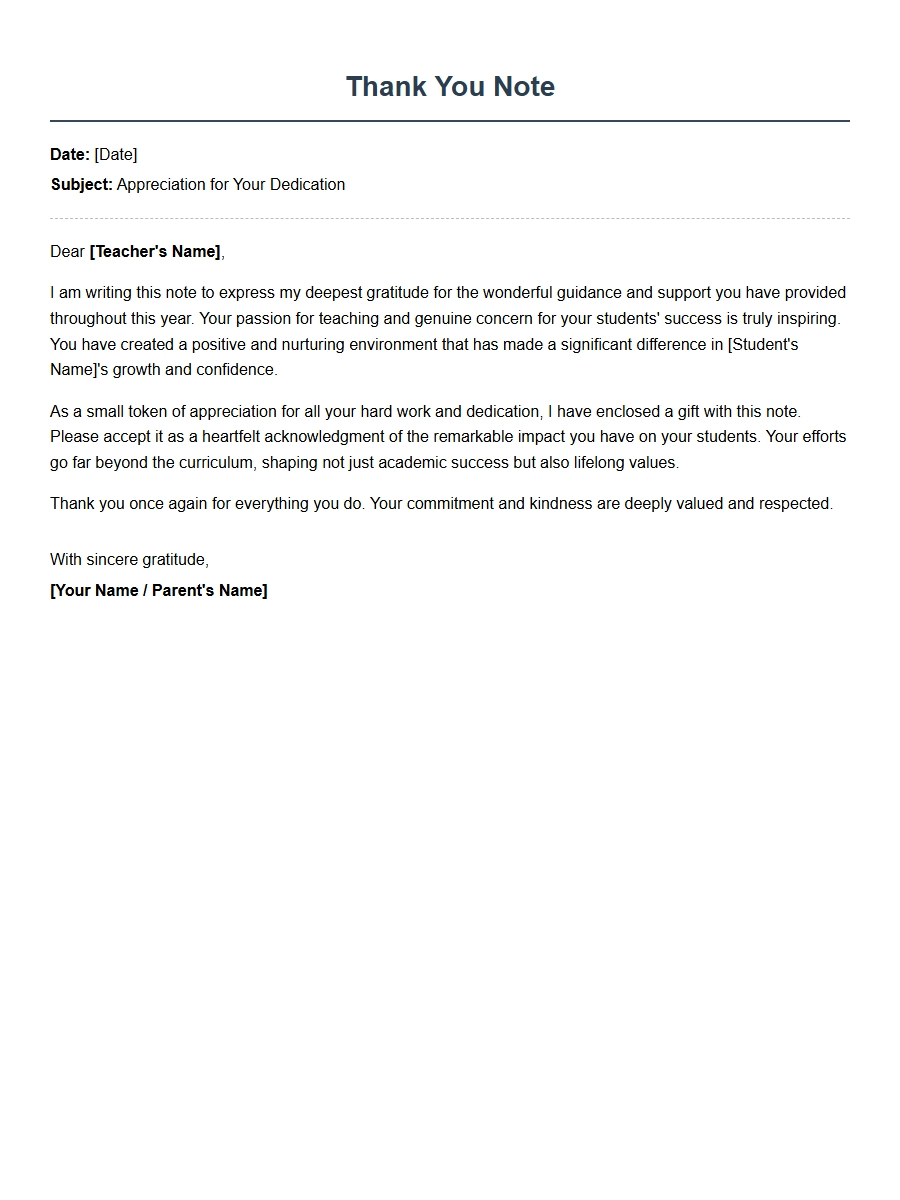 Sample Thank You Note for Teacher Gift
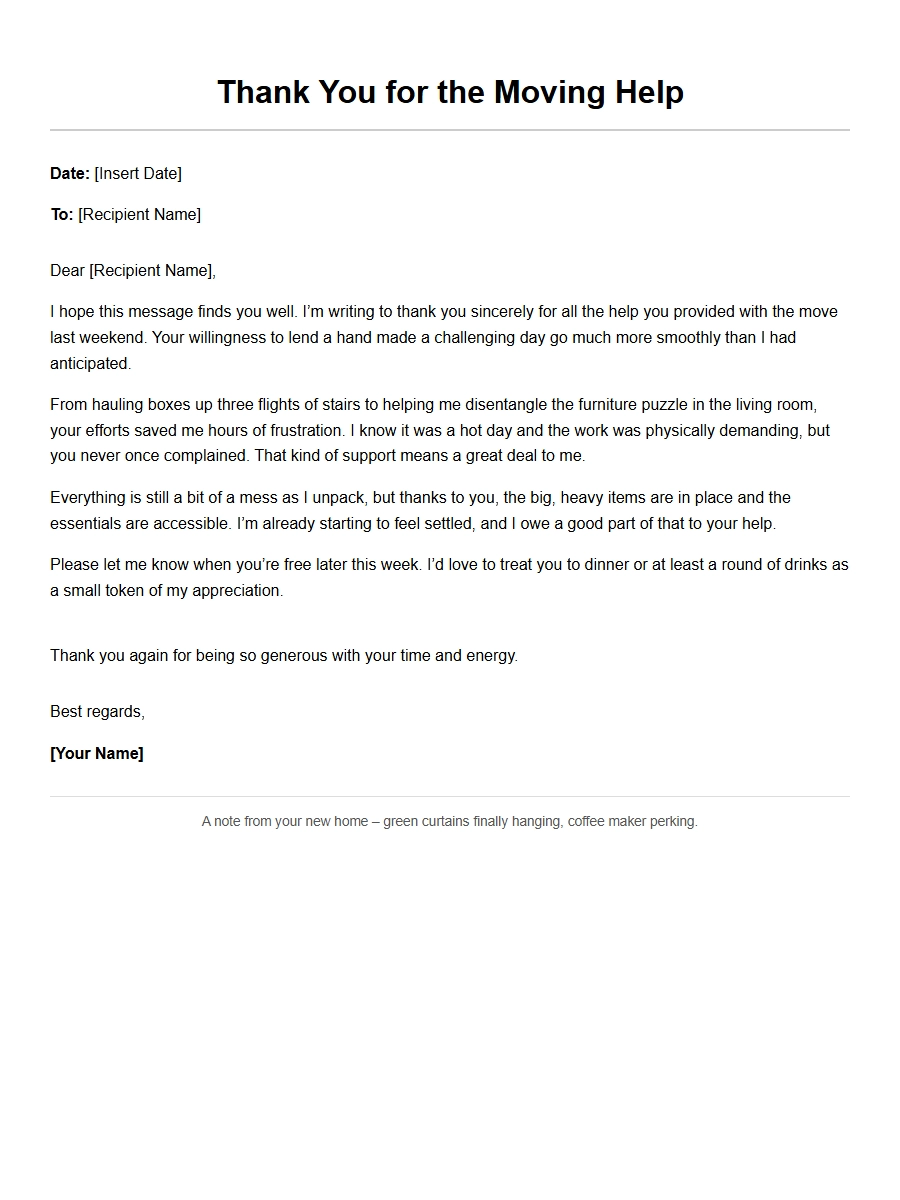 Thank-You Letter for Help with Moving
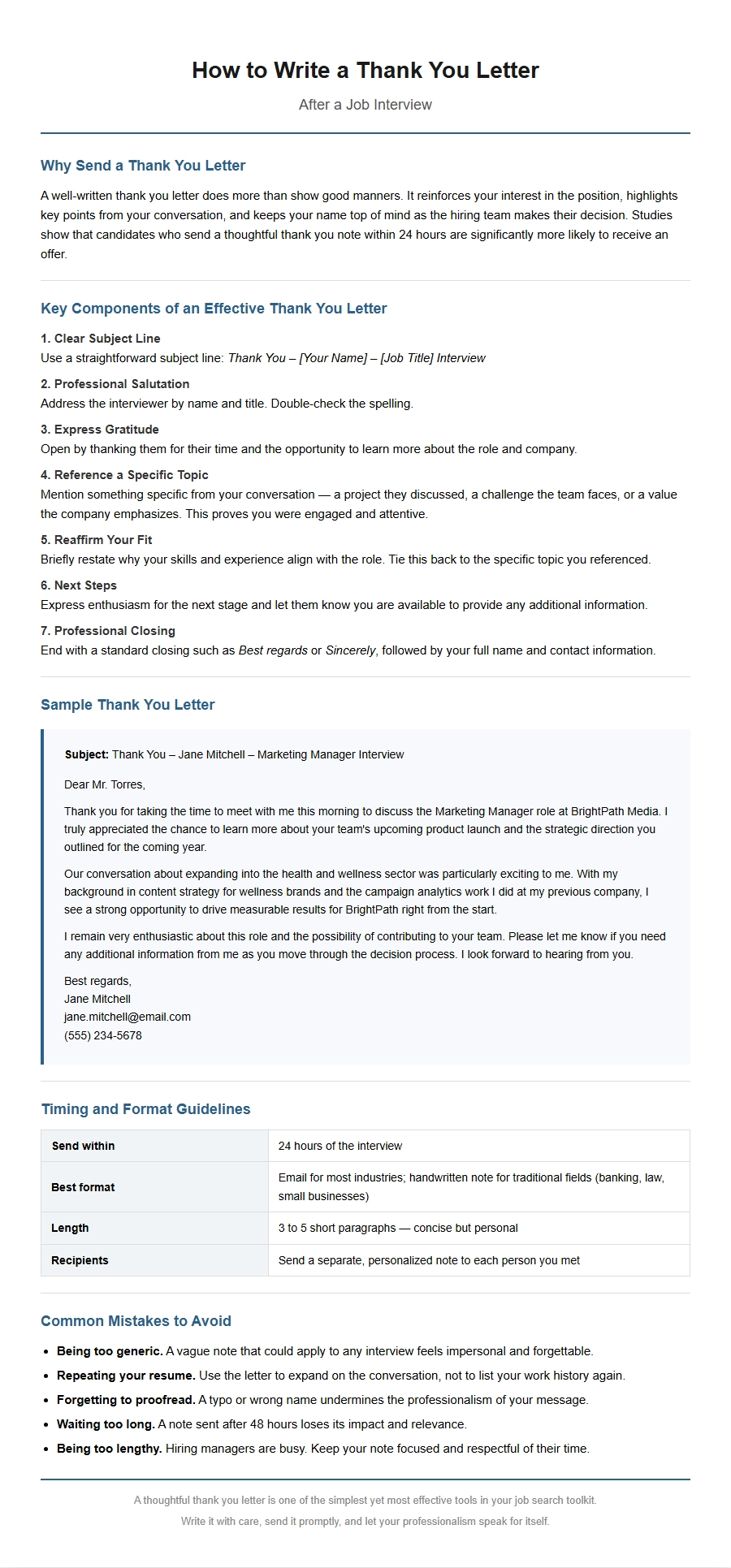 How to Write a Thank You Letter After an Interview
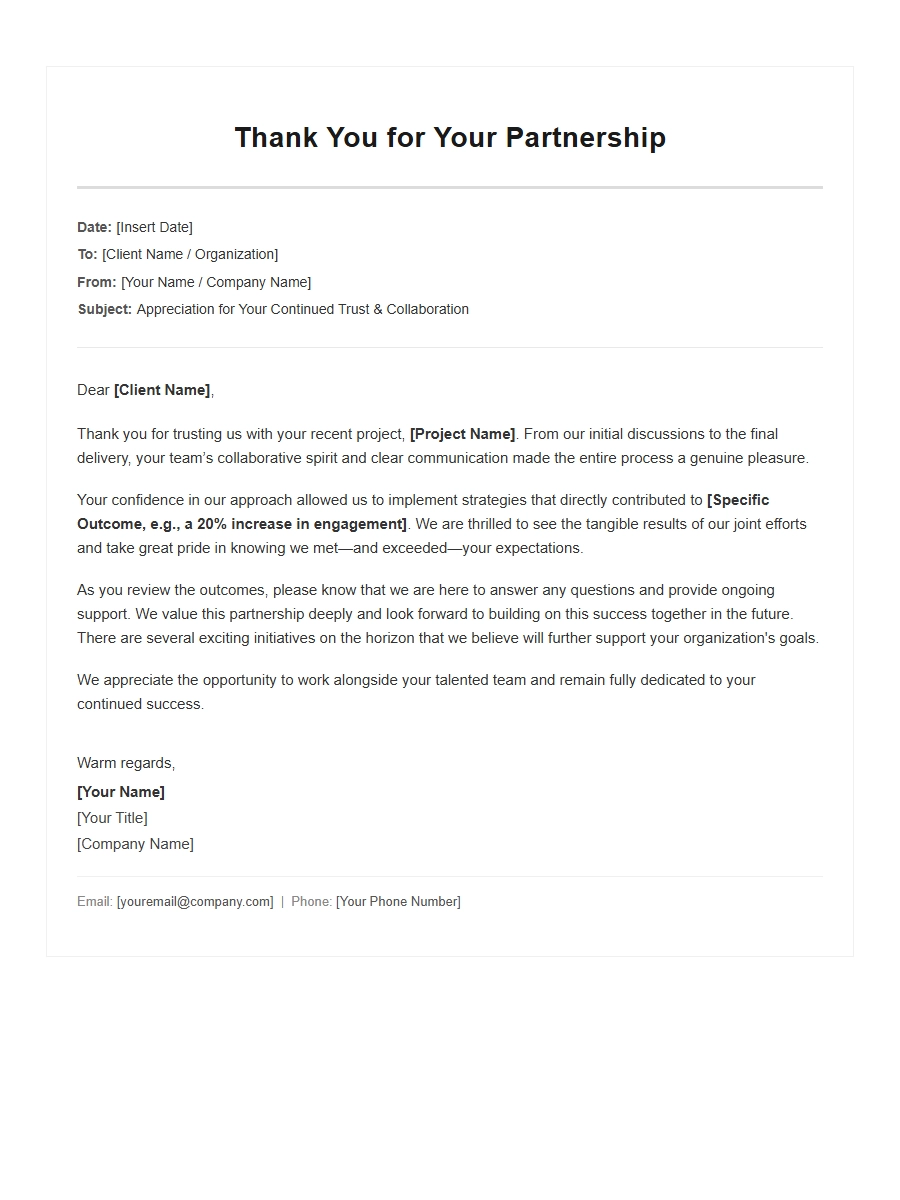 professional thank you email example for client - Thank-You Letters
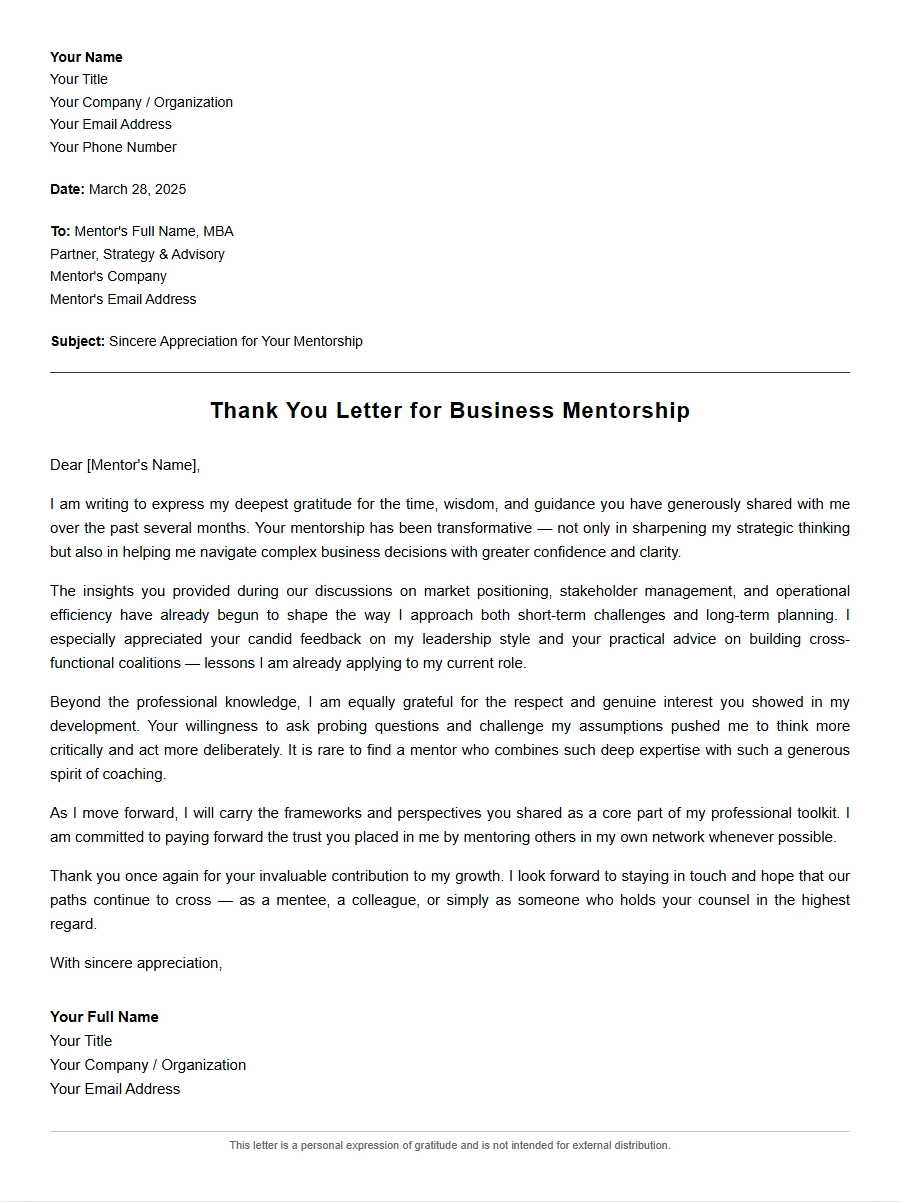 Business Mentor Thank-You Letter Guide
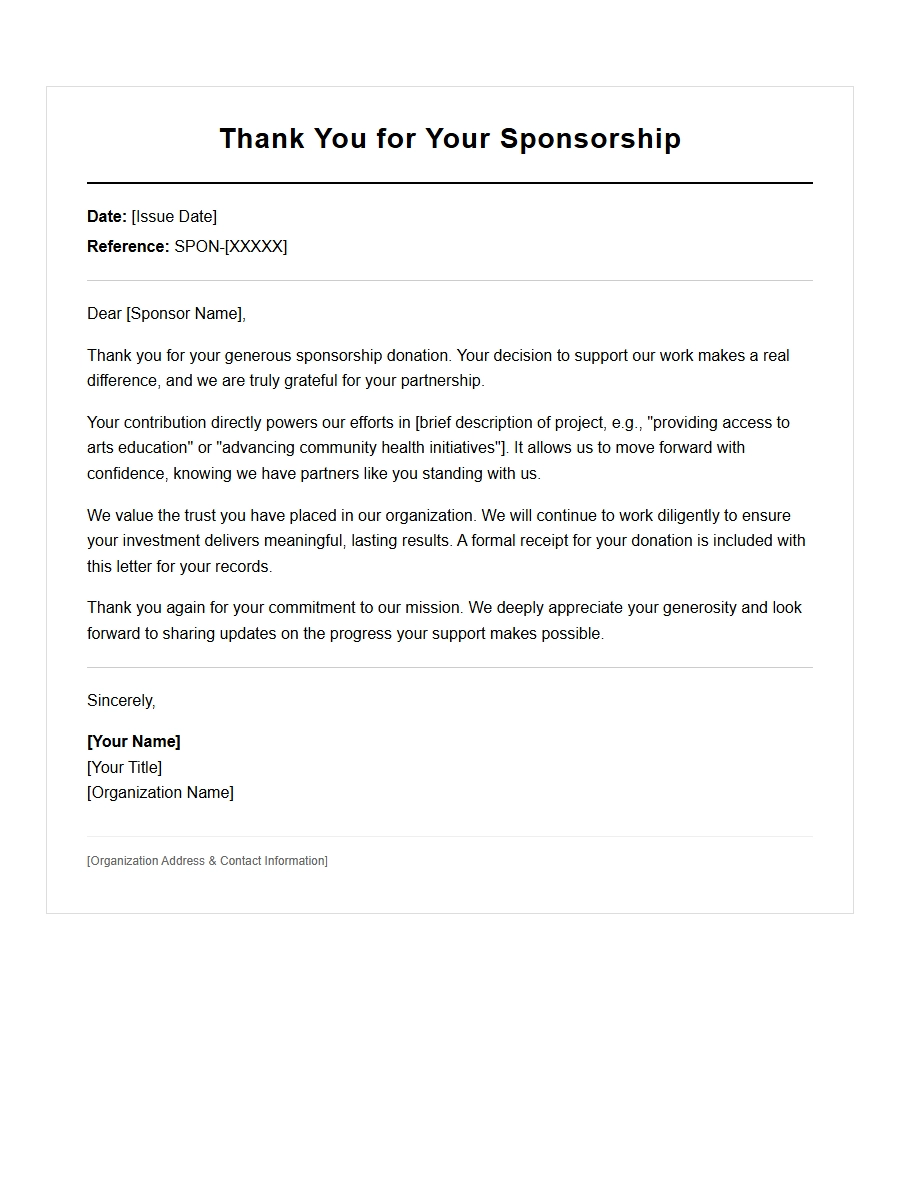 Thank You Letter for Sponsor Donation