You’re staring at a blank email screen, and the pressure is real. You need to invite someone—maybe a candidate or a colleague—to discuss a job offer, but finding the right words feels harder than it should. That’s where a sample draft for job offer discussion invite comes in. It’s not a crutch; it’s a time-saver that gives you structure when you’re short on time or unsure about tone.
Why use a sample for a job offer discussion invite?
Writing professional correspondence from scratch every time is exhausting. Using a sample isn’t cheating. It’s smart. A good letter template gives you the skeleton—proper salutation, closing, and flow—so you can focus on personalizing the message. Think of it as a starting point, not a finished product.
The exact wording you choose matters. A job offer discussion invite sits somewhere between formal and friendly. You want to show enthusiasm without being pushy, and professionalism without sounding robotic. The best samples strike that balance.
What should your invite include?
A solid invite has a clear purpose: schedule a conversation about the offer. Keep it short. State the job title, suggest a few time options, and mention that you’ll discuss details like start date, compensation, and next steps. Avoid dumping all terms in the email—save that for the call.
Here’s a common structure:
Subject line – Clear and direct, e.g., “Job Offer Discussion – [Job Title] – [Your Name]”
Greeting – Use the person’s name. “Dear [Name]” works for formal situations; “Hi [Name]” is fine if you’ve already been chatting.
Purpose – Say you’re reaching out to schedule a call to discuss the offer.
Logistics – Offer 2–3 time slots and ask what works best.
The biggest mistake people make is copying a sample word-for-word. That leaves the invite feeling stiff. Instead, read the sample, then rewrite the opening paragraph in your natural voice. If you’re excited about the candidate, say so. “We were really impressed by your background and would love to chat about the next steps.” That’s human. It’s not robotic.
Also consider the recipient’s industry. A formal writing tips approach works for law firms or finance. For startups or creative roles, keep it warmer. The same business letter format can be tweaked by swapping “Dear” for “Hey” or dropping the full address.
One more thing: pay attention to tone in writing. If you’ve been emailing back and forth casually, don’t suddenly switch to “To whom it may concern.” Match the existing vibe.
Common mistakes to avoid
Ever received an invite that felt too stiff or too casual? That happens when you ignore context. Here are traps to dodge:
Outdated salutations – “To whom it may concern” sounds like junk mail. Use the person’s name.
Ignoring format – An email invite doesn’t need a letterhead design. A printed letter does. Know your medium.
Overloading details – Don’t negotiate salary in the invite. Save that for the discussion.
Skipping proofreading – A typo in the job title looks careless. Read it out loud.
Most job offer discussion invites are sent by email. That means your digital letter format should be easy to read on a phone. Keep paragraphs short, use line breaks, and avoid attachments if possible—put the details in the body. If you’re printing the letter (rare these days), then use a proper letterhead design and include addresses.
Also, think about timing. Send the invite within 24 hours of the verbal offer. Momentum matters. And always include a clear call to action: “Please let me know which time works for you.”
How samples save you from blank-page panic
When you’re stuck, a sample gives you a bridge. You don’t have to invent the structure from scratch. That’s especially helpful if you’re writing a resignation letter sample or a cover letter examples for yourself later. The same principle applies: samples show you what’s expected, then you make it your own.
For inspiration on scheduling a different kind of meetup, look at this sample email invitation for networking mixer—it uses a friendly tone while clearly stating time and place.
Mistakes in personalization (and how to fix them)
I’ve seen invites that copy-paste the wrong company name. That’s a fast way to lose trust. Before hitting send, double-check: correct job title, correct name spelling, correct date. Also, avoid generic phrases like “We are pleased to inform you.” Instead, say “We loved meeting you last week and are excited to talk numbers.”
One quick tip: if you’re unsure about formality, lean slightly toward professional. You can always warm it up after you gauge their response. But you can’t undo a “Hey dude” if the recipient expects a formal tone.
The best invites feel personal and professional
Your sample draft is a springboard, not a final answer. Use it to get the letter structure right, then add your personality. Think of the conversation you’ll have—what excites you about this person joining the team? Mention that. A line like “We think your skills would be a great fit for our upcoming projects” goes a long way.
Pick a sample that matches your situation. Read it once. Then close it and write your own version from memory. That way you keep the structure but use your voice. Then proofread—or better, have a colleague glance at it. A fresh pair of eyes catches awkward phrasing.
Remember: every time you write one of these invites, the next one gets faster. The sample is a shortcut, but practice builds real skill. So go ahead, draft that email, and make it sound like you—just a slightly more polished you.
Extra Samples
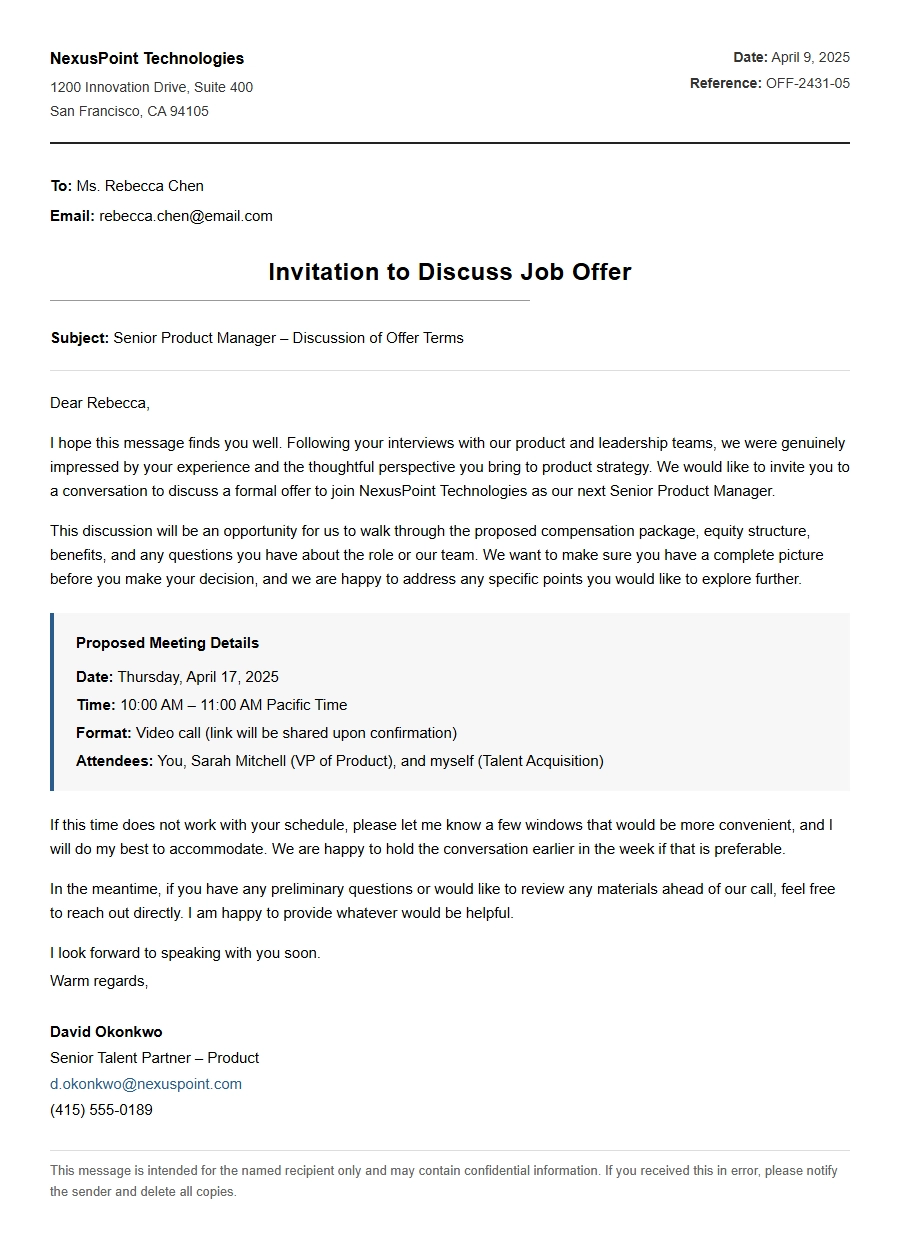
Draft Job Offer Discussion Invite
Formal Offer Discussion Invitation
Dear Jane Smith,
Following your successful interview for the position of Senior Marketing Manager, we are pleased to invite you to a discussion regarding the terms of your employment offer. The meeting will take place on Thursday, March 28, 2024, at 10:00 AM in our main conference room (Building 2, 3rd Floor).
During this conversation we will cover:
Base salary and bonus structure
Equity package details
Start date and onboarding schedule
Benefits overview (health, retirement, vacation)
Any questions you may have
Please confirm your availability by replying to this email. If the proposed time does not suit you, kindly suggest two alternative slots. We look forward to welcoming you to the team.
Best regards, Michael Brown Talent Acquisition Lead ACME Corp
Internal Promotion Offer Meeting
Hello David,
Congratulations! Based on your outstanding performance and leadership potential, we would like to invite you to a meeting to discuss your promotion to Team Lead – Product Development.
The meeting is scheduled for Wednesday, April 3, 2024, at 2:30 PM in the Blue Room. We will go over the revised offer, including:
Item
Details
New Title
Team Lead – Product Development
Salary Adjustment
+15% base increase
Additional Benefits
Company car allowance, extra PTO days
Reporting Structure
Directly to VP of Engineering
Please bring any questions you have. If you are unable to attend, let HR (ext. 4021) know by end of this week.
Warmly, Sarah Lee VP, Engineering
Phone Call to Discuss Offer
Hi Emily,
Thank you for your interest in the Junior Graphic Designer role at DesignLab. We would love to set up a brief phone call to walk you through the offer details.
Our HR coordinator Alex will call you at +1-555-123-4567 on Friday, March 22, 2024, between 10:00 AM and 12:00 PM (EST).
During the call we will discuss:
Compensation package: $45,000 base + performance bonus
Work schedule: Monday–Friday, 9 AM–5 PM (flexible start)
Equipment provided: MacBook Pro, Wacom tablet
Start date: April 15, 2024
If that time window does not work, please suggest a 30-minute slot that suits you. We are excited to have you on board!
Best, Chris Martin Recruiting Coordinator
Video Conference Invite for Offer Terms
Dear Dr. Anna Kostas,
We are thrilled to invite you to a video conference to discuss the offer for the position of Lead Research Scientist. The meeting details are:
Detail
Information
Date
Monday, April 8, 2024
Time
11:00 AM – 12:00 PM (CET)
Platform
Zoom (link will be sent upon confirmation)
Attendees
You + Hiring Manager (Dr. Rivera) & HR Director (Ms. Park)
We will review the proposed terms, including laboratory funding, publication support, and relocation assistance. Please have your passport ready if you plan to discuss visa sponsorship.
Kindly respond by Thursday, April 4 to confirm. We look forward to seeing you.
On behalf of the executive team, I am pleased to invite you to an in-person meeting to present the offer for Chief Operating Officer at GlobalTech Solutions.
The meeting will be held on Tuesday, April 2, 2024, at 3:00 PM in the Boardroom (10th Floor, HQ Tower). We will cover the complete offer package:
Compensation: Base salary $350,000 + annual bonus up to 40%
Equity: 15,000 stock options (vesting over 4 years)
Benefits: Executive health plan, 6 weeks vacation, club membership
Start date: May 1, 2024 (flexible)
We anticipate the discussion to last approximately 90 minutes. Please bring a copy of your identification for background verification. Confirm your attendance by March 28 to executive.hiring@globaltech.com.
Yours faithfully, Patricia Lang Chairperson, GlobalTech Solutions
Offer Discussion for Part-Time Position
Hello Mia,
We were impressed with your interview for the Part-Time Content Writer role. Let’s schedule a brief discussion to finalize the offer terms.
Proposed date: Thursday, April 4, 2024 at either 10:00 AM or 2:00 PM (your choice). The meeting can be via phone or Zoom – whatever works best for you.
Here is a preview of what we will talk about:
Hourly rate: $28/hour for up to 25 hours/week
Flexible schedule (core hours 10 AM – 3 PM)
Remote work – equipment provided
Contract duration: 6 months, with potential extension
Please reply with your preferred time and format. We look forward to having you on the team!
Best, Liam Scott Editorial Director WriteWorld Media
Invitation to Review Offer Package
Dear Sophia,
Thank you for your patience while we finalized the offer for Data Analyst II. We would like to invite you to a meeting where we will present the complete offer package and answer any questions.
Details:
Field
Value
Date
Friday, March 29, 2024
Time
1:00 PM – 2:00 PM (ET)
Location
Teams meeting – link sent upon RSVP
Agenda
Compensation, benefits, start date, onboarding
To help us prepare, please let us know if you have any specific items you’d like to discuss (e.g., work-from-home policy, professional development budget). We want this conversation to be as productive as possible.
Please confirm by Wednesday, March 27. We can’t wait to welcome you to the team!
Warm regards, Kevin O’Brien HR Business Partner
Calendar Invite: Offer Discussion with HR
This is an official calendar invitation for a job offer discussion.
Subject: Offer Discussion – John Doe – Software Engineer II
Date & Time
Duration
Location
Monday, April 1, 2024 11:30 AM
45 minutes
Meeting Room C / Google Meet
Attendees: John Doe (candidate), Rachel Adams (HR Manager), Tom Liu (Hiring Manager)
Agenda:
Review offer letter and compensation details
Clarify stock options and 401(k) match
Discuss start date and training schedule
Open Q&A
Please accept or propose a new time via the calendar system. If you have dietary restrictions, let us know so we can arrange refreshments.
Best, Rachel Adams Human Resources
Reminder: Offer Discussion Scheduled
Hi Tom,
This is a quick reminder about your upcoming offer discussion for the Customer Success Manager position.
Meeting details:
Date: Wednesday, April 3, 2024
Time: 2:30 PM (sharp)
Location: Room 405, Main Office
Attendees: You, Jane (HR), and David (VP Customer)
Please bring a printed copy of your signed non-disclosure agreement (sent earlier). We will also go over the following offer revisions based on your earlier feedback:
Increased signing bonus from $5,000 to $7,500
Remote work option – 2 days per week
Tuition reimbursement up to $3,000 per year
If you have any last-minute questions, feel free to reach out. See you on Wednesday!
Best regards, Jane White HR Coordinator
Final Offer Discussion Request
Dear Ms. Olivia Hernandez,
We are pleased to inform you that the hiring committee has approved the final offer for Director of Operations. We would like to meet with you one last time to present the updated terms before you make your decision.
Proposed meeting:
Option
Date & Time
A
Tuesday, April 9, 2:00 PM – 3:00 PM
B
Wednesday, April 10, 10:00 AM – 11:00 AM
Both sessions will be held at our Downtown Office (Suite 500). During the meeting we will share the finalized compensation breakdown, a detailed benefits summary, and a draft employment contract for your review.
Please reply with your preferred slot by Friday, April 5. If you have specific concerns or requests you’d like addressed during the discussion, list them in your reply so we can prepare thoroughly.
We look forward to speaking with you.
Sincerely, Daniel Kim Chief Human Resources Officer OmniCorp Industries
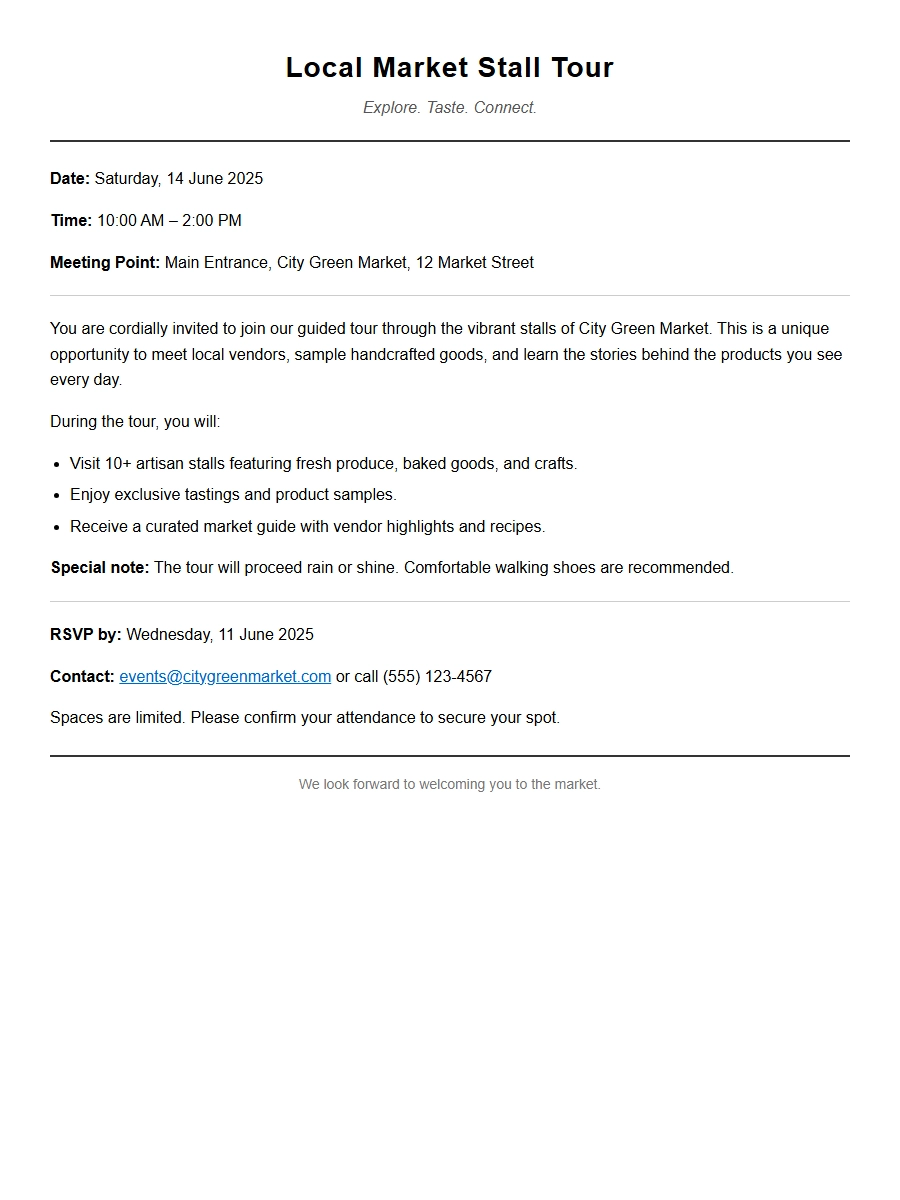 sample invitation for local market stall tour - Invitation Letters
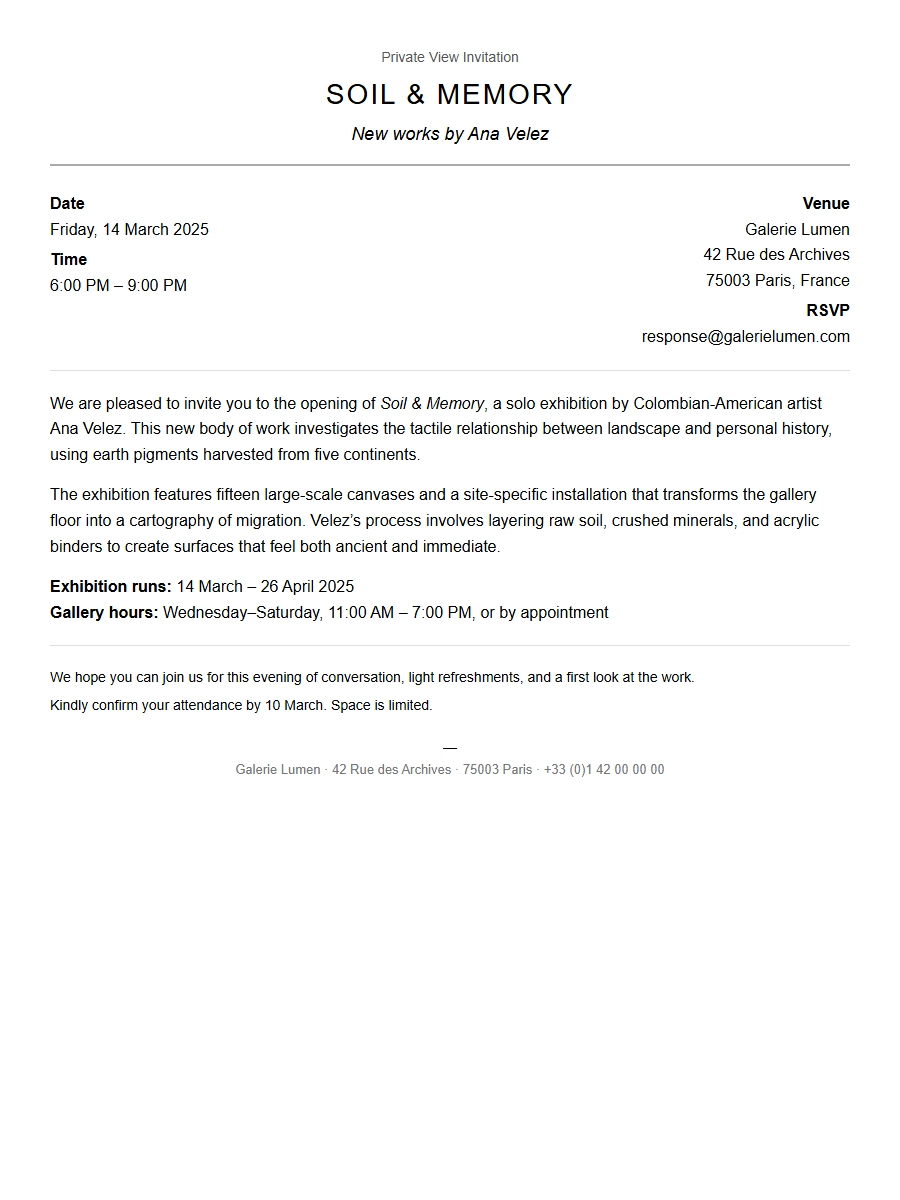 Art Exhibition Opening Invitation Wording Ideas
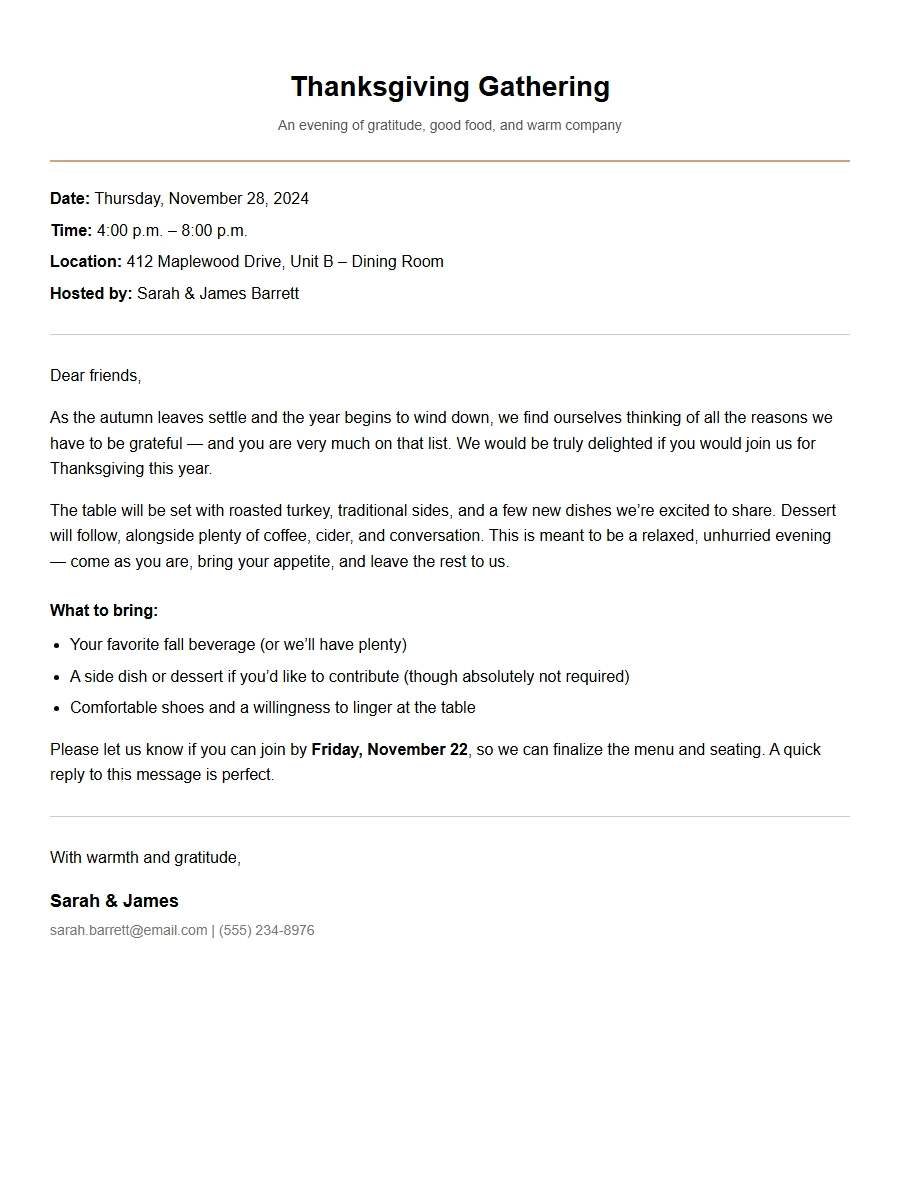 Thanksgiving Meal Gathering Invitation Text
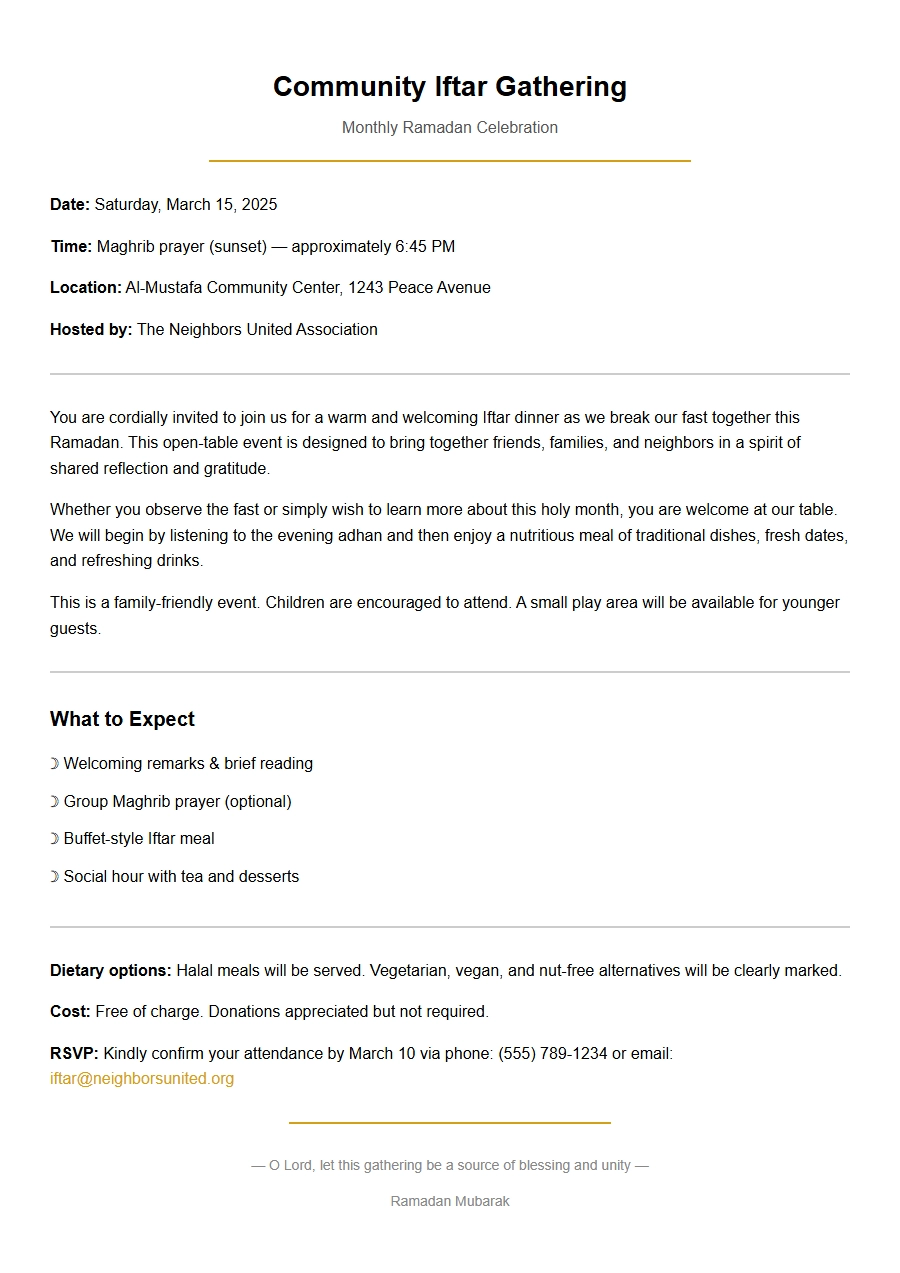 Ramadan Iftar Community Event Invitation
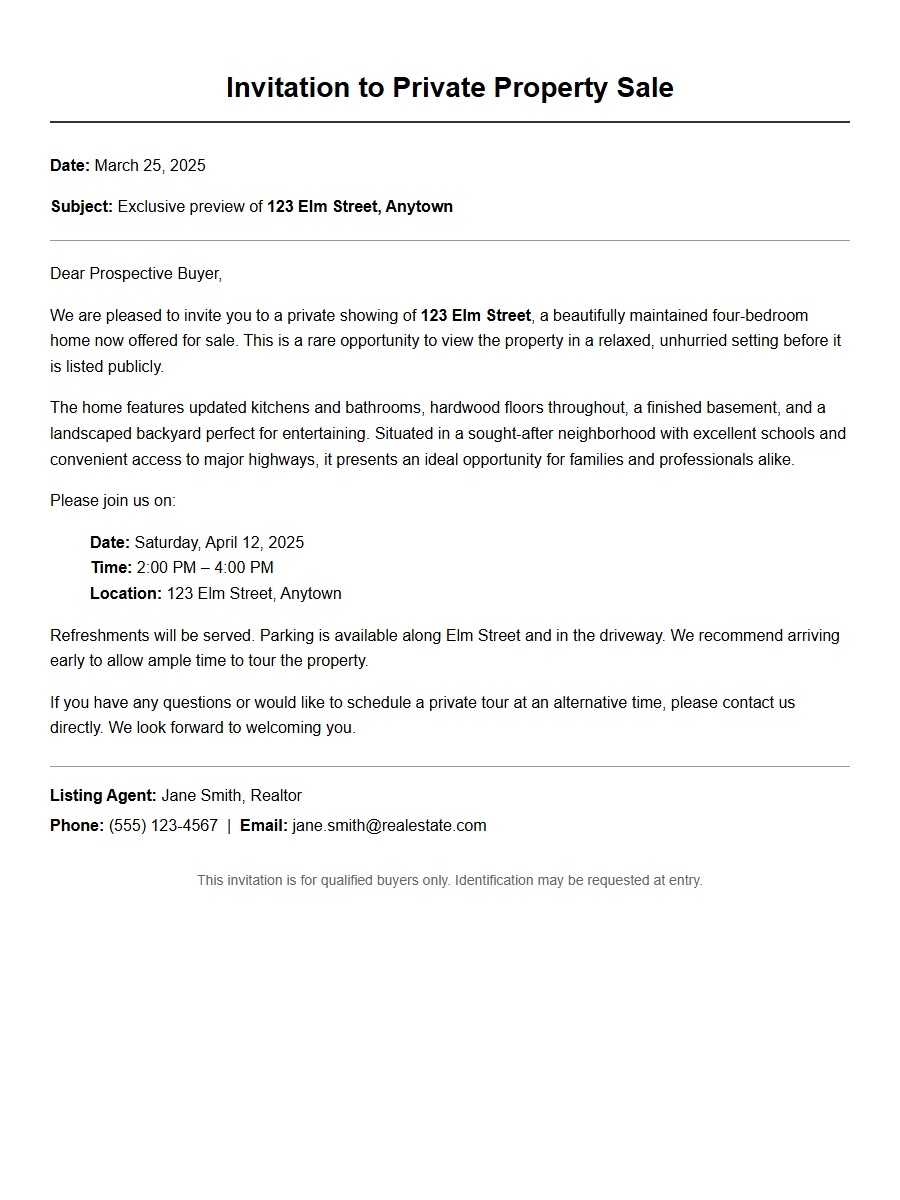 Sample Wording for Property Sale Invitations
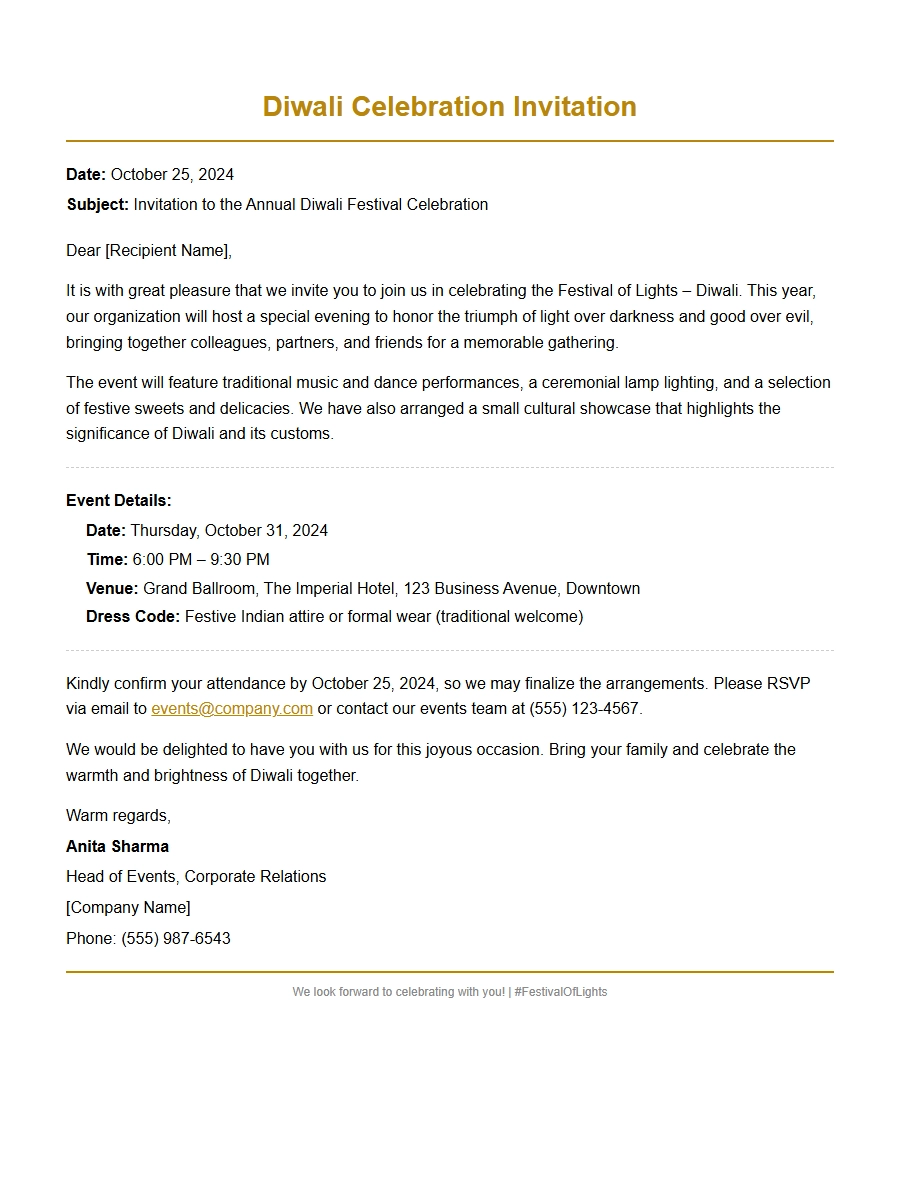 Diwali Festival Celebration Invitation Draft