You know the feeling: you’ve finally decided to move on, but the thought of writing that resignation letter makes your stomach drop. How do you explain that your personal life is falling apart without sounding like you’re complaining? And how do you keep things professional when you’re exhausted, not angry?
If you’re drafting a resignation letter due to work life imbalance, you’re not alone. Many people leave jobs not because of a bad boss or poor pay, but because the schedule never stops bleeding into evenings, weekends, and family time. The hard part is putting that reason on paper in a way that feels honest and respectful.
Using a letter template is not cheating. It’s a smart shortcut. A good sample gives you the structure, tone, and key phrases you need, so you don’t have to reinvent formal writing tips from scratch. You just customize the details and keep your own voice. Think of it as borrowing a solid framework, not handing over your integrity.
Category: Resignation Letters
The trick is to pick a sample that matches your situation. For work-life imbalance, you don’t want a stiff, corporate resignation letter sample that sounds like a legal notice. You want a professional correspondence that’s direct but warm. Look for templates that offer options for both formal and semi-formal tone. If you’re close with your manager, a semi-formal note works. If your company culture is buttoned-up, stick to business letter format with a proper salutation and closing.
Once you’ve found a good template, adapt it without losing your authentic voice. For example, the opening paragraph should get right to the point: “I am writing to formally resign from my position as [title], effective [date].” That’s standard. But then you add your reason briefly: “After a lot of reflection, I’ve realized I need to restore a healthier balance between my work and personal life.” Keep it simple. You don’t need to over-explain. Most managers will understand.
A common mistake is using outdated salutations like “To Whom It May Concern” when you have a real person’s name. Always use a name if you can. Another mistake is ignoring the format difference between digital and printed letters. For an email, write a clear subject line (e.g., “Resignation – [Your Name]”) and keep your letter structure tight. For a printed version, consider simple letterhead design—your name, address, date, and the recipient’s details at the top. It shows you care about letter writing etiquette.
Speaking of tone: yours should be grateful but firm. You can say you appreciate the opportunities you’ve had, but don’t apologize for leaving. Phrases like “I’m sorry to do this” can weaken your stance. Instead, say “I’m grateful for my time here and have learned a lot.” That’s enough.
If you’re not sure how to balance gratitude with your real reason, look at cover letter examples for inspiration on professional wording—they often handle positive yet honest language well. Also, don’t forget to proofread your letter before sending. Even small typos can undercut your professionalism. Run it through a spellcheck, read it aloud, or ask someone you trust to glance at it. Proofreading a letter is a small step that makes a big difference.
You might also need to handle a letter of recommendation request in the same conversation. If your manager asks for one later, that’s fine. For now, focus on your resignation. Make sure your final paragraph includes your last working day, a brief transition plan (like “I’m happy to help hand over my projects during my notice period”), and a forward-looking line like “I wish the team continued success.”
Remember, this letter is a customizable letter—not a final script. Use the sample as a springboard, not a crutch. Change words that feel too stiff. Add a personal sentence about something you genuinely enjoyed. The best letters feel both professional and human. They show you’ve thought about your decision and you’re leaving on good terms.
Writing a resignation letter due to work life imbalance gets easier with practice. The first one might take an hour. The next one—if you ever need it—will take ten minutes. For now, pick a sample that resonates, adapt it honestly, and hit send. Your well-being is worth it.
Samples to Guide You
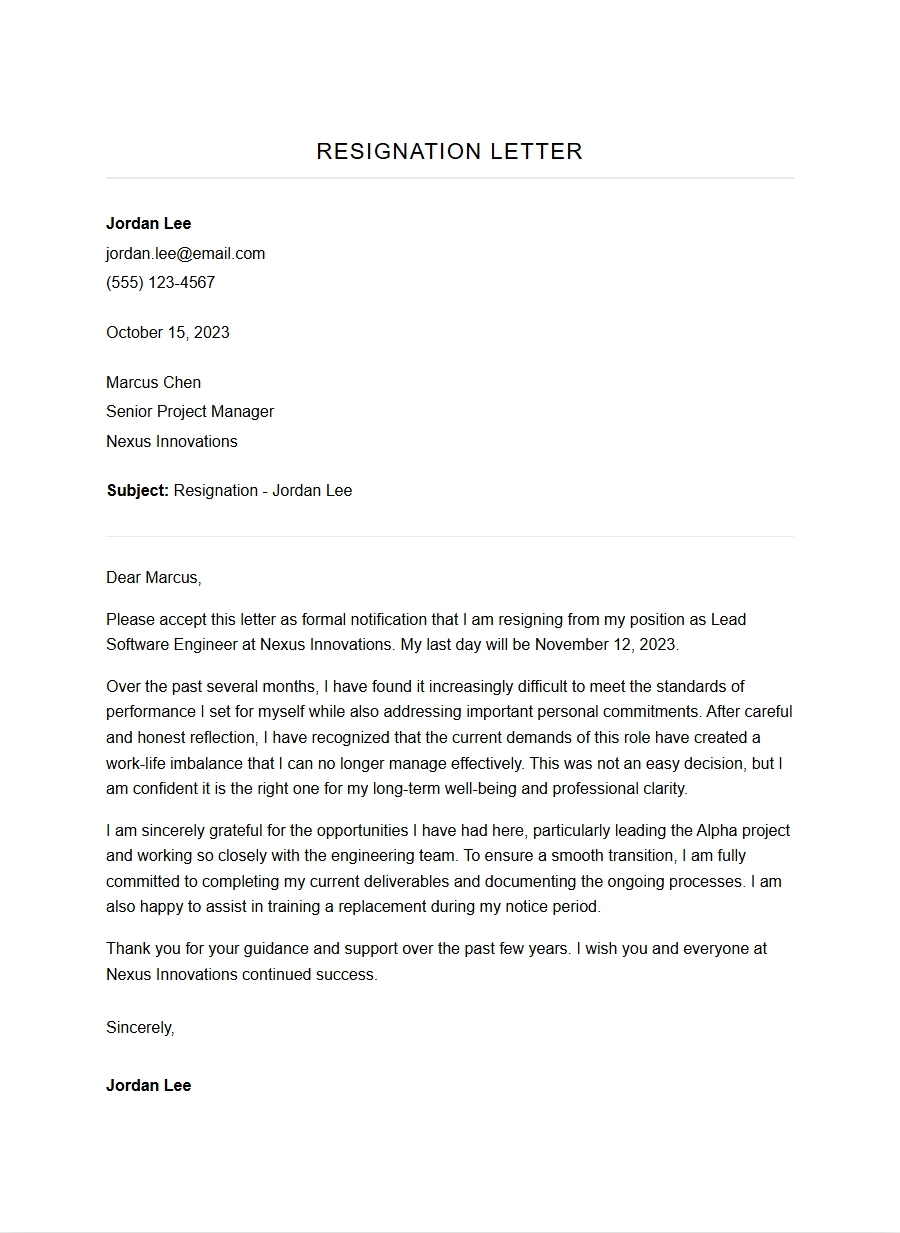
Resignation Letter for Work Life Imbalance
Resignation Letter – Prioritizing Family and Health
Subject: Resignation – [Your Name]
Date: March 10, 2025
To: [Manager's Name] Company: [Company Name]
Dear [Manager's Name],
Please accept this letter as formal notification that I am resigning from my position as [Job Title], effective two weeks from today, March 24, 2025.
After much reflection, I have realized that the current demands of my role have created an unsustainable imbalance between my professional responsibilities and my personal well-being. The long hours and frequent weekend work have taken a toll on my health and my ability to be present for my family. I believe this step is necessary for my long-term happiness and health.
I am grateful for the opportunities I have had here and will do my best to ensure a smooth transition during my notice period.
Sincerely, [Your Name]
Resignation Letter – Burnout and Reassessment
Subject: Resignation due to work-life imbalance
Date: March 12, 2025
To: HR Manager
Dear [HR Manager],
I am writing to formally resign from my position as [Job Title] at [Company Name], effective [Last Working Day].
Over the past several months, I have experienced chronic burnout from an unrelenting workload that consistently invades my evenings and weekends. Despite my best efforts to communicate boundaries, the culture of constant availability has undermined my ability to maintain a healthy work-life balance. I have reached a point where I need to prioritize my mental and physical health.
I wish the company continued success and will assist in transitioning my responsibilities to a colleague.
Best regards, [Your Name]
Resignation Letter – Seeking Flexible Work Elsewhere
Subject: Resignation – [Your Name]
Date: March 14, 2025
To: [Manager's Name]
Dear [Manager's Name],
Please accept this letter as my resignation from the role of [Job Title], effective [Date].
After evaluating my current schedule, I have concluded that I cannot sustain the required 60+ hour weeks while maintaining my family commitments. I had hoped we could explore a reduced workload or remote arrangement, but since that is not possible, I must seek a position that offers better flexibility.
I appreciate the mentorship I have received here and will ensure a thorough handover.
Sincerely, [Your Name]
Resignation Letter – Short Notice Due to Urgent Personal Needs
Subject: Urgent resignation – work-life conflict
Date: March 16, 2025
To: [Manager's Name]
Dear [Manager's Name],
I regret to inform you that I must resign from my position as [Job Title] immediately, effective [Date].
The last month has made it clear that my current schedule is incompatible with my responsibilities as a primary caregiver. A recent family health emergency has forced me to choose between my job and my loved ones. I cannot in good conscience continue in a role that demands I ignore my personal life.
I apologize for the short notice and will do what I can to help in the transition.
Thank you for understanding. [Your Name]
Resignation Letter – After Denied Flexibility Request
Subject: Resignation – [Your Name]
Date: March 18, 2025
To: [Manager's Name]
Dear [Manager's Name],
I am writing to resign from my position as [Job Title], effective [Date].
As I discussed with you last week, I requested a transition to a part-time schedule to better manage my childcare needs. Unfortunately, this request was declined due to business requirements. Without this adjustment, I cannot continue to meet both my job expectations and my family obligations. I therefore feel compelled to seek employment elsewhere that aligns with my need for work-life balance.
I value the time I have spent here and hope to maintain positive relations.
Please accept this letter as my resignation from the role of [Job Title], effective [Date].
My doctor has strongly advised me to reduce stress and work hours due to elevated blood pressure and anxiety. Unfortunately, my current position routinely requires 10–12 hour days and on-call weekends. I have no choice but to prioritize my health and step away.
I hope you can understand my decision. I will cooperate fully in the handover process.
Thank you, [Your Name]
Resignation Letter – For a Managerial Role with Constant Overtime
Subject: Resignation – [Your Name]
Date: March 22, 2025
To: [Manager's Name]
Dear [Manager's Name],
I am resigning from my position as [Job Title], effective [Date].
Managing a team in this high-pressure environment has meant staying late nearly every day and answering emails on weekends. My family rarely sees me, and I have no time for hobbies or rest. I have tried to delegate and set boundaries, but the culture demands constant availability. I have decided that my well-being is more important than this career.
I am grateful for the leadership skills I gained and will ensure a smooth transition.
Sincerely, [Your Name]
Resignation Letter – New Parent Returning to Work
Subject: Resignation – inability to balance newborn and workload
Date: March 24, 2025
To: [Manager's Name]
Dear [Manager's Name],
I am writing to resign from my position as [Job Title], effective [Date].
Since returning from parental leave, I have struggled to manage the demands of my role alongside the needs of my infant. The expectation to work late hours and travel on short notice has become unmanageable. I need a position that respects family time, and I have decided to resign to find a more balanced opportunity.
I appreciate the support I received during my leave and will assist in training my replacement.
Best regards, [Your Name]
Resignation Letter – Professional yet Firm Tone
Subject: Resignation – [Your Name]
Date: March 26, 2025
To: [Manager's Name]
Dear [Manager's Name],
I am formally resigning from my role as [Job Title] at [Company Name], effective [Date].
Despite my best efforts to maintain a healthy work-life balance, the role consistently requires more than 50 hours per week, including weekend work. I have repeatedly raised this concern with no lasting change. I have concluded that this environment is not conducive to my long-term well-being. I am leaving to pursue a position that respects personal time.
I will ensure my projects are handed over properly. Thank you for the opportunities.
Sincerely, [Your Name]
Resignation Letter – Short, Direct, and Clear
Subject: Resignation – [Your Name]
Date: March 28, 2025
To: [Manager's Name]
Dear [Manager's Name],
I am resigning from my position as [Job Title], effective [Date].
My decision is driven by an unsustainable work-life balance. The current workload leaves me no time for rest, exercise, or family. I have decided to prioritize my personal life and find a situation that allows for better boundaries.
I will complete my tasks and assist with the transition. Thank you.
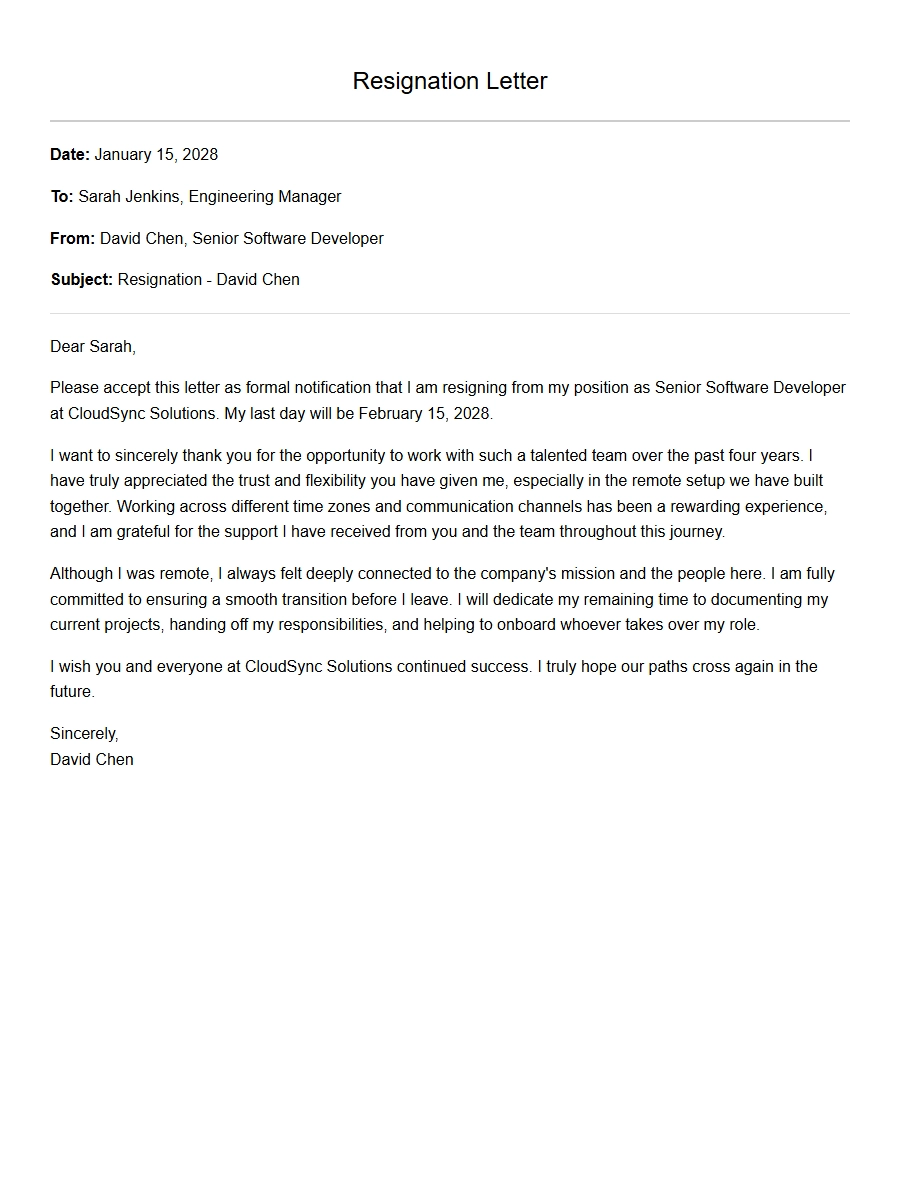 Polite Resignation Email for Remote Employees
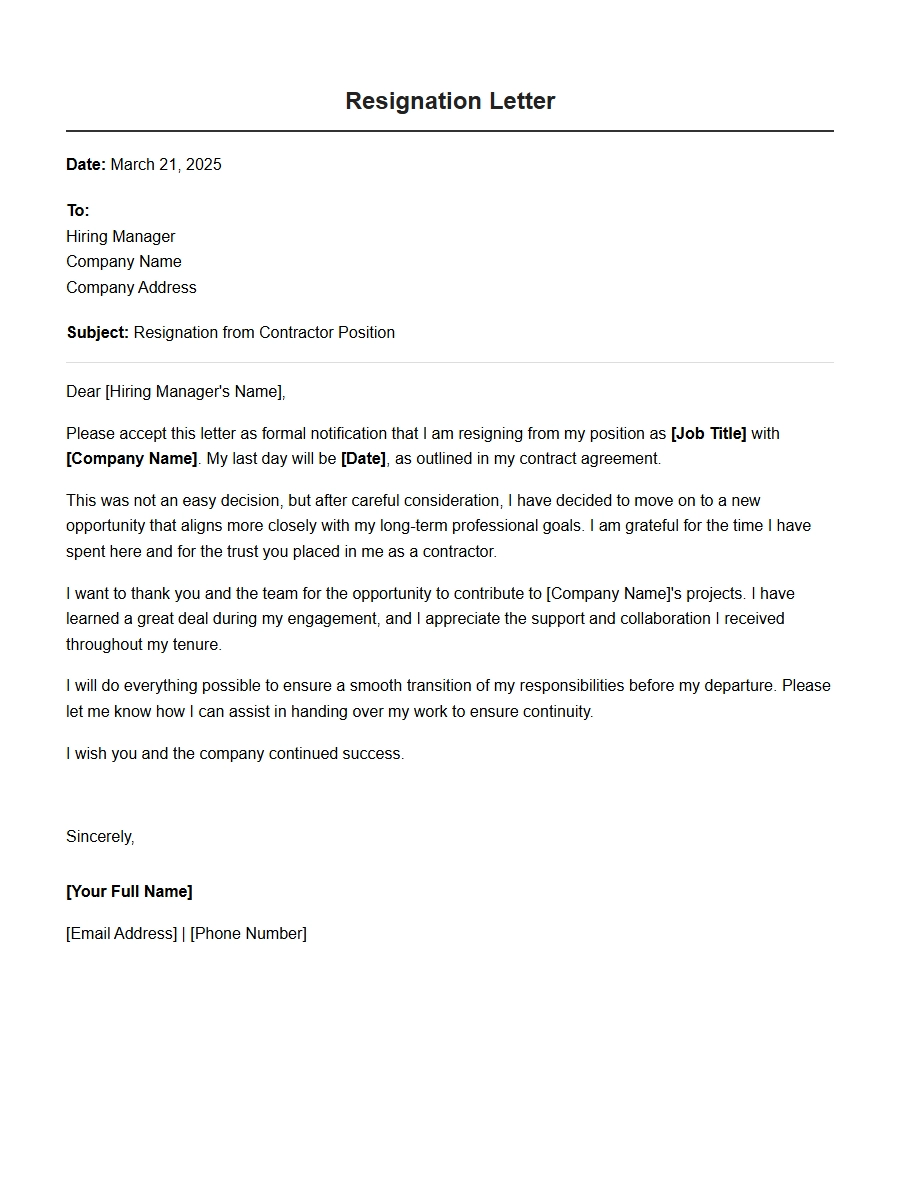 Short Resignation Letter for Contractor Position
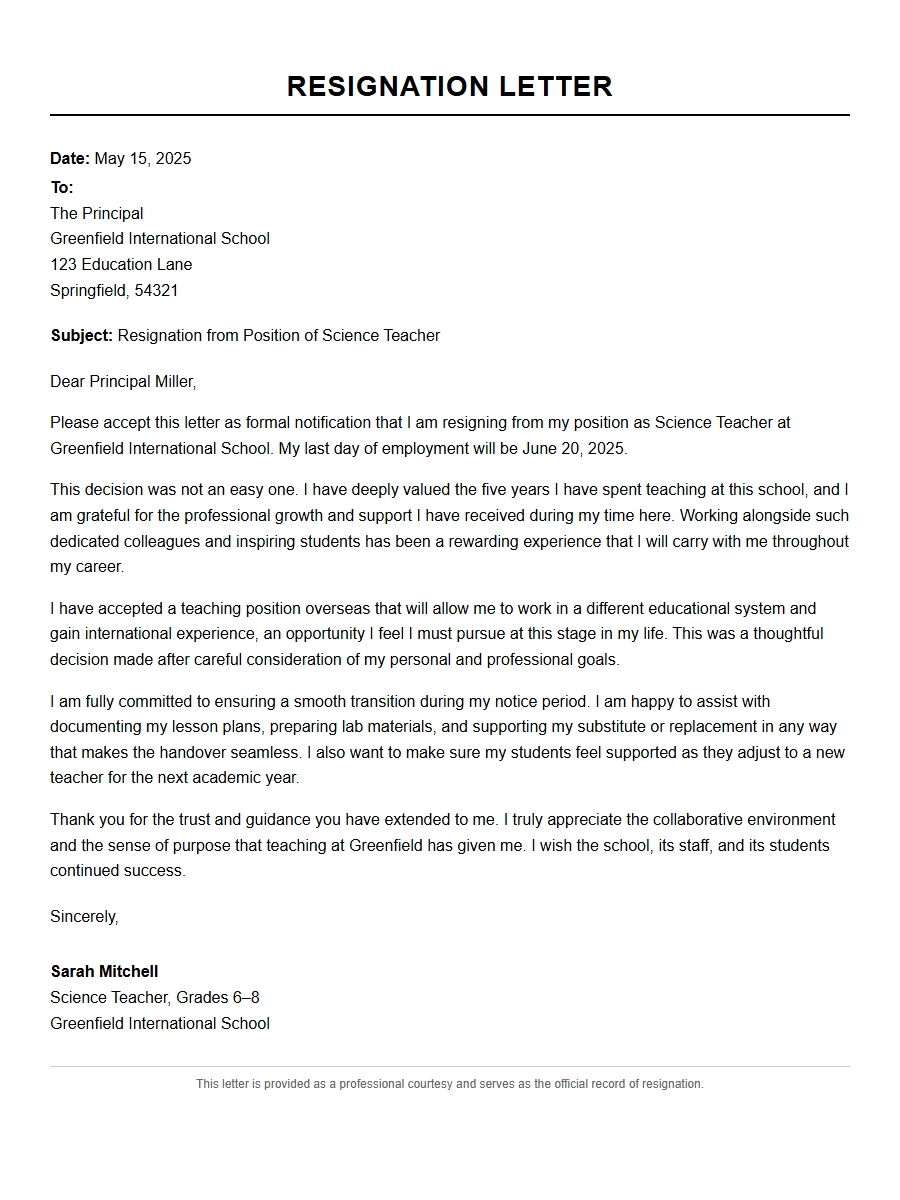 Teacher Resignation Letter Example
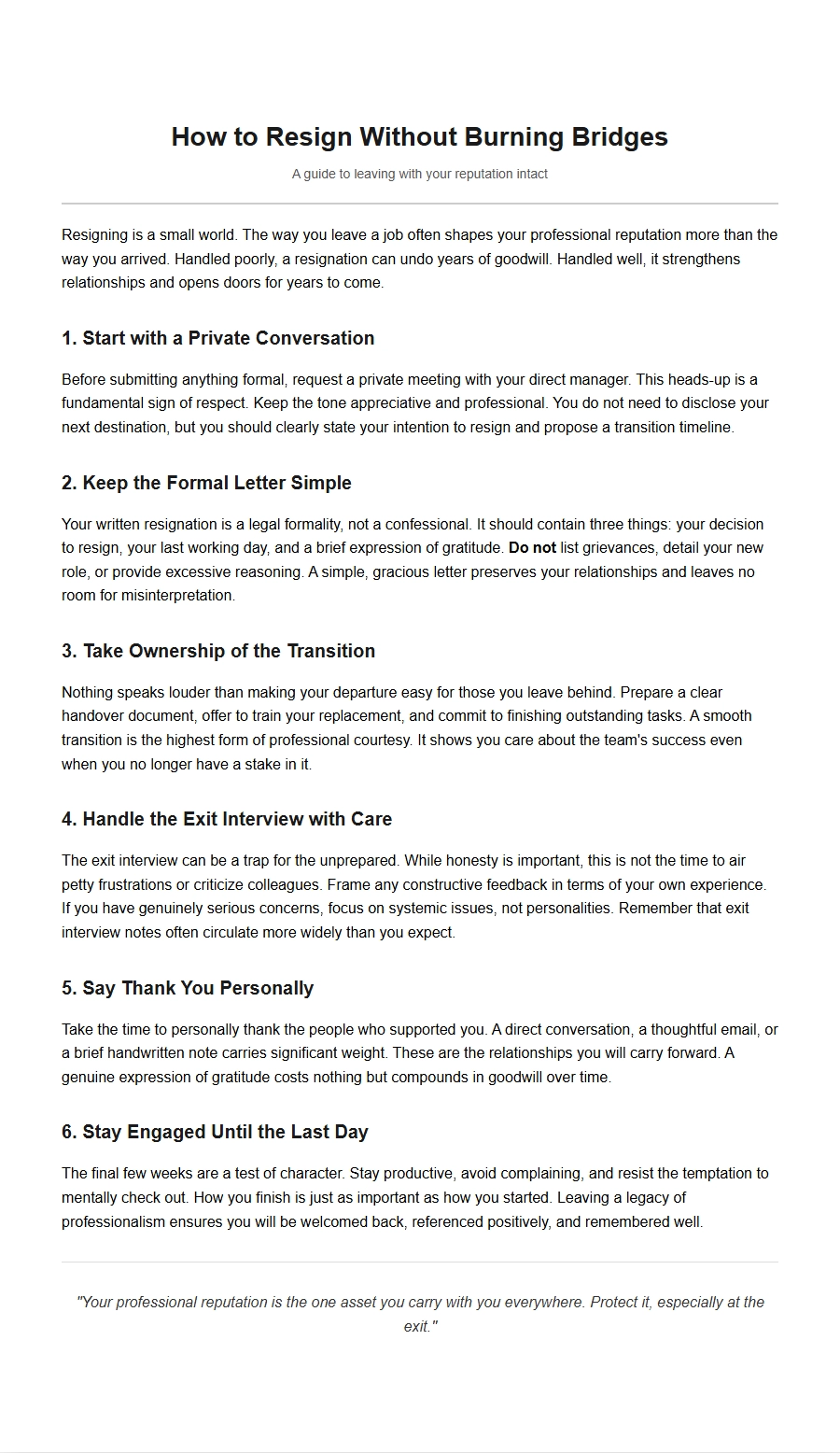 How to Resign Without Burning Bridges
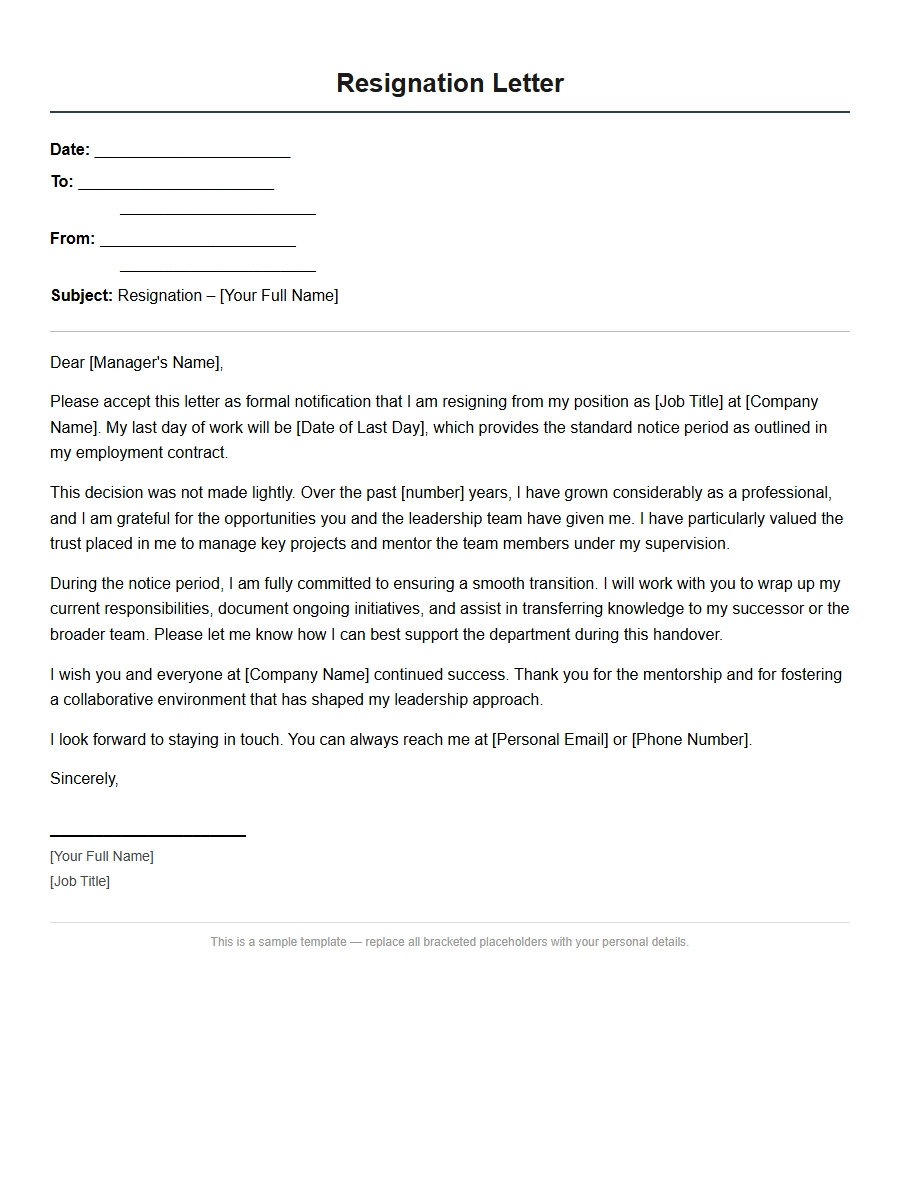 Formal Resignation Letter Sample for Manager
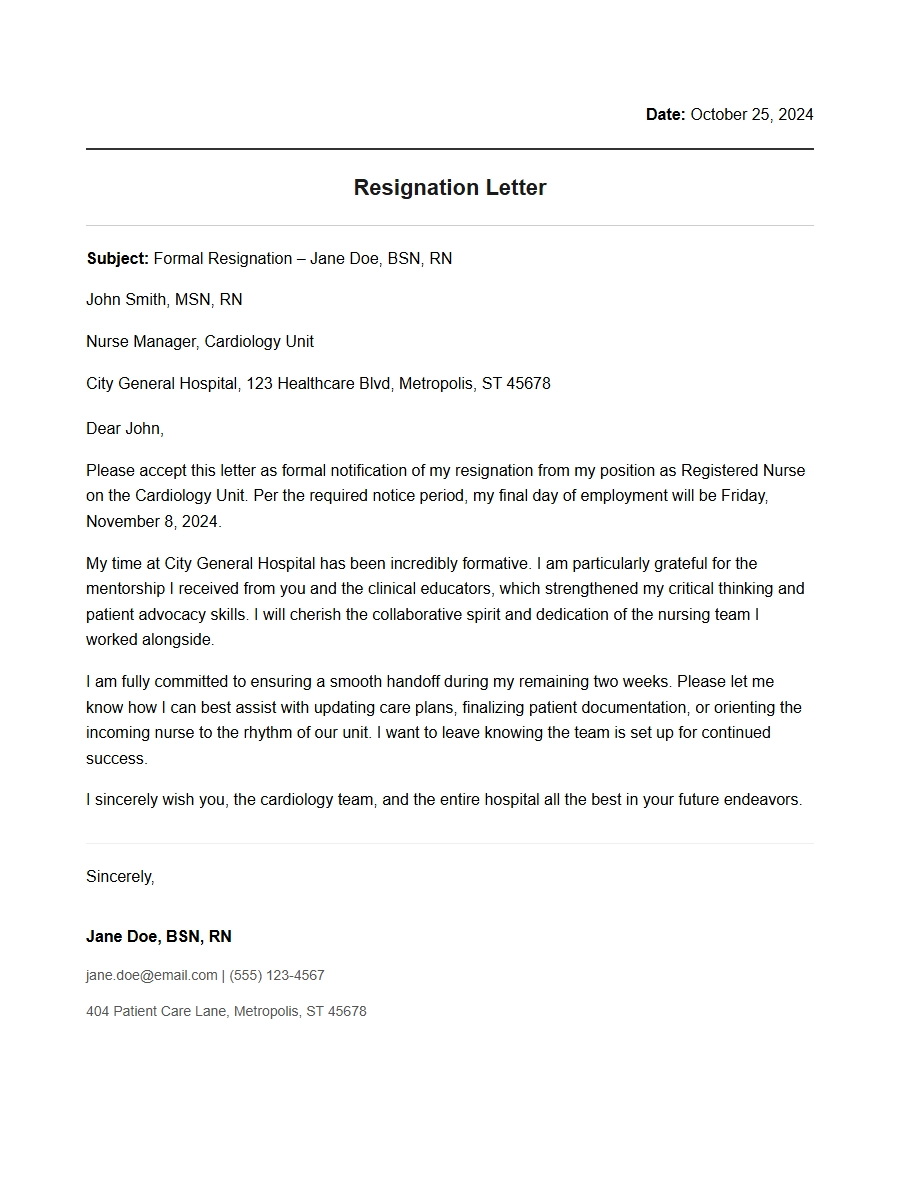 Nurse Resignation Letter with 2 Weeks Notice