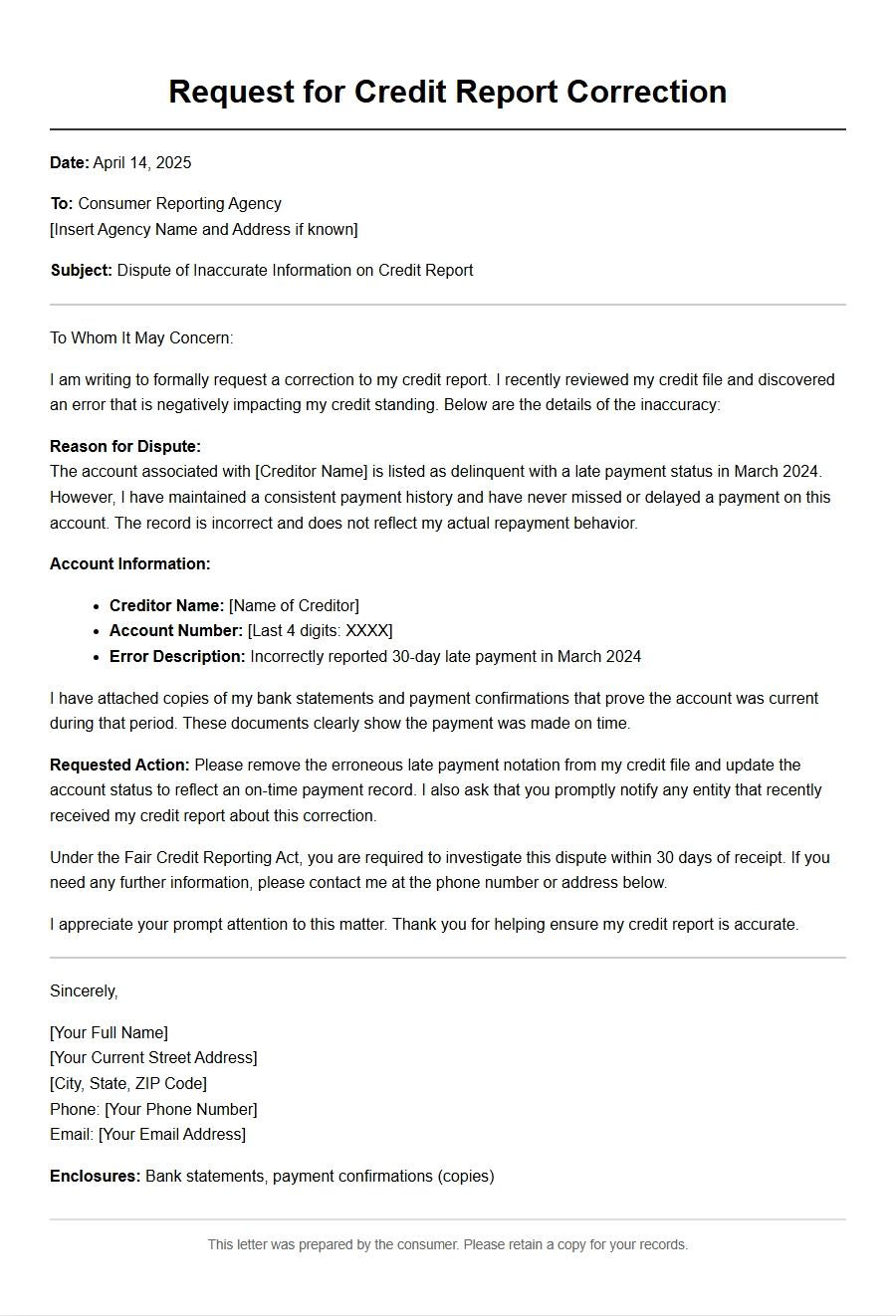
Request a Credit Report Correction: Personal Letter
You check your credit report and spot an error—a payment marked late that you paid on time, an account that isn’t yours, or an outdated address that shouldn’t be there. Your first instinct might be to call the credit bureau, but a written correction letter is often the required next step. Staring at a blank screen, you might feel stuck. That’s normal. But with a solid sample to guide you, you can turn that frustration into a clear, effective letter in minutes.
Using a letter template isn’t cheating. It’s a smart way to make sure you include all the right pieces: your personal information, the specific error, evidence, and the correction you want. Good samples give you a structure and a tone that works for professional correspondence without sounding robotic. You can customize every part to fit your situation.
Category: Personal Letters
What exactly are you asking for?
A credit report correction letter is a formal request to a credit bureau (Equifax, Experian, or TransUnion) to fix an error on your report. You’re not just complaining—you’re providing proof and asking them to investigate and update your file. The Fair Credit Reporting Act gives you the right to dispute mistakes, and the bureau must respond within 30 days.
Most people send this letter by certified mail so they have proof of delivery. You’ll include a copy of your credit report with the error circled, plus any documents that support your claim (like a bank statement or a confirmation email). Keep the original documents for yourself.
How to choose the right sample
Not all letter samples are created equal. You want one that matches the type of error you’ve found:
Incorrect personal information (wrong name, address, SSN) – Use a simple verification letter.
Wrong account details (balance, payment history, account status) – Use a dispute letter with specific facts and evidence.
Accounts that don’t belong to you (identity theft) – Use a fraud-specific dispute letter and include an FTC identity theft report if you have one.
A good sample follows proper business letter format: your contact info at the top, the date, the bureau’s address, a clear subject line (like “Dispute of Erroneous Information”), a polite salutation, a body that explains the error, and a professional closing. Even for email or an online submission, using that structure makes your request easier to process.
Adapting the sample without losing your voice
Templates are starting points, not scripts. Read the sample once, then rewrite the opening paragraph in your own words. Say something like: “I am writing to dispute an error on my credit report. The account ending in 1234 is listed as 30 days late in March 2024, but I made the payment on time. I’ve attached my bank statement showing the payment cleared on March 5.” That’s direct and clear.
Don’t copy a generic “To whom it may concern” if you know the bureau’s name. Use a specific salutation and closing. For example: “Dear Equifax Consumer Relations” and “Sincerely.” The tone in writing should be factual and polite—no anger, even if you’re frustrated. Keep sentences short, use active voice, and stick to what happened, not how you feel.
Common mistakes: using outdated letterhead design (skip fancy fonts, use a simple header), forgetting to include your account number or report ID, or not signing the letter. If you’re sending via email, treat it as a digital letter format—plain text or a PDF attachment, and include the same details.
One quick tip that saves you time
Before you write the whole letter, make a list of every error you want to correct. If there are three mistakes, you can either write one letter listing all three or send separate letters. The bureaus prefer one dispute per letter, but it’s fine to group them if they’re related. Just be clear and keep each point separate.
After you draft the letter, proofreading letter is essential. A small typo—like the wrong date or a missing attachment—can slow down the process. Read it out loud, or ask a friend to glance at it. Double-check that you’ve included your full name, current address, report number (if you have it), and a copy of your ID.
What else can you learn from a good sample?
Sample letters also show you how to handle trickier situations. For example, if you need a letter of recommendation for a landlord or employer, the same principles apply: clear structure, specific evidence, professional tone. And if you’re writing other personal letters—like a cover letter examples for a job or a resignation letter sample—the same letter writing etiquette carries over. Once you master one type, adapting to another is much faster.
Think of the sample as a map. You still have to drive the car. The more you practice, the easier it gets. Next time you need to dispute an error or request a correction, you’ll know exactly what to include and how to say it. That confidence comes from using a solid starting point—not from memorizing rules. Write the letter, send it, and keep a copy. Then check your credit report in a month. You’ll likely see the correction, and you’ll realize the whole process was simpler than you feared.
Browse Sample Ideas
Request a Credit Report Correction: Personal Letter
Incorrect Name on Credit Report
To Whom It May Concern:
I am writing to dispute an error on my credit report. My name is listed incorrectly as “Jonathan M. Doe” instead of my legal name, “Jonathan Michael Doe.” This error appears on my report from your agency, reference number CR-98765.
I have attached a copy of my driver’s license and Social Security card to verify my correct name. Please update my name accordingly and send me a corrected copy of my report.
Thank you for your prompt attention to this matter.
Sincerely, Jonathan Michael Doe 123 Elm Street Anytown, USA 12345 Phone: 555-123-4567 Email: jdoe@email.com
Wrong Address Listed on Credit Report
Dear Credit Bureau:
I am requesting a correction to my credit report (file # 456-789-123). An incorrect address, “456 Oak Avenue, Suite 200, Anytown, USA 12345,” is listed. I have never resided at that address; my current and only address is “789 Pine Road, Anytown, USA 12346.”
This error may affect my creditworthiness. I request that you remove the erroneous address and update your records with my correct address as shown on the enclosed utility bill.
Please investigate and correct this within 30 days as required by law. Confirm the change in writing.
Respectfully, Jane A. Smith 789 Pine Road Anytown, USA 12346
Fraudulent Account on Credit Report
To the Dispute Department:
I am writing to dispute a fraudulent account that appears on my credit report. An account with “First Bank Credit Card” account number 1234-5678-9012-3456 was opened in my name on April 15, 2023. I did not authorize this account and have never applied for credit with First Bank.
I have attached a copy of my police report (case # 2024-00456) and an identity theft affidavit. Please block this account and investigate immediately. Notify me of the results as per the Fair Credit Reporting Act.
Thank you for protecting my credit history.
Sincerely, Robert Johnson 321 Maple Drive Anytown, USA 12347
Incorrect Late Payment History
Dear Credit Reporting Agency:
I am disputing a late payment that is incorrectly shown on my credit report for the account “XYZ Auto Loan” (account # 789012). The report states a payment was 30 days late in December 2023.
I have proof that I made the payment on time via my bank statement (enclosed). The payment cleared my account on December 2, 2023, before the due date. Please update the account status to “Paid on Time” and remove the derogatory entry.
I request a corrected report and notification to all entities that received the incorrect information.
Thank you, Emily Garcia 654 Cedar Lane Anytown, USA 12348
Wrong Balance on Credit Card Account
To the Consumer Relations Team:
I am writing to correct an error on my Equifax credit report. For the account “Capital One” (number ending in 5432), the reported balance as of last month is $5,200, but my actual statement shows a balance of $2,100. The discrepancy appears to be due to a data entry error.
I have attached a copy of my latest credit card statement showing the correct balance. Please investigate and update the account information immediately. If the creditor reported incorrectly, please contact them to verify.
Send me a confirmation of the correction and an updated credit report.
Sincerely, Michael Brown 987 Birch Street Anytown, USA 12349
Duplicate Account Entry on Credit Report
Dear Dispute Specialist:
I am requesting removal of a duplicate entry on my credit report. The account “ABC Student Loan” (account # 456789) appears twice in the file # TRAN-2024-001. Both entries show identical balance and payment history, inflating my total debt.
Please delete the duplicate account and retain only one accurate record. I have highlighted the duplication in the enclosed report.
I appreciate your assistance in correcting this error.
Respectfully, Sarah Williams 12 Willow Way Anytown, USA 12350
Outdated Collection Account on Credit Report
To the Compliance Department:
I am disputing a collection account from “ABC Collections” (account # 111222) that is outdated. The original debt was from January 2017 and has exceeded the 7-year reporting period under federal law. The entry still appears on my TransUnion report, last updated July 2024.
According to the Fair Credit Reporting Act, this account should have been removed after March 2024. I have enclosed proof of the original charge-off date. Please delete this account from my credit history immediately.
Confirm the removal in writing.
Sincerely, David Lee 55 Cherry Street Anytown, USA 12351
Mixed File Credit Report Error
Dear Customer Service:
My credit report appears to contain information belonging to another person. Specifically, a mortgage account with “Home Loan Inc.” (account # 998877) is listed under my Social Security number. I have never held a mortgage with that company. The address associated with that account is in a different state.
This mixed file error is harmful to my credit score. Please investigate and remove all third-party accounts. I have provided my social security card and current mortgage statement.
I expect a response within 30 days. Thank you.
Regards, Anna Martinez 789 Elm Street, Apt 4B Anytown, USA 12352
Identity Theft Account on Credit Report
To the Fraud Department:
I am a victim of identity theft. An unauthorized account was opened in my name at “Quick Cash Loans” (account # 445566) on March 1, 2024. I never applied for this loan. I have filed a police report (case # 2024-00789) and an FTC Identity Theft Affidavit (attached).
Please block this account from my credit report and place a fraud alert on my file. Send me a copy of the corrected report and a description of your investigation.
I request that you delete all associated inquiries and balances.
Thank you for your prompt action.
Sincerely, Christopher Thompson 200 Maple Avenue Anytown, USA 12353
Incorrect Account Status on Credit Report
Dear Credit Bureau:
I am disputing the account status of “Best Buy Credit Card” (account # 789123) on my Experian report. The status currently shows “Closed – Charge Off,” but the account was paid in full and closed voluntarily by me in February 2024 with a zero balance.
I have attached a letter from Best Buy confirming the account was closed in good standing and a copy of my final statement. Please update the status to “Closed – Paid as Agreed” and remove the charge-off notation.
This error is damaging my credit score. I expect corrections and a revised report.
Sincerely, Jessica Robinson 456 Pine Street Anytown, USA 12354
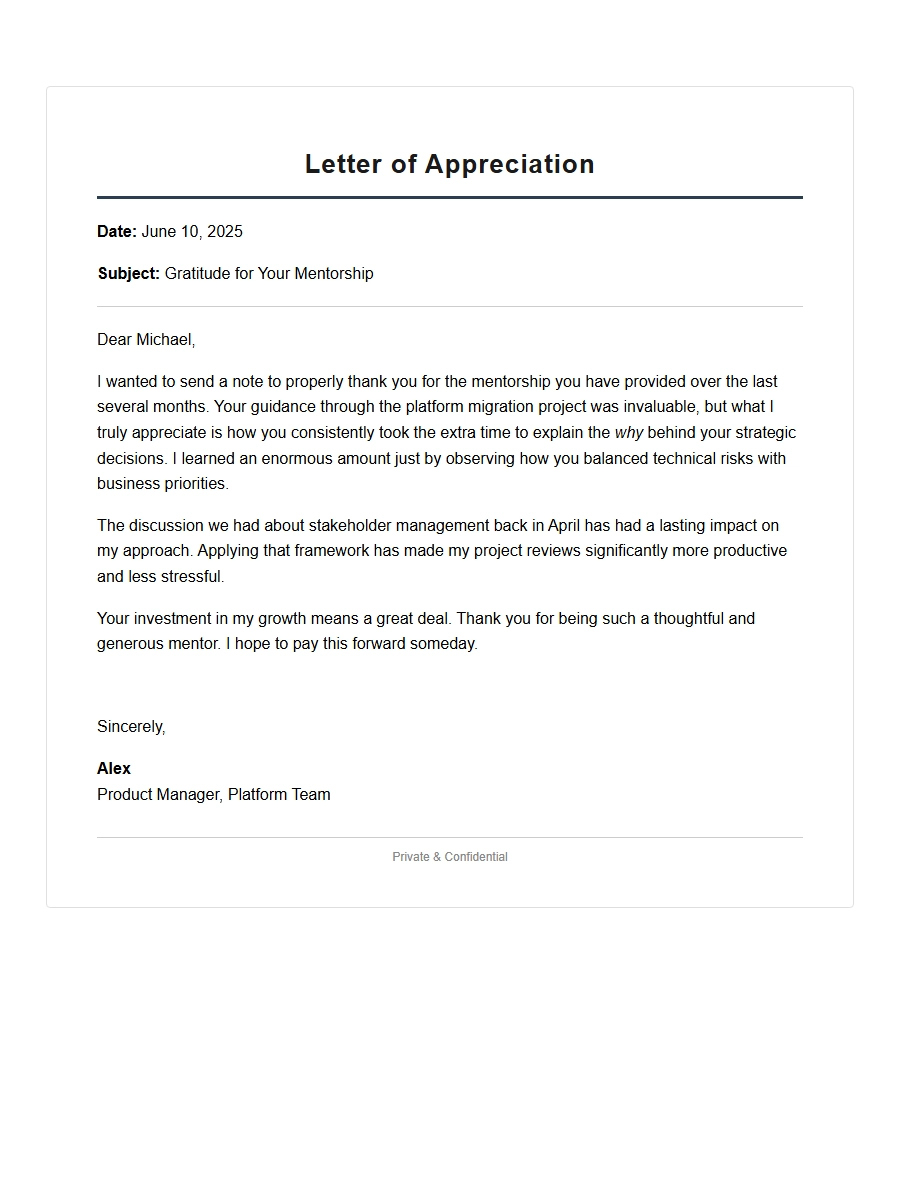 Thanking a Mentor for Guidance: Sample Messages
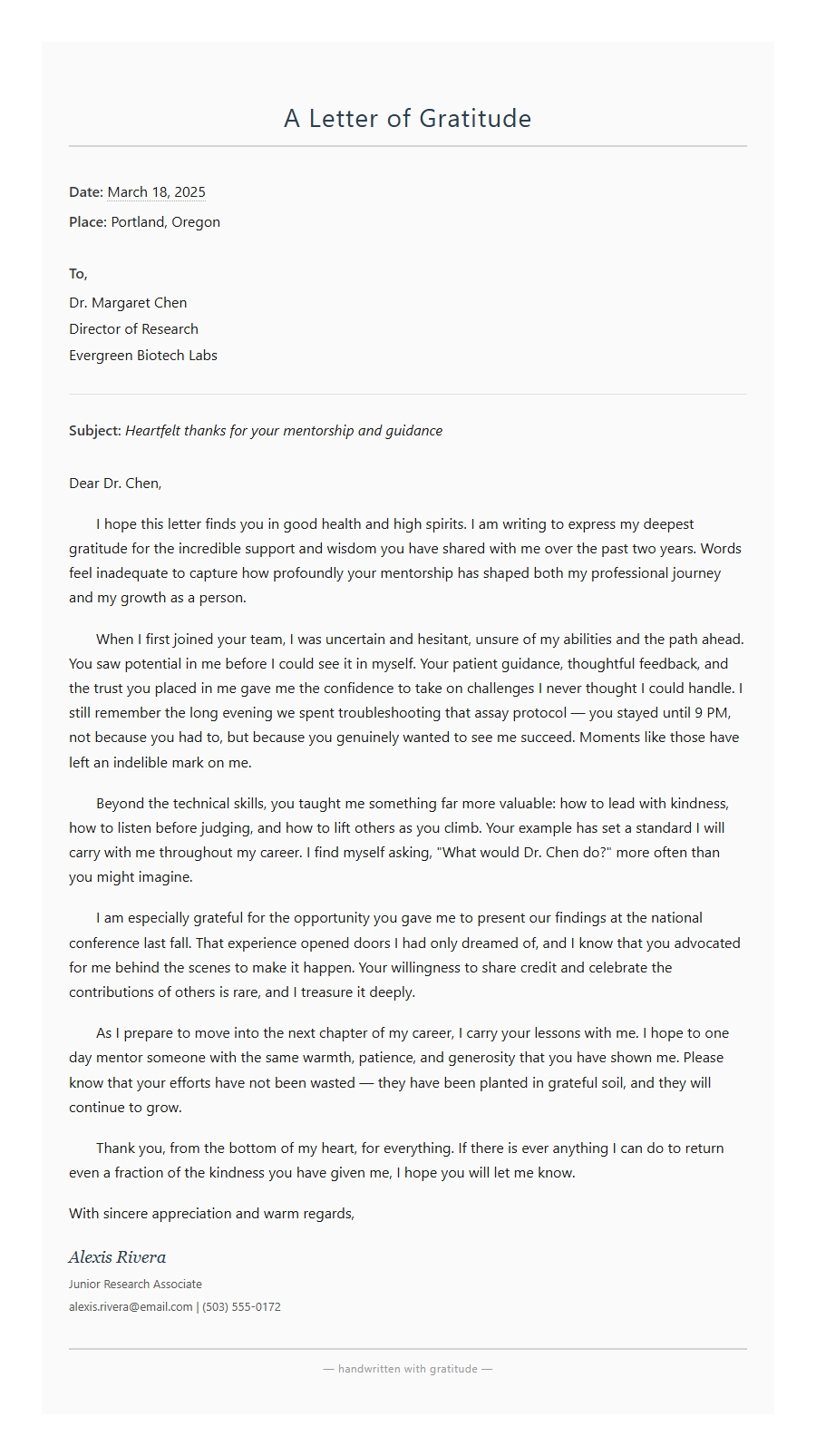 Expressing Gratitude: Handwritten Letter Example
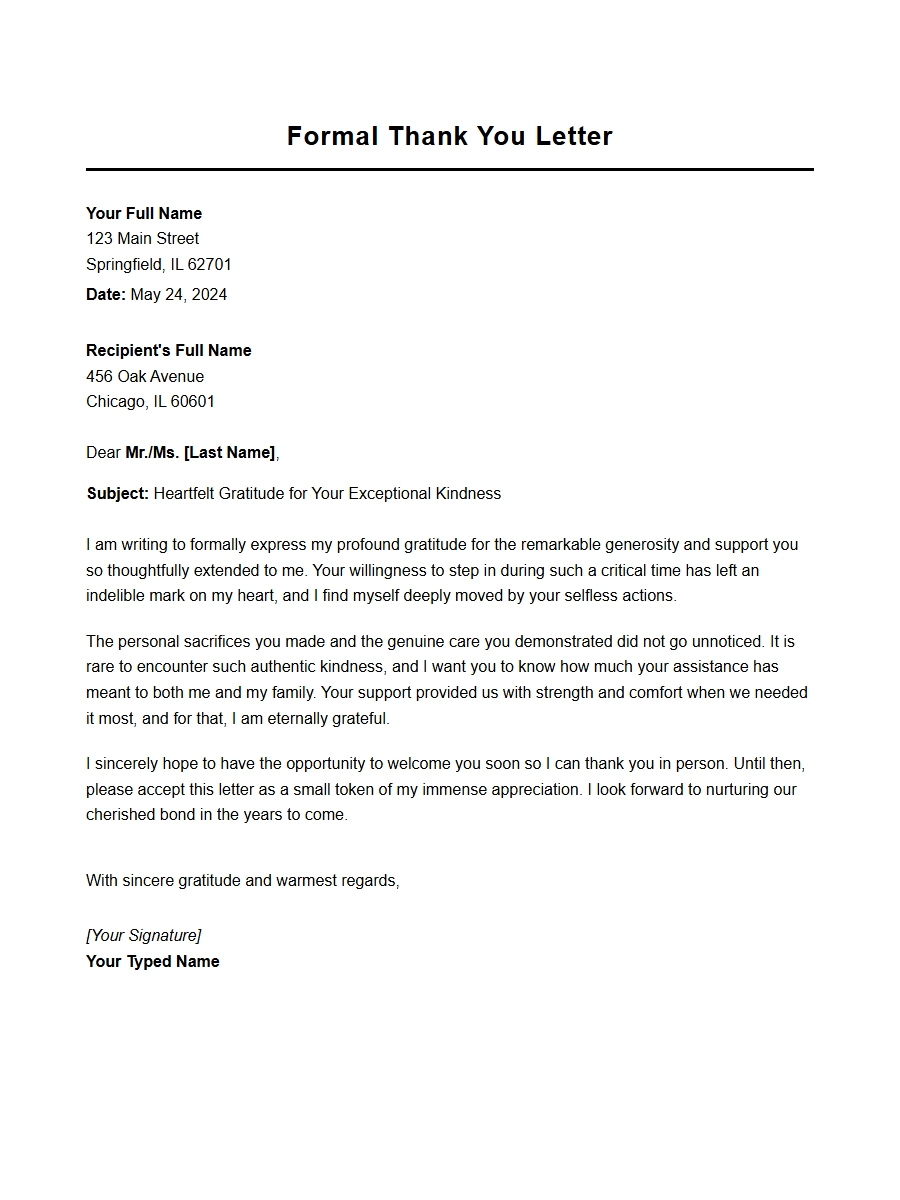 Expressing Thanks in a Formal Personal Letter
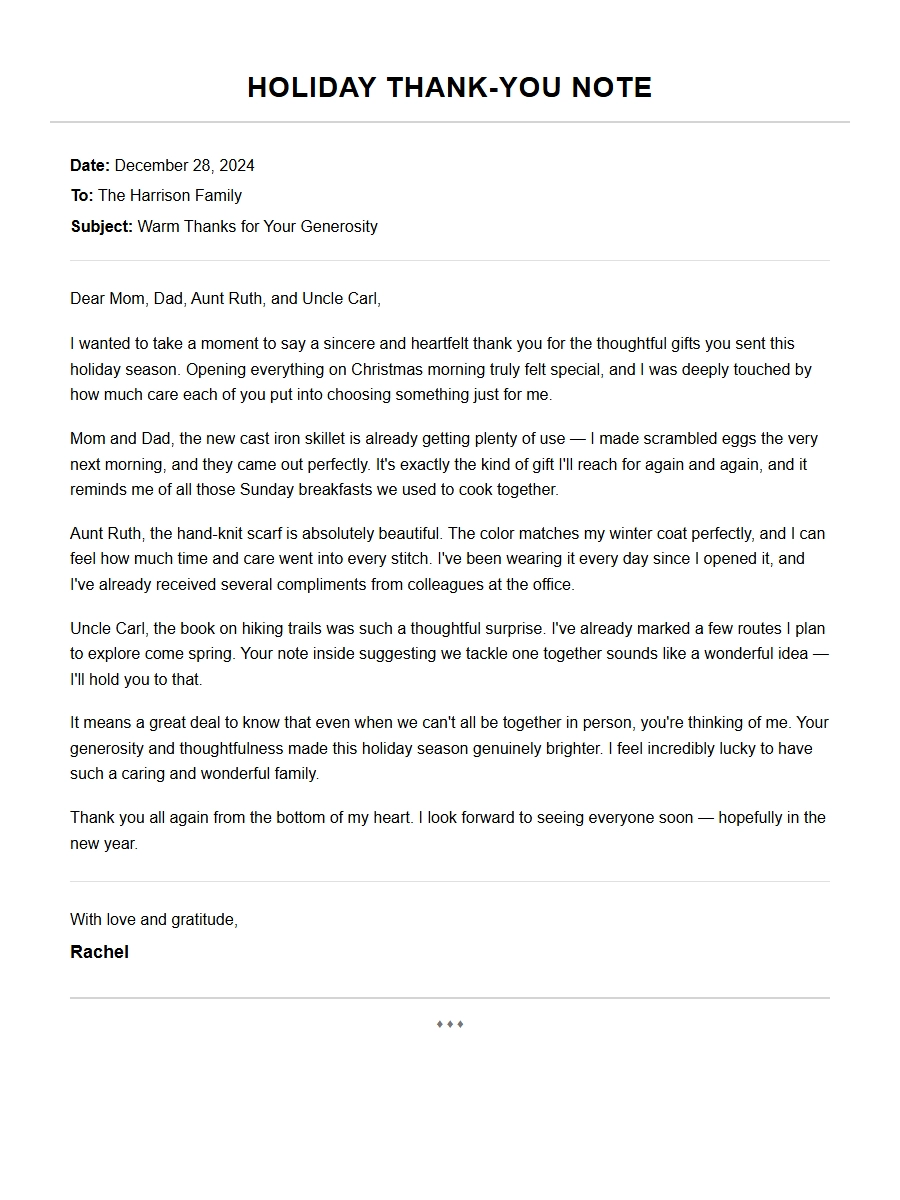 Thank You Letter Examples for Family Holiday Gifts
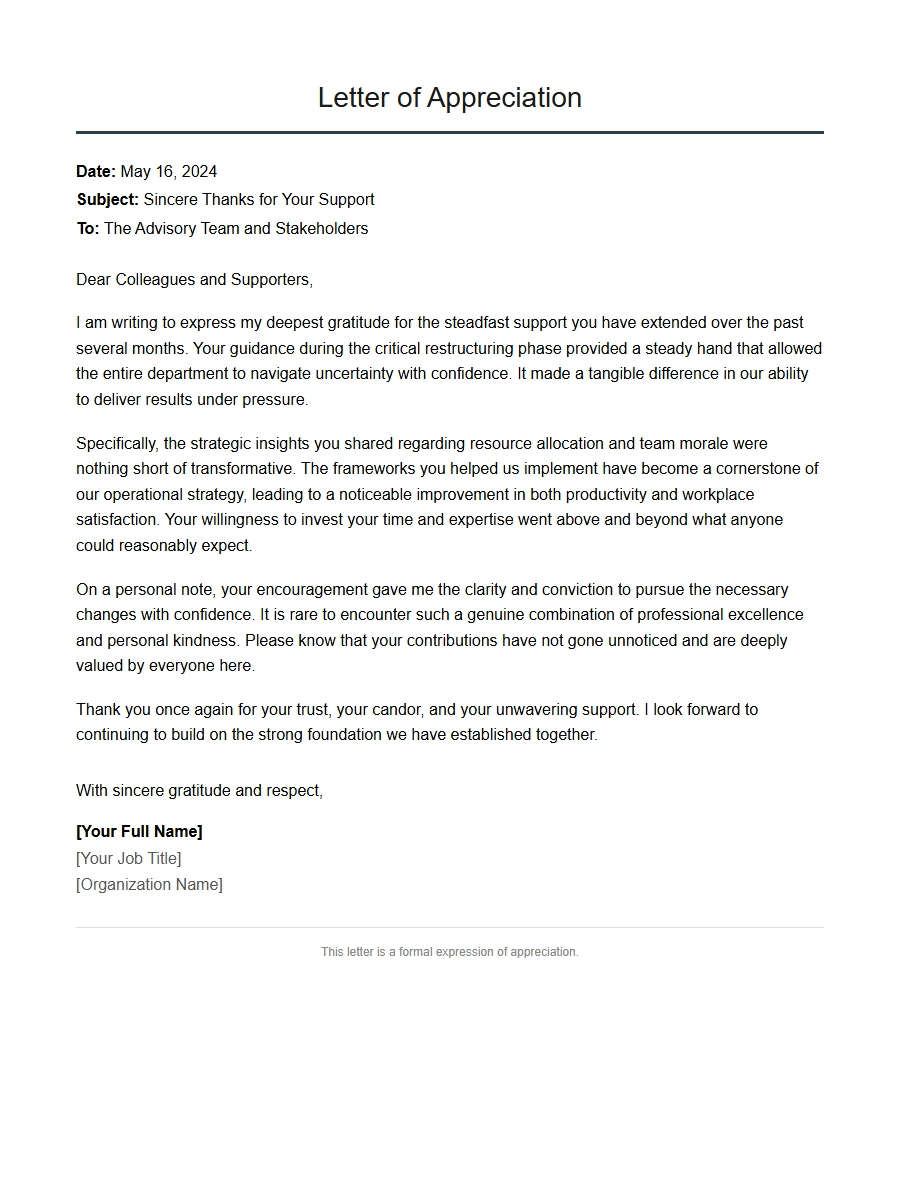 Sample Thank You Letter for Support
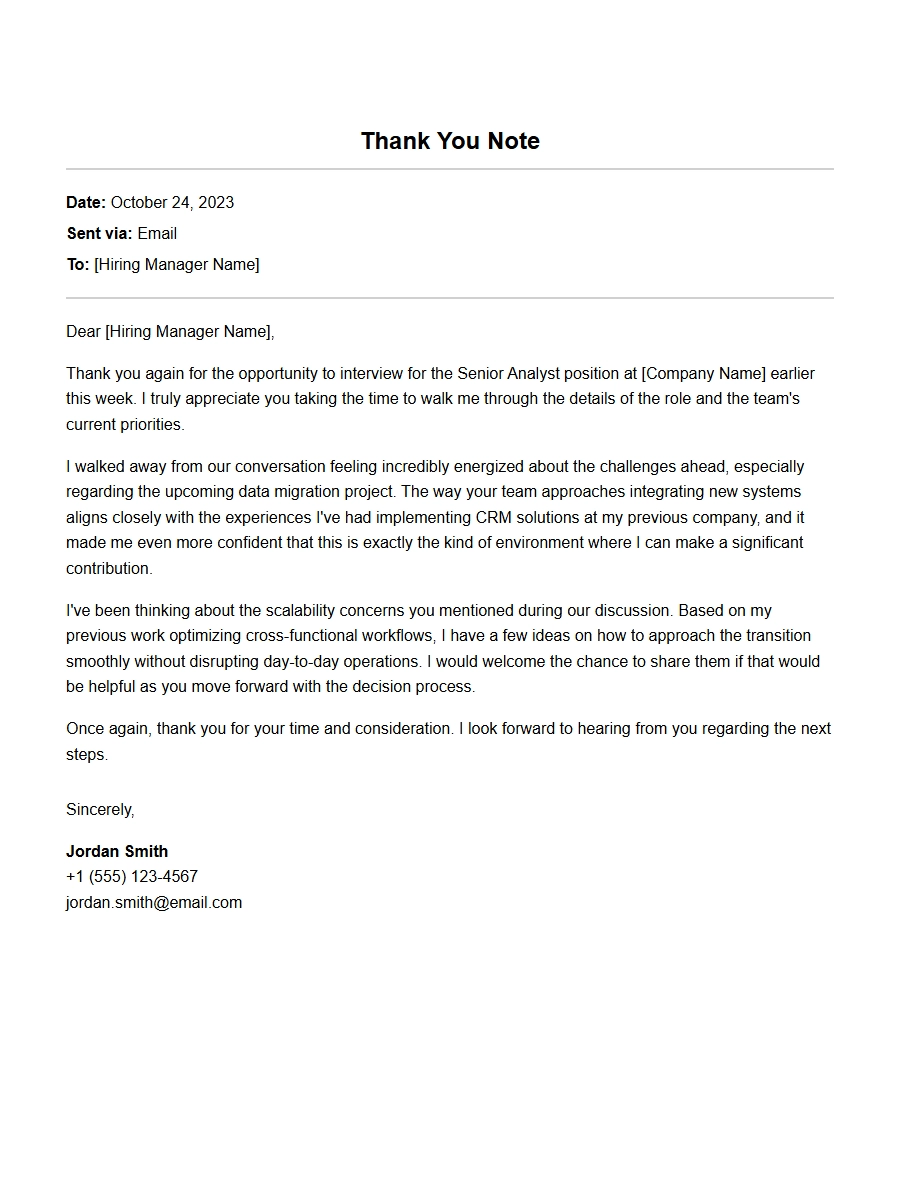 How to Write a Personal Thank-You Note After an Interview